Green lacewing larvae are tiny predatory insects famous for eating aphids and other soft-bodied garden pests. Often called “aphid lions,” these larvae belong to the green lacewing family Chrysopidae and are widely valued in gardens, greenhouses, and agricultural fields. Their elongated bodies, curved jaws, and sometimes unusual debris-covered camouflage can make them look intimidating. However, they are primarily beneficial insects rather than pests. Learning how to identify green lacewing larvae, what they eat, whether they bite, and how to use them can improve natural pest control.
What Do Green Lacewing Larvae Look Like?
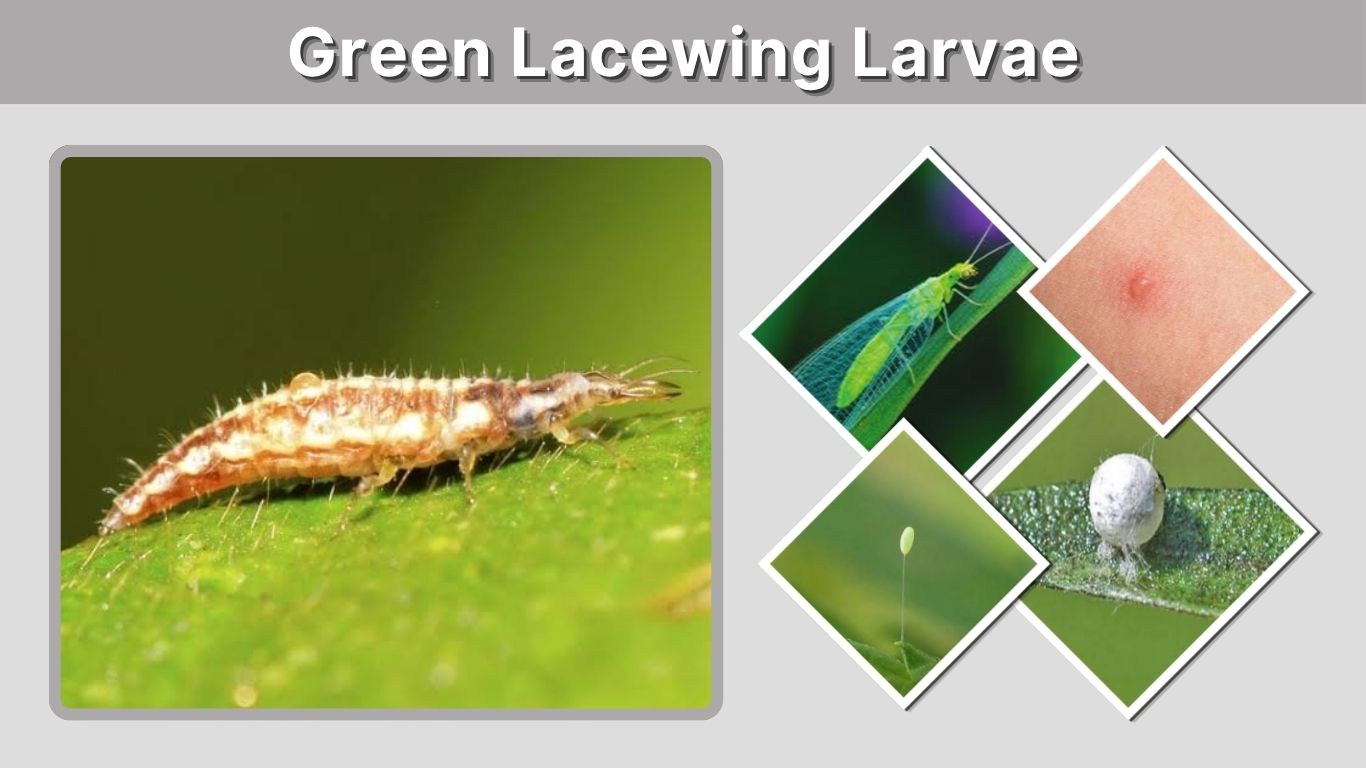
Green lacewing larvae look dramatically different from the delicate green adults they eventually become. Their bodies are elongated and somewhat flattened, with six well-developed legs and prominent curved mouthparts. Depending on the species and age, larvae may appear cream, brown, gray, or reddish and are commonly found actively searching across leaves and stems.
Green Lacewing Larvae Identification
Look for these common characteristics:
- Elongated, tapered body
- Six relatively long legs
- Large curved jaws extending from the head
- Brown, gray, cream, or reddish markings
- Usually several millimeters long
- Rapid movement across plant surfaces
- Rough or bristly body appearance
- Sometimes covered with plant material or insect remains
Their oversized jaws are among the easiest features to recognize. These jaws are specialized for capturing and feeding on small prey.
Green Lacewing Larvae Size
Newly hatched green lacewing larvae are extremely small, often only a few millimeters long. They increase noticeably in size as they pass through several larval stages.
Mature larvae of many common species reach roughly 6–10 mm long, although exact size varies by species.
Despite their small bodies, they can capture surprisingly active prey such as aphids, thrips, and tiny caterpillars.
Debris-Carrying Green Lacewing Larvae
Some green lacewing larvae are known as debris-carrying larvae or “junk bugs.” They collect materials such as dead insects, wax, bits of leaves, lichens, and other debris and place them on specialized hairs along their backs.
This unusual camouflage helps disguise the predator from potential prey and may also provide protection against larger predators.
A moving pile of debris on a leaf can therefore actually be a lacewing larva hunting underneath its camouflage.
What Do Green Lacewing Larvae Eat?
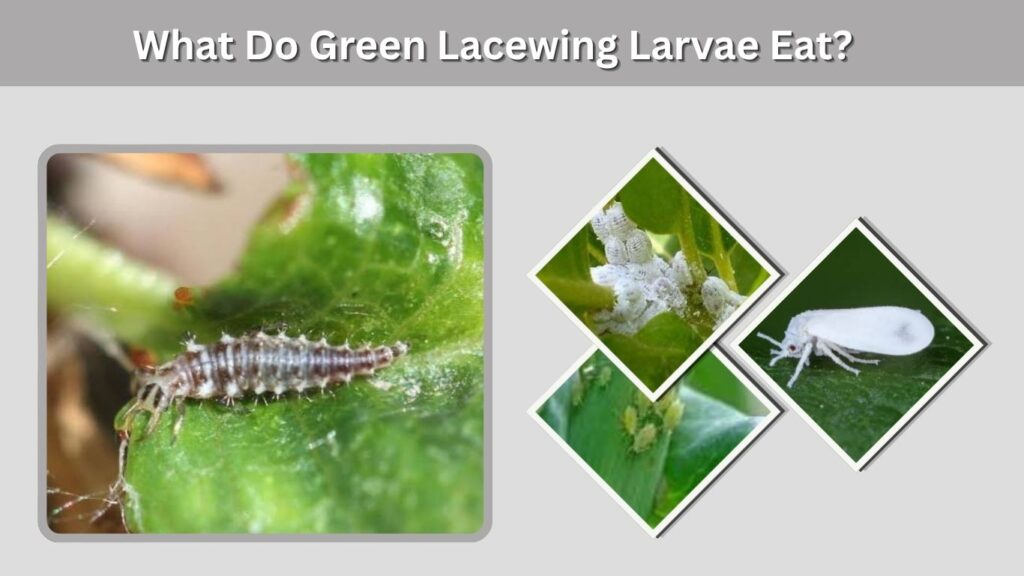
Green lacewing larvae are generalist predators capable of feeding on many small arthropods. Aphids are among their best-known prey, which explains the nickname “aphid lions.” Their appetite makes them particularly useful where plants are suffering from infestations of sap-feeding insects and other tiny garden pests.
Common Prey of Green Lacewing Larvae
Their diet may include:
- Aphids
- Mealybugs
- Whiteflies
- Thrips
- Spider mites
- Scale insect crawlers
- Small caterpillars
- Moth eggs
- Beetle eggs
- Leafhopper nymphs
- Other small insect larvae
What they eat depends largely on which prey species are available in their environment.
How Green Lacewing Larvae Catch Prey
A lacewing larva searches leaves, stems, and branches while moving its head from side to side. When it contacts suitable prey, it quickly grabs the victim using its paired sickle-shaped jaws.
The mouthparts pierce the prey and allow the larva to consume its internal fluids. Once feeding is complete, the larva abandons the remains and continues searching.
Their active hunting style allows them to attack numerous pests within a relatively small area.
Green Lacewing Larvae for Aphid Control
One of the primary reasons gardeners value lacewing larvae is their ability to reduce aphid populations naturally. Unlike pesticides that may harm both pests and beneficial insects, lacewing larvae target many small prey species directly. They can be especially helpful on vegetables, flowers, fruit plants, ornamentals, and greenhouse crops.
Benefits for Natural Pest Control
Green lacewing larvae can provide several advantages:
- Feed heavily on aphids
- Attack several pest species
- Work on many different plants
- Leave little or no harmful residue
- Reduce dependence on chemical insecticides
- Help manage pests in greenhouses
- Support integrated pest management
- Can be released directly near infestations
Because larvae cannot fly away like adults, releasing them close to active pest colonies can help concentrate their feeding activity.
Green Lacewing Larvae and Mealybugs
Mealybugs are another common target. Their soft bodies make them suitable prey for lacewing larvae, particularly younger mealybugs and crawlers.
Lacewings may search between leaves, along stems, and around plant joints where mealybugs frequently hide.
For substantial infestations, lacewing larvae are often used as part of a broader pest-management strategy rather than being treated as an instant solution.
Do Green Lacewing Larvae Bite?
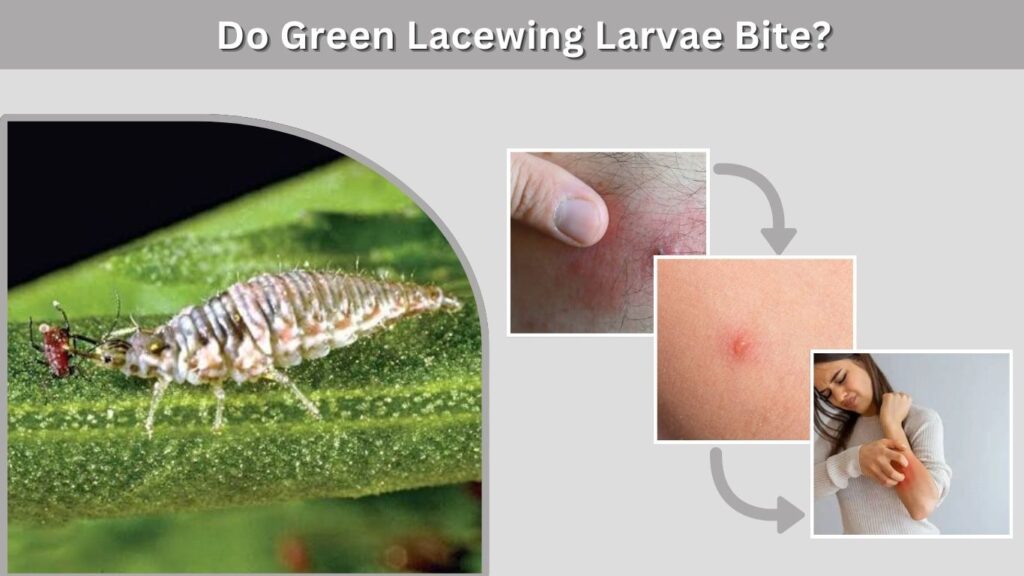
Green lacewing larvae possess powerful mouthparts designed to capture insects, so they can occasionally pinch human skin. However, they do not seek people as prey, and bites normally happen accidentally when a larva becomes trapped against the skin or is handled directly. They are not considered dangerous to humans.
Green Lacewing Larvae Bite Symptoms
A bite or pinch may cause:
- Brief sharp or stinging sensation
- Small red spot
- Mild swelling
- Temporary itching
- Minor localized irritation
Symptoms are generally limited to the area where contact occurred.
Anyone experiencing severe swelling, difficulty breathing, widespread hives, or another serious reaction after an insect encounter should seek appropriate medical attention, regardless of the suspected insect.
Are Lacewing Larvae Venomous?
Green lacewing larvae are not considered medically significant venomous insects. Their mouthparts are designed for feeding on small arthropods rather than defending themselves against humans.
Most people can work around lacewing larvae in gardens without any problems.
Avoid squeezing or handling them unnecessarily. Moving them with a leaf, soft brush, or container reduces the chance of accidental pinching.
Green Lacewing Larvae Life Cycle
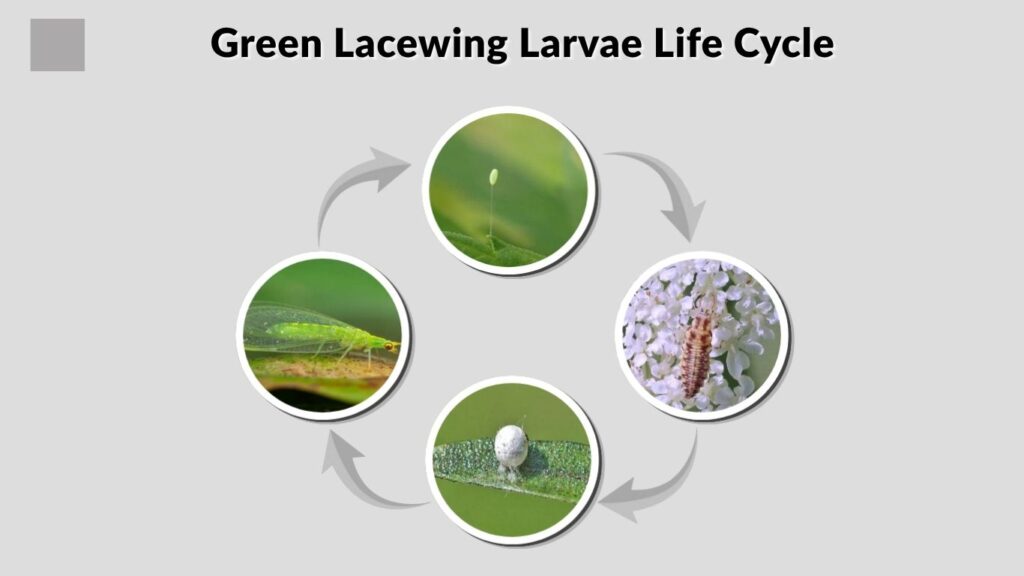
The larval stage is only one part of the green lacewing’s complete life cycle. Green lacewings undergo complete metamorphosis through egg, larva, pupa, and adult stages. Temperature, food supply, humidity, and species can affect development time, but larvae spend most of their active period hunting and growing.
From Egg to Larva
Female lacewings often lay distinctive eggs on slender stalks attached to leaves or stems. Eggs are commonly placed near aphids or other potential food sources.
After hatching, the tiny larva begins hunting almost immediately. It passes through several larval instars, becoming larger after each molt.
The larval period is also when the lacewing is usually most valuable as a biological pest-control predator.
From Larva to Adult
When fully developed, the larva stops actively feeding and searches for a protected location. It produces silk and forms a small rounded cocoon.
Transformation occurs inside the cocoon during the pupal stage.
Eventually, an adult green lacewing emerges. The adult has long antennae, large eyes, a slender green body, and transparent wings covered with an intricate network of veins.
Buying and Releasing Green Lacewing Larvae
Green lacewing larvae are commercially available for gardeners and growers interested in biological control. They may be sold directly as larvae or as eggs expected to hatch shortly after application. Because these are living organisms, proper storage, timing, and release conditions can significantly affect their performance.
Tips for Releasing Lacewing Larvae
For better results:
- Release larvae close to visible pest infestations.
- Distribute them across several affected plants.
- Follow the supplier’s recommended release rate.
- Avoid leaving containers in excessive heat.
- Release them soon after receiving them.
- Avoid applying broad-spectrum insecticides around release time.
- Check plants regularly for remaining pest colonies.
- Repeat releases if recommended for severe infestations.
Even distribution is important because lacewing larvae usually remain relatively close to areas where sufficient prey is available.
Green Lacewing Larvae in the House
Occasionally, lacewing larvae may appear indoors after entering through windows or arriving on houseplants. A single larva usually does not indicate an indoor infestation.
If you find one, gently collect it with a container and release it outdoors near vegetation. There is generally no reason to use pesticides simply because one lacewing larva entered the house.
FAQs
1. What do green lacewing larvae eat?
Green lacewing larvae eat many small, soft-bodied pests, including aphids, mealybugs, whiteflies, thrips, spider mites, insect eggs, scale crawlers, and small caterpillars. Their broad diet makes them useful generalist predators in gardens, greenhouses, orchards, and agricultural environments.
2. Do green lacewing larvae bite humans?
Yes, green lacewing larvae can occasionally pinch or bite human skin with their curved jaws, particularly when handled or trapped against the body. The reaction is generally mild and temporary. They do not actively seek humans and are primarily interested in hunting small insects.
3. How big are green lacewing larvae?
Green lacewing larvae begin life only a few millimeters long. As they develop, many common species grow to approximately 6–10 mm in length. Size varies between species and developmental stages, with mature larvae being much easier to notice while moving across plant leaves.
4. Why do some green lacewing larvae carry debris?
Some species cover themselves with dead insects, plant fragments, wax, and other materials. This behavior provides camouflage while the larvae hunt. The covering may make them less noticeable to both prey and predators, which is why debris-carrying lacewing larvae are sometimes called junk bugs.
5. Are green lacewing larvae good for plants?
Yes. Green lacewing larvae do not normally eat healthy plants. Instead, they prey on insects and mites that can damage vegetation. Their appetite for aphids, mealybugs, thrips, whiteflies, and other pests makes them valuable natural allies for gardeners and growers.