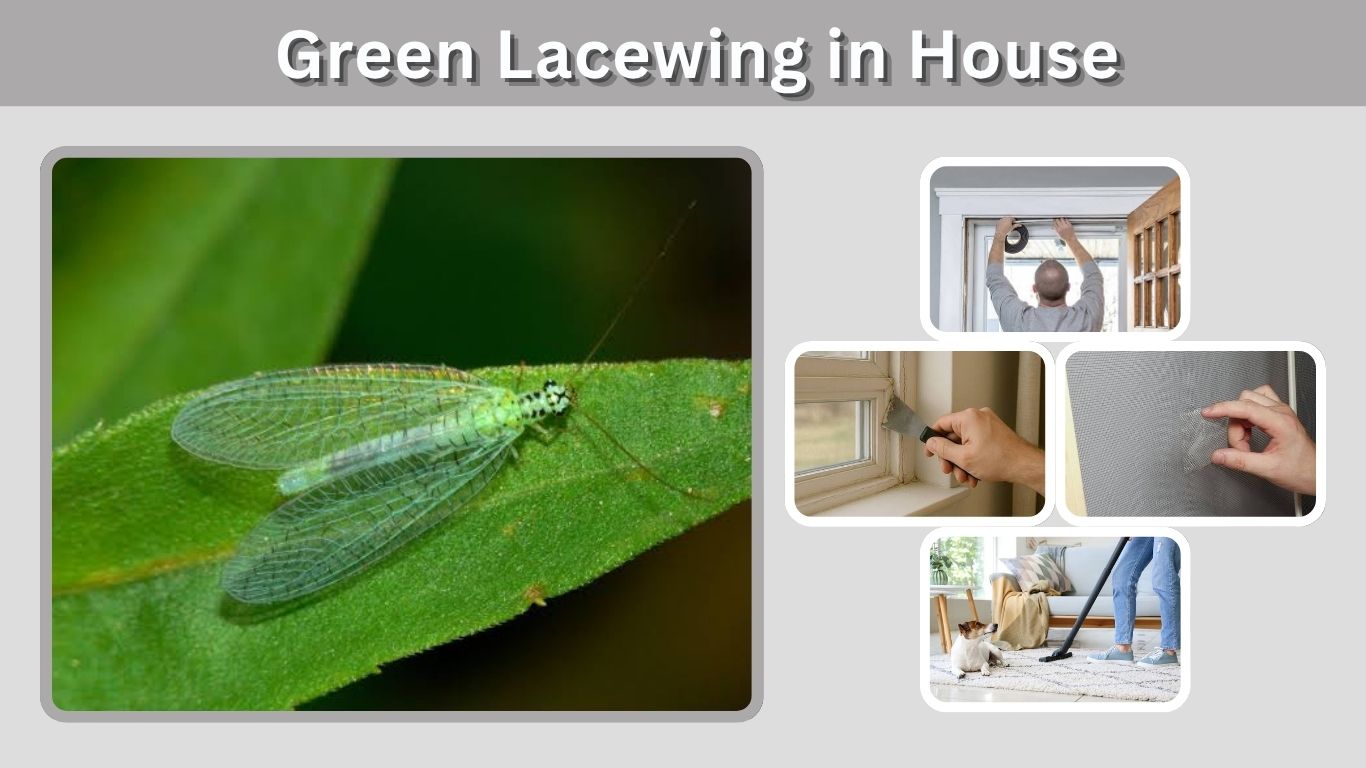
Finding a green lacewing in the house can be surprising, especially when several appear near windows, lights, or ceilings. These delicate green insects usually live outdoors and are considered beneficial because their larvae feed on aphids and other small pests. Green lacewings generally enter homes accidentally while following lights, seeking shelter, or looking for a place to overwinter. They do not normally infest houses, damage furniture, or reproduce indoors in large numbers. Understanding why green lacewings come inside makes them easy to manage safely.
Why Are Green Lacewings in My House?
Green lacewings normally spend their lives outdoors around gardens, shrubs, trees, and flowering plants. When one appears indoors, it has usually entered accidentally rather than deliberately choosing your home as a breeding site. Artificial lights, open windows, seasonal temperature changes, and tiny gaps around doors can all bring these insects indoors.
They Are Attracted to Lights
Adult green lacewings are frequently active during the evening and nighttime. Lights shining through windows or around doors may attract them toward a house.
Once near the building, a lacewing can enter through an open window, damaged screen, doorway, or another small opening. You may therefore notice them around lamps, windows, curtains, or ceilings after dark.
They May Be Looking for Shelter
Some green lacewing species seek sheltered places when temperatures begin dropping.
Small cracks in buildings can provide protection from cold weather, wind, and rain. A lacewing entering through one of these openings may eventually appear inside a heated room.
This is one reason green lacewings in the house may become more noticeable during seasonal weather changes.
They Can Enter Accidentally
A green lacewing inside the house may simply have flown through an open door.
They can also be carried indoors on flowers, houseplants, vegetables, firewood, or other outdoor materials. A single lacewing usually does not indicate an infestation.
What Does a Green Lacewing in the House Look Like?
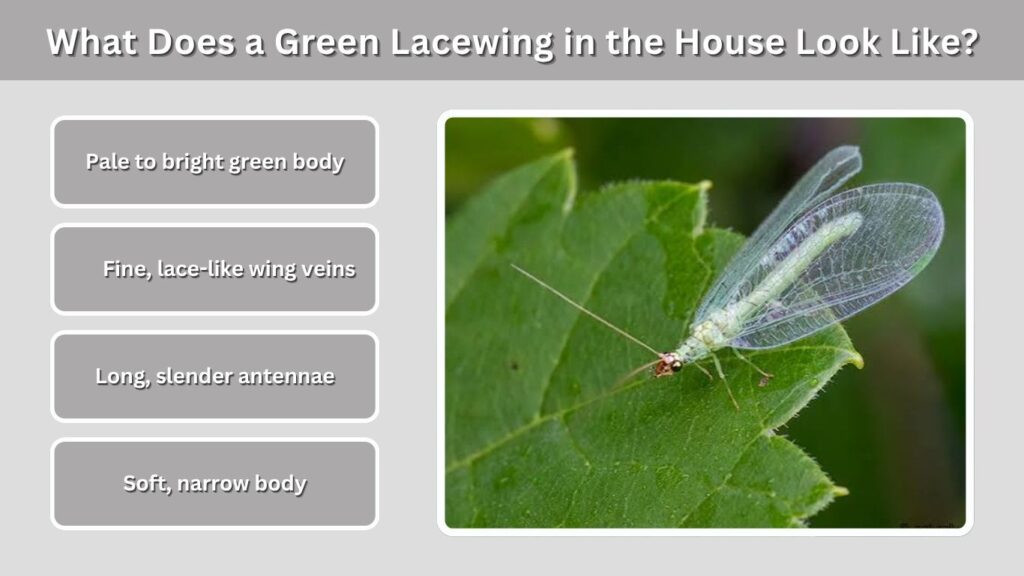
Green lacewings have a distinctive delicate appearance that helps separate them from many household pests. Adults typically have soft green bodies and transparent wings covered by a network of fine veins.
Green Lacewing Identification
- Pale to bright green body
- Two pairs of transparent wings
- Fine, lace-like wing veins
- Long, slender antennae
- Golden, bronze, or copper-colored eyes
- Soft, narrow body
- Wings held roof-like over the body when resting
- Usually around ½–¾ inch long, depending on species
Because of their transparent wings and green coloration, they can sometimes be mistaken for tiny moths, flying termites, or other delicate insects.
Are Green Lacewings in the House Harmful?
Green lacewings are generally harmless household visitors. They do not behave like cockroaches, bed bugs, termites, or pantry pests and normally have no interest in human food, clothing, furniture, or wooden structures.
Do Green Lacewings Bite?
Adult green lacewings are not considered dangerous to humans. Occasionally, a lacewing or its larva may nip exposed skin if handled or trapped against the body.
Such incidents are uncommon and are generally minor.
Green lacewing larvae have stronger mouthparts because they are predators of aphids, mites, insect eggs, mealybugs, and other small arthropods. Even so, they are not blood-feeding insects and do not deliberately seek people as hosts.
Do Green Lacewings Damage a House?
No. Green lacewings do not eat wood, fabrics, carpets, stored food, or building materials.
Their presence indoors is usually temporary. In most cases, a lacewing simply needs to be removed and released outside.
Green Lacewing Larvae in the House
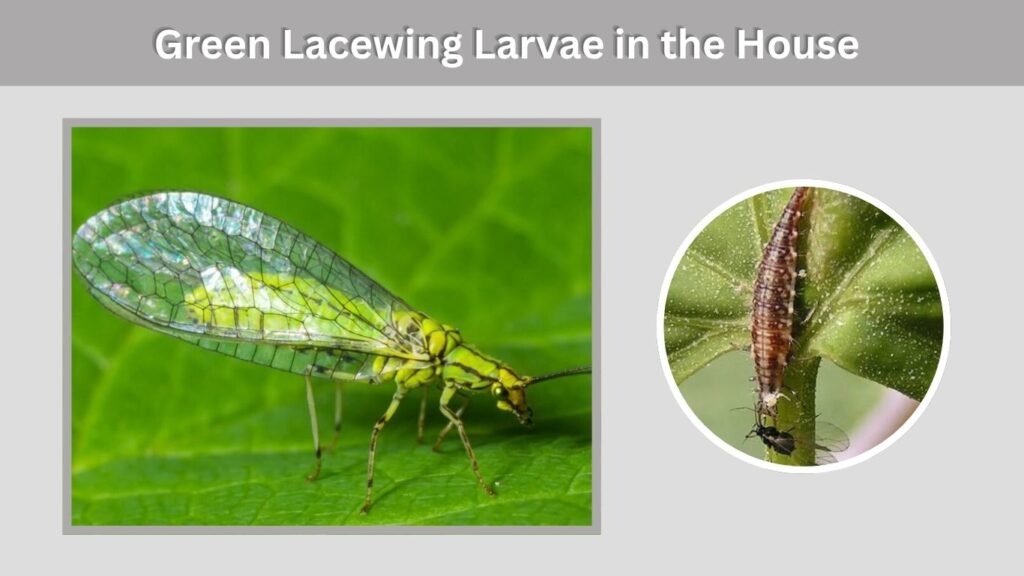
Finding green lacewing larvae in the house is less common than finding adults. Larvae look very different from mature lacewings and may initially be mistaken for another type of household bug.
What Do Green Lacewing Larvae Look Like?
Green lacewing larvae generally have elongated bodies with prominent curved jaws. They are often brownish, grayish, or mottled rather than bright green.
Some species carry debris, dead insect remains, or other material on their backs as camouflage.
If larvae are found indoors, they may have arrived on plants or other materials brought in from outside. They need small insect prey, so a normal indoor environment is usually unsuitable for supporting large populations.
How to Get Rid of Green Lacewings in the House
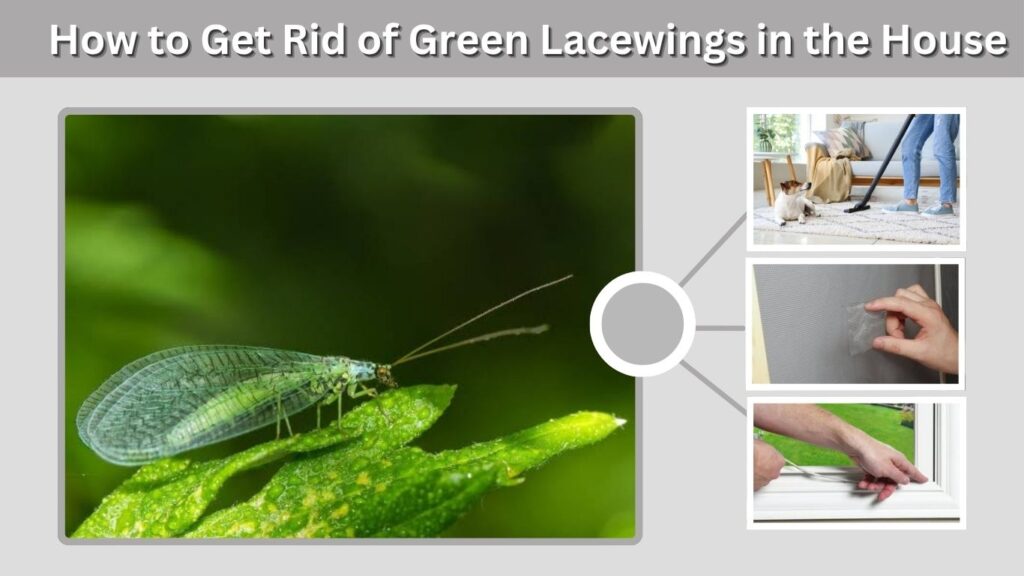
Because green lacewings are beneficial and generally harmless, strong pesticides are rarely necessary. Physical removal and exclusion are usually enough.
Safe Ways to Remove Green Lacewings
- Catch individual insects with a cup and paper.
- Release them outdoors near vegetation.
- Open a nearby window and turn off indoor lights.
- Use a vacuum for numerous dead or trapped insects.
- Repair torn window screens.
- Seal gaps around windows and doors.
- Install weather stripping where necessary.
- Reduce unnecessary outdoor lighting near entrances.
If using a vacuum, empty it outside soon afterward if the insects are still alive.
Should You Kill Green Lacewings?
Usually, there is no reason to kill them.
Green lacewing larvae are valuable natural predators of aphids and other garden pests. Releasing adults outdoors allows them to continue contributing to biological pest control.
A few lacewings indoors are normally an inconvenience rather than a pest problem.
How to Prevent Green Lacewings From Coming Into the House
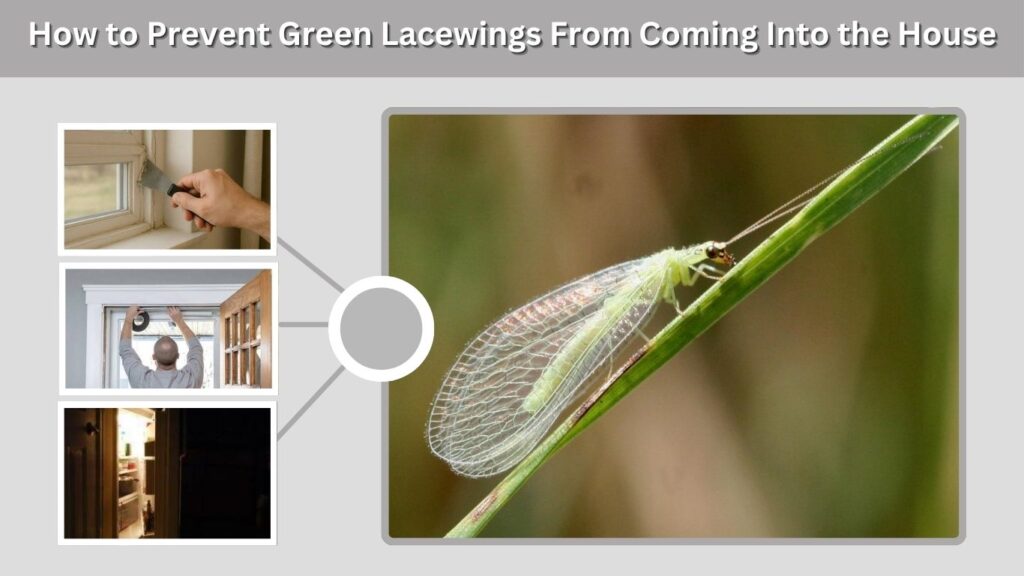
Prevention primarily involves reducing access points and making entrances less attractive at night. If green lacewings repeatedly enter the house, inspect the areas where lights, windows, and doors meet the outdoors.
Prevention Tips
- Repair damaged window and door screens.
- Seal cracks around window frames.
- Add weather stripping around exterior doors.
- Keep doors closed when lights are on at night.
- Reduce bright outdoor lighting near windows.
- Use warmer or less intense exterior lighting where practical.
- Inspect flowers and plants before carrying them indoors.
- Check firewood before bringing it inside.
- Seal gaps around vents and utility openings.
You do not need to eliminate green lacewings from the garden. Keeping them outdoors is desirable because they help control plant pests naturally.
Common Green Lacewing in the House
The term common green lacewing can refer to several closely related green lacewing species. Adults often look very similar, so identifying an exact species usually requires closer examination.
Why Common Green Lacewings Enter Homes
Adult lacewings may approach buildings because of lights and favorable shelter. Some species also survive colder periods in protected locations.
If you notice multiple lacewings appearing around the same window or room, inspect nearby screens, frames, vents, and light fixtures for possible entry points.
Their presence does not usually mean they are breeding throughout the house.
Green Lacewing in House Spiritual Meaning
Some people search for the spiritual meaning of a green lacewing in the house. Symbolic interpretations sometimes associate green insects with renewal, growth, good fortune, transformation, or harmony with nature.
These meanings come from personal or cultural beliefs rather than scientific evidence.
What Does a Green Lacewing Really Mean?
From a biological perspective, a green lacewing indoors usually means something much simpler: the insect was attracted to light, accidentally entered through an opening, or sought shelter.
Seeing one may also suggest that healthy vegetation and insect life exist somewhere close to your home.
Green Lacewings in the House During Winter
Seasonal conditions can influence how frequently lacewings enter buildings. Some adults seek protected places where they can avoid harsh weather.
Should You Be Concerned?
Finding a few lacewings indoors during colder months is generally not a reason for concern.
They do not establish destructive colonies inside walls or consume household materials. Once weather conditions improve, surviving adults normally belong outdoors around vegetation where food and breeding sites are available.
FAQs
1. Why do I have green lacewings in my house?
Green lacewings usually enter houses accidentally. They may be attracted to indoor lights, come through open doors or windows, or enter through gaps while seeking shelter from cold weather. A few individuals normally do not indicate an indoor infestation.
2. Are green lacewings harmful inside the house?
No. Green lacewings are generally harmless to people and buildings. They do not damage wood, furniture, clothing, or stored food. Their larvae are actually beneficial predators that feed on aphids, mites, and other small outdoor pests.
3. How do I get rid of green lacewings in my house?
Catch individual lacewings and release them outdoors, or guide them toward an open window by reducing other indoor lights. For repeated problems, repair screens, seal gaps around doors and windows, and reduce bright exterior lighting near entry points.
4. Why are there green lacewing larvae in my house?
Larvae may accidentally enter on plants, flowers, vegetables, or other outdoor materials. They could also hatch from eggs laid on something brought indoors. Because they depend on small arthropod prey, normal homes are generally unsuitable for supporting large populations.
5. What does a green lacewing in the house mean spiritually?
Some traditions or personal interpretations associate a green lacewing with renewal, luck, growth, or positive change. Scientifically, however, its presence usually means the insect followed light, entered accidentally, or was seeking a protected place to shelter.