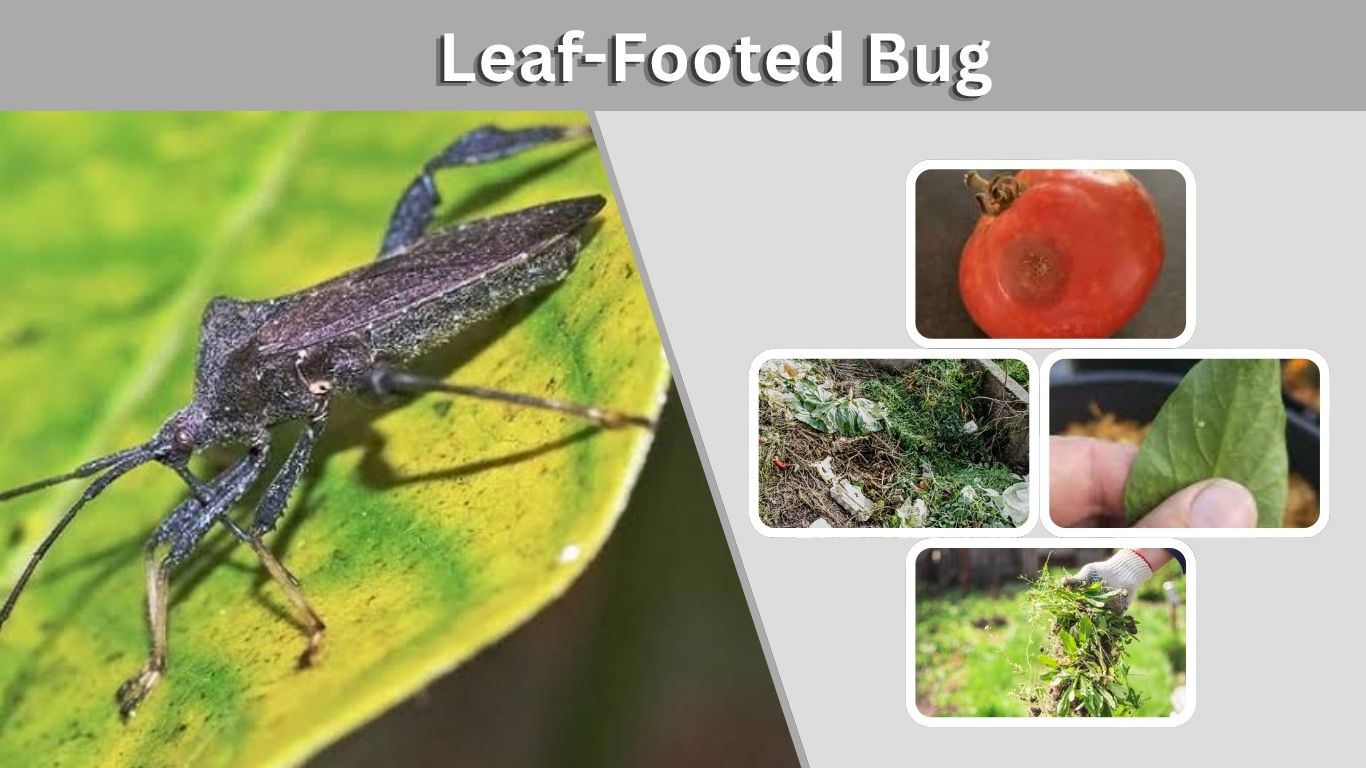
The leaf-footed bug is a plant-feeding insect known for the flattened, leaf-like expansions found on the hind legs of many species. These insects are commonly seen on tomatoes, pomegranates, citrus, vegetables, and ornamental plants. Adults may look intimidating because of their large bodies and long legs, while young leaf-footed bug nymphs are often brightly colored. Although they rarely cause problems for people, heavy populations can damage fruits and vegetables. Learning how to identify their eggs, nymphs, adults, and feeding damage makes control much easier.
What Is a Leaf-Footed Bug?
Leaf-footed bugs belong to the family Coreidae. Many species have widened sections on their hind legs that resemble small leaves, giving them their common name. They use piercing-sucking mouthparts to feed on plant juices, especially from developing fruits, seeds, stems, and vegetables.
Leaf-Footed Bug Identification
- Elongated, somewhat flattened body
- Usually brown, gray, or dark colored as adults
- Long antennae
- Long hind legs
- Leaf-like expansions on the hind legs of many species
- Piercing-sucking mouthparts
- Adults often measure around ¾ to more than 1 inch long
- Some species have a pale zigzag stripe across the wings
- Can fly when disturbed
Species such as the eastern leaf-footed bug, western leaf-footed bug, and giant leaf-footed bug can differ in size, markings, and leg shape.
Leaf-Footed Bug Nymph
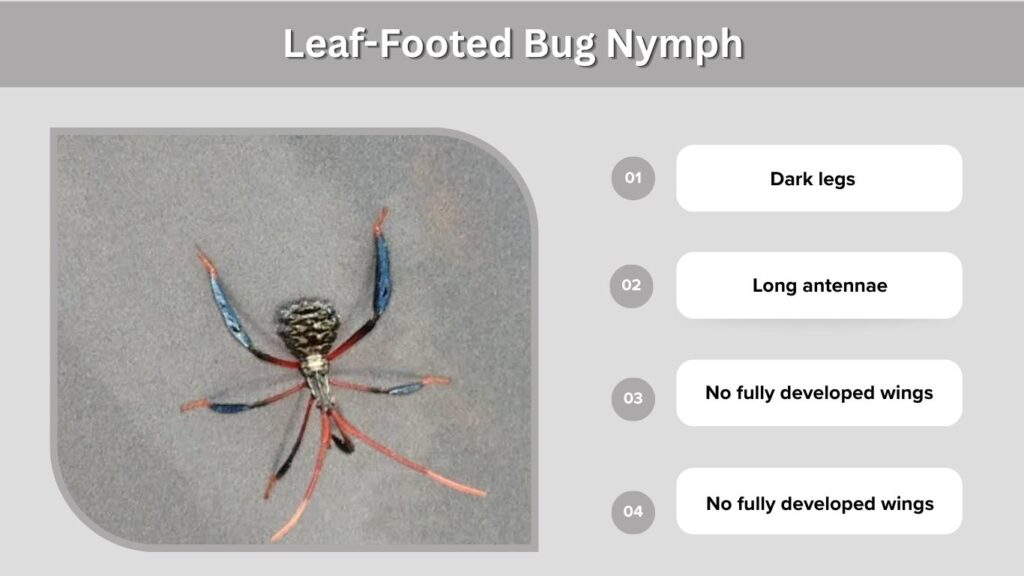
A leaf-footed bug nymph looks surprisingly different from an adult. Newly hatched nymphs are small, wingless, and often brightly colored. Depending on the species and developmental stage, they may be orange, red, brown, black, or even bluish.
What Do Leaf-Footed Bug Nymphs Look Like?
Young nymphs commonly have:
- Bright orange, red, or reddish bodies
- Dark legs
- Long antennae
- No fully developed wings
- Narrower bodies than adults
- Darker coloration as they mature
- Small wing pads in later stages
- Groups clustered together shortly after hatching
The recognizable leaf-like hind-leg expansions may be much less obvious in young nymphs.
Leaf-Footed Bug Nymph vs Assassin Bug Nymph
Leaf-footed bug nymphs are frequently mistaken for assassin bug nymphs because both can have long legs and red or orange coloration.
The biggest difference is feeding behavior. Leaf-footed bugs mainly use their mouthparts to pierce plants and suck sap, while assassin bugs are predators that attack other insects.
Assassin bug nymphs may therefore be beneficial in gardens, so accurate identification is important before applying insecticides.
Leaf-Footed Bug Eggs and Life Cycle
The leaf-footed bug life cycle includes egg, nymph, and adult stages. These insects undergo incomplete metamorphosis, which means there is no pupal stage. Nymphs gradually become more adult-like as they molt several times.
What Do Leaf-Footed Bug Eggs Look Like?
Leaf-footed bug eggs are often:
- Barrel-shaped or cylindrical
- Brown, bronze, or dark colored
- Laid in straight rows or chains
- Attached to leaves, stems, or nearby surfaces
- Found close to suitable host plants
Finding and removing egg rows early can prevent dozens of young nymphs from beginning to feed.
From Nymph to Adult
After hatching, young bugs pass through several nymph stages known as instars. With each molt, the body grows larger and wing pads become increasingly visible.
Once mature, adults develop fully functional wings and can fly between plants. Warm weather can allow populations to develop quickly where abundant food is available.
What Do Leaf-Footed Bugs Eat?
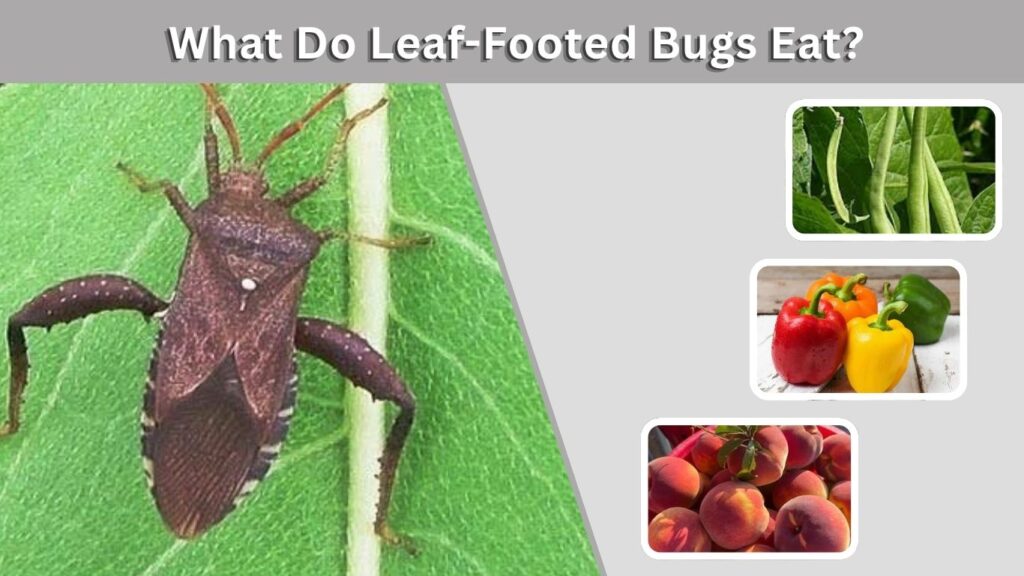
Leaf-footed bugs feed by inserting their piercing mouthparts into plant tissues and withdrawing juices. Their diet varies between species, but developing fruits and seeds are particularly attractive.
Common Host Plants
Leaf-footed bugs may feed on:
- Tomatoes
- Pomegranates
- Citrus fruits
- Peaches
- Peppers
- Beans
- Squash
- Pecans
- Sunflowers
- Various ornamental plants
Large populations can become troublesome because both adults and nymphs may feed on the same plants.
Leaf-Footed Bugs on Tomatoes
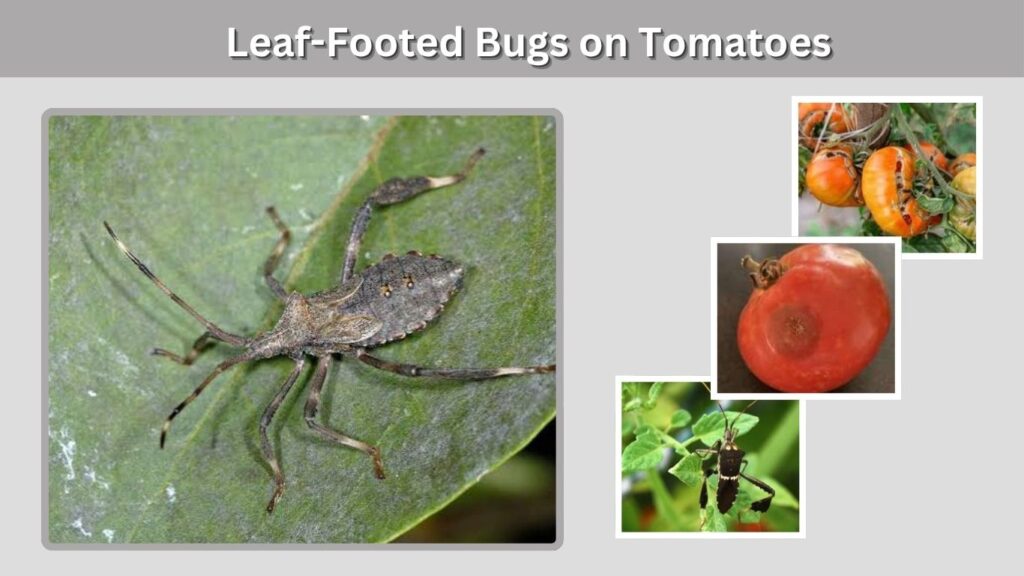
Leaf-footed bugs on tomatoes can become a frustrating garden problem, particularly when adults and nymphs gather around developing fruit.
They pierce tomato skins and suck juices beneath the surface. Feeding punctures may be small, but repeated attacks can lower fruit quality.
Leaf-Footed Bug Tomato Damage
Symptoms can include:
- Small puncture marks
- Yellow or discolored spots
- Depressed areas on fruit
- Internal hard or corky tissue
- Distorted young fruit
- Premature fruit drop in severe cases
- Reduced overall fruit quality
Mature tomatoes may tolerate limited feeding better than very young fruit.
Are Leaf-Footed Bugs Dangerous?
Leaf-footed bugs can look intimidating because of their large size, long legs, and prominent mouthparts. However, they are primarily plant feeders and are not considered aggressive toward people.
Do Leaf-Footed Bugs Bite?
A leaf-footed bug bite is uncommon. These insects do not seek humans for blood and generally prefer escaping when disturbed.
If handled roughly, a large individual may potentially use its piercing mouthparts defensively, producing a painful prick. This is very different from kissing bugs, which are blood-feeding insects.
Are Leaf-Footed Bugs Harmful to Plants?
Yes, they can be harmful when populations become large. A few individuals may cause little noticeable damage, but numerous adults and nymphs feeding on developing fruits can significantly reduce crop quality.
Leaf-Footed Bug vs Assassin Bug
The leaf-footed bug vs assassin bug comparison matters because one generally feeds on plants while the other often eats garden pests.
Key Differences
Leaf-footed bugs typically have plant-feeding mouthparts, long bodies, and enlarged hind-leg sections in many species. Assassin bugs often have a stronger curved beak designed for piercing insect prey.
Leaf-footed bugs are commonly seen feeding in groups on fruits or stems, whereas assassin bugs are more likely to be found hunting insects individually.
Avoid automatically killing every red or long-legged nymph until identification is reasonably certain.
Leaf-Footed Bug vs Kissing Bug
Leaf-footed bugs and kissing bugs may both be brown, elongated insects, but they have very different feeding habits.
Kissing bugs belong to a blood-feeding group of assassin bugs. Leaf-footed bugs primarily feed on plants.
Leaf-like expansions on the hind legs can strongly suggest a leaf-footed bug, although not every species has equally obvious expansions.
Leaf-Footed Bug vs Stink Bug
Leaf-footed bugs and stink bugs are both true bugs and can damage many of the same crops, but their shapes are usually different.
Stink bugs tend to have broad, shield-shaped bodies. Leaf-footed bugs are generally longer and narrower, with noticeably long legs.
Both groups can also release unpleasant defensive odors when disturbed, which explains why some people refer to leaf-footed bugs as leaf-footed stink bugs.
How to Get Rid of Leaf-Footed Bugs
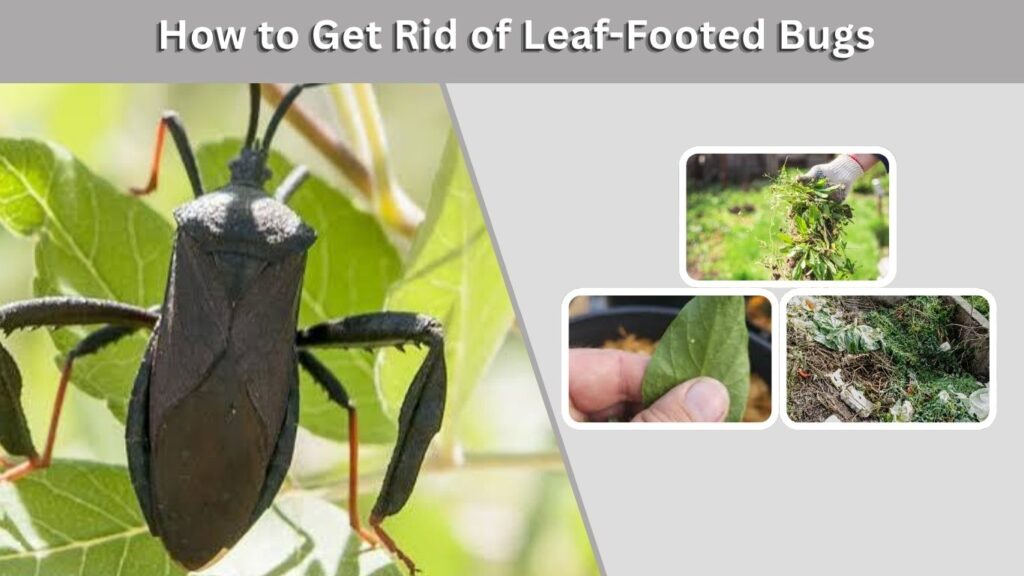
Controlling leaf-footed bugs is easiest when populations are still small. Eggs and young nymphs are much easier to manage than large flying adults.
Natural Leaf-Footed Bug Control
- Inspect plants frequently for egg rows.
- Crush or remove eggs by hand.
- Knock nymphs into a container of soapy water.
- Remove weeds that provide food and shelter.
- Clear old fruits and garden debris.
- Use protective row covers on suitable young crops.
- Encourage beneficial predators.
- Check tomatoes and pomegranates frequently.
- Remove heavily infested plant material when practical.
Hand removal is especially effective in small home gardens.
What Kills Leaf-Footed Bugs?
Insecticidal soap or similar contact treatments may work better on small nymphs than on mature adults. Large adults can be difficult to control because they fly away easily and may return later.
If an insecticide is needed, use only a product labeled for both the pest and the crop being treated. Follow all label directions carefully and avoid unnecessary spraying that could kill pollinators and beneficial predators.
Leaf-Footed Bug Predators
Leaf-footed bugs are part of the food web and have several natural enemies. Birds, predatory insects, spiders, and parasitoids may attack different life stages.
Natural Enemies
Egg parasitoid wasps can be particularly useful because they attack leaf-footed bug eggs before nymphs hatch.
Assassin bugs, spiders, birds, and other predators may feed on young bugs. Maintaining a diverse garden with limited broad-spectrum pesticide use can help preserve these natural enemies.
FAQs
1. Are leaf-footed bugs bad?
Leaf-footed bugs can become garden pests when large populations feed on fruits, vegetables, and seeds. Small numbers may cause limited damage, while heavy infestations can result in discolored, distorted, or lower-quality fruit.
2. Do leaf-footed bugs fly?
Yes. Adult leaf-footed bugs have developed wings and can fly between plants or gardens. Nymphs cannot fly because their wings are still developing.
3. Do leaf-footed bugs stink?
Some leaf-footed bugs can release an unpleasant defensive odor when disturbed. This behavior is one reason they are sometimes confused with stink bugs, although the two belong to different insect families.
4. What is the difference between a leaf-footed bug and an assassin bug?
Leaf-footed bugs primarily feed on plants, while assassin bugs generally hunt other insects. Many adult leaf-footed bugs also have distinctive widened sections on their hind legs, while assassin bugs typically lack these leaf-like expansions.
5. How do you get rid of leaf-footed bugs on tomatoes?
Inspect tomatoes regularly, remove egg rows, and knock nymphs and adults into soapy water. Controlling young populations early is usually easiest. Garden sanitation and protection of beneficial predators can also help reduce future infestations.