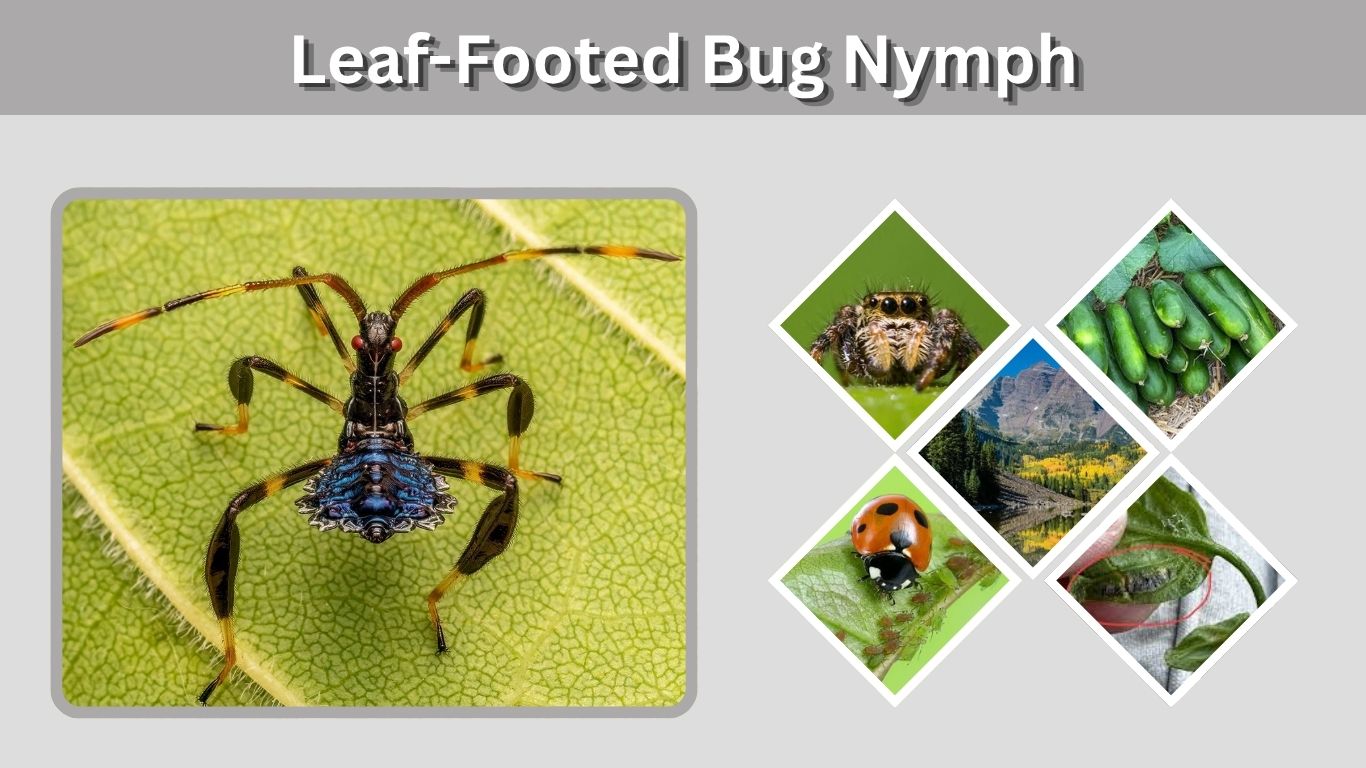
A leaf-footed bug nymph is the immature stage of a leaf-footed bug, a plant-feeding insect in the family Coreidae. These young bugs are commonly seen on tomatoes, peppers, citrus, squash, and other garden plants. Many are bright red or orange with black legs when young, making them easy to confuse with beneficial assassin bug nymphs. As they grow, their coloration changes and their bodies become more adult-like. Correct identification is important because leaf-footed bug nymphs can damage developing fruits and seeds.
What Does a Leaf-Footed Bug Nymph Look Like?
Leaf-footed bug nymphs look different from adults because they lack fully developed wings and usually do not yet have the exaggerated leaf-shaped hind legs associated with mature insects. Their appearance also changes considerably as they pass through several immature stages.
Young nymphs are often colorful and may gather together shortly after hatching.
Leaf-Footed Bug Nymph Identification
Common identification features include:
- Red, orange, brown, or dark-colored body
- Long black or dark legs
- Long antennae
- Narrow, elongated body
- No developed wings in young nymphs
- Small wing pads appearing as they mature
- Groups of nymphs often found together
- Piercing-sucking mouthparts
- Gradual development of adult coloration
Older nymphs can resemble miniature adults but still lack fully developed wings.
Why Are Some Nymphs Bright Red?
A red leaf-footed bug nymph is especially common among several species.
Freshly hatched nymphs may have bright red or orange bodies combined with black legs and antennae. The striking coloration gradually becomes darker as they grow and molt.
This color pattern is one reason they are frequently mistaken for assassin bug nymphs.
Blue Leaf-Footed Bug Nymph
Some leaf-footed bug nymphs may appear bluish, metallic, gray-blue, or blue-black depending on species, developmental stage, lighting, and viewing angle.
A blue leaf-footed bug nymph should therefore be identified using body shape, antennae, feeding behavior, and associated adults rather than color alone.
Leaf-Footed Bug Nymph Life Stages
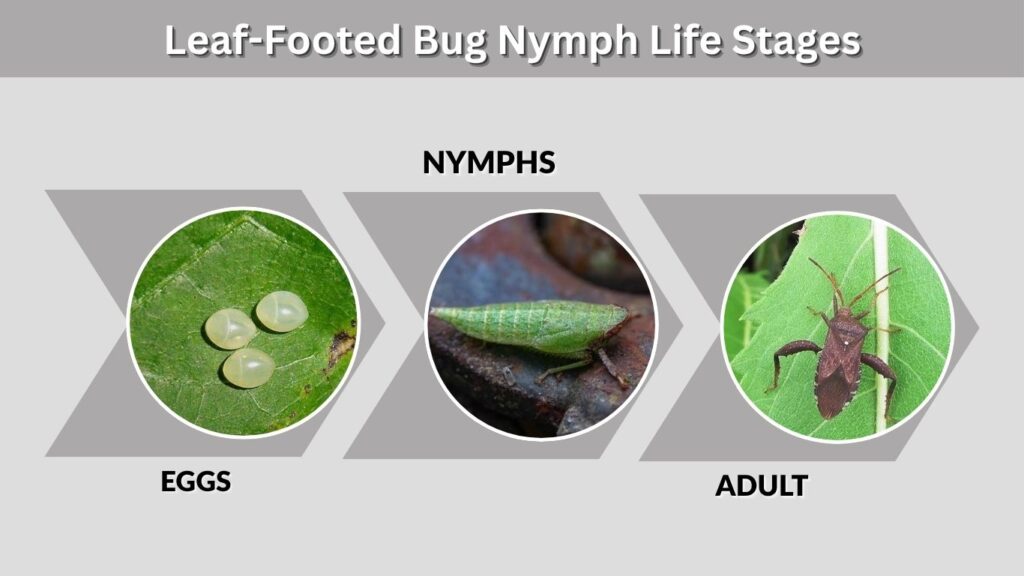
Leaf-footed bugs undergo incomplete metamorphosis. Unlike butterflies and beetles, they do not have a pupal stage.
Instead, they develop from eggs into nymphs and gradually transform into adults through repeated molts.
Leaf-Footed Bug Nymph Stages
The general life cycle includes:
- Egg
- First-stage nymph
- Second-stage nymph
- Third-stage nymph
- Fourth-stage nymph
- Fifth-stage nymph
- Adult
Many leaf-footed bugs pass through five nymphal instars before becoming adults.
Each time the insect molts, it becomes larger and develops more adult-like features.
Leaf-Footed Bug Eggs
Females commonly lay eggs in a line or chain along stems, leaves, or other plant surfaces.
The eggs may appear:
- Brown
- Bronze
- Dark reddish
- Cylindrical or barrel-shaped
- Arranged in straight rows
After hatching, the young nymphs often remain clustered close to the egg row for a short period.
What Happens as Nymphs Mature?
Young nymphs start without wings.
With each molt, they increase in size and develop visible wing pads. Their body coloration often changes from bright red or orange to brown, gray, or darker shades.
The distinctive flattened expansions on the hind legs become more noticeable in adults of species that possess them.
Leaf-Footed Bug Nymph vs. Assassin Bug Nymph
Confusing a leaf-footed bug nymph with an assassin bug nymph is common because both can have red or orange bodies, dark legs, and similar overall shapes.
The difference is important because leaf-footed bugs feed on plants, while assassin bugs are predators that can help control garden pests.
Leaf-Footed Bug Nymph
Leaf-footed bug nymphs typically:
- Feed directly on plants
- Gather together more frequently when young
- Insert their mouthparts into fruits and seeds
- Have relatively straight, plant-feeding beaks
- May be found with other leaf-footed bugs
- Develop broad leaf-like hind legs in some species
They are especially likely to be found feeding on tomatoes, peppers, pomegranates, citrus, squash, and seed pods.
Assassin Bug Nymph
Assassin bug nymphs typically:
- Hunt other insects
- Have a predatory, curved piercing beak
- Frequently move independently while hunting
- Capture caterpillars and other small insects
- Do not develop the same classic leaf-like hind-leg expansions
Some species, including milkweed assassin bugs, can look remarkably similar to young leaf-footed bugs.
Quick Comparison
If multiple red nymphs are clustered together with their mouthparts inserted into a fruit, stem, or seed pod, they are more likely to be leaf-footed bugs.
If an individual is actively capturing and feeding on another insect, it is more likely an assassin bug.
Avoid killing an unfamiliar red-and-black nymph until you are confident about its identification.
What Do Leaf-Footed Bug Nymphs Eat?
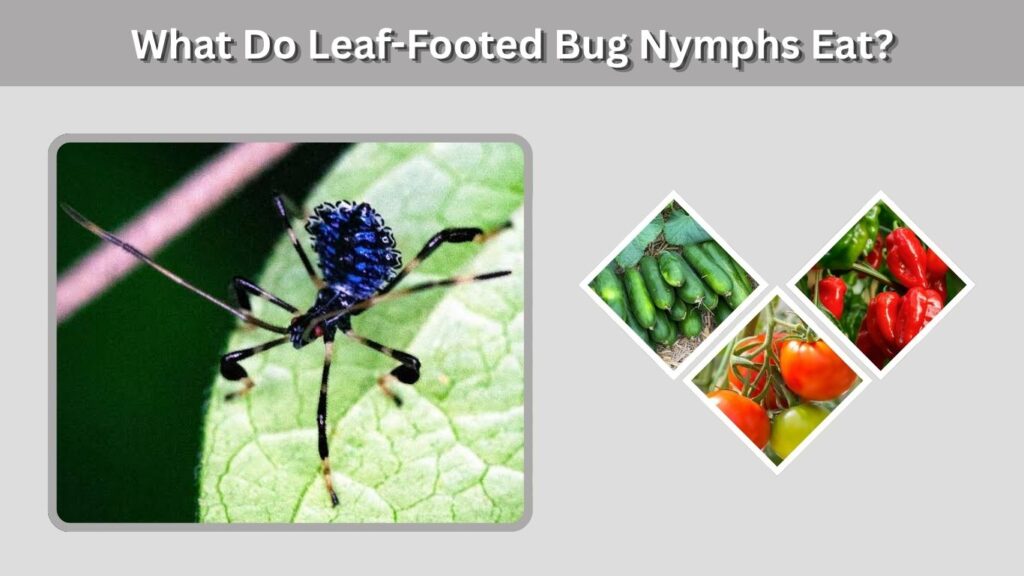
Leaf-footed bug nymphs feed by piercing plant tissue and sucking juices.
Their preferred feeding sites frequently include developing fruits and seeds, where damage can reduce crop appearance and quality.
Common Host Plants
Leaf-footed bug nymphs may feed on:
- Tomatoes
- Peppers
- Cucumbers
- Zucchini
- Squash
- Citrus fruits
- Pomegranates
- Beans
- Sunflowers
- Nuts
- Seed-producing plants
- Various garden vegetables
The exact host plants vary by species and location.
Leaf-Footed Bug Nymph on Tomato Plants
Finding a leaf-footed bug nymph on a tomato plant can be concerning because both nymphs and adults may pierce developing tomatoes.
Their feeding can produce:
- Small puncture marks
- Yellow or pale spots
- Hard areas beneath the skin
- Misshapen fruit
- Premature discoloration
- Reduced fruit quality
Heavy infestations can become particularly damaging when many bugs concentrate on young fruit.
Do Leaf-Footed Bug Nymphs Eat Peppers?
Yes. They may feed on peppers and other fruiting vegetables.
Damage is caused when the insect inserts its piercing mouthparts through the fruit surface and removes plant fluids. Larger populations generally create more noticeable damage.
How to Get Rid of Leaf-Footed Bug Nymphs
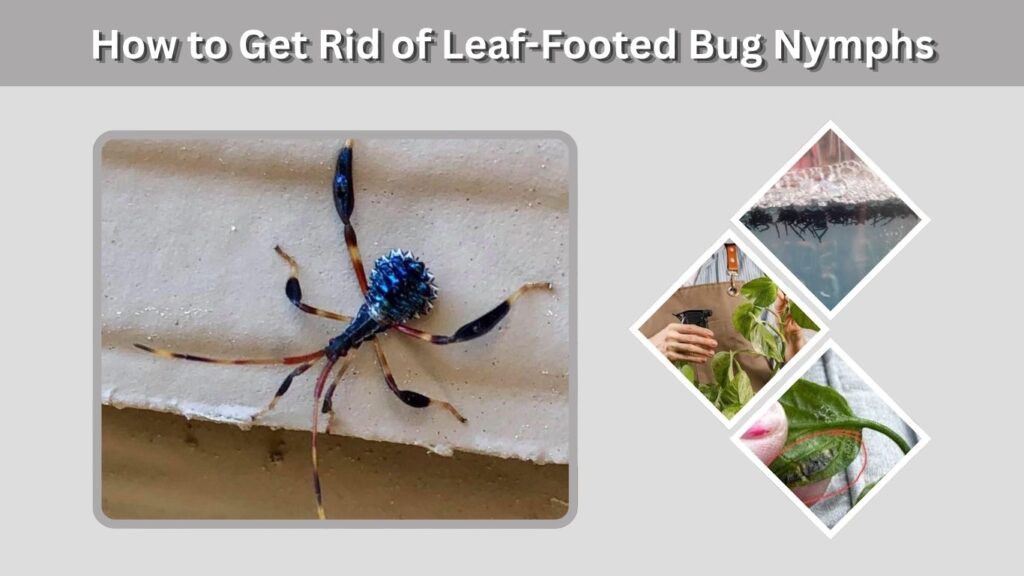
Controlling leaf-footed bugs is often easiest during the nymph stage. Young nymphs frequently remain grouped together and are easier to remove than fast-moving, winged adults.
Regular inspection is one of the most effective ways to prevent a small population from becoming a major infestation.
Hand Removal
For small gardens:
- Inspect plants regularly
- Look beneath leaves and along stems
- Remove egg rows before they hatch
- Knock nymphs into soapy water
- Hand-pick groups while wearing gloves
- Remove heavily infested plant material when practical
Early morning can be a convenient time for inspection because insects may be less active.
Use Physical Barriers
Fine insect netting or row covers can prevent adults from reaching plants and laying eggs.
For best results:
- Install covers before infestation begins
- Seal edges carefully
- Avoid trapping existing pests underneath
- Remove or adjust covers when pollination is required
Physical exclusion is particularly useful on young vegetable plants.
Remove Weeds and Overwintering Sites
Leaf-footed bugs may use weeds, debris, or nearby vegetation as shelter.
Garden sanitation can include:
- Removing excessive weeds
- Cleaning fallen plant debris
- Removing old fruit
- Checking nearby host plants
- Cleaning garden beds after harvest
Reducing hiding and feeding locations can lower the number of bugs that remain around a garden.
Organic Control for Leaf-Footed Bug Nymphs
Gardeners often prefer non-chemical methods, particularly when infestations are still small.
Young nymphs are generally easier to manage than adults because they cannot fly away.
Practical Organic Approaches
Options include:
- Hand-picking
- Removing egg masses
- Row covers
- Garden sanitation
- Encouraging natural predators
- Targeting groups of young nymphs early
Insecticidal soaps or horticultural products labeled for the crop and pest may provide some control when they directly contact young nymphs. Always follow the product label.
Does Neem Oil Kill Leaf-Footed Bug Nymphs?
Neem-based products may help suppress young insects when applied according to the label, but they should not be expected to eliminate a large population immediately.
Coverage is important because many lower-risk contact products work best when they directly reach the insects.
Avoid spraying open flowers or beneficial insects unnecessarily.
Natural Predators of Leaf-Footed Bug Nymphs
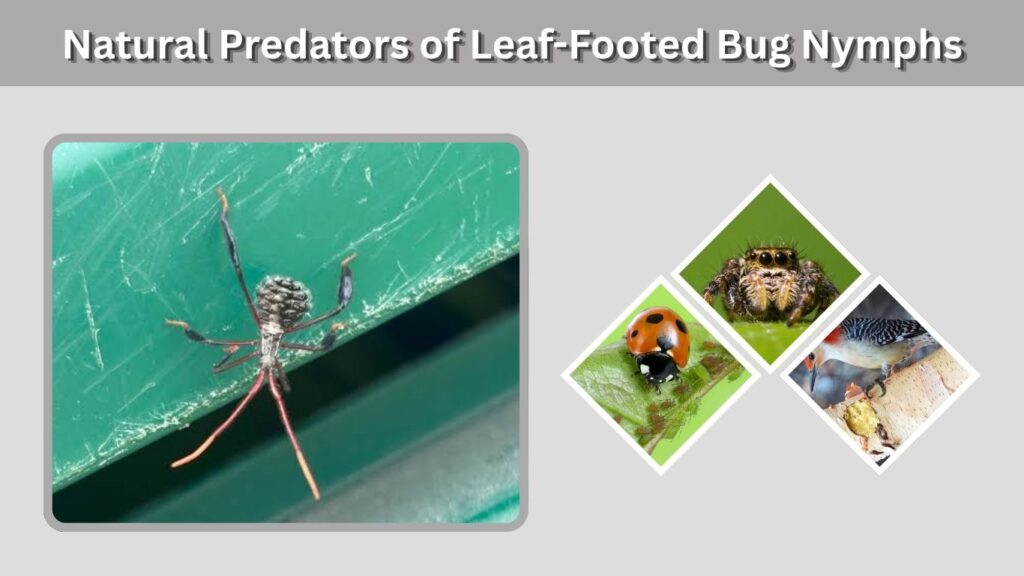
Leaf-footed bugs are part of a larger food web, and numerous predators and parasitoids can attack their eggs or immature stages.
Maintaining a diverse garden can help support these beneficial organisms.
Beneficial Predators
Natural enemies may include:
- Assassin bugs
- Spiders
- Predatory insects
- Birds
- Parasitic wasps and flies
- Egg parasitoids
This is another reason correctly distinguishing an assassin bug from a leaf-footed nymph matters.
Accidentally killing predators can make pest control more difficult.
Do Leaf-Footed Bug Nymphs Bite?
A leaf-footed bug nymph bite is uncommon.
These insects are adapted for piercing plant tissue rather than feeding on humans. They generally try to escape when disturbed.
Can They Hurt Humans?
Leaf-footed bugs are not considered medically important biting insects.
However, larger individuals may potentially jab defensively if roughly handled or pressed against the skin.
To avoid unnecessary contact:
- Wear gloves when hand-picking
- Do not squeeze insects with bare fingers
- Use a container or garden tool for removal
Their main importance is as agricultural and garden pests rather than as a danger to people.
Where Are Leaf-Footed Bug Nymphs Found?
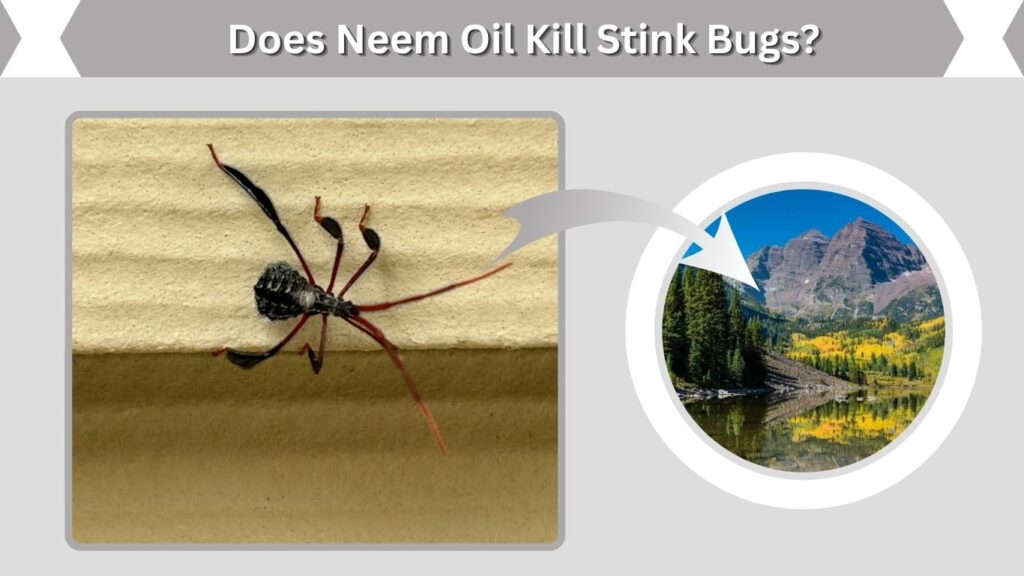
Leaf-footed bugs occur across many warm and temperate regions, and several species are common throughout the United States.
Garden sightings are particularly frequent during warm periods when fruits and seeds are developing.
Florida Leaf-Footed Bug Nymph
Florida’s warm climate supports several leaf-footed bug species.
Nymphs may appear on citrus, tomatoes, ornamentals, vegetables, and other host plants for extended portions of the year.
Leaf-Footed Bug Nymph in Texas
Texas also supports numerous species, and populations can become noticeable during warm weather.
Gardeners may find groups of red nymphs on tomatoes, peppers, fruit trees, and seed-bearing plants.
Eastern Leaf-Footed Bug Nymph
The eastern leaf-footed bug and related species occur across portions of eastern North America.
Young insects may initially look quite different from adults, so finding both life stages on the same plant can make identification easier.
FAQs
Are leaf-footed bug nymphs harmful?
They are not generally dangerous to people, but they can damage vegetables, fruits, seeds, and ornamental plants by sucking plant juices.
How can I tell a leaf-footed bug nymph from an assassin bug?
Leaf-footed nymphs feed on plants and frequently cluster together, while assassin bug nymphs are predators that hunt other insects. Their beak shape and feeding behavior can also help distinguish them.
What color are leaf-footed bug nymphs?
Young nymphs are commonly red or orange with dark legs, although older nymphs may become brown, gray, blue-black, or otherwise darker.
How do I get rid of leaf-footed bug nymphs naturally?
Remove egg rows and young nymph clusters by hand, use row covers, reduce weeds and debris, and encourage natural predators before populations become large.
Do leaf-footed bug nymphs damage tomatoes?
Yes. They can pierce tomatoes and suck plant fluids, sometimes causing pale spots, hard areas, discoloration, deformation, or reduced fruit quality.