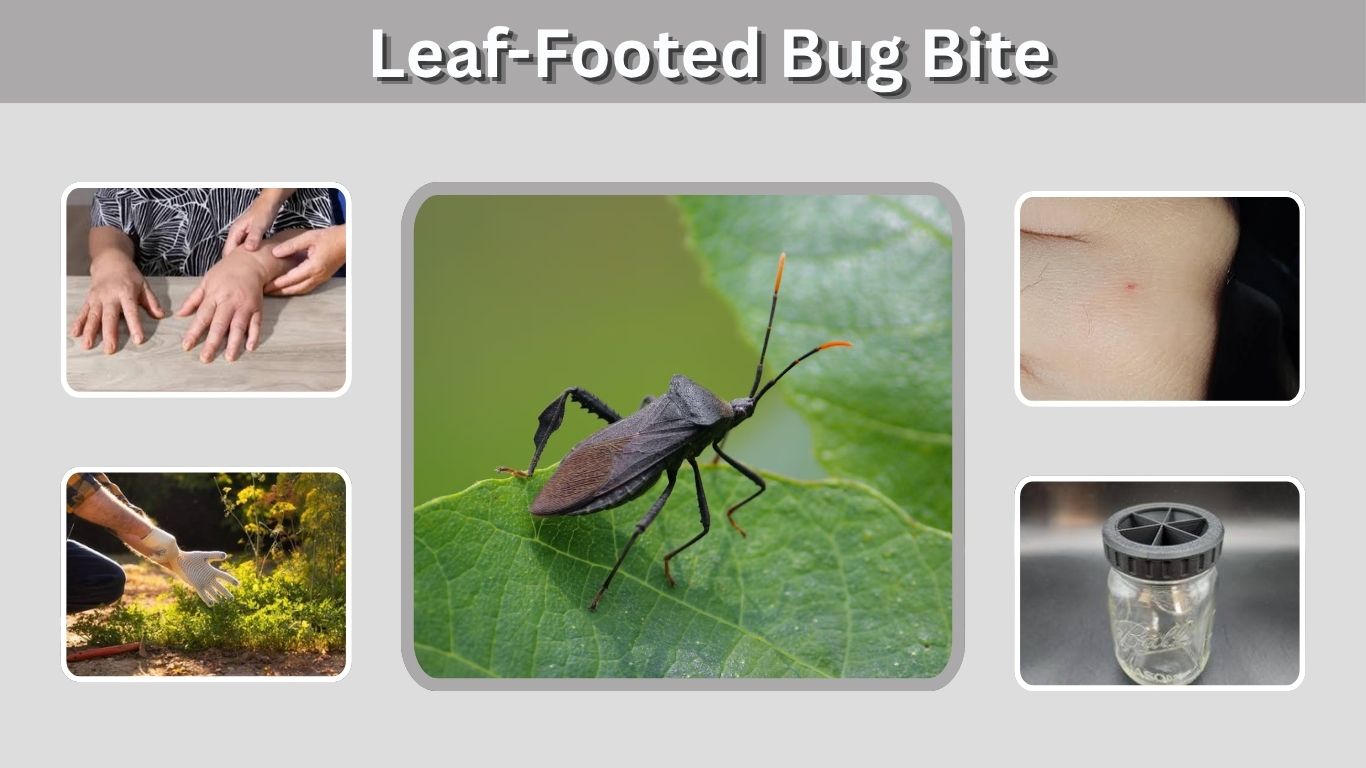
Leaf-footed bugs are easy to recognize by their long legs, flattened leaf-like hind legs, and piercing mouthparts. Because these insects can look intimidating, many people wonder whether a leaf-footed bug bite is dangerous to humans, children, dogs, or cats. Leaf-footed bugs primarily use their mouthparts to pierce plants and suck juices from fruits, stems, and seeds. They are not aggressive toward people, although accidental defensive piercing can occasionally occur when one is handled or trapped against the skin.
Do Leaf-Footed Bugs Bite Humans?
Leaf-footed bugs belong to the family Coreidae and are mainly plant-feeding insects. Their long, needle-like mouthparts are designed for feeding on vegetation rather than animals. A leaf-footed bug normally tries to escape when approached. However, direct handling can occasionally cause the insect to use its mouthparts defensively, producing a painful prick that people often describe as a bite.
Can Leaf-Footed Bugs Bite?
Yes, a leaf-footed bug is physically capable of piercing human skin, but this behavior is uncommon. They do not seek humans for blood meals and have no reason to bite people under normal conditions.
Most reported incidents happen when someone:
- Picks up a leaf-footed bug with bare hands
- Accidentally presses one against the skin
- Handles an insect that feels threatened
- Traps one inside clothing
- Tries to remove one from a home manually
A defensive piercing may hurt because the insect’s mouthpart is relatively long and sharp.
Do Leaf-Footed Bugs Bite Humans on Purpose?
Leaf-footed bugs do not normally attack humans. They are interested in plant tissue, seeds, fruits, and other vegetation.
Unlike mosquitoes, ticks, fleas, or bed bugs, leaf-footed bugs do not depend on human or animal blood. If one lands on your arm, it will usually walk or fly away rather than attempt to feed.
What Does a Leaf-Footed Bug Bite Feel Like?
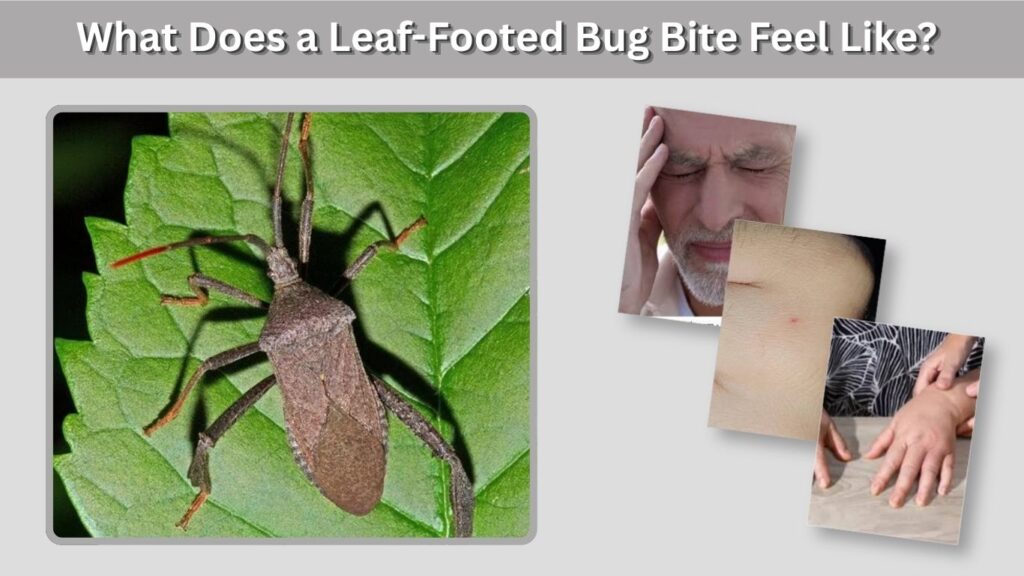
An accidental leaf-footed bug bite may feel like a sudden sharp prick or sting. The intensity varies depending on the species, insect size, and location of the piercing. Giant leaf-footed bugs can appear particularly intimidating because of their size, but their normal feeding behavior is still directed toward plants rather than humans.
Common Symptoms
After an accidental piercing, a person might notice:
- Sudden sharp pain
- A tiny red mark
- Mild swelling
- Localized tenderness
- Itching or irritation
- A small raised bump
Symptoms are generally limited to the area where the skin was pierced.
How Long Can Irritation Last?
Minor irritation may disappear relatively quickly, although redness or tenderness can sometimes remain longer depending on skin sensitivity.
Avoid scratching the affected area because damaged skin may become more irritated or infected. Persistent, severe, or unusual symptoms should be evaluated by a healthcare professional.
Are Leaf-Footed Bug Bites Dangerous?
Leaf-footed bugs are not generally considered dangerous pests to humans. Their primary importance comes from the damage they can cause to garden plants and agricultural crops. Their piercing-sucking mouthparts allow them to feed on developing fruits, vegetables, nuts, and seeds, sometimes causing discoloration or deformities.
Are Leaf-Footed Bugs Venomous?
Leaf-footed bugs are not venomous insects in the way that bees, wasps, or certain other animals use venom for defense or capturing prey.
They also do not have a stinger. The sensation people call a bite comes from the insect’s piercing mouthpart rather than jaws or a stinging structure.
What to Do After a Leaf-Footed Bug Bite
If a leaf-footed bug has pierced your skin, basic care is usually appropriate:
- Wash the area gently with soap and water.
- Apply a cold compress if there is swelling or discomfort.
- Avoid scratching or repeatedly touching the spot.
- Keep the area clean while the skin heals.
- Seek medical attention if severe swelling, breathing problems, spreading redness, intense pain, or other concerning symptoms develop.
People with unusual reactions should not assume that every insect bite will behave the same way.
Do Giant Leaf-Footed Bugs Bite?
Giant leaf-footed bugs are among the larger members of the Coreidae family. Their size, long legs, and prominent mouthparts can make them look threatening. Nevertheless, they remain primarily plant feeders. A giant leaf-footed bug bite is possible mainly when an insect is grabbed, squeezed, or otherwise disturbed.
Giant Leaf-Footed Bug Bite
A larger insect may potentially produce a more noticeable prick because its piercing mouthpart is substantial.
Even so, giant leaf-footed bugs do not normally chase people or attempt to bite exposed skin. Leaving the insect alone is usually enough to prevent any defensive encounter.
Eastern and Western Leaf-Footed Bugs
Eastern and western leaf-footed bugs follow similar feeding behavior. An eastern leaf-footed bug bite or western leaf-footed bug bite would be considered an unusual defensive incident rather than normal feeding behavior.
The best approach is to avoid handling unfamiliar true bugs with bare hands.
Can Leaf-Footed Bug Nymphs Bite?
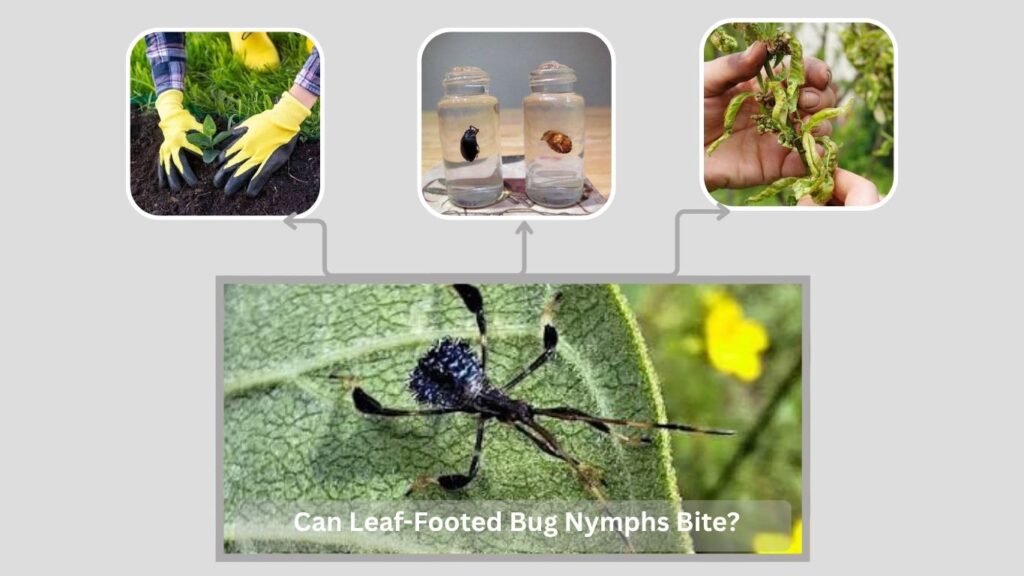
Young leaf-footed bugs, called nymphs, may look very different from adults. Many have bright orange, red, or black coloration and live together in groups when young. Their developing piercing mouthparts are used mainly for feeding on tender plant tissue.
Leaf-Footed Bug Nymph Bite
A leaf-footed bug nymph bite is unlikely, particularly because young insects are smaller than adults. However, they should still be handled carefully.
When removing nymphs from plants:
- Wear gardening gloves
- Brush insects into a container
- Avoid crushing them against your skin
- Inspect plant stems, fruits, and leaves for groups
- Wash your hands after gardening
These precautions also reduce contact with other insects that may be mixed into the same vegetation.
Do Leaf-Footed Bugs Bite Dogs and Cats?
Dogs and cats occasionally investigate insects by sniffing, pawing, or trying to catch them. A leaf-footed bug usually attempts to escape rather than attack a pet. Defensive piercing is theoretically possible if the insect is trapped against sensitive tissue, although encounters are uncommon.
Leaf-Footed Bug Bite on a Dog
If your dog suddenly paws at its mouth after interacting with an insect, inspect the area carefully. Mild irritation may resolve without intervention.
Contact a veterinarian if you notice:
- Significant facial swelling
- Continuous drooling
- Repeated vomiting
- Difficulty breathing
- Persistent pain
- Unusual weakness or behavior
These signs could have several possible causes and should not automatically be attributed to a leaf-footed bug.
Western Leaf-Footed Bug and Cats
Cats may chase leaf-footed bugs because of their movement. Preventing pets from playing with unfamiliar insects is sensible because other species found nearby may sting, bite, or contain irritating substances.
Leaf-Footed Bug vs. Other Biting Bugs
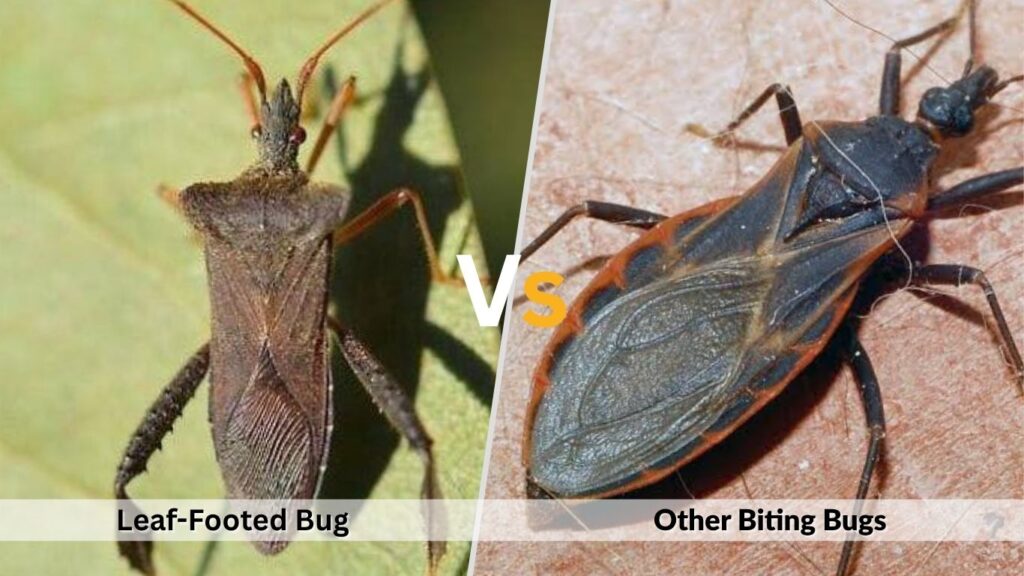
Leaf-footed bugs are sometimes confused with assassin bugs because both groups are true bugs with elongated bodies and piercing mouthparts. Correct identification matters because their behavior can be very different.
Leaf-Footed Bug
Leaf-footed bugs typically have:
- Flattened or widened sections on the hind legs
- Long antennae
- Elongated bodies
- Plant-feeding behavior
- Brown, gray, black, or reddish coloration
Some species do not have extremely obvious leaf-shaped expansions, so other characteristics may also be needed for identification.
Assassin Bugs
Assassin bugs are predators that use their piercing mouthparts to attack other insects. Some can deliver noticeably painful defensive bites when handled.
Therefore, if an unfamiliar insect gives a surprisingly painful bite, identification should not be based solely on its general shape or color.
How to Avoid Being Bitten by Leaf-Footed Bugs
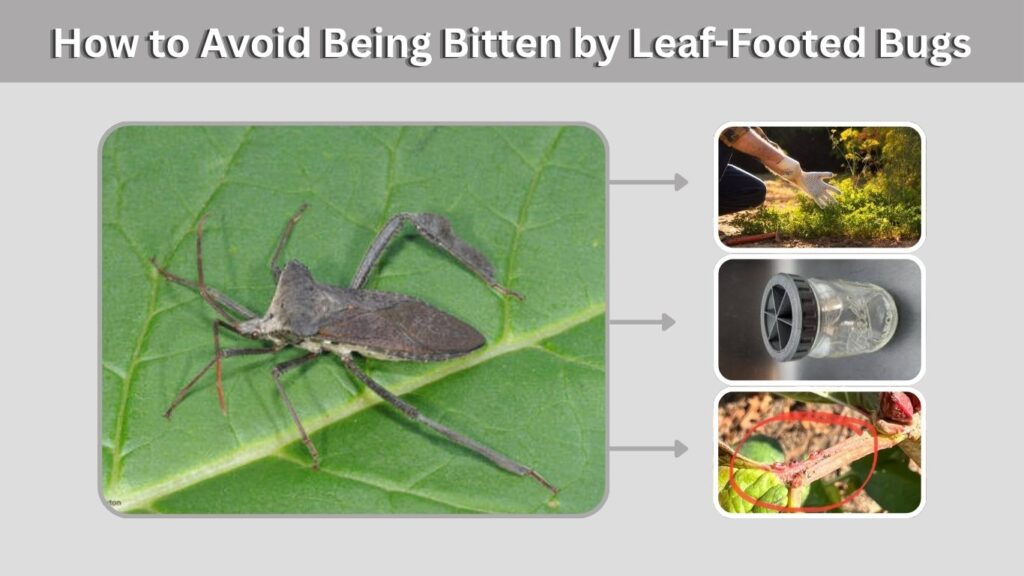
The easiest way to prevent an accidental bite is to avoid grabbing these insects directly. Leaf-footed bugs are common around gardens containing tomatoes, pomegranates, citrus, vegetables, ornamental plants, and seed-producing plants.
Safe Handling Tips
When dealing with leaf-footed bugs:
- Wear gloves while gardening.
- Do not pick adults up with bare fingers.
- Use a container to move insects found indoors.
- Shake gardening gloves before putting them on.
- Check clothing after working around heavily infested plants.
- Teach children not to handle unfamiliar insects.
Removing One From Your Home
If a leaf-footed bug enters your home, place a cup or container over it and slide a piece of cardboard underneath. You can then carry it outside without touching it.
This method avoids unnecessary contact and prevents the insect from being crushed indoors.
FAQs
1. Do leaf-footed bugs bite?
Leaf-footed bugs rarely pierce people defensively, but they are plant feeders and do not normally bite humans for food.
2. Can a leaf-footed bug bite hurt?
Yes. If the insect pierces the skin while being handled or trapped, its sharp mouthpart can cause a noticeable prick and temporary discomfort.
3. Do giant leaf-footed bugs bite humans?
Giant leaf-footed bugs can potentially pierce skin defensively, but they do not normally attack humans. Their primary food comes from plants.
4. Are leaf-footed bug bites poisonous?
Leaf-footed bugs are not generally considered venomous to humans. Mild local irritation may occur after an accidental piercing.
5. Do leaf-footed bugs bite dogs or cats?
They do not normally target pets. Defensive contact could occur if a dog or cat traps or mouths one, so monitor the pet and contact a veterinarian if significant symptoms appear.