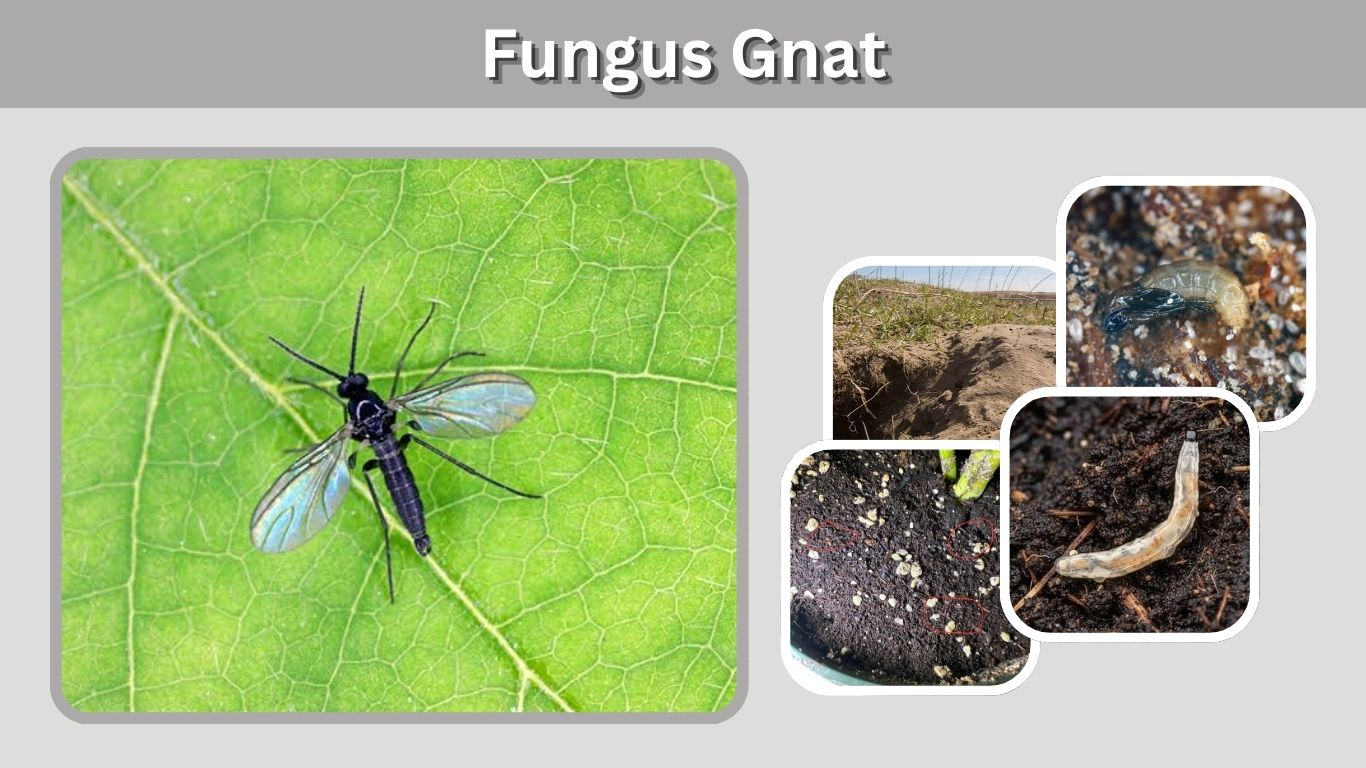
Fungus gnats are tiny flying insects commonly found around houseplants, greenhouses, and damp potting soil. While adult gnats are mostly a nuisance, their larvae live beneath the soil surface and may damage tender roots when populations become large. Moist growing media, decaying organic matter, and frequent watering create ideal conditions for infestations. Understanding fungus gnat identification, eggs, larvae, life cycle, traps, and control methods makes it much easier to eliminate these pests and prevent them from returning.
What Is a Fungus Gnat?
Fungus gnats are small flies associated with moist soil and decomposing organic material. Several families are commonly described as fungus gnats, with dark-winged fungus gnats in the family Sciaridae being especially important around indoor plants and greenhouses. Adults usually fly close to soil surfaces, while larvae remain hidden within damp growing media where they feed and develop.
Fungus Gnat Identification
Adult fungus gnats can usually be recognized by several characteristics:
- Small, delicate fly-like body
- Usually dark gray, brown, or black
- Long, slender legs
- Long antennae
- Clear or smoky wings
- Adults often run across soil before flying
- Commonly seen around plant pots and windows
They are sometimes mistaken for fruit flies or drain flies, but their appearance and breeding habitat are different.
Fungus Gnat Size
Most adults are only a few millimeters long. Their thin bodies and long legs can make them resemble miniature mosquitoes.
Their small size allows them to remain unnoticed until adults begin flying around plants in noticeable numbers.
Fungus Gnat vs Fruit Fly
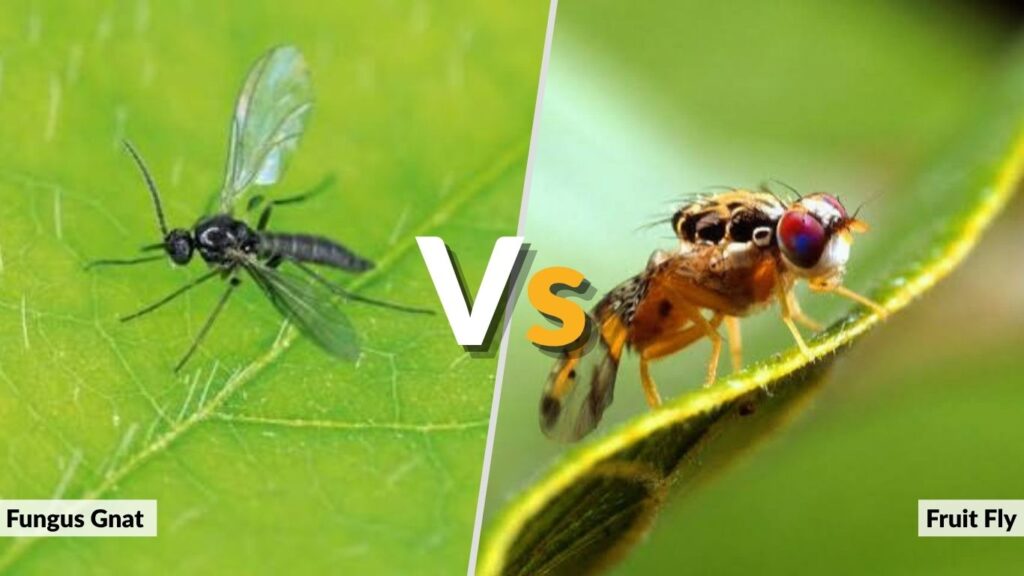
Fungus gnats and fruit flies are both tiny indoor flies, but they usually originate from completely different sources. Fungus gnats are strongly associated with damp potting soil, while fruit flies are attracted to fermenting fruit, food waste, and sugary liquids. Correct identification is important because the treatment that works for one pest may not solve the other.
Key Differences
- Fungus gnats: Usually dark, slender, and long-legged.
- Fruit flies: Usually stockier with tan or brown bodies.
- Breeding site: Fungus gnats breed mainly in moist soil.
- Fruit fly breeding: Fruit flies reproduce around fermenting food.
- Flight: Fungus gnats often make weak, short flights around plants.
- Location: Fruit flies are frequently concentrated around kitchens and waste containers.
Drain flies are another possible look-alike, but they have broader, fuzzy wings and are normally associated with drains.
What Do Fungus Gnat Larvae Look Like?
Fungus gnat larvae are small, slender, worm-like creatures that live primarily in the upper layers of damp soil. They are generally translucent or whitish and have a distinctive dark head capsule. Because they remain underground, growers may notice flying adults before ever seeing larvae. Heavy infestations can sometimes reveal larvae near the soil surface after watering.
Fungus Gnat Larvae Identification
Typical larval characteristics include:
- Transparent to whitish body
- Thin, elongated shape
- Shiny black head
- Legless appearance
- Usually several millimeters long
- Found in moist potting soil
- May gather around roots and organic debris
Larvae can sometimes be seen by carefully examining the upper layer of wet soil.
What Do Fungus Gnat Larvae Eat?
Fungus gnat larvae primarily consume fungi, algae, decaying plant matter, and other organic material within the soil.
When populations become high or food is limited, some larvae may also feed on tender roots, root hairs, seedlings, and young plant tissue. This feeding is particularly concerning for seedlings, cuttings, and plants with delicate root systems.
Fungus Gnat Eggs
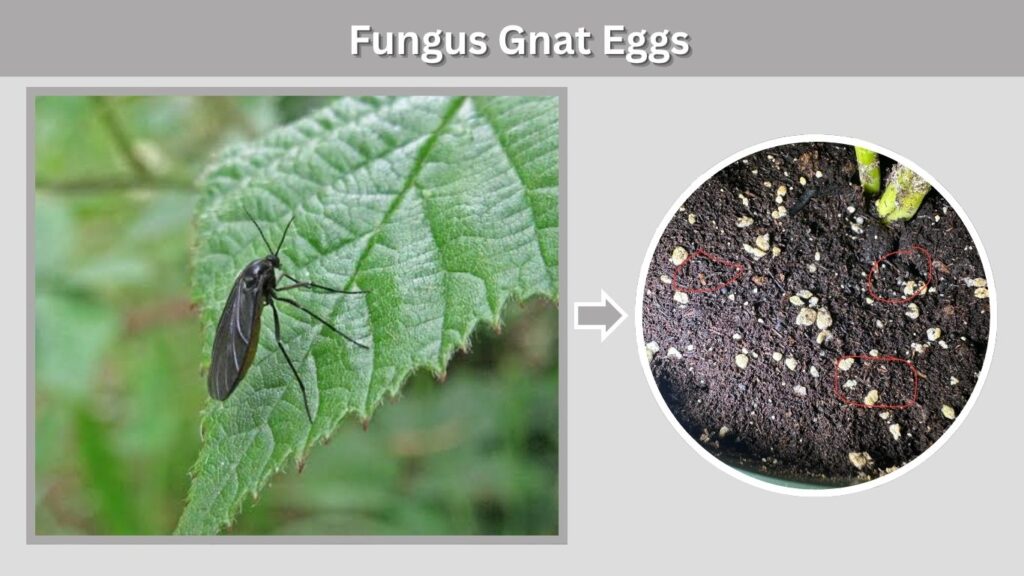
Female fungus gnats search for moist growing media where their offspring will have access to food. Eggs are extremely small and can be difficult to spot without magnification. Damp soil rich in organic matter provides excellent conditions for eggs and newly hatched larvae, explaining why persistently wet houseplants often experience repeated infestations.
What Do Fungus Gnat Eggs Look Like?
Fungus gnat eggs are generally:
- Extremely small
- Whitish or translucent
- Oval in shape
- Difficult to see with the naked eye
- Usually deposited in moist soil
- Common around organic material and plant roots
They are much easier to control by changing soil conditions than by attempting to locate individual eggs.
Fungus Gnat Eggs on Leaves
The primary breeding area is normally moist growing media rather than healthy leaf surfaces. Adults may rest on leaves, pots, or nearby objects, which can create the impression that eggs are being deposited there.
When managing an infestation, attention should therefore focus mainly on the soil and moisture conditions.
Fungus Gnat Life Cycle
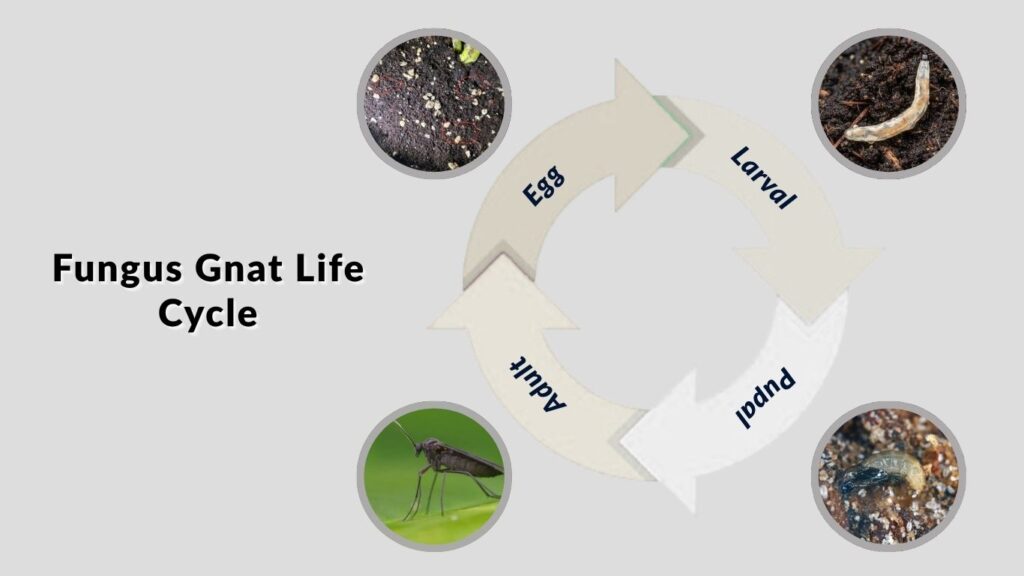
Fungus gnats undergo complete metamorphosis. Their four developmental stages are egg, larva, pupa, and adult. Warm temperatures and consistently moist soil can allow the population to develop rapidly. Because several generations may overlap, simply killing visible adults rarely eliminates an infestation; developing eggs, larvae, and pupae can remain inside the soil.
Four Life Cycle Stages
- Egg: Females deposit tiny eggs in moist growing media.
- Larva: Larvae hatch and begin feeding on fungi and organic matter.
- Pupa: Mature larvae form pupae in or near the soil.
- Adult: Adults emerge, mate, and begin laying another generation of eggs.
The entire cycle can occur within several weeks under favorable indoor conditions.
How Long Does a Fungus Gnat Live?
Individual adults generally survive for only a short period compared with the immature stages. However, an infestation may seem continuous because different generations overlap.
This is why control efforts should continue after the visible number of adults begins to decline.
Fungus Gnat Damage to Plants
A few fungus gnats around an established plant may cause little direct damage. Problems become more serious when larval populations grow in consistently damp soil. Root feeding can interfere with nutrient and water uptake, while injured roots may leave young plants especially vulnerable to stress and disease.
Signs of Fungus Gnat Damage
Potential symptoms include:
- Slow seedling growth
- Weak young plants
- Yellowing leaves
- Wilting despite adequate moisture
- Damaged fine roots
- Reduced root development
- Large numbers of adults around soil
These symptoms can have many causes, so the presence of larvae should be confirmed before assuming fungus gnats are responsible.
How to Get Rid of Fungus Gnats
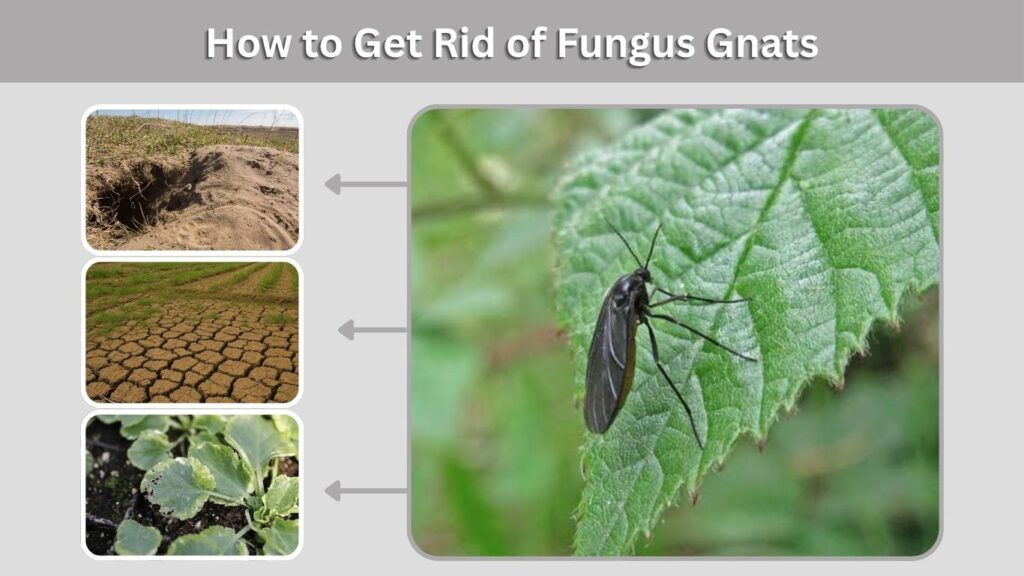
Effective fungus gnat control targets both adults and immature stages. Adult traps can reduce breeding populations, but larvae developing in soil must also be addressed. Combining moisture management, trapping, sanitation, and suitable biological or soil treatments generally provides better control than relying on one method alone.
Let the Soil Surface Dry
Allowing the upper portion of the potting mix to dry between waterings can make conditions less suitable for eggs and larvae.
Plants still need appropriate moisture, so watering should be adjusted according to the requirements of each plant rather than allowing severe wilting.
Use Yellow Sticky Traps
Yellow sticky traps are useful for capturing adult fungus gnats flying around pots.
Place traps:
- Close to the soil surface
- Near heavily affected plants
- Around greenhouse growing areas
- In several locations during large infestations
Sticky cards also help determine whether adult numbers are increasing or decreasing.
Biological Control
Beneficial organisms can target larvae in the soil. Common biological options used by growers include beneficial nematodes such as Steinernema feltiae and predatory soil mites such as Stratiolaelaps scimitus. These approaches can be particularly useful in greenhouses or large plant collections.
Fungus Gnat Traps and Home Treatments
Traps are most effective when used as part of a wider management strategy. Sticky traps target flying adults, while soil-focused measures interrupt developing larvae. Homemade remedies are popular, but effectiveness varies, and overly concentrated treatments can injure plant roots.
Apple Cider Vinegar Fungus Gnat Trap
Apple cider vinegar is much more strongly associated with fruit fly trapping than fungus gnat management. Some fungus gnats may enter vinegar traps, but yellow sticky cards placed near plant soil are usually better suited to monitoring and catching adult fungus gnats.
Hydrogen Peroxide for Fungus Gnat Larvae
Diluted hydrogen peroxide soil drenches are sometimes used by home growers against larvae. However, concentration matters because strong solutions may damage roots or soil organisms.
Moisture management and established biological controls are generally better choices for long-term prevention.
How to Prevent Fungus Gnats
Prevention centers on removing the damp, organic conditions fungus gnats prefer. Indoor plant collections are particularly vulnerable when every pot is watered frequently, drainage is poor, or newly purchased plants introduce larvae.
Prevention Tips
- Avoid routinely overwatering plants.
- Use containers with proper drainage.
- Remove fallen leaves from potting soil.
- Empty standing water from saucers.
- Inspect newly purchased plants.
- Store unused potting mix properly.
- Replace badly decomposed growing media when necessary.
- Monitor plants with sticky traps when infestations are common.
Maintaining healthier soil conditions can greatly reduce opportunities for fungus gnats to reproduce.
Are Fungus Gnats Dangerous to Humans?
Fungus gnats are primarily plant and soil-associated insects rather than human parasites. Their presence indoors can be annoying, especially when adults fly around faces, windows, or computer screens, but common household fungus gnats are not considered significant biting pests.
Do Fungus Gnats Bite?
Typical fungus gnats encountered around houseplants do not normally bite people. Reports of small flying insects biting indoors may involve other insects that resemble fungus gnats.
Their main concern is therefore nuisance activity and potential damage to young plants rather than direct harm to humans.
FAQs
Fungus gnat problems often continue because adults and larvae occupy different environments. Adults fly around plants, while immature stages remain hidden inside moist soil. Understanding where they breed and what conditions support their development makes long-term control easier.
1. Why do I suddenly have fungus gnats?
They commonly appear when indoor potting soil remains consistently moist. New plants or contaminated growing media may also introduce eggs or larvae.
2. Can fungus gnats kill houseplants?
Large larval populations can damage roots, particularly in seedlings and young or stressed plants. Established plants generally tolerate small populations better.
3. Will sticky traps eliminate fungus gnats?
Sticky traps capture adults but do not kill larvae or eggs already in the soil. They work best when combined with soil management and larval control.
4. Can fungus gnat larvae live in water?
They prefer damp organic material and saturated soil rather than living as truly aquatic insects. Very wet growing media can support heavy populations.
5. How can I permanently get rid of fungus gnats?
Reduce excessive soil moisture, trap adults, remove decaying organic material, and target larvae when necessary. Continuing these measures through several generations is important because new adults can emerge from soil after treatment begins.