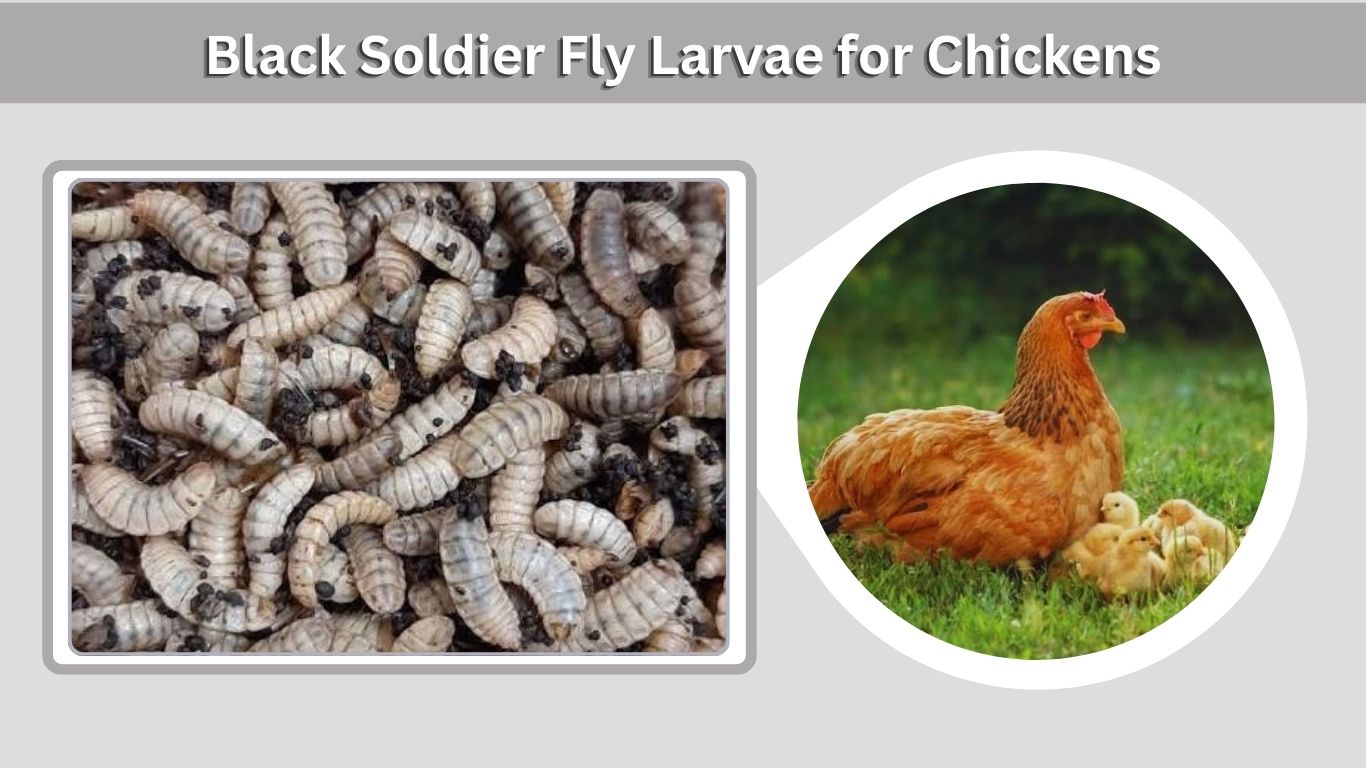
Black soldier fly larvae for chickens have become a popular natural treat and supplemental feed because they provide protein, fat, calcium, and other nutrients in a form chickens naturally enjoy. Available as live larvae, dried grubs, or processed meal, they can encourage normal scratching and foraging behavior while adding variety to a flock’s diet. They can also be raised at home by converting suitable food scraps into useful poultry feed. This guide covers their benefits, nutrition, feeding amounts, live versus dried larvae, raising BSFL, and how they compare with mealworms.
Are Black Soldier Fly Larvae Good for Chickens?
Yes. Black soldier fly larvae, commonly abbreviated BSFL, can be a nutritious supplemental food for chickens. They are the immature stage of the black soldier fly, Hermetia illucens, and naturally contain protein, fat, minerals, and energy.
Their nutritional composition varies depending on how the larvae were raised, what they were fed, their age at harvest, and whether they are offered fresh or dried.
Benefits of Black Soldier Fly Larvae for Chickens
- Provide a valuable source of animal protein
- Naturally contain calcium and phosphorus
- Supply energy-rich fats
- Encourage scratching and foraging
- Can be fed live or dried
- Suitable as a training or enrichment treat
- Can help recycle suitable farm and kitchen waste when raised at home
- Easy to scatter through bedding or outdoor runs
- Convenient dried products can be stored for long periods
BSFL should complement a nutritionally complete poultry ration rather than become the flock’s only food.
Black Soldier Fly Larvae Nutrition for Chickens
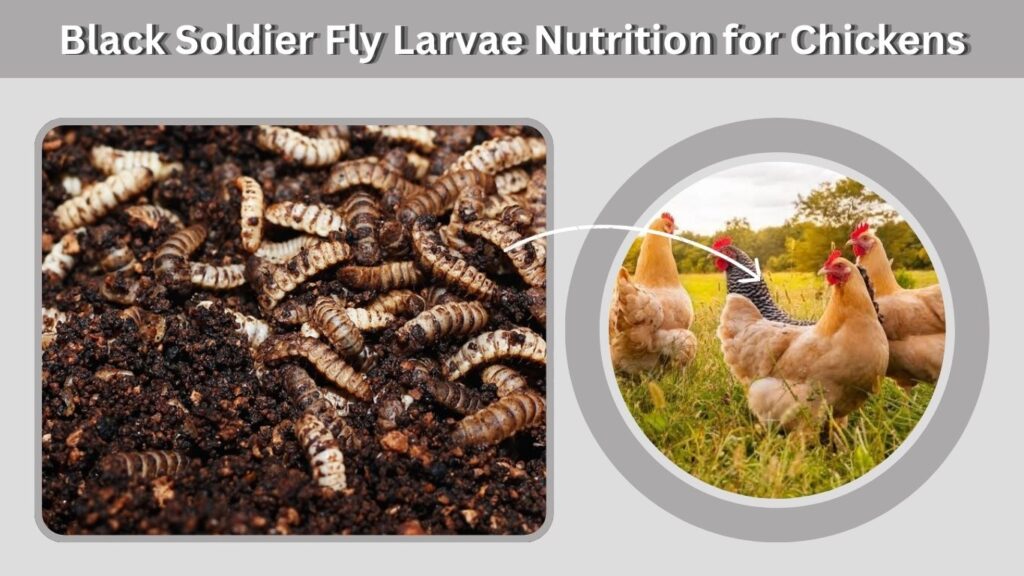
One major advantage of BSFL is their combination of protein, fat, and minerals. Dried larvae appear especially nutrient-dense because most of their original water has been removed.
Nutrient levels can differ substantially between brands and farming systems, so the label on a commercial product provides better guidance than assuming every batch has identical values.
Important Nutrients in BSFL
Protein: Chickens require protein for growth, muscle maintenance, feather production, and egg formation. BSFL can contribute additional protein to the diet.
Fat: Larvae naturally store fat, making them a concentrated energy source, particularly when dried.
Calcium: Black soldier fly larvae are especially well known among feeder insects for their calcium content. Calcium is important for bone health and eggshell formation in laying hens.
Phosphorus: Phosphorus works alongside calcium in numerous biological functions, although an appropriate dietary balance remains important.
Because BSFL are nutrient-rich, more is not necessarily better. A complete layer or grower feed should remain the foundation of the diet.
How Much Black Soldier Fly Larvae Should Chickens Eat?
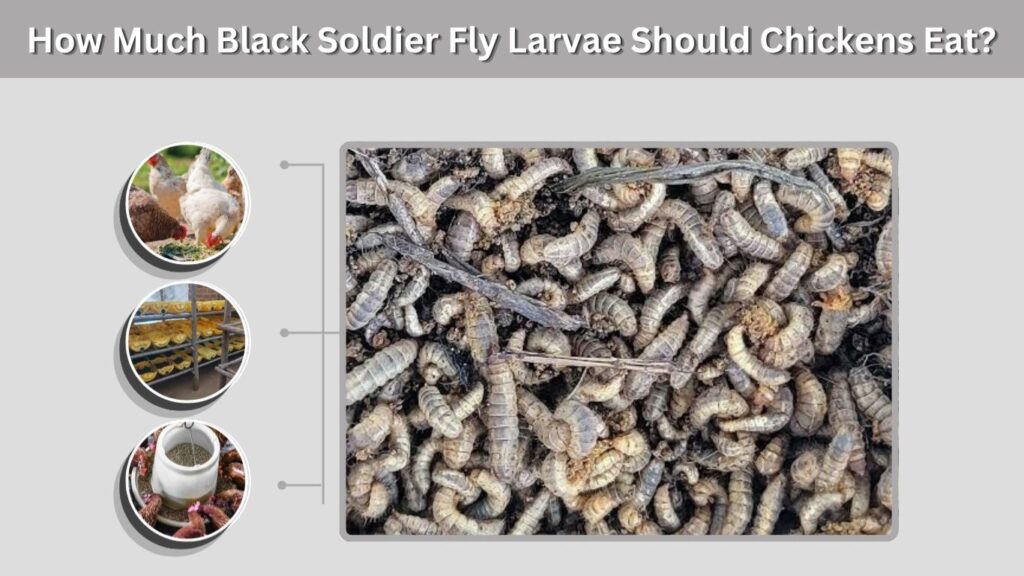
There is no universal quantity that works for every flock because the correct amount depends on whether the larvae are dried, fresh, or formulated into commercial poultry feed.
Feeding BSFL as a Treat
When using whole larvae as treats:
- Keep the flock’s complete poultry ration as the main food.
- Offer BSFL in controlled portions rather than unlimited amounts.
- Scatter small amounts for enrichment and foraging.
- Adjust treats if chickens begin ignoring their regular feed.
- Provide constant access to fresh drinking water.
A commonly used practical rule for chicken treats in general is to keep treats to a relatively small share of total food intake. Whole dried larvae are particularly concentrated, so a small serving can provide considerable energy.
Commercial poultry diets containing formulated BSFL meal are different. Their inclusion level is calculated as part of the complete nutritional formula and should not be treated like feeding whole grubs as snacks.
Dried Black Soldier Fly Larvae for Chickens
Dried black soldier fly larvae are probably the easiest option for backyard flock owners. Removing moisture increases shelf life and makes the larvae convenient to transport, measure, and store.
Advantages of Dried BSFL
- Convenient to store
- No live-insect maintenance
- Easy to scatter as treats
- Nutrient-dense by weight
- Useful during seasons when natural insects are scarce
- Can encourage chickens to explore their run
- Available in small bags or large bulk quantities
Store dried larvae in a cool, dry location inside a tightly closed container. Moisture can reduce product quality and encourage mold or pests.
How to Feed Dried BSFL
Dried larvae can be offered directly by hand, placed in a treat feeder, or scattered around the run. Scattering them across grass, bedding, or leaf litter encourages chickens to search naturally rather than consuming everything immediately from a bowl.
They can also be mixed with other appropriate treats, but the flock should continue receiving its normal nutritionally complete feed.
Live Black Soldier Fly Larvae for Chickens
Live BSFL offer a different experience because their movement stimulates natural hunting and foraging behaviors. Chickens usually show strong interest in moving larvae.
Benefits of Live BSFL
Live larvae provide more moisture than dried larvae and can be especially useful as environmental enrichment.
Instead of placing all the larvae in a feeder, owners can scatter them across a clean area and allow chickens to scratch, chase, and peck for them.
Live larvae require more management than dried ones. They continue developing and will eventually become dark prepupae before transforming into adult flies.
If you purchase live larvae, follow the supplier’s temperature and storage recommendations to prevent premature pupation.
Black Soldier Fly Larvae vs Mealworms for Chickens
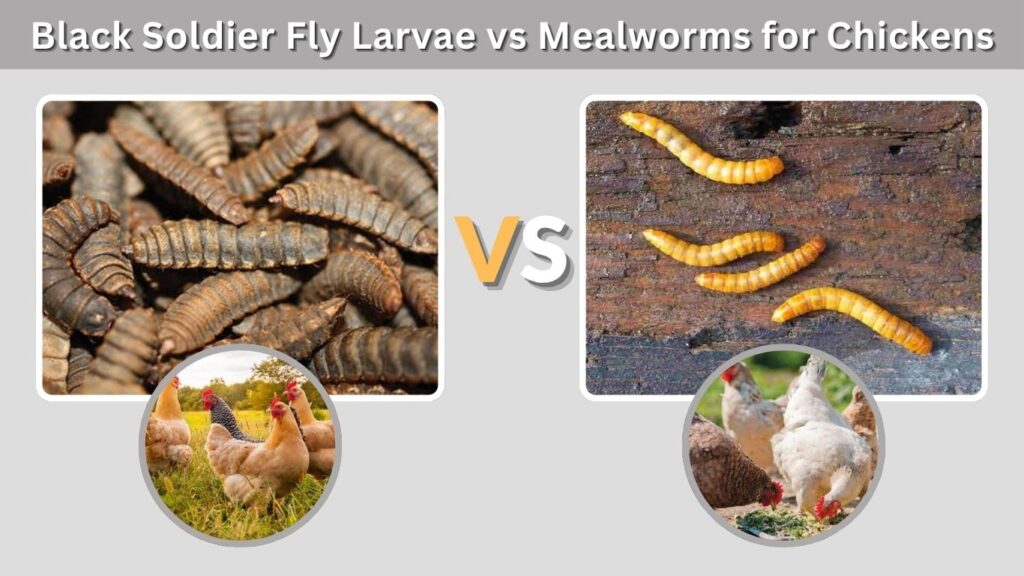
Both BSFL and mealworms are popular poultry treats, but they are different insects.
Mealworms are the larvae of darkling beetles, while black soldier fly larvae develop into flies.
BSFL vs Mealworms
- Calcium: BSFL are generally much richer in calcium than mealworms.
- Protein: Both can provide substantial protein.
- Fat: Both contain fat, with exact amounts varying by product.
- Enrichment: Live versions of both encourage natural foraging.
- Storage: Both are widely available dried and easy to store.
- Appearance: Mealworms are longer and more slender; BSFL are shorter and thicker.
- Farming: BSFL are particularly effective at converting organic material into insect biomass.
Which Is Better for Chickens?
For many flock owners, black soldier fly larvae have an advantage because of their naturally higher calcium content. This can make them particularly attractive for laying hens.
However, that does not mean mealworms are unhealthy. Both can be useful treats when offered appropriately.
Rather than treating either insect as a replacement for complete poultry feed, consider them supplemental foods that add variety, enrichment, and extra nutrients.
How to Raise Black Soldier Fly Larvae for Chickens
Raising BSFL at home can convert appropriate organic scraps into chicken treats. The process works particularly well in warm climates because black soldier flies reproduce and larvae grow more actively in warm conditions.
Basic BSFL Growing Setup
- Prepare a bin: Use a ventilated container that prevents flooding.
- Add suitable organic material: Fruit scraps, vegetables, and other appropriate organic waste can provide larval food.
- Maintain moisture: The mixture should stay moist without becoming soupy.
- Provide drainage: Excess liquid should be able to escape.
- Protect the bin: Prevent rodents and other unwanted animals from entering.
- Add a ramp: Mature larvae naturally crawl away from food as they approach pupation.
- Collect larvae: A self-harvesting design can direct mature larvae into a collection container.
- Save some adults for reproduction: Continuous production requires some larvae to become pupae and adult flies.
Avoid using contaminated material, chemicals, spoiled hazardous waste, or unsuitable manure when the larvae will be fed to chickens.
Feeding and Breeding BSFL at Home
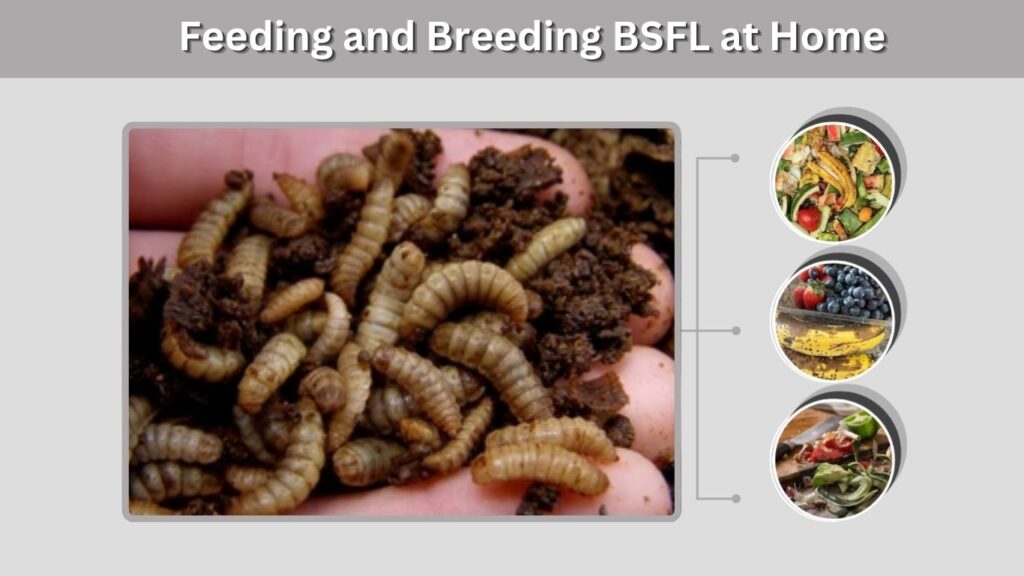
The feeding stage is where black soldier fly larvae perform most of their impressive waste-processing work. Young larvae consume decomposing organic material and grow rapidly when temperature, moisture, and food supply are favorable.
What to Feed BSFL
Suitable materials may include:
- Vegetable scraps
- Fruit waste
- Overripe produce
- Grain leftovers
- Agricultural plant waste
- Appropriate food-processing leftovers
Avoid allowing the bin to become excessively wet. Too much food can also create odors before the larvae have time to process it.
When larvae reach the prepupal stage, they become noticeably darker and naturally attempt to crawl away from the feeding material. A properly designed ramp uses this behavior to collect them automatically.
Can Baby Chicks Eat Black Soldier Fly Larvae?
Young chickens naturally consume small insects, but chick nutrition requires careful balance during rapid growth. A properly formulated chick starter should therefore remain their primary food.
If BSFL are offered, they need to be appropriately sized and given conservatively. Dried whole larvae may be too large or hard for very young chicks.
As chickens become older, whole larvae can be introduced more easily as occasional treats while maintaining access to an age-appropriate complete ration.
Are There Any Disadvantages?
Black soldier fly larvae have many benefits, but excessive feeding can unbalance a chicken’s diet.
Things to Consider
- Too many treats may reduce consumption of balanced feed.
- Dried larvae are calorie-dense.
- Nutritional composition varies between products.
- Poor-quality larvae may come from inappropriate growing substrates.
- Live larvae require proper storage.
- Home farming can create odors if bins are poorly maintained.
- Wet bins may attract unwanted pests.
When purchasing BSFL, choose products intended specifically for animal feeding and follow the manufacturer’s feeding and storage directions.
FAQs
Can chickens eat black soldier fly larvae every day?
They can receive BSFL regularly in controlled quantities, but a complete poultry ration should remain the main part of their diet. Avoid allowing treats to replace balanced feed.
Are dried black soldier fly larvae good for laying hens?
Yes. Dried BSFL provides protein, fat, and calcium and can be a useful supplemental treat for laying hens. They should not replace a properly formulated layer feed.
Are live or dried black soldier fly larvae better for chickens?
Both have advantages. Live larvae encourage stronger natural hunting behavior and contain more moisture, while dried larvae are easier to store and offer concentrated nutrients.
Are black soldier fly larvae better than mealworms?
BSFL are generally richer in calcium, giving them an advantage for many poultry keepers. Mealworms can still be a nutritious occasional treat, and neither should replace complete chicken feed.
Can you raise black soldier fly larvae for chickens?
Yes. BSFL can be raised in purpose-built bins using suitable organic material. Mature larvae can even be collected automatically using ramps that take advantage of their natural tendency to crawl away from the feeding area before pupating.