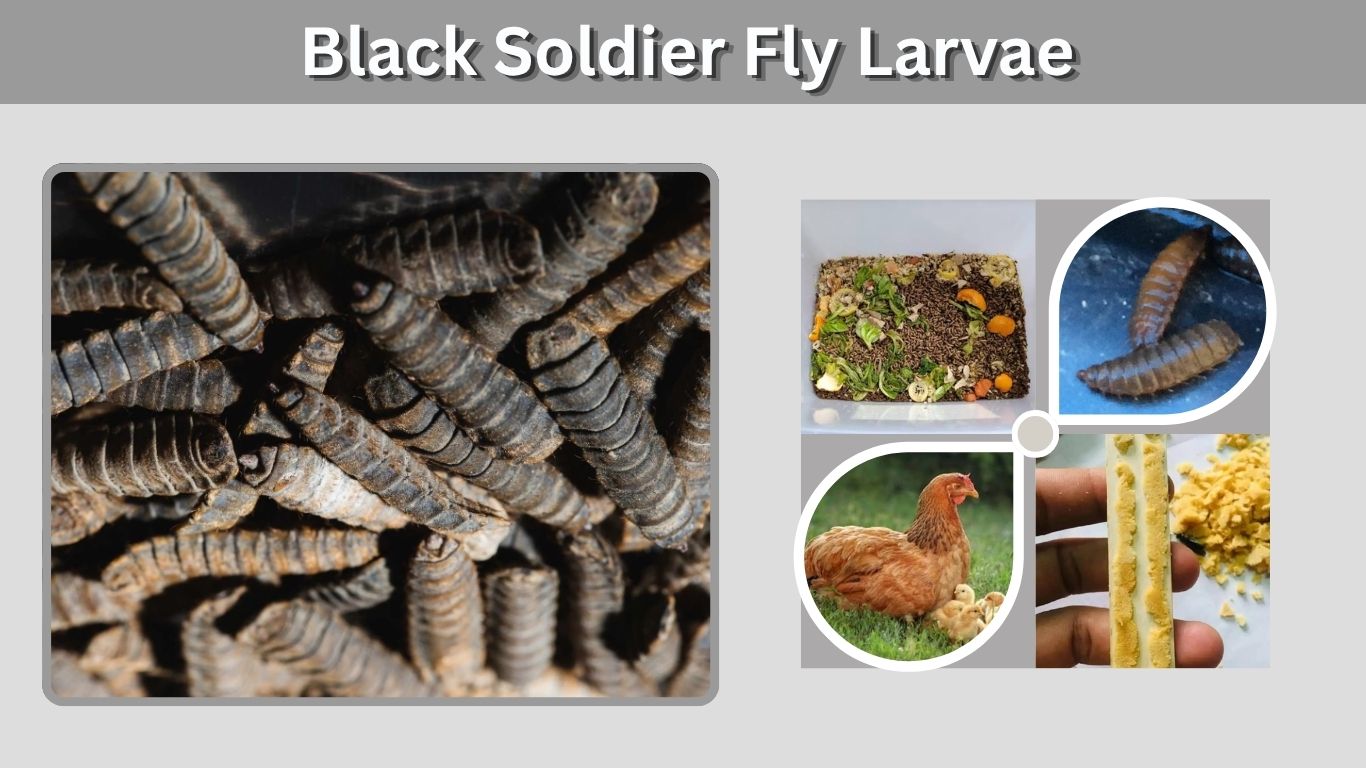
Black soldier fly larvae (BSFL) are the juvenile stage of the black soldier fly, Hermetia illucens. These fast-growing larvae are increasingly used for composting organic waste and as nutritious feed for chickens, reptiles, fish, and other animals. Their ability to consume food scraps while producing protein- and fat-rich biomass makes them especially valuable in sustainable farming. Whether you want to raise them at home, use them in a compost bin, or feed them to animals, understanding their diet, development, storage, and benefits is important.
What Are Black Soldier Fly Larvae?
Black soldier fly larvae are the feeding stage of Hermetia illucens, a harmless species of soldier fly. They are often called BSFL, grubs, or black soldier fly maggots. Unlike adult black soldier flies, which spend relatively little time feeding, larvae eat aggressively and gain weight rapidly.
Black Soldier Fly Larvae Identification
- Color: Creamy white when young, becoming tan, brown, or nearly black before pupation
- Body: Thick, segmented, and slightly flattened
- Length: Mature larvae can approach about 3/4 to 1 inch
- Texture: Tougher and more leathery than typical housefly maggots
- Movement: Crawl through moist organic material
- Prepupal stage: Becomes darker and leaves the feeding area to find a dry location
Black soldier fly larvae should not be confused with mealworms. Mealworms are beetle larvae, while BSFL develop into true flies.
What Do Black Soldier Fly Larvae Eat?
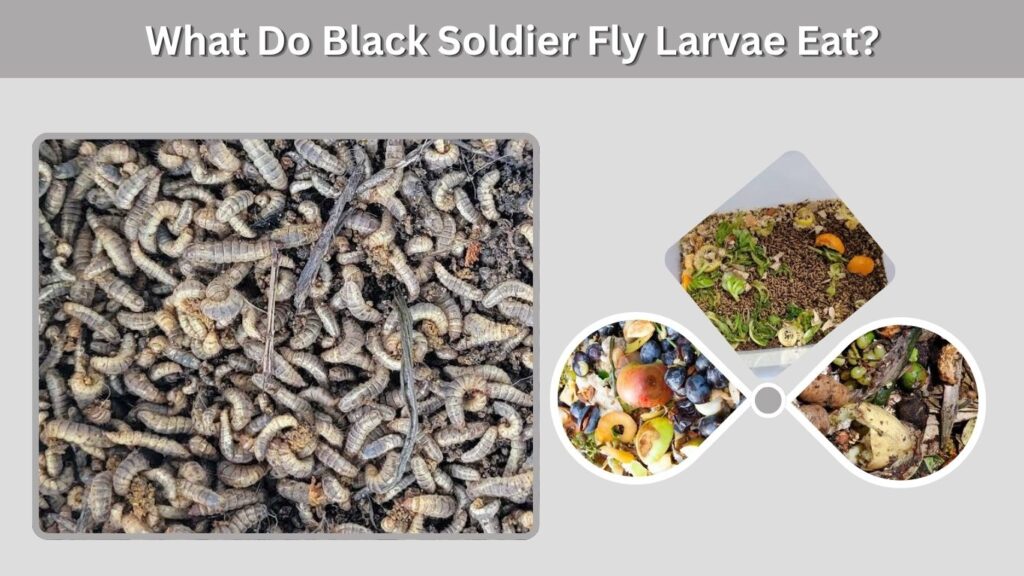
Black soldier fly larvae are efficient decomposers. They consume a broad range of moist organic materials and can rapidly reduce the volume of food waste under suitable conditions.
Foods Black Soldier Fly Larvae Can Eat
- Fruit scraps
- Vegetable waste
- Overripe produce
- Grain byproducts
- Spoiled animal feed
- Coffee grounds
- Agricultural waste
- Some animal manure
- Leftover plant material
- Food-processing residues
A varied food source generally supports healthy growth. Extremely salty, chemically contaminated, moldy, or unsuitable waste should not be used when the larvae will eventually become animal feed.
How Much Do They Eat?
Their consumption rate depends on temperature, larval age, moisture, population density, and the type of feed available. During their fastest-growing stages, a dense colony can process an impressive amount of organic material.
The goal in a home bin is not to add as much waste as possible. Overfeeding can create excessive moisture, odor, and poor aeration.
Black Soldier Fly Larvae for Chickens
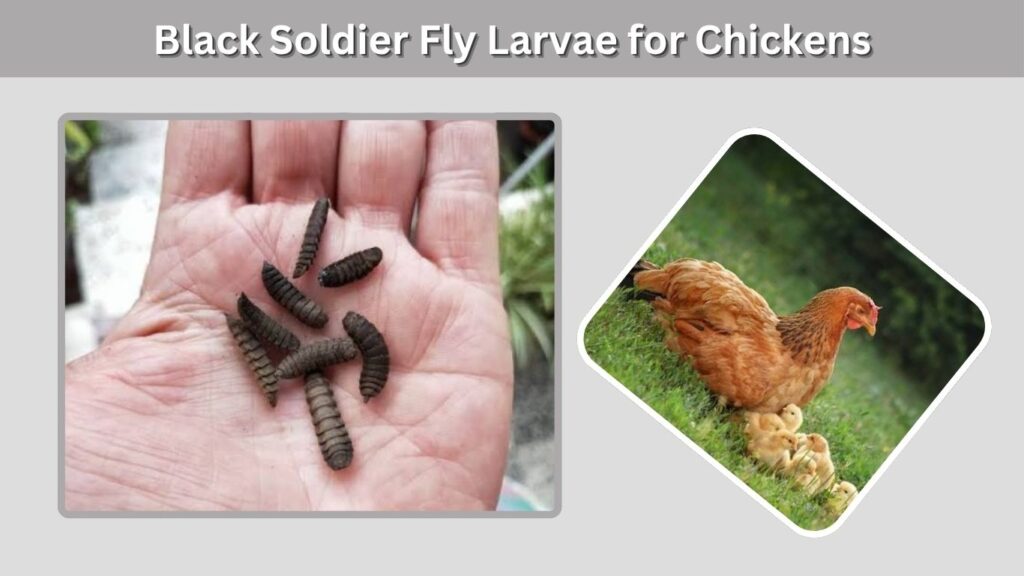
One of the most popular uses for BSFL is poultry feeding. Chickens naturally enjoy insects, and both live and dried black soldier fly larvae can provide useful nutrients.
Benefits for Chickens
- Good source of protein
- Naturally contains fat
- Provides calcium and other minerals
- Encourages natural foraging behavior
- Can be offered live or dried
- Useful as a supplemental treat
- May help reduce dependence on some conventional insect feeds
Black soldier fly larvae should complement a properly formulated poultry diet rather than completely replace balanced chicken feed.
Live vs Dried BSFL for Chickens
Live larvae provide movement that encourages chickens to scratch and forage. They also contain considerably more moisture.
Dried larvae are easier to store, transport, and portion. Because much of the water has been removed, their nutrients are more concentrated by weight. This also means portions should be controlled rather than assuming the same amount of live and dried larvae are nutritionally equivalent.
Black Soldier Fly Larvae for Reptiles
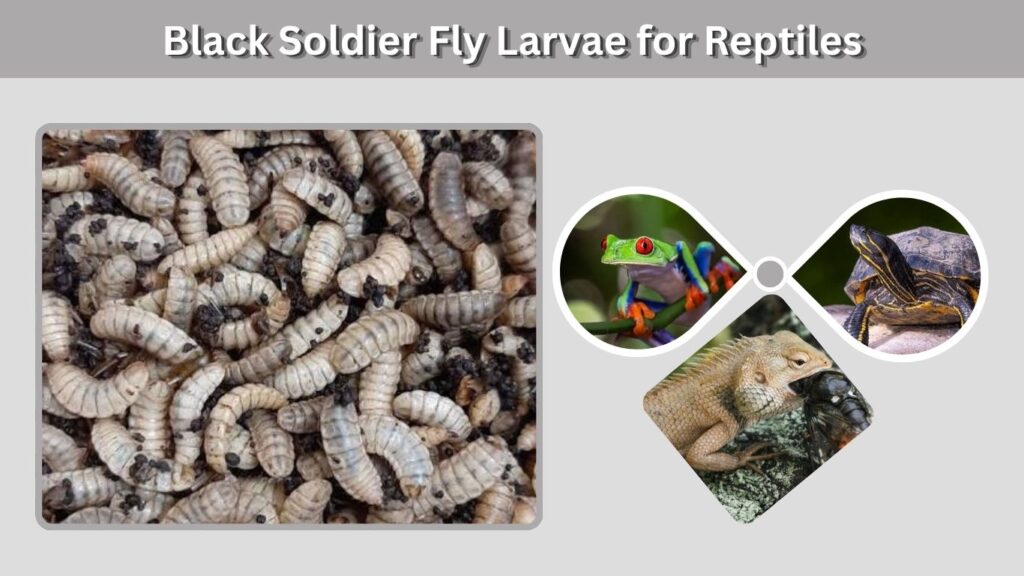
BSFL are widely used as feeder insects for insect-eating reptiles. Bearded dragons and leopard geckos are among the animals commonly offered commercially raised larvae.
Animals That May Eat BSFL
- Bearded dragons
- Leopard geckos
- Some other geckos
- Insect-eating lizards
- Certain frogs
- Some turtles
- Captive birds
- Fish
Their suitability depends on the animal’s species, age, size, and nutritional needs.
Are BSFL Good for Bearded Dragons?
Black soldier fly larvae can be a useful feeder option for bearded dragons because they contain protein, fat, and relatively high calcium compared with many common feeder insects.
They should still be combined with an appropriately varied diet. Young dragons and adults have different dietary requirements, so portion size and feeding frequency should reflect age and overall nutrition.
Black Soldier Fly Larvae for Composting
BSFL composting differs from traditional composting. Instead of relying primarily on microorganisms and worms, a larval colony actively consumes food waste.
Benefits of BSFL Composting
- Rapidly processes kitchen waste
- Reduces organic waste volume
- Produces harvestable larvae
- Converts waste into useful biomass
- Can process moist scraps effectively
- Produces residue that can be further composted
- Mature larvae can self-harvest from specially designed bins
A properly maintained system should be moist but not flooded. Excess liquid can create anaerobic conditions and unpleasant odors.
How to Raise Black Soldier Fly Larvae
Raising BSFL can be relatively simple in warm climates. The basic goal is to provide food, moisture, warmth, ventilation, and a suitable way for mature larvae to leave the feeding material.
Basic BSFL Farming Setup
- Choose a container: Use a ventilated bin capable of holding moist organic material.
- Add feed: Introduce appropriate food scraps or agricultural material.
- Maintain moisture: Keep the substrate moist but not submerged.
- Provide warmth: Larvae grow more actively under warm conditions.
- Avoid overfeeding: Add new food according to how quickly existing material disappears.
- Create a harvesting ramp: Mature prepupae naturally crawl toward dry areas.
- Collect mature larvae: Use them as feed or retain some for breeding.
For continuous production, some larvae must be allowed to pupate and become adults.
Black Soldier Fly Larvae Life Cycle
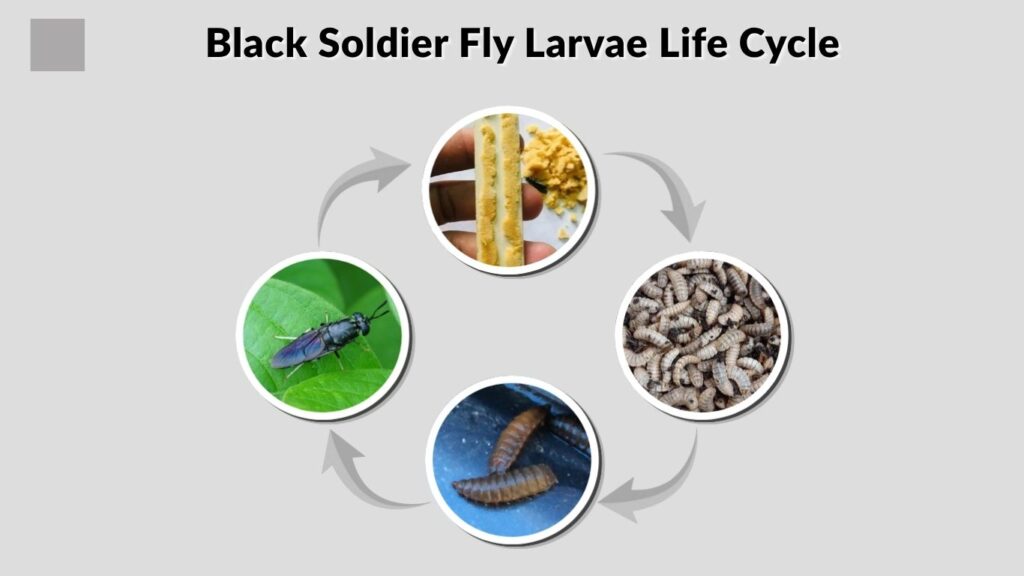
Black soldier flies undergo complete metamorphosis. Their larval stage receives the most attention because this is when they consume large quantities of food.
Life Cycle Stages
Egg: Adult females lay clusters of eggs close to a suitable food source.
Larva: After hatching, the larvae feed intensively and grow through several stages.
Prepupa: Mature larvae stop eating, darken, and leave the feeding material in search of a dry location.
Pupa: The insect undergoes transformation inside the hardened outer larval skin.
Adult: The adult fly emerges, mates, and produces another generation.
Environmental conditions greatly influence how quickly this process occurs.
How to Keep Black Soldier Fly Larvae Alive
Live BSFL requires different storage conditions from dried larvae. If temperatures remain warm and food is available, they continue growing and eventually turn into prepupae.
For short-term storage, keep larvae in a ventilated container away from direct sunlight and extreme heat. Their bedding should not become excessively wet.
Cooler temperatures can slow their metabolism and development, but freezing live larvae will kill them.
How to Store Dried BSFL
Dried black soldier fly larvae are much easier to store. Keep them:
- In a sealed container
- In a cool, dry location
- Away from direct sunlight
- Protected from moisture
- Protected from rodents and insects
Always follow the storage instructions supplied with commercially produced feeder larvae.
Black Soldier Fly Larvae vs Mealworms
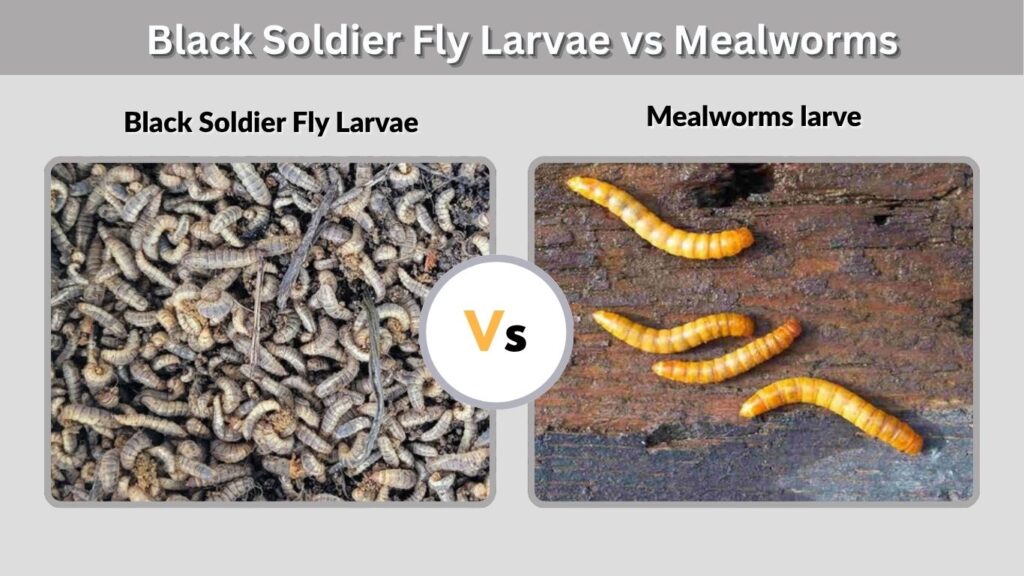
Both insects are popular animal feeds, but they are completely different species with different nutritional characteristics.
Main Differences
- BSFL: Larvae of a fly
- Mealworms: Larvae of a darkling beetle
- Calcium: BSFL are generally known for higher calcium levels
- Appearance: BSFL are short and thick; mealworms are longer and more worm-like
- Waste processing: BSFL are highly efficient organic-waste converters
- Storage: Mealworms are often easier to keep alive for extended periods under controlled conditions
Neither feeder should automatically be considered ideal for every animal. The better option depends on the species being fed and the rest of its diet.
Are Black Soldier Fly Larvae Dangerous?
Black soldier fly larvae are not venomous and cannot sting. They also do not attack people.
Finding them in compost is usually not a reason for concern. In fact, their presence often indicates that suitable decomposing organic matter is available.
However, large numbers appearing inside a house can indicate a nearby source of rotting organic material that should be located and cleaned.
Why Do Black Soldiers Fly Larvae in the House?
Mature larvae naturally leave wet food sources and crawl toward dry areas before pupating. This behavior can sometimes bring them indoors or into unexpected places.
Possible sources include garbage containers, spoiled food, compost bins, animal manure, damaged drains, and decomposing organic material.
Cleaning the breeding source is usually more effective than simply removing individual larvae.
FAQs
Are black soldiers fly larvae maggots?
Yes. Technically, they are maggots because they are the larvae of a fly. However, they are very different from common housefly maggots and are usually called BSFL or soldier fly larvae.
Can chickens eat black soldier fly larvae?
Yes. Chickens can eat both live and dried BSFL. They are best offered as part of a nutritionally balanced diet rather than as the chicken’s only food.
Can leopard geckos eat black soldier fly larvae?
Yes, BSFL can be used as a feeder insect for leopard geckos when appropriately sized. A varied feeder-insect diet is still recommended.
Are black soldier fly larvae good for compost?
Yes. They are particularly efficient at processing moist food scraps and can significantly reduce organic waste while producing harvestable larvae.
Are black soldier fly larvae the same as mealworms?
No. Black soldier fly larvae develop into flies, while mealworms develop into darkling beetles. They also differ in appearance, nutritional composition, and how they are raised.