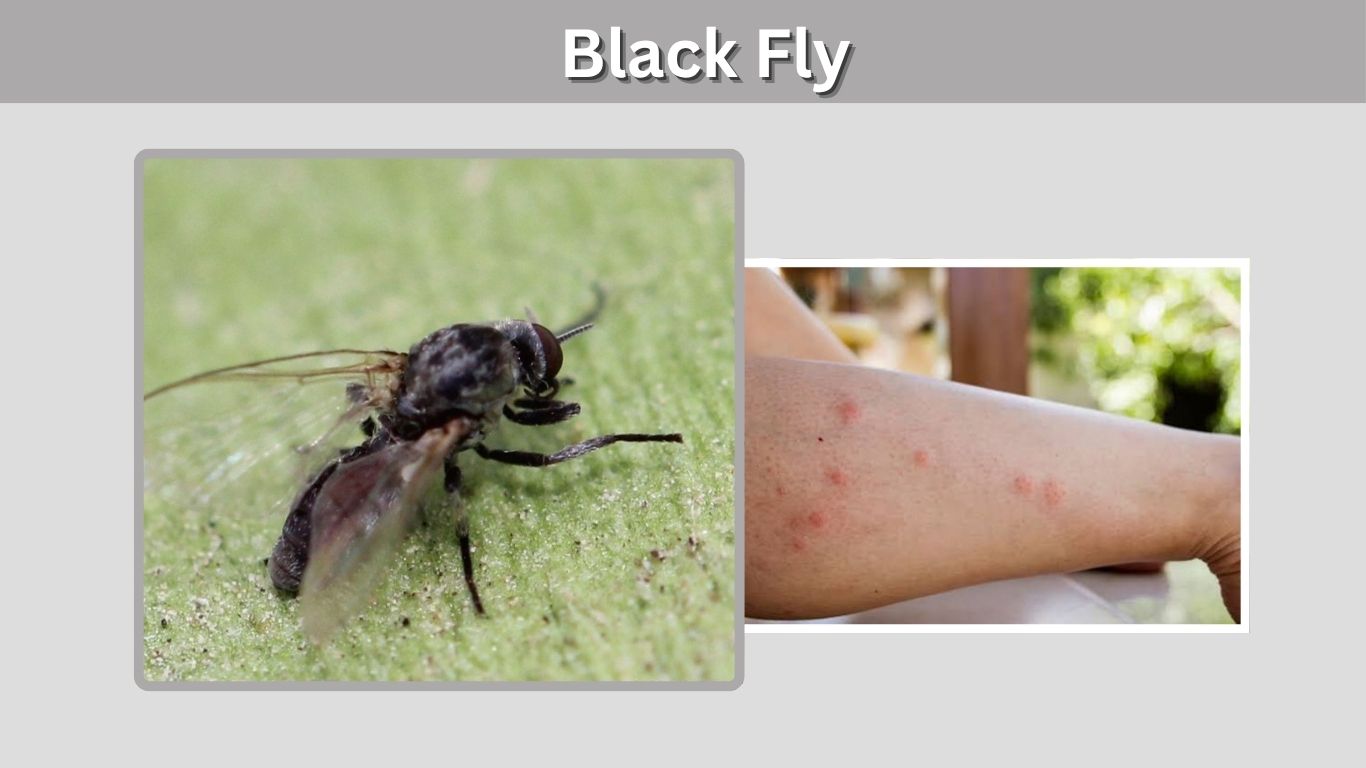
The black fly is a small, dark biting fly belonging to the family Simuliidae. Also called a buffalo gnat, it is best known for appearing in large numbers near rivers and streams during spring and summer. Female black flies can bite humans, dogs, livestock, and wildlife, sometimes leaving itchy, swollen red spots. Their larvae are completely aquatic and develop only in flowing water. Although black flies can be extremely irritating outdoors, understanding their appearance, life cycle, biting habits, season, and effective repellents makes them easier to avoid.
What Is a Black Fly?
Black flies are tiny, stout-bodied flies associated closely with clean, running water. There are many species worldwide, and only some regularly bite humans. Adults are typically much smaller than house flies and have an arched or humpbacked appearance, which helps explain the name “buffalo gnat.”
Black Fly Identification
- Family: Simuliidae
- Common names: Black fly, buffalo gnat, biting gnat
- Size: Many are around 1/16 inch long
- Color: Usually dark gray, brown, or black
- Body: Short and stout
- Back: Distinctively rounded or hump-shaped
- Wings: Broad compared with body size
- Legs: Relatively short
- Activity: Primarily during daylight hours
Their small size means people sometimes mistake them for mosquitoes, fungus gnats, or other tiny flies.
Black Fly Bites
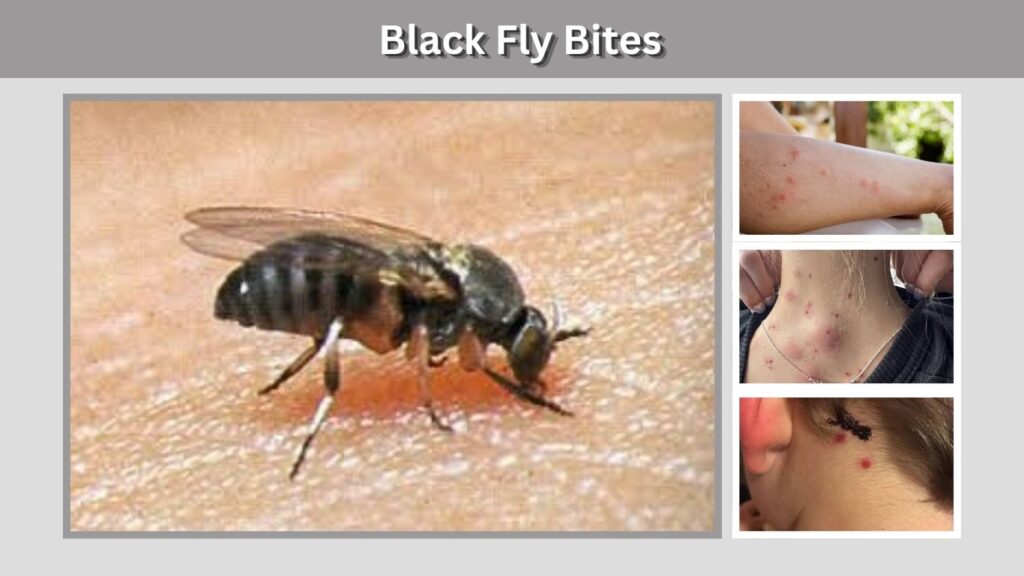
Only female black flies bite. Both males and females can feed on flower nectar for energy, but females of biting species require blood to support egg production. Instead of inserting a long needle-like mouthpart, a black fly cuts the skin and feeds from the blood that collects at the surface.
What Do Black Fly Bites Look Like?
Black fly bites may cause:
- A small red spot
- Itching
- Local swelling
- Tenderness
- A raised bump
- Redness surrounding the bite
- Occasionally stronger localized swelling in sensitive people
Reactions vary widely. One person may barely notice a bite, while another may develop considerable swelling and irritation.
Black flies often target exposed skin around the arms, ankles, feet, neck, and hairline. They frequently swarm around a person’s head as well.
Are Black Fly Bites Dangerous?
Most black fly bites cause temporary local irritation rather than a serious medical problem. However, severe reactions can occur, particularly following numerous bites or in someone who is unusually sensitive.
Black flies can transmit some diseases in certain parts of the world, although disease risk varies greatly with geography and species. If a bite is followed by severe swelling, breathing difficulty, faintness, or another serious reaction, seek medical care.
Black Fly Bites on Dogs
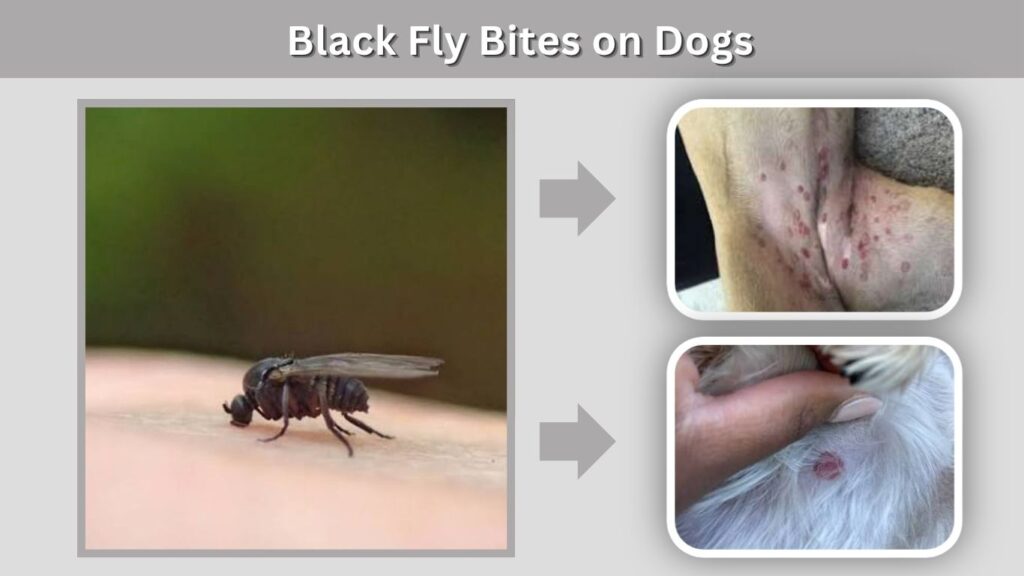
Dogs can also be bitten by black flies, particularly when they spend time outdoors near streams, wooded areas, or places experiencing heavy black fly activity. Exposed areas with relatively little fur are especially accessible.
Common Bite Locations on Dogs
- Belly
- Inner thighs
- Groin
- Ears
- Legs
- Other sparsely furred areas
Bites can leave circular or reddish marks that may look alarming. Some dogs show little discomfort, while others may lick or scratch the affected area.
Heavy attacks by biting gnats can become more serious for animals, especially when insects occur in extremely large swarms.
If a dog’s skin changes are severe, spreading, painful, infected-looking, or accompanied by weakness, breathing problems, vomiting, or unusual behavior, veterinary evaluation is appropriate.
Black Fly Larvae
Unlike adult black flies, black fly larvae live underwater. They are found in streams, rivers, and other areas of flowing water rather than stagnant ponds or ordinary household drains.
The larvae attach themselves to submerged surfaces and remain positioned in the current while feeding.
How to Identify Black Fly Larvae
- Worm-like body
- No true legs
- Enlarged rear end
- Fan-like feeding structures near the head
- Usually attached to rocks, vegetation, or other submerged objects
- Found in running water
The fan-like structures collect tiny suspended particles from passing water.
Large numbers of black fly larvae can sometimes indicate relatively clean, oxygenated streams because many species do not tolerate heavily polluted water.
Black Fly Life Cycle
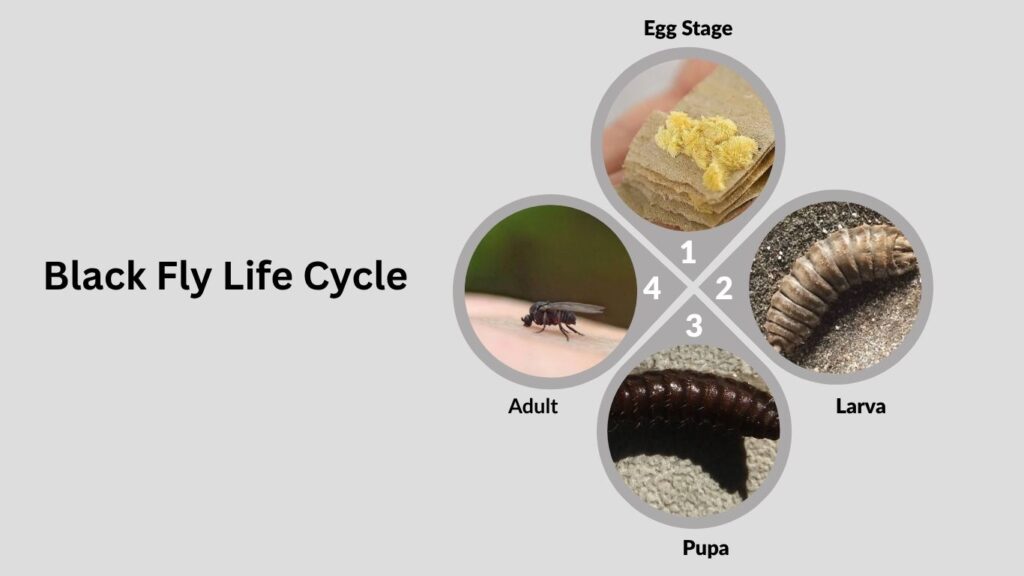
Black flies undergo complete metamorphosis with four stages: egg, larva, pupa, and adult. Flowing water is essential for their immature stages, which is why black fly populations can be especially noticeable around rivers and streams.
Four Life Cycle Stages
Egg: Females lay eggs on water, aquatic vegetation, rocks, or other surfaces associated with flowing water.
Larva: Larvae attach to submerged objects and filter tiny organic particles from the current.
Pupa: Mature larvae pupate underwater.
Adult: Fully developed flies emerge from the water and begin their terrestrial adult lives.
Depending on species and temperature, the larval period may last around 10 days to several weeks. Adults can live approximately three to six weeks, although this varies.
When Is Black Fly Season?
Black fly season depends heavily on climate, geography, species, and stream temperature. In colder parts of North America, the most noticeable biting activity typically occurs during spring and early summer.
Some species have only one spring generation, while others produce several generations and remain active much later.
Black Fly Season in Maine and the Northeast
Maine, New Hampshire, the Adirondacks, and surrounding northern regions are famous for seasonal black fly activity. Spring snowmelt and rising stream temperatures create favorable conditions for larval development.
In New Hampshire, for example, major human-biting species may begin appearing during May, with activity continuing into June or even July in cooler northern and mountainous locations. Other species can remain active later in summer.
Therefore, “black fly season” is not one fixed date for an entire state.
When Are Black Flies Most Active?
Unlike many mosquitoes, black flies are primarily daytime biters. Their activity often increases during calm, humid weather and in sheltered locations.
Black flies can be especially troublesome during morning and late-afternoon periods. Windy open locations tend to provide some relief because these small flies have more difficulty reaching hosts in stronger air movement.
They may also be more attracted to dark clothing than lighter colors.
Best Black Fly Repellent and Prevention
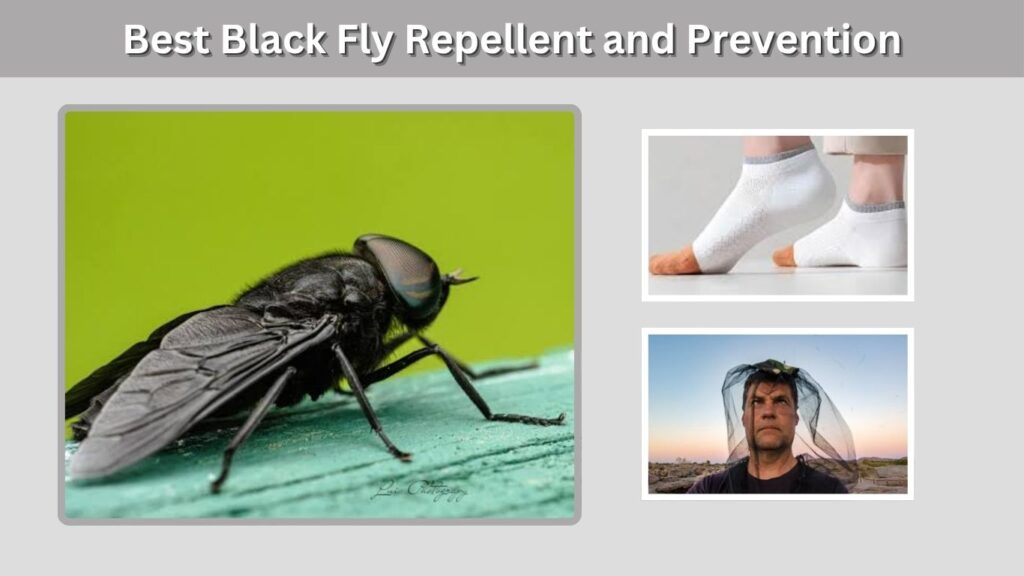
Avoiding bites is usually much easier than trying to eliminate black flies from an entire outdoor area. Adults can fly several miles from their breeding waters, so treating one yard rarely solves a regional black fly problem.
How to Repel Black Flies
- Wear long sleeves and long pants.
- Cover ankles with socks and closed shoes.
- Wear a hat or insect head net in heavily infested areas.
- Choose lighter-colored clothing instead of dark navy or black.
- Limit outdoor activity during peak biting periods.
- Move into breezier or more open areas when possible.
- Use a labeled insect repellent according to its directions.
DEET-containing repellents can help prevent black flies from landing and biting, although no repellent provides perfect protection during extremely heavy activity.
Can You Control Black Flies Around Your Home?
Black flies are difficult to control at the household level because their larvae originate in flowing water and adults can travel considerable distances.
Ways to Reduce Exposure
Keeping window and door screens in good condition can prevent flies from entering buildings. Outdoor fans may also make patios and sitting areas less comfortable for these weak-in-wind insects.
Treating streams yourself is generally inappropriate. Aquatic pesticide treatments can affect sensitive environments and may require permits. Large-scale black fly control programs sometimes target larvae in waterways using specialized methods, but these are normally handled by authorized agencies rather than homeowners.
Black Fly vs House Fly
Despite sharing the word “fly,” black flies and house flies have very different lifestyles.
Black flies are tiny, humpbacked insects whose larvae require flowing water. Females of certain species feed on blood.
House flies are significantly larger and commonly develop in garbage, manure, and other decaying organic material. They possess sponging mouthparts and do not normally bite.
Finding a large dark fly inside the kitchen is therefore unlikely to mean that you have a biting black fly infestation.
FAQs
Do black flies bite humans?
Yes. Females of some black fly species bite humans to obtain blood needed for egg development. Males do not take blood meals.
What attracts black flies to people?
Black flies locate hosts using several cues, including carbon dioxide, body odors, movement, and visual signals. Dark clothing can also be more attractive to them.
Where do black fly larvae live?
Black fly larvae develop in flowing freshwater, including rivers and streams. They attach themselves to submerged rocks, leaves, branches, and vegetation.
How long does black fly season last?
It varies by location and species. Peak biting frequently occurs during spring and early summer in northern regions, although some species can remain active into late summer or fall.
What is another name for a black fly?
Black flies are commonly called buffalo gnats because of their small size and characteristic humpbacked body shape.