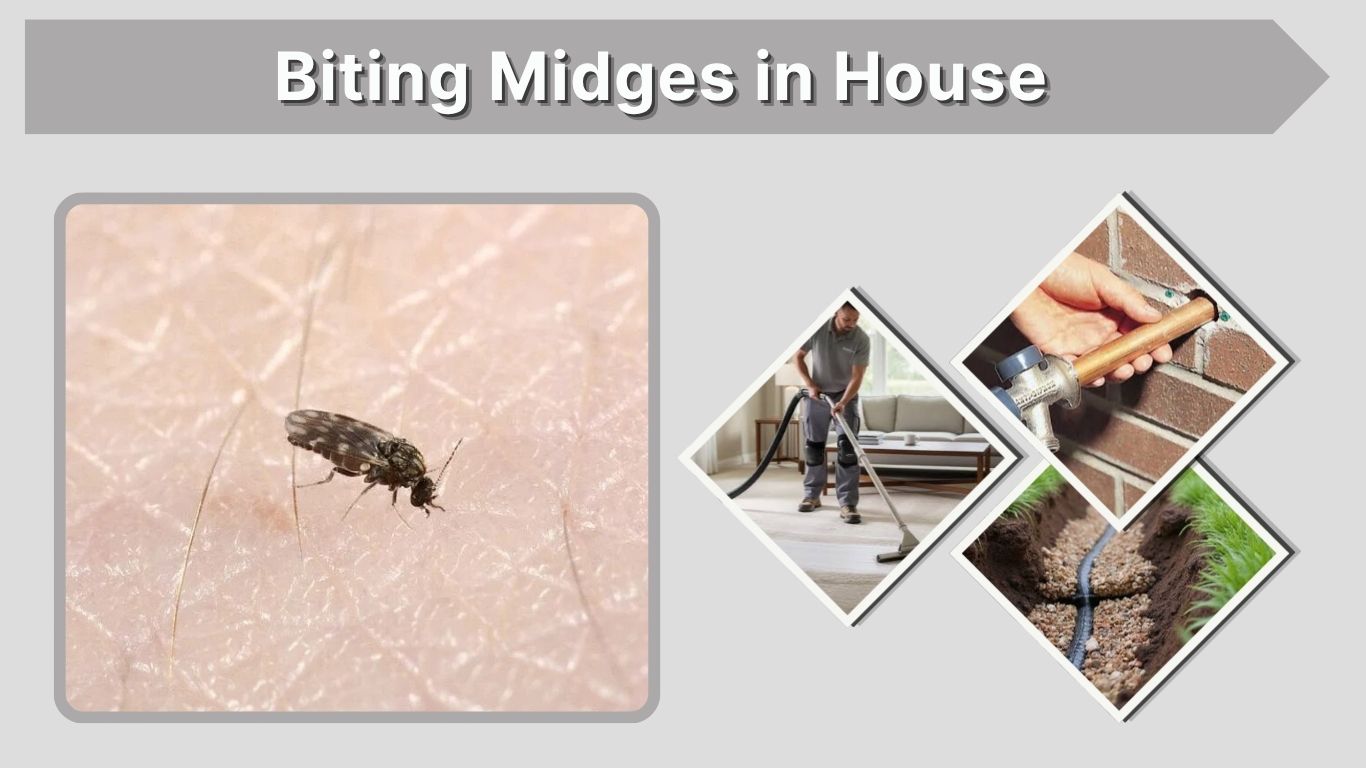
Finding biting midges in the house can be frustrating because these tiny insects are difficult to see and may cause irritating bites. Also called no-see-ums, biting midges are extremely small flies that usually develop outdoors but can enter homes through screens, doors, windows, and tiny gaps. They generally do not establish permanent indoor colonies. Controlling them successfully means removing indoor adults, blocking entry points, reducing nearby moisture, and using airflow or repellents to make your home less attractive to these persistent pests.
Why Are Biting Midges in Your House?
Biting midges normally live and reproduce outdoors in moist environments, including wet soil, marshy areas, damp vegetation, pond edges, and poorly drained ground. When adults enter a house, they are usually looking for hosts or are attracted by favorable conditions. Their extremely small size allows some species to pass through openings that ordinary mosquitoes cannot.
Common Reasons They Enter Homes
Several conditions can increase the number of biting midges getting indoors:
- Torn or loosely fitted window screens
- Open windows and exterior doors
- Gaps around doors, vents, and window frames
- Wet soil or drainage problems near the house
- Nearby ponds, marshes, canals, or wetlands
- Outdoor lighting near entrances
- Heavy midge populations around patios or gardens
Homes close to humid or wet environments may experience repeated invasions even when the interior itself contains no breeding sites.
Do Biting Midges Live Inside Houses?
Biting midges generally do not live permanently inside normal homes. Their larvae require specific wet or semi-aquatic environments that are usually found outdoors.
If tiny flies continue appearing around sinks, drains, houseplants, or bathrooms, make sure they are actually biting midges. Fungus gnats, drain flies, fruit flies, and other small insects may look similar but require different control methods.
How to Get Rid of Biting Midges in the House
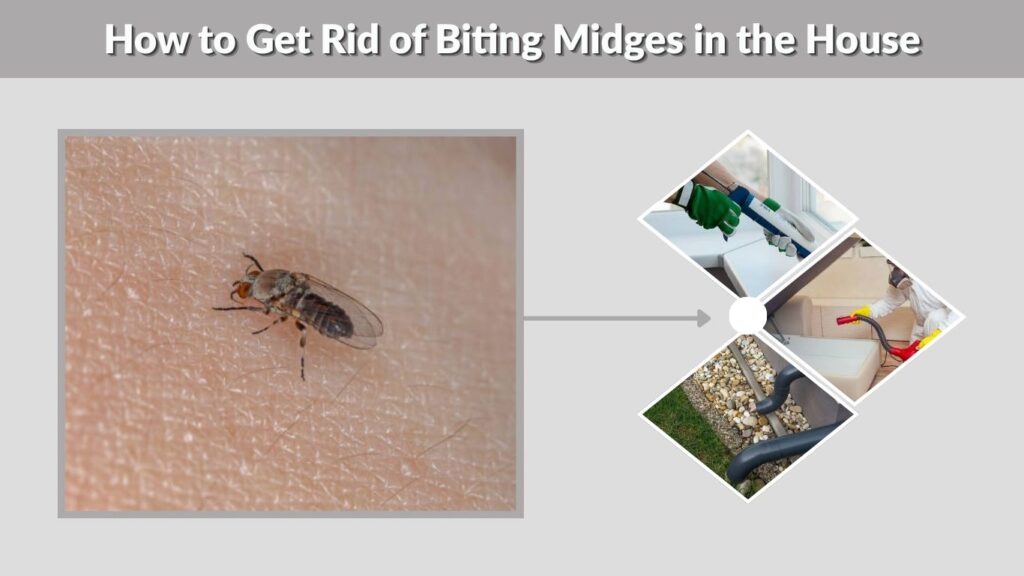
Getting rid of biting midges indoors requires both immediate control and prevention. Killing the adults already inside may provide temporary relief, but new insects can continue entering unless you identify and close their access points. Combining vacuuming, airflow, screening, sealing, and moisture management usually provides more reliable results than depending on a single spray.
Remove Midges Already Inside
Start by reducing the number of adult midges currently flying around your rooms.
Useful steps include:
- Vacuum midges from walls, windows, and ceilings.
- Use strong fans in rooms where biting occurs.
- Keep exterior doors closed whenever possible.
- Close windows without fine insect screens.
- Empty vacuum contents outside after cleaning.
- Use appropriately labeled indoor insect products only when necessary.
Fans are especially useful because these tiny insects are weak flyers. Strong airflow around beds, sofas, desks, and sitting areas may make it difficult for them to land and bite.
Find Where They Are Entering
Look closely around windows and doors during periods when midges are most active. Tiny gaps that seem insignificant may still provide enough space for no-see-ums to enter.
Inspect weather stripping, window frames, vents, screen edges, door bottoms, and other exterior openings. Once you know where insects are entering, exclusion becomes much easier.
How to Keep No-See-Ums and Biting Midges Out
Prevention is one of the most important parts of indoor biting midge control. Because the insects usually originate outside, stopping adults before they enter can dramatically reduce the problem. Ordinary mosquito screens may not always be fine enough because some biting midges are only a few millimeters long.
Improve Screens and Seal Openings
Check the entire exterior of your home for possible entry points.
Focus on:
- Installing fine-mesh no-see-um screens
- Repairing holes or tears in existing screens
- Sealing gaps around window frames
- Adding weather stripping around doors
- Repairing damaged door sweeps
- Covering suitable vents with fine insect screening
- Closing unscreened windows during peak activity
Fine screens can restrict airflow more than standard screening, so fans or air conditioning may help maintain comfortable indoor ventilation.
Reduce Attraction Around Entrances
Avoid keeping doors open for long periods, especially when biting midges are abundant outdoors. If insects repeatedly gather near entryways, consider reducing unnecessary exterior lighting close to doors and windows.
Moving outdoor seating areas farther from wet vegetation or damp soil may also reduce the number of midges concentrated near the home.
Biting Midges in House at Night
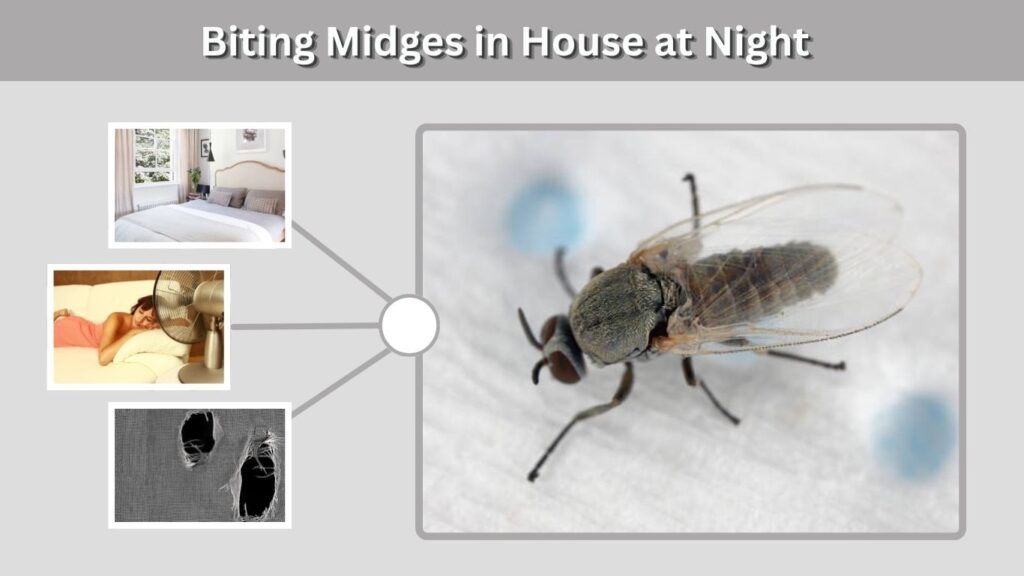
Some homeowners notice biting midges more frequently at night or around dusk. Activity varies among midge species, but certain species are especially active during the evening, early morning, or periods of low wind. Open windows and doors can make nighttime entry easier, particularly when insects are abundant outside.
How to Reduce Nighttime Biting
If you experience bites mainly at night:
- Keep bedroom windows properly screened.
- Run a fan toward the bed or sleeping area.
- Keep bedroom doors and exterior doors closed.
- Repair small holes in window screens.
- Avoid bright lights beside open windows.
- Wear lightweight clothing that covers exposed skin.
- Check whether another pest may actually be responsible.
Because biting midges are difficult to see, people sometimes assume unexplained nighttime bites come from no-see-ums. Bed bugs, mosquitoes, fleas, and mites can cause similar complaints, so correct identification is important.
Do Biting Midges Hide in Beds?
Biting midges may temporarily land on bedding, furniture, curtains, or walls, but beds are not typical breeding sites.
Washing bedding can remove insects that happen to be present, but repeatedly washing sheets will not solve a midge problem if adults continue entering from outdoors.
How to Kill Biting Midges in Your House
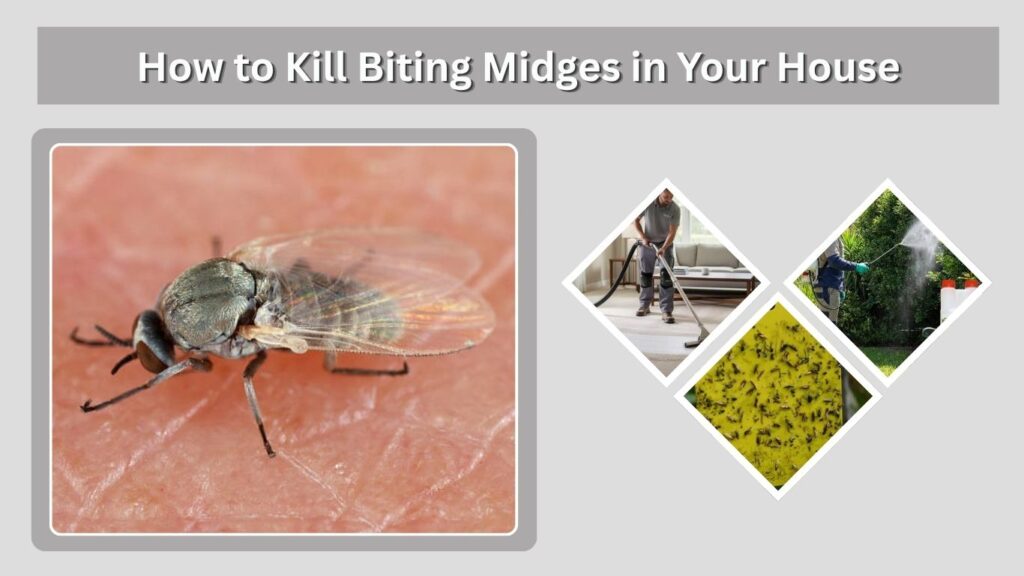
When several biting midges have already entered, physical removal is usually the simplest first response. Chemical control may sometimes help, but it should complement rather than replace exclusion. An indoor treatment cannot provide lasting results if hundreds of new midges continue passing through damaged screens or open windows.
Indoor Control Options
For immediate control, consider:
- Vacuuming visible adults
- Using fans to prevent insects from landing
- Installing fine screens
- Closing doors and windows
- Using insect traps designed for tiny flying insects
- Applying only indoor insecticides specifically labeled for the intended use
Always follow the product label when using any pesticide indoors. Avoid unnecessarily spraying bedding, clothing, food preparation areas, pets, or surfaces not listed on the label.
Why Spraying Alone Often Fails
Sprays mainly affect the insects they contact. They do not remove outdoor breeding areas or prevent new adults from entering.
A better long-term strategy combines indoor removal with sealing, screening, and outdoor moisture management.
Reduce Biting Midges Around the Outside of Your Home
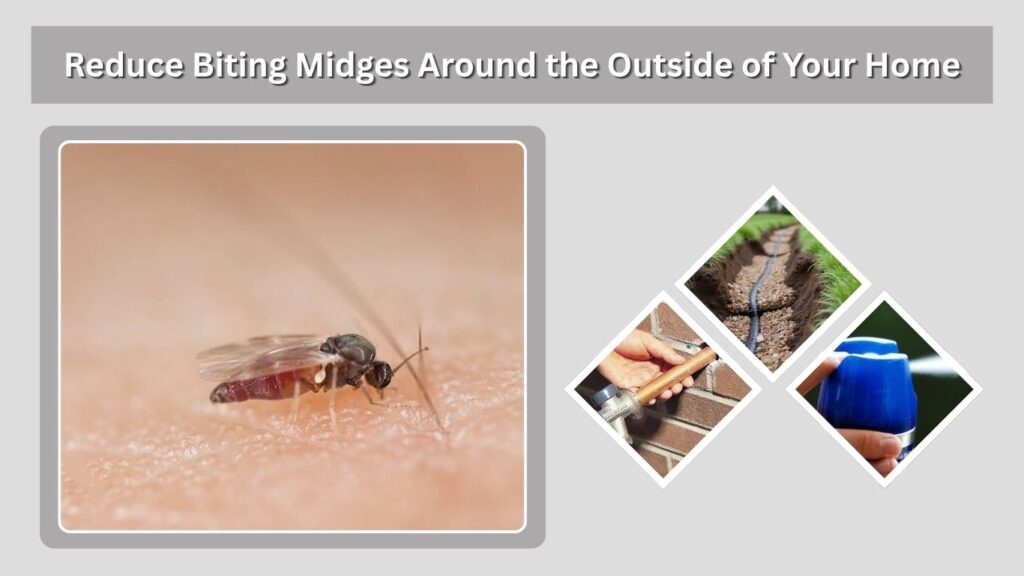
Indoor infestations often begin outdoors. Reducing favorable habitat around your house can lower the number of midges reaching doors and windows. However, complete elimination may be difficult if you live near extensive marshes, wetlands, ponds, coastal habitats, or other natural breeding areas.
Reduce Excess Moisture
Inspect the areas immediately surrounding your home and correct unnecessary moisture where possible.
Consider these measures:
- Repair leaking outdoor faucets.
- Improve drainage around foundations.
- Avoid overwatering lawns.
- Prevent irrigation from creating muddy areas.
- Clean clogged gutters.
- Remove piles of wet decaying vegetation.
- Empty unnecessary containers holding water.
- Keep patio areas dry when practical.
Biting midge larvae are not limited to buckets of standing water like many mosquitoes. Some develop in saturated soil, mud, damp organic material, or the margins of aquatic habitats.
Use Fans Around Outdoor Living Areas
Strong fans are one of the simplest tools for reducing contact with adult midges around patios, porches, and outdoor seating areas.
Since biting midges are tiny and weak flyers, moving air makes it harder for them to approach and land on people.
Biting Midges vs Non-Biting Midges in the House
Not every small midge found indoors can bite. Non-biting midges often resemble mosquitoes and biting midges but generally do not feed on people. They may appear around homes in large numbers, particularly when the property is near lakes, ponds, rivers, drainage areas, or other aquatic habitats.
How Non-Biting Midges Behave
Non-biting midges often swarm outdoors and are commonly attracted to lights. Adults may gather around illuminated windows, exterior walls, porches, and doors.
They can accidentally enter houses but typically cause annoyance rather than bites.
Reducing outdoor lighting near entrances, improving screens, and keeping doors closed can help limit indoor numbers.
Why Correct Identification Matters
If insects are entering your home but nobody is being bitten, non-biting midges or another small fly may be responsible.
Correct identification prevents unnecessary pesticide treatments and allows you to focus on the actual source of the problem.
FAQs
1. Why do I keep getting biting midges in my house?
They are usually entering from outside through tiny openings, damaged screens, doors, windows, or vents. Nearby wet soil, ponds, wetlands, or poorly drained areas can support large outdoor populations.
2. Can biting midges reproduce inside my house?
Usually not. Most biting midges require moist outdoor habitats for their immature stages. Repeated indoor appearances normally mean adults are continually entering from outside.
3. What is the fastest way to get rid of biting midges indoors?
Vacuum visible insects, close entry points, run strong fans, repair screens, and keep doors and windows closed. Address nearby moisture problems to reduce the number reaching your home.
4. Why are biting midges in my house at night?
Some species become especially active around dusk or evening. They may enter through open doors, windows, or damaged screens while searching for hosts.
5. Can biting midges get through window screens?
Yes. Some biting midges are small enough to pass through ordinary mosquito screening. Fine-mesh no-see-um screens are more effective for homes experiencing persistent problems.