
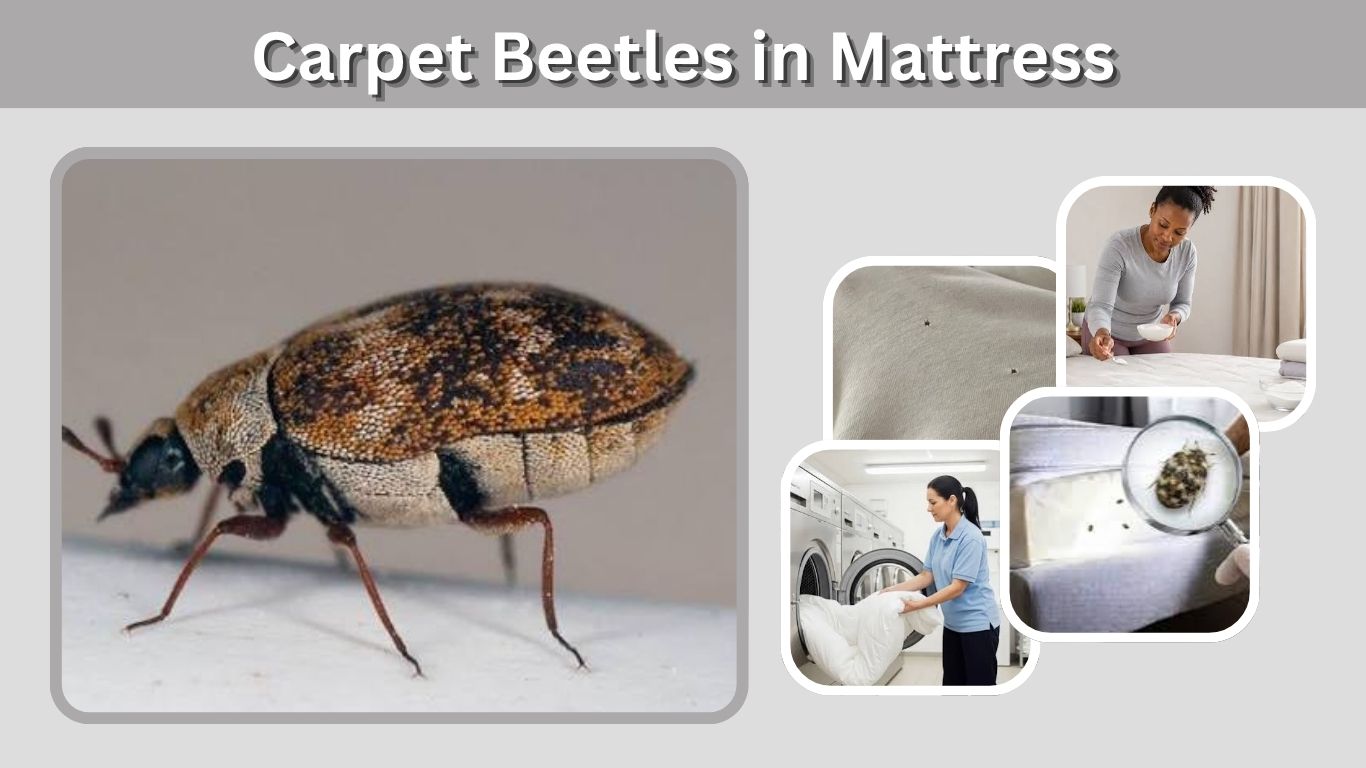
Carpet beetles in mattress materials can become a frustrating household problem, particularly when their larvae hide inside seams, bedding, or natural-fiber stuffing. Although these tiny insects do not feed on human blood like bed bugs, their larvae can damage fabrics and occasionally trigger allergic skin reactions. Finding carpet beetles around your bed does not always mean your mattress is infested, but repeated sightings deserve attention. This guide explains how to identify carpet beetles in a mattress, recognize infestation signs, remove them safely, and prevent future problems.
Can Carpet Beetles Live in Your Mattress?
Yes, carpet beetles can live in or around a mattress when suitable food sources are available. Their larvae feed on animal-derived materials, including wool, feathers, fur, and accumulated hair. Mattresses containing natural-fiber stuffing may provide favorable feeding conditions. However, modern mattresses made primarily from synthetic materials are generally less attractive unless organic debris has accumulated.
Why Do Carpet Beetles Infest Mattresses?
Female carpet beetles lay eggs near materials that provide food for emerging larvae. Bedding containing wool, feathers, or other animal-derived fibers can attract them.
Carpet beetle larvae prefer dark, undisturbed environments. Mattress seams, bed frames, and spaces beneath beds may provide protected hiding locations.
Unlike bed bugs, carpet beetles are not attracted to mattresses because humans sleep there.
Signs of Carpet Beetles in a Mattress
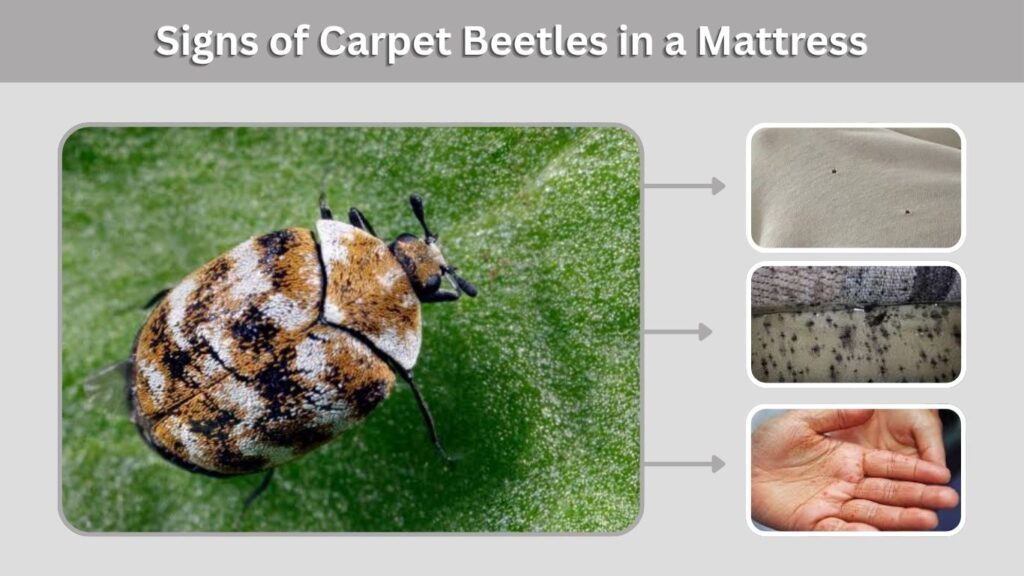
Recognizing the signs of carpet beetles in a mattress is important for early detection. Infestations are often difficult to identify because larvae remain concealed in fabric folds and protected areas. Adult beetles may appear occasionally, while larvae and their shed skins provide stronger evidence of an active infestation.
Common Signs of an Infestation
- Hairy brown larvae: Small, elongated insects appear around mattress seams, bedding, or bed frames.
- Shed larval skins: Brownish, bristly casings accumulate near hiding places.
- Small fabric holes: Natural-fiber mattress covers or bedding may show irregular feeding damage.
- Adult carpet beetles: Tiny black, brown, or patterned beetles appear around bedrooms and windows.
- Skin irritation: Sensitive individuals may develop itching or redness after contacting larval hairs.
- Eggs: Tiny white or cream-colored eggs may remain hidden near suitable larval food.
Finding a single adult beetle does not necessarily indicate a mattress infestation.
Where Do Carpet Beetles Hide Around a Bed?
Carpet beetles may occupy different areas around a sleeping environment. Their larvae generally prefer dark locations with minimal disturbance and access to suitable materials. Inspecting the entire bed and surrounding furniture is often more effective than examining the mattress surface alone.
Common Hiding Places
- Mattress seams: Folded fabric and stitching provide protected spaces.
- Mattress stuffing: Natural hair, wool, or feather stuffing may support larval feeding.
- Bed frames: Cracks and joints can shelter wandering larvae.
- Bedding: Wool blankets, feather-filled pillows, and natural-fiber covers may attract larvae.
- Underneath beds: Accumulated pet hair, lint, and dead insects provide food.
- Nearby carpets: Carpet edges and areas beneath furniture may contain hidden populations.
Carpet Beetles vs. Bed Bugs in a Mattress
Carpet beetles and bed bugs are frequently confused because both can appear around sleeping areas. However, their appearance, feeding habits, and effects on humans differ considerably. Correct identification is essential because treatment methods are not identical, and an unexplained skin rash alone cannot reliably distinguish these insects.
Appearance and Behavior Differences
| Feature | Carpet Beetles | Bed Bugs |
| Appearance | Small beetles; hairy larvae | Flat, oval, reddish-brown insects |
| Main food | Animal-derived fibers and debris | Blood |
| Human bites | Do not bite | Bite to obtain blood |
| Skin reactions | Larval hairs may cause dermatitis | Bites may cause itchy welts |
| Common evidence | Hairy larvae, shed skins, fabric damage | Dark fecal spots, bloodstains, live bugs |
| Flying ability | Adults can fly | Cannot fly |
How to Tell Which Pest Is Present
Carpet beetle larvae typically appear brown, segmented, and covered with bristles. Bed bugs have flattened bodies and lack the dense hairs associated with carpet beetle larvae.
Rust-colored bloodstains and dark fecal marks near mattress seams suggest bed bugs rather than carpet beetles.
How to Get Rid of Carpet Beetles in a Mattress
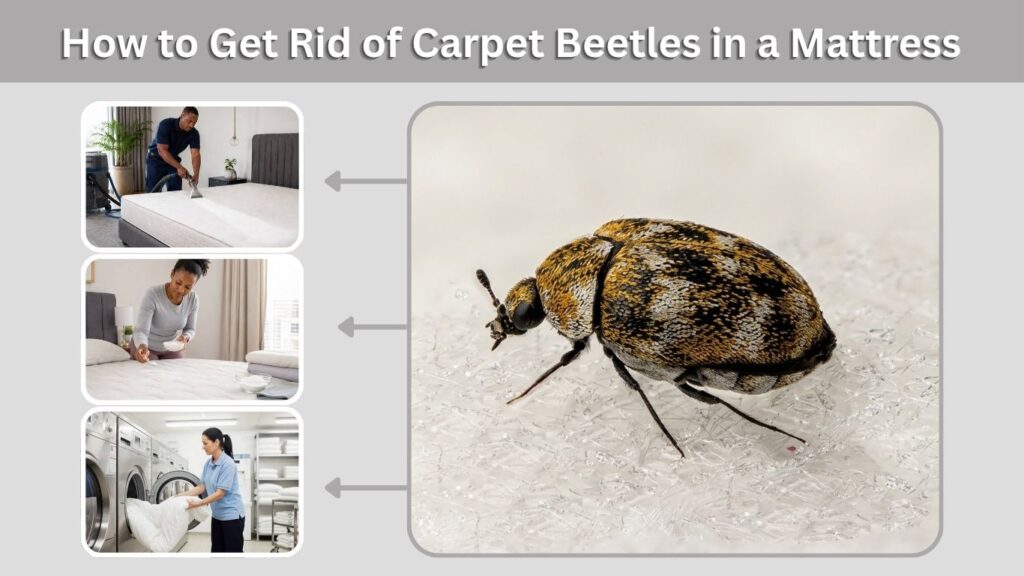
Removing carpet beetles from a mattress requires thorough cleaning and identifying their breeding sources. Surface treatment alone may be ineffective if larvae have entered natural-fiber stuffing or surrounding furniture. The most reliable strategy combines vacuuming, fabric cleaning, careful inspection, and removal of materials supporting larval development.
Step-by-Step Carpet Beetle Removal
- Remove all bedding: Take off sheets, pillowcases, blankets, and mattress protectors for inspection and cleaning.
- Vacuum mattress seams: Use an upholstery attachment to clean stitching, edges, folds, and accessible surfaces thoroughly.
- Clean the bed frame: Vacuum joints, cracks, headboards, and the area beneath the mattress.
- Wash affected bedding: Launder washable materials at the hottest temperature permitted by their care labels or use professional dry cleaning.
- Clean surrounding areas: Vacuum bedroom carpets, baseboards, closets, and furniture to remove hidden larvae and organic debris.
- Dispose of vacuum contents: Empty the vacuum outdoors promptly to prevent collected insects from remaining indoors.
- Monitor for further activity: Reinspect the mattress and surrounding areas regularly for larvae, shed skins, or fabric damage.
Can Steam Cleaning Remove Carpet Beetles?
Steam cleaning may kill exposed carpet beetles and larvae when sufficient heat reaches them.
However, steam may not penetrate deeply enough to eliminate insects hidden inside thick mattress stuffing. Excess moisture can also damage mattresses or encourage mold growth.
Only steam clean a mattress when its manufacturer permits the treatment, and allow it to dry completely.
Can Black Carpet Beetles Infest a Mattress?
Black carpet beetles (Attagenus unicolor) can occur around mattresses, particularly where natural fibers and accumulated organic debris are present.
Their larvae are elongated, brown to dark brown, and commonly have a distinctive tuft of hairs at the rear.
Unlike adult black carpet beetles, which primarily feed on pollen outdoors, larvae consume suitable animal-derived materials.
Black carpet beetle removal involves cleaning mattress seams, laundering bedding, and eliminating hidden larval food sources.
The same general cleaning approach also works against varied and furniture carpet beetles, although their appearance differs.
Are Carpet Beetles in a Mattress Dangerous?
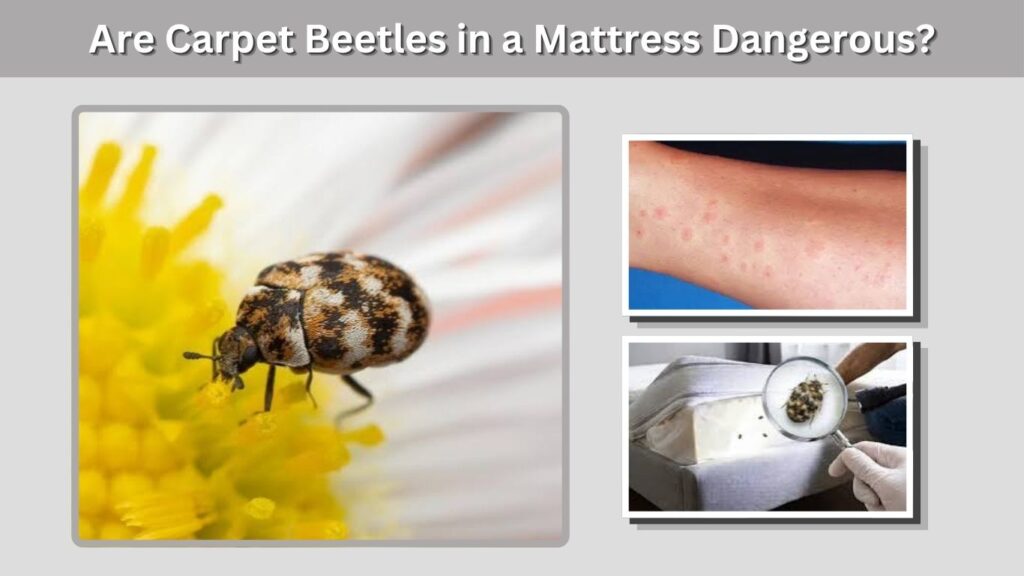
Carpet beetles are not blood-feeding parasites and do not normally bite humans. They are primarily household fabric pests rather than direct threats to human health. However, their larvae can create problems for individuals sensitive to the tiny hairs covering their bodies.
Can Carpet Beetles Cause Skin Rashes?
Yes, contact with carpet beetle larval hairs can trigger carpet beetle dermatitis in susceptible individuals.
Symptoms may include itching, redness, and small raised bumps resembling insect bites.
These reactions do not mean carpet beetles are feeding on human skin. Persistent or unexplained symptoms should be evaluated by a healthcare professional.
Can Carpet Beetles Lay Eggs in Your Mattress?
Female carpet beetles may deposit eggs near mattress seams or inside natural-fiber materials when suitable food is available.
Eggs are tiny, usually pale-colored, and difficult to detect without magnification.
They generally hatch within approximately one to three weeks, depending on species and temperature.
Should You Replace a Mattress With Carpet Beetles?
Finding carpet beetles near a mattress does not automatically mean replacement is necessary. Minor infestations involving exposed larvae or surrounding bedding can often be addressed through thorough cleaning and treatment of affected fabrics.
However, mattresses containing natural hair, feathers, or wool stuffing can be more difficult to treat when larvae penetrate deeply.
If insects remain inside inaccessible stuffing, consult a qualified pest control professional about specialized treatment.
Replacement may be appropriate when severe infestation, extensive damage, or unsuccessful treatment makes the mattress impractical to retain.
How to Prevent Carpet Beetles in Your Mattress
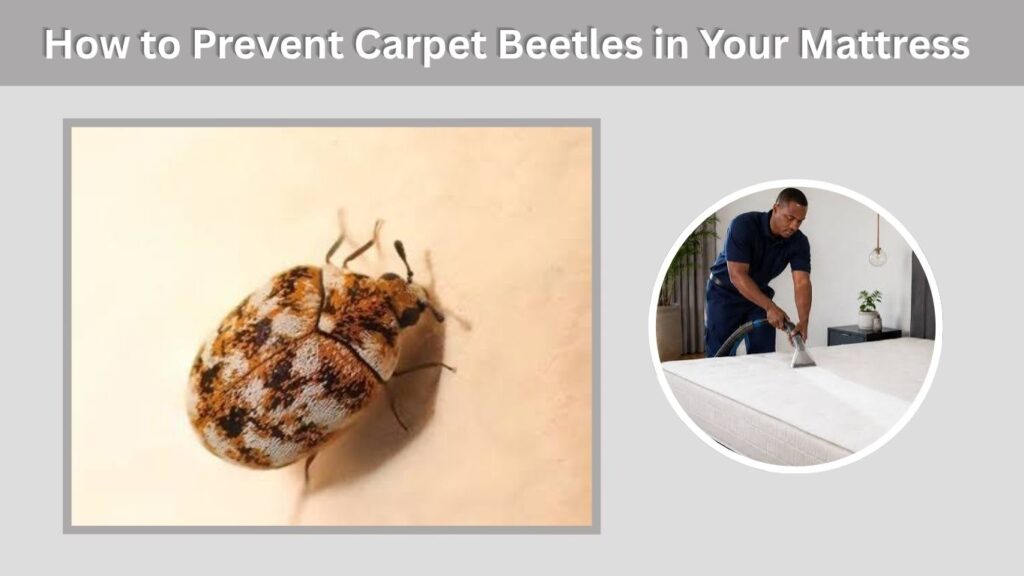
Preventing carpet beetles requires regular bedroom cleaning and controlling materials that support larval development. Even after successful treatment, adult beetles can enter homes through windows or arrive on infested fabrics. Maintaining clean bedding and inspecting vulnerable materials helps prevent new infestations.
Effective Prevention Tips
- Vacuum regularly: Clean mattress edges, bed frames, carpets, and bedroom corners.
- Wash bedding frequently: Remove accumulated hair, skin debris, and other organic materials.
- Inspect natural-fiber bedding: Check wool blankets, feather pillows, and mattress covers periodically.
- Use sealed storage: Protect clean wool bedding and stored textiles inside airtight containers.
- Remove pet hair: Vacuum sleeping areas where pets frequently rest.
- Maintain window screens: Reduce opportunities for adult beetles to enter bedrooms.
- Inspect secondhand items: Examine used mattresses, rugs, and upholstered furniture before bringing them home.
FAQs
1. What are the first signs of carpet beetles in a mattress?
The first signs often include hairy brown larvae, shed larval skins, or small holes in natural-fiber bedding. Adult beetles may also appear nearby. Inspecting mattress seams, bed frames, and surrounding carpets helps determine whether an active infestation exists.
2. Can carpet beetles live inside a mattress permanently?
Carpet beetle larvae can remain inside suitable mattress stuffing for extended periods when food is available. However, they do not necessarily infest every mattress. Synthetic materials generally provide fewer feeding opportunities than mattresses containing wool, feathers, or animal hair.
3. How do you remove carpet beetles from a mattress naturally?
Natural removal methods include thorough vacuuming, hot laundering of suitable bedding, and removing accumulated organic debris. Steam treatment may help when compatible with mattress materials. Deep infestations inside stuffing may require specialized professional treatment for complete elimination.
4. Are carpet beetles in a mattress worse than bed bugs?
Carpet beetles generally pose a different problem from bed bugs. Their larvae damage natural fibers and may cause allergic skin irritation, while bed bugs feed on human blood. Both require proper identification and treatment, but their behavior differs.
5. Do you need to throw away a mattress with carpet beetles?
Not necessarily. A mattress with a minor, accessible infestation may be cleaned successfully. However, severe infestations involving inaccessible natural-fiber stuffing can be difficult to eliminate. Professional inspection can help determine whether specialized treatment or mattress replacement is necessary.
