
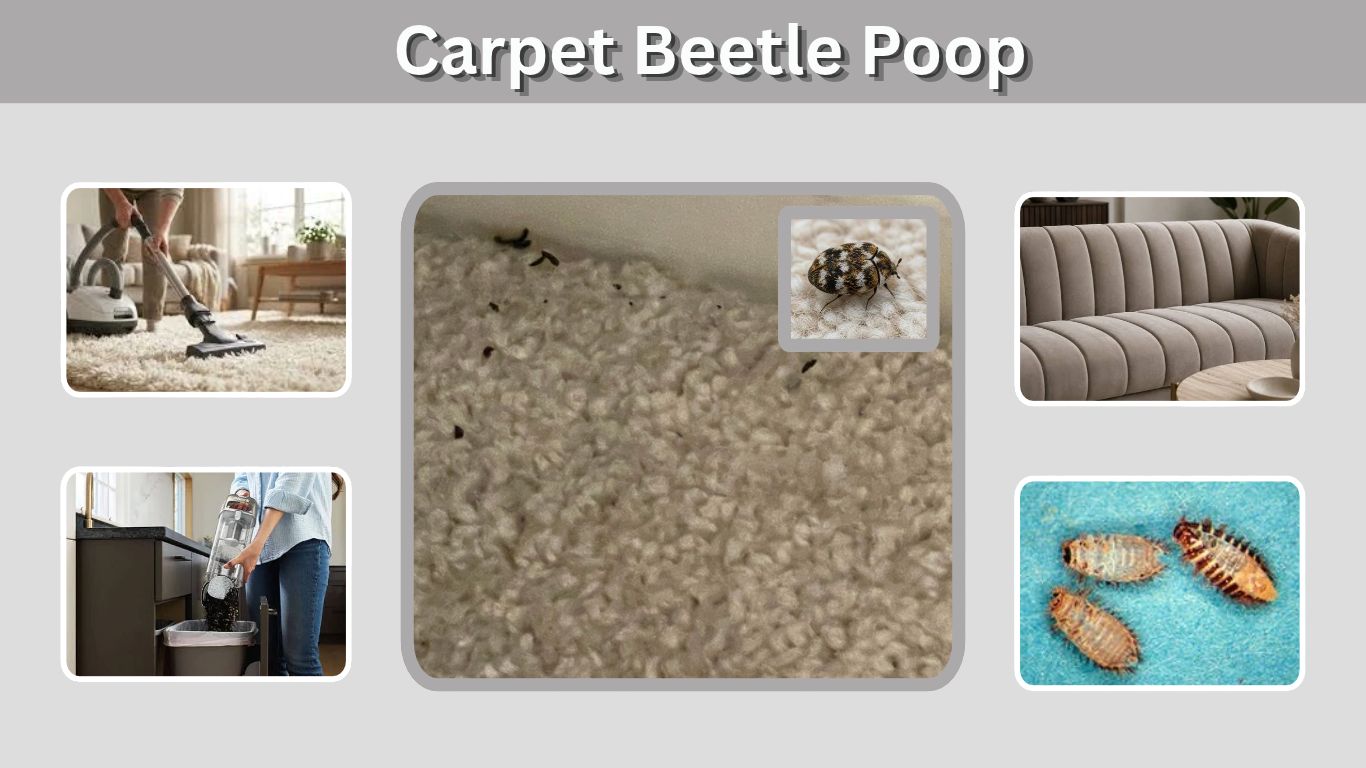
Carpet beetle poop is a common but often overlooked sign of an infestation in carpets, furniture, and stored clothing. These tiny droppings, also called frass, are produced primarily by carpet beetle larvae as they feed on wool, fur, feathers, and other organic materials. Because the droppings resemble dust or small particles, homeowners may mistake them for ordinary household debris. Understanding what carpet beetle poop looks like, where it accumulates, and how to distinguish it from other pest droppings can help identify infestations and prevent damage.
Do Carpet Beetles Poop?
Yes, carpet beetles produce waste as part of their normal digestive processes. Their droppings are called frass, a term used for insect excrement. Carpet beetle larvae produce noticeable frass while feeding on natural materials. Although adult beetles also excrete waste, larval droppings are more useful for identifying household infestations because they accumulate near damaged fabrics.
Why Do Carpet Beetle Larvae Produce Droppings?
Carpet beetle larvae digest animal-derived materials containing proteins such as keratin. As they consume wool, feathers, fur, and other suitable substances, they eliminate undigested material as waste.
Larvae may feed for several months or longer, allowing frass to accumulate in undisturbed locations.
The presence of droppings alongside feeding damage and shed larval skins strongly suggests active or previous carpet beetle activity.
What Does Carpet Beetle Poop Look Like?
Carpet beetle poop usually appears as tiny, dry particles or powdery debris. Its appearance varies depending on the beetle species, diet, and surrounding materials. Individual fecal pellets may be approximately the size of a grain of salt, making them difficult to distinguish from ordinary dust without magnification.
Common Characteristics of Carpet Beetle Poop
- Color: Usually brown or dark brown, although the shade may vary with diet.
- Size: Extremely small particles, sometimes comparable to grains of salt.
- Shape: Tiny pellets or irregular granular fragments.
- Texture: Generally dry, powdery, or slightly gritty.
- Location: Commonly found near damaged textiles and larval feeding areas.
- Appearance: May resemble dust, dirt, or scattered fabric debris.
Can Carpet Beetle Poop Be Black or Rust Red?
Some carpet beetle frass may appear dark brown or nearly black. However, black particles alone cannot confirm an infestation.
A black string-like object is not a reliable identifying feature of carpet beetle poop.
Rust-red stains or dark marks that smear into fabric may indicate another source, particularly bed bugs. Identifying the insects themselves provides more dependable evidence.
Where Can You Find Carpet Beetle Poop in Your House?
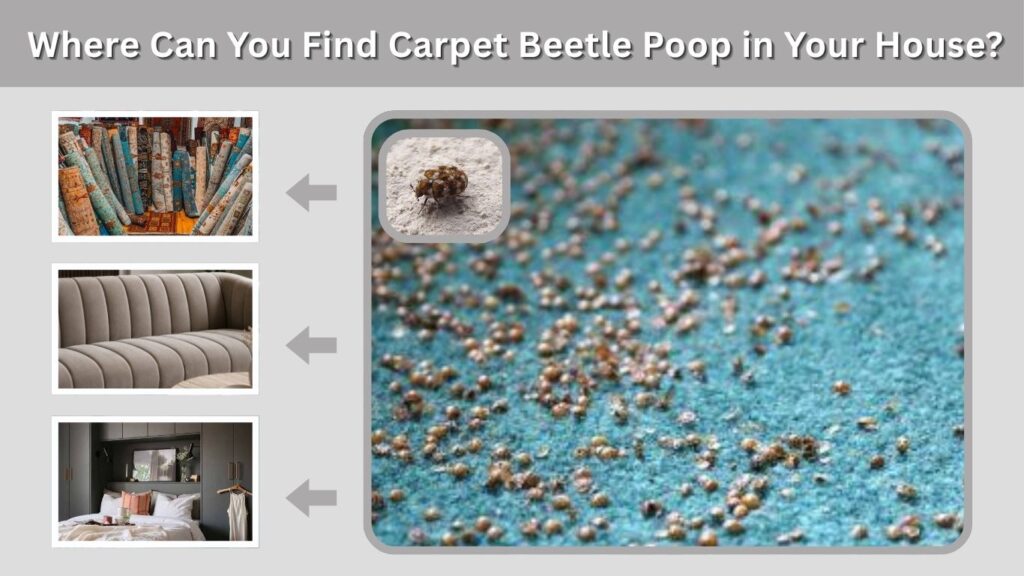
Carpet beetle droppings generally accumulate near places where larvae feed. Because larvae prefer dark and undisturbed locations, frass may remain unnoticed for extended periods. Inspecting vulnerable household materials helps reveal whether carpet beetles are developing nearby.
Common Locations of Carpet Beetle Droppings
- Carpets and rugs: Along edges, beneath furniture, and within natural-fiber carpets.
- Closets: Around stored wool clothing, blankets, and fabric containers.
- Upholstered furniture: Beneath cushions, inside seams, and around natural-fiber padding.
- Mattresses: Near wool, feather-filled materials, or accumulated animal hair.
- Baseboards: Inside cracks containing lint, dead insects, or pet hair.
- Attics: Around abandoned bird nests, feathers, and other suitable larval food.
Can Carpet Beetle Poop Appear on Ceilings?
Carpet beetle larvae sometimes wander across walls and ceilings while searching for suitable locations.
However, droppings found on ceilings are not strong evidence of carpet beetles. Flies, spiders, and other household pests may leave similar-looking marks.
Inspect the surrounding area for actual larvae before identifying the source.
Signs of Carpet Beetle Poop and an Active Infestation
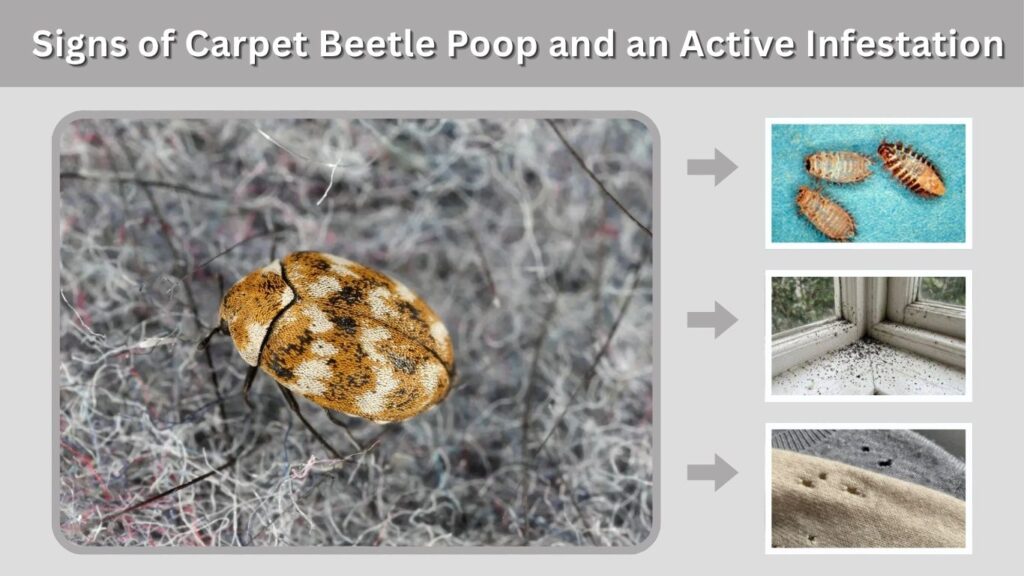
Finding small brown particles does not automatically confirm carpet beetle activity. Dust, fabric fragments, and debris from other insects may look similar. However, several signs appearing together can indicate that larvae are feeding nearby.
Important Infestation Signs
- Frass accumulation: Fine, granular droppings near natural-fiber materials.
- Shed larval skins: Brown, hairy casings left behind during molting.
- Fabric holes: Irregular damage to wool, rugs, blankets, and upholstery.
- Live larvae: Small, hairy insects hiding in carpets or storage areas.
- Adult beetles: Tiny oval beetles occasionally appearing near windows.
Carpet beetle poop pictures may help with preliminary identification, but examining larvae or shed skins is more reliable than comparing droppings alone.
Carpet Beetle Poop vs. Bed Bug Droppings
Carpet beetle poop and bed bug droppings are sometimes confused, particularly when dark particles appear around mattresses or bedroom furniture. However, these insects have different diets and produce different types of waste. Recognizing the differences helps homeowners avoid treating the wrong pest.
How Are Their Droppings Different?
Carpet beetle larvae primarily produce dry frass associated with feeding on natural materials.
Bed bugs feed on blood and typically leave dark reddish-brown or black fecal spots. These marks may soak into fabric and resemble ink stains.
Unlike dry carpet beetle frass, bed bug fecal marks may smear when dampened.
Can Carpet Beetle Poop Leave Stains?
Carpet beetle frass may soil fabrics, but prominent rust-colored or ink-like stains are not typical identifying signs.
If dark marks remain embedded in mattress fabric, investigate possible bed bugs or other sources.
A professional inspection may be necessary when visual evidence is unclear.
Black Carpet Beetle Poop vs. Varied Carpet Beetle Poop
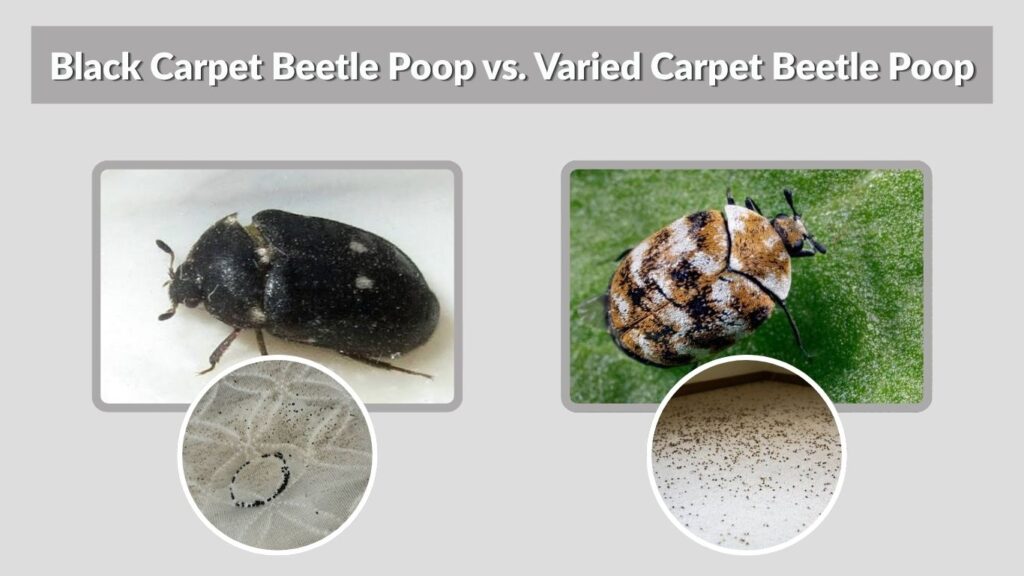
Black and varied carpet beetles are common household fabric pests. Their larvae have different appearances, but their droppings share similar characteristics. Identifying carpet beetle species from frass alone is generally unreliable because diet and surrounding materials influence waste appearance.
Black Carpet Beetle Droppings
Black carpet beetle (Attagenus unicolor) larvae feed on natural fibers, animal-derived debris, and certain stored products.
Their droppings may appear as small brown or dark granular particles near feeding locations.
Finding elongated brown larvae with a rear tuft of hairs provides stronger identification evidence.
Varied Carpet Beetle Droppings
Varied carpet beetle (Anthrenus verbasci) larvae frequently develop in wool, feathers, fur, and accumulated organic debris.
Their frass may resemble fine dust scattered around affected materials.
These larvae are typically shorter, hairy, and somewhat carrot-shaped. Shed skins often provide better identification clues than their waste.
Is Carpet Beetle Poop Harmful to Humans?
Carpet beetle droppings are not generally considered a major direct health hazard. However, their presence can indicate an infestation involving larvae, shed skins, and contaminated household materials. Cleaning affected areas is advisable, especially when insect debris accumulates in bedrooms or frequently used furniture.
Can Carpet Beetle Poop Cause Skin Irritation?
Carpet beetle larvae possess tiny hairs that may trigger allergic skin reactions in susceptible individuals.
This condition is commonly called carpet beetle dermatitis and may cause itching, redness, or small raised bumps.
The larval hairs, rather than the droppings themselves, are the better-established cause of these reactions.
Does Carpet Beetle Poop Smell?
Carpet beetle frass does not typically produce a strong, distinctive odor.
An unpleasant smell in an infested area may originate from damp materials, decaying organic matter, or another household problem.
Odor alone cannot reliably identify carpet beetles.
How to Clean Carpet Beetle Poop From Your Home
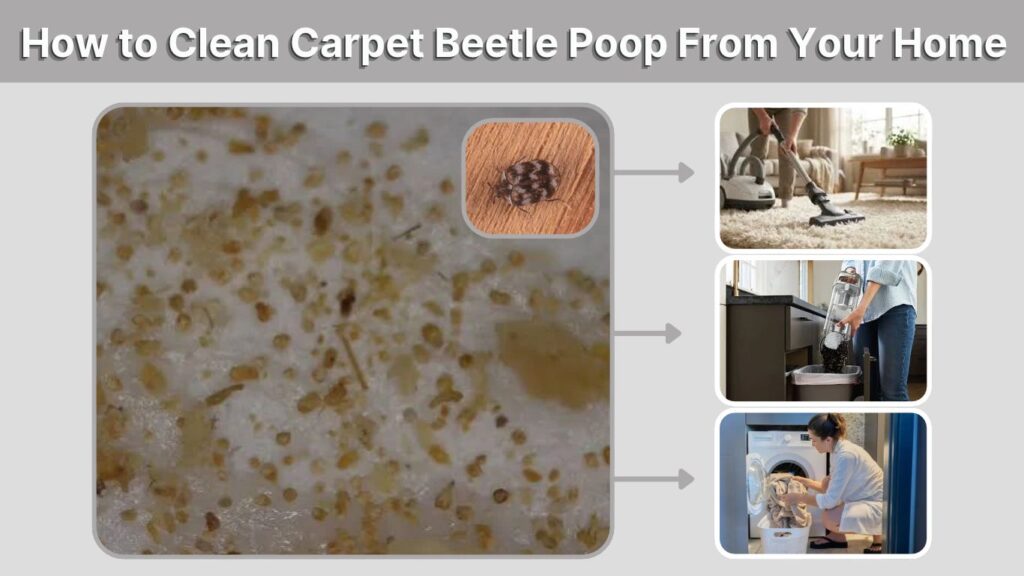
Removing carpet beetle droppings requires thorough cleaning and elimination of the infestation source. Simply wiping away visible frass is insufficient if larvae remain hidden inside furniture, carpets, or stored fabrics. Proper cleaning also removes shed larval hairs and accumulated debris.
Effective Carpet Beetle Poop Removal Steps
- Inspect affected materials: Locate droppings, larvae, shed skins, and damaged natural fibers.
- Vacuum thoroughly: Clean carpet edges, furniture seams, baseboards, and storage areas using suitable attachments.
- Dispose of collected debris: Empty vacuum contents outdoors immediately after cleaning.
- Wash contaminated fabrics: Launder washable materials according to their care labels or use professional dry cleaning.
- Clean surrounding furniture: Remove accumulated lint, hair, and dead insects from protected locations.
- Monitor the area: Reinspect previously affected surfaces for fresh frass and larvae.
Avoid dry brushing large accumulations of insect debris because this may disperse dust and larval hairs.
How to Prevent Carpet Beetle Droppings From Returning
Preventing new carpet beetle poop requires controlling the insects responsible for producing it. Regular vacuuming removes larvae and organic materials that support their development.
Store clean wool clothing and other vulnerable fabrics in sealed containers. Inspect carpets, furniture, and storage spaces periodically for signs of feeding.
Eliminate accumulated pet hair, feathers, dead insects, and abandoned nesting materials where practical.
If fresh frass continues appearing despite thorough cleaning, investigate hidden breeding sources or consult a qualified pest control professional.
FAQs
1. What does carpet beetle poop look like on carpet?
Carpet beetle poop generally resembles tiny brown pellets or powdery debris scattered near damaged fibers. It can blend with dust and ordinary household dirt. Finding hairy larvae, shed skins, or irregular fabric damage helps confirm whether the particles are associated with carpet beetles.
2. Does carpet beetle poop stick to rugs?
Carpet beetle frass may become trapped between rug fibers, making it appear attached to the material. However, it is generally dry rather than sticky. Thorough vacuuming can remove accessible particles, although deeper infestations may require additional cleaning and inspection.
3. Can carpet beetle poop appear on a mattress?
Yes, carpet beetle frass may occur around mattresses when larvae feed on suitable natural fibers or accumulated animal-derived debris. However, dark mattress stains are not automatically carpet beetle droppings. Inspecting for larvae, shed skins, and bed bug evidence helps identify the cause.
4. Does carpet beetle poop smear when wet?
Carpet beetle frass is typically dry and granular rather than an ink-like stain. Dark spots that spread or turn reddish-brown when dampened may suggest bed bugs or another source. Smearing alone cannot conclusively identify any particular household pest.
5. How do you permanently remove carpet beetle poop?
Remove carpet beetle droppings by thoroughly vacuuming affected areas, cleaning contaminated fabrics, and eliminating nearby larvae. Long-term prevention requires removing breeding sources, storing vulnerable textiles properly, and inspecting hidden spaces. Fresh droppings after cleaning may indicate continuing insect activity.
