
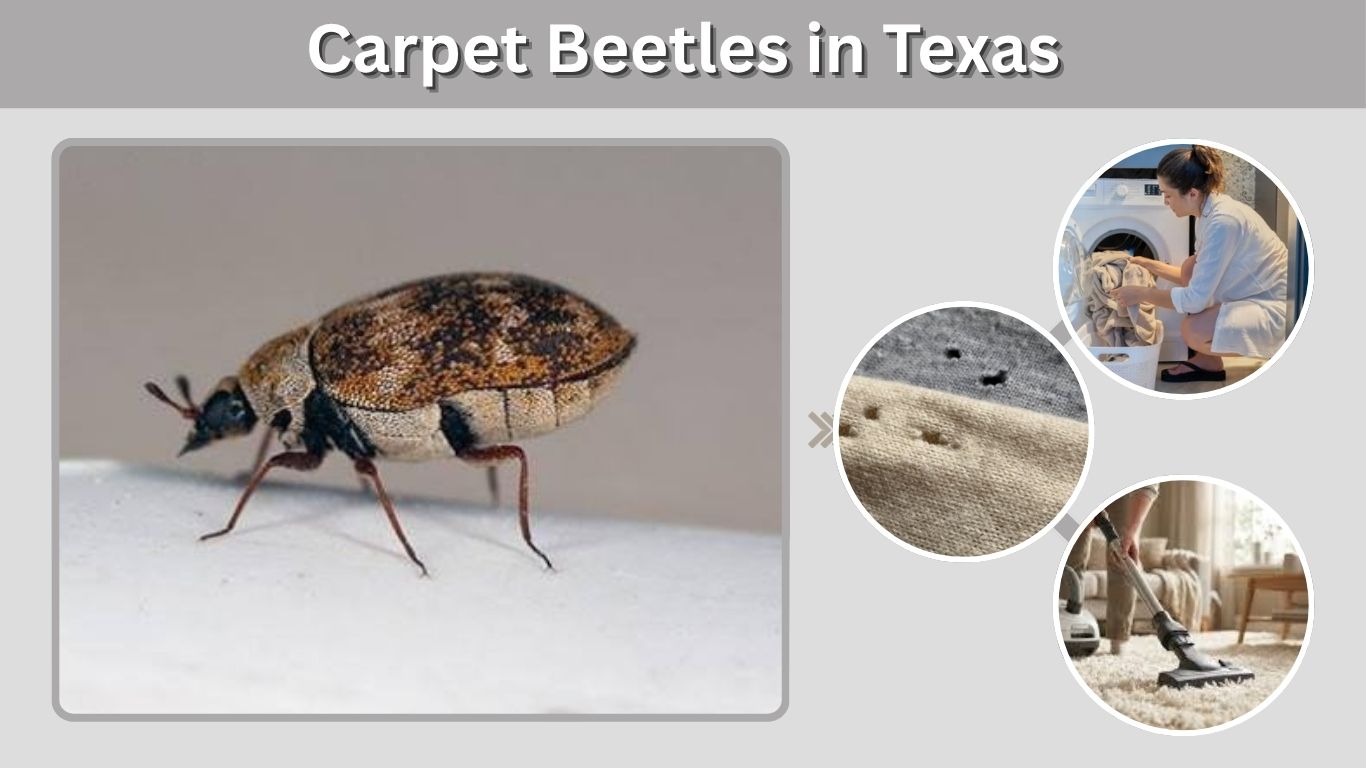
Carpet beetles in Texas are common household pests that can damage carpets, clothing, furniture, and other natural materials. These tiny beetles often enter homes through open windows, doors, or infested household items. Although adult carpet beetles are generally harmless, their larvae feed on wool, fur, feathers, and accumulated organic debris. Texas’s warm climate can support their activity for extended periods, particularly inside temperature-controlled homes. This guide explains how to identify Texas carpet beetles, recognize infestation signs, understand their seasonal behavior, and effectively eliminate them from your home.
Are Carpet Beetles Common in Texas?
Yes, carpet beetles are common throughout Texas, including residential areas in Houston, Dallas, Austin, San Antonio, and East Texas. These insects belong to the family Dermestidae and frequently occur in homes containing natural-fiber materials.
Texas’s relatively warm climate provides favorable conditions for carpet beetle activity. However, their development depends on species, food availability, and indoor temperatures rather than outdoor warmth alone.
Adult beetles may enter buildings from gardens and flowering plants. Once inside, females can deposit eggs near suitable larval food sources.
Types of Carpet Beetles Found in Texas
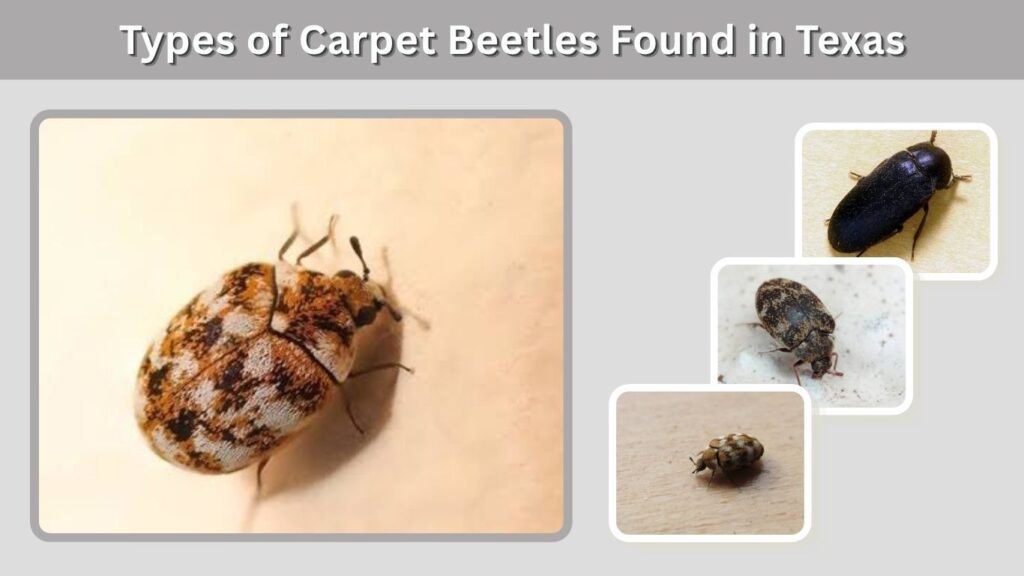
Several carpet beetle species occur in Texas, each with distinct physical characteristics. Although adults differ in color and appearance, their larvae share similar feeding habits. Identifying the species can help homeowners recognize infestations and locate potential breeding areas. Black, varied, furniture, and common carpet beetles are among the species associated with household fabric damage.
Black Carpet Beetle in Texas
The black carpet beetle (Attagenus unicolor) is a common fabric pest found throughout Texas.
Adults are approximately 3–5 millimeters long, with elongated oval bodies ranging from dark brown to black.
Their larvae are brown, carrot-shaped, and covered with short hairs. A distinctive tuft of longer hairs extends from the rear.
Black carpet beetle larvae feed on wool, feathers, fur, and other suitable household materials.
Varied Carpet Beetle in Texas
The varied carpet beetle (Anthrenus verbasci) is another common indoor species.
Adults measure approximately 2–3 millimeters and have rounded bodies decorated with irregular white, yellowish, and brown scales.
Their larvae are hairy, segmented, and often called woolly bears.
Varied carpet beetles frequently infest stored clothing, wool carpets, upholstered furniture, and accumulated dead insects.
Furniture and Common Carpet Beetles
Furniture carpet beetles (Anthrenus flavipes) have rounded bodies covered with contrasting light and dark scales.
Common carpet beetles (Anthrenus scrophulariae) also display distinctive patterns, often including reddish or orange-colored scales.
Both species can develop in natural-fiber furnishings, clothing, and other animal-derived materials.
How to Identify Carpet Beetles in Texas
Texas carpet beetles are small insects that homeowners sometimes mistake for bed bugs or other household beetles. Adults are generally rounded or oval, while larvae have elongated bodies covered with bristles. Correct identification is important because adults and larvae have different feeding habits and cause different problems.
Carpet Beetle Appearance and Size
Adult carpet beetles commonly measure approximately 2–5 millimeters, although size varies by species.
Some have uniformly dark bodies, while others display mottled patterns.
Larvae can grow several millimeters long, with black carpet beetle larvae sometimes reaching approximately 12 millimeters.
Their dense hairs and segmented bodies are useful identification features.
Signs of Carpet Beetles in Texas Homes
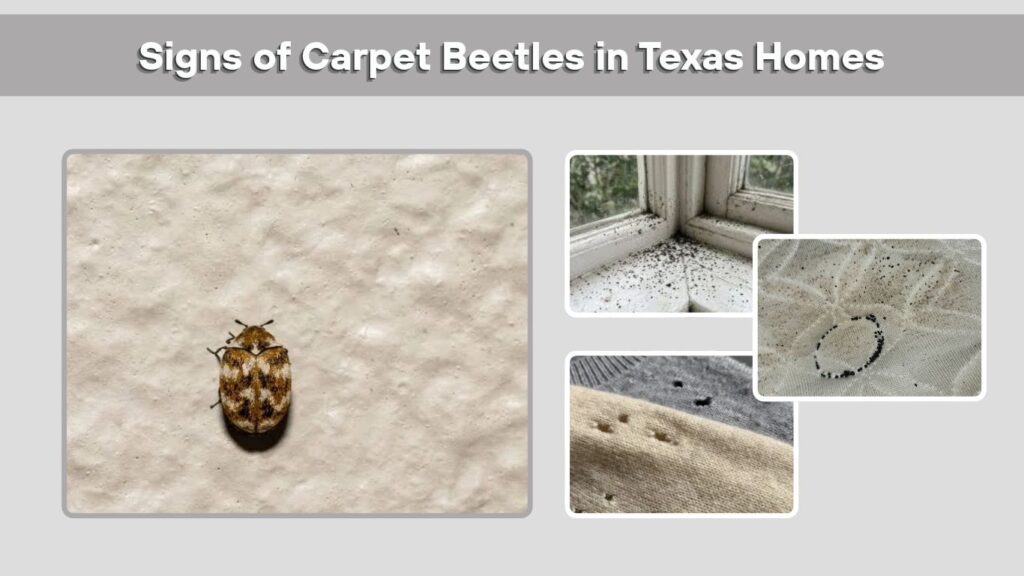
Carpet beetle infestations often develop unnoticed because larvae remain hidden in dark, undisturbed areas. Adult beetles may be visible near windows, but larval activity provides stronger evidence of an established population. Recognizing early warning signs helps prevent damage to clothing, carpets, and upholstered furniture.
Common Infestation Signs
- Hairy brown larvae: Small, segmented insects crawling around carpets, furniture, or walls.
- Damaged fabrics: Irregular holes appearing in wool clothing, blankets, rugs, and upholstery.
- Shed larval skins: Empty brownish casings accumulating in closets and protected corners.
- Adult beetles near windows: Small black or patterned beetles appearing around natural light.
- Accumulated insect debris: Fine particles and shed skins near feeding areas.
Finding one adult beetle does not automatically indicate a serious infestation. Repeated larval sightings and fresh fabric damage are more concerning.
Where Do Carpet Beetles Hide in Texas Houses?
Carpet beetles prefer protected locations containing suitable food for their larvae. While adult beetles may visit flowers outdoors, larvae frequently develop inside homes where natural materials remain undisturbed. Their hiding places vary depending on furniture, flooring, storage habits, and household cleanliness.
Common Hiding Places
- Carpets and rugs: Beneath furniture and along carpet edges.
- Closets: Inside stored wool garments, blankets, and other vulnerable fabrics.
- Upholstered furniture: Under cushions and inside natural-fiber padding.
- Bedrooms: Around feather pillows, wool bedding, and accumulated pet hair.
- Attics: Near abandoned bird nests, feathers, and dead insects.
- Baseboards: Behind furniture where lint and animal hair accumulate.
Regular inspection of these areas helps identify infestations before extensive damage occurs.
When Are Carpet Beetles Most Active in Texas?
Carpet beetle activity varies with seasonal temperatures, species, and indoor conditions. In Texas, adult beetles are commonly noticed during spring and early summer when flowering plants provide food. However, larvae may remain active throughout the year inside heated or air-conditioned buildings.
Spring and Summer Activity
During spring, adult carpet beetles frequently visit flowering plants to feed on pollen and nectar.
Females may enter homes through open windows, doors, or damaged screens and deposit eggs near suitable materials.
Larvae emerging from these eggs begin feeding on nearby natural fibers.
Fall and Winter Activity
Carpet beetle development may slow when outdoor temperatures decrease.
However, Texas homes often maintain relatively stable indoor temperatures, allowing larvae to continue developing.
Consequently, infestations may be discovered during winter even when adult activity outdoors is limited.
Do Carpet Beetles Bite in Texas?
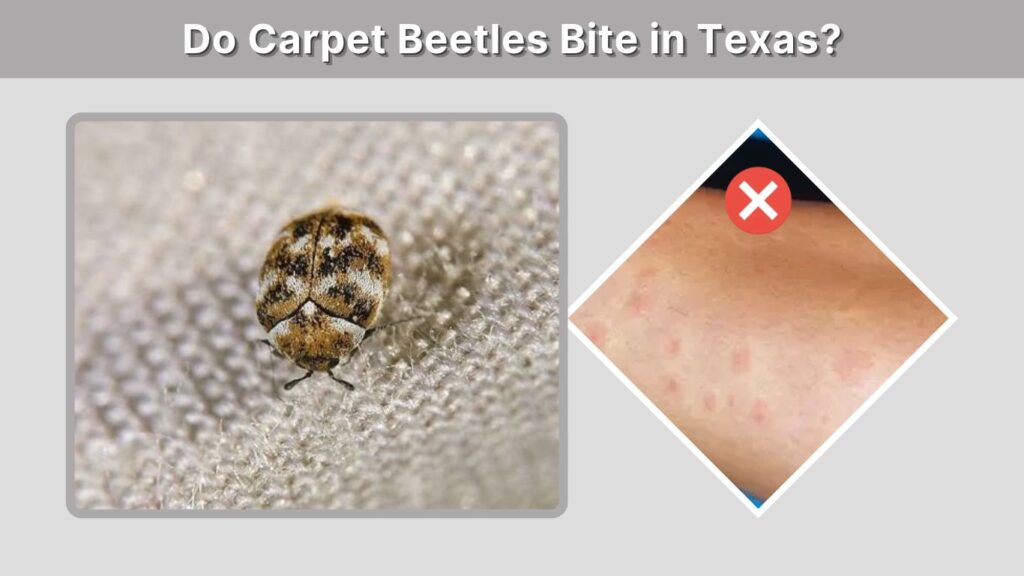
Carpet beetles do not bite humans during any stage of their life cycle. Unlike bed bugs, they do not feed on blood or require human hosts to reproduce.
However, carpet beetle larvae possess tiny hairs that can trigger allergic reactions in susceptible individuals.
Carpet Beetle Dermatitis and Allergic Reactions
Carpet beetle dermatitis may cause itching, redness, and small raised bumps that resemble insect bites.
The irritation results from contact with larval hairs rather than actual biting.
Removing larvae and shed skins helps reduce exposure. Persistent or severe skin reactions should be evaluated by a healthcare professional.
How to Get Rid of Carpet Beetles in Texas
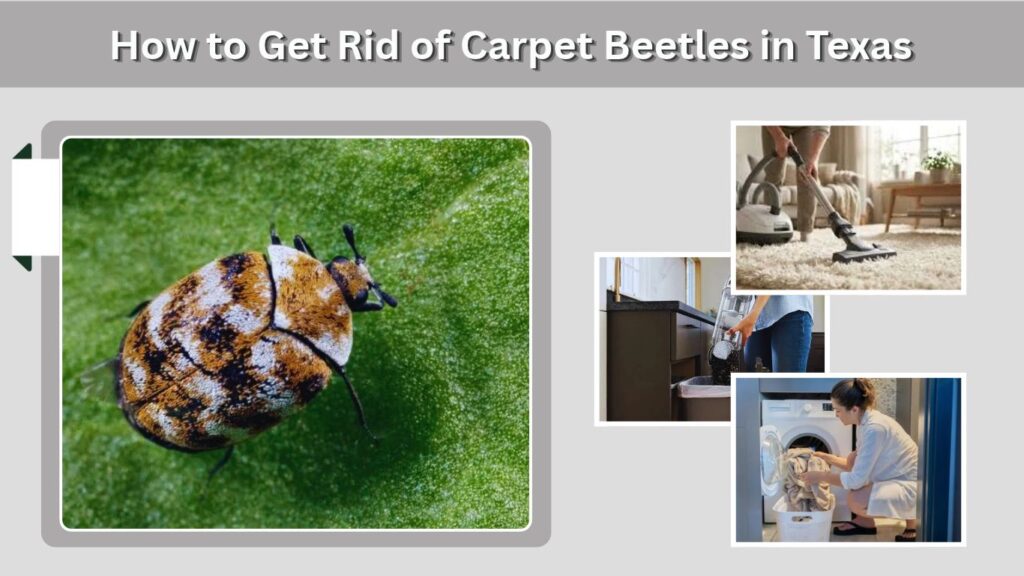
Eliminating carpet beetles requires locating hidden larvae, removing suitable food sources, and cleaning affected household materials. Treating visible adults alone is insufficient because eggs and larvae may remain concealed. Most small infestations can be managed through thorough cleaning and careful inspection.
Effective Carpet Beetle Removal Methods
- Vacuum thoroughly: Clean carpets, furniture, closets, baseboards, and hard-to-reach corners.
- Wash affected fabrics: Launder suitable clothing and blankets using temperatures permitted by their care labels.
- Inspect stored materials: Examine wool garments, rugs, and furniture for larvae and shed skins.
- Remove organic debris: Eliminate pet hair, feathers, lint, and accumulated dead insects.
- Clean upholstered furniture: Vacuum cushions, seams, and furniture undersides.
- Use suitable temperature treatments: Professional dry cleaning, controlled freezing, or appropriate heat treatments can eliminate insects from compatible materials.
- Remove severely infested materials: Discard contaminated items that cannot be cleaned effectively.
- Consider professional pest control: Persistent infestations may require targeted treatment of hidden breeding areas.
Avoid applying insecticides directly to bedding or clothing unless specifically permitted by the product label.
How to Prevent Carpet Beetles in Texas
Preventing carpet beetles involves maintaining clean household environments and protecting vulnerable materials. Since adult beetles can enter homes from outdoor flowers and surrounding vegetation, complete exclusion is difficult. However, regular maintenance greatly reduces opportunities for larvae to become established.
Carpet Beetle Prevention Tips
- Vacuum regularly: Pay particular attention to carpet edges, closets, and furniture undersides.
- Store clothing properly: Keep clean wool garments and blankets inside sealed containers.
- Inspect secondhand furniture: Examine upholstery and natural-fiber materials before bringing them indoors.
- Maintain window screens: Repair holes and seal gaps around doors and windows.
- Remove pet hair: Clean areas where animal hair accumulates.
- Inspect stored fabrics: Check vulnerable materials periodically for new damage.
These practices are useful throughout Texas, including Austin, Dallas, Houston, and other communities where carpet beetles occur.
FAQs
1. Are carpet beetles common in Texas homes?
Yes, carpet beetles are common household pests throughout Texas. They can infest homes containing wool, feathers, fur, and other suitable larval food sources. Adults frequently appear during warmer months, while larvae may remain active indoors throughout the year.
2. What does a Texas carpet beetle look like?
Adult Texas carpet beetles are small, rounded or oval insects measuring approximately 2–5 millimeters. Some have solid dark bodies, while others display mottled patterns. Their larvae are typically brown, segmented, and covered with distinctive hairs or bristles.
3. Do black carpet beetles live in Texas?
Yes, black carpet beetles occur in Texas and can damage natural-fiber household materials. Adults are dark brown to black, while larvae are elongated and brown with a tuft of hairs at the rear. Larvae cause most fabric damage.
4. What time of year are carpet beetles active in Texas?
Adult carpet beetles are commonly noticed during spring and early summer, particularly around flowering plants and windows. However, larvae can remain active during other seasons when indoor temperatures and food availability support development, including inside heated homes.
5. How do you get rid of carpet beetles in Texas?
Remove carpet beetles through thorough vacuuming, laundering affected fabrics, and eliminating hidden larval food sources. Inspect closets, furniture, carpets, and storage areas regularly. Severe or persistent infestations may require professional pest control after the breeding source is identified.
