
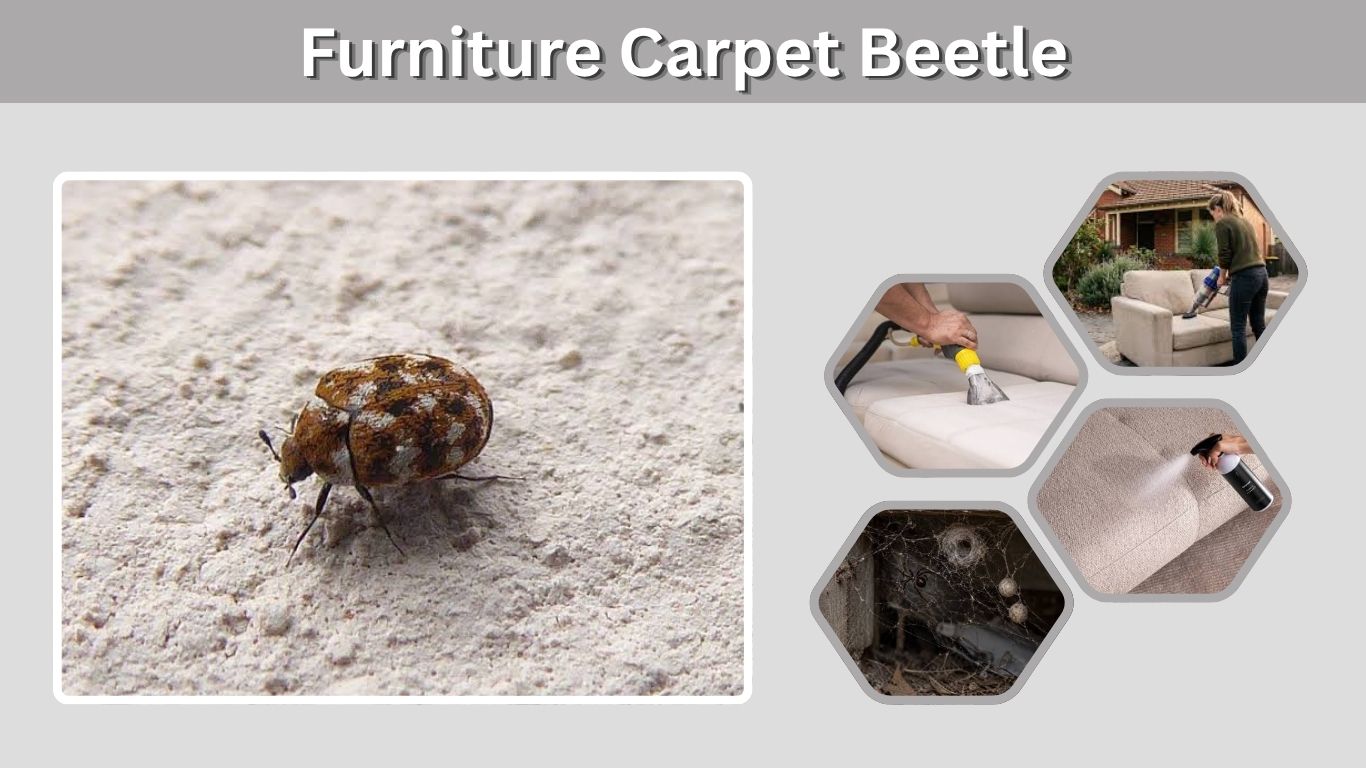
Furniture carpet beetles are small household insects that can quietly damage upholstered chairs, sofas, rugs, and stored fabrics. The furniture carpet beetle (Anthrenus flavipes) is especially troublesome because its hairy larvae feed on wool, feathers, animal hair, and other vulnerable materials. Adults often appear near windows, while larvae remain hidden in furniture seams and dark corners. Knowing how to identify furniture carpet beetles, recognize their eggs and larvae, and locate feeding damage can help you remove an infestation before expensive furnishings are ruined.
What Is a Furniture Carpet Beetle?
The furniture carpet beetle (Anthrenus flavipes) belongs to the Dermestidae family. It is a small, rounded beetle found in homes, warehouses, and buildings containing natural-fiber materials.
Furniture carpet beetles are widespread, particularly in warmer regions. Although adults primarily feed on pollen outdoors, their larvae consume materials containing animal proteins.
These insects frequently infest upholstered furniture, wool carpets, stored clothing, and other household materials. Their hidden feeding habits make early detection difficult.
Furniture Carpet Beetle Identification
Furniture carpet beetles have different appearances throughout their development. Adults are small, rounded, and covered with patterned scales, while larvae are elongated and hairy. Understanding these physical characteristics helps distinguish furniture carpet beetles from other common household pests.
Adult Furniture Carpet Beetle Identification
Adult furniture carpet beetles usually measure 2–3.5 millimeters long. Their bodies are rounded and covered with black, white, and yellowish scales.
The legs often have yellow scales, while the hardened wing covers display irregular markings.
Adults can fly and frequently appear around windows, doors, and flowering plants.
Furniture Carpet Beetle Larvae Identification
Furniture carpet beetle larvae typically grow to approximately 5 millimeters long. They have brown, oval-shaped bodies covered with dense hairs.
A distinctive feature is the tuft of longer hairs extending from the rear of the body.
Larvae prefer dark environments and may remain concealed within furniture padding, carpet edges, and fabric folds.
Furniture Carpet Beetle Life Cycle
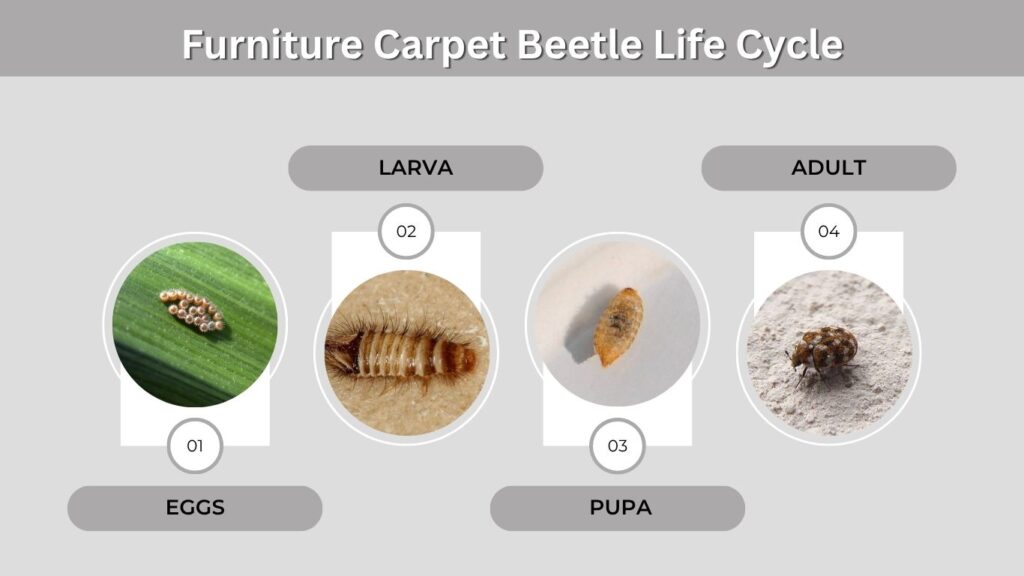
Furniture carpet beetles undergo complete metamorphosis, developing through four distinct stages. Their life cycle generally takes four to twelve months, although development varies with temperature and environmental conditions. Understanding each stage helps identify active infestations and determine where treatment should focus.
- Eggs: Females deposit small, white, oval eggs in cracks and protected areas near suitable food. Eggs generally hatch within one to three weeks.
- Larvae: Brown, hairy larvae feed on animal-based materials and cause most household damage.
- Pupae: Mature larvae pupate inside their final larval skins, usually near feeding areas.
- Adults: Fully developed beetles emerge, reproduce, and may fly outdoors to feed on flower pollen.
The larval stage is especially important because continued feeding can damage furniture before adults become visible.
Where Do Furniture Carpet Beetles Live?
Furniture carpet beetles commonly inhabit dark, undisturbed locations containing natural fibers or accumulated organic debris. They may enter homes through windows and doors or arrive inside infested furniture and stored belongings.
Furniture Carpet Beetles in Upholstered Furniture
Upholstered furniture provides suitable hiding places for larvae. They may occupy cushion seams, internal padding, fabric folds, and spaces beneath sofas.
Older furniture containing animal hair, feathers, or wool stuffing is particularly vulnerable.
Furniture Carpet Beetles in Carpets and Closets
Larvae can also develop along carpet edges, beneath furniture, and inside closets.
Stored wool clothing, blankets, fur, and feather-filled items provide additional food sources. Adults may appear on nearby windowsills after emerging.
Furniture Carpet Beetle Damage and Infestation Signs
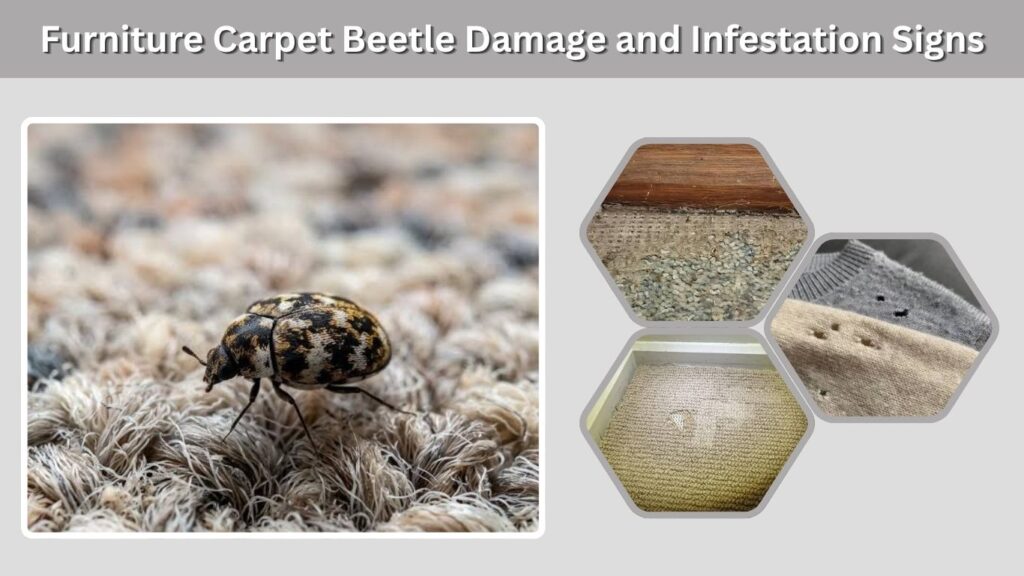
Furniture carpet beetle damage occurs primarily during the larval stage. Larvae consume keratin-containing materials, including wool, hair, and feathers. Severe infestations can damage upholstery, carpets, and furniture stuffing, particularly when the insects remain undetected for extended periods.
Common Signs of Furniture Carpet Beetle Damage
- Holes in upholstery: Irregular openings appearing in wool or other vulnerable furniture coverings.
- Damaged padding: Animal-hair or feather stuffing deteriorating inside furniture.
- Shed larval skins: Brown, hairy skins accumulating beneath cushions and furniture.
- Live larvae: Small, fuzzy insects crawling through fabric seams.
- Damaged carpets: Thin or missing fibers around carpet edges.
- Adult beetles: Multiple small, patterned beetles appearing near furniture or windows.
Furniture carpet beetles do not normally eat sound wood. Damage associated with wooden furniture usually involves upholstery, stuffing, or accumulated organic materials rather than the wood itself.
Furniture Carpet Beetle vs Varied Carpet Beetle
Furniture carpet beetles and varied carpet beetles are closely related and frequently confused. Both have rounded bodies with black, white, and yellowish markings.
However, furniture carpet beetles generally have a broader, rounded appearance, while varied carpet beetles may show a more irregular mottled pattern.
Their larvae also differ in body shape and hair arrangements. Varied carpet beetle larvae are typically broader toward the rear, while furniture carpet beetle larvae have distinctive terminal hair tufts.
Because these differences can be subtle, accurate species identification may require magnification.
Are Furniture Carpet Beetles Dangerous?
Furniture carpet beetles are not considered dangerous to humans because they do not bite, sting, or feed on blood. However, their larvae can create problems inside homes.
Furniture Carpet Beetle Bites and Rashes
Furniture carpet beetles do not bite humans. Nevertheless, contact with larval hairs, shed skins, or beetle fragments may trigger allergic skin irritation in sensitive individuals.
Such reactions can sometimes resemble insect bites.
Persistent or unexplained rashes should be evaluated by a healthcare professional rather than automatically attributed to carpet beetles.
How to Get Rid of Furniture Carpet Beetles
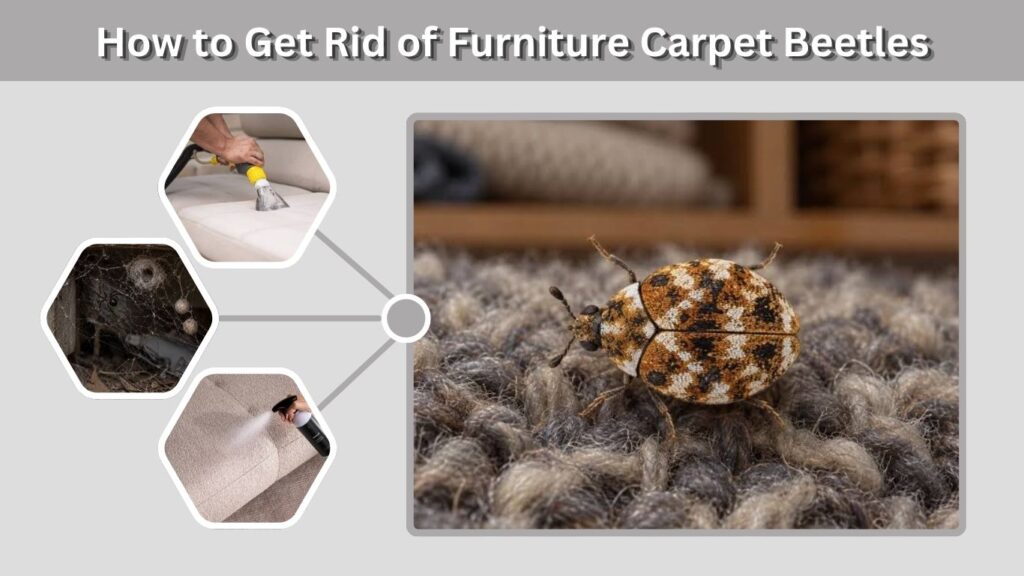
Eliminating furniture carpet beetles requires locating their feeding areas and removing larvae, eggs, and suitable food materials. Thorough cleaning is usually the most important treatment. Insecticides may help with persistent infestations, but spraying visible adults alone will not eliminate larvae hidden inside furniture.
Furniture Carpet Beetle Control Methods
- Inspect furniture: Examine upholstery seams, cushion undersides, padding, and surrounding carpets.
- Vacuum thoroughly: Remove larvae, shed skins, and debris from accessible furniture surfaces.
- Clean removable covers: Wash or dry-clean suitable fabrics according to their care instructions.
- Remove food sources: Eliminate pet hair, lint, feathers, and dead insects from hidden spaces.
- Treat vulnerable materials: Use appropriate professional heat or cleaning treatments when necessary.
- Remove heavily infested items: Discard furniture that cannot be effectively cleaned or restored.
- Monitor regularly: Inspect previously affected areas for returning larvae and new damage.
Consistent cleaning and identifying the original infestation source are essential for long-term control.
Do Furniture Carpet Beetle Sprays and Traps Work?
Insecticide sprays and monitoring traps may help manage furniture carpet beetles, but their effectiveness depends on proper use and the infestation’s location.
Carpet Beetle Spray for Furniture
Use only insecticides specifically labeled for carpet beetles and the intended treatment surface.
Some products permit targeted applications to cracks and crevices, but not direct spraying on upholstered seating surfaces.
Never apply insecticidal dusts or sprays inside cushions or onto bedding unless the product label explicitly allows that use.
Furniture Carpet Beetle Traps
Certain monitoring traps can capture adult carpet beetles. However, traps generally cannot eliminate larvae feeding inside furniture.
They are most useful for detecting activity and evaluating whether other control methods are working.
How to Prevent Furniture Carpet Beetle Infestations
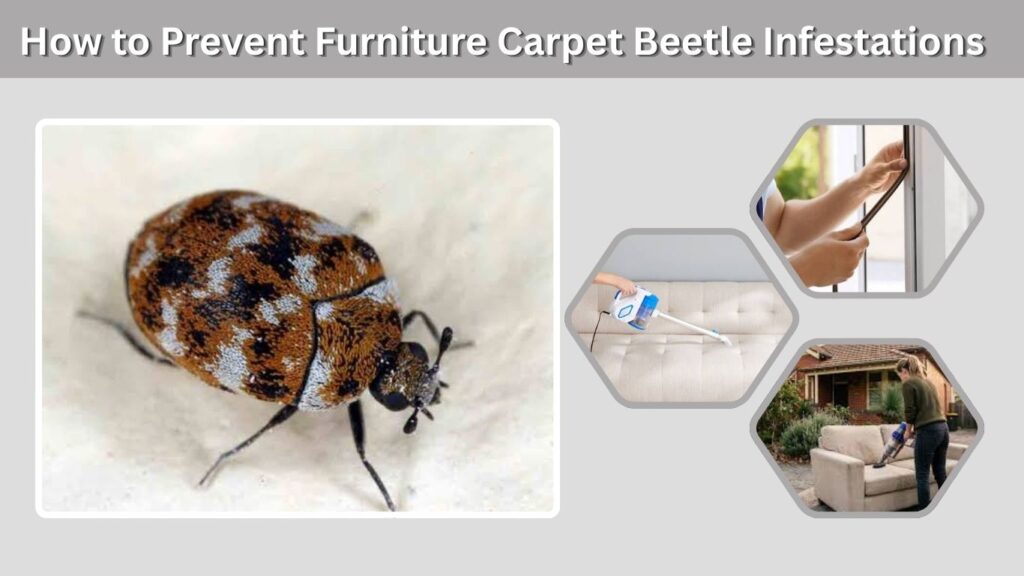
Preventing furniture carpet beetles involves regular cleaning, careful storage, and reducing access to suitable breeding locations. Because larvae thrive in undisturbed environments, routine inspection of furniture and carpets helps detect infestations before serious damage develops.
Furniture Carpet Beetle Prevention Tips
- Vacuum upholstered furniture, carpets, and hidden corners regularly.
- Remove accumulated lint, pet hair, and dead insects.
- Inspect secondhand furniture before bringing it indoors.
- Store clean natural-fiber materials inside sealed containers.
- Repair damaged window screens and seal entry gaps.
- Inspect furniture seams and cushions periodically.
- Address bird nests or other potential infestation sources when safe and appropriate.
These preventive measures help reduce larval food sources and make furniture less attractive for carpet beetle development.
FAQs
What Does a Furniture Carpet Beetle Look Like?
An adult furniture carpet beetle is a tiny, rounded insect measuring approximately 2–3.5 millimeters. Its body has black, white, and yellowish markings. The larvae look different, with brown, hairy bodies and distinctive longer hairs near the rear.
Do Furniture Carpet Beetles Bite Humans?
No, furniture carpet beetles do not bite humans or feed on blood. However, their larvae have irritating hairs that may cause allergic skin reactions in sensitive individuals. These reactions sometimes resemble insect bites but are not caused by actual biting.
Can Furniture Carpet Beetles Live Inside Sofas?
Yes, furniture carpet beetle larvae can live inside sofas, particularly those containing wool, feathers, or animal-hair padding. They often hide in cushion seams, upholstery folds, and internal stuffing, making infestations difficult to detect without carefully inspecting the furniture.
Do I Need to Throw Away Furniture With Carpet Beetles?
Not necessarily. Many infested furniture items can be saved through thorough vacuuming, appropriate fabric cleaning, and targeted treatment. However, severely damaged furniture or items with inaccessible infestations may require professional restoration or disposal to prevent the insects from spreading.
What Is the Best Treatment for Furniture Carpet Beetles?
The most effective approach combines careful inspection, thorough vacuuming, cleaning affected fabrics, and removing larval food sources. Insecticides labeled for carpet beetles may help with persistent infestations, but professional pest control can be necessary when larvae remain hidden inside furniture.
