
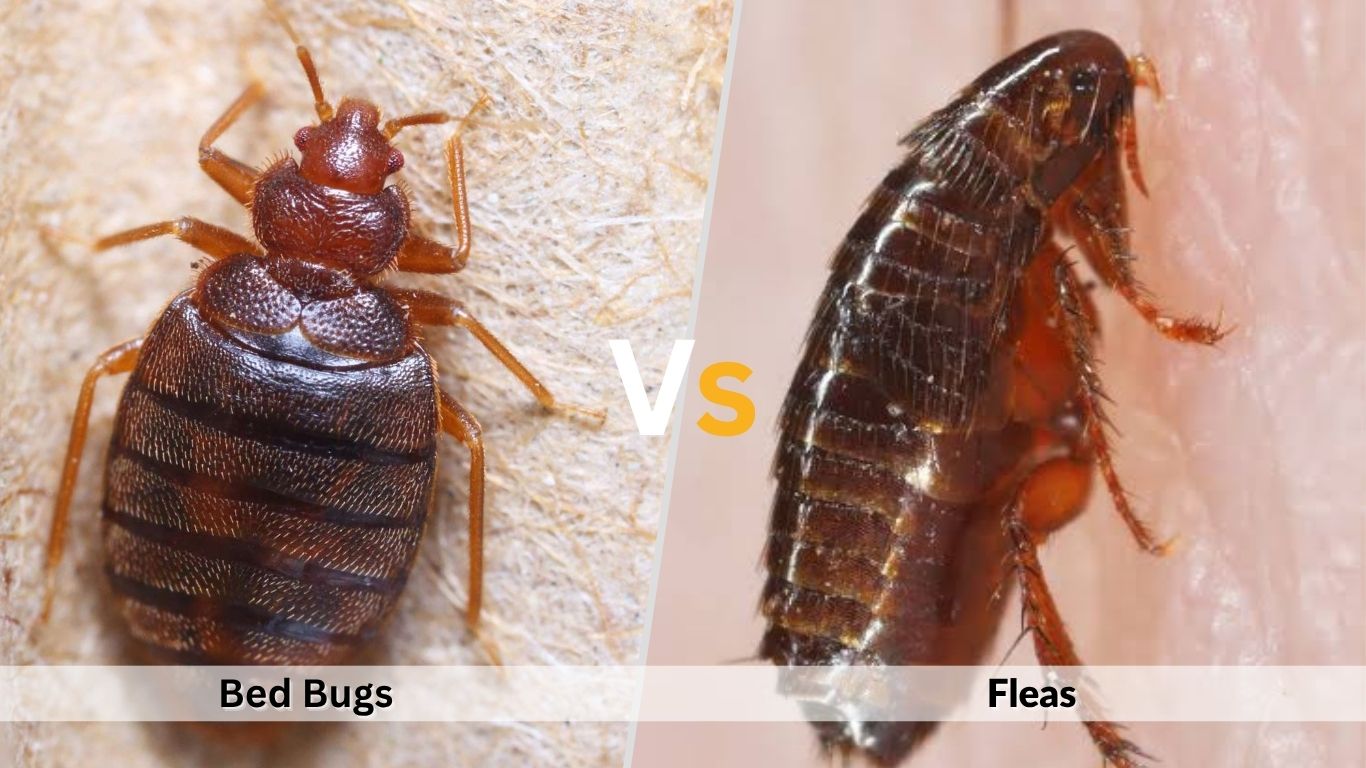
Are you noticing tiny insects around your bed or pets but struggling to identify whether they are bed bugs or fleas? These common household pests can cause itchy bites, discomfort, and frustrating infestations. Although they share some similarities, their appearance, behavior, hiding places, and treatment methods differ significantly. Understanding the differences between bed bugs and fleas helps you identify the problem correctly, recognize infestation signs, and choose effective control methods to protect your home and family.
What Are Bed Bugs and Fleas?
Bed bugs and fleas are small, blood-feeding insects that commonly cause problems in residential environments. Both can bite humans, but their preferred hosts, habitats, and feeding behaviors are different. Bed bugs typically hide near sleeping areas, while fleas commonly live on dogs, cats, and other animals. Understanding their basic characteristics makes identification easier.
What Are Bed Bugs?
Bed bugs are small, wingless insects with flattened, oval-shaped bodies. Adult bed bugs typically measure around 4–7 millimeters long and have reddish-brown coloring.
They feed on human blood and usually remain hidden during daylight. Common hiding places include mattresses, bed frames, headboards, and furniture cracks.
Bed bugs cannot fly or jump. Instead, they crawl between hiding locations and feeding areas. Their ability to hide in narrow spaces makes established infestations difficult to eliminate.
What Are Fleas?
Fleas are tiny, wingless parasites that feed on the blood of mammals and birds. Adult fleas generally measure 1–3 millimeters long and have dark brown, narrow bodies.
Their powerful hind legs allow them to jump quickly between surfaces and hosts. Fleas commonly infest dogs and cats, but they can also bite humans.
Flea eggs frequently fall from animals into carpets, furniture, and bedding, where immature fleas continue developing.
Key Differences Between Bed Bugs and Fleas
Although both pests feed on blood and cause itchy bites, several physical and behavioral characteristics distinguish them. Bed bugs prefer hiding near resting humans, while fleas are often associated with pets and animal bedding. Comparing their size, movement, appearance, and breeding environments helps identify which insect may be responsible for an infestation.
| Features | Bed Bugs | Fleas |
| Size | 4–7 mm | 1–3 mm |
| Body shape | Broad, oval, flattened | Narrow, compressed sideways |
| Color | Reddish-brown | Dark brown to reddish-brown |
| Movement | Crawl | Jump and crawl |
| Main hosts | Humans | Dogs, cats, and other animals |
| Common habitat | Mattresses, bed frames, furniture | Pet fur, carpets, pet bedding |
| Feeding behavior | Often feed at night | Can feed throughout the day |
| Eggs | Usually deposited in hiding places | Often fall into surrounding areas |
| Main infestation clue | Dark spots and shed skins | Flea dirt and jumping insects |
| Treatment focus | Hiding places and infested belongings | Pets and surrounding environments |
Flea Bites vs. Bed Bug Bites
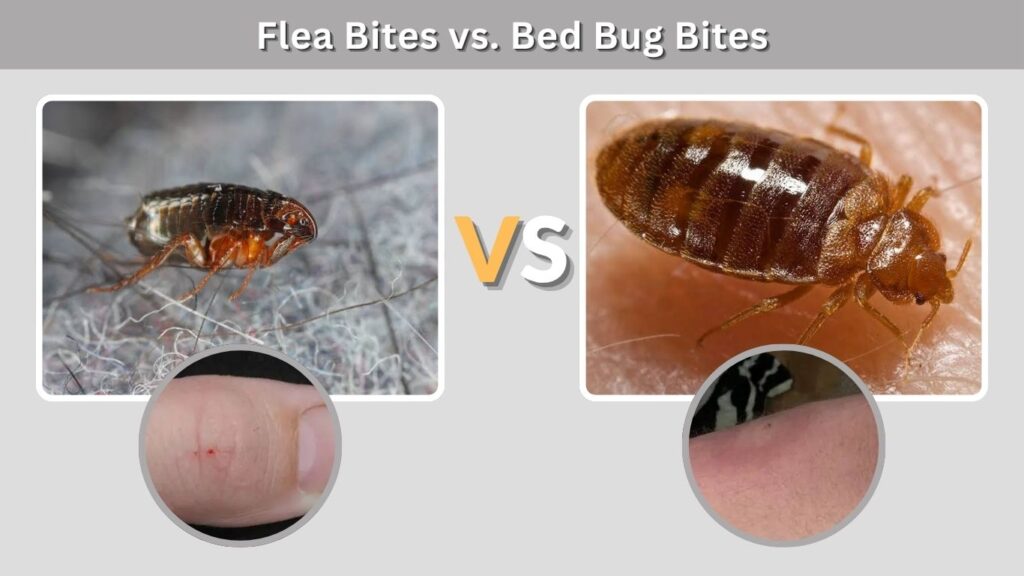
Flea bites and bed bug bites can produce similar skin reactions, including itching, redness, and small raised bumps. However, their typical locations and exposure patterns may provide clues. Bite appearance alone cannot reliably identify the insect because reactions vary between individuals. Finding the insects or other physical evidence is necessary for more accurate identification.
What Do Bed Bug Bites Look Like?
Bed bug bites often appear as small, itchy, reddish bumps on exposed areas of the body. Common locations include the arms, shoulders, neck, face, and legs.
Some bites develop in clusters or lines, although this arrangement is not unique to bed bugs.
Skin reactions may appear immediately or develop several days later. Some individuals experience little or no visible reaction, even after repeated exposure.
What Do Flea Bites Look Like?
Flea bites commonly appear as small, intensely itchy bumps. They frequently occur around the ankles, feet, and lower legs, especially after exposure to infested carpets or pets.
The affected skin may become irritated or swollen, particularly when repeatedly scratched.
Flea bites sometimes appear in groups, but their arrangement varies. Similar-looking bumps can result from other insects and skin conditions.
How to Tell Flea Bites From Bed Bug Bites
Bite location and surrounding evidence provide useful clues. Bed bug bites may be noticed after sleeping, particularly on exposed skin.
Flea bites often affect the lower legs and may occur in homes where pets are scratching excessively.
However, neither pattern confirms the pest. Inspecting sleeping areas and pets for actual insects provides stronger evidence.
Where Do Bed Bugs and Fleas Hide?
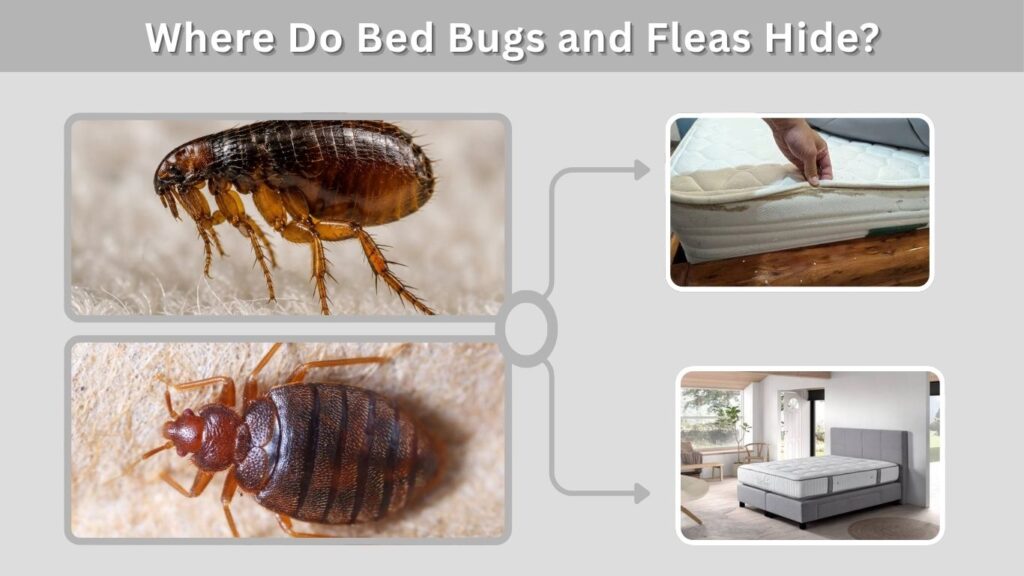
Both bed bugs and fleas can remain unnoticed while their populations increase. However, they occupy different environments during their life cycles. Bed bugs usually hide in narrow spaces near people, whereas fleas are closely connected to animal resting locations. Examining the appropriate areas improves the chances of detecting an infestation early.
Common Bed Bug Hiding Places
Bed bugs frequently hide along mattress seams, inside box springs, behind headboards, and within furniture joints.
They may also occupy cracks in walls, baseboards, and upholstered furniture.
Look for reddish-brown insects, dark fecal spots, pale shed skins, and tiny eggs. These physical signs are more dependable than skin irritation alone.
Common Flea Hiding Places
Adult fleas often remain on animals, while developing stages accumulate in surrounding environments.
Carpets, upholstered furniture, rugs, pet bedding, and floor crevices can support flea development.
Small black particles called flea dirt may appear in an infested animal’s fur. These particles contain digested blood and can turn reddish-brown when moistened.
How to Get Rid of Bed Bugs and Fleas
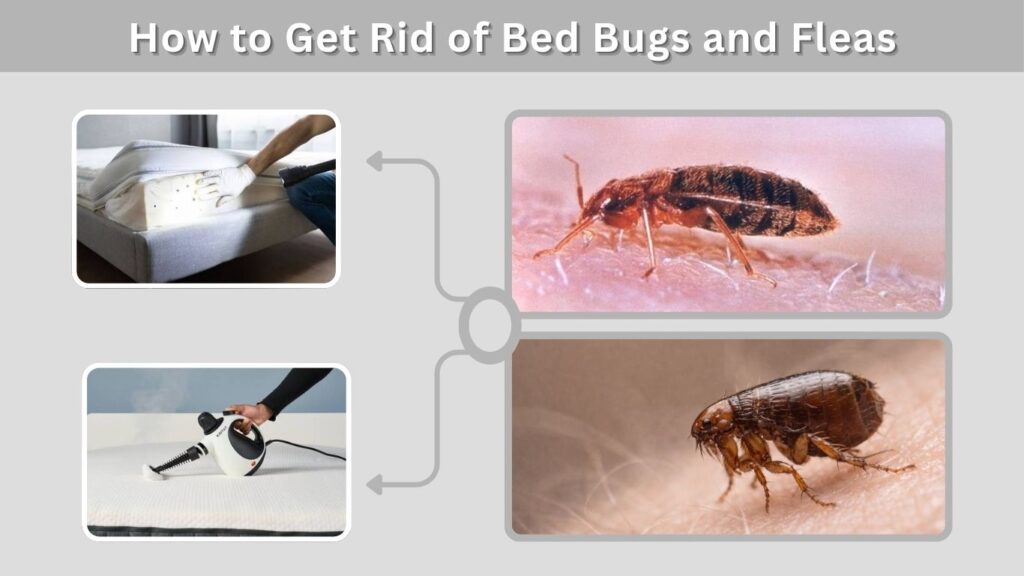
Removing bed bugs and fleas requires different treatment strategies because their hiding places and life cycles differ. Both pests can survive when treatment focuses only on visible insects. Effective management combines inspection, environmental cleaning, suitable pest-control methods, and repeated monitoring. More extensive infestations may require professional assistance.
How to Get Rid of Bed Bugs
- Inspect infested areas: Examine mattresses, bed frames, headboards, and nearby furniture for insects and hiding places.
- Use heat treatment: Dry suitable clothing and bedding on high heat for at least 30 minutes, following fabric-care instructions.
- Vacuum thoroughly: Clean mattress seams, furniture joints, and floor edges, then securely dispose of vacuum debris.
- Install mattress encasements: Use protective encasements designed specifically for bed bug management.
- Consider professional treatment: Contact an experienced pest-control professional when infestations persist or spread.
How to Get Rid of Fleas
- Treat household pets: Consult a veterinarian about appropriate flea-control products for each animal.
- Wash pet bedding: Clean blankets, covers, and washable fabrics regularly.
- Vacuum carpets: Focus on rugs, upholstery, floor edges, and locations where pets spend time.
- Address the environment: Use appropriately labeled treatment when necessary, following all safety instructions.
- Continue monitoring: Repeat recommended cleaning and control measures because immature fleas may emerge after initial treatment.
Do Flea and Bed Bug Sprays Work?
Insecticide sprays are commonly marketed for controlling fleas, bed bugs, or both. However, effectiveness varies according to the active ingredients, application method, and target insect. Some products are intended for specific surfaces or locations and should not be used elsewhere. Correct identification and following product labels are essential for safe and effective treatment.
Can Flea Spray Kill Bed Bugs?
Some flea-control sprays may affect bed bugs, but a product designed exclusively for fleas should not automatically be considered effective against bed bugs.
Check whether the label specifically lists bed bugs as a target pest.
Products intended for animal flea treatment must never be substituted for household bed bug treatments unless explicitly approved for that purpose.
Do Bed Bug and Flea Foggers Work?
Foggers release insecticide into enclosed spaces, but they do not reliably reach insects hidden deep inside mattresses, furniture, and cracks.
For this reason, foggers alone are generally ineffective against established bed bug infestations.
They also pose potential exposure and fire hazards when used incorrectly. An integrated treatment approach is more dependable than relying solely on fogging products.
How to Prevent Bed Bugs and Fleas
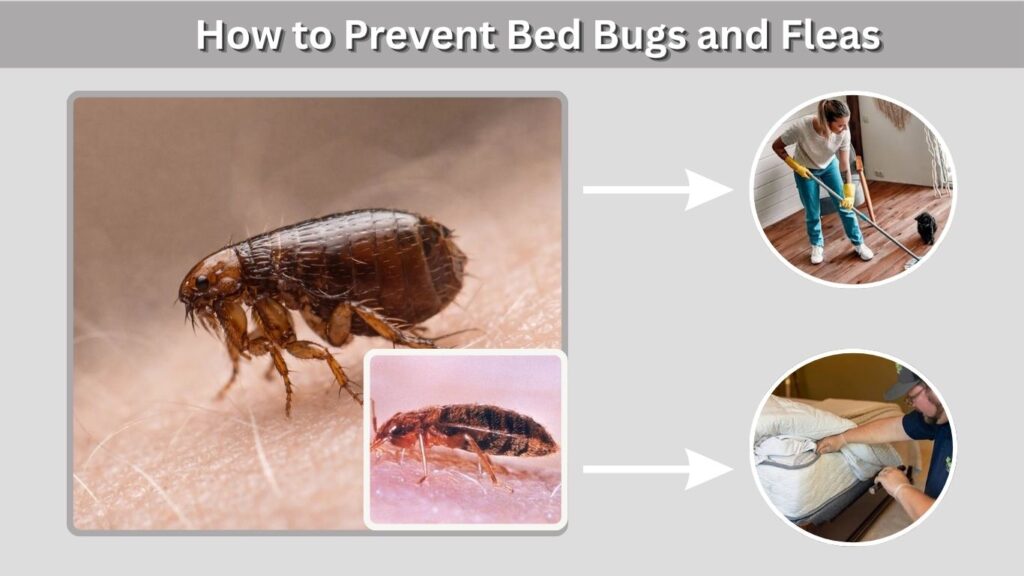
Preventing bed bugs and fleas requires regular inspection, cleaning, and attention to possible sources of infestation. Bed bugs often enter homes through luggage, furniture, and belongings, while fleas commonly arrive on animals. Addressing these different pathways helps reduce the likelihood of repeated problems and makes early detection easier.
Tips to Prevent Bed Bugs
- Inspect secondhand furniture: Examine mattresses, chairs, and upholstered furniture before bringing them indoors.
- Check travel accommodations: Look around mattress seams and headboards for infestation signs.
- Reduce clutter: Keep sleeping areas organized to limit potential hiding places.
- Monitor bedding: Investigate unusual dark stains, shed skins, or insects near beds.
- Handle infested belongings carefully: Avoid moving untreated items between rooms where they could spread insects.
Tips to Prevent Fleas
- Maintain pet protection: Follow veterinarian-recommended flea prevention throughout the appropriate season or year.
- Inspect pets regularly: Check fur and skin for fleas, flea dirt, and unusual scratching.
- Wash pet bedding: Clean animal resting materials frequently.
- Vacuum living spaces: Pay attention to carpets, rugs, furniture, and pet resting areas.
- Manage outdoor exposure: Discourage rodents and stray animals from sheltering around the property.
FAQs
1. Are Bed Bugs and Fleas the Same?
No. Bed bugs and fleas are different insects. Bed bugs crawl and commonly hide around beds, while fleas jump and frequently live on animals.
2. Can Bed Bugs and Fleas Live in the Same House?
Yes. A household can experience both infestations simultaneously. Each pest requires appropriate identification and a targeted treatment strategy.
3. Do Flea Bites and Bed Bug Bites Look Similar?
Yes. Both can cause itchy, reddish bumps. Their appearance may overlap considerably, making physical evidence necessary for reliable identification.
4. Can Fleas Live in Your Bed Like Bed Bugs?
Fleas can occur in bedding, particularly when infested pets sleep there. However, unlike bed bugs, fleas typically develop in environments associated with animal hosts.
5. Which Is Harder to Get Rid of, Bed Bugs or Fleas?
Both can be challenging. Bed bugs hide in difficult-to-reach spaces, while flea infestations require coordinated treatment of pets and their surroundings.
