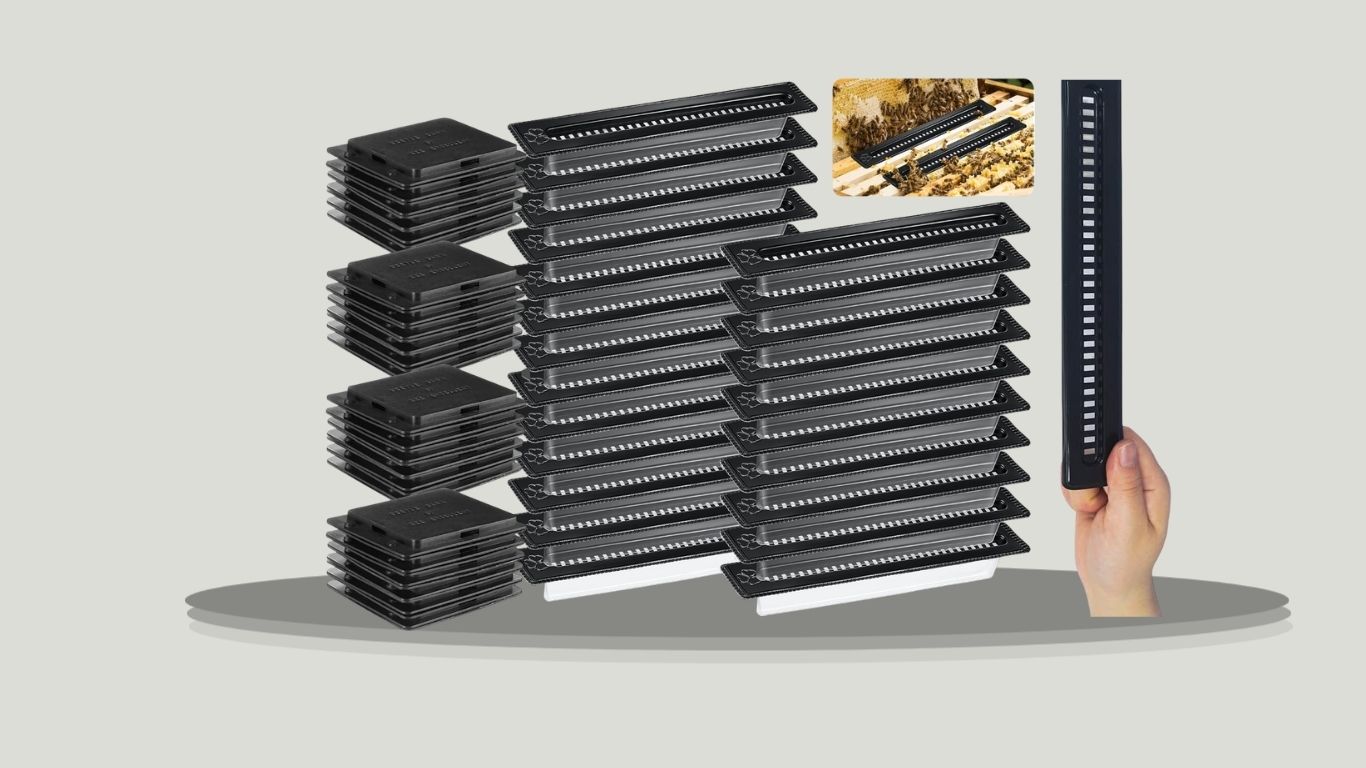
Small hive beetles can quickly become a serious problem inside a beehive by contaminating honey, damaging comb, and placing extra stress on the colony. Using a well-designed hive beetle trap can help reduce adult beetle numbers before they become harder to control. The best hive beetle traps are easy to install, reusable or disposable as needed, and designed to fit naturally within the hive. In this guide, we review seven reliable options that can help beekeepers improve hive protection and maintain healthier colonies.
1. Witbee Beetle Blaster Hive Beetle Traps
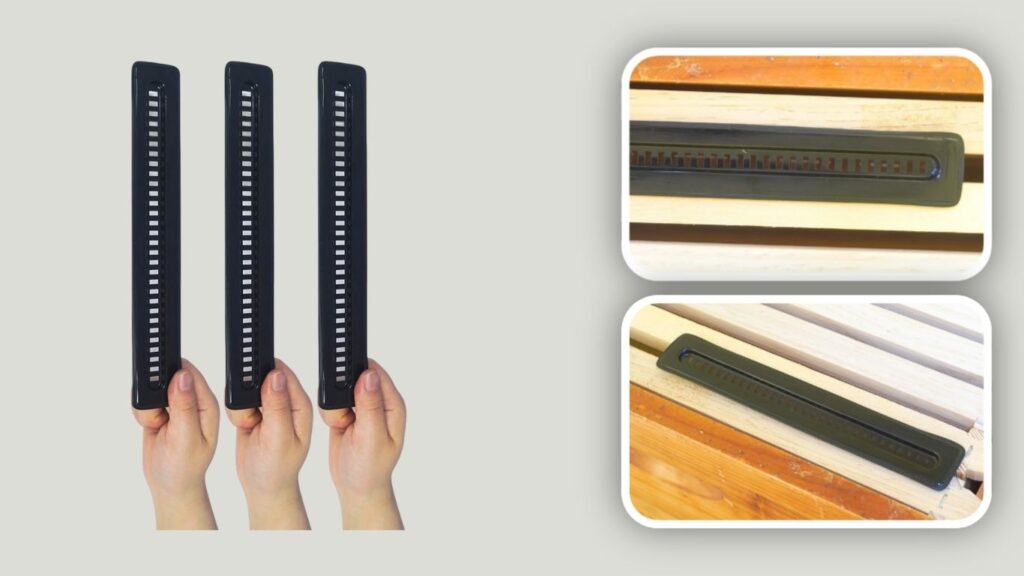
The Witbee Beetle Blaster is a straightforward in-hive solution designed to reduce adult small hive beetles without complicated equipment. Its narrow plastic body fits between hive frames, allowing beetles to enter while keeping honey bees away from the trapping area. The multi-pack format also makes it practical for beekeepers managing several colonies or wanting multiple traps inside higher-pressure hives.
Key Features
- Plastic Beetle Blaster-style construction
- Fits between hive frames
- Designed for vegetable or mineral oil
- Helps capture adult small hive beetles
- Large multi-trap format
- Simple, non-electric operation
Why It’s Best for Routine Hive Protection
The main strength of the Witbee design is simplicity. It takes advantage of a beetle’s tendency to seek narrow hiding spaces while bees patrol the hive. Once beetles enter an oil-filled trap, they have difficulty escaping.
This design makes sense for beekeepers who regularly inspect their colonies and want something that can remain inside the hive between inspections. It also avoids complicated moving parts, batteries, or external equipment.
Because the traps sit directly between frames, they can provide control close to where adult beetles are actually hiding.
Performance and Hive Management
The trap can be filled with an appropriate amount of vegetable or mineral oil, depending on the manufacturer’s directions. Avoid overfilling because oil spilling onto bees, brood, or comb would create unnecessary problems.
For colonies experiencing heavier pressure, strategically placing more than one trap can provide greater trapping coverage. Strong colony management is still essential, however. Small hive beetle control works best when hives remain well populated and excess unprotected comb is minimized.
Overall Verdict
The Witbee Beetle Blaster stands out as a practical option for beekeepers who prefer a traditional oil-trap approach. Its narrow design, straightforward placement, and multi-trap quantity make it particularly useful for repeated seasonal monitoring.
It is not a substitute for keeping colonies strong, but it provides a convenient mechanical tool that can become part of a regular small hive beetle management routine.
2. TIHOOD 12PCS Small Hive Beetle Traps
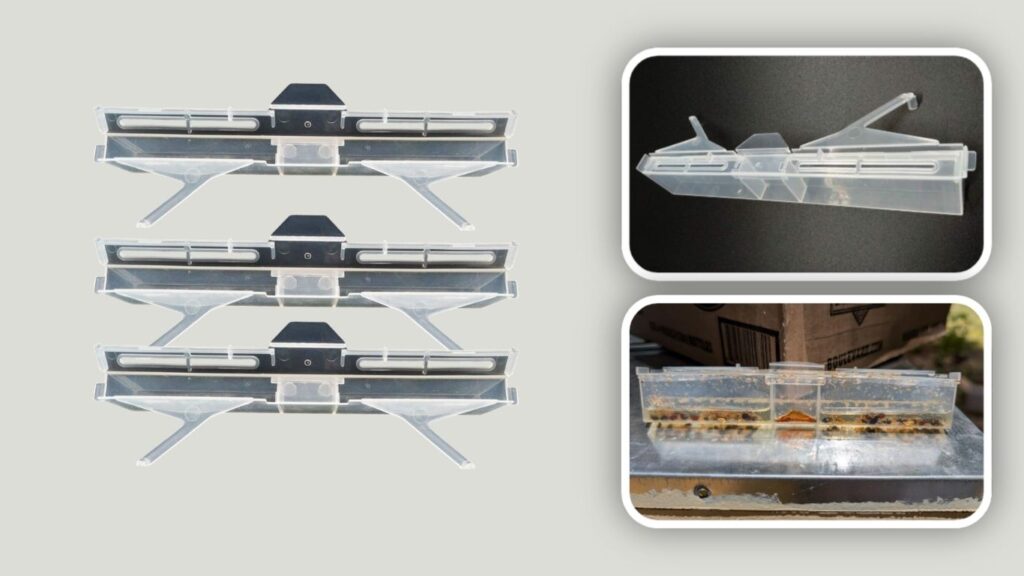
The TIHOOD 12-piece set offers a reusable-style trapping approach for small hive beetles. These compact traps are designed to sit between hive frames and use separate trapping areas for bait or oil. With twelve pieces included, the set provides enough flexibility for hobbyists managing several boxes or for placing multiple traps in colonies experiencing greater beetle pressure.
Key Features
- 12 traps per set
- Compact plastic construction
- Fits between hive frames
- Separate trapping compartments
- Can be used with oil or attractant
- Easy to install and inspect
Why It’s Best for Hobby Beekeepers
A 12-piece package offers a practical balance between quantity and manageability. It is large enough to protect multiple hives without leaving a beginner with an unnecessarily huge supply of traps.
The between-frame design also makes placement intuitive. Rather than modifying hive equipment, the traps can be positioned in locations where beetles are likely to retreat when bees chase them.
TIHOOD’s trap design can accommodate vegetable oil and, depending on the setup, an attractant such as apple cider vinegar in a separate compartment.
Performance and Ease of Maintenance
One advantage of this format is that the traps can be inspected during normal hive checks. You can determine which areas are catching more beetles and adjust placement accordingly.
Because liquid traps require upkeep, beekeepers should periodically check oil levels, remove captured beetles, and make sure propolis or debris has not blocked entry points.
Careful filling is also important. Adding excessive liquid can create unnecessary spill risk when frames are moved.
Overall Verdict
TIHOOD’s 12PCS Small Hive Trap is particularly suitable for beginner and intermediate beekeepers looking for a manageable, mechanically simple beetle-control tool.
The reusable-style construction and multiple compartments offer more flexibility than basic disposable blasters. For someone maintaining a few colonies and willing to clean traps during inspections, this set provides a useful combination of affordability, quantity, and practical hive integration.
3. 30 PCS Reusable Plastic Hive Beetle Traps
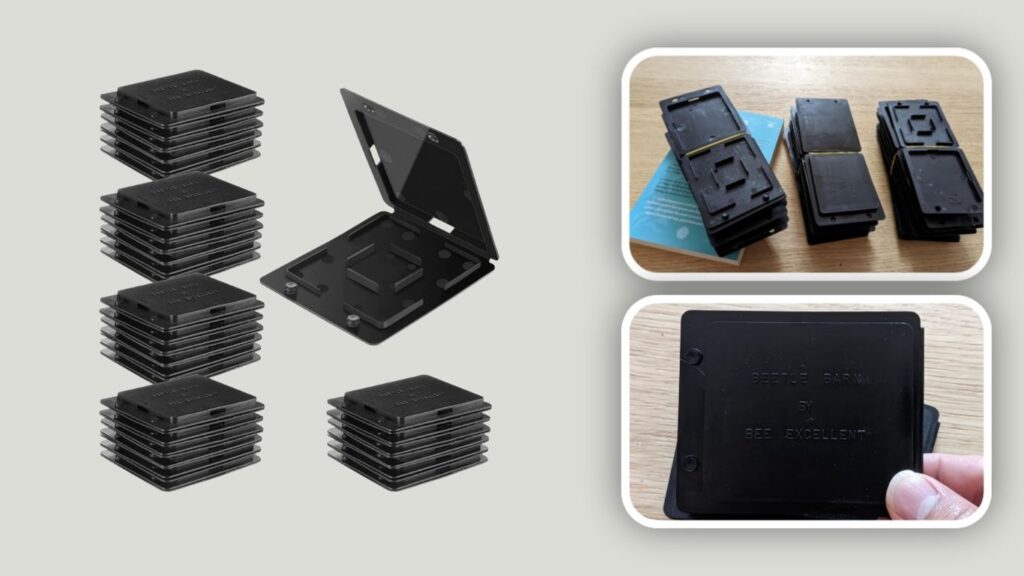
This 30-piece reusable hive beetle trap set is designed for beekeepers who want broad coverage across several colonies. The traps use durable black plastic and have a compact rectangular profile that fits into common hive configurations. Their reusable construction makes them especially appealing when beetle pressure continues throughout warm months and repeated trapping is necessary.
Key Features
- 30 reusable traps
- Weather-resistant plastic construction
- Compact rectangular profile
- Suitable for multiple hives
- Compatible with several trapping materials
- Easy to remove and maintain
Why It’s Best for Multiple Hives
Quantity is the biggest advantage here. A beekeeper managing several colonies can quickly use a dozen traps, especially when two or more are required in individual boxes during periods of heavy beetle activity.
Having 30 traps available also makes it easier to rotate dirty traps out for cleaning while keeping others active.
The design can be used with options such as mineral oil, vegetable oil, cider vinegar, or other trapping materials according to appropriate beekeeping practices.
Durability and Practical Performance
The black plastic construction is intended for repeated apiary use and is resistant to normal outdoor conditions. Because these traps are reusable, their value improves for beekeepers willing to clean and reset them instead of continuously replacing disposable traps.
Their compact dimensions also reduce interference with hive space compared with larger pest-control devices.
As with all in-hive traps, placement should be checked during inspections so beetles cannot simply establish hiding locations elsewhere in the box.
Overall Verdict
This 30-piece set is one of the strongest options for beekeepers prioritizing quantity and reuse.
It makes particular sense for a small or medium apiary where hive beetles appear seasonally across several colonies. Instead of depending on a few traps and constantly moving them between boxes, the larger quantity lets you establish more consistent protection.
Combined with strong colonies, sanitation, and regular inspection, these traps can become a useful long-term part of hive beetle management.
4. Qualirey Reusable Hive Beetle Collecting Traps
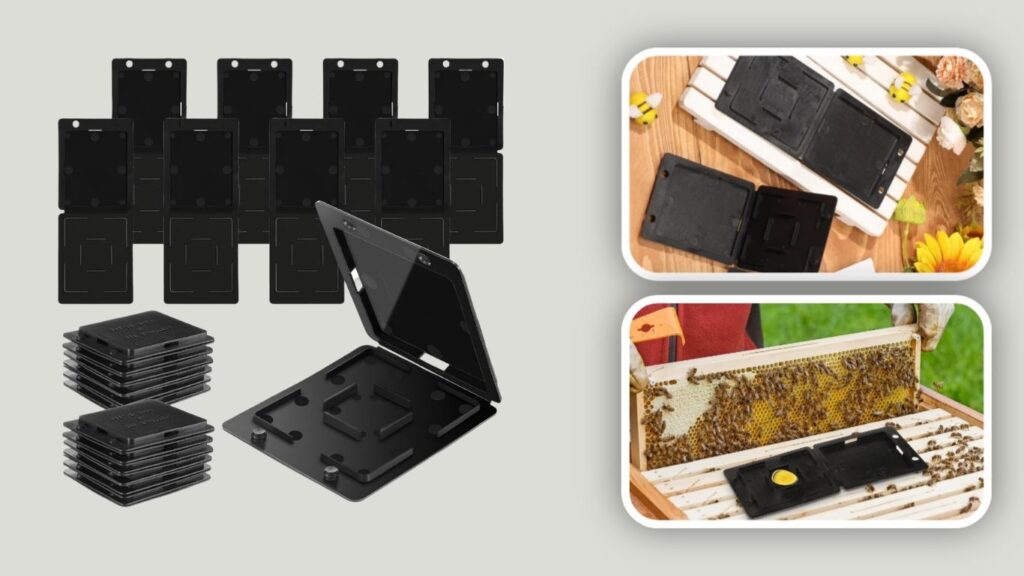
Qualirey Reusable Hive Beetle Collecting Traps are designed for beekeepers who want a trap that can remain part of their regular hive-maintenance routine instead of being discarded after a single use. Their plastic construction and compact format make them convenient for placement around areas where adult beetles attempt to hide from worker bees.
Key Features
- Reusable plastic design
- Intended for small hive beetles
- Compact in-hive placement
- Easy to inspect during hive checks
- Suitable for repeated seasonal use
- No powered components required
Why It’s Best for Repeated Seasonal Use
Reusable traps become especially attractive in climates where small hive beetles remain active through much of the warm season. Instead of treating traps as disposable equipment, beekeepers can clean, reset, and return suitable units to service.
This can make routine monitoring easier because the same style of trap remains familiar from one inspection to the next.
The design is also useful for beekeepers who prefer mechanical control methods rather than relying entirely on pesticides.
Performance and Maintenance
A reusable trap is only useful when it is maintained properly. During inspections, check for dead beetles, propolis buildup, wax debris, and changes in the trapping material.
Cleaning also gives you an opportunity to estimate beetle pressure. A trap that repeatedly fills faster than those in neighboring colonies may signal that the hive deserves additional attention.
Strong colonies remain the foundation of control because weak hives and excess unguarded comb give beetles more opportunity to reproduce.
Overall Verdict
The Qualirey reusable collecting design is a practical match for beekeepers who value low-complexity equipment they can continue using throughout the season.
Its real advantage is not flashy technology but repeatability. A trap that is simple to check, clean, and reinstall is more likely to become part of a consistent management schedule.
For apiaries where beetles return every year, that consistency can be more valuable than choosing a complicated trap that rarely gets maintained.
5. RONYOUNG 12PCS Small Hive Beetle Traps

RONYOUNG’s 12-piece small hive trap set provides a reusable trapping option with a format suited to hobby and backyard apiaries. Available product information highlights a sturdy construction, easy cleaning, and the ability to use bait-based trapping approaches. The quantity is also convenient for spreading traps across several colonies without purchasing a very large commercial package.
Key Features
- 12-piece package
- Reusable trap design
- Sturdy plastic construction
- Easy-clean format
- Suitable for attractant-based trapping
- Designed specifically for hive beetles
Why It’s Best for Reusable Beetle Control
The RONYOUNG set stands out because of its serviceable design. Instead of throwing away every trap after beetles are captured, the units can be opened and cleaned for subsequent use.
That feature becomes valuable during summer when traps may need frequent attention.
Users have also reported employing vinegar-based attractants with these traps, providing flexibility for beekeepers experimenting with different non-powered trapping strategies.
Practical Performance Inside the Hive
Compact beetle traps work best when placed where bees naturally chase beetles. Adult small hive beetles frequently look for cracks or sheltered spaces that workers cannot easily reach.
Strategic traps exploit that behavior by providing a refuge that becomes a capture point.
During each inspection, evaluate both the number of trapped beetles and the overall condition of the colony. A rapidly increasing trap count could indicate that additional hive-management measures are necessary.
Overall Verdict
RONYOUNG’s 12PCS set is a well-rounded choice for beekeepers who want reusable traps without buying an unusually large bulk package.
Its strongest qualities are straightforward maintenance and practical quantity. Twelve traps give backyard beekeepers enough units to protect multiple boxes while keeping replacements ready.
For people comfortable checking and cleaning their equipment during routine inspections, it provides an efficient mechanical approach to lowering adult beetle pressure without adding complicated equipment to the hive.
6. Small Hive Beetle Ultimate Prevention 15PCS Traps
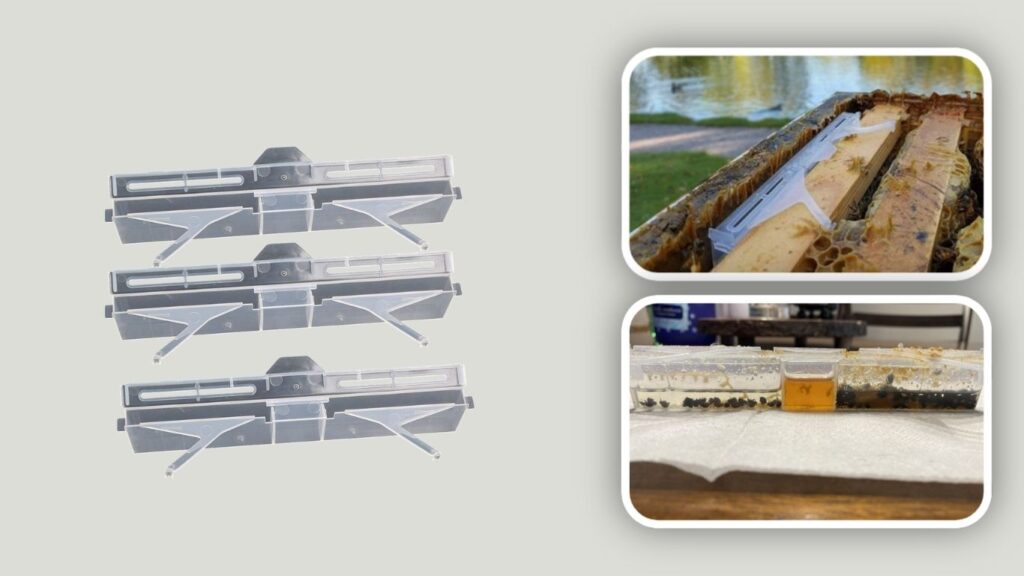
This 15-piece small hive beetle trap set, sold under the Micnaron brand in matching product listings, combines a lightweight plastic design with a two-compartment trapping format. The traps are designed for placement near the upper portion of hive boxes and can work with several trapping materials, including vegetable oil, mineral oil, hydrated lime, or dry capture methods.
Key Features
- 15 traps per package
- Double-compartment construction
- Lightweight plastic body
- Fits inside common hive boxes
- Works with several trapping materials
- No pesticide required for mechanical trapping
Why It’s Best for Flexible Trap Filling
One major advantage is the ability to experiment with different trapping approaches rather than being limited to one proprietary refill.
Vegetable or mineral oil offers a conventional drowning method, while hydrated lime or dry trapping can be considered where appropriate.
That flexibility can be useful for experienced beekeepers who already have a preferred small hive beetle routine.
Hive Fit and Practical Performance
The traps measure roughly seven inches long and are lightweight enough for straightforward hive placement. Their compact form helps them fit around the upper portion of hive boxes without consuming large amounts of valuable colony space.
The 15-piece quantity is also useful because multiple traps may be distributed among several colonies.
However, trapping should always be paired with broader management. Removing excess equipment, maintaining strong bee populations, and avoiding neglected comb are equally important for keeping beetle reproduction under control.
Overall Verdict
The Small Hive Beetle Ultimate Prevention traps offer excellent flexibility for beekeepers who like adjusting their pest-management technique.
The combination of 15 pieces, compact construction, and compatibility with several trapping materials makes the set suitable for both new and experienced hive owners.
Its strongest appeal is adaptability: rather than locking the beekeeper into a single approach, these traps can fit into several mechanical hive-beetle management strategies.
7. Qualirey Plastic Beetle Blaster Hive Traps
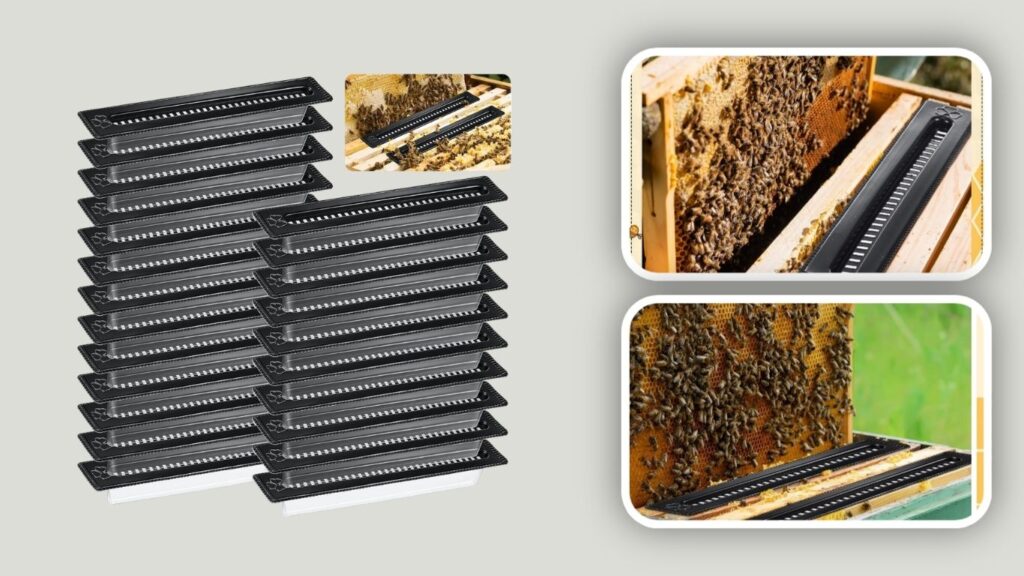
Qualirey Plastic Beetle Blaster Traps follow the familiar narrow in-hive trap concept used by many beekeepers for adult small hive beetle control. Available Qualirey versions are made from plastic and are offered in larger quantities, making them particularly suitable for apiaries where numerous traps must be deployed across multiple boxes.
Key Features
- Beetle Blaster-style design
- Plastic construction
- Narrow in-hive profile
- Suitable for bulk deployment
- Simple mechanical trapping approach
- Useful for routine beetle monitoring
Why It’s Best for Bulk Apiary Use
Beetle Blaster-style traps are inexpensive and uncomplicated, which becomes particularly important as the number of hives increases.
Rather than relying on one expensive device, a beekeeper can distribute multiple small traps wherever beetles are most active.
Qualirey offers this style in large quantities, making it practical to dedicate traps to individual colonies instead of continually moving equipment from hive to hive.
Trap Design and Hive Performance
This type of trap typically hangs or sits between frames and uses oil or another appropriate trapping material to capture beetles entering its narrow openings.
Bees themselves cannot easily enter the restricted space, while adult beetles seeking refuge can move inside.
This works well with natural hive behavior because worker bees frequently chase beetles toward cracks and confined locations.
Traps should still be monitored regularly. Oil levels, dead insects, wax buildup, and propolis can all affect performance over time.
Overall Verdict
Qualirey’s Plastic Beetle Blaster is particularly attractive for beekeepers who prioritize quantity, simplicity, and easy distribution across several colonies.
It may not offer the cleaning convenience of a more elaborate reusable multi-compartment trap, but the uncomplicated design makes replacement and deployment fast.
For an apiary experiencing recurring seasonal hive beetle pressure, having a generous supply of simple blaster-style traps can make it much easier to maintain consistent protection throughout the active season.
FAQs
1. Do hive beetle traps really work?
Yes. Mechanical traps can reduce the number of adult small hive beetles living inside a colony. Many designs work by allowing beetles into spaces bees cannot enter and then drowning or capturing them with oil or another trapping medium. However, traps work best as part of an integrated management program rather than as the only control method.
2. Where should I place hive beetle traps?
Many in-hive traps are positioned between frames, especially toward areas where adult beetles seek shelter from worker bees. Follow the specific manufacturer’s placement instructions because different trap styles are designed for different hive locations.
Checking several positions can help determine where beetles are concentrating within the colony.
3. What should I put inside a hive beetle trap?
Depending on the trap design, common options include vegetable oil, mineral oil, bait combined with oil, hydrated lime, or other materials specifically recommended for that trap. Some reusable designs have separate bait and drowning compartments.
Never overfill a liquid trap because spills inside the colony can create unnecessary risk.
4. How many hive beetle traps should I use per hive?
The appropriate number depends on beetle pressure, hive size, and trap design. Some suppliers recommend around two traps per box during heavy infestation, while other reusable designs suggest multiple traps strategically placed around affected boxes.
Follow the manufacturer’s instructions and increase monitoring when trap catches rise.
5. Can hive beetle traps completely eliminate an infestation?
Usually not by themselves. Traps mainly reduce adult beetle numbers. Effective long-term management also involves keeping colonies strong, reducing unused hive space, promptly handling harvested supers, removing abandoned equipment, and maintaining good apiary sanitation.