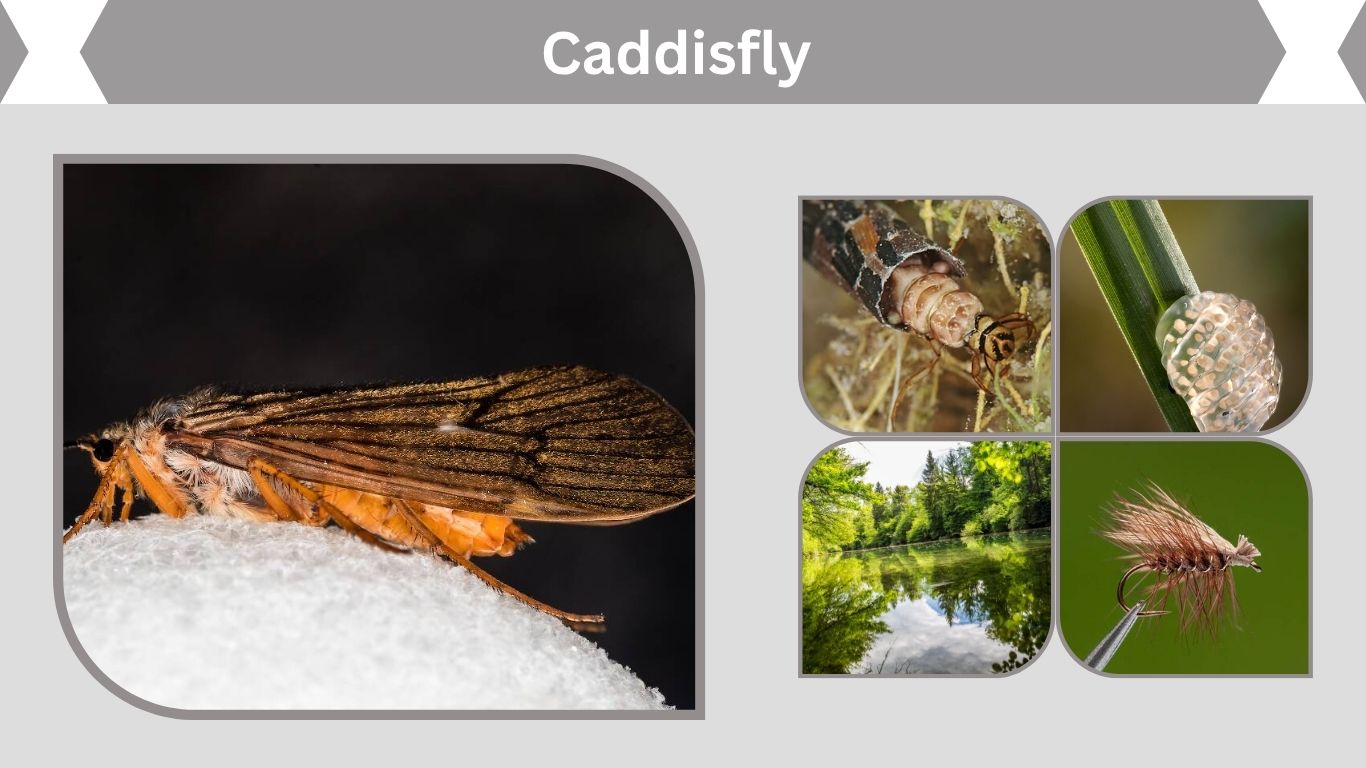
Caddisflies are fascinating aquatic insects known for their unique larvae that build protective cases from tiny stones, sand, leaves, and plant material. Belonging to the order Trichoptera, these insects play an important role in freshwater ecosystems and are commonly found in rivers, streams, ponds, and lakes. Caddisflies are also highly important in fly fishing because fish feed heavily on both larvae and adults. This guide explores caddisfly identification, life cycle stages, feeding habits, habitat, larvae types, and interesting facts about these remarkable underwater insects and their ecological importance.
What Is a Caddisfly?
Caddisflies are aquatic insects from the order Trichoptera and are closely related to moths and butterflies. Most species spend the majority of their lives underwater as larvae before transforming into flying adults. These insects are especially known for their case-building larvae, which create protective shelters using silk and materials gathered from freshwater environments.
Scientific Classification
- Order: Trichoptera
- Related to moths and butterflies
- More than 14,000 known species worldwide
Common Characteristics
- Hair-covered wings folded over the body
- Long antennae and soft bodies
- Usually active near water sources
Caddisfly Life Cycle
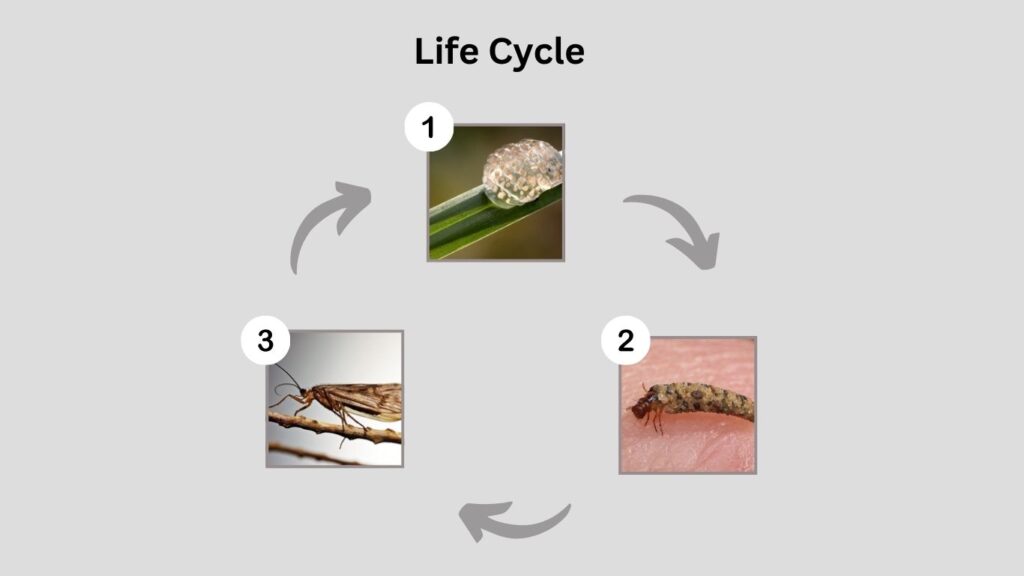
The caddisfly life cycle includes four stages: egg, larva, pupa, and adult. Most of the insect’s development occurs underwater during the larval stage. Each phase has specialized adaptations that help caddisflies survive in streams and lakes while contributing to freshwater food chains and ecological balance.
Egg Stage
Female caddisflies lay eggs on the surface of water or attached to aquatic plants and rocks. Depending on water temperature and species, the eggs may hatch within several days or weeks. Moist environments are essential because the eggs require constant water exposure to develop successfully.
Larval Stage
- Aquatic larvae build protective cases
- Feed on algae, plants, or tiny organisms
- Grow through several molting stages
- Spend most of their life underwater
Pupal and Adult Stage
Once fully grown, larvae enter the pupal stage inside a sealed case or shelter. During this transformation, the insect develops wings and adult body structures. Adult caddisflies emerge from the water and usually live only a few weeks, focusing mainly on reproduction and dispersal.
Types of Caddisfly Larvae
Caddisfly larvae are divided into several groups based on how they build shelters and gather food. Some species create portable protective cases, while others spin silk nets or remain free-living predators. These differences help scientists identify species and understand their ecological roles in freshwater habitats.
Cased Caddisfly Larvae
- Build portable cases from stones, leaves, and sand
- Carry their cases while crawling underwater
- Blend into the environment for camouflage
Net-Spinning Caddisflies
- Build silk nets attached to rocks
- Use flowing water to trap food particles
- Common in rivers and fast-moving streams
Caseless Caddisfly Larvae
- Do not build protective cases
- Often active predators of smaller insects
- Usually hide beneath rocks or debris
Caddisfly Habitat and Distribution
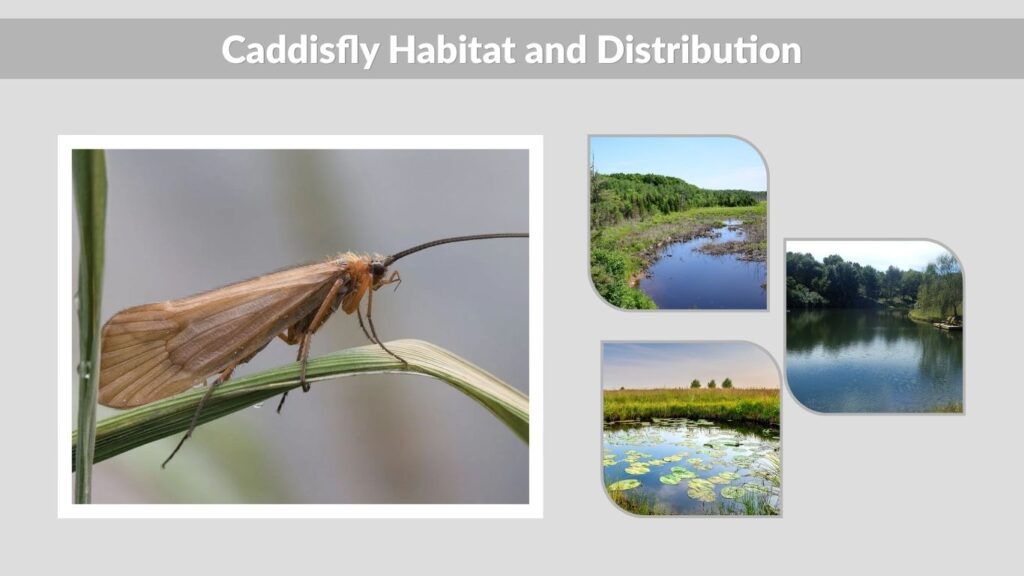
Caddisflies are found in freshwater habitats around the world. Most species prefer clean, oxygen-rich water and are commonly seen in streams, rivers, ponds, and lakes. Their sensitivity to pollution makes them valuable indicators of environmental health, helping scientists monitor freshwater ecosystems and detect contamination problems.
Streams and Rivers
Flowing water habitats are ideal for many caddisfly species because they provide oxygen and steady food supplies. Net-spinning larvae often dominate fast-moving streams where currents help bring organic particles directly into their silk traps. Rocky streambeds also provide shelter and stable surfaces for larvae to attach their cases.
Lakes and Ponds
Some caddisflies thrive in still water habitats such as lakes and ponds. These environments often support case-building species that feed on algae, plant debris, and organic matter found along the bottom. Aquatic vegetation provides protection and egg-laying surfaces for adult females.
What Do Caddisflies Eat?
Caddisflies have varied feeding habits depending on species and life stage. Larvae usually feed underwater on algae, organic debris, or small aquatic animals, while adults often consume very little food. Their feeding activities help recycle nutrients and support healthy freshwater ecosystems.
Diet of Caddisfly Larvae
- Algae and microscopic plants
- Decaying leaves and organic debris
- Tiny aquatic insects and plankton
Adult Feeding Habits
Adult caddisflies usually feed on nectar, plant fluids, or moisture when available. Many species eat very little because their adult lifespan is short and mainly focused on reproduction. Most adult activity occurs during evening hours near freshwater habitats.
How Caddisflies Build Their Cases
One of the most remarkable caddisfly characteristics is the ability of larvae to build protective cases using silk and materials gathered from the surrounding environment. These portable shelters protect the soft-bodied larvae from predators and strong currents while also helping them blend into rocks, sand, and aquatic plants within freshwater habitats.
Materials Used for Cases
- Tiny stones and gravel
- Sand grains and mud particles
- Small twigs and leaves
- Snail shells and plant debris
Purpose of the Protective Case
The protective case acts like armor for the larva while it moves underwater. Many species carefully select materials that match their habitat, improving camouflage and reducing the chance of being eaten by fish or larger aquatic insects. The case also helps stabilize the larva in fast-moving streams.
Caddisflies and Water Quality
Caddisflies are considered important bioindicators because many species are highly sensitive to pollution. Healthy populations usually indicate clean, oxygen-rich water, while declining populations may signal contamination or habitat damage. Scientists often study caddisfly larvae during freshwater surveys to evaluate environmental conditions and ecosystem health.
Why Caddisflies Indicate Clean Water
- Require oxygen-rich freshwater habitats
- Sensitive to chemical pollution
- Decline in heavily contaminated streams
Importance in Environmental Monitoring
- Used in freshwater quality surveys
- Help scientists detect ecosystem changes
- Support conservation and habitat restoration efforts
Caddisflies in Fly Fishing
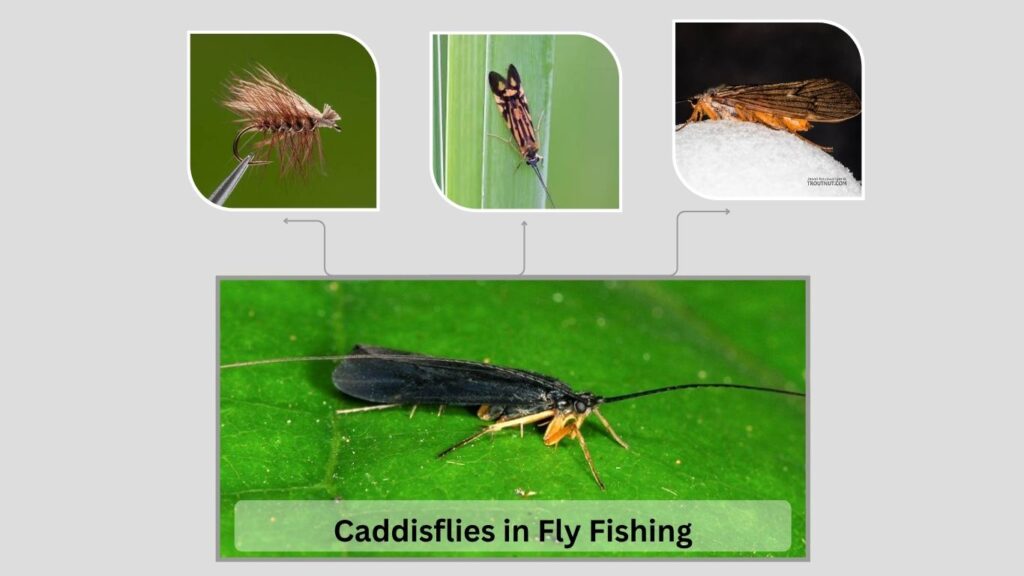
Caddisflies are among the most important aquatic insects in fly fishing because trout and other fish feed heavily on their larvae, pupae, and adults. Fly anglers often imitate caddisflies using artificial fly patterns designed to match different life stages during seasonal insect hatches.
Popular Caddisfly Fly Patterns
- Elk Hair Caddis
- Zebra Caddis
- October Caddis
- Soft Hackle Caddis
Why Fish Feed on Caddisflies
Caddisflies are abundant in many rivers and streams, making them a reliable food source for freshwater fish. During major hatches, adult insects emerge in large numbers, creating feeding opportunities that attract trout and other predatory fish near the water surface.
Are Caddisflies Dangerous?
Caddisflies are harmless insects that do not bite, sting, or spread disease to humans. Although adults may gather near lights around homes during large hatches, they are not considered dangerous pests. In fact, their presence often indicates nearby clean water and a healthy freshwater ecosystem.
Do Caddisflies Bite?
- Adults do not bite humans
- Larvae are harmless aquatic insects
- No venom or stingers present
Caddisflies Around Homes
Adult caddisflies are strongly attracted to lights at night, especially near rivers and lakes. Large swarms may occasionally appear around windows, porches, or streetlights, but they usually disappear naturally after the short breeding period ends.
Common Caddisfly Species and Families
Thousands of caddisfly species exist worldwide, and many belong to groups with unique behaviors and body structures. Some species are known for long antennae, while others specialize in net-spinning or large case-building behaviors commonly observed in streams and rivers.
Long-Horned Caddisflies
- Known for extremely long antennae
- Common in freshwater streams
- Often active during evening hours
Net-Spinning Families
- Build silk feeding nets underwater
- Common in fast-flowing rivers
- Important filter feeders in aquatic ecosystems
October and Northern Caddisflies
These larger species emerge during autumn and are especially important in fly fishing. Their large size makes them attractive prey for trout, and anglers frequently imitate them with seasonal fly patterns during fall fishing conditions.
Interesting Facts About Caddisflies
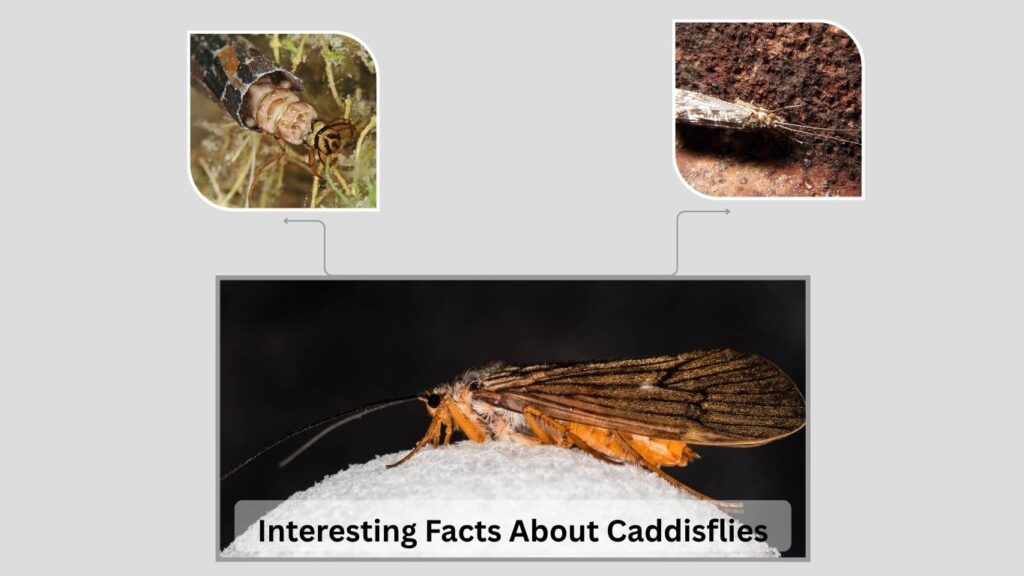
Caddisflies are some of the most fascinating aquatic insects because of their underwater engineering abilities and ecological importance. Scientists, artists, and fly fishers have studied them for decades because of their unique behaviors, silk production, and role in freshwater ecosystems.
Unique Caddisfly Facts
- Larvae produce silk underwater
- Fossil caddisflies date back millions of years
- Some artists use larvae to create jewelry
Why They Are Called Underwater Architects
Caddisfly larvae carefully design and construct their protective cases using natural materials found around them. Their ability to build customized shelters with camouflage and structural stability has earned them the nickname “underwater architects” among entomologists and nature enthusiasts.
FAQs
What is a caddisfly?
A caddisfly is an aquatic insect from the order Trichoptera that spends most of its life underwater as a larva before emerging as a winged adult.
What do caddisfly larvae eat?
Caddisfly larvae feed on algae, decaying plant material, plankton, and tiny aquatic organisms depending on the species.
Are caddisflies dangerous to humans?
No, caddisflies are harmless insects that do not bite, sting, or spread disease to humans or pets.
Why are caddisflies important in fly fishing?
Trout and other freshwater fish feed heavily on caddisflies, making them one of the most important insects imitated by fly fishing patterns.
How can you identify a caddisfly larva?
Caddisfly larvae are soft-bodied aquatic insects often found inside protective cases made from stones, sand, leaves, or other natural materials.