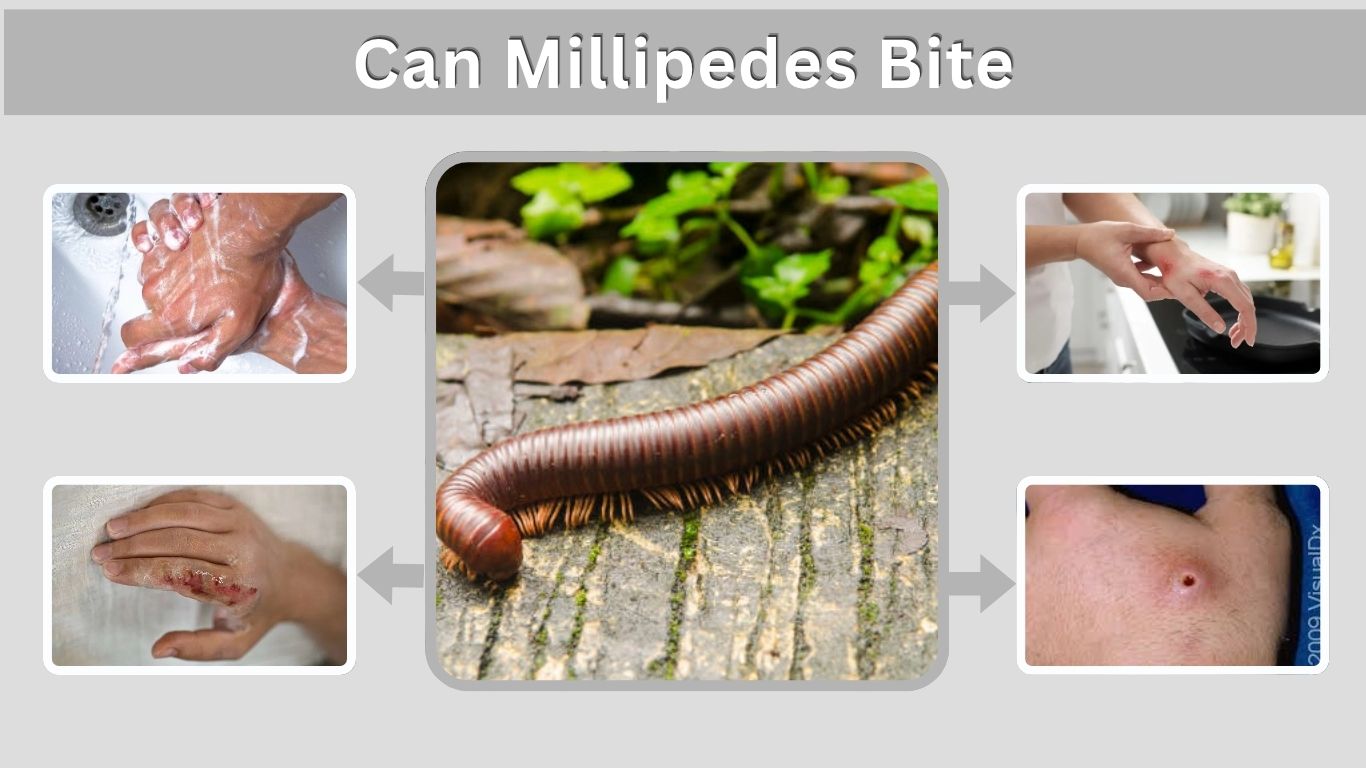
Millipedes are slow-moving arthropods commonly found in gardens, forests, and damp outdoor areas. Many people wonder whether millipedes can bite because these creatures sometimes appear in homes or crawl across soil and leaf litter after rain. They are often confused with centipedes, which are more aggressive and capable of painful bites. Unlike centipedes, millipedes mainly feed on decaying organic matter and prefer to avoid danger instead of attacking humans or animals when disturbed.
Although millipedes are generally harmless, some species can release defensive chemicals that may irritate the skin. Understanding how millipedes defend themselves and whether they can actually bite helps reduce unnecessary fear and allows people to handle these creatures more safely.
Can Millipedes Bite Humans?
Millipedes do have mouthparts, but they are very weak and mainly designed for chewing decaying plant material. These arthropods are not aggressive predators and rarely attempt to bite humans. In most situations, millipedes prefer to curl into a defensive position or hide rather than attack.
Do Millipedes Have Mouthparts?
Millipedes possess small mouthparts that help them eat dead leaves, rotting wood, and other soft organic material. Their jaws are much weaker than those of centipedes and are not designed for hunting or defense against large animals.
Why Millipedes Rarely Bite
Millipedes move slowly and depend on defensive behaviors instead of aggression. When threatened, they usually curl into a spiral shape to protect their softer underside. Because of this defensive strategy, biting humans is extremely uncommon.
Can a Millipede Bite Hurt?
If a millipede manages to pinch the skin, the sensation is usually very mild. Most people experience little or no pain from direct contact. Skin irritation is more often caused by the millipede’s defensive chemicals rather than its mouthparts.
What Happens if a Millipede Bites You?
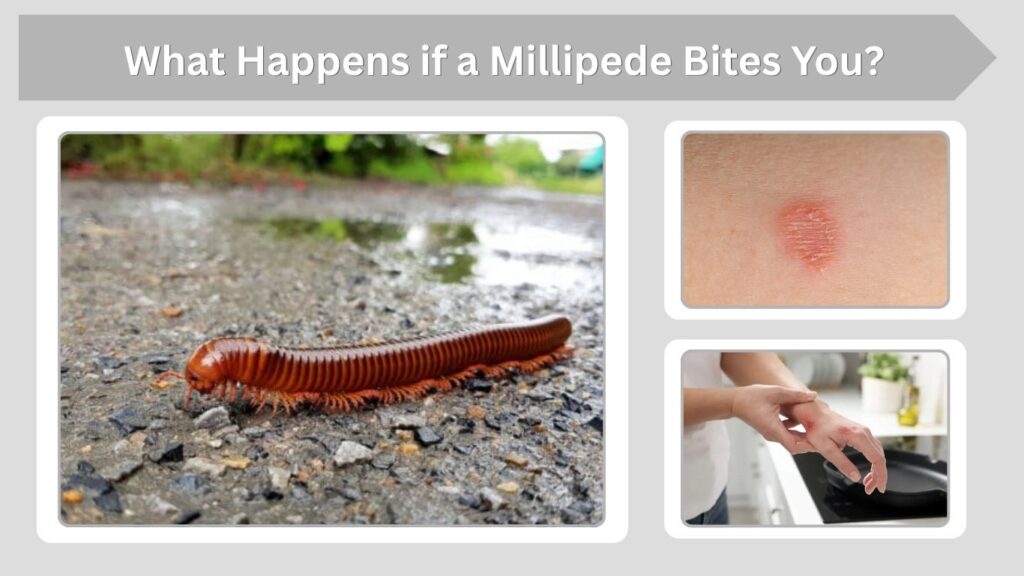
Millipede bites are extremely rare and usually harmless. In most cases, people who touch millipedes are more likely to experience irritation from defensive secretions instead of an actual bite. These reactions are typically mild and temporary.
Common Symptoms After Contact
- Mild skin redness
- Temporary irritation
- Burning sensation
- Brown or yellow skin staining
- Unpleasant odor from defensive fluids
Millipede Defensive Chemicals
Some millipedes release chemicals when stressed or frightened. These secretions help discourage predators and may contain irritating compounds. Contact with eyes or sensitive skin can cause discomfort, so washing the area after handling a millipede is recommended.
Can a Millipede Bite Cause Death?
Millipede bites do not cause death in healthy humans. They do not possess deadly venom and are considered low-risk animals. Serious reactions are extremely rare and usually related to allergies or accidental exposure to defensive chemicals in the eyes.
Can Giant Millipedes Bite?
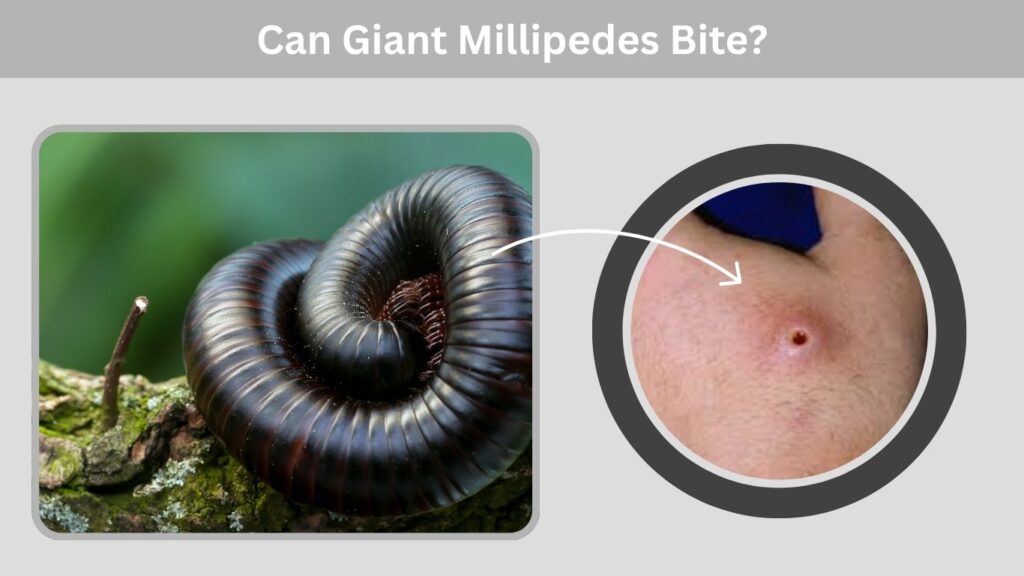
Giant millipedes are popular pets because of their calm behavior and unusual appearance. Many people worry that larger species may have stronger bites, but giant millipedes are still considered harmless and rarely attempt to bite humans.
Can Giant African Millipedes Bite?
- Weak mouthparts
- Rare biting behavior
- Calm temperament
- Slow movement
- Non-aggressive nature
Are Giant Millipedes Dangerous?
Giant millipedes are generally safe to handle gently. Their main defense is the release of mild chemicals rather than biting. Some people may experience temporary skin irritation after contact, especially if they touch their face or eyes afterward.
How to Handle Giant Millipedes Safely
Giant millipedes should be handled carefully to avoid stressing them. Washing hands after handling is important because defensive chemicals may remain on the skin. Gentle handling also helps protect the delicate body of the millipede from injury.
Can Millipedes Sting or Attack?
Millipedes are defensive creatures that avoid confrontation whenever possible. Unlike bees, wasps, or centipedes, they do not sting or actively attack humans. Their survival strategy depends mainly on hiding, curling into a ball, and releasing defensive chemicals when threatened.
Do Millipedes Sting?
- No stingers
- No venom injection
- No aggressive attacks
- Defensive chemicals instead
- Harmless to most humans
How Millipedes Defend Themselves
When threatened, millipedes often curl tightly into a spiral shape to protect their softer body parts. Some species also release strong-smelling fluids that discourage predators from eating them. These defenses are usually enough to keep predators away.
Are Millipedes Aggressive?
Millipedes are not aggressive animals and rarely interact with humans intentionally. They spend most of their time hiding in moist environments such as soil, leaf litter, or beneath logs where they feed on decaying material.
Millipede vs Centipede Bites
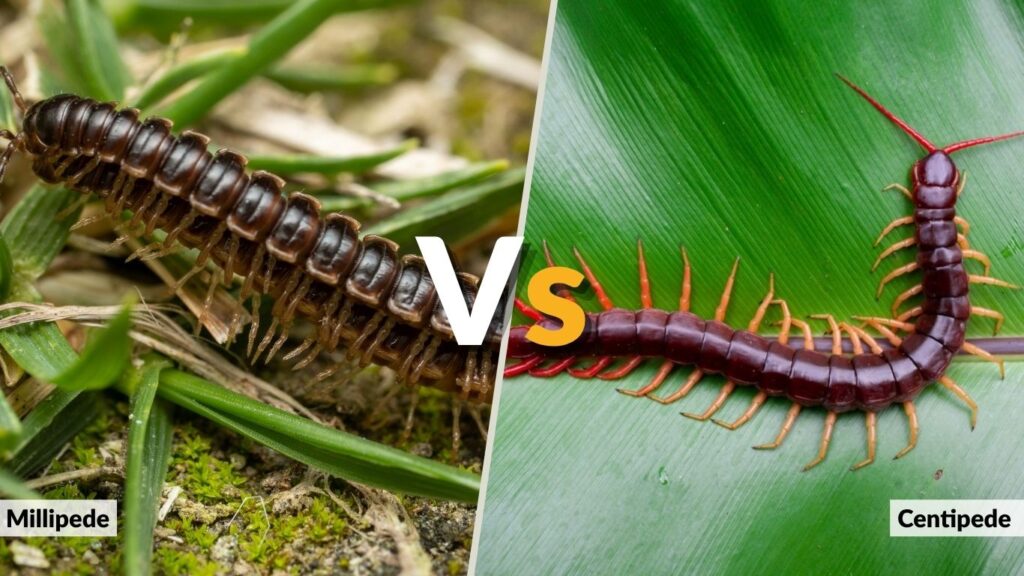
Millipedes and centipedes are commonly confused because both have long segmented bodies and many legs. However, their behavior and defense methods are very different. Centipedes are active predators that can bite humans, while millipedes are slow-moving decomposers that mainly rely on chemical defenses instead of aggression.
Which One Bites Humans?
- Centipedes can bite humans
- Millipedes rarely bite
- Centipedes hunt prey actively
- Millipedes feed on decaying plants
- Millipedes prefer defensive curling behavior
Which Is More Dangerous?
Centipedes are more dangerous because they inject venom through specialized front legs. Their bites may cause pain, swelling, and irritation. Millipedes do not inject venom and usually cause only mild skin irritation from defensive chemicals.
How to Tell Them Apart
Millipedes have rounded bodies and two pairs of legs on most body segments. Centipedes have flatter bodies with one pair of legs per segment and move much faster. Centipedes are also more aggressive and active hunters compared to millipedes.
Are Millipede Bites Poisonous?
Millipedes are not venomous animals, but some species produce defensive chemicals that may irritate skin or eyes. These secretions help protect them from predators and are sometimes mistaken for poisonous bites. In most situations, the effects are mild and temporary.
Poisonous vs Venomous
Millipedes are considered mildly poisonous rather than venomous because they release chemicals instead of injecting venom through bites. Venomous animals actively inject toxins, while poisonous animals usually cause harm through touch or consumption.
Can Millipede Chemicals Harm Skin?
- Mild burning sensation
- Temporary redness
- Skin discoloration
- Irritation on sensitive skin
- Eye discomfort if touched afterward
Are Millipedes Dangerous to Pets?
Dogs and cats may experience mild mouth irritation or stomach upset if they chew on a millipede. The defensive chemicals usually create unpleasant tastes rather than serious poisoning. Most pets recover quickly without severe health problems.
What to Do if a Millipede Bites You
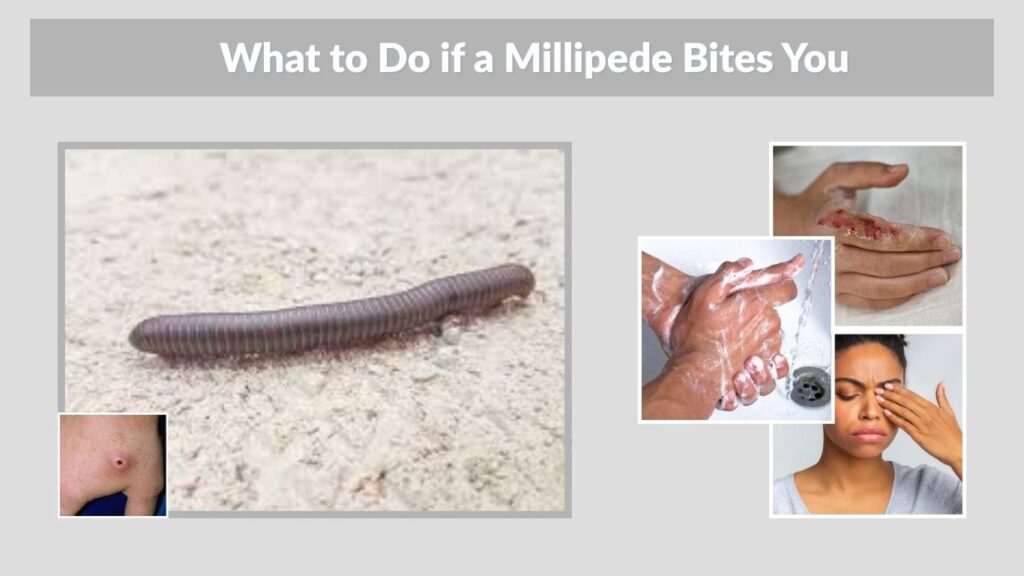
Millipede bites and chemical exposure are usually mild and easy to treat at home. Basic cleaning and avoiding further irritation are often enough to solve the problem. Serious reactions are rare but should still be monitored carefully.
First Aid for Millipede Contact
- Wash the skin with soap and water
- Avoid touching the eyes
- Remove chemical residue quickly
- Apply cool water for irritation
- Monitor for allergic reactions
When to Seek Medical Help
Medical attention may be needed if severe allergic reactions, strong swelling, or persistent pain develops after contact with a millipede. Eye exposure should also be treated carefully because defensive chemicals may cause temporary irritation or redness.
Preventing Future Contact
People can reduce contact with millipedes by removing damp debris, leaves, and rotting wood around homes. Wearing gloves while gardening or moving logs also helps prevent accidental exposure to defensive secretions.
Common Myths About Millipede Bites
Many myths make millipedes seem more dangerous than they really are. In reality, these arthropods are harmless decomposers that rarely interact aggressively with humans. Understanding the facts helps reduce fear and confusion about millipede behavior.
Myth: Millipedes Are Deadly
- Millipedes do not have deadly venom
- Most species are harmless
- Bites are extremely rare
- Defensive chemicals are usually mild
- Serious reactions are uncommon
Myth: Millipedes Chase Humans
Millipedes do not chase or hunt people. They move slowly and usually try to hide when disturbed. Their main goal is to stay in damp, protected environments where they can feed on decaying organic material safely.
Myth: All Large Millipedes Bite
Large millipede species, including giant African millipedes, are generally calm and non-aggressive. Their size may appear intimidating, but they rarely bite humans and usually depend on curling into a ball for protection.
FAQs
Can millipedes bite humans?
Millipedes can technically bite because they have mouthparts, but bites are extremely rare and usually harmless. Their jaws are weak and designed for eating decaying plant matter rather than attacking people. Most irritation comes from defensive chemicals instead of actual bites.
Can a millipede bite kill you?
No, a millipede bite cannot kill a healthy human. Millipedes do not inject deadly venom and are considered low-risk arthropods. At most, some species may cause mild skin irritation or discomfort through defensive secretions released when they feel threatened.
Do giant millipedes bite?
Giant millipedes rarely bite humans because they are calm and non-aggressive animals. Their mouthparts are weak and mainly used for eating decaying organic matter. Most giant millipedes defend themselves by curling into a spiral shape or releasing mild defensive chemicals.
Can millipedes sting people?
Millipedes cannot sting because they do not have stingers or venom injection systems. Instead, some species release defensive chemicals that may irritate skin or eyes. These secretions are usually mild and temporary when washed off quickly with soap and water.
Which is more dangerous, a centipede or a millipede?
Centipedes are more dangerous because they are venomous predators capable of painful bites. Millipedes are slow-moving decomposers that rely on mild defensive chemicals instead of venom. In general, millipedes are considered far less harmful to humans and pets.