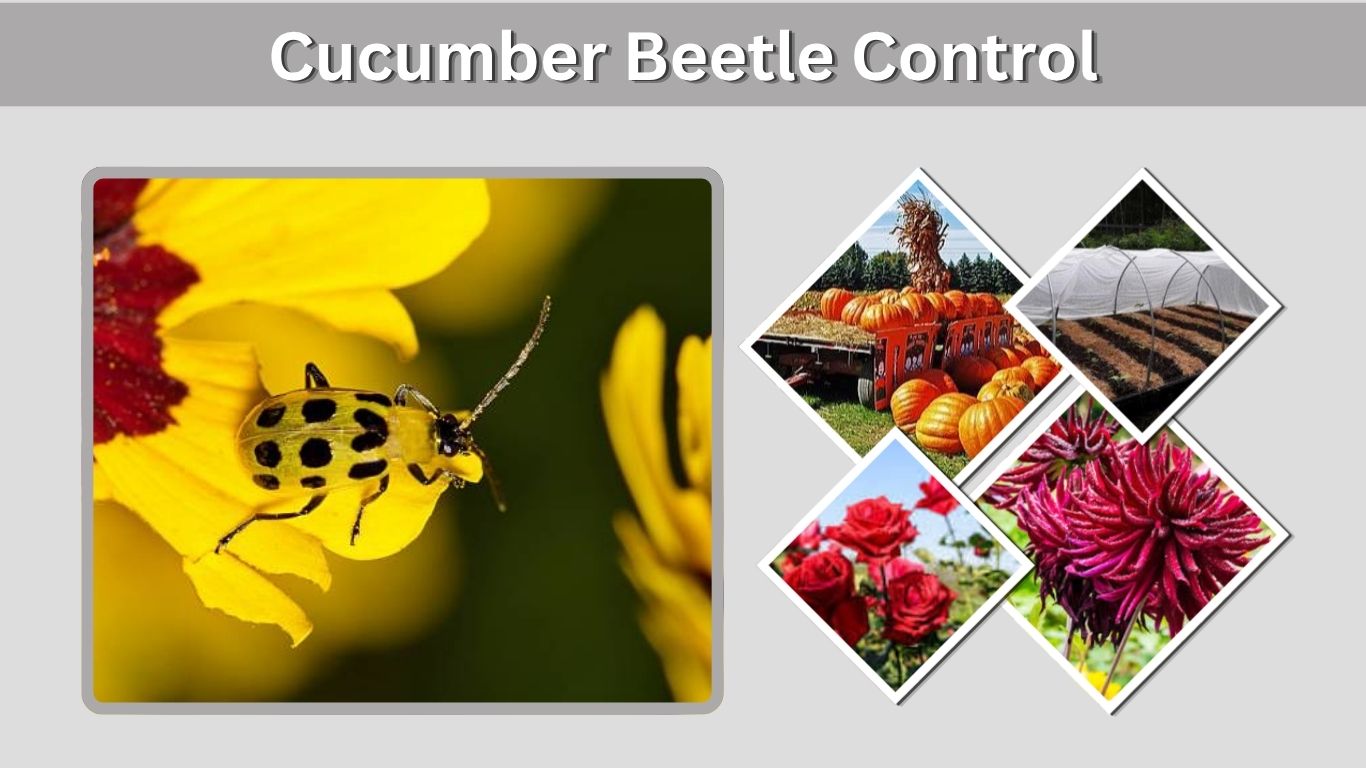
Cucumber beetle control works best when it begins before serious leaf damage or bacterial wilt appears. Both striped and spotted cucumber beetles feed on cucumbers, squash, pumpkins, melons, and other plants. Young seedlings are especially vulnerable because only a few beetles can stunt or kill them. An effective program combines regular inspection, physical barriers, garden sanitation, trap crops, and carefully selected treatments when necessary.
Identify the Beetle Before Starting Control
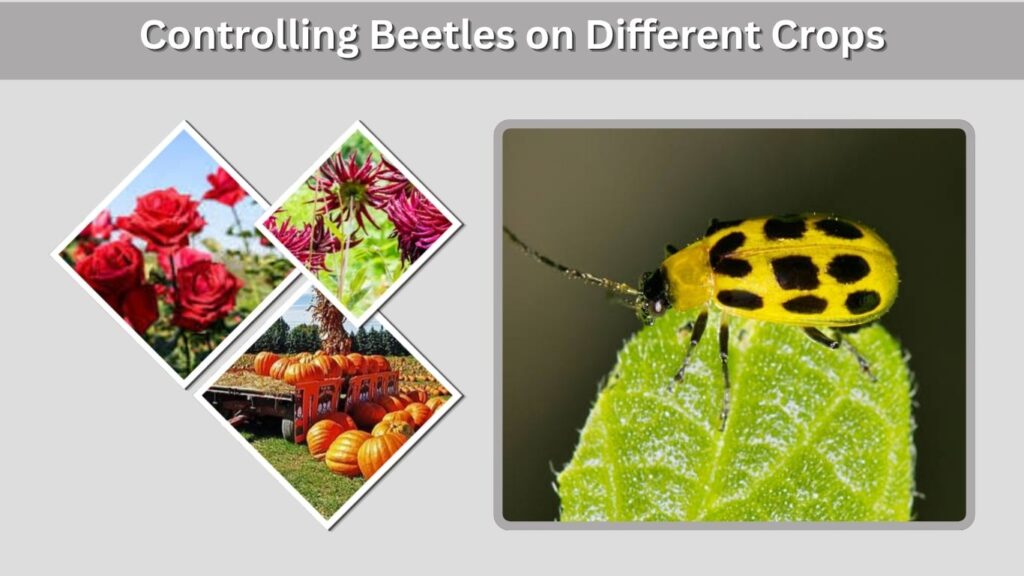
Striped and spotted cucumber beetles cause similar aboveground damage, but their life cycles and preferred hosts differ. Correct identification helps determine where and when control efforts should be concentrated.
| Feature | Striped cucumber beetle | Spotted cucumber beetle |
| Appearance | Yellow body with three black stripes | Yellow-green body with 12 black spots |
| Main target | Cucumbers, squash, pumpkins, and melons | Cucurbits, beans, corn, potatoes, and ornamentals |
| Early-season risk | Often high | Usually lower in northern regions |
| Larval feeding | Cucurbit roots and underground stems | Primarily corn, grass, and other plant roots |
| Disease concern | Important bacterial wilt carrier | Can also transmit plant pathogens |
Early-season attention should usually focus on striped cucumber beetles. Newly emerged and transplanted cucurbits should be inspected two or three times per week because feeding can rapidly destroy small plants. Larger plants can generally be checked weekly.
How to Control Cucumber Beetles Naturally
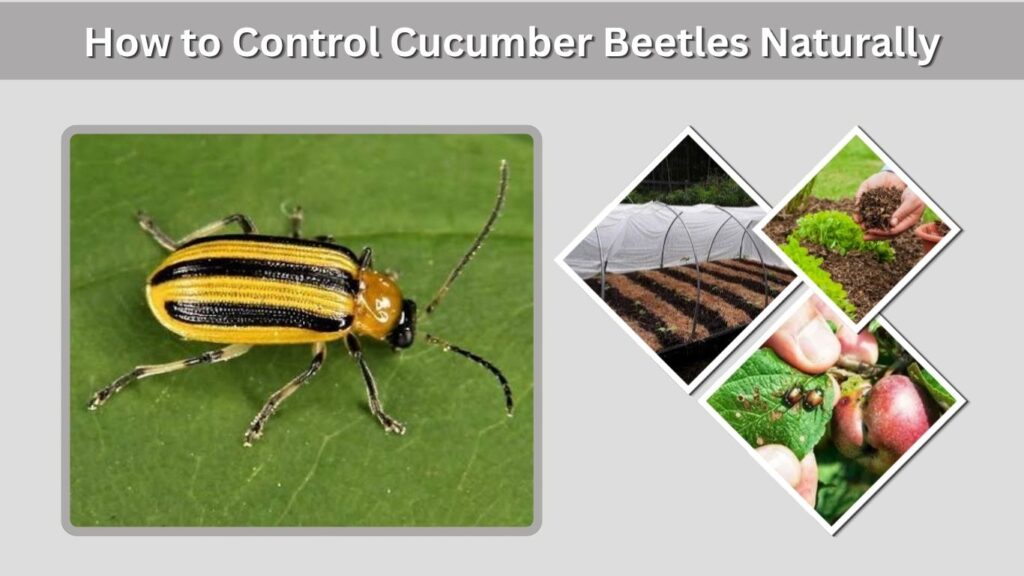
Natural cucumber beetle control depends more on preventing access to plants than on trying to kill a large established population. Combining several methods is usually more effective than relying on one homemade spray.
Inspect and Hand-Pick Beetles
Examine cotyledons, new leaves, flowers, stem bases, and leaf undersides. Cucumber beetles commonly hide inside yellow blossoms or drop from plants when disturbed.
For a small garden, place a container of soapy water beneath the plant and gently knock the beetles into it. Early morning is often a convenient time to inspect plants because the insects may be less active. Continue checking every few days after finding the first beetle.
Protect Seedlings With Row Covers
Floating row covers or fine insect netting provide some of the most reliable protection for young cucumber, melon, squash, and pumpkin plants. Install the covering immediately after planting and secure every edge so beetles cannot crawl underneath.
Remove the cover when flowers open because most cucurbit crops need insect pollination. Parthenocarpic cucumber varieties that produce fruit without pollination may remain covered longer when their growing instructions permit it.
Use Mulch Around the Plants
A thick layer of straw can make it harder for striped cucumber beetles to lay eggs near plant stems. Organic or plastic mulch also separates fruit from moist soil, reducing opportunities for larvae to feed on fruit surfaces.
Reflective or aluminum-coated plastic mulch can disorient and repel adult beetles. Drip irrigation is helpful because it limits the broad areas of wet soil that may encourage fruit and larval feeding.
Remove Weeds and Crop Debris
Remove weeds around the garden because spotted cucumber beetles can use grasses and other plants as alternative hosts. At the end of the growing season, remove old vines, roots, fallen fruit, and leaf litter that could provide shelter.
Rotate cucurbits away from the previous year’s planting area whenever possible. Rotation is particularly valuable when combined with row covers because beetles emerging near an old planting cannot immediately reach the protected new crop.
Organic Cucumber Beetle Control
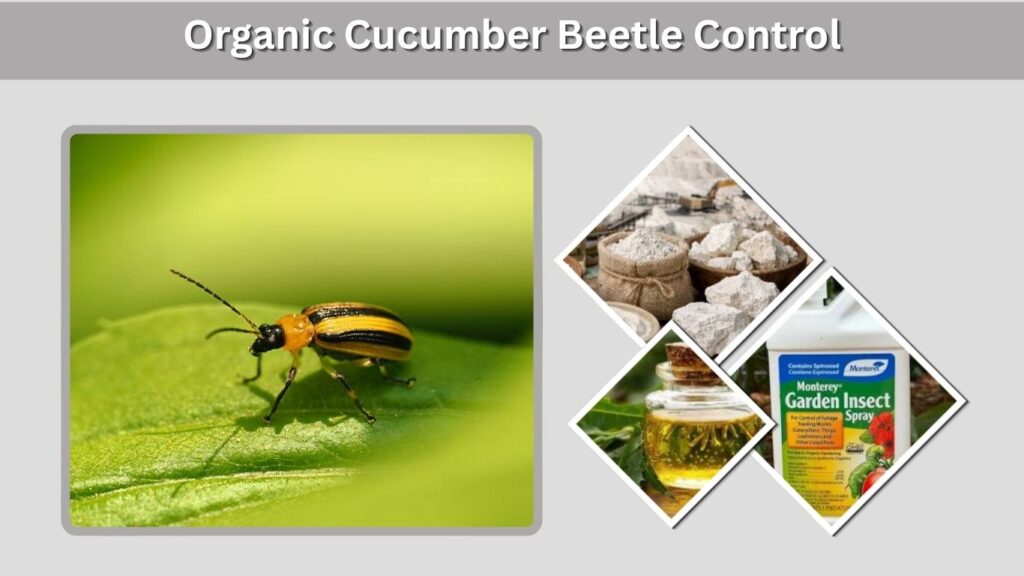
Products permitted in organic gardening vary by country and certification program. A product described as natural is not automatically harmless to bees, beneficial insects, people, or pets.
Kaolin Clay
Kaolin clay creates a pale mineral coating that discourages cucumber beetles from landing, navigating, and feeding. Apply it before beetle numbers become high and maintain adequate coverage as plants grow or rain removes the coating.
Kaolin clay repels rather than kills beetles, so it should not be treated as a rescue solution for a severe infestation. It works best as one part of a preventive program involving row covers, scouting, and trap crops.
Neem Oil
Neem-based products may discourage feeding or affect insects that receive adequate direct exposure, but results against mobile adult cucumber beetles can be inconsistent. Neem should not be expected to eliminate a major infestation by itself.
Use only a neem product labeled for the crop and target pest. Avoid treating open flowers or spraying when bees are visiting, and test a small portion of the plant first because oils can sometimes injure heat-stressed foliage.
Pyrethrins and Spinosad
Some pyrethrin and spinosad products may be labeled for cucumber beetles or cucurbit crops. However, formulation, approved crops, pests, application intervals, and organic status differ among products.
Pyrethrins can provide short-term knockdown when they contact adult beetles, but repeated treatment may be needed. Spinosad should be used only when cucumber beetles and the intended crop are specifically included on the label. Both can present risks to pollinators when misused, particularly around flowering crops.
Diatomaceous Earth
Diatomaceous earth works through direct contact and loses much of its usefulness when wet. Rain, irrigation, plant growth, and the beetles’ ability to fly can make dependable control difficult.
Avoid applying the dust to flowers where bees may contact it. It may provide limited support around dry seedling bases, but row covers, hand removal, and kaolin clay are generally more practical preventive measures.
Avoid Unproven Home Remedies
Baby powder, wood ash, catnip, radishes, garlic mixtures, and homemade soap sprays are sometimes promoted as cucumber beetle remedies. Evidence that they provide dependable control is limited.
Ashes and powders may wash away quickly or damage leaves when applied heavily. Strong homemade soap or detergent mixtures can burn plant tissue. Treat companion plants as possible additions to a broader program rather than replacements for proven exclusion and monitoring methods.
Use a Trap Crop
Blue Hubbard squash is particularly attractive to striped cucumber beetles and can draw them away from cucumbers, melons, and other desired crops. Plant it approximately one or two weeks before the main crop and position it around the planting area or along likely entry points.
The trap crop must be monitored and managed. If beetles accumulate without being removed or treated, the plants may become a breeding and disease-spreading center rather than providing protection.
Controlling Cucumber Beetle Larvae
Larvae live underground, making them more difficult to target than adults. Striped cucumber beetle larvae feed on cucurbit roots and may scar fruit touching the soil. Spotted cucumber beetle larvae commonly feed on corn, beans, grasses, and related roots.
Control larvae by rotating crops, removing plant residue, managing grassy weeds, using mulch, and keeping ripening fruit away from wet soil. Beneficial nematodes and fungal biological products have shown promise in some controlled studies, but field results have not consistently demonstrated reliable cucumber beetle suppression.
Chemical Cucumber Beetle Control
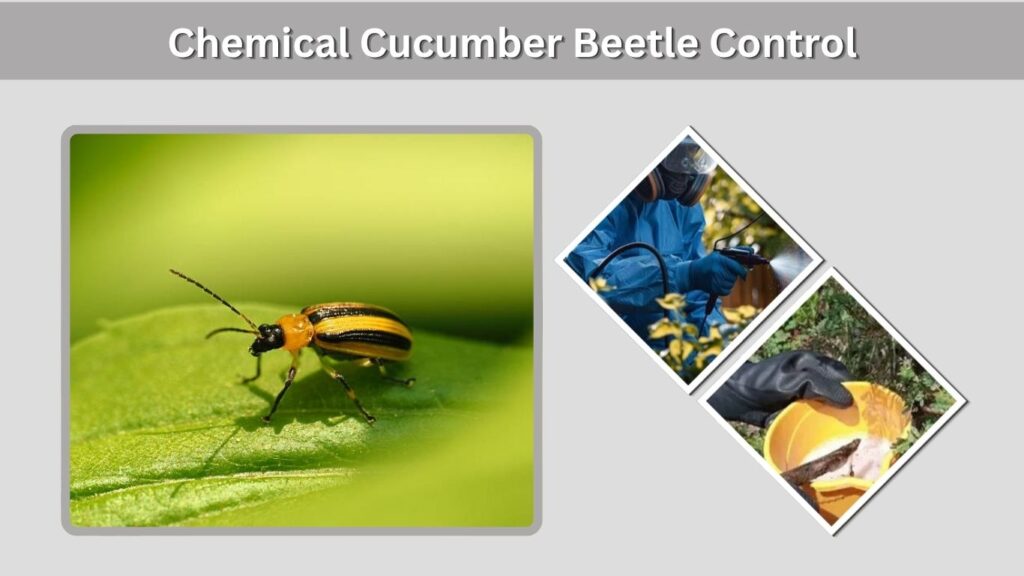
Consider an insecticide when preventive measures are failing and young plants face significant feeding pressure. One University of Minnesota guideline recommends considering treatment when two or more beetles are found per plant on at least 25% of cotyledon-stage plants. Once plants have two or more true leaves, approximately 25% defoliation may justify treatment. Local thresholds may differ by crop and region.
Products registered for cucumber beetles may contain pyrethrins, permethrin, bifenthrin, lambda-cyhalothrin, or other active ingredients. Registrations change, and a product labeled for ornamental plants is not necessarily permitted on edible cucurbits.
Before applying any insecticide:
- Confirm that both the crop and cucumber beetle are listed on the label.
- Follow the stated rate, application interval, and maximum number of treatments.
- Observe the preharvest interval before picking produce.
- Wear the required protective equipment.
- Do not spray open flowers unless the label specifically permits it.
- Avoid treatment while bees are actively foraging.
Pesticide labels specify where, how, how often, and at what rate products may be used. In the United States, using a pesticide inconsistently with its labeling violates federal law; gardeners elsewhere should follow their local pesticide regulations.
Controlling Beetles on Different Crops
Cucumbers and Muskmelons
Protect these crops from the moment they emerge because they are highly vulnerable to bacterial wilt. Remove permanently wilted plants promptly; insecticides cannot cure a plant after bacterial wilt becomes established.
Squash and Pumpkins
Established squash and pumpkin plants can tolerate limited feeding after producing four or more leaves. Focus control on seedlings and developing fruit rather than automatically treating every beetle found later in the season.
Watermelons
Watermelons are not affected by bacterial wilt, but beetles can still damage seedlings, flowers, leaves, and fruit rinds. Mulching and keeping fruit away from moist soil can reduce surface feeding.
Dahlias and Roses
Spotted cucumber beetles may enter flowers and chew petals. Hand-pick beetles, remove heavily damaged blooms, and avoid broad insecticide applications that expose visiting pollinators.
FAQs
What is the best cucumber beetle control?
The strongest approach combines row covers for seedlings, frequent inspection, hand removal, garden sanitation, mulch, and a managed trap crop. Kaolin clay can provide additional deterrence. Use insecticides only when beetle numbers or plant damage justify treatment.
Will neem oil control cucumber beetles?
Neem oil may repel or suppress some beetles, but it rarely provides dependable control of a heavy adult infestation. Apply only a labeled product and combine it with barriers, hand-picking, and regular monitoring.
Can cucumber plants recover after beetle feeding?
Established plants can recover from limited leaf damage by producing new growth. Seedlings with severe cotyledon or stem injury may not recover. Plants infected with bacterial wilt gradually collapse and cannot be cured with insecticides or fungicides.
How do I keep cucumber beetles away organically?
Cover young plants with insect netting, remove beetles by hand, apply kaolin clay preventively, use straw or reflective mulch, remove weeds, rotate crops, and plant Blue Hubbard squash as a carefully managed trap crop.
When should I spray cucumber beetles?
Spray only when monitoring indicates that feeding threatens young plants or exceeds an appropriate local threshold. Select a product labeled for the crop and pest, avoid exposing pollinators, and follow the application interval and preharvest period printed on the label.