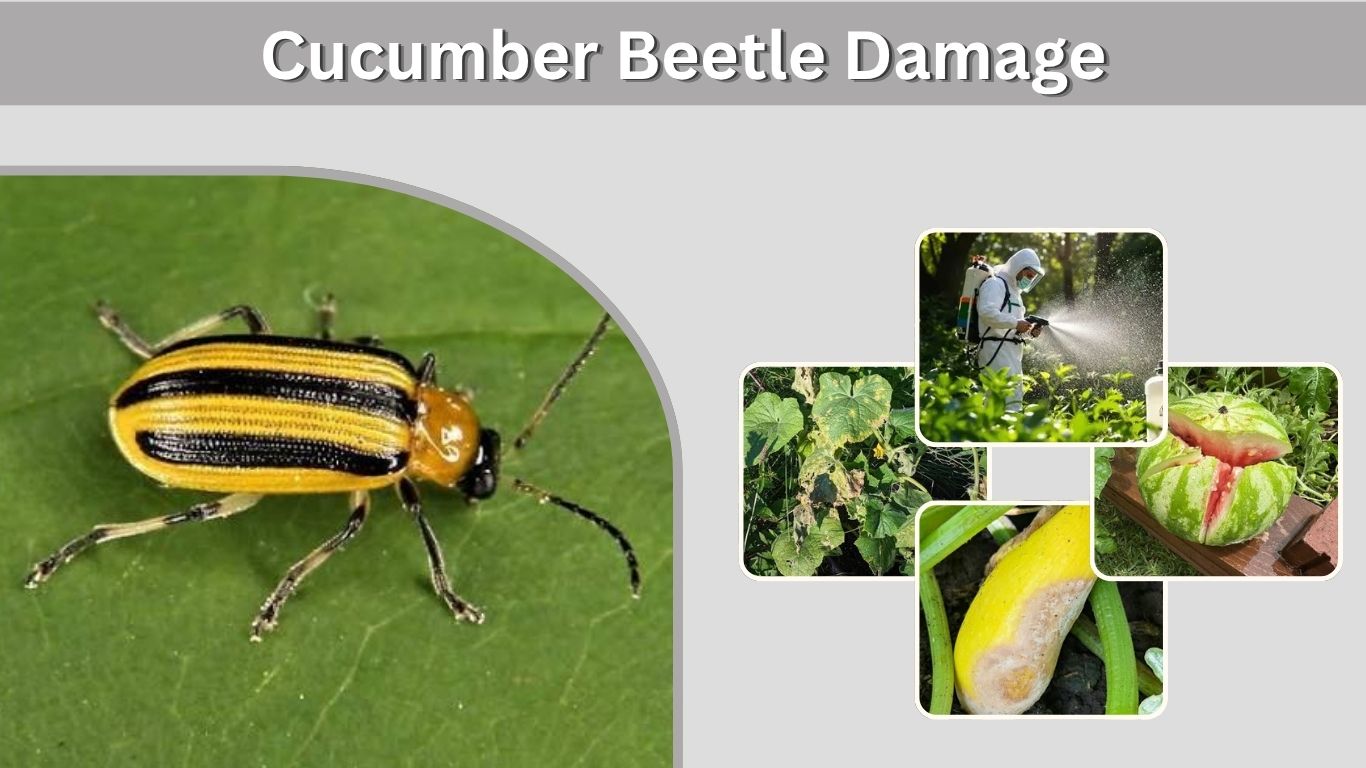
Cucumber beetle damage can quickly weaken cucumbers, squash, pumpkins, melons, and other garden plants. These small yellow-and-black insects chew holes in leaves, scar developing fruit, damage flowers, and occasionally injure roots. More importantly, some cucumber beetles spread bacterial wilt, a disease capable of killing an otherwise healthy plant. Recognizing the early signs allows gardeners to protect seedlings before feeding becomes severe or disease spreads through the garden.
What Does Cucumber Beetle Damage Look Like?
Cucumber beetle damage usually appears as irregular holes, scraped patches, or skeletonized areas on leaves. The beetles may also chew seedlings, blossoms, stems, vines, and young fruit. Severe feeding is especially dangerous during the cotyledon and first three true-leaf stages because a group of beetles can seriously stunt or completely defoliate a young plant.
Common signs include:
- Numerous small or irregular holes in leaves
- Ragged, chewed leaf edges
- Thin, skeletonized patches between leaf veins
- Damaged cotyledons on newly emerged seedlings
- Chewed blossoms or missing flower parts
- Scraped, pitted, or scarred fruit surfaces
- Weak, broken, or chewed stems
- Sudden wilting caused by bacterial wilt
- Yellow striped or spotted beetles on the plant
The insects often hide inside flowers, beneath leaves, around plant crowns, or in cracks in the soil. They may drop from the plant when disturbed, making them easy to overlook.
Cucumber Beetle Damage by Plant Part
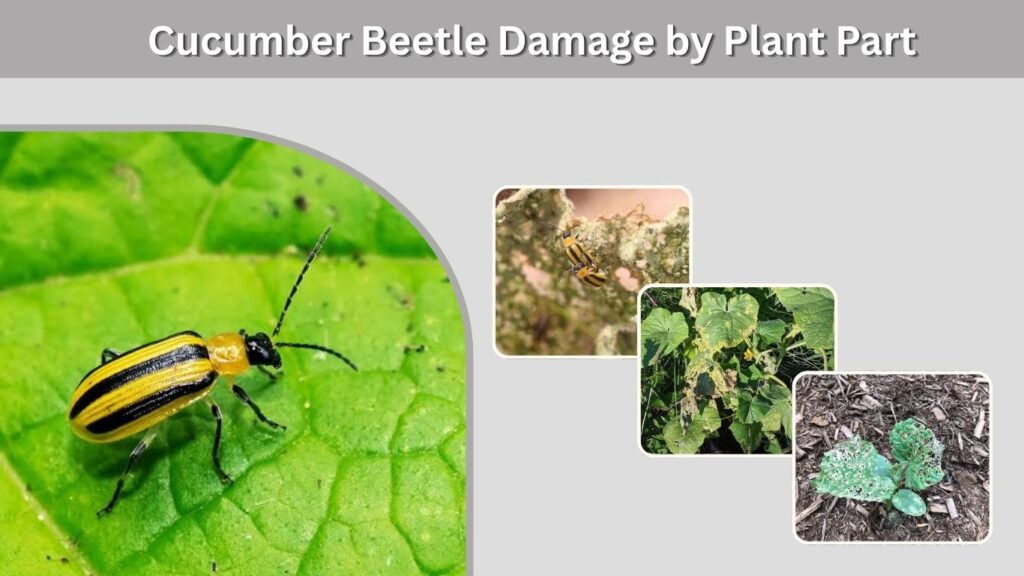
Adult beetles cause most of the visible aboveground damage. Striped cucumber beetle larvae may also harm plants underground by feeding on roots and buried stem tissue.
Leaf Damage
Leaf damage begins as small feeding holes or shallow scraped areas. As feeding continues, the holes become larger and may merge, leaving a ragged or lace-like leaf.
Established squash and pumpkin plants can usually tolerate limited leaf loss. Young cucumbers and melons are more vulnerable because feeding can slow their growth, and these crops may also become infected with bacterial wilt.
Cucumber beetle leaf damage can sometimes be confused with:
- Flea beetle feeding
- Caterpillar damage
- Slug or snail feeding
- Hail injury
- Leaf diseases that produce dead spots
Finding striped or spotted beetles on or near the damaged foliage is the most reliable confirmation.
Seedling Damage
Seedlings are at greatest risk before they develop several true leaves. Beetles may chew the cotyledons, growing point, stem, and first leaves. Heavily attacked plants can become stunted, fail to produce runners, or die.
A cucumber seedling with damaged seed leaves and several beetles present should be protected immediately. Waiting for extensive defoliation can allow irreversible injury or disease transmission.
Flower and Stem Damage
Adult cucumber beetles frequently enter yellow cucurbit blossoms to feed on pollen and tender flower tissue. Light flower feeding may have little effect, but severe damage can destroy flower parts and potentially reduce fruit production.
The insects also chew soft stems and vines. Injured stems may weaken or break during wind, reducing the number of healthy runners and fruit-producing sections of the plant.
Fruit Damage
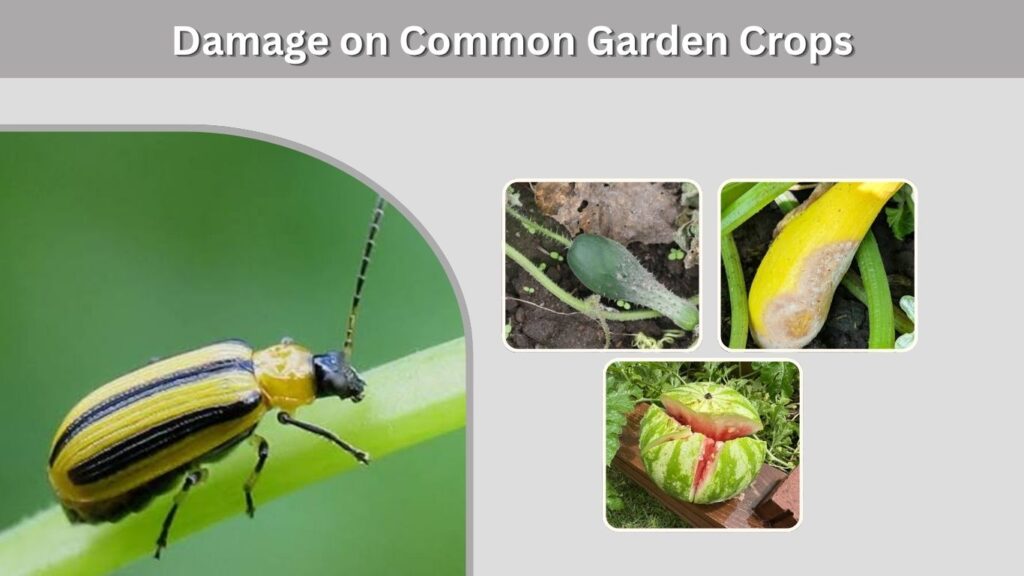
Cucumber beetle damage on fruit appears as shallow pits, scars, feeding grooves, or rough corky patches. Beetles usually target young fruit with tender skin, although they may also scar nearly mature produce.
Watermelons, honeydew melons and other smooth-skinned cucurbits are particularly vulnerable to rind injury. The damage may remain cosmetic, but heavily scarred fruit can become unmarketable and may be more vulnerable to decay.
Cucumber Beetle Larvae Damage
Striped cucumber beetle larvae live in the soil and feed on cucurbit roots and underground stem portions. This feeding can reduce plant stands, stunt growth, or contribute to the death of young plants. Larvae may also scar fruit resting directly on the soil.
Spotted cucumber beetle larvae primarily develop on the roots of corn, grasses, and certain other plants, so the adult stage is generally the more important threat to cucurbits.
Striped vs. Spotted Cucumber Beetle Damage
| Feature | Striped cucumber beetle | Spotted cucumber beetle |
| Appearance | Yellow wing covers with three black stripes | Yellow-green wing covers with 12 black spots |
| Main hosts | Cucumbers, squash, melons and other cucurbits | Cucurbits, corn, beans, potatoes and other plants |
| Adult damage | Leaves, flowers, stems and fruit | Leaves, flowers and tender plant tissue |
| Larval damage | Cucurbit roots and underground stems | Mainly roots of corn and grasses |
| Disease risk | Important carrier of bacterial wilt | Can also carry plant diseases |
| Overall concern | Usually the more serious cucurbit pest | Often broader in host range |
Both types can injure cucurbit plants, but striped cucumber beetles generally create the greatest risk because both adults and larvae damage cucurbits, and the adults can spread bacterial wilt.
Damage on Common Garden Crops
Cucumbers
Cucumber plants may develop perforated leaves, chewed stems, damaged flowers, scarred fruit, and sudden wilting. Seedlings can be killed by heavy feeding, while larger plants may lose vigor or produce lower-quality cucumbers.
Cucumbers remain vulnerable throughout the season because beetles can transmit bacterial wilt even when direct feeding appears minor.
Watermelons
Beetles chew watermelon leaves and may create shallow scars across the rind. Fruit touching moist soil can be particularly accessible to feeding adults or striped cucumber beetle larvae.
Watermelon is generally not considered susceptible to bacterial wilt, so the main concerns are seedling injury, defoliation and rind scarring rather than wilt transmission.
Squash and Zucchini
Squash and zucchini may develop irregular leaf holes, skeletonized sections, chewed blossoms and fruit scars. Young plants are vulnerable, but established plants with several leaves can usually tolerate modest feeding.
Some zucchini and summer squash varieties are highly attractive to cucumber beetles, so gardeners should examine flowers, leaf undersides and new growth regularly.
Pumpkins
Pumpkin seedlings may be defoliated or stunted, while developing pumpkins can acquire pitted or spiral-shaped surface scars. Established pumpkin vines usually tolerate more leaf injury than cucumber seedlings, but high beetle populations can still reduce fruit quality.
Peppers, Tomatoes, and Roses
Cucumber beetles occasionally feed on tomatoes, potatoes, beans and other vegetables, although cucurbits remain their primary concern. Damage generally consists of small holes or chewing on tender foliage and fruit.
Spotted cucumber beetles may also enter rose blooms and chew holes in the petals. One beetle usually causes limited injury, but several feeding inside the same flower can noticeably disfigure it.
Bacterial Wilt Damage
Bacterial wilt is often more destructive than the beetles’ direct feeding. Striped cucumber beetles can carry the bacterium and introduce it into feeding wounds. The bacteria multiply inside the plant’s water-conducting tissue, eventually preventing water from reaching leaves and vines.
Symptoms commonly progress as follows:
- One or two leaves wilt during the day.
- Wilted leaves may temporarily recover at night.
- An entire runner begins to collapse.
- The plant remains permanently wilted.
- The affected vine or whole plant dies.
Once a plant is systemically infected, it cannot be cured. Remove the wilted plant promptly so beetles do not feed on it and carry the bacteria to healthy plants.
How to Reduce Cucumber Beetle Damage
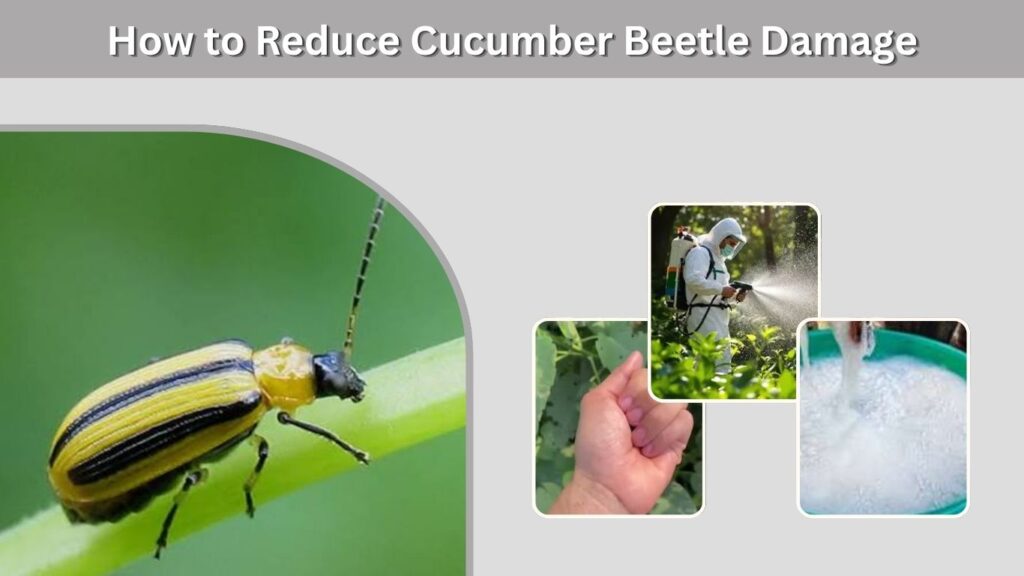
Inspect young plants at least several times each week, paying close attention to seedlings, flowers and new leaves. Early detection is important because the smallest plants suffer the greatest injury.
Protect vulnerable crops with floating row covers immediately after planting. Remove the covers when flowering begins so bees and other pollinators can reach the blossoms. Hand-pick small numbers of beetles and drop them into soapy water. Mulch around plants, remove weeds and clear crop debris after harvest to reduce egg-laying sites and overwintering shelter.
Blue Hubbard squash or another highly attractive cucurbit can be planted as a trap crop to draw beetles away from cucumbers and melons. When pesticides are necessary, use only products labeled for cucumber beetles and the crop being treated. Follow application rates, pollinator precautions and preharvest intervals exactly.
FAQs
Can cucumber beetle damage kill a plant?
Yes. Heavy feeding can kill small seedlings by destroying their cotyledons, leaves or growing point. Larger plants usually tolerate moderate leaf damage, but cucumbers and melons may die if beetles transmit bacterial wilt.
What do cucumber beetle holes look like?
The holes are usually irregular, ragged or elongated rather than perfectly round. Heavy feeding can leave skeletonized areas between veins. Beetles may also scrape leaf surfaces, creating thin, pale or brown patches.
Do cucumber beetles damage cucumber fruit?
Yes. Adults chew shallow pits, grooves and scars into young cucumbers. The fruit may remain edible after trimming minor damaged areas, but deep injury can reduce quality and create openings for decay organisms.
Why is my cucumber plant suddenly wilting?
Sudden permanent wilting may indicate bacterial wilt, especially when cucumber beetles are present. Water stress may improve after irrigation or during cooler conditions, whereas bacterial wilt generally progresses from individual leaves to runners and eventually the whole plant.
Can cucumber plants recover from beetle damage?
Healthy, established plants can recover from light or moderate feeding by producing new foliage. Small seedlings, severely defoliated plants and plants infected with bacterial wilt are much less likely to recover.