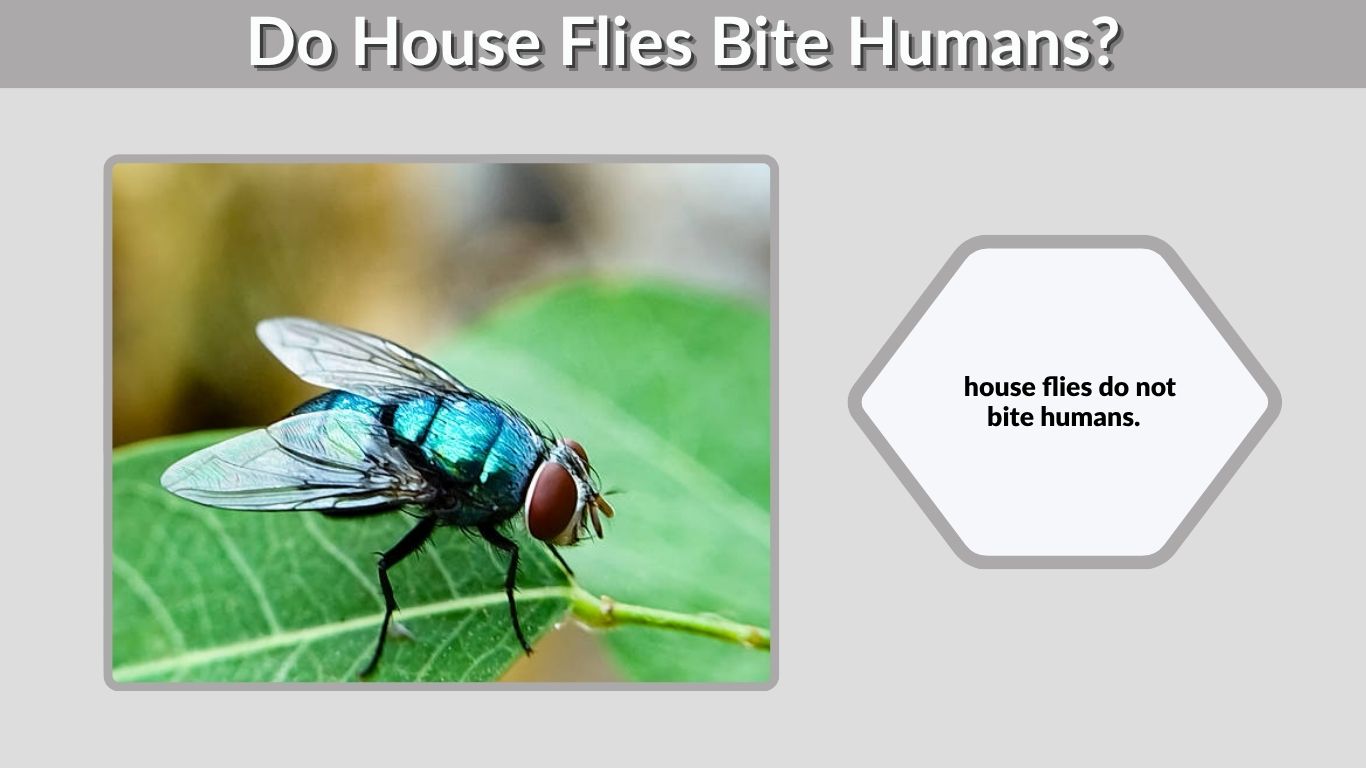
If a fly lands on your skin and you suddenly feel a sharp pinch, you may wonder, do house flies bite? The common house fly does not bite humans, dogs, or other animals because its mouthparts are designed for sponging up liquid food rather than piercing skin. However, several biting fly species closely resemble ordinary house flies and can cause painful bites. Knowing the difference helps explain why people sometimes believe house flies bite and what may actually be responsible.
Do House Flies Bite Humans?
Common house flies (Musca domestica) are among the most familiar insects found around homes, kitchens, garbage, and animal areas. Despite their annoying habit of landing on people, house flies do not bite humans. Their mouthparts cannot puncture healthy skin. Instead, they feed by releasing digestive fluids onto food and then sponging up the resulting liquid.
Why Common House Flies Cannot Bite
House flies have specialized mouthparts called sponging mouthparts. They are designed to collect liquid or softened foods rather than bite.
Important characteristics include:
- No teeth capable of biting human skin
- No piercing mouthparts
- A soft, sponge-like feeding structure
- Feeding primarily on liquids and dissolved organic material
- Frequent landing on food, garbage, waste, and other moist substances
So, whether a house fly lands on your arm, leg, or face, it cannot take a blood meal by biting you.
Do Regular or Normal House Flies Bite?
No. Regular, ordinary, or common house flies are all generally references to Musca domestica, and they do not bite.
A house fly may walk across your skin and use its mouthparts to investigate sweat, salts, oils, or other substances. This can create a tickling or mildly irritating sensation that some people interpret as a bite.
However, it is not actually puncturing the skin.
Do House Flies Sting?
House flies cannot sting either. They do not possess a stinger like bees or wasps.
Their main concern is not biting or stinging but contamination. Because they frequently visit garbage, feces, decaying matter, and food, they may mechanically carry microorganisms from dirty surfaces to places where people prepare or eat food.
Why Do People Think House Flies Bite?
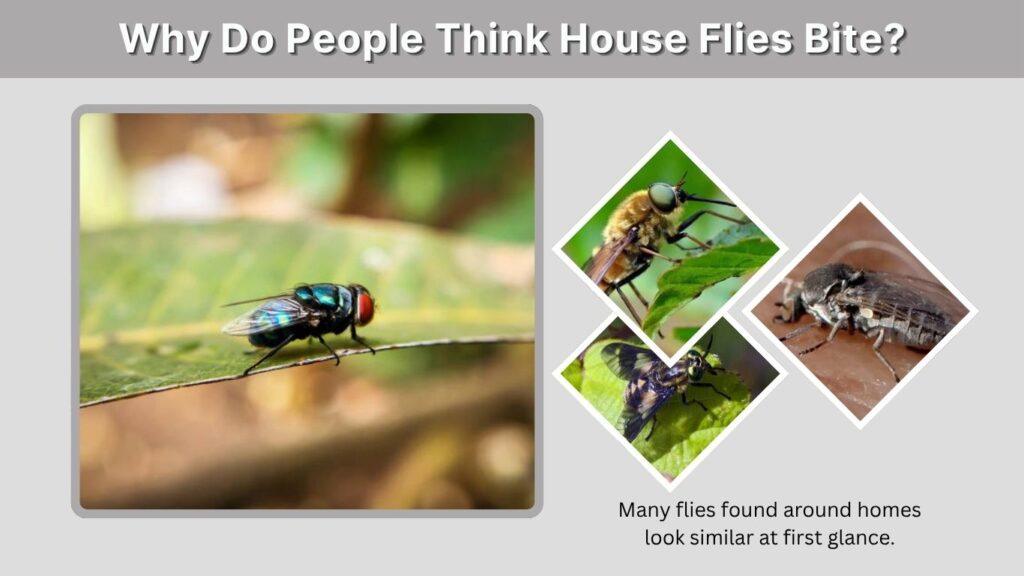
Many flies found around homes look similar at first glance. Some are true house flies, while others are species capable of biting. When a painful fly lands on someone indoors or around livestock, it may simply be called a “house fly.” This confusion is one of the main reasons people search for why house flies suddenly bite.
Flies Commonly Mistaken for House Flies
Several biting insects may be confused with ordinary house flies:
- Stable flies: Resemble house flies but feed on blood and can deliver painful bites.
- Horse flies: Larger flies with strong cutting mouthparts.
- Deer flies: Often smaller than horse flies but capable of painful bites.
- Black flies: Small blood-feeding flies that commonly bite outdoors.
- Biting midges: Tiny flies that can produce surprisingly irritating bites.
Stable flies are particularly important because their general gray appearance can make them look similar to common house flies.
How Stable Flies Differ From House Flies
Stable flies possess a stiff, forward-projecting mouthpart designed to pierce skin and consume blood.
Both males and females feed on blood, and their bites can be painful. They frequently attack legs and ankles of people and animals.
A common house fly has a softer sponging mouthpart instead. Looking closely at the mouth area can therefore help distinguish a biting stable fly from a non-biting house fly.
Why Does a Fly Keep Landing on Me?
A house fly may repeatedly land on you because it is attracted to moisture, sweat, salt, body odors, or substances on your skin.
It may seem aggressive when it repeatedly returns after being brushed away, but this behavior does not mean it is trying to bite.
Do Big, Black, or Small House Flies Bite?
Size and color alone cannot determine whether a fly bites. People often use terms such as “big house fly,” “black house fly,” or “small house fly” for many unrelated species. Some of these flies are harmless, while others may feed on blood. Correct identification is therefore more useful than judging a fly by appearance alone.
Do Big House Flies Bite?
A large fly indoors may not actually be a house fly.
Common possibilities include:
- Blow flies
- Cluster flies
- Flesh flies
- Horse flies
- Large house flies
- Other outdoor flies that accidentally enter buildings
Many large flies do not bite humans, but horse flies and certain other blood-feeding species can.
Do Black House Flies Bite?
Typical house flies may appear gray or dark from a distance, but they still cannot bite.
A genuinely black-colored fly could belong to another species. If it repeatedly causes painful bites, it is unlikely to be the common house fly.
Do Small House Flies Bite?
Small flies around homes are often fruit flies, fungus gnats, drain flies, or phorid flies. Most common indoor species in these groups do not bite people.
Tiny biting midges exist, but they generally have different behavior and biology from the small flies breeding around fruit, drains, or houseplants.
Do House Flies Bite Dogs and Other Animals?
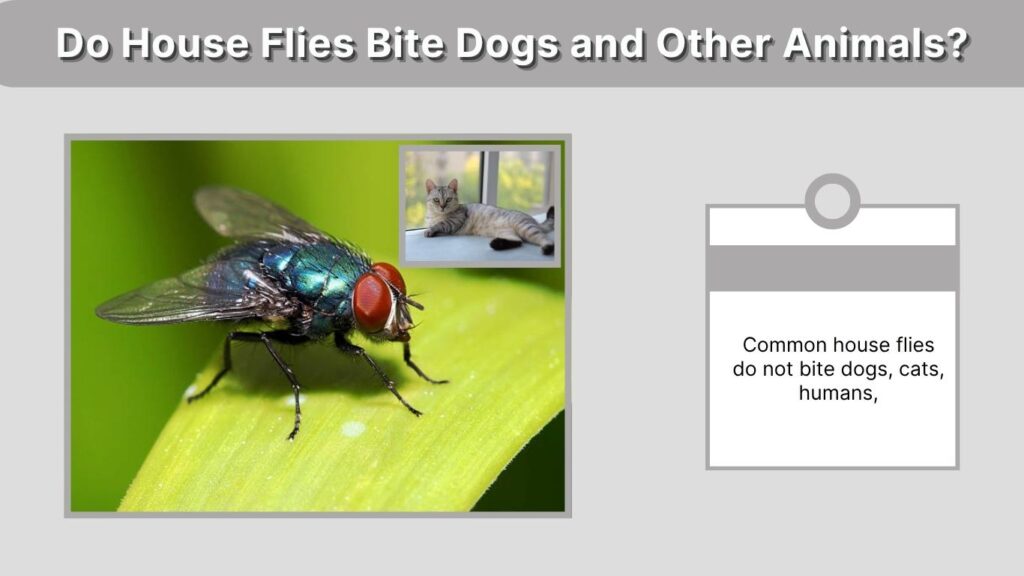
Common house flies do not bite dogs, cats, humans, or livestock. However, they may gather around animals because they are attracted to food, waste, wounds, moisture, or other organic material. Other fly species that occur around homes, farms, and kennels can genuinely bite animals and cause significant irritation.
Flies That May Bite Dogs
If a dog appears bothered by flies, possible biting species include:
- Stable flies
- Horse flies
- Deer flies
- Black flies
- Biting midges
Stable flies may particularly target exposed areas such as the ears and legs.
Why House Flies Gather Around Dogs
House flies may be attracted to pet food, feces, moist bedding, skin secretions, or wounds.
Although they cannot bite, repeated fly activity around an open wound deserves attention because contaminated flies may land on damaged tissue.
Keeping feeding and waste areas clean can make the environment less attractive to flies.
Do House Flies Bite Before Rain or at Night?
Claims that house flies suddenly start biting before rain are usually caused by mistaken identity. A genuine common house fly does not gain the ability to bite when weather changes. However, temperature, humidity, wind, and atmospheric conditions can change the activity of many insects, including species that genuinely bite.
Why Flies May Seem Worse Before Rain
Before storms or during humid weather, people may notice increased insect activity.
Changes can include:
- Flies sheltering closer to buildings
- Increased humidity
- Reduced wind
- Changes in temperature
- Greater activity from some biting species
If you experience actual painful bites during these periods, another fly species is probably responsible rather than the common house fly.
Do House Flies Bite Humans at Night?
No. House flies cannot bite during either daytime or nighttime.
House flies are generally most active during daylight and typically rest at night on walls, ceilings, vegetation, wires, or other surfaces.
If you wake with unexplained bites, consider other possible pests instead of assuming house flies are responsible.
Are House Flies Dangerous If They Don’t Bite?
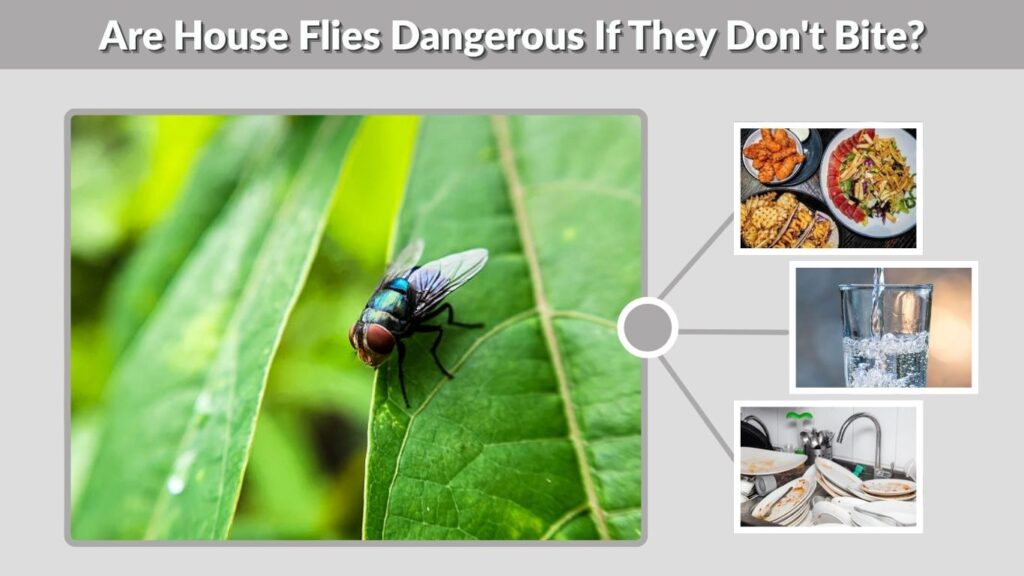
The fact that house flies do not bite does not make them completely harmless. Their biggest health concern comes from where they feed and land. Flies can move between garbage, fecal matter, decomposing organic material, animal waste, and human food, potentially carrying contaminants on their bodies and mouthparts.
How House Flies Can Contaminate Food
House flies may transfer contaminants when they:
- Walk across food
- Land on cooking surfaces
- Move between waste and kitchens
- Regurgitate liquid while feeding
- Leave fecal spots on surfaces
Covering food and maintaining good sanitation reduces opportunities for this contamination.
How to Reduce House Flies Indoors
Removing food and breeding sources is usually more effective than dealing only with individual adult flies.
Keep garbage containers covered, clean food spills promptly, remove pet waste, repair window screens, and avoid allowing decaying organic material to accumulate.
If flies continue appearing in large numbers, locating the breeding source is particularly important.
House Flies vs. Biting Flies
The simplest way to answer “do house flies bite?” is no: common house flies lack the physical equipment needed to bite. If a house-fly-looking insect produces an obvious painful bite, another species is probably responsible. Stable flies are among the most common sources of confusion because they closely resemble house flies but possess piercing mouthparts.
Signs You May Be Dealing With a Biting Fly
A fly may not be a common house fly if it:
- Causes an immediate sharp or painful sensation
- Leaves a visible irritated spot
- Repeatedly attacks exposed skin
- Focuses heavily on ankles or legs
- Has a noticeable forward-pointing mouthpart
- Actively feeds on animals
Correct identification can help determine the appropriate way to control the problem.
FAQs
House flies frequently land on people, making it understandable that many people assume they can bite. In reality, most confusion comes from other fly species that resemble them. These answers cover the most common questions about house flies, biting behavior, humans, pets, and weather-related fly activity.
Do house flies bite humans?
No. Common house flies do not bite humans because they have sponging mouthparts rather than piercing mouthparts. They can land on skin but cannot puncture it to feed on blood.
Why do house flies bite me?
If you experience an actual painful bite, the insect is probably not a common house fly. Stable flies are a frequent lookalike and can bite humans to obtain blood.
Do house flies bite or sting?
House flies do neither. They have no stinger and cannot pierce human skin with their mouthparts.
Why do house flies seem to bite before it rains?
Common house flies cannot bite regardless of weather. Humidity and changing weather may alter the activity of other insects, including biting fly species, which can create the impression that house flies become aggressive before rain.
Do common house flies bite dogs?
No. Common house flies cannot bite dogs. However, stable flies, horse flies, black flies, and other blood-feeding flies may attack dogs and other animals, especially around exposed skin.