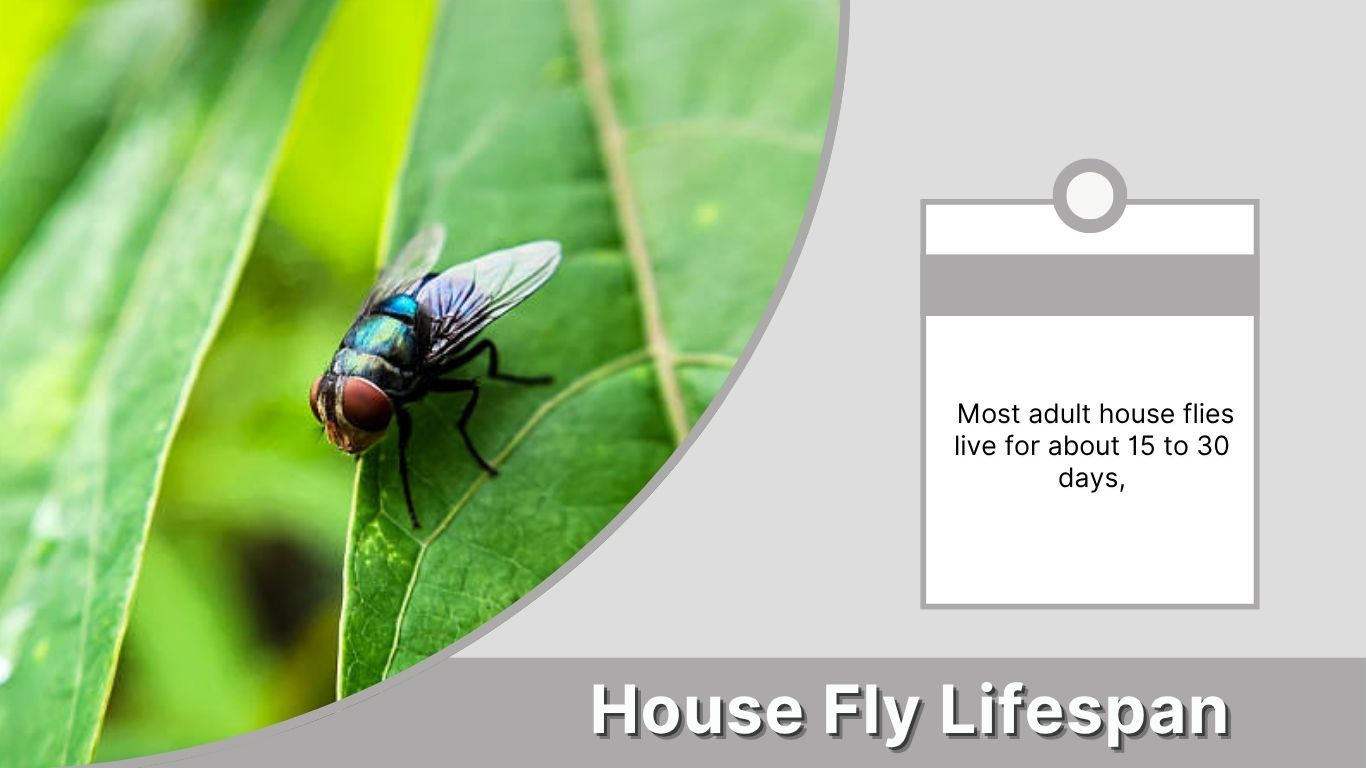
The average house fly lifespan is surprisingly short, but these insects can reproduce so quickly that even a few flies may become a noticeable problem. Most adult house flies live for about 15 to 30 days, although favorable indoor conditions can sometimes allow them to survive longer. Their complete life cycle—from egg to adult—can happen rapidly in warm environments. Understanding the lifespan of a house fly, its life stages, reproduction, and survival indoors can help explain why fly populations seem to appear almost overnight.
What Is the Average House Fly Lifespan?
The average lifespan of a house fly depends on temperature, food availability, humidity, and other environmental conditions. Adult house flies generally survive for several weeks rather than just a day or two. Warm temperatures and reliable access to food can support longer survival, while extreme temperatures and lack of resources can shorten their lives considerably.
How Long Does a House Fly Live?
A typical adult house fly usually lives for approximately 15 to 30 days. Under especially favorable conditions, some may survive for a month or longer.
Several factors influence how long they live:
- Availability of food and moisture
- Indoor or outdoor temperature
- Humidity levels
- Access to suitable resting areas
- Exposure to predators or insect control
- Overall environmental conditions
Because house flies reproduce rapidly during their short lifespan, even one generation can produce many new flies.
Is a House Fly Lifespan Only 24 Hours?
No. The common belief that a house fly lives for only 24 hours is incorrect.
House flies generally live for several weeks as adults. The confusion may come from other short-lived insects, particularly certain mayflies whose adult stages can be extremely brief.
A house fly has enough time during its adult life to mate repeatedly, search for food, and reproduce.
Adult House Fly Lifespan
The adult stage is the final part of the house fly life cycle. Once the fly emerges from its pupal case, it begins feeding and reaches reproductive maturity quickly.
An adult spends much of its life searching for food, water, breeding sites, and suitable resting surfaces. Females also seek decaying organic material where they can deposit eggs.
House Fly Life Cycle From Egg to Adult
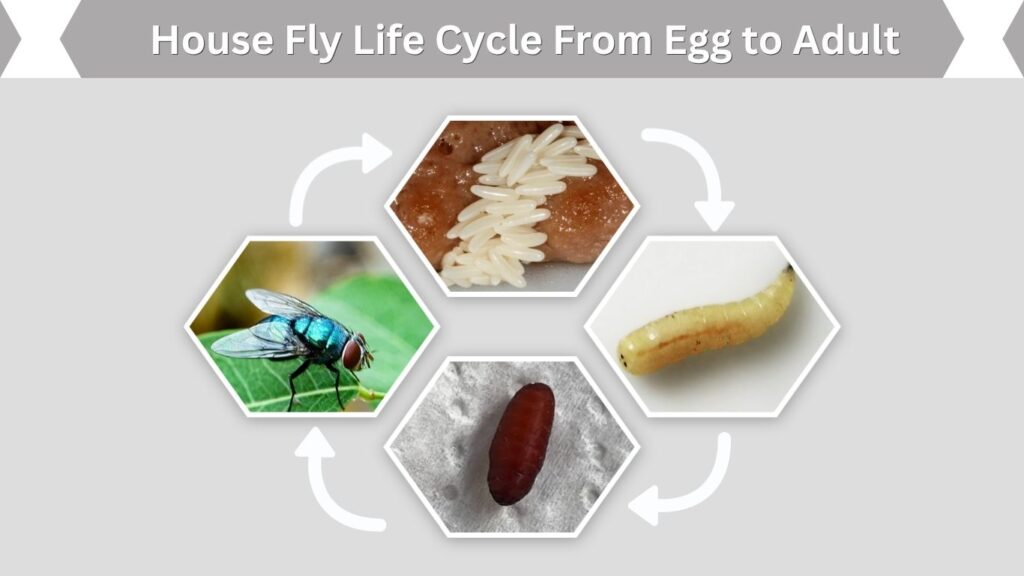
Understanding the complete house fly lifespan requires looking beyond the adult stage. House flies undergo complete metamorphosis and pass through four distinct stages: egg, larva, pupa, and adult. Warm conditions can dramatically accelerate development, which explains why populations can increase quickly around garbage, animal waste, spoiled food, and other organic materials.
Four Stages of the House Fly Life Cycle
The house fly life cycle includes:
- Egg: Females lay small white eggs in moist organic material.
- Larva: Maggots hatch and begin feeding on decomposing matter.
- Pupa: Mature larvae form pupae where transformation occurs.
- Adult: Fully developed flies emerge and begin feeding and reproducing.
Under warm conditions, the process from egg to adult may take roughly one to two weeks.
House Fly Egg and Larvae Lifespan
House fly eggs hatch quickly when temperatures and moisture levels are favorable. The larvae, commonly called maggots, then spend several days feeding.
During this stage, they grow rapidly and molt several times. Once mature, the larvae move toward a drier location and prepare for pupation.
Development slows considerably during cooler weather, meaning the exact duration of each stage varies.
Pupal Stage and Adult Emergence
The pupal stage is the transformation period between the maggot and adult fly.
The developing insect remains inside a protective case while its body changes into the familiar winged adult form. When development is complete, the adult emerges and soon begins searching for food.
Within only a short period after emergence, adult flies can become reproductively active.
House Fly Lifespan Indoors

A fly living inside a house may experience very different conditions from one outdoors. Indoor temperatures are often relatively stable, and flies may have access to food crumbs, garbage, drains, pet waste, and moisture. These conditions can support survival and reproduction, which is why indoor fly problems may continue even when outdoor populations decline.
How Long Can a Fly Live in Your House?
A house fly indoors can potentially survive for several weeks if it finds enough food and moisture.
Common resources that help house flies survive include:
- Uncovered garbage
- Food scraps
- Dirty dishes
- Pet food
- Animal waste
- Spilled sugary drinks
- Organic material in trash containers
Without these resources, indoor flies may survive for a shorter period.
Why Do Flies Stay Inside Houses?
House flies enter buildings because indoor environments frequently provide three things they need: food, moisture, and shelter.
They may enter through open doors, windows, damaged screens, vents, or small gaps. Once indoors, they often remain near kitchens, garbage containers, dining areas, pet areas, and windows.
If suitable breeding material exists inside the building, flies may also complete their life cycle indoors.
Does Temperature Affect Fly Lifespan?
Yes. Temperature strongly influences both house fly development and adult activity.
Warm temperatures generally speed up metabolism, larval development, and reproduction. Excessive heat, however, can reduce survival. Cool temperatures slow development and activity considerably.
This is one reason house fly populations often increase rapidly during warm seasons.
Female House Fly Lifespan and Reproduction
Female house flies have a similar general lifespan to males, but their ability to produce multiple batches of eggs makes them especially important in fly infestations. A female does not need to live for months to create a large population. Rapid maturation and repeated egg laying allow house fly numbers to grow remarkably quickly when breeding conditions are favorable.
How Many Eggs Can a Female House Fly Lay?
A female house fly can lay multiple batches of eggs during her adult life.
Important reproductive characteristics include:
- Eggs are commonly deposited in batches.
- Moist, decaying organic matter is preferred.
- Garbage and animal waste are common breeding materials.
- Females may produce hundreds of eggs during their lives.
- Warm conditions accelerate development.
- New adults can begin another generation quickly.
This reproductive capacity explains why controlling breeding material is more effective than simply killing visible adult flies.
How Quickly Do House Flies Reproduce?
House flies can reproduce very quickly under favorable conditions. Adults become sexually mature soon after emerging, and females begin searching for suitable egg-laying sites.
Because the development from egg to new adult may occur within a relatively short period during warm weather, several generations can develop over a season.
A small sanitation problem can therefore turn into a much larger fly problem.
How Long Can House Flies Live Without Food?
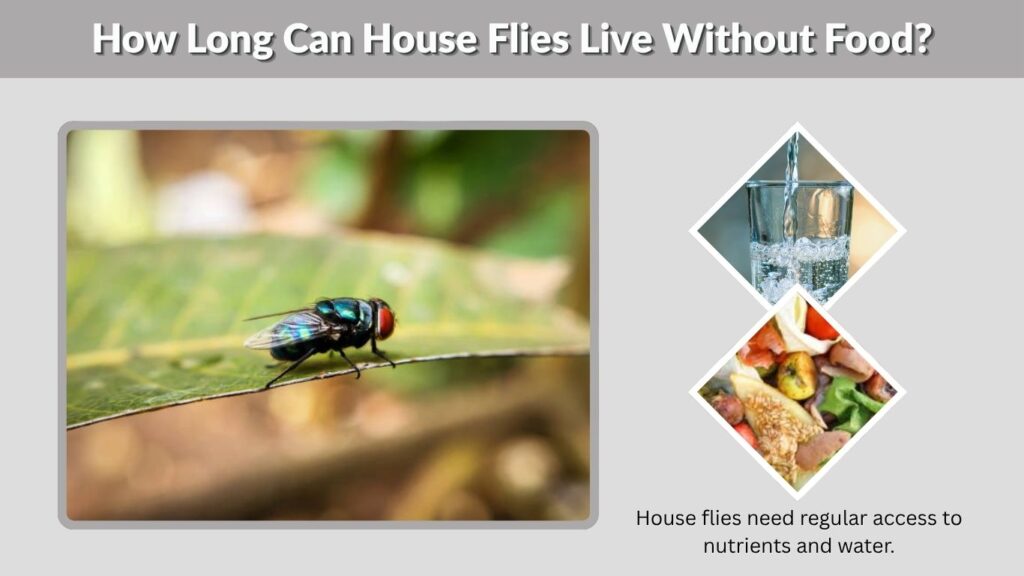
House flies need regular access to nutrients and water. Their mouthparts are designed for consuming liquid or liquefied foods rather than chewing solid material. Without adequate food or moisture, their lifespan becomes much shorter than it would under normal conditions. Water availability is particularly important because dehydration can quickly reduce survival.
What Do House Flies Need to Survive?
House flies commonly survive by feeding on:
- Sugary liquids
- Food residues
- Garbage
- Decaying organic materials
- Animal waste
- Pet food
- Other moist food sources
Removing these resources makes indoor environments much less suitable for them.
Can House Flies Survive Without Water?
House flies require moisture and are vulnerable to dehydration. Access to liquids from food, standing water, spills, drains, or other moist environments can help them survive.
A dry, clean environment with limited food resources reduces their ability to remain active for long periods.
Factors That Shorten a House Fly’s Lifespan
Although a typical house fly can live for several weeks, many never reach their maximum potential lifespan. Environmental stress, predators, lack of resources, and human control measures frequently shorten their lives. Removing breeding material is particularly important because eliminating adults alone does not stop eggs, larvae, or pupae that may already be developing nearby.
What Can Reduce House Fly Survival?
Important factors include:
- Lack of food and water
- Extreme heat or cold
- Predatory insects and spiders
- Birds and other natural predators
- Fly traps
- Proper sanitation
- Removal of garbage and waste
- Sealed entry points
Keeping kitchens, trash areas, and pet spaces clean helps remove both food and potential breeding sites.
Why Removing Breeding Sites Matters
Killing one adult fly solves only a very small part of an infestation.
If eggs or maggots are developing in garbage, manure, spoiled food, or another source, new adults can continue appearing.
Finding and removing the breeding source breaks the life cycle and is usually far more effective than repeatedly dealing with individual adult flies.
FAQs
The house fly’s short lifespan can be misleading because rapid reproduction allows populations to persist much longer than any individual fly. Understanding adult longevity, indoor survival, and the complete life cycle makes it easier to determine why flies repeatedly appear and what conditions support their populations.
What is the lifespan of a house fly?
Most adult house flies live approximately 15 to 30 days, although lifespan varies according to temperature, food, moisture, and environmental conditions.
What is the average lifespan of a common house fly?
The average adult common house fly survives for several weeks. Under favorable conditions, some individuals can live for a month or longer.
Is the lifespan of a house fly only 24 hours?
No. House flies do not normally die after 24 hours. Adults typically survive for several weeks. The 24-hour lifespan idea is commonly confused with certain species of mayflies.
How long does a house fly live indoors?
A house fly may survive indoors for several weeks when it has reliable access to food, moisture, and appropriate temperatures. Poor sanitation can also provide breeding locations that allow new generations to develop.
How long is a house fly lifespan from egg to adult?
Under warm, favorable conditions, development from egg to adult can occur in roughly one to two weeks. Cooler conditions can significantly slow development, while adults may then survive for several additional weeks.