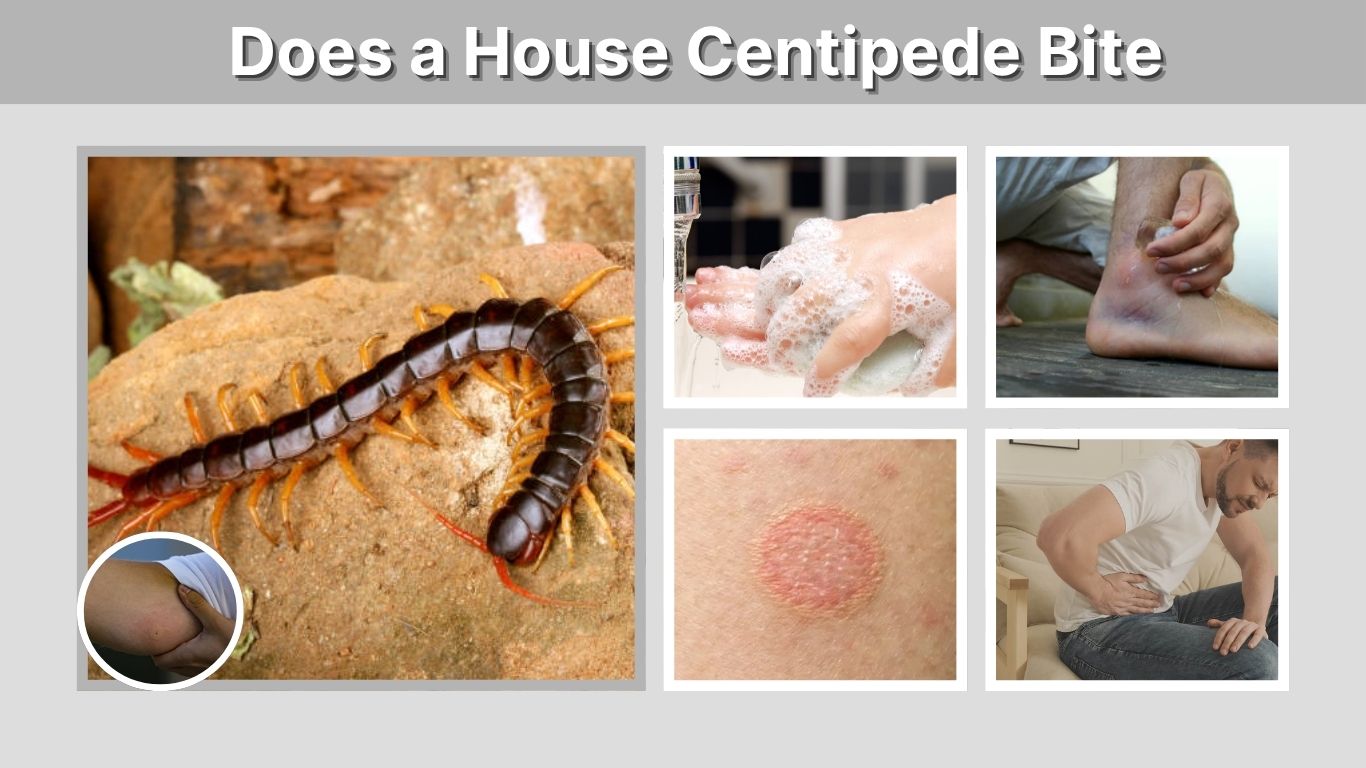
House centipedes are fast-moving indoor predators that often frighten homeowners because of their long legs and unusual appearance. Many people wonder whether house centipedes bite humans after spotting one running across a wall or floor at night. Although these creatures can bite, it happens very rarely and usually only in self-defense. Most house centipede bites are mild and cause temporary discomfort rather than serious medical problems. Learning how these centipedes behave, what their bites look like, and how to treat symptoms can help reduce fear and confusion.
Do House Centipedes Bite Humans?
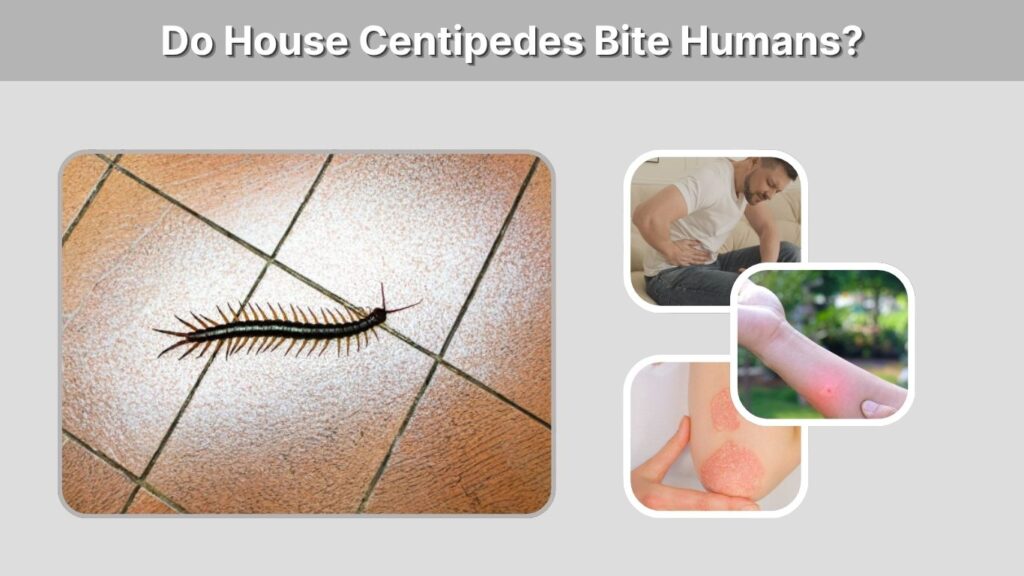
House centipedes are venomous predators that use specialized front legs called forcipules to capture insects and small prey. These modified legs inject venom into their victims. Although they are capable of biting humans, house centipedes generally avoid people and prefer escaping instead of attacking. Most bites occur only when the centipede feels threatened or trapped.
Can a House Centipede Bite?
House centipedes can bite, but bites are uncommon because they are shy and non-aggressive creatures.
- Use venom claws to catch prey
- Usually avoid human contact
- Bite mainly in self-defense
- Smaller species may struggle to pierce skin
- Fast movement helps them escape danger
Most encounters end with the centipede running away rather than biting.
Why House Centipedes Bite
House centipedes do not actively hunt humans. Bites normally happen accidentally during close contact or handling.
Common reasons for bites include:
- Feeling trapped
- Being touched or picked up
- Accidentally pressed against skin
- Defensive reactions during fear
- Disturbing their hiding place
These centipedes rely more on speed and hiding than aggression.
Are House Centipede Bites Dangerous?
Most house centipede bites are mild and not medically dangerous. The venom is designed mainly for hunting insects rather than harming humans.
Typical effects are temporary and may include:
- Mild pain
- Redness
- Slight swelling
- Minor irritation
Serious allergic reactions are rare, but sensitive individuals may experience stronger symptoms.
What Does a House Centipede Bite Look Like?
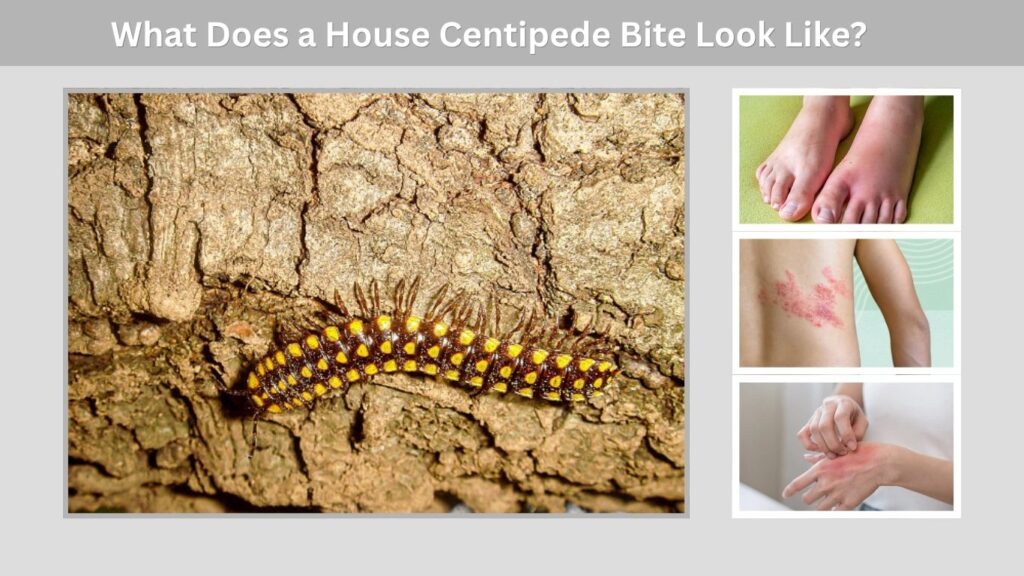
A house centipede bite is usually small and difficult to identify. The symptoms often resemble minor insect bites or mild spider bites. Because the puncture marks can be tiny, many people do not realize they were bitten by a centipede. The appearance may vary depending on skin sensitivity and the severity of the bite.
Common Bite Appearance
House centipede bites usually produce mild visible symptoms around the affected area.
- Small red bumps
- Tiny puncture marks
- Mild swelling
- Slight skin irritation
- Local redness
The bite area may remain tender for several hours or longer depending on the individual.
House Centipede Bite Pictures and Misidentification
Many people confuse house centipede bites with spider bites, ant stings, or mosquito bites because the symptoms are similar. Since the bite marks are often very small, identifying the exact cause can be difficult without seeing the centipede directly.
Skin reactions may also vary from person to person. Some individuals experience almost no visible symptoms, while others may notice redness and swelling more clearly.
How Long Does a House Centipede Bite Last?
Most house centipede bites heal fairly quickly and do not cause long-term problems.
- Mild pain may last a few hours
- Redness often fades within 1–2 days
- Swelling usually improves quickly
- Itching may continue briefly
- Severe symptoms are uncommon
Keeping the bite clean can help speed recovery and reduce irritation.
What Does a House Centipede Bite Feel Like?
The sensation of a house centipede bite is often compared to a mild insect sting or pinching sensation. Pain levels vary depending on the size of the centipede and the sensitivity of the person bitten. Most people experience only temporary discomfort that fades within a short period.
Pain Level of a House Centipede Bite
Most bites produce mild to moderate discomfort rather than severe pain.
- Sharp pinching feeling
- Mild burning sensation
- Temporary soreness
- Light throbbing
- Brief irritation around the bite
The pain is usually far less intense than a bee sting or large centipede bite.
Bite Symptoms After Contact
After the initial bite, mild symptoms may continue for a short time.
Common symptoms include:
- Itching
- Redness
- Tenderness
- Minor swelling
- Warm feeling around the skin
Most symptoms improve naturally without medical treatment.
Severe Reactions to Watch For
Serious reactions to house centipede bites are rare, but some people may experience stronger symptoms because of allergies or sensitive skin.
Seek medical attention if you notice:
- Difficulty breathing
- Severe swelling
- Fever
- Increasing pain
- Signs of infection
Most healthy adults recover quickly without complications after a mild bite.
House Centipede Venom and Toxicity
House centipedes use venom mainly to capture insects and small prey. Their venom is effective against pests but generally weak against humans. While the word venom may sound dangerous, house centipede venom rarely causes serious medical problems. Most bites remain mild and temporary compared to those from larger tropical centipede species.
Do House Centipedes Have Venom?
Yes, house centipedes are venomous animals that inject venom using specialized front legs called forcipules.
- Venom helps paralyze prey
- Used mainly for hunting insects
- Not designed to harm humans
- Mild effects on human skin
- Small species produce weaker bites
Their venom allows them to efficiently capture cockroaches, spiders, and other household pests.
Is House Centipede Venom Harmful?
For most people, house centipede venom causes only mild irritation and discomfort. Severe reactions are extremely uncommon.
The symptoms are often less serious than:
- Bee stings
- Wasp stings
- Large centipede bites
- Some spider bites
People with allergies or very sensitive skin may experience stronger swelling or irritation, but major medical emergencies are rare.
Difference Between House Centipedes and Giant Centipedes
House centipedes are much smaller and less dangerous than giant tropical centipedes found in some parts of the world.
| Feature | House Centipede | Giant Centipede |
| Size | Small to medium | Very large |
| Bite Strength | Mild | Strong and painful |
| Venom Effect | Mild irritation | More severe pain |
| Risk to Humans | Low | Moderate |
| Habitat | Indoors | Tropical forests |
This difference explains why house centipede bites are usually far less serious than bites from larger species.
How to Treat a House Centipede Bite
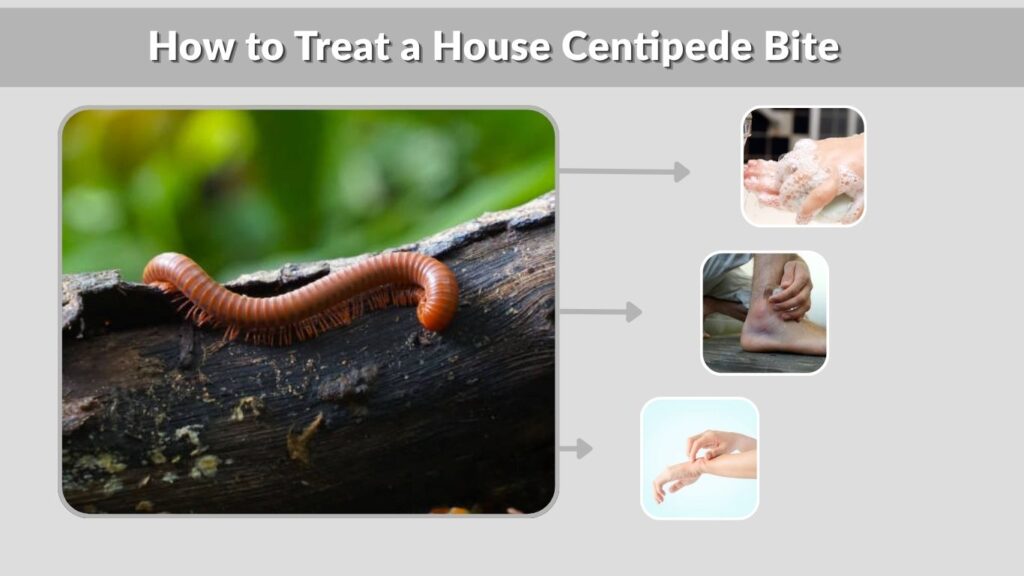
Most house centipede bites can be treated easily at home with simple first aid. Cleaning the bite area and reducing swelling are usually enough to manage symptoms. Since bites rarely become severe, most people recover without needing professional medical care.
Immediate First Aid Steps
Taking quick action after a bite can help reduce irritation and discomfort.
- Wash the area with soap and water
- Apply an ice pack for swelling
- Keep the bite clean
- Avoid scratching the skin
- Rest the affected area if sore
Cold compresses can help reduce redness and swelling during the first few hours.
Home Remedies for Relief
Several simple home treatments may help relieve mild symptoms naturally.
- Cold compresses
- Anti-itch creams
- Over-the-counter pain relievers
- Aloe vera gel
- Hydration and rest
Most symptoms improve within a day or two without complications.
When to See a Doctor
Although rare, some situations may require medical attention. People with allergies or worsening symptoms should seek professional care.
You should contact a doctor if:
- Swelling becomes severe
- The bite area becomes infected
- Pain continues worsening
- Fever develops
- Breathing problems occur
Prompt treatment can help prevent complications in unusual cases.
Why House Centipedes Enter Homes
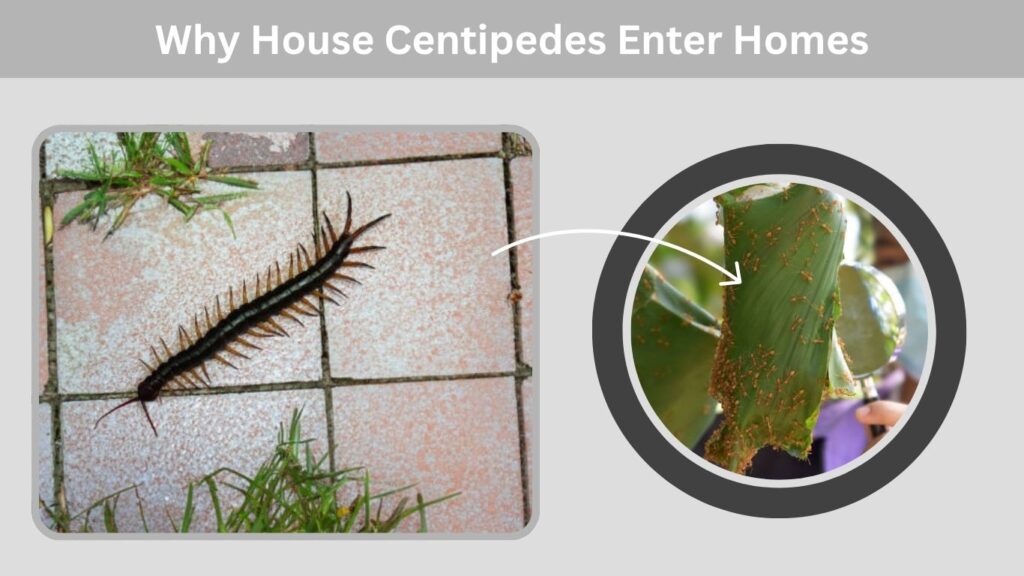
House centipedes enter homes because indoor spaces provide food, moisture, and shelter. They thrive in damp environments where insects are plentiful. Although many homeowners dislike seeing them, these centipedes actually help control other household pests naturally.
Searching for Insects and Food
House centipedes feed on many common indoor pests.
Their diet includes:
- Cockroaches
- Silverfish
- Ants
- Spiders
- Small insects
Because they eat pests, house centipedes can help reduce insect populations inside homes.
Favorite Hiding Places Indoors
House centipedes prefer dark and humid hiding spots where they can remain hidden during the daytime.
Common hiding places include:
- Bathrooms
- Basements
- Laundry rooms
- Under sinks
- Storage areas
They usually become more active at night while hunting insects.
Are House Centipedes Helpful?
Despite their creepy appearance, house centipedes are beneficial predators indoors. They reduce populations of unwanted pests without damaging furniture, clothing, or food supplies.
Many homeowners tolerate them because they naturally control insects that can become much larger household problems.
FAQs
Can a house centipede bite hurt humans?
Yes, a house centipede bite can hurt, but the pain is usually mild. Most people experience temporary redness, swelling, or a slight burning sensation. Serious medical problems are rare, and symptoms often disappear within a short time without treatment.
What does a house centipede bite look like?
A house centipede bite usually appears as a small red bump with mild swelling. Tiny puncture marks may also be visible. The bite can resemble a mild insect sting or spider bite, making it difficult to identify without seeing the centipede.
How painful is a house centipede bite?
Most people describe the pain as similar to a mild bee sting or pinching sensation. The discomfort is usually temporary and far less severe than the bite of a large tropical centipede or venomous spider species.
How long does a house centipede bite last?
The pain from a house centipede bite may last a few hours, while redness or swelling can remain for one or two days. Most symptoms improve quickly with simple home treatment such as cleaning the area and applying ice.
Should you kill house centipedes in your home?
House centipedes are actually beneficial because they eat pests like cockroaches, ants, silverfish, and spiders. Many homeowners choose to leave them alone or remove them safely instead of killing them because they help control insect populations naturally.