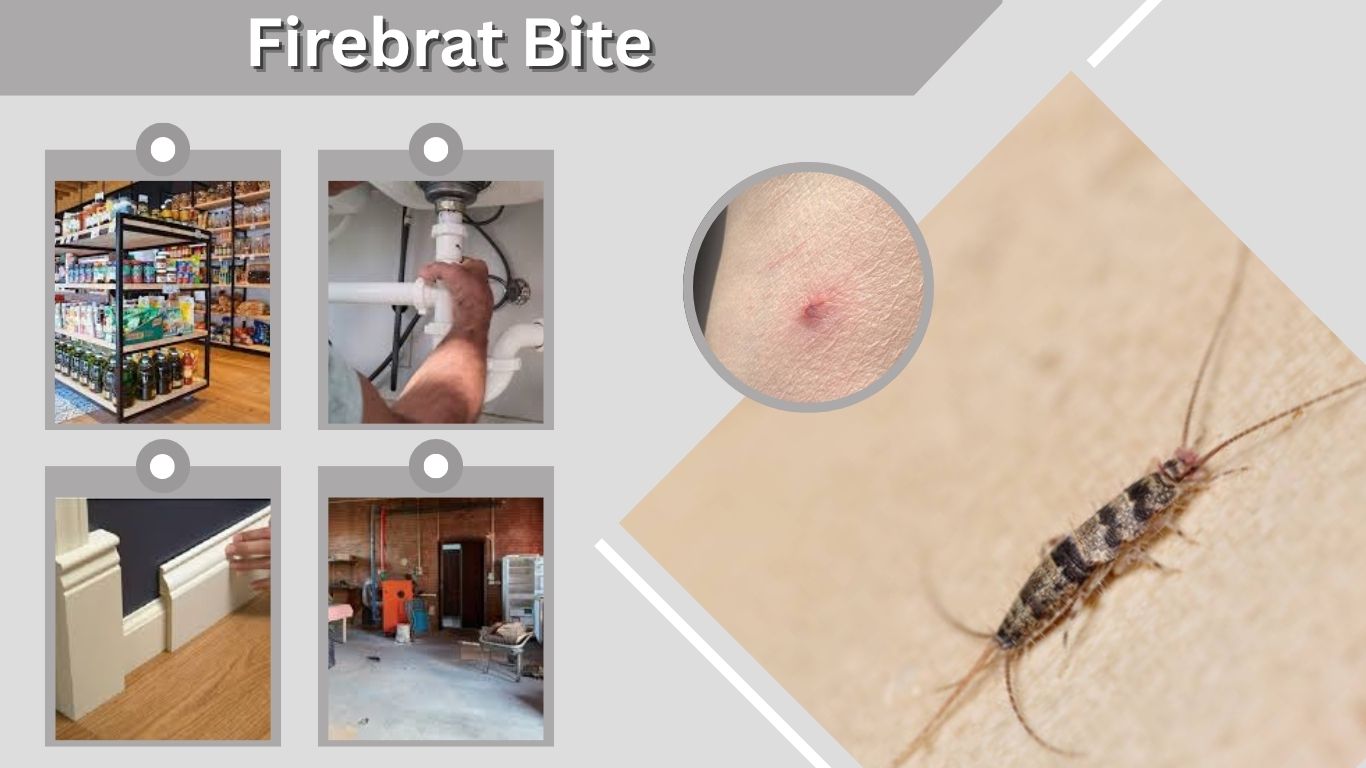
Firebrats are small, fast-moving insects often confused with silverfish. Because they appear suddenly in bathrooms, kitchens, basements, laundry rooms, and warm storage areas, many people worry about whether firebrats bite humans. The good news is that firebrats are not considered dangerous pests. They do not normally bite, sting, suck blood, or spread disease. Most “firebrat bite” symptoms are usually caused by another pest, skin irritation, allergies, or contact with something in the home rather than the firebrat itself.
What Is a Firebrat?
Firebrats are wingless insects closely related to silverfish. They have long antennae, flat bodies, and three tail-like bristles at the end of the body. Their color is usually grayish-brown or mottled, which helps separate them from the more silvery appearance of common silverfish.
Firebrat Size and Appearance
Most firebrats are small, usually around half an inch long, although their long antennae and tail filaments can make them look bigger. Their bodies are carrot-shaped, wider near the head and narrower toward the back.
Common firebrat features include:
- Long, thin antennae
- Three bristle-like tails
- Flat, wingless body
- Gray, brown, or mottled coloring
- Quick, darting movement
- Preference for warm, humid areas
Firebrats are nocturnal, so you are more likely to notice them at night when turning on a bathroom, kitchen, or basement light.
Do Firebrats Bite Humans?
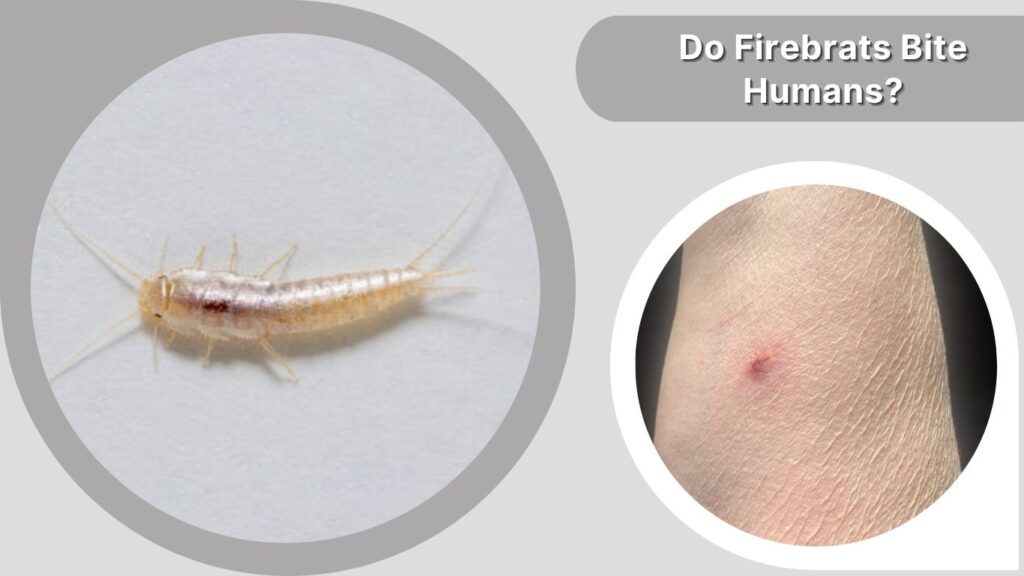
Firebrats do not normally bite humans. They are not blood-feeding insects, and their mouthparts are designed for scraping and chewing starchy materials, not piercing skin. Virginia Tech Extension states that silverfish and firebrats are harmless to humans and do not bite, sting, or transmit diseases.
Why People Search for “Firebrat Bite”
Many people search for “firebrat bite” after finding a small red bump, rash, or itchy spot and seeing a firebrat nearby. However, the insect may simply be present in the same damp or warm area where another irritation happened.
Possible reasons include:
- A mosquito, flea, mite, bed bug, or spider caused the mark
- Skin reacted to dust, mold, detergent, or fabric
- A scratch or friction mark looked like a bite
- The person saw a firebrat and assumed it was responsible
- The firebrat was confused with another insect
Firebrats are unpleasant to see indoors, but their presence alone does not mean they are biting people.
Firebrat Bite Symptoms: What You Might Notice
Because true firebrat bites are not a normal concern, there is no standard medical pattern for “firebrat bite symptoms.” If you notice skin irritation after seeing firebrats, the symptoms are more likely linked to another cause.
| Symptom | Possible Cause | What to Do |
| Small red bump | Mosquito, flea, mite, or minor irritation | Wash the area and avoid scratching |
| Itchy cluster of bumps | Bed bugs, fleas, or allergy | Inspect bedding, pets, and furniture |
| Mild rash | Detergent, dust, mold, or contact irritation | Clean the area and monitor symptoms |
| Swelling or pain | Infected scratch or stronger reaction | Seek medical advice if it worsens |
| Repeated marks overnight | Bed bugs, fleas, or mites | Check sleeping areas and carpets |
When Skin Marks Are Not from Firebrats
If you wake up with itchy bumps, especially in lines or clusters, firebrats are unlikely to be the cause. Firebrats hide in cracks, feed on starches, and avoid people. Repeated bite-like marks should make you check for pests that actually bite, such as bed bugs, fleas, mosquitoes, mites, or spiders.
Are Firebrats Dangerous?
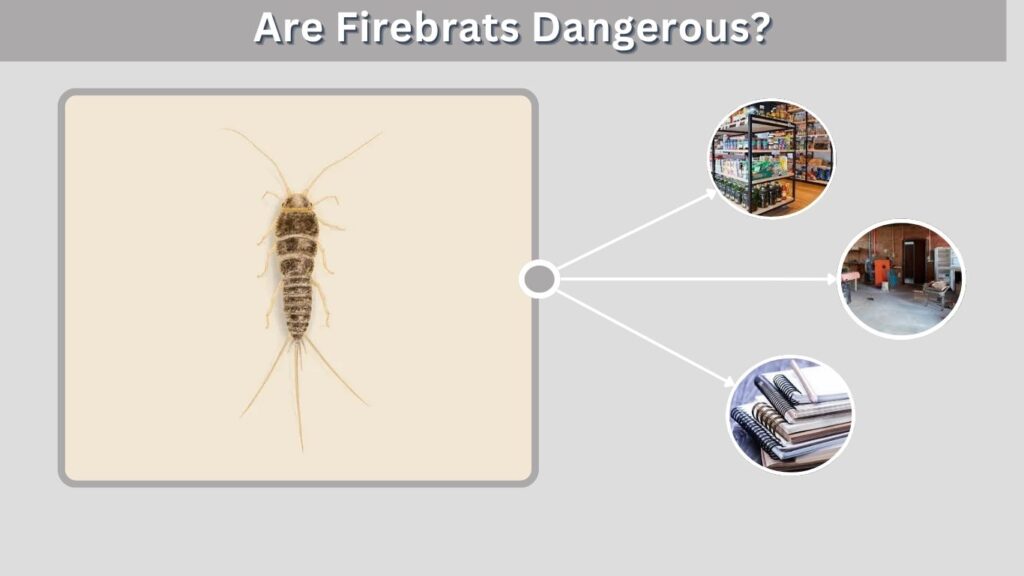
Firebrats are not dangerous in the same way biting or disease-spreading insects are. They do not transmit known diseases to humans, and they do not sting. However, they can still become a household nuisance because they feed on materials found around the home.
What Firebrats Can Damage
Firebrats are attracted to starches, sugars, proteins, and certain household materials. Rutgers notes that silverfish and firebrats can damage homes by feeding on foods and materials containing protein, sugar, or starch.
They may damage:
- Books and paper
- Cardboard boxes
- Wallpaper paste
- Stored dry foods
- Fabrics and linens
- Glue in book bindings
- Old documents and photographs
So, while firebrats are not a major health threat, they can damage belongings if the infestation grows.
Firebrat vs Silverfish Bite
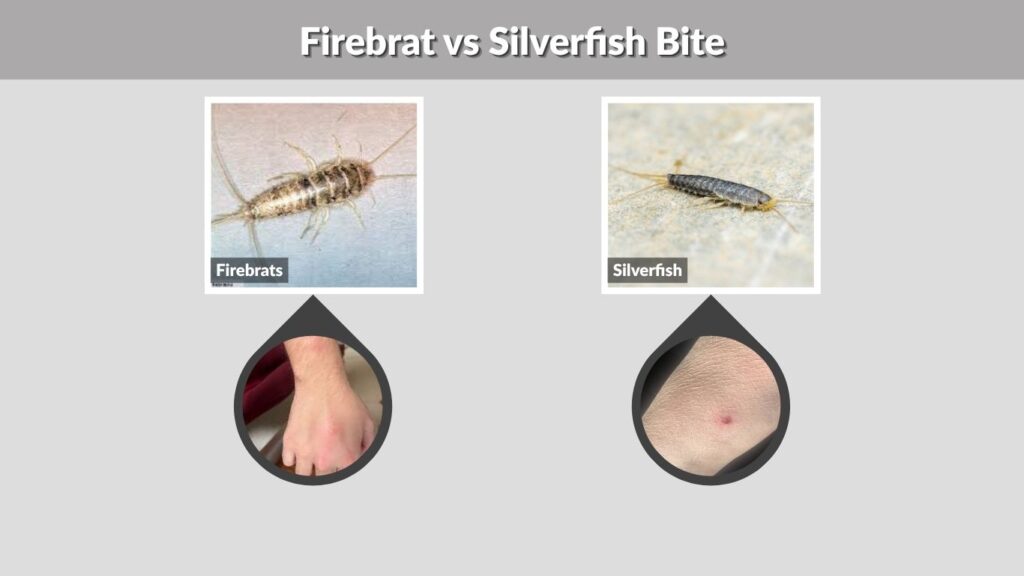
Firebrats and silverfish are often discussed together because they look similar and belong to the same general group of household pests. Both are fast, wingless, and attracted to hidden indoor spaces. Both are also generally considered harmless to humans and are not known for biting people.
Key Differences Between Firebrats and Silverfish
Firebrats usually prefer warmer areas, while silverfish are often found in cooler, damp spaces. Firebrats may gather near ovens, furnaces, water heaters, boiler rooms, laundry areas, and warm wall voids. Silverfish are more common in bathrooms, basements, closets, and damp storage spaces.
The main point is simple: whether you see a firebrat or a silverfish, the insect is far more likely to damage paper or starchy materials than bite your skin.
What to Do If You Think a Firebrat Bit You
Even though firebrat bites are unlikely, you should still care for any irritated skin. Treat the mark as a minor skin irritation unless symptoms are severe or spreading.
Basic Skin Care Steps
Try these simple steps:
- Wash the area with soap and water
- Apply a cold compress for itching or swelling
- Avoid scratching the spot
- Use an over-the-counter anti-itch cream if needed
- Monitor the area for signs of infection
Seek medical help if the area becomes very painful, hot, swollen, filled with pus, or if you develop breathing trouble, dizziness, fever, or a widespread rash.
Why Firebrats Come Into Homes
Firebrats enter and survive indoors when the environment gives them warmth, moisture, hiding places, and food. They are especially common in buildings with humid rooms, stored cardboard, old books, food crumbs, or poor ventilation.
Common Firebrat Hiding Places
You may find firebrats in:
- Kitchens
- Bathrooms
- Basements
- Laundry rooms
- Boiler rooms
- Attics
- Storage closets
- Behind appliances
- Around water heaters
- Inside cardboard boxes
They are secretive insects, so seeing one or two may mean more are hiding nearby.
How to Get Rid of Firebrats
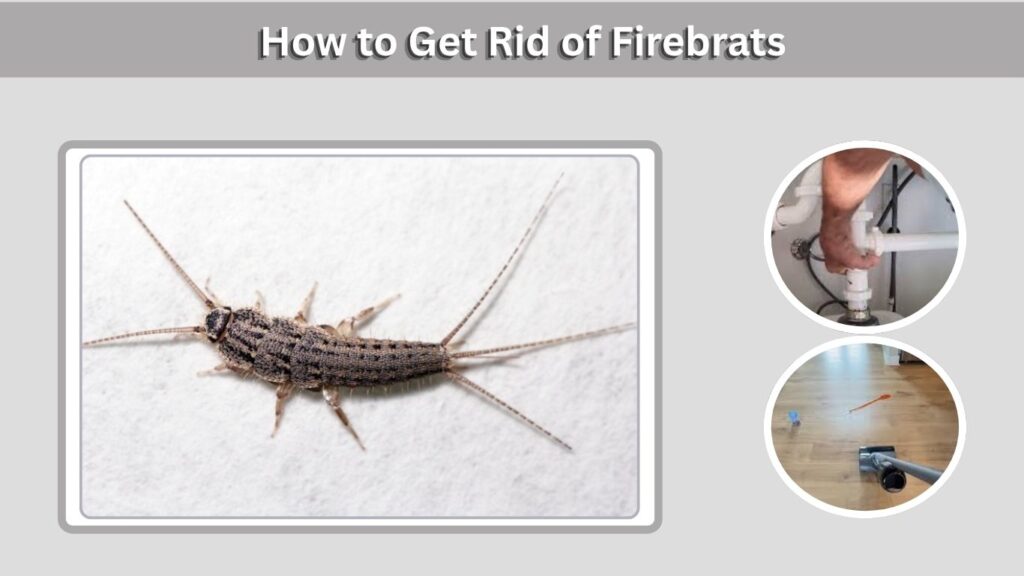
The best way to control firebrats is to make your home less comfortable for them. Since they like warmth, humidity, and starchy food sources, prevention is usually more effective than simply killing the insects you see.
Firebrat Prevention Tips
Start with these practical steps:
- Reduce indoor humidity with ventilation or a dehumidifier
- Fix leaks around sinks, pipes, and appliances
- Store paper, books, and documents in sealed containers
- Remove old cardboard boxes from storage areas
- Vacuum cracks, corners, closets, and baseboards
- Keep dry foods in airtight containers
- Seal gaps around pipes, trim, and wall openings
- Clean crumbs and food residue regularly
If the infestation is large, recurring, or spreading into multiple rooms, a licensed pest control professional can inspect for hidden sources and suggest safer treatment options.
How to Tell If Another Pest Is Biting You
If you have bite-like marks, focus on pests that actually bite. Firebrats may be visible because they run across floors or walls, but that does not mean they caused the skin reaction.
Signs the Problem May Be Another Pest
Look for:
- Dark spots or shed skins near mattresses
- Fleas on pets or pet bedding
- Mosquitoes indoors
- Mites around birds, rodents, or stored products
- Spider sightings in corners or storage areas
- Repeated bites after sleeping
- Itchy bumps in rows or clusters
Finding the real cause matters because treating for firebrats will not solve a flea, bed bug, mite, or mosquito problem.
FAQs
Do firebrats bite humans?
Firebrats do not normally bite humans. They are not blood feeders, and their mouthparts are not designed to pierce skin. If you have itchy bumps, another insect or skin irritant is more likely responsible than a firebrat.
What do firebrat bite symptoms look like?
There is no typical firebrat bite pattern because firebrats are not known to bite people. Red bumps, itching, swelling, or rashes are more likely caused by fleas, mosquitoes, bed bugs, mites, allergies, or contact irritation.
Are firebrats dangerous in the house?
Firebrats are not dangerous to people in a direct medical sense. They do not sting or spread disease. However, they can damage books, papers, wallpaper, stored foods, cardboard, and fabrics if they are allowed to multiply.
Why do I keep seeing firebrats?
You may keep seeing firebrats because your home has warm, humid hiding places and available food sources such as paper, cardboard, crumbs, glue, or starchy materials. Reducing humidity and removing clutter can help control them.
Should I call pest control for firebrats?
You may not need pest control for a few occasional firebrats. However, if you see them often, find damage, or notice them in several rooms, a pest control professional can inspect hidden areas and recommend proper treatment.