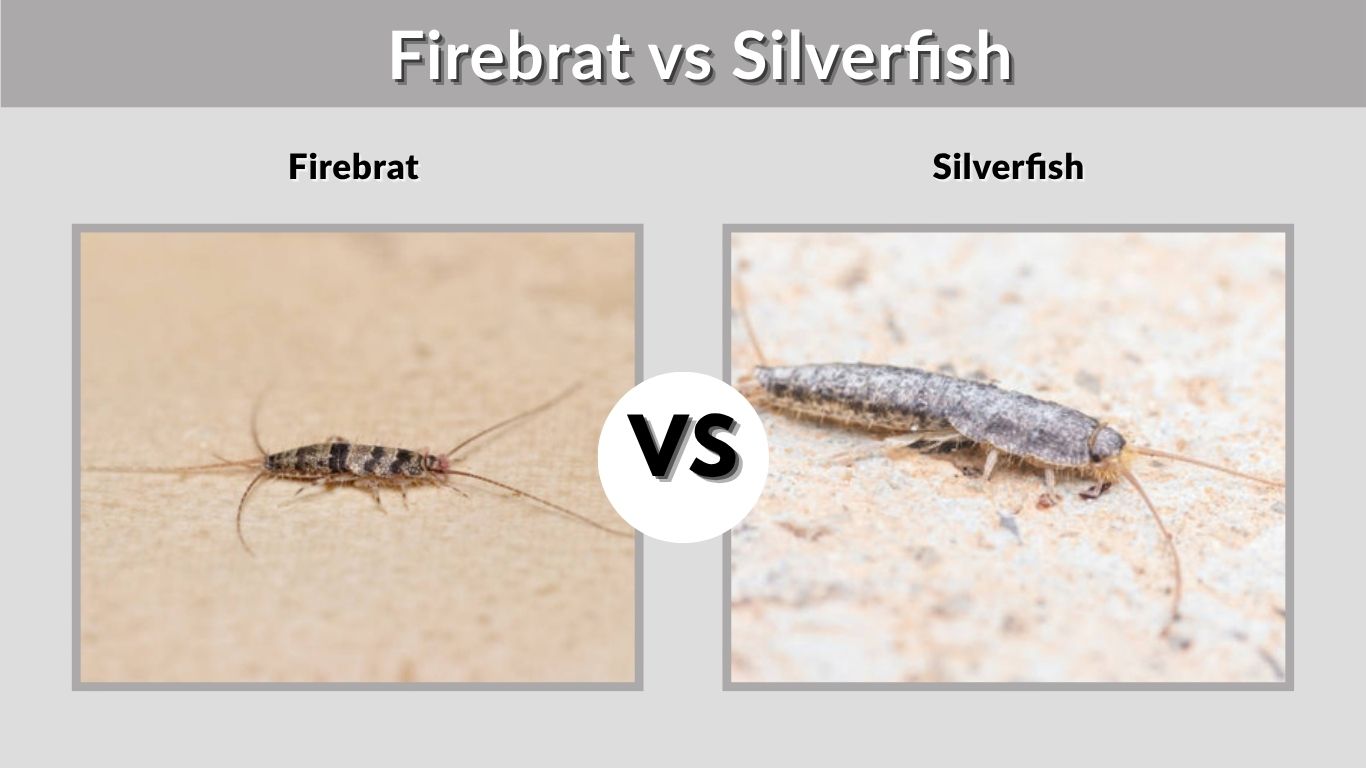
Firebrats and silverfish are often mistaken for the same insect, and it is easy to see why. Both are small, fast-moving, wingless pests with long antennae and three tail-like bristles at the end of the body. They hide during the day, come out at night, and feed on starchy materials found around the home. However, they are not exactly the same. The biggest difference is where they prefer to live: firebrats like hotter areas, while silverfish usually prefer cooler, damp places.
What Are Firebrats and Silverfish?
Firebrats and silverfish are primitive household insects often grouped together because of their similar shape, behavior, and feeding habits. They are nuisance pests, but they can cause damage when their numbers grow.
What Is a Firebrat?
A firebrat is a small, wingless insect that usually has a mottled gray, brown, or tan body. It is called a “firebrat” because it prefers warm or hot areas. In homes and commercial buildings, firebrats are often found near furnaces, boilers, water heaters, ovens, heat pipes, bakeries, laundry rooms, and other warm spaces.
Firebrats are most active at night. During the day, they hide in cracks, crevices, wall voids, behind baseboards, or near warm equipment. They move quickly when disturbed and usually avoid light.
What Is a Silverfish?
A silverfish is also a small, wingless insect, but it usually has a shiny silver or pearl-gray body. Its movement is fish-like, which is how it got the name “silverfish.” Silverfish are commonly found in bathrooms, basements, kitchens, closets, laundry rooms, attics, and other humid areas.
Silverfish prefer moisture, darkness, and access to paper, glue, fabric, or stored food. They are often seen around sinks, plumbing fixtures, damp storage boxes, bookshelves, and old wallpaper.
Firebrat vs Silverfish: Quick Comparison
Although they look similar, firebrats and silverfish have different habitat preferences. This is the easiest way to tell them apart.
| Feature | Firebrat | Silverfish |
| Body color | Mottled gray, brown, tan, or dark | Shiny silver, gray, or pearl-like |
| Preferred temperature | Hot and warm areas | Cool to warm, damp areas |
| Common hiding places | Furnaces, boilers, ovens, water heaters, heat pipes | Bathrooms, basements, closets, kitchens, bookshelves |
| Moisture preference | Likes warmth, may also tolerate humidity | Strongly attracted to moisture and humidity |
| Activity | Mostly nocturnal | Mostly nocturnal |
| Damage | Paper, starches, fabrics, stored foods | Paper, books, wallpaper, fabrics, stored foods |
| Main clue | Found near heat sources | Found in damp or humid rooms |
How to Identify Firebrats and Silverfish
The easiest way to identify these pests is to look at their body shape, color, and location. You do not always need a microscope or expert inspection to make a basic guess.
Body Shape and Size
Both insects have:
- Long, flat bodies
- No wings
- Long antennae
- Three long bristles at the rear
- A tapered, carrot-shaped appearance
- Quick, darting movement
Adults are usually small, often around half an inch long, though some may appear slightly larger depending on the species and maturity.
Color Differences
Color is one of the most useful clues. Silverfish usually look metallic, shiny, silver, or pearl gray. Firebrats are usually duller and may appear mottled with gray, brown, tan, or dark patches.
However, color alone can be misleading because lighting, age, and species variation can affect appearance. That is why location is also important.
Location Differences
If you find the insect in a bathroom, damp basement, closet, or around a sink, it is more likely to be a silverfish. If you find it near a furnace, boiler, oven, hot-water pipe, or other heat source, it is more likely to be a firebrat.
Why Firebrats and Silverfish Enter Homes
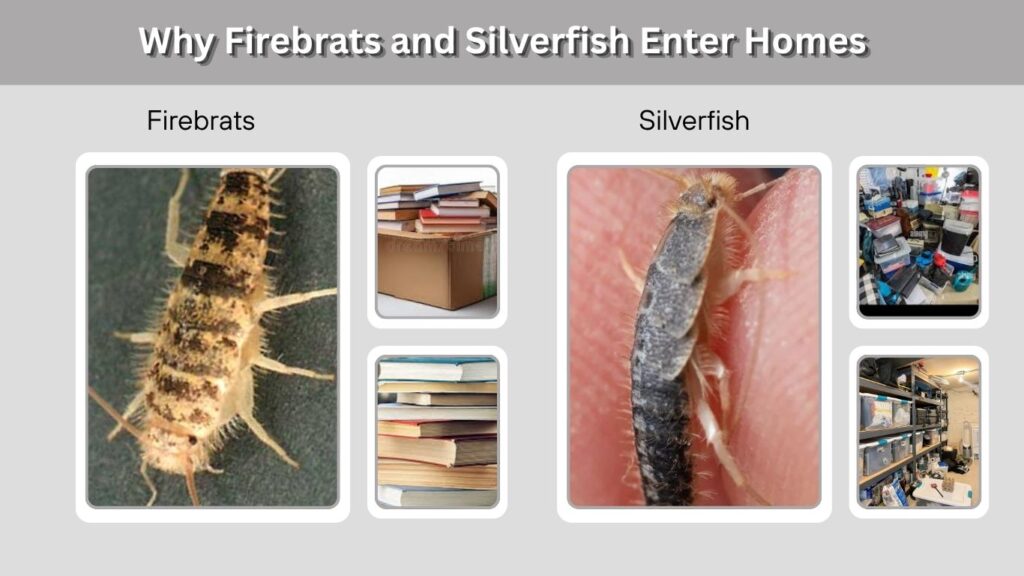
Firebrats and silverfish enter homes because indoor environments provide food, hiding places, warmth, and moisture. They can live quietly for long periods before people notice them.
Common Attractants
These pests are attracted to:
- High humidity
- Warm hiding places
- Paper, books, and cardboard
- Wallpaper paste and glue
- Starchy materials
- Cereals and dry foods
- Fabric containing starch
- Cluttered storage areas
- Cracks and crevices
Silverfish are especially linked with dampness, while firebrats are more strongly linked with heat. Still, both pests can survive in hidden areas if food and shelter are available.
Damage Caused by Firebrats and Silverfish
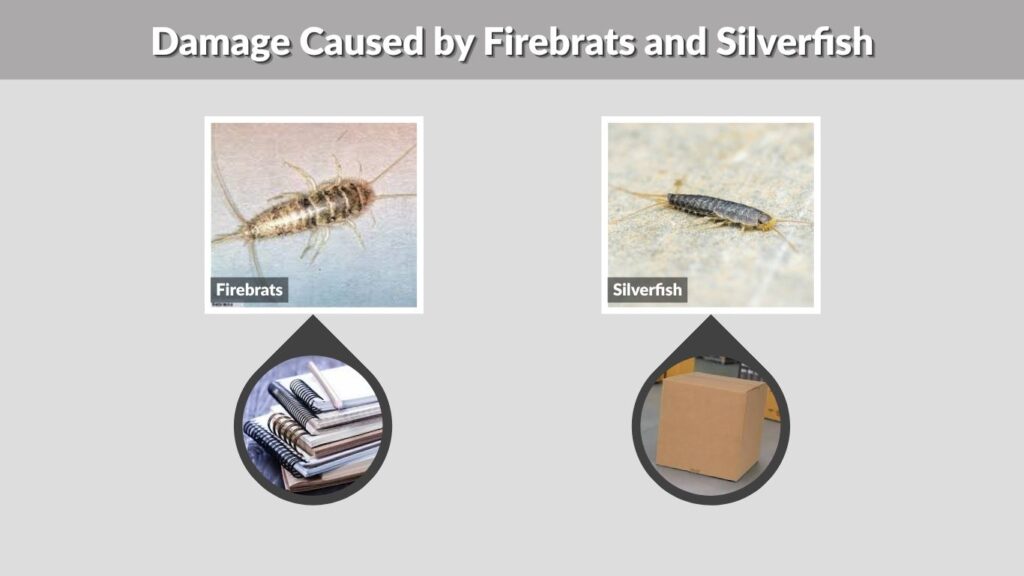
Firebrats and silverfish do not bite people, spread serious disease, or damage wood like termites. The main problem is the damage they cause to stored items.
Items They Commonly Damage
They may feed on:
- Books and book bindings
- Paper documents
- Wallpaper
- Cardboard boxes
- Starched clothing
- Cotton, linen, silk, or rayon fabrics
- Dry cereals
- Flour and other stored foods
- Glue, paste, and adhesives
- Old photographs or paper collections
Damage often appears as irregular holes, surface scraping, yellowish stains, scales, or small droppings. In many homes, the damage is minor. However, in libraries, archives, storage rooms, or homes with large paper collections, the problem can become more serious.
Are Firebrats or Silverfish Dangerous?
Firebrats and silverfish are not considered dangerous to humans. They do not sting, they do not bite in a harmful way, and they are not known as major disease carriers. Their presence is mainly a sign of favorable indoor conditions, such as moisture, warmth, clutter, or available food.
However, that does not mean they should be ignored. A few insects may not be a major issue, but repeated sightings can point to a growing infestation or an underlying humidity problem.
How to Prevent Firebrats and Silverfish
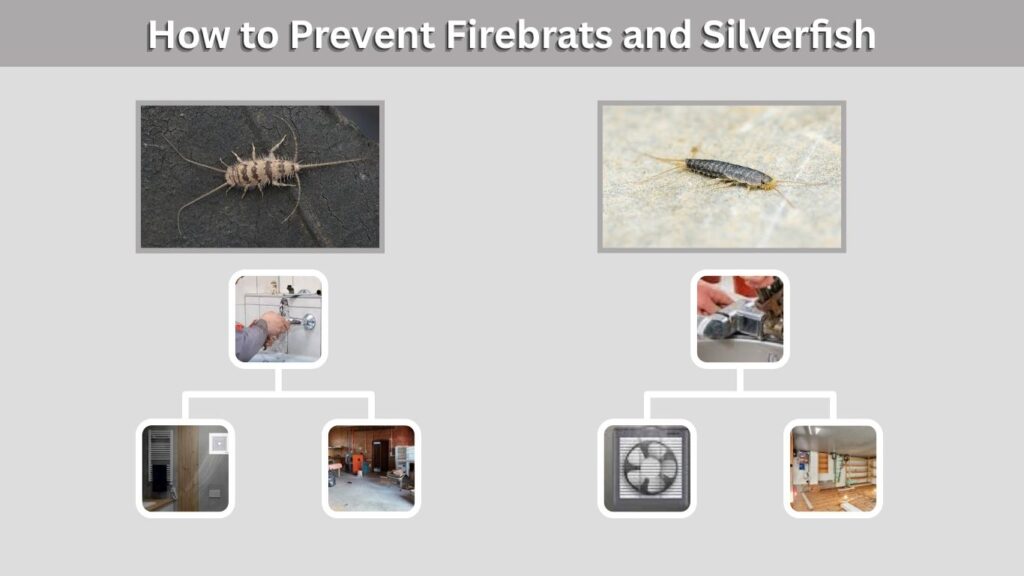
Prevention is the best long-term approach. Since these insects hide well and reproduce in protected spaces, removing the conditions they like is often more effective than simply killing the ones you see.
Reduce Moisture
For silverfish especially, moisture control is important.
Helpful steps include:
- Fix leaking pipes and dripping faucets
- Use exhaust fans in bathrooms and kitchens
- Run a dehumidifier in damp basements
- Improve airflow in closets and storage rooms
- Avoid storing paper goods directly on basement floors
Lower humidity makes the home less attractive to silverfish and can also reduce mold growth that may support other pests.
Reduce Heat-Friendly Hiding Spots
For firebrats, focus on hot areas.
Check around:
- Furnaces
- Boilers
- Water heaters
- Ovens
- Heat pipes
- Laundry equipment
- Warm utility rooms
Seal cracks and remove clutter near these areas when possible. In commercial spaces like bakeries or kitchens, regular cleaning behind warm equipment is especially important.
Store Items Properly
Because both insects feed on paper, starch, and dry foods, storage habits matter.
Use these prevention tips:
- Store dry foods in sealed containers
- Keep books and papers in dry rooms
- Use plastic storage bins instead of cardboard
- Avoid keeping old newspapers or paper piles
- Wash starched clothing before long-term storage
- Vacuum closets, shelves, and storage areas regularly
Cardboard boxes are especially attractive because they provide both food and shelter. Replacing cardboard with sealed plastic bins can make a big difference.
How to Get Rid of Firebrats and Silverfish
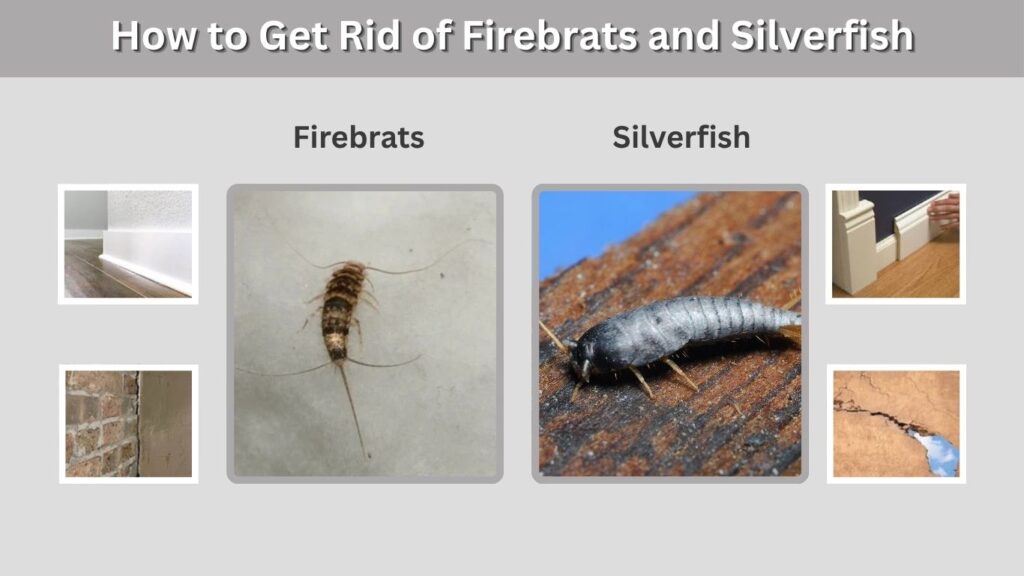
Control usually requires a combination of cleaning, moisture reduction, sealing, and targeted treatment. Spraying random areas is rarely enough because these insects hide in narrow cracks and dark spaces.
Step 1: Find the Source
Start by identifying where you see them most often. A silverfish problem may begin in a damp bathroom or basement. A firebrat problem may come from a warm utility room or kitchen area.
Look for insects, shed skins, droppings, damaged paper, or feeding marks.
Step 2: Remove Food and Shelter
Vacuum cracks, shelves, closets, and storage corners. Remove paper clutter, seal dry foods, and clean up crumbs. Pay attention to areas behind appliances, under sinks, and around baseboards.
Step 3: Seal Entry Points and Hiding Places
Seal cracks around:
- Baseboards
- Pipes
- Utility openings
- Wall gaps
- Window frames
- Door frames
- Cabinets
This reduces hiding places and makes future control easier.
Step 4: Use Targeted Pest Control
Sticky traps can help monitor activity and show where insects are traveling. Insecticidal dusts, baits, or sprays may be used in cracks and voids, but they should be applied carefully and according to the product label.
For large infestations, recurring problems, or sensitive spaces such as libraries, food facilities, or archives, professional pest control may be the best option.
Which Is Worse: Firebrat or Silverfish?
Neither pest is “worse” in every situation. Silverfish are more commonly noticed in ordinary homes because bathrooms, basements, and closets often provide the damp conditions they like. Firebrats may be more common in very warm areas or buildings with heat-producing equipment.
If you are seeing silverfish, your main concern may be humidity. If you are seeing firebrats, your main concern may be heat and hidden nesting areas near warm equipment. In both cases, the real issue is not just the insect but the indoor condition that allows it to survive.
FAQs
Are firebrats and silverfish the same thing?
No. They are closely related and look very similar, but they are not exactly the same. Silverfish usually prefer damp, humid areas, while firebrats prefer hotter locations such as boiler rooms, furnace areas, ovens, or heat pipes.
Do firebrats or silverfish bite humans?
Firebrats and silverfish are not known for biting people in a harmful way. They are mainly nuisance pests. Their biggest problem is damage to paper, books, wallpaper, fabrics, and stored dry foods rather than direct harm to humans.
Why do I keep seeing silverfish in my bathroom?
Bathrooms often provide moisture, darkness, and hiding places, which silverfish prefer. Leaky pipes, poor ventilation, damp cabinets, and high humidity can make the problem worse. Reducing moisture and sealing cracks can help prevent repeated sightings.
Where do firebrats usually hide?
Firebrats usually hide in warm, dark places. Common hiding spots include areas near furnaces, boilers, water heaters, ovens, laundry equipment, hot-water pipes, and heated utility rooms. They are most active at night and quickly hide when disturbed.
What is the best way to prevent firebrats and silverfish?
The best prevention method is to remove the conditions they like. Reduce humidity, fix leaks, improve ventilation, store dry foods in sealed containers, remove paper clutter, use plastic storage bins, vacuum regularly, and seal cracks around walls, pipes, and baseboards.