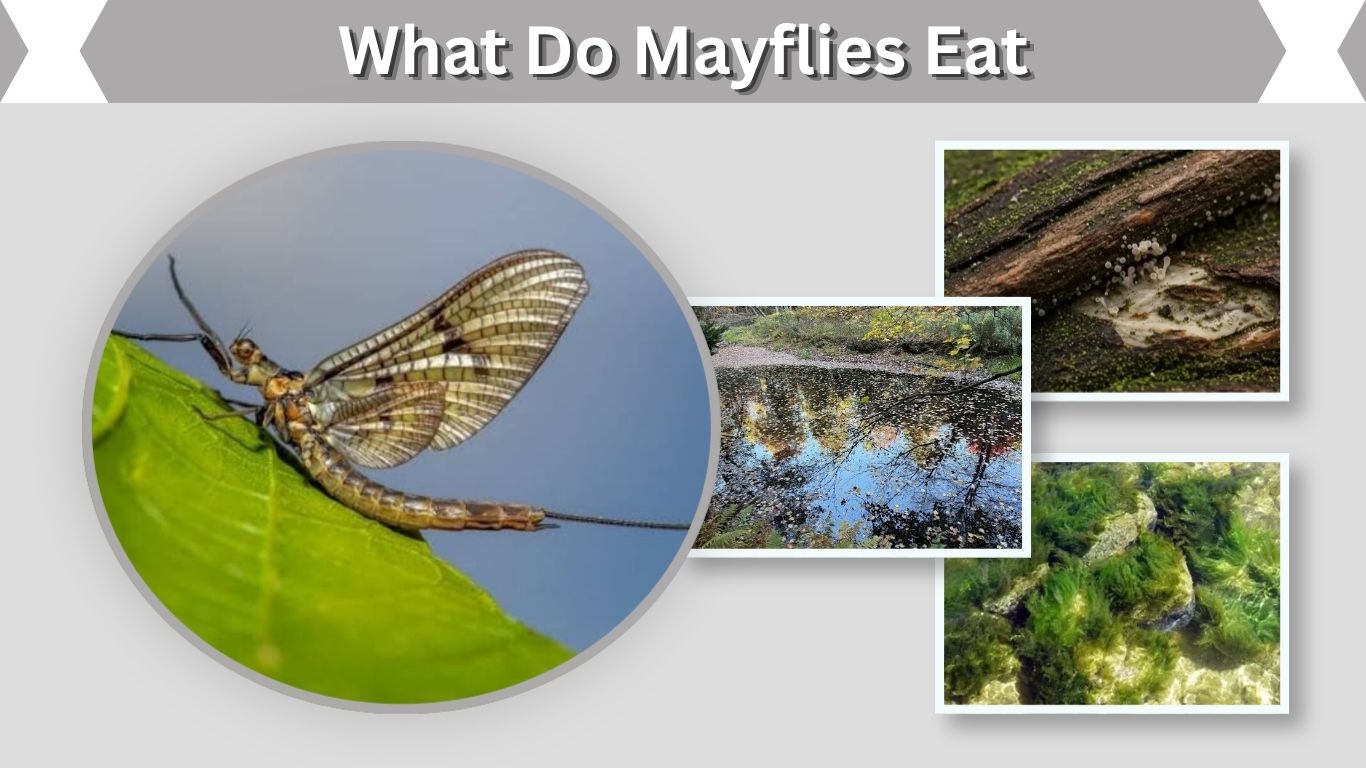
Mayflies eat mainly during their aquatic nymph stage. Most mayfly nymphs consume algae, diatoms, biofilm, decaying leaves, and fine organic debris found in streams, rivers, ponds, and lakes. A few species filter suspended particles or prey on tiny aquatic animals. Adult mayflies generally do not eat because their mouthparts and digestive systems are reduced. Their brief adult lives are devoted almost entirely to mating and laying eggs.
What Do Mayflies Eat?
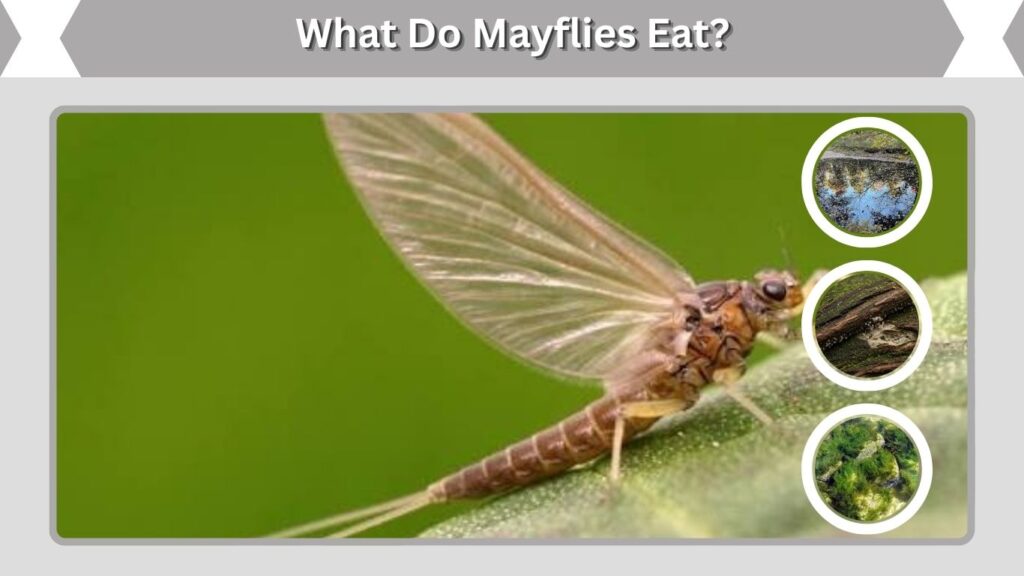
The mayfly diet changes according to species, habitat, and life stage. Nymphs may scrape food from rocks, gather particles from the bottom, or filter material from flowing water.
1. Algae
Algae are among the most important foods for mayfly nymphs. Many species scrape thin layers of algae from rocks, submerged wood, aquatic plants, and other underwater surfaces.
Algae provide energy that allows nymphs to grow and molt repeatedly before emerging from the water. Swimming and clinging species are especially likely to graze on algae in streams and rivers.
2. Diatoms
Diatoms are microscopic algae protected by delicate silica shells. They form part of the slippery coating found on submerged rocks and vegetation.
Mayfly nymphs consume diatoms while scraping these surfaces. Some species possess specialized mouthparts that help remove tightly attached algae and other microscopic food.
3. Biofilm
Biofilm is the thin, slippery layer covering rocks, logs, plants, and sediment underwater. It contains algae, bacteria, fungi, and trapped organic particles.
Scraping mayfly nymphs feed directly on this mixed layer. Biofilm offers several nutrients in one place and can support large populations of aquatic insects.
4. Decaying Leaves
Leaves that fall into streams and ponds gradually soften and decompose. Mayfly nymphs gather small fragments and particles produced during this process.
They usually do not chew through fresh, tough leaves like dedicated leaf-shredding insects. Instead, they consume softened material and fine particles created as leaves break down. Most mayfly nymphs are classified as algae scrapers or collectors of plant detritus.
5. Fine Plant Detritus
Plant detritus includes broken pieces of stems, roots, bark, seeds, and other dead vegetation. Water movement and microbial activity reduce this material into particles small enough for mayfly nymphs to eat.
Collector-gatherer nymphs search the bottom for these particles. They may use their legs and mouthparts to separate edible material from sand, mud, and gravel.
6. Fine Organic Particles
Mayfly nymphs also consume fine particulate organic matter that settles on the bottom. This mixture can include decomposed plants, microscopic organisms, animal waste, and other organic debris.
By eating these particles, mayflies help recycle nutrients and transfer energy from decomposing material to larger animals. Aquatic bottom-dwelling invertebrates are important links between organic matter and fish populations.
7. Fungi
Aquatic fungi grow on decomposing leaves, wood, and other organic material. Mayfly nymphs may ingest fungal tissue while gathering or scraping food.
Fungi also soften dead plant material and make it easier to digest. Therefore, a decomposing leaf covered with fungi may be more nutritious than a newly fallen leaf.
8. Bacteria
Bacteria are another microscopic component of biofilm and decomposing organic matter. Mayfly nymphs consume them accidentally or deliberately while scraping rocks and collecting sediment particles.
Although individual bacteria are extremely small, dense bacterial communities can contribute useful nutrients to the nymph’s diet.
9. Suspended Food Particles
Some mayfly species filter tiny particles from flowing water. They may collect algae, detritus, microorganisms, and other edible material suspended in the current.
Burrowing species can move their abdominal gills to circulate water through tunnels in mud or sand. This current supplies oxygen and may carry food particles within reach.
10. Tiny Aquatic Animals
Most mayfly nymphs are not predators, but a small number of species consume tiny aquatic animals. Their prey may include microscopic invertebrates, small insect larvae, or other organisms that can be captured underwater.
Predatory feeding is an exception rather than the rule. The majority of mayfly species depend mainly on algae and decomposing plant material.
Mayfly Diet by Life Stage
| Life stage | Main food |
| Newly hatched nymph | Microscopic algae and organic particles |
| Growing nymph | Algae, biofilm, diatoms, and detritus |
| Burrowing nymph | Fine organic matter and suspended particles |
| Predatory nymph species | Tiny aquatic animals |
| Subimago | Does not normally eat |
| Mature adult | Does not normally eat |
Do Adult Mayflies Eat?
Adult mayflies generally do not eat. Their mouthparts are reduced, and their digestive systems are not designed for normal feeding. Adults survive on energy stored while they were aquatic nymphs.
The adult stage may last from approximately one hour to several days, depending on the species and environmental conditions. During that time, adults form mating swarms, reproduce, and return to the water to lay eggs.
Do Mayflies Eat Mosquitoes?
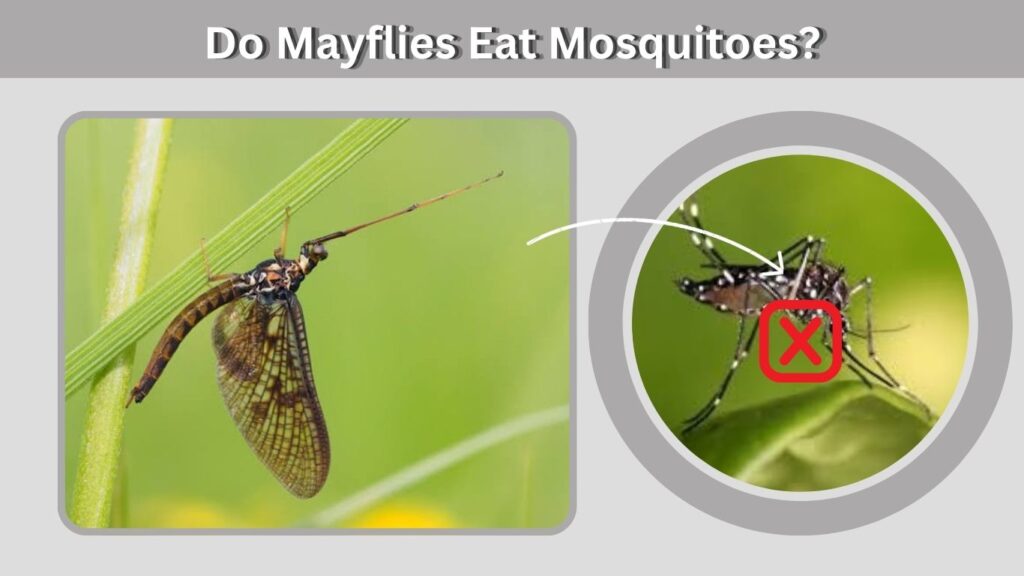
Mayflies do not normally eat mosquitoes. Adult mayflies do not feed, and most nymphs eat algae, biofilm, and organic debris rather than mosquito larvae.
A few predatory mayfly nymphs consume small aquatic organisms, but mayflies are not considered an effective form of mosquito control. Dragonfly nymphs, predatory fish, and other aquatic hunters are more likely to consume mosquito larvae regularly.
Do Mayflies Eat Plants?
Mayflies do not usually attack healthy garden plants, crops, grass, or trees. Their nymphs consume microscopic algae and decomposing plant material underwater.
They may ingest small pieces of dead leaves, but they are not significant plant pests. Adults do not feed on leaves, flowers, wood, clothing, or household materials.
What Eats Mayflies?
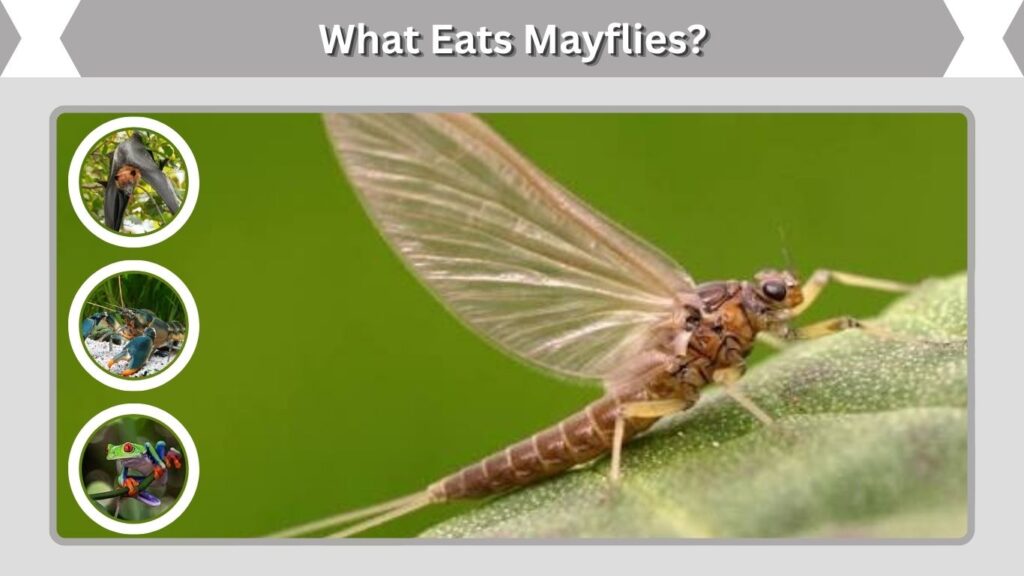
Mayflies provide food for many freshwater and land-dwelling animals. Nymphs are especially important prey because they may remain underwater for months or years.
Common predators include:
- Trout and other freshwater fish
- Bass and sunfish
- Dragonfly and stonefly nymphs
- Crayfish
- Frogs and other amphibians
- Aquatic birds
- Bats
- Spiders
One USGS-linked study found that mayfly nymphs formed a major part of the diets of redbreast sunfish and smallmouth bass at the study site. Adult mayflies also transfer nutrients from water to land when birds, bats, and shoreline spiders eat them after emergence.
Why Are Mayflies Important?
Mayfly nymphs process algae, leaf litter, and organic debris while living on the bottom of freshwater habitats. They then become food for fish and other predators, moving energy through the aquatic food chain.
Mayflies are also used in water-quality assessments. Many species are sensitive to low oxygen, pollution, sedimentation, and habitat disturbance, so their abundance and diversity can help scientists evaluate freshwater conditions.
FAQs
How do mayflies eat?
Mayfly nymphs use specialized mouthparts to scrape algae, gather organic particles, or filter suspended food from water. A few predatory species capture tiny aquatic animals. Adults generally do not eat.
Do mayfly nymphs eat algae?
Yes. Algae are a major food for many mayfly nymphs. They scrape algae and diatoms from rocks, wood, plants, and other submerged surfaces.
Do mayflies eat fish?
No. Mayflies do not eat fish. The relationship normally works in the opposite direction: fish frequently feed on mayfly nymphs, emerging mayflies, and winged adults.
Do mayflies eat mosquitoes?
Mayflies do not regularly eat mosquitoes. Most nymphs feed on algae and detritus, while adults do not eat. A few predatory nymphs may capture small organisms, but they do not provide reliable mosquito control.
Can people eat mayflies?
Mayflies have been used as food in some cultures, but insects collected from the wild may carry contaminants or pesticide residue. They should not be eaten unless they were obtained and prepared specifically as safe human food.