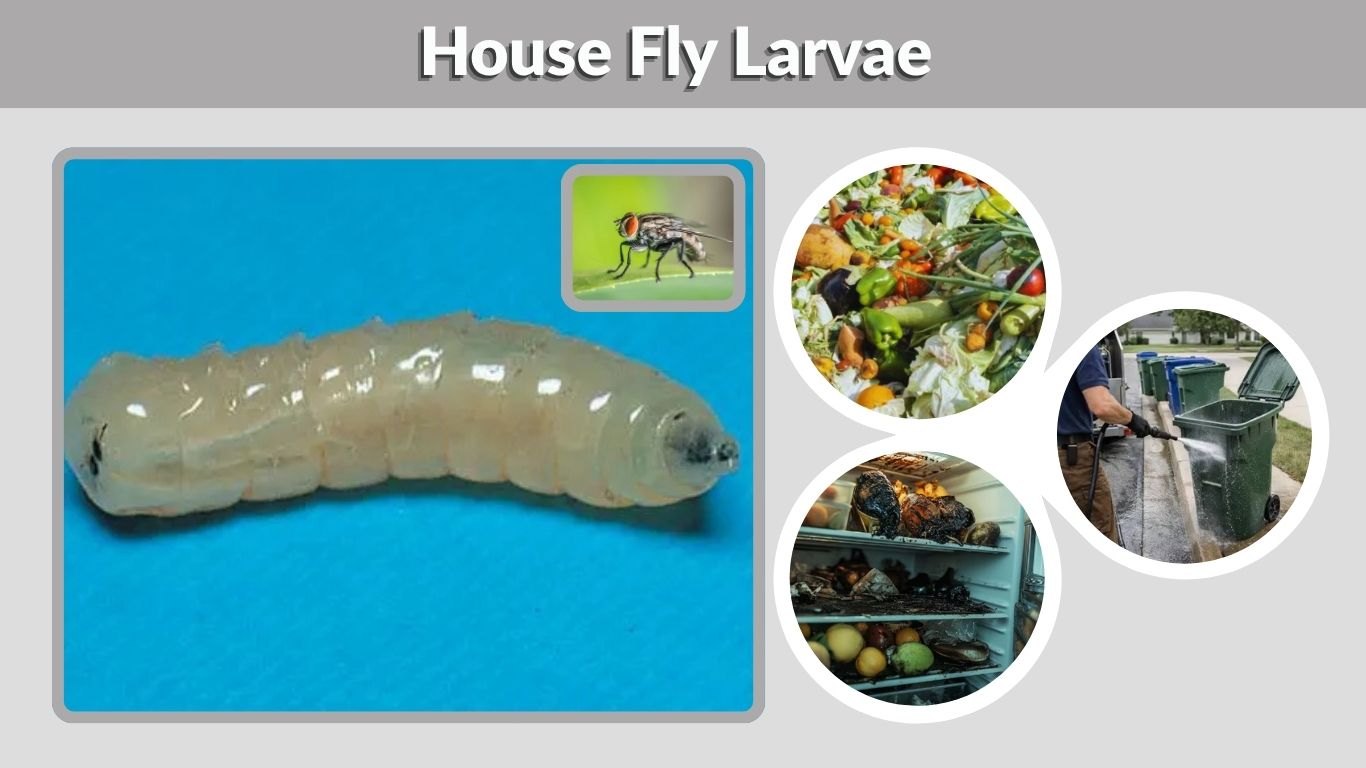
House fly larvae are the small, pale maggots that develop after house fly eggs hatch. Finding them inside a home usually means adult flies have located decaying organic material where they can reproduce. Larvae may appear near garbage, spoiled food, pet waste, drains, or other moist material. Although they are unpleasant to discover, removing the breeding source usually solves the problem. This guide explains what house fly larvae look like, their life cycle, where they come from, whether they are dangerous, and how to get rid of them effectively.
What Do House Fly Larvae Look Like?
House fly larvae are commonly called maggots. They look very different from adult flies because they have soft, legless bodies without obvious heads or wings. Freshly hatched larvae are extremely small, but they grow quickly while feeding on moist organic matter. Correct identification is important because several other fly species can produce larvae inside homes.
House Fly Larvae Identification
Typical house fly larvae have several recognizable characteristics:
- Creamy white to pale yellow coloration
- Soft, smooth, legless body
- Tapered front end and broader rear end
- Worm-like appearance
- Usually several millimeters long when young
- Mature larvae may grow to roughly 1/2 inch long
- No visible wings or developed legs
They often move by contracting their bodies as they crawl through food waste or other moist materials.
House Fly Larvae vs Other Fly Larvae
Not every maggot found indoors comes from a common house fly. Black soldier fly larvae, fruit fly larvae, flesh fly larvae, drain fly larvae, and lesser house fly larvae can also occur around homes.
Black soldier fly larvae are generally darker and more robust than house fly maggots. Fruit fly larvae are much smaller and frequently occur around fermenting fruit or wet organic residue. Drain fly larvae are usually associated with the gelatinous buildup inside drains.
The location where larvae are found can therefore be as helpful for identification as their appearance.
Where House Fly Maggots Are Commonly Found
House fly larvae usually occur close to the material where eggs were laid. They are especially likely to appear around garbage containers, decomposing food, animal waste, dirty outdoor bins, or forgotten organic material.
When mature larvae are ready to pupate, however, they often crawl away from the wet breeding material toward a drier location. This explains why maggots may suddenly appear on floors several feet away from a trash can or other source.
House Fly Larvae Life Cycle
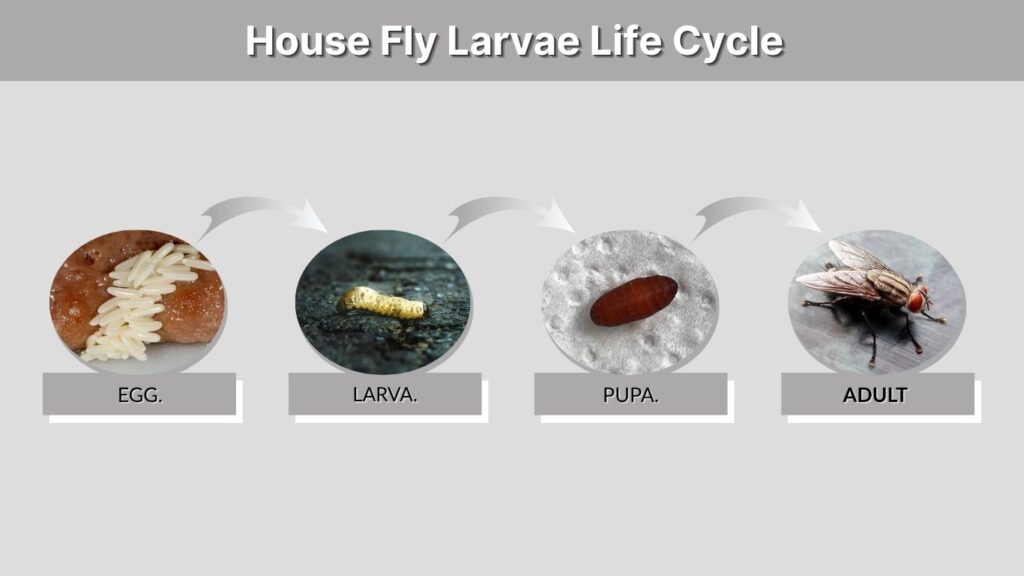
The common house fly, Musca domestica, undergoes complete metamorphosis. Its development includes egg, larva, pupa, and adult stages. Warm temperatures and readily available food can accelerate development, allowing fly populations to increase rapidly. Understanding this cycle helps explain why removing larvae alone is often not enough to stop an infestation.
From Eggs to Larvae
Female house flies typically lay batches of eggs on moist, decomposing organic material. Suitable breeding sites can include:
- Rotting food
- Garbage
- Animal manure
- Pet waste
- Decaying plant material
- Other moist organic debris
The eggs can hatch quickly under favorable warm conditions. Newly emerged larvae immediately begin feeding on the surrounding material.
House Fly Larvae Stages
House fly larvae pass through three larval stages, called instars. During each stage, the maggot grows and molts before advancing to the next stage.
Most larval development occurs within the moist breeding material where food is abundant. As larvae mature, they become noticeably larger and more active.
After completing the final larval stage, the maggot usually leaves the wet food source and searches for a relatively dry, protected location.
Pupa to Adult House Fly
The mature larva forms a pupa inside a hardened casing. The pupal case may appear reddish-brown to dark brown and can resemble a small seed or capsule.
Inside this casing, the insect changes into an adult fly. Once development is complete, the adult emerges and eventually begins searching for food and breeding sites.
Because development can occur quickly during warm weather, a small unnoticed breeding source can produce many adult flies in a relatively short period.
Why Are Fly Larvae in My House?
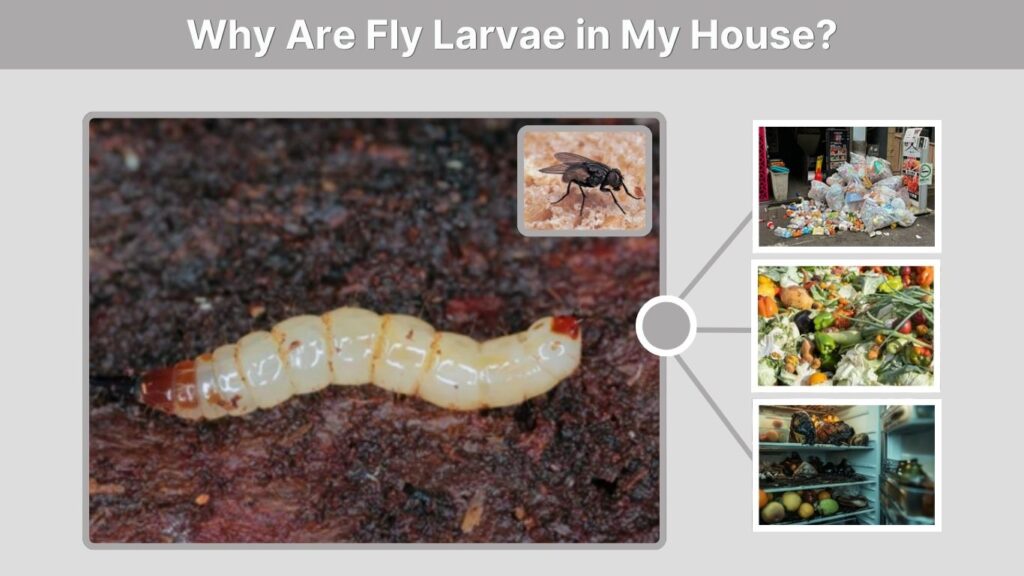
Finding fly larvae indoors usually indicates that flies have discovered suitable organic material somewhere nearby. The larvae do not typically appear randomly. Locating the source is therefore the most important part of controlling the problem.
Common Indoor Breeding Sources
Check areas where organic material may remain moist or overlooked, including:
- Kitchen garbage cans
- Trash bags with food residue
- Spoiled food behind appliances
- Pet food and animal waste
- Dirty recycling containers
- Dead rodents or other animals
- Compost containers
- Food spills beneath cabinets
- Decaying material around drains
A single forgotten food item can sometimes support many larvae.
House Fly Larvae in Carpets or Beds
House fly larvae do not normally breed in clean carpets or bedding. If maggots are seen there, they may have crawled away from a nearby breeding source while searching for a place to pupate.
Inspect underneath furniture, behind appliances, inside trash containers, and around pet areas.
If larvae repeatedly appear near one wall or ceiling area, a hidden source such as a dead animal may occasionally be involved.
Fly Larvae in Houseplants
Larvae found in potting soil are often not house fly larvae. Fungus gnat larvae are much more commonly associated with moist indoor plant soil.
House flies generally prefer decomposing organic material rather than ordinary potting mix. Overwatered soil containing significant decaying organic matter can attract various flies, so improving drainage and allowing the soil surface to dry can help reduce many plant-related fly problems.
How to Get Rid of House Fly Larvae
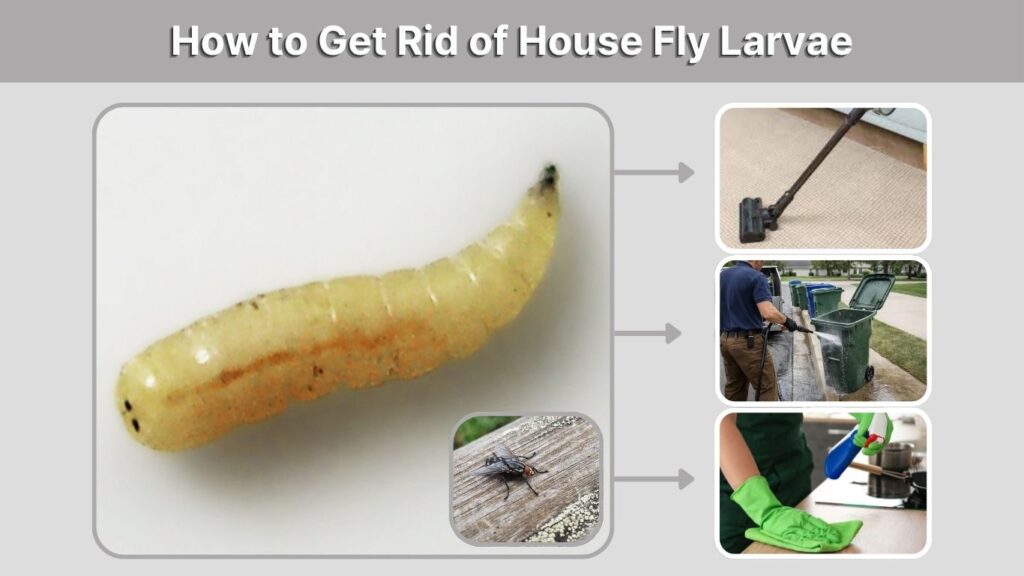
Effective control focuses on removing both the larvae and the material supporting their development. Killing visible maggots without cleaning the breeding source may only provide temporary relief because additional eggs or larvae can remain hidden nearby.
Find and Remove the Breeding Source
Begin by inspecting the area where larvae are concentrated. Look inside and beneath trash cans, appliances, cabinets, pet areas, and other places where food or organic debris may accumulate.
Discard contaminated materials in a sealed outdoor garbage bag. If the source is inside a garbage container, remove all waste before cleaning it thoroughly.
Finding the source is usually more important than applying an insecticide.
Clean the Infested Area
Once the source has been removed:
- Vacuum or sweep up remaining larvae and pupae
- Wash contaminated surfaces with soap and hot water
- Clean garbage cans inside and outside
- Remove food residue from floors and counters
- Empty indoor trash frequently
- Wash pet feeding areas
- Keep recycling containers clean
- Repair leaking plumbing that creates persistent moisture
Dispose of vacuum contents promptly so surviving insects cannot continue developing inside the vacuum.
Prevent House Fly Larvae From Returning
House fly prevention depends primarily on sanitation and exclusion. Store food in covered containers, keep garbage tightly closed, and clean spills promptly.
Window and door screens should fit securely without holes. Doors should not remain open longer than necessary, particularly during warm months when fly activity is high.
Outdoor garbage containers should be kept covered and cleaned periodically. Pet waste should also be removed frequently.
Reducing access to food and breeding materials interrupts the house fly life cycle before larvae become established indoors.
Are House Fly Larvae Dangerous?
House fly maggots are generally more of a sanitation warning than a direct threat from touching or crawling nearby. However, their presence often means they are feeding in decomposing or contaminated material. Adult house flies can pick up microorganisms from garbage, feces, and other unsanitary sources and transfer them onto surfaces or food.
Can House Fly Larvae Harm People?
Ordinary house fly larvae typically develop in decomposing organic material rather than living human tissue. They should nevertheless be removed promptly from food preparation and living areas.
Food containing maggots or showing evidence of fly contamination should be discarded rather than eaten.
If larvae appear to be coming from a wound or directly from skin rather than from the environment, seek medical attention because that situation is different from a normal household fly infestation.
When an Infestation Needs More Investigation
A few larvae near an overflowing trash container usually have an obvious explanation. Repeated infestations without an identifiable source deserve closer inspection.
Persistent maggots can sometimes indicate hidden food waste, plumbing contamination, animal remains, or another breeding source that cannot easily be reached.
A pest-management professional may be useful when larvae continue appearing after thorough sanitation and source removal.
FAQs
1. Are house fly larvae the same as maggots?
Yes. The larval stage of a house fly is commonly called a maggot. Maggots are the feeding stage between the egg and pupa stages of the fly life cycle.
2. How do fly larvae get inside a house?
Adult flies usually enter through doors, windows, screens, or other openings and lay eggs on suitable organic material. The eggs hatch into larvae wherever adequate food and moisture are available.
3. What kills house fly larvae?
Physically removing larvae and their food source is usually the most effective approach. Cleaning contaminated areas with hot soapy water and disposing of organic waste prevents remaining larvae from continuing development. Insecticides are often unnecessary when the breeding source can be eliminated.
4. Why am I finding maggots away from the garbage?
Mature house fly larvae commonly crawl away from wet breeding material before pupating. They may therefore appear on floors, beneath furniture, or along walls even though their original food source is several feet away.
5. How can I permanently prevent house fly larvae?
Keep food and garbage covered, clean trash containers, remove pet waste, eliminate spoiled organic material, repair screens, and keep indoor surfaces clean. Preventing adult flies from reaching suitable egg-laying material is the most reliable way to stop future larvae.