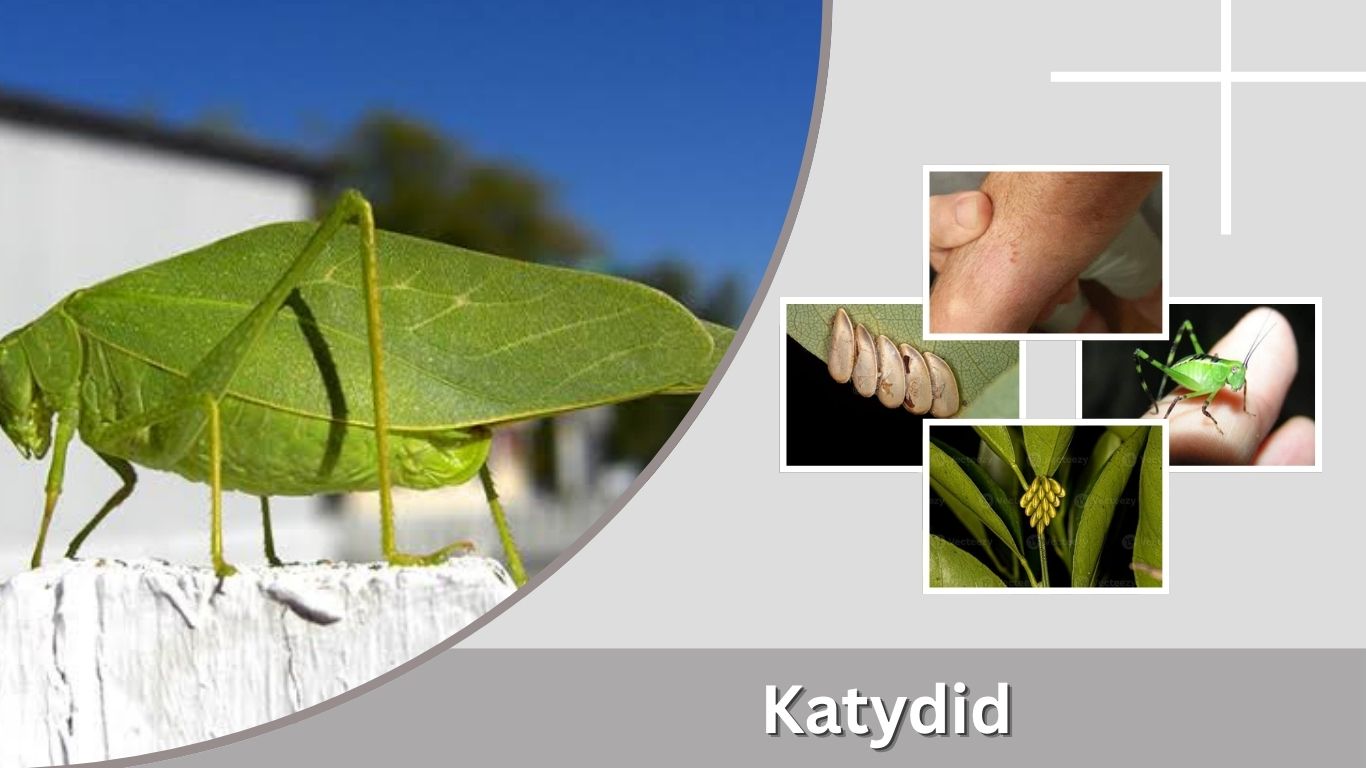
A katydid is a long-legged insect known for its leaf-like appearance, extremely long antennae, and loud nighttime calls. Katydids are closely related to crickets and grasshoppers, but their long antennae and often leaf-shaped wings make them easier to distinguish. Most are green and spend their time among trees, shrubs, grasses, and garden plants, where their camouflage helps them avoid predators. Although katydids can occasionally bite when handled, they are generally harmless to people. Their fascinating behavior, unusual sounds, eggs, and nymph stages make them some of the most recognizable insects of warm summer nights.
What Is a Katydid?
Katydids are insects belonging to the family Tettigoniidae within the order Orthoptera. They are relatives of crickets and grasshoppers and are sometimes called bush-crickets or long-horned grasshoppers.
Thousands of katydid species occur around the world, particularly in tropical and warm temperate regions.
Many live in:
- Forests
- Gardens
- Grasslands
- Meadows
- Shrublands
- Woodland edges
Katydids are commonly active at night. During the daytime, they often remain nearly motionless among leaves because their body shape and coloration provide excellent camouflage.
What Does a Katydid Look Like?
The appearance of a katydid varies among species, but most have several recognizable characteristics.
Common identification features include:
- Very long, thread-like antennae
- Six long legs
- Large hind legs for jumping
- Green or brown coloration
- Leaf-like wings
- Chewing mouthparts
- Slender or broad bodies
- Wings extending over much of the abdomen
The antennae are one of the easiest ways to identify a katydid. They are usually longer than the insect’s entire body.
Many species have wings shaped like leaves. Some even show vein-like patterns that closely resemble the veins of real foliage.
Katydid Size
Most katydids are approximately 1 to 3 inches long, although size depends greatly on the species.
Some tropical katydids become much larger and may have extremely broad wings. Long legs and antennae can also make an individual appear considerably larger than its actual body length.
Young katydids are much smaller and gradually increase in size through repeated molts.
Katydid Sounds
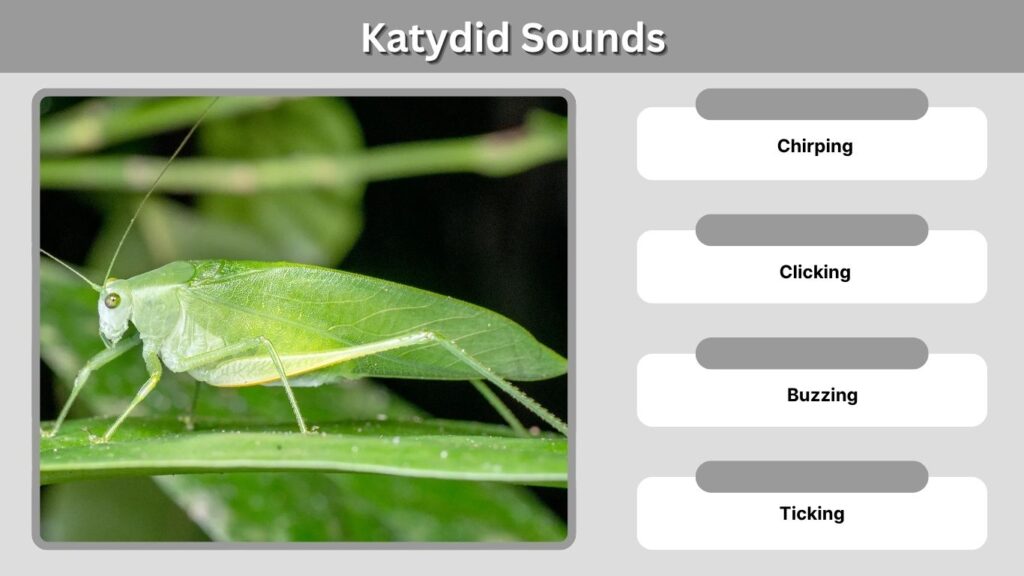
Katydids are famous for the sounds they make during warm evenings and nights.
Depending on the species, their calls may sound like:
- Chirping
- Clicking
- Buzzing
- Rattling
- Ticking
- Repeated raspy notes
Some calls have traditionally been interpreted as sounding like “katy-did, katy-didn’t,” which contributed to the insect’s common name.
How Do Katydids Make Sounds?
Male katydids usually produce sounds by rubbing specialized parts of their front wings together. This process is known as stridulation.
One wing contains a file-like surface while another has a scraper-like structure. Rubbing these structures together produces vibrations that create the familiar call.
The exact sound differs among species.
Why Do Katydids Make Sounds at Night?
The main purpose of katydid calls is communication associated with mating.
Male katydids call to attract females. Each species may have a particular rhythm or pattern that helps females recognize males of their own species.
Because many katydids are nocturnal, their calls become most noticeable after sunset.
Warm summer nights may become especially noisy when numerous males are calling at the same time.
Katydid vs Grasshopper
Katydids and grasshoppers can look similar because both have strong hind legs and belong to the same insect order.
However, several features make them relatively easy to distinguish.
| Feature | Katydid | Grasshopper |
| Antennae | Very long | Usually short |
| Activity | Often nighttime | Usually daytime |
| Body shape | Often leaf-like | Usually thicker |
| Wings | Frequently resemble leaves | Less leaf-like |
| Sound production | Commonly uses wings | Often uses legs and wings |
| Typical color | Frequently green | Green, brown, gray |
Antennae Are the Best Clue
The biggest visual difference is usually antenna length.
Katydids have extremely long, narrow antennae that may extend far beyond their bodies. Grasshoppers generally have much shorter antennae.
Katydids are also more likely to resemble leaves, while many grasshoppers have thicker and more robust bodies.
Do Katydids Bite?
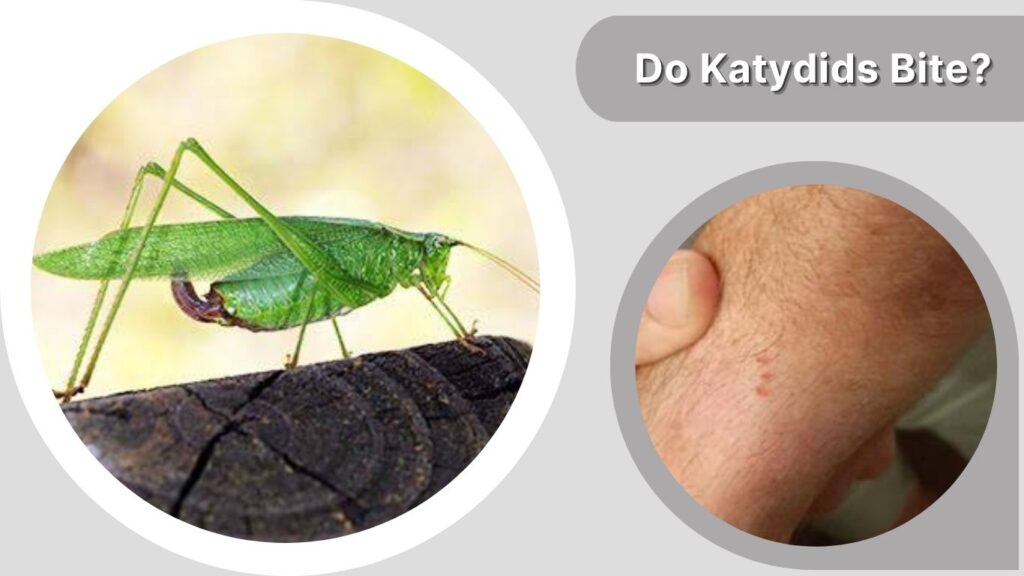
Katydids can bite, but bites are uncommon.
They have strong chewing mouthparts designed for eating food. A large katydid may use those mouthparts defensively when it is grabbed, squeezed, or handled roughly.
A bite may feel like a sharp pinch and could occasionally cause minor redness or irritation.
Katydids do not normally seek out humans or attack people.
Is a Katydid Bite Dangerous?
For most people, a katydid bite is not considered medically serious.
Katydids are not venomous insects and do not have specialized stingers for attacking humans.
If one lands on you, allowing it to walk away or gently encouraging it onto another surface is usually better than grabbing it with your fingers.
Katydid Eggs
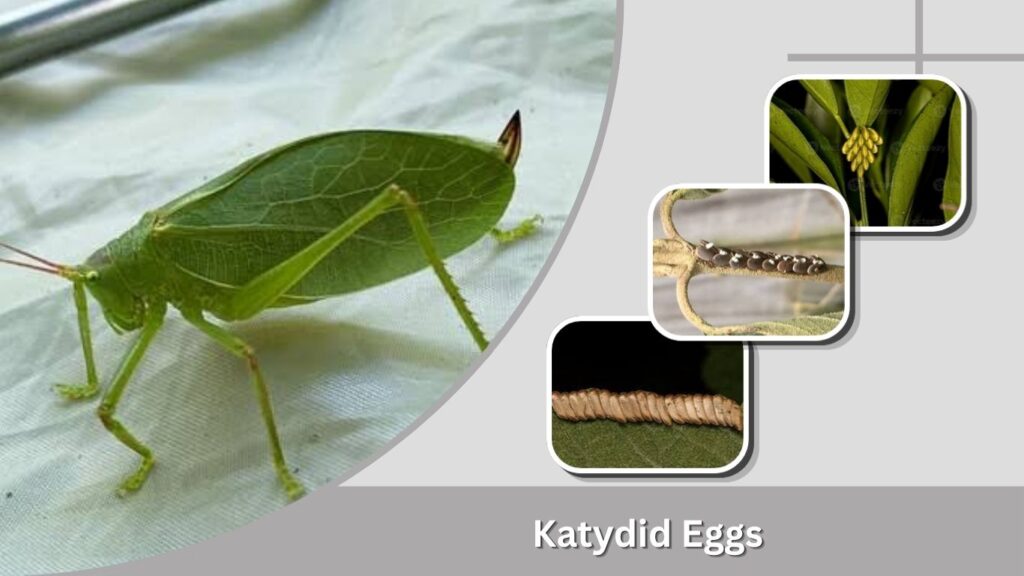
Female katydids reproduce by laying eggs in carefully selected locations.
The exact appearance and placement of the eggs vary among species.
Katydid eggs may be:
- Flat
- Oval
- Elongated
- Seed-like
- Brown
- Gray
- Tan
- Greenish
Females use a specialized egg-laying structure called an ovipositor.
Where Do Katydids Lay Eggs?
Depending on the species, females may deposit eggs:
- On leaves
- Along leaf margins
- Inside plant tissue
- On stems
- Under bark
- In soil
Some species arrange multiple eggs neatly along plant stems or leaves.
Egg placement helps provide protection during development.
In cooler climates, the egg stage may survive winter while adult katydids disappear after cold weather arrives.
Katydid Nymph
A young katydid is known as a nymph.
Katydids undergo incomplete metamorphosis, so there is no caterpillar-like larval stage or pupal stage.
Their life cycle is:
Egg → Nymph → Adult
What Does a Katydid Nymph Look Like?
A katydid nymph generally resembles a tiny adult, but there are several differences.
Young nymphs:
- Are much smaller
- Lack fully developed wings
- Cannot reproduce
- May have slightly different coloration
- Have proportionally long antennae and legs
Some nymphs initially look more like ants or other insects than adult katydids.
As they mature, their characteristic katydid appearance becomes increasingly obvious.
How Does a Katydid Nymph Grow?
Katydid nymphs must molt because their outer skeleton cannot expand continuously.
During molting, the insect sheds its old exoskeleton and emerges with a larger, softer body covering.
The new exoskeleton eventually hardens.
After several molts, the nymph develops mature wings and becomes an adult.
Katydid Life Cycle
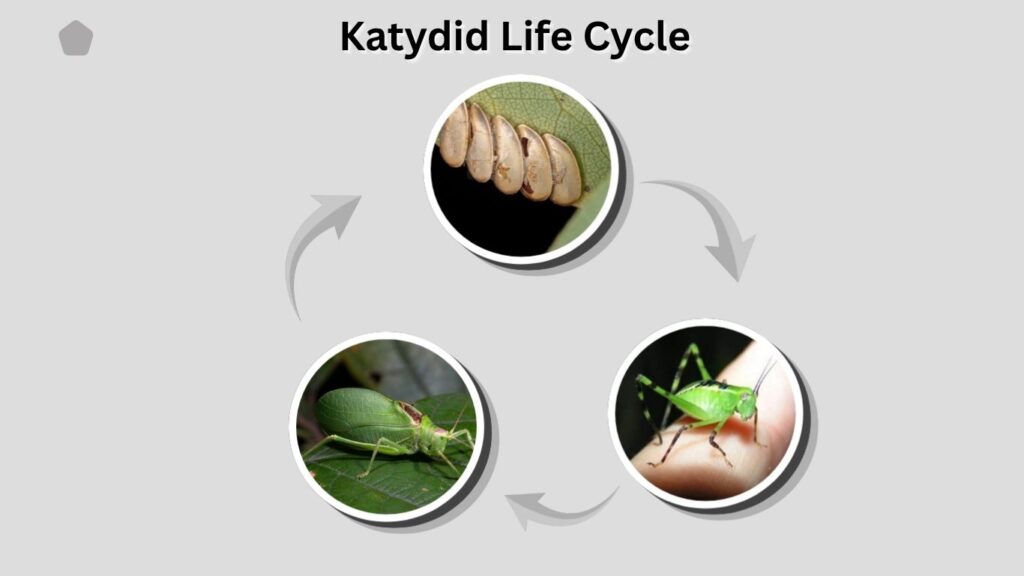
Katydids experience three basic life stages.
Egg Stage
The cycle begins when a female deposits eggs on or around vegetation.
Eggs may remain dormant for an extended period depending on climate and species.
Nymph Stage
Once an egg hatches, a small nymph emerges.
The nymph feeds, grows, and molts repeatedly. Small wing pads eventually develop and become increasingly noticeable.
Adult Stage
After the final molt, the katydid reaches adulthood.
Adults have fully developed reproductive structures, and many species have functional wings.
Males begin producing mating calls, females mate, and another generation of eggs is eventually laid.
What Do Katydids Eat?
Many katydids primarily eat plant material such as:
- Leaves
- Flowers
- Seeds
- Stems
- Pollen
- Fruits
However, katydids have diverse feeding habits.
Some species are omnivorous and may eat small insects, insect eggs, or other arthropods. A smaller number are more strongly predatory.
Their strong chewing mouthparts allow them to consume both tough vegetation and, in some species, animal prey.
Where Do Katydids Live?
Katydids usually live in areas with abundant vegetation.
They may be found on trees, shrubs, vines, tall grasses, garden plants, and forest vegetation.
Green species often remain among fresh foliage, while brown katydids can blend effectively with dead leaves, bark, and dried vegetation.
Their camouflage is one of their most important defenses.
Are Katydids Harmful?
Katydids are generally harmless to humans.
They do not infest homes in the same way as cockroaches or termites, and they normally prefer outdoor vegetation.
A few species can chew garden plants, and large populations may sometimes cause noticeable plant damage.
However, individual katydids found around gardens are usually simply part of the local ecosystem.
They also serve as food for birds, frogs, reptiles, spiders, and many other predators.
FAQs
Are katydids dangerous?
Katydids are generally not dangerous to people. They do not have venomous stingers and normally avoid human contact. A large katydid may bite defensively when roughly handled, but such bites are uncommon and usually cause little more than temporary discomfort.
Why do katydids make so much noise?
Male katydids make loud calls mainly to attract females. They usually create these sounds by rubbing specialized structures on their wings together. Because many species are active after sunset, their calls can become particularly noticeable during warm summer nights.
Can katydids fly?
Many adult katydids can fly, although flying ability differs among species. Some are strong fliers, while others rely mainly on jumping, climbing, and short flights. Their wings also provide camouflage and are commonly involved in producing mating sounds.
What is the difference between a katydid nymph and an adult?
Nymphs are immature katydids that resemble smaller versions of adults but do not yet have fully developed wings or reproductive structures. They molt several times as they grow. After completing their final molt, they become sexually mature adults.
How can you tell a katydid from a grasshopper?
Look at the antennae first. Katydids normally have extremely long antennae that may extend beyond their bodies, while grasshoppers have much shorter antennae. Katydids are also frequently leaf-like and nocturnal, whereas grasshoppers are generally more active during daylight.