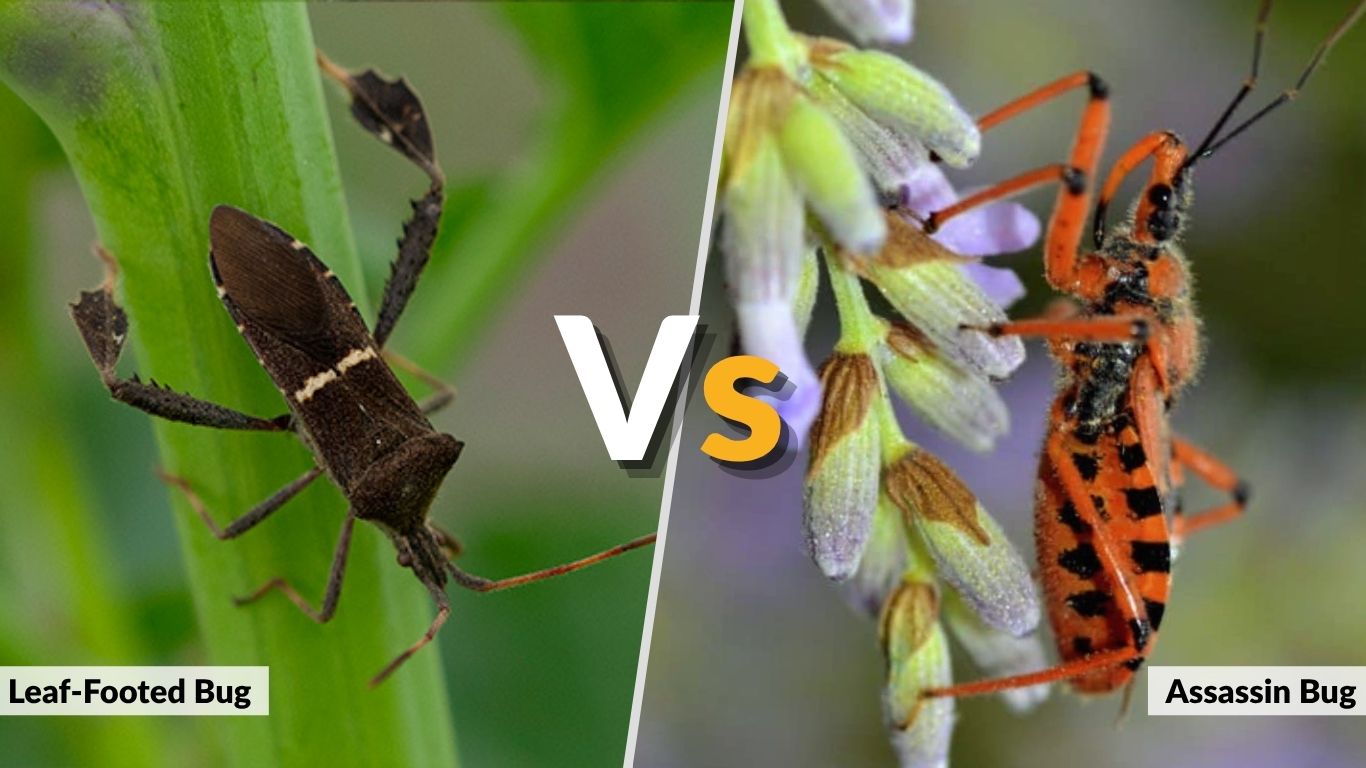
The leaf-footed bug vs assassin bug comparison can be confusing because both insects have long legs, narrow bodies, piercing mouthparts, and sometimes similar red-and-black nymphs. However, their behavior and diets are very different. Leaf-footed bugs mainly feed on plants and may damage fruits and vegetables, while assassin bugs are predators that hunt other insects. Knowing the difference helps gardeners avoid killing beneficial predators while controlling plant pests. This guide compares their appearance, nymphs, feeding habits, bites, and garden roles.
Leaf-Footed Bug vs Assassin Bug: Quick Comparison
Leaf-footed bugs and assassin bugs belong to different insect families, although both are true bugs in the order Hemiptera. Their similarities can make identification difficult, especially when they are young. The easiest clues usually involve the hind legs, shape of the beak, feeding behavior, and whether the insect is clustered on plants or actively hunting other insects.
Main Differences
- Leaf-footed bug family: Coreidae
- Assassin bug family: Reduviidae
- Leaf-footed bug diet: Plant juices, fruits, seeds, stems
- Assassin bug diet: Other insects and arthropods
- Leaf-footed hind legs: Often enlarged or leaf-like in adults
- Assassin bug hind legs: Usually lack leaf-like expansions
- Leaf-footed nymphs: Frequently cluster together
- Assassin bug nymphs: More often hunt independently
- Garden role: Leaf-footed bugs can be pests; assassin bugs are often beneficial predators
Are Leaf-Footed Bugs Assassin Bugs?
No. Leaf-footed bugs are not assassin bugs.
They may resemble one another because both have elongated bodies and piercing-sucking mouthparts, but they belong to separate families and use their mouthparts differently. Leaf-footed bugs pierce plant tissue, while assassin bugs use a stronger predatory beak to attack prey.
How to Identify a Leaf-Footed Bug
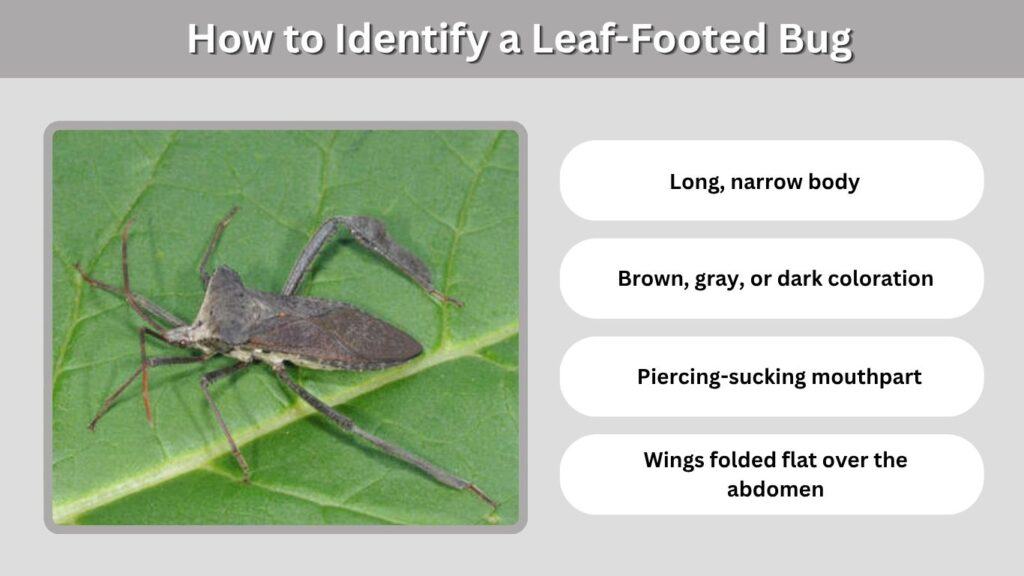
Adult leaf-footed bugs typically have elongated brown, gray, or dark bodies. Many species develop widened sections on the hind legs that resemble small leaves, giving the family its common name. They are often encountered on vegetable plants, fruits, seed heads, trees, and ornamental plants where they insert their mouthparts into plant tissue.
Leaf-Footed Bug Identification
Look for:
- Long, narrow body
- Brown, gray, or dark coloration
- Long antennae
- Piercing-sucking mouthpart
- Broad or flattened hind tibiae in many species
- Wings folded flat over the abdomen
- White or pale markings on some species
- Frequent presence on fruits or seed-producing plants
Not every leaf-footed species has dramatically enlarged hind legs, so feeding behavior can also be useful for identification.
What Do Leaf-Footed Bugs Eat?
Leaf-footed bugs feed primarily on plant material. They insert their mouthparts into fruits, seeds, stems, and developing plant tissue and remove fluids.
Common host plants include tomatoes, peppers, citrus, pomegranates, squash, beans, nuts, and many ornamental plants.
Heavy feeding can cause spotting, deformation, damaged seeds, or reduced fruit quality.
How to Identify an Assassin Bug
Assassin bugs are predatory insects built to capture and consume other arthropods. Many have narrow heads, long legs, and a short, strong beak tucked beneath the body. Some species are brightly colored, while others are brown or gray and easily blend into vegetation, bark, or soil.
Assassin Bug Identification
Typical features include:
- Narrow or elongated head
- Strong, curved piercing beak
- Long legs
- Predatory behavior
- Usually no leaf-like hind-leg expansions
- Brown, black, red, orange, or mixed coloration
- Solitary hunting behavior in many species
- Feeding directly on other insects
Assassin bugs may remain motionless while waiting for prey or actively stalk insects through vegetation.
What Do Assassin Bugs Eat?
Assassin bugs prey on many small animals, including:
- Caterpillars
- Flies
- Beetles
- Aphids
- Leafhoppers
- Small moths
- Other true bugs
- Various soft-bodied insects
They grasp prey and pierce it with their beak, injecting saliva that immobilizes the victim and helps liquefy internal tissues.
Leaf-Footed Bug Nymph vs Assassin Bug Nymph
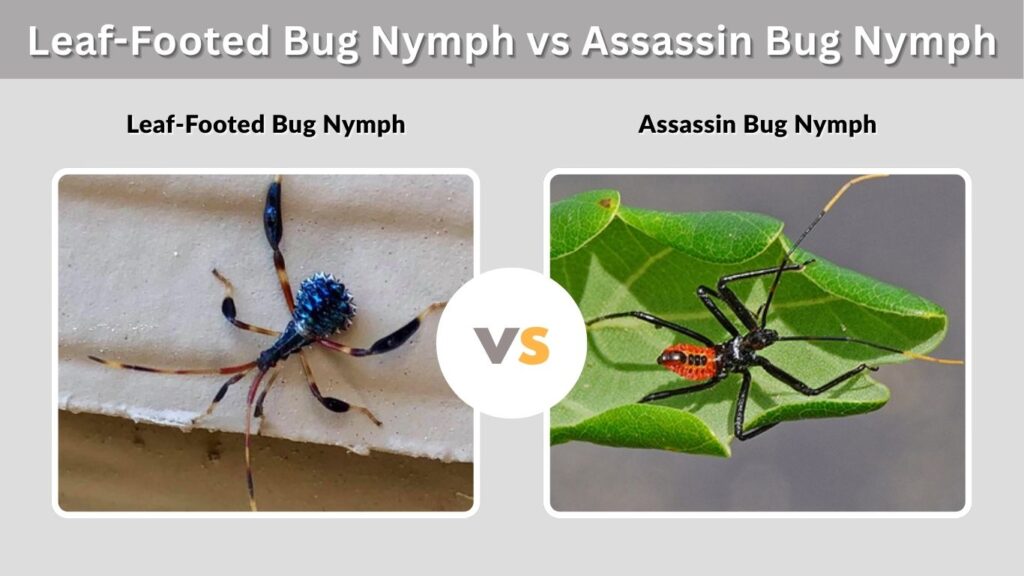
The leaf-footed bug nymph vs assassin bug nymph comparison is often more difficult than identifying adults. Young insects may both be red or orange with dark legs and lack the features seen in mature insects. Their behavior, body shape, mouthparts, and grouping habits become especially important during identification.
Leaf-Footed Bug Nymph
Leaf-footed bug nymphs commonly:
- Have red, orange, or dark bodies
- Possess long black legs
- Cluster together after hatching
- Feed directly on plants
- Lack developed wings
- Develop visible wing pads with age
- Become more adult-like after each molt
- Eventually develop expanded hind legs in species that have them
Finding a group feeding on a tomato, fruit, or seed pod strongly suggests leaf-footed bug nymphs.
Assassin Bug Nymph
Assassin bug nymphs may:
- Be red, orange, black, brown, or patterned
- Have long legs
- Carry a prominent predatory beak
- Hunt insects rather than plants
- Move individually more often
- Lack leaf-shaped hind legs
- Attack caterpillars or other prey
Observing what the insect is eating is often one of the best identification methods.
Which Nymph Is Beneficial?
Assassin bug nymphs are generally beneficial because they consume garden pests.
Leaf-footed bug nymphs can damage plants, particularly when numerous individuals gather on developing fruits or seeds.
Because they can look very similar, gardeners should identify nymphs carefully before removing them.
Milkweed Assassin Bug vs Leaf-Footed Bug
The milkweed assassin bug vs leaf-footed bug comparison causes particular confusion because milkweed assassin bugs and some leaf-footed nymphs have similar orange, red, and black coloration. Both may also have long legs and antennae. However, milkweed assassin bugs are predators, whereas leaf-footed bugs are primarily plant feeders.
Milkweed Assassin Bug
Milkweed assassin bugs typically have:
- Orange or reddish bodies
- Long dark legs
- A narrow head
- Strong predatory beak
- No leaf-like hind-leg expansion
- Habit of hunting insects
They may capture caterpillars, flies, and other insects on garden vegetation.
Leaf-Footed Bug
Leaf-footed bugs are more likely to be found with their mouthparts inserted into:
- Tomatoes
- Peppers
- Squash
- Seed pods
- Citrus
- Pomegranates
- Developing fruits
Watching the bug for a few moments can sometimes reveal whether it is feeding on the plant or searching for prey.
Giant Leaf-Footed Bug vs Assassin Bug
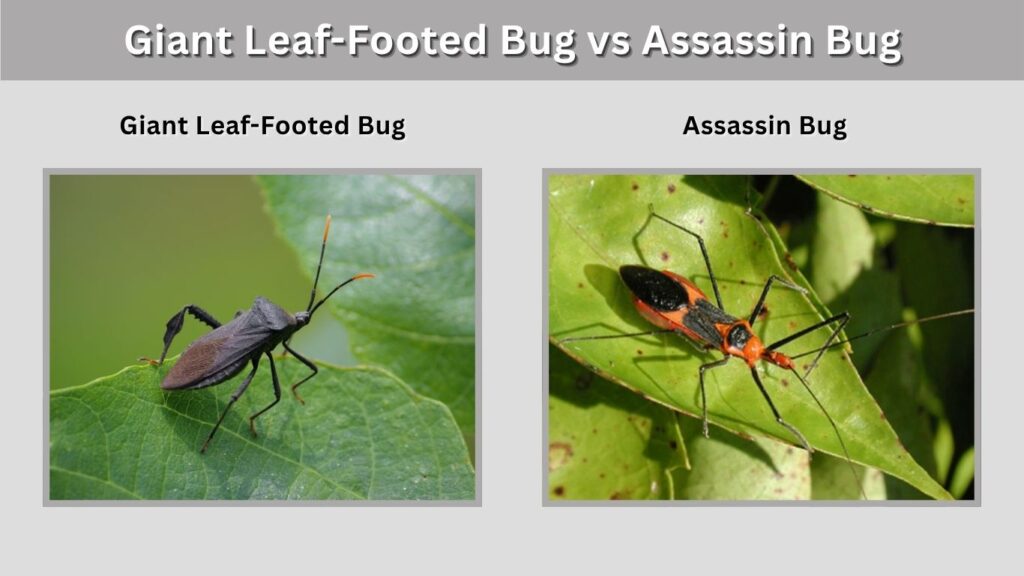
Large leaf-footed bugs can appear intimidating because of their long bodies and enlarged legs. Large assassin bugs can look equally formidable, making size a poor identification feature.
Instead, examine the rear legs, head, beak, and behavior.
How to Tell Them Apart
A giant leaf-footed bug is more likely to show broad hind-leg expansions and spend time feeding on vegetation.
An assassin bug usually has a more obvious predatory beak and may be observed attacking insects.
Some assassin bugs have thick front legs for grabbing prey, while many leaf-footed bugs have their most distinctive modifications on the rear legs.
Do Leaf-Footed Bugs and Assassin Bugs Bite?
Both insects possess piercing mouthparts, but neither normally seeks humans as prey. Assassin bugs can deliver a painful defensive bite if handled, while leaf-footed bugs are much less likely to pierce human skin. The safest approach is to avoid picking up either insect directly with bare hands.
Assassin Bug Bite
An assassin bug may bite defensively if:
- It is trapped against the skin
- It is squeezed
- Someone handles it
- It feels threatened
The bite can be painful because its beak is adapted for piercing other animals.
Most garden assassin bugs are not aggressive toward humans and usually retreat when disturbed.
Leaf-Footed Bug Bite
Leaf-footed bugs are plant feeders and rarely interact aggressively with people.
A defensive jab may be possible if an insect is roughly handled, but they are primarily a concern because of plant damage rather than bites.
Wearing gloves while removing them from crops is a sensible precaution.
Assassin Bug vs Kissing Bug vs Leaf-Footed Bug
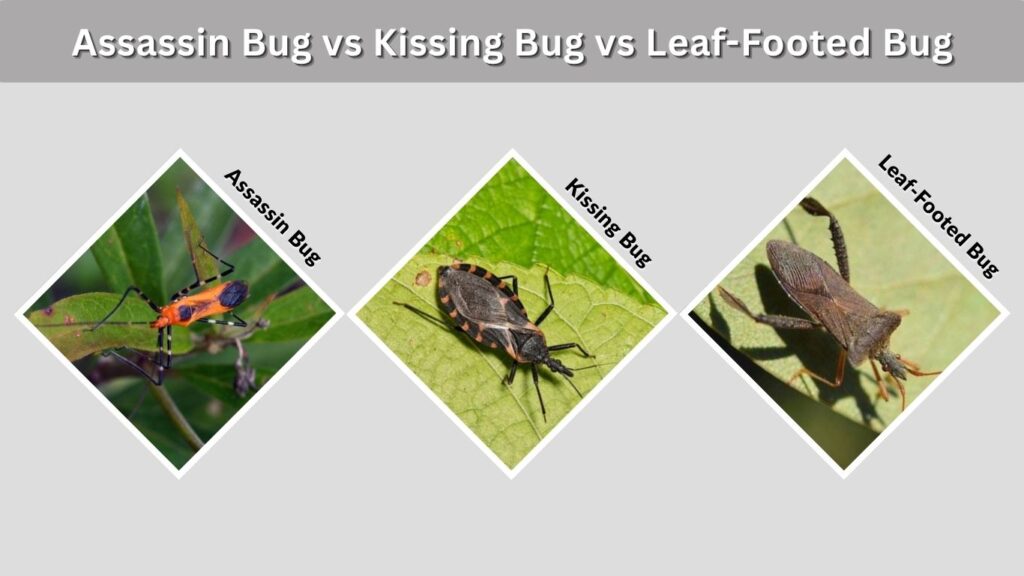
Another source of confusion involves kissing bugs. Kissing bugs are actually a specialized group within the assassin bug family, but their lifestyle differs from most predatory assassin bugs. They feed on vertebrate blood rather than garden insects and are medically important in some regions because certain species can transmit the parasite associated with Chagas disease.
Important Differences
- Leaf-footed bug: Plant feeder
- Typical assassin bug: Insect predator
- Kissing bug: Blood-feeding member of the assassin bug family
- Leaf-footed bug hind legs: Often expanded
- Typical assassin bug: Predatory beak
- Kissing bug: Often has a broad abdomen with contrasting edge markings
Do not assume every assassin bug is a kissing bug. The assassin bug family contains many species with very different habits.
Which Bug Should You Remove From the Garden?
Leaf-footed bugs can become damaging when their numbers increase around vegetables and fruits. Assassin bugs, by contrast, often contribute to natural pest control.
Correct identification allows you to protect helpful predators while targeting genuine plant pests.
Remove or Control Leaf-Footed Bugs When
Control may be useful when:
- Numerous nymphs appear on crops
- Tomatoes show feeding damage
- Developing fruits are heavily attacked
- Egg rows are widespread
- Large populations gather on seed crops
Removing egg masses and young nymph clusters early can prevent populations from increasing.
Leave Assassin Bugs Alone When Possible
Assassin bugs can help reduce pest insects without pesticides.
Allowing them to remain in the garden may contribute to control of caterpillars, flies, leafhoppers, and other insects.
Avoid handling them directly because their defensive bite can be painful.
FAQs
What is the main difference between a leaf-footed bug and an assassin bug?
Leaf-footed bugs mainly feed on plants, while assassin bugs are predators that kill and consume other insects.
How can I tell a leaf-footed bug nymph from an assassin bug nymph?
Leaf-footed nymphs commonly cluster together and feed on plant tissue. Assassin bug nymphs are more often seen hunting other insects and have a stronger predatory beak.
Are leaf-footed bugs assassin bugs?
No. Leaf-footed bugs belong to Coreidae, while assassin bugs belong to Reduviidae.
Are assassin bugs good for the garden?
Many assassin bugs are beneficial because they prey on caterpillars, flies, aphids, beetles, and other garden pests.
Which is more dangerous to humans, an assassin bug or leaf-footed bug?
Typical assassin bugs can deliver a more painful defensive bite. Leaf-footed bugs rarely bother humans and are mainly plant pests.
The leaf-footed bug vs assassin bug comparison can be confusing because both insects have long legs, narrow bodies, piercing mouthparts, and sometimes similar red-and-black nymphs. However, their behavior and diets are very different. Leaf-footed bugs mainly feed on plants and may damage fruits and vegetables, while assassin bugs are predators that hunt other insects. Knowing the difference helps gardeners avoid killing beneficial predators while controlling plant pests. This guide compares their appearance, nymphs, feeding habits, bites, and garden roles.
Leaf-Footed Bug vs Assassin Bug: Quick Comparison
Leaf-footed bugs and assassin bugs belong to different insect families, although both are true bugs in the order Hemiptera. Their similarities can make identification difficult, especially when they are young. The easiest clues usually involve the hind legs, shape of the beak, feeding behavior, and whether the insect is clustered on plants or actively hunting other insects.
Main Differences
- Leaf-footed bug family: Coreidae
- Assassin bug family: Reduviidae
- Leaf-footed bug diet: Plant juices, fruits, seeds, stems
- Assassin bug diet: Other insects and arthropods
- Leaf-footed hind legs: Often enlarged or leaf-like in adults
- Assassin bug hind legs: Usually lack leaf-like expansions
- Leaf-footed nymphs: Frequently cluster together
- Assassin bug nymphs: More often hunt independently
- Garden role: Leaf-footed bugs can be pests; assassin bugs are often beneficial predators
Are Leaf-Footed Bugs Assassin Bugs?
No. Leaf-footed bugs are not assassin bugs.
They may resemble one another because both have elongated bodies and piercing-sucking mouthparts, but they belong to separate families and use their mouthparts differently. Leaf-footed bugs pierce plant tissue, while assassin bugs use a stronger predatory beak to attack prey.
How to Identify a Leaf-Footed Bug
Adult leaf-footed bugs typically have elongated brown, gray, or dark bodies. Many species develop widened sections on the hind legs that resemble small leaves, giving the family its common name. They are often encountered on vegetable plants, fruits, seed heads, trees, and ornamental plants where they insert their mouthparts into plant tissue.
Leaf-Footed Bug Identification
Look for:
- Long, narrow body
- Brown, gray, or dark coloration
- Long antennae
- Piercing-sucking mouthpart
- Broad or flattened hind tibiae in many species
- Wings folded flat over the abdomen
- White or pale markings on some species
- Frequent presence on fruits or seed-producing plants
Not every leaf-footed species has dramatically enlarged hind legs, so feeding behavior can also be useful for identification.
What Do Leaf-Footed Bugs Eat?
Leaf-footed bugs feed primarily on plant material. They insert their mouthparts into fruits, seeds, stems, and developing plant tissue and remove fluids.
Common host plants include tomatoes, peppers, citrus, pomegranates, squash, beans, nuts, and many ornamental plants.
Heavy feeding can cause spotting, deformation, damaged seeds, or reduced fruit quality.
How to Identify an Assassin Bug
Assassin bugs are predatory insects built to capture and consume other arthropods. Many have narrow heads, long legs, and a short, strong beak tucked beneath the body. Some species are brightly colored, while others are brown or gray and easily blend into vegetation, bark, or soil.
Assassin Bug Identification
Typical features include:
- Narrow or elongated head
- Strong, curved piercing beak
- Long legs
- Predatory behavior
- Usually no leaf-like hind-leg expansions
- Brown, black, red, orange, or mixed coloration
- Solitary hunting behavior in many species
- Feeding directly on other insects
Assassin bugs may remain motionless while waiting for prey or actively stalk insects through vegetation.
What Do Assassin Bugs Eat?
Assassin bugs prey on many small animals, including:
- Caterpillars
- Flies
- Beetles
- Aphids
- Leafhoppers
- Small moths
- Other true bugs
- Various soft-bodied insects
They grasp prey and pierce it with their beak, injecting saliva that immobilizes the victim and helps liquefy internal tissues.
Leaf-Footed Bug Nymph vs Assassin Bug Nymph
The leaf-footed bug nymph vs assassin bug nymph comparison is often more difficult than identifying adults. Young insects may both be red or orange with dark legs and lack the features seen in mature insects. Their behavior, body shape, mouthparts, and grouping habits become especially important during identification.
Leaf-Footed Bug Nymph
Leaf-footed bug nymphs commonly:
- Have red, orange, or dark bodies
- Possess long black legs
- Cluster together after hatching
- Feed directly on plants
- Lack developed wings
- Develop visible wing pads with age
- Become more adult-like after each molt
- Eventually develop expanded hind legs in species that have them
Finding a group feeding on a tomato, fruit, or seed pod strongly suggests leaf-footed bug nymphs.
Assassin Bug Nymph
Assassin bug nymphs may:
- Be red, orange, black, brown, or patterned
- Have long legs
- Carry a prominent predatory beak
- Hunt insects rather than plants
- Move individually more often
- Lack leaf-shaped hind legs
- Attack caterpillars or other prey
Observing what the insect is eating is often one of the best identification methods.
Which Nymph Is Beneficial?
Assassin bug nymphs are generally beneficial because they consume garden pests.
Leaf-footed bug nymphs can damage plants, particularly when numerous individuals gather on developing fruits or seeds.
Because they can look very similar, gardeners should identify nymphs carefully before removing them.
Milkweed Assassin Bug vs Leaf-Footed Bug
The milkweed assassin bug vs leaf-footed bug comparison causes particular confusion because milkweed assassin bugs and some leaf-footed nymphs have similar orange, red, and black coloration. Both may also have long legs and antennae. However, milkweed assassin bugs are predators, whereas leaf-footed bugs are primarily plant feeders.
Milkweed Assassin Bug
Milkweed assassin bugs typically have:
- Orange or reddish bodies
- Long dark legs
- A narrow head
- Strong predatory beak
- No leaf-like hind-leg expansion
- Habit of hunting insects
They may capture caterpillars, flies, and other insects on garden vegetation.
Leaf-Footed Bug
Leaf-footed bugs are more likely to be found with their mouthparts inserted into:
- Tomatoes
- Peppers
- Squash
- Seed pods
- Citrus
- Pomegranates
- Developing fruits
Watching the bug for a few moments can sometimes reveal whether it is feeding on the plant or searching for prey.
Giant Leaf-Footed Bug vs Assassin Bug
Large leaf-footed bugs can appear intimidating because of their long bodies and enlarged legs. Large assassin bugs can look equally formidable, making size a poor identification feature.
Instead, examine the rear legs, head, beak, and behavior.
How to Tell Them Apart
A giant leaf-footed bug is more likely to show broad hind-leg expansions and spend time feeding on vegetation.
An assassin bug usually has a more obvious predatory beak and may be observed attacking insects.
Some assassin bugs have thick front legs for grabbing prey, while many leaf-footed bugs have their most distinctive modifications on the rear legs.
Do Leaf-Footed Bugs and Assassin Bugs Bite?
Both insects possess piercing mouthparts, but neither normally seeks humans as prey. Assassin bugs can deliver a painful defensive bite if handled, while leaf-footed bugs are much less likely to pierce human skin. The safest approach is to avoid picking up either insect directly with bare hands.
Assassin Bug Bite
An assassin bug may bite defensively if:
- It is trapped against the skin
- It is squeezed
- Someone handles it
- It feels threatened
The bite can be painful because its beak is adapted for piercing other animals.
Most garden assassin bugs are not aggressive toward humans and usually retreat when disturbed.
Leaf-Footed Bug Bite
Leaf-footed bugs are plant feeders and rarely interact aggressively with people.
A defensive jab may be possible if an insect is roughly handled, but they are primarily a concern because of plant damage rather than bites.
Wearing gloves while removing them from crops is a sensible precaution.
Assassin Bug vs Kissing Bug vs Leaf-Footed Bug
Another source of confusion involves kissing bugs. Kissing bugs are actually a specialized group within the assassin bug family, but their lifestyle differs from most predatory assassin bugs. They feed on vertebrate blood rather than garden insects and are medically important in some regions because certain species can transmit the parasite associated with Chagas disease.
Important Differences
- Leaf-footed bug: Plant feeder
- Typical assassin bug: Insect predator
- Kissing bug: Blood-feeding member of the assassin bug family
- Leaf-footed bug hind legs: Often expanded
- Typical assassin bug: Predatory beak
- Kissing bug: Often has a broad abdomen with contrasting edge markings
Do not assume every assassin bug is a kissing bug. The assassin bug family contains many species with very different habits.
Which Bug Should You Remove From the Garden?
Leaf-footed bugs can become damaging when their numbers increase around vegetables and fruits. Assassin bugs, by contrast, often contribute to natural pest control.
Correct identification allows you to protect helpful predators while targeting genuine plant pests.
Remove or Control Leaf-Footed Bugs When
Control may be useful when:
- Numerous nymphs appear on crops
- Tomatoes show feeding damage
- Developing fruits are heavily attacked
- Egg rows are widespread
- Large populations gather on seed crops
Removing egg masses and young nymph clusters early can prevent populations from increasing.
Leave Assassin Bugs Alone When Possible
Assassin bugs can help reduce pest insects without pesticides.
Allowing them to remain in the garden may contribute to control of caterpillars, flies, leafhoppers, and other insects.
Avoid handling them directly because their defensive bite can be painful.
FAQs
What is the main difference between a leaf-footed bug and an assassin bug?
Leaf-footed bugs mainly feed on plants, while assassin bugs are predators that kill and consume other insects.
How can I tell a leaf-footed bug nymph from an assassin bug nymph?
Leaf-footed nymphs commonly cluster together and feed on plant tissue. Assassin bug nymphs are more often seen hunting other insects and have a stronger predatory beak.
Are leaf-footed bugs assassin bugs?
No. Leaf-footed bugs belong to Coreidae, while assassin bugs belong to Reduviidae.
Are assassin bugs good for the garden?
Many assassin bugs are beneficial because they prey on caterpillars, flies, aphids, beetles, and other garden pests.
Which is more dangerous to humans, an assassin bug or leaf-footed bug?
Typical assassin bugs can deliver a more painful defensive bite. Leaf-footed bugs rarely bother humans and are mainly plant pests.