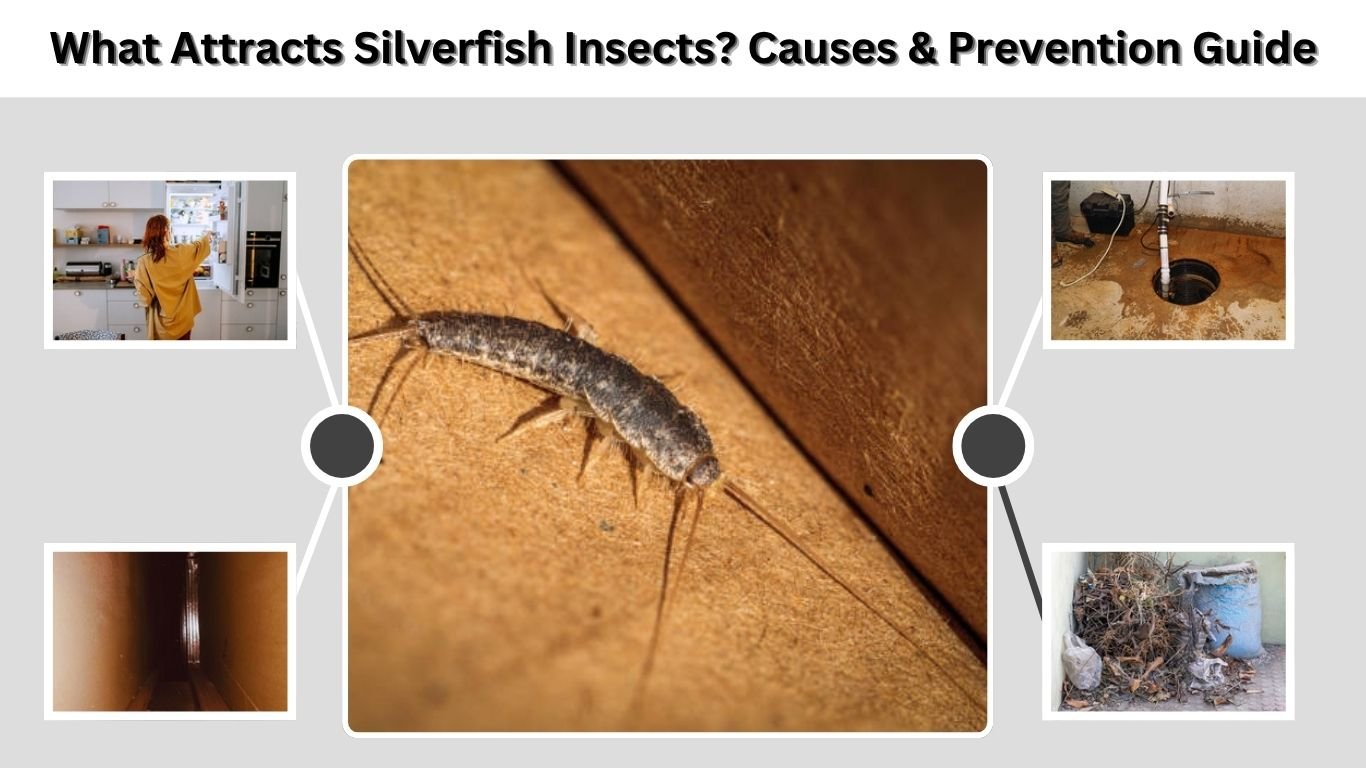
Silverfish are small, wingless insects that often appear unexpectedly in homes. While they are not harmful to humans, they can damage books, clothing, and household items. Understanding what attracts silverfish insects is the first step toward preventing and eliminating them. This guide explains the main causes, common attractants, and why these pests thrive indoors.
What Attracts Silverfish Insects?

Silverfish are attracted to environments that provide moisture, food, and shelter. These insects thrive in places where they can easily find all three without disturbance. Homes naturally offer ideal conditions, especially in certain rooms and hidden areas.
The most common factors that attract silverfish include:
- High humidity and moisture
- Readily available food sources
- Dark, undisturbed hiding spots
- Warm indoor temperatures
When these conditions are present together, silverfish are more likely to settle and multiply quickly.
Moisture and Humidity: The #1 Attraction

Moisture is the biggest reason silverfish enter homes. These insects require humid environments to survive, making damp areas extremely attractive. Even small amounts of excess moisture can create a suitable habitat.
Bathrooms, kitchens, and basements are the most common hotspots. Leaky pipes, condensation, and poor ventilation increase humidity levels, allowing silverfish to thrive unnoticed.
- Bathrooms with frequent water use
- Kitchens with steam and spills
- Basements with damp conditions
- Areas with poor airflow
Controlling moisture is one of the most effective ways to reduce silverfish activity. Lower humidity levels make your home far less appealing to them.
Food Sources That Attract Silverfish

Silverfish feed on materials rich in starch, sugar, and protein. Many everyday household items provide exactly what they need, making homes a reliable food source.
They are especially drawn to paper-based and organic materials. Books, cardboard boxes, and wallpaper glue are common targets. In kitchens, they may feed on pantry items like flour, cereals, and crumbs.
- Paper, books, and magazines
- Glue, wallpaper, and fabrics
- Dry food products like grains
- Dust and organic debris
Because their diet is so broad, silverfish can survive in multiple areas of the home. This makes them difficult to eliminate without addressing all potential food sources.
Dark, Hidden Spaces They Prefer

Silverfish are nocturnal insects that avoid light and human activity. They prefer to stay hidden during the day and come out at night to feed. This behavior makes dark, undisturbed areas especially attractive.
Closets, storage boxes, and spaces behind furniture provide ideal hiding spots. Cracks in walls and floor gaps also allow them to remain unnoticed while staying close to food and moisture sources.
- Closets and storage areas
- Behind appliances and furniture
- Inside wall cracks and gaps
- Cluttered or unused spaces
Reducing clutter and regularly cleaning hidden areas can help limit the places where silverfish can hide and breed.
Warm Environments and Indoor Conditions
Temperature plays an important role in silverfish activity. These insects prefer warm environments, which is why they are commonly found indoors. Heated homes provide stable conditions that support their survival year-round.
Even in cooler climates, indoor heating systems create a comfortable environment for silverfish. When combined with humidity and food availability, warmth makes your home an ideal habitat.
- Consistent indoor temperatures
- Warm, enclosed spaces
- Limited airflow in certain rooms
Improving ventilation and maintaining balanced indoor conditions can help reduce their presence.
Why Are Silverfish in Your Bathroom?
Bathrooms are one of the most common places to find silverfish because they provide everything these insects need to survive. High humidity, constant moisture, and limited airflow make bathrooms an ideal environment.
Water from showers, sinks, and pipes increases moisture levels, while soap residue and organic matter can serve as additional food sources.
- High humidity from daily use
- Constant access to water
- Damp surfaces and corners
Regular ventilation and keeping the area dry can significantly reduce silverfish activity in bathrooms.
What Causes a Silverfish Infestation?
A silverfish infestation occurs when the right conditions are consistently present. It’s not just one factor but a combination of moisture, food, and shelter that allows their population to grow.
Homes with ongoing humidity issues or poor maintenance are more likely to experience infestations. Over time, even a small number of silverfish can multiply if conditions remain favorable.
- Persistent moisture problems
- Easy access to food sources
- Clutter and hidden spaces
- Lack of regular cleaning
Addressing these root causes is essential to stopping an infestation before it spreads.
Where Do Silverfish Come From?
Silverfish can enter homes in several ways, often without being noticed. They typically move in through small openings or are brought inside unintentionally.
Cracks in walls, gaps around doors, and poorly sealed windows are common entry points. They may also arrive through items like old books, cardboard boxes, or storage materials.
- Gaps and cracks in walls or floors
- Open windows and doors
- Infested items brought indoors
Sealing entry points and inspecting items before bringing them inside can help prevent new infestations.
How to Prevent Silverfish Naturally
Preventing silverfish starts with making your home less attractive to them. By eliminating moisture, food sources, and hiding spots, you can reduce the chances of an infestation.
Simple, consistent actions can make a big difference over time.
- Use dehumidifiers and improve ventilation
- Fix leaks and reduce moisture buildup
- Store food in airtight containers
- Declutter and clean regularly
Natural prevention methods are effective because they target the conditions silverfish depend on to survive.
Best Ways to Get Rid of Silverfish
If silverfish are already present, combining prevention with removal methods is the best approach. There are both natural and chemical solutions available depending on the severity of the problem.
Natural repellents like cedar and citrus can help deter them, while traps can reduce their numbers. In more serious cases, professional pest control may be necessary.
- Use natural repellents such as cedar or bay leaves
- Set traps to monitor and reduce activity
- Apply safe insecticides if needed
- Contact pest control for large infestations
Taking action early can prevent a small issue from becoming a larger problem.
Common Mistakes That Attract Silverfish
Many homeowners unknowingly create conditions that attract silverfish. Avoiding these common mistakes can help keep your home pest-free.
Small habits, when ignored, can lead to bigger problems over time.
- Ignoring minor leaks or damp areas
- Storing paper items in humid spaces
- Poor ventilation in bathrooms or basements
- Leaving food exposed or improperly stored
Being proactive and attentive can make your home much less inviting to silverfish.
FAQ
Why do silverfish suddenly appear in my home?
Silverfish often appear when humidity levels increase or new food sources become available. Seasonal changes, leaks, or poor ventilation can create ideal conditions. Once they find a suitable environment, they tend to stay hidden and multiply quickly.
Do silverfish mean your house is dirty?
Not necessarily. While clutter and food debris can attract them, silverfish are mainly drawn to moisture. Even clean homes can have infestations if there is high humidity or hidden damp areas like behind walls or under sinks.
What smell attracts silverfish?
Silverfish are attracted to materials rather than strong smells. They seek out starches, paper, glue, and organic matter. However, damp or musty environments can signal the presence of food and moisture, indirectly drawing them in.
Are silverfish harmful to humans?
Silverfish are not harmful to humans. They do not bite or spread diseases. However, they can damage books, clothing, wallpaper, and other household items, making them a nuisance if left untreated.
How do I permanently get rid of silverfish?
To permanently remove silverfish, eliminate moisture, reduce food sources, and seal entry points. Consistent cleaning, proper ventilation, and using traps or repellents can control them. In severe cases, professional pest control ensures complete removal.