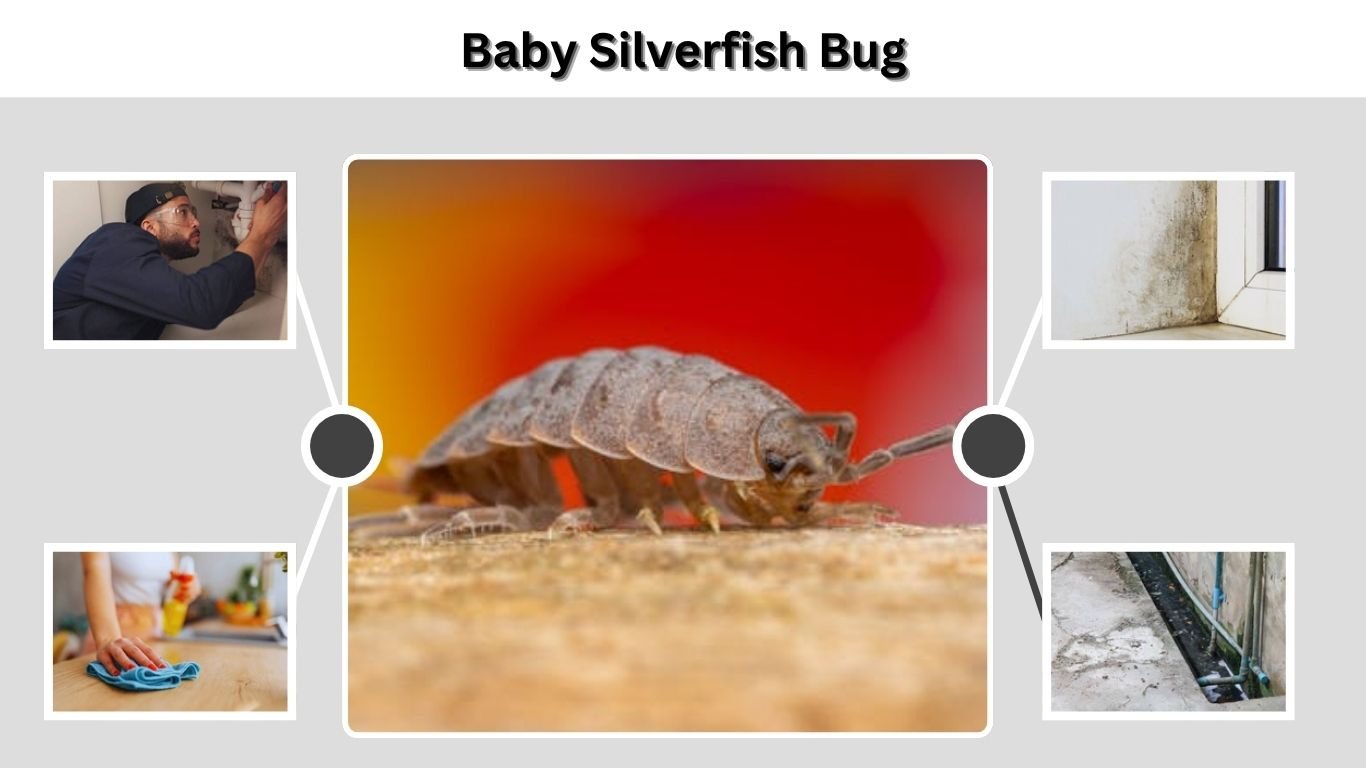
Noticing tiny, almost invisible bugs in your bathroom or shower can be confusing. Many people assume they’re something else—dust, lint, or even mold—until they start moving. In most cases, these are baby silverfish bugs, and their presence usually points to moisture and hidden breeding conditions in your home.
If you’re seeing them, it’s not random. It means the environment is suitable for them to hatch, grow, and survive.
What Does a Baby Silverfish Bug Look Like?
Baby silverfish look quite different from the adults most people recognize. Because of their size and color, they’re often overlooked or misidentified at first.
Size and Appearance
Baby silverfish are extremely small, especially right after hatching.
- They can appear almost like tiny white specks
- Their bodies are soft, pale, and slightly translucent
- They lack the shiny, metallic scales seen in adults
At this stage, they are much harder to spot unless you look closely, especially on light-colored bathroom surfaces.
How They Change as They Grow
As baby silverfish mature, their appearance gradually becomes more recognizable.
- They slowly develop a gray or silvery tone
- Their bodies become more elongated and fish-like
- They grow faster and more active over time
This transformation can take weeks to months, which is why you might suddenly notice both small and larger silverfish at the same time.
Where Baby Silverfish Are Commonly Found

Baby silverfish tend to stay close to the places where they hatch. These areas are usually hidden, damp, and rarely disturbed.
In Bathrooms and Showers
Bathrooms are one of the most common places to find baby silverfish.
- Near drains, where moisture is constant
- Along tile edges and grout lines
- Under bath mats or damp surfaces
- Inside cabinets beneath sinks
Because these areas stay humid, they provide the perfect environment for eggs to hatch and young silverfish to survive.
Other Hidden Areas in the Home
While bathrooms are the main hotspot, baby silverfish can also appear in other parts of the house if conditions allow.
- Behind baseboards or inside wall cracks
- Inside cardboard boxes or paper storage
- In closets with poor airflow
- Around old books, newspapers, or fabrics
These spaces offer both shelter and food, making them ideal for growth and hiding.
Why You Are Seeing Baby Silverfish Bugs

Seeing baby silverfish usually means more than just a random occurrence—it often indicates an active life cycle happening in your home.
Eggs Have Recently Hatched
The most common reason is that silverfish eggs have hatched nearby.
- Female silverfish lay eggs in hidden cracks and crevices
- Eggs hatch in moist, undisturbed environments
- Baby silverfish stay close to where they were born
If you’re noticing multiple tiny ones, it’s a strong sign that breeding is already happening.
High Humidity Levels
Moisture plays a major role in their survival, especially in early stages.
- Steam from showers creates ideal humidity
- Damp surfaces prevent dehydration
- Poor ventilation keeps the environment stable
Baby silverfish are more sensitive than adults, so high humidity is essential for them to grow successfully.
Safe Hiding and Breeding Spots
Silverfish choose locations that are rarely disturbed.
- Cracks in walls or tile gaps
- Spaces behind fixtures or under cabinets
- Areas that are not regularly cleaned
These hidden zones protect both eggs and young silverfish, allowing them to develop without interruption.
Signs You Have a Growing Infestation

Seeing one or two baby silverfish may not seem like a big issue, but certain signs suggest a larger problem developing.
- Frequent sightings of tiny white bugs along with larger ones
- Increased activity during nighttime
- Bugs appearing near drains, corners, or storage areas
When baby silverfish are visible, it usually means the population is growing behind the scenes.
Do Baby Silverfish Bugs Bite?
One of the most common concerns people have is whether these tiny bugs can harm them.
- Baby silverfish do not bite humans
- They do not sting or carry venom
- There is no evidence of disease transmission
Even though they may look unsettling, they are completely harmless to people. The real issue is not health-related—it’s the conditions in your home that allow them to exist.
Are Baby Silverfish Different from Adults?
While they belong to the same species, baby silverfish differ in a few noticeable ways.
Key Differences
- Much smaller in size and harder to see
- Pale white or translucent instead of silver
- Slower and less active in early stages
These differences are why many people don’t realize they’re dealing with silverfish until they grow larger.
Similar Behavior
Despite their appearance, baby silverfish behave almost exactly like adults.
- They avoid light and prefer darkness
- Stay in humid, damp environments
- Feed on the same materials like dust, paper, and residue
This means the same conditions that attract adults will also support babies.
How to Get Rid of Baby Silverfish Bugs

Eliminating baby silverfish requires targeting both the insects and the environment they depend on.
Reduce Moisture First
Moisture control is the most important step.
- Dry wet surfaces after showers or cleaning
- Fix leaking pipes, taps, or hidden drips
- Use exhaust fans to remove humidity
Without moisture, baby silverfish struggle to survive and grow.
Clean Hidden Areas
Regular cleaning should go beyond visible surfaces.
- Clean under sinks and behind toilets
- Remove dust, hair, and buildup from corners
- Empty and wipe storage areas and cabinets
Focusing on hidden spots helps remove both food sources and shelter.
Use Natural or Chemical Solutions
Additional treatments can speed up the process.
- Diatomaceous earth to dehydrate them
- Boric acid applied carefully in cracks
- Store-bought insect sprays or traps
These methods work best when combined with moisture control.
How to Prevent Baby Silverfish from Appearing
Prevention is all about making your home less suitable for them.
- Keep humidity levels low with proper ventilation
- Seal cracks, gaps, and openings around pipes
- Avoid storing paper products in damp areas
- Maintain consistent cleaning routines
Small, consistent habits can prevent future infestations from starting.
When to Be Concerned
In some cases, baby silverfish may point to a bigger issue.
- Large numbers appearing frequently
- Continued sightings after cleaning and drying
- Spread beyond the bathroom into other rooms
These signs often indicate hidden moisture problems or structural gaps that need deeper inspection.
FAQs
What do baby silverfish bugs look like in the shower?
Baby silverfish in the shower appear as tiny white or translucent insects that are easy to miss. They are often found near damp tiles, grout lines, or drains, where moisture is constant and helps them survive.
Are baby silverfish bugs dangerous?
No, baby silverfish are not dangerous. They do not bite, sting, or spread diseases. However, their presence can indicate moisture issues and may lead to minor damage to paper, fabrics, or stored items over time.
Why am I seeing baby silverfish instead of adults?
This usually means eggs have recently hatched nearby. Baby silverfish stay close to their hiding spots, while adults may remain hidden. It’s often an early sign that a population is growing in unseen areas.
Can baby silverfish survive without moisture?
No, they rely heavily on humid environments. Without enough moisture, baby silverfish dry out quickly and cannot survive. Reducing humidity is one of the most effective ways to eliminate them.
How long does it take for baby silverfish to grow?
Baby silverfish grow slowly and can take several months to reach full size. During this time, they molt multiple times and gradually develop their silver color while staying hidden in damp, protected areas.