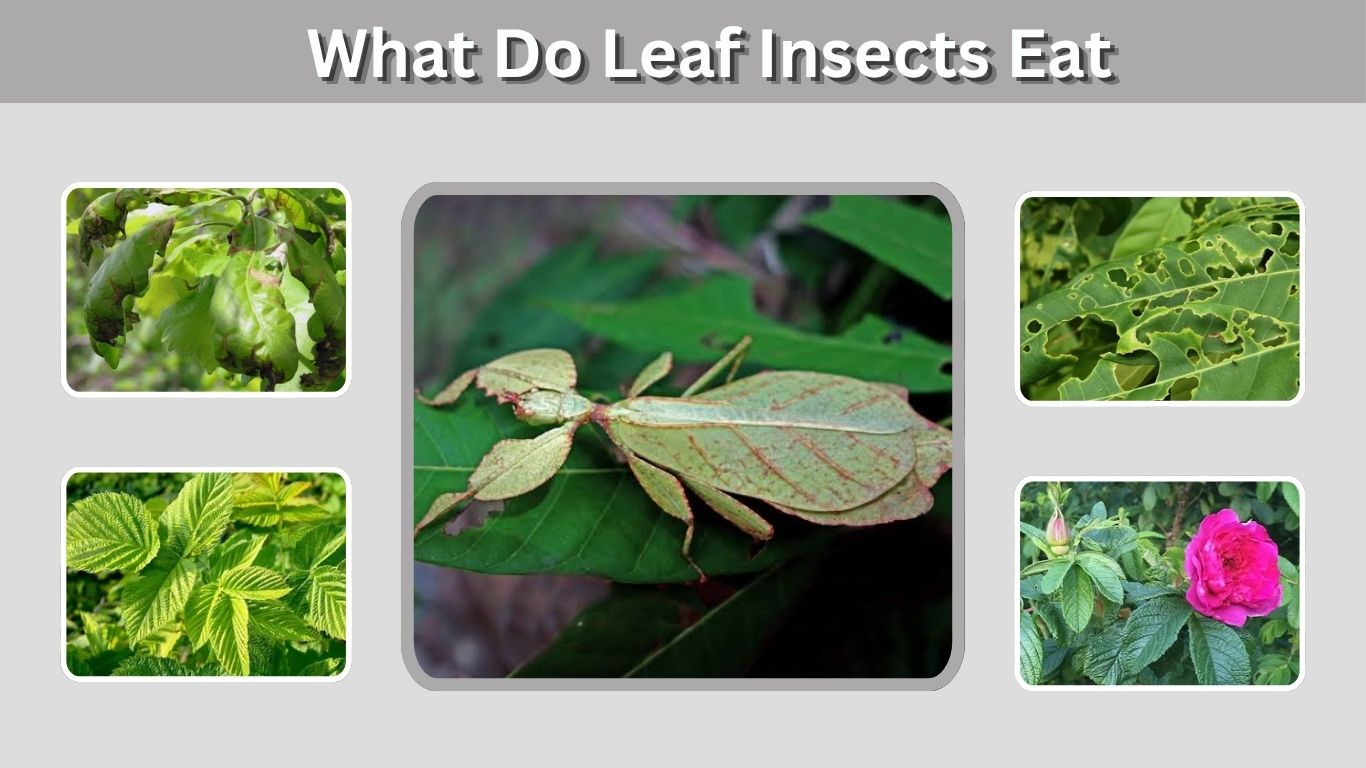
Leaf insects are herbivorous insects that survive mainly by eating fresh leaves from specific trees, shrubs, and garden plants. In captivity, they commonly feed on bramble, rose, oak, eucalyptus, raspberry, and similar foliage, although preferred foods vary between species. They do not normally eat meat, other insects, or processed foods. Providing fresh, pesticide-free leaves is essential for healthy growth and successful molting. Understanding what leaf insects eat, how they drink, and which plants are safe makes feeding them much easier.
What Do Leaf Insects Eat?
Leaf insects feed almost entirely on plant foliage. Their chewing mouthparts are specially adapted for cutting small sections from leaves. Different species may accept different plants, but many commonly kept leaf insects can survive on several widely available food plants. Freshness and the absence of pesticides are more important than offering a very large variety.
Common Foods for Leaf Insects
Commonly accepted food plants include:
- Blackberry or bramble leaves
- Rose leaves
- Oak leaves
- Raspberry leaves
- Guava leaves
- Eucalyptus leaves
- Hawthorn leaves
- Hazel leaves
- Mango leaves for some species
Not every leaf insect accepts all these plants. It is usually best to continue feeding the same foliage the insect was eating before you obtained it.
Do Leaf Insects Eat Plants?
Yes. Leaf insects are strict plant eaters and spend much of their lives among the same vegetation they use for food.
Their leaf-like appearance allows them to feed while remaining hidden from predators. They often chew from the edges of leaves inward, leaving irregular missing sections behind.
Do Leaf Insects Eat Grass?
Most leaf insects do not naturally depend on grass. Their mouthparts and feeding behavior are better suited to broad leaves from shrubs and trees.
A leaf insect should not be switched to grass simply because other stick insects may consume it. Feeding suitable broadleaf plants is generally a safer option.
Best Food Plants for Leaf Insects
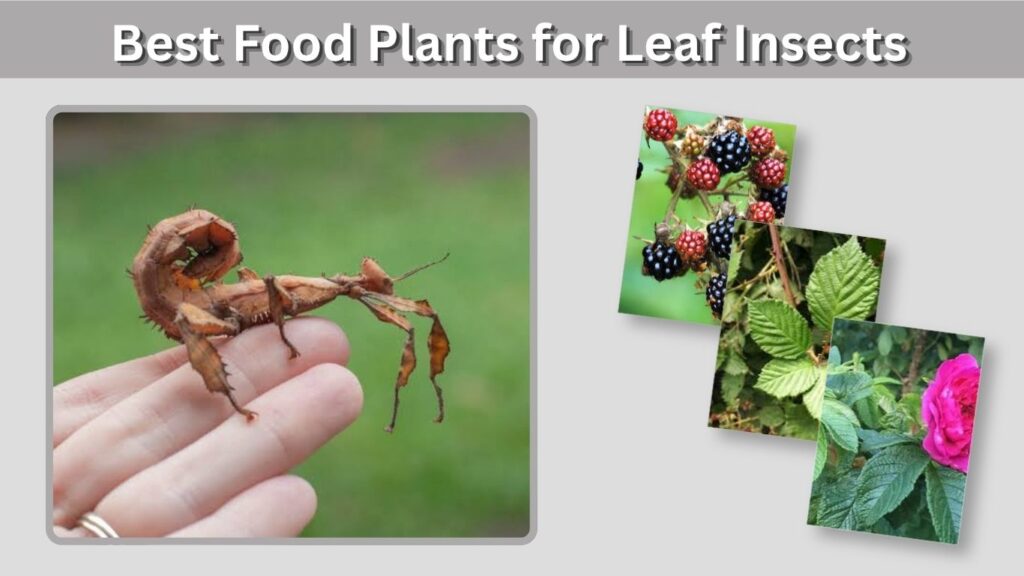
Choosing appropriate foliage is one of the most important parts of keeping leaf insects healthy. Leaves should be fresh, clean, untreated with pesticides, and collected away from heavily polluted roads. Whenever introducing a new plant, offer it alongside familiar food instead of suddenly replacing the insect’s established diet.
Bramble and Blackberry Leaves
Blackberry and bramble are among the most commonly used foods for captive leaf insects.
They are popular because:
- Leaves remain fresh reasonably well.
- Bramble is available in many regions.
- Several leaf insect species readily accept it.
- Branches provide climbing surfaces.
- It can often be found throughout much of the year.
Care should be taken when handling thorny stems inside an enclosure.
Rose Leaves
Rose leaves can be useful for some leaf insect species. However, commercially purchased rose plants may have been treated with pesticides or systemic insecticides.
Only use leaves from plants you know have not been chemically treated. Wash foliage gently before placing it inside the enclosure.
Oak and Other Tree Leaves
Oak may be accepted by several commonly kept species. Other suitable leaves can include hazel, hawthorn, eucalyptus, and guava depending on the leaf insect.
Young, healthy foliage is generally preferable to old, dry, or damaged leaves because it contains more moisture and is easier to chew.
How Do Leaf Insects Eat Their Food?
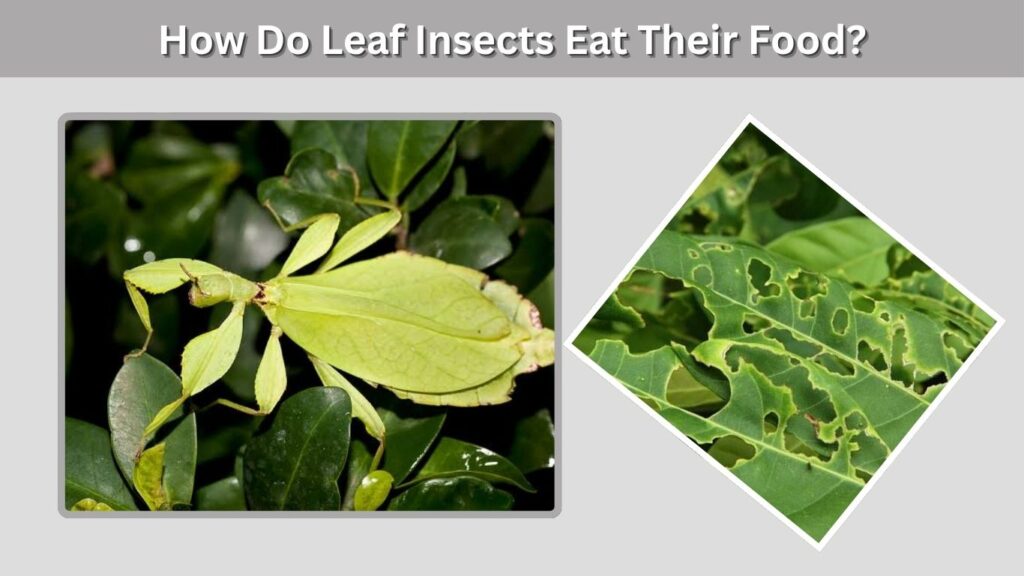
Leaf insects have chewing mouthparts rather than sucking mouthparts. They typically begin along the outer edge of a leaf and gradually remove pieces as they feed. Most feeding activity occurs during the evening or nighttime, which means owners may rarely see their insects eating directly even when plenty of foliage disappears overnight.
How Leaf Insects Chew Leaves
Their mandibles work like tiny cutting tools. They grip the edge of a leaf and repeatedly remove small pieces.
This often produces:
- Rounded bites along leaf edges
- Irregular missing sections
- Partially eaten leaves
- Small pieces of plant material below feeding areas
Finding these signs is a good indication that the insect is actively feeding.
When Do Leaf Insects Eat?
Leaf insects are generally more active after dark. During the daytime, they often remain motionless to maintain their camouflage.
Young nymphs may feed frequently because they need nutrients for rapid growth and repeated molts. Adults continue feeding regularly but may occasionally eat less before molting, mating, or egg production.
What Do Spiny Leaf Insects Eat?
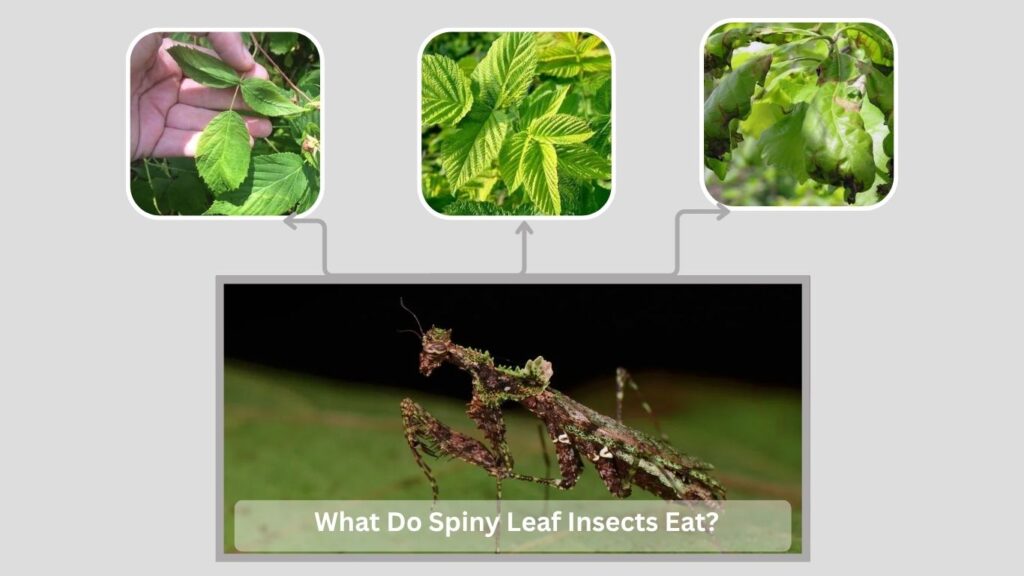
Spiny leaf insects are closely related to other stick insects and are also herbivorous. In captivity, they are commonly fed fresh leaves from suitable host plants. Their dietary needs are straightforward, but food quality is extremely important because contaminated foliage can quickly make them sick.
Spiny Leaf Insect Food
Common choices include:
- Eucalyptus leaves
- Blackberry or bramble leaves
- Rose leaves
- Raspberry leaves
- Oak leaves
- Guava leaves
Spiny leaf insects may develop preferences for certain plants. Changing their diet gradually usually works better than suddenly replacing familiar foliage.
Do Spiny Leaf Insects Eat Each Other?
Spiny leaf insects are not naturally predatory and do not normally eat each other. They are herbivores.
However, overcrowding and inadequate enclosure conditions may lead to accidental injuries. Providing enough space, food, branches, and molting room reduces unnecessary contact between individuals.
Do Spiny Leaf Insects Eat Their Skin?
Yes, they may eat part or all of their shed exoskeleton after molting.
This behavior is normal. The old skin contains nutrients that the insect can recycle. Removing the shed skin is therefore unnecessary unless it begins to mold or creates hygiene problems inside the enclosure.
Do Leaf Insects Drink Water?
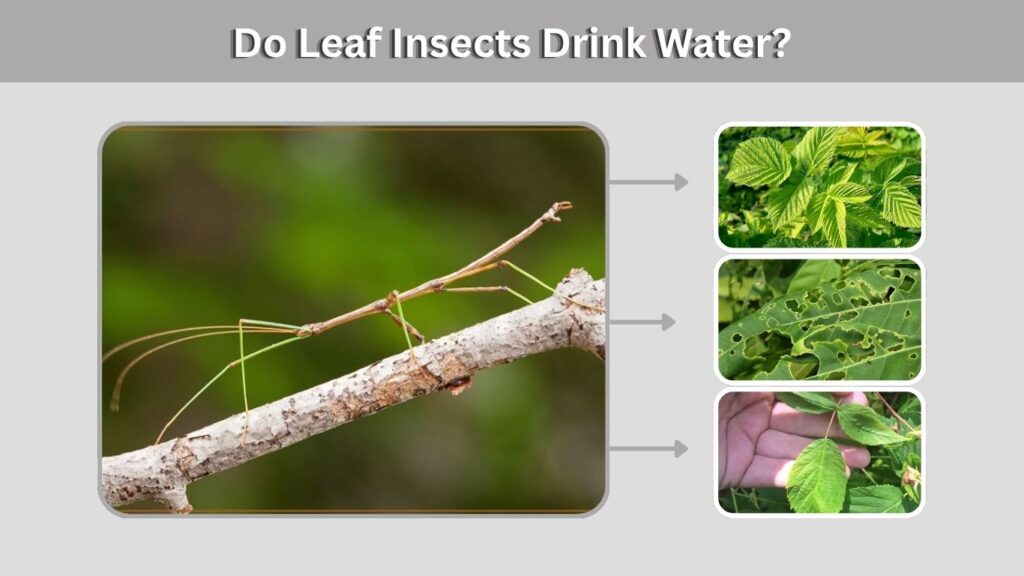
Leaf insects obtain much of their water from the fresh foliage they consume. They can also drink tiny droplets that collect on leaves after light misting. Because they are small insects, they do not require a conventional open water bowl, which may actually create a drowning risk for young nymphs.
Providing Water Safely
Lightly misting the enclosure or food leaves can provide drinking droplets.
Useful practices include:
- Mist lightly rather than soaking the enclosure.
- Allow good ventilation.
- Avoid permanently wet substrate.
- Use fresh foliage with good moisture content.
- Remove moldy or rotting leaves quickly.
Humidity requirements vary somewhat between species.
Keeping Food Leaves Fresh
Cut branches can be placed in a small container of water to keep them fresh longer.
The opening should be blocked with cotton, mesh, foil, or another safe material so insects cannot fall into the water. Replace branches when they become wilted, dry, or heavily eaten.
Foods Leaf Insects Should Not Eat
Leaf insects have specialized digestive systems designed for plant matter. Human food, meat, sweets, and random garden plants should not be offered. Even apparently suitable foliage may be dangerous if it has been sprayed with pesticides or exposed to chemicals.
Foods to Avoid
Do not offer:
- Meat
- Other insects
- Bread
- Fruit as a primary diet
- Candy or sugary foods
- Processed human food
- Pesticide-treated leaves
- Unknown toxic plants
- Moldy foliage
A simple diet of proven host plants is safer than experimenting with many unfamiliar foods.
Can Leaf Insects Eat Fruit?
Leaf insects are primarily foliage feeders rather than fruit eaters. Some individuals may investigate soft fruit, but fruit should not replace their normal leafy diet.
Fresh host leaves provide the moisture, fiber, and plant nutrients their digestive systems are adapted to process.
Feeding Leaf Insects in Captivity
Captive feeding is generally easy once you identify a suitable host plant. The biggest challenges are keeping leaves fresh and ensuring that collected foliage is free from pesticides. Giving insects enough branches also creates a more natural environment for feeding, climbing, resting, and molting.
How Often Should Food Be Replaced?
Check the enclosure daily and replace leaves whenever they become dry or heavily eaten.
Fresh branches may remain usable for several days when their stems are kept in water. During hot weather, foliage may need replacing more frequently.
Signs a Leaf Insect Is Eating Properly
Look for:
- Fresh bite marks
- Missing leaf edges
- Droppings on the enclosure floor
- Normal movement
- Regular growth in young insects
- Successful molts
A healthy insect does not necessarily need to be observed eating directly.
What If a Leaf Insect Stops Eating?
Temporary appetite loss can occur shortly before molting. Newly moved insects may also take time to settle into a new enclosure.
If feeding does not resume, check the plant species, freshness of the leaves, temperature, humidity, and whether chemicals were used on the foliage.
FAQs
What do leaf insects mainly eat?
Leaf insects mainly eat fresh leaves from shrubs and trees. Bramble, blackberry, rose, oak, eucalyptus, guava, and raspberry are commonly used depending on the species. Their food should always be fresh and free from pesticides or other garden chemicals.
How often should I feed leaf insects?
Leaf insects should have access to fresh foliage at all times. Rather than feeding them at specific meal times, place leafy branches inside the enclosure and replace them when they begin to wilt, dry out, or become heavily eaten.
Can leaf insects eat lettuce?
Lettuce is generally not considered an ideal staple food for leaf insects. Most species do better on their established host plants such as bramble, rose, oak, eucalyptus, or guava. Suitable natural foliage provides more appropriate nutrition than common salad vegetables.
Do leaf insects need water every day?
Leaf insects receive much of their moisture from fresh leaves, but light misting can provide additional drinking droplets. The enclosure should not remain constantly wet. Good airflow and moderate humidity are important for preventing mold while still allowing insects access to moisture.
Why is my leaf insect not eating?
A leaf insect may stop eating shortly before molting or after being moved to a new environment. Unsuitable or old leaves can also cause feeding problems. Check that the foliage is fresh, pesticide-free, and appropriate for the particular species you are keeping.