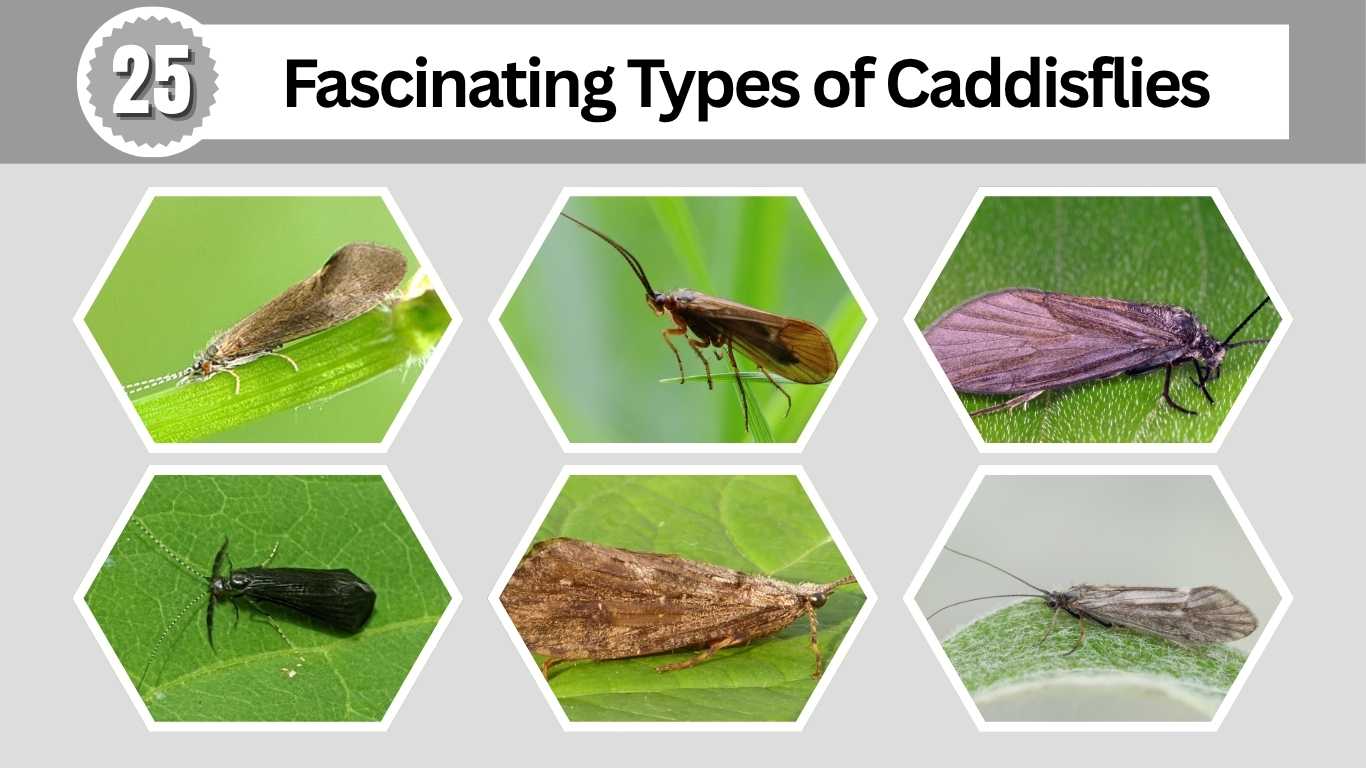
Caddisflies, belonging to the order Trichoptera, are fascinating aquatic insects with diverse life histories and ecological roles. Their larvae are either case-makers or net-spinners, creating protective structures from sand, plant material, or silk, which makes them important bioindicators of freshwater health. Found in streams, rivers, ponds, and lakes worldwide, caddisflies contribute to nutrient cycling and serve as vital food sources for fish, amphibians, and other predators. Understanding their identification, habitat, and behavior is essential for both ecological studies and freshwater conservation efforts.
1. Hydropsyche
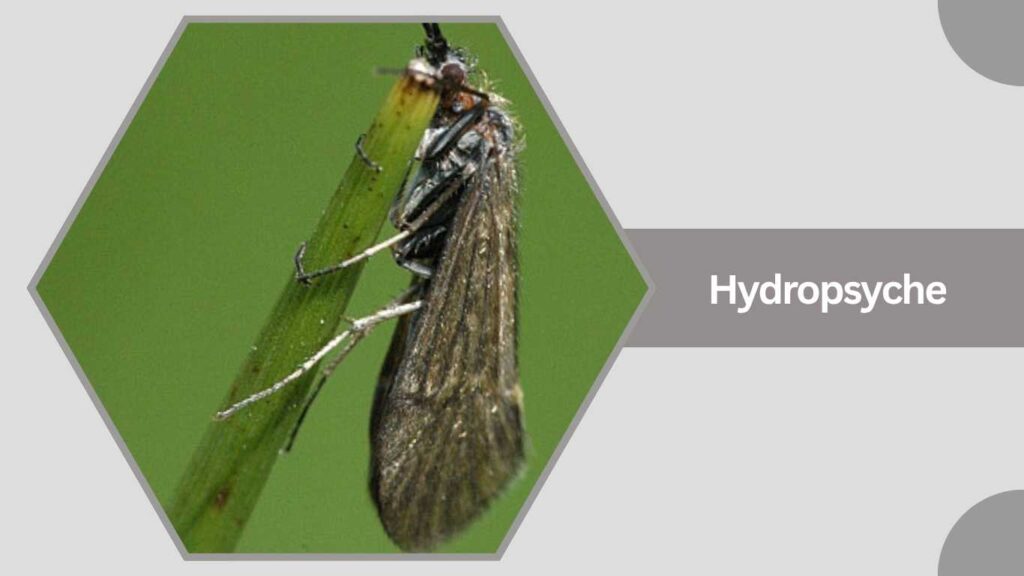
Hydropsyche is one of the most widespread genera of caddisflies, belonging to the family Hydropsychidae. These caddisflies are primarily net-spinning and are commonly found in flowing freshwater habitats such as streams and rivers. Their larvae are important indicators of water quality and play a key role in aquatic ecosystems.
Identification
- Medium-sized caddisflies with robust, dark-colored bodies
- Larvae build silken nets in flowing water to capture food particles
- Adults have hairy wings held roof-like over the body at rest
- Long antennae and well-developed legs
Habitat and Distribution
Hydropsyche species are usually found in clean, oxygen-rich streams and rivers worldwide. They prefer habitats with moderate to fast currents and abundant submerged rocks or vegetation where larvae can attach their nets.
Life Cycle
The life cycle includes egg, larval, pupal, and adult stages. Larvae construct silken nets to filter organic matter from the water, and adults emerge mainly in the warmer months to mate and lay eggs.
Ecological Importance
Larvae contribute to nutrient cycling by filtering organic material from streams. Adults serve as prey for fish, birds, and other insects, supporting the aquatic and riparian food webs.
Behavior
Hydropsyche larvae are sedentary within their nets, while adults are active flyers, often found near water bodies at dusk and night. Their net-spinning behavior is unique among caddisflies and is a key identifying feature.
2. Limnephilus
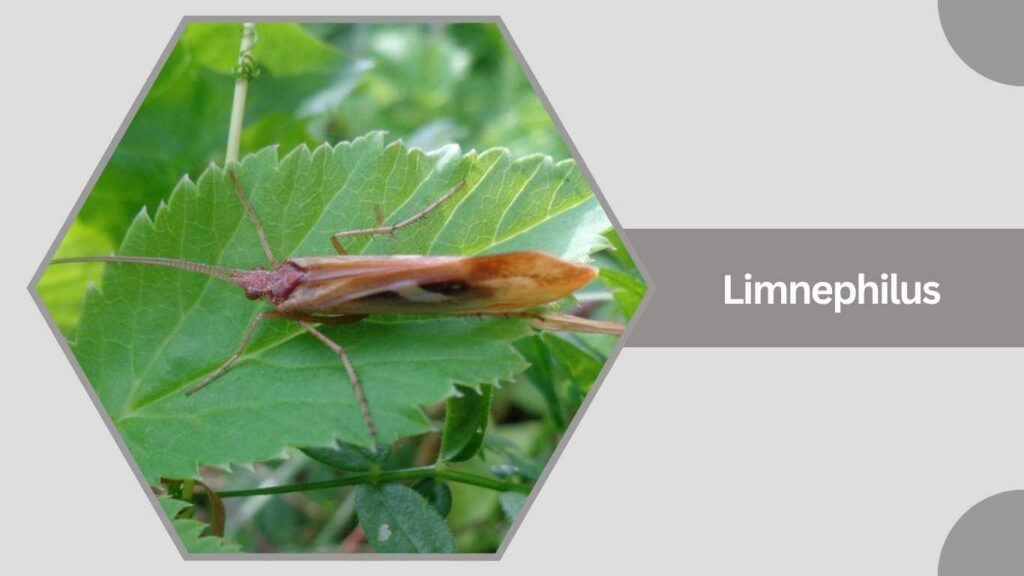
Limnephilus is a large and diverse genus of caddisflies in the family Limnephilidae, commonly known as northern caddisflies. These caddisflies are mostly case-making, with larvae constructing portable cases from sand, plant debris, and small stones. They are widespread in lakes, ponds, and slow-moving streams.
Identification
- Medium to large-sized caddisflies with brownish or mottled wings
- Larvae create tubular cases from detritus, sand, or plant material
- Adults have long antennae and wings held roof-like over the body
- Larvae often have prominent gills along the abdomen
Habitat and Distribution
Limnephilus species inhabit lentic or slow-flowing waters, including ponds, marshes, and streams. They are common in temperate regions and adapt well to a variety of aquatic environments.
Life Cycle
The genus exhibits complete metamorphosis: egg, larval, pupal, and adult stages. Larvae spend most of their development inside protective cases, while adults emerge seasonally to reproduce.
Ecological Importance
Limnephilus larvae play a vital role in detritus processing and nutrient cycling in freshwater ecosystems. They are also a significant food source for fish, amphibians, and other aquatic predators.
Behavior
Larvae are mostly sedentary within their cases, moving slowly along the substrate to feed on detritus. Adults are nocturnal and attracted to lights, often found near the water’s edge during emergence periods.
3. Brachycentrus
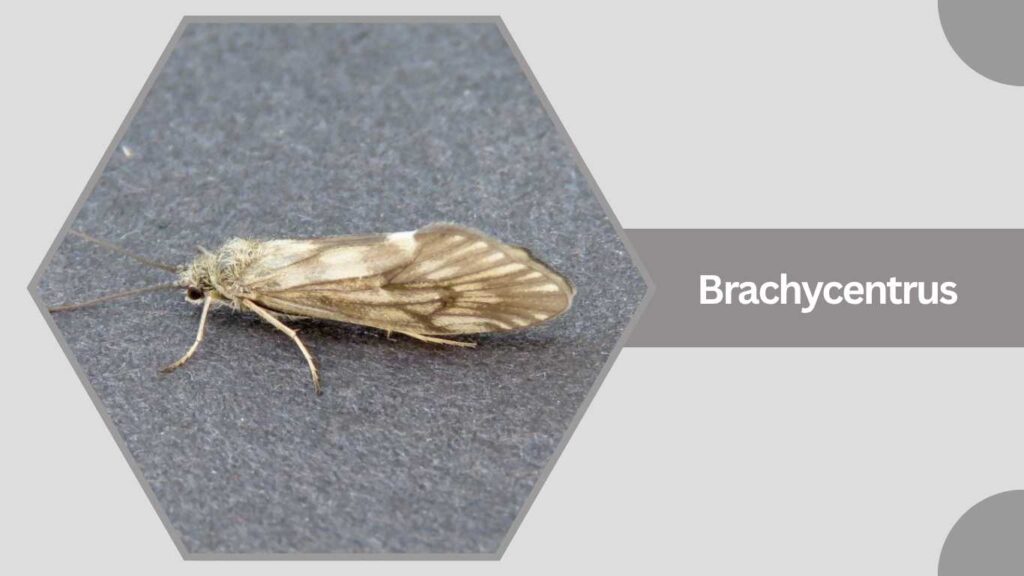
Brachycentrus is a genus of caddisflies in the family Brachycentridae, commonly known as humpless case-makers. These caddisflies are mostly found in cool, clean streams with moderate to fast flow. Their larvae construct distinctive cases from plant material and small stones, which they carry around as protective shelters.
Identification
- Small to medium-sized caddisflies with slender, brownish bodies
- Larvae build tubular cases often covered with plant fragments or mineral particles
- Adults have long antennae and wings held roof-like at rest
- Larvae lack pronounced humps on the thorax, unlike some other case-makers
Habitat and Distribution
Brachycentrus species prefer well-oxygenated streams with stable substrates. They are commonly found in North America and parts of Europe, thriving in riffles and shallow flowing waters.
Life Cycle
The genus follows complete metamorphosis: egg, larval, pupal, and adult stages. Larvae remain inside their portable cases for protection, feeding primarily on detritus and algae. Adults emerge to mate, typically in late spring or summer.
Ecological Importance
Larvae are important contributors to stream ecosystems, aiding in leaf litter breakdown and serving as prey for fish and aquatic predators. Their presence is an indicator of clean, unpolluted waters.
Behavior
Larvae are largely sedentary, moving slowly within their cases to graze on organic material. Adults are nocturnal flyers, often found near streams during emergence periods.
4. Glossosoma
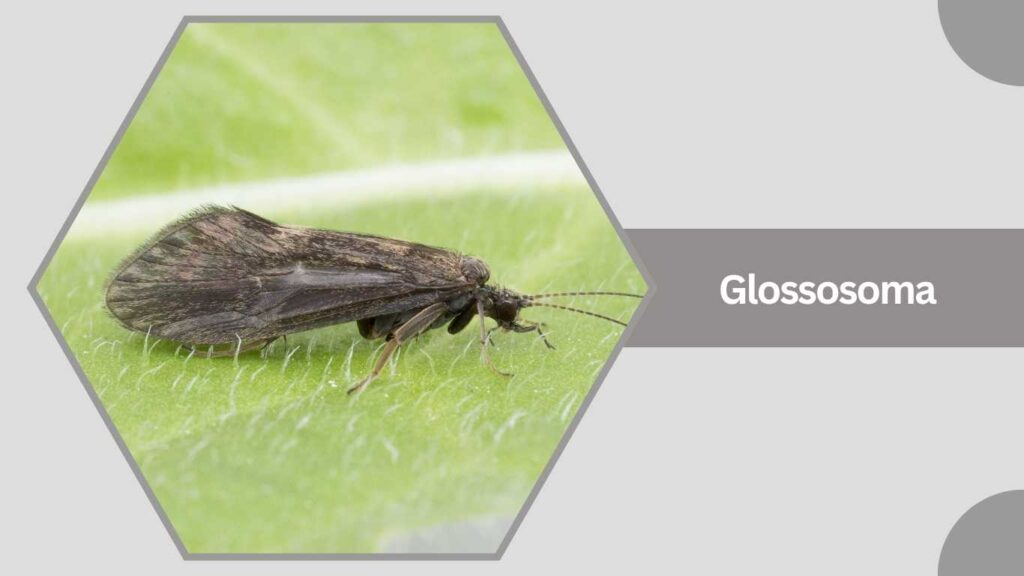
Glossosoma is a genus of caddisflies in the family Glossosomatidae, commonly called saddle-case makers. These caddisflies are small and agile, with larvae that construct distinctive flattened, saddle-shaped cases from tiny stones and sand particles. They are typically found in fast-flowing, well-oxygenated streams.
Identification
- Small-sized caddisflies with compact, dark bodies
- Larvae build flattened, dorsally compressed “saddle” cases from mineral particles
- Adults have hairy wings held roof-like over the body at rest
- Antennae are long and slender, aiding in navigation in fast currents
Habitat and Distribution
Glossosoma species prefer swift, rocky streams where water is clean and oxygen-rich. They are widely distributed in North America, Europe, and Asia, particularly in mountainous regions.
Life Cycle
These caddisflies undergo complete metamorphosis: egg, larval, pupal, and adult stages. Larvae remain protected in their portable cases while feeding on biofilm and fine organic matter. Adults emerge mainly in spring and summer to reproduce.
Ecological Importance
Larvae contribute to biofilm control and nutrient cycling in streams. They serve as an essential food source for trout and other predatory fish, making them ecologically significant in freshwater systems.
Behavior
Larvae cling tightly to rocks in riffles using silk, avoiding being swept away by strong currents. Adults are active near streams, often attracted to lights at night.
5. Cheumatopsyche
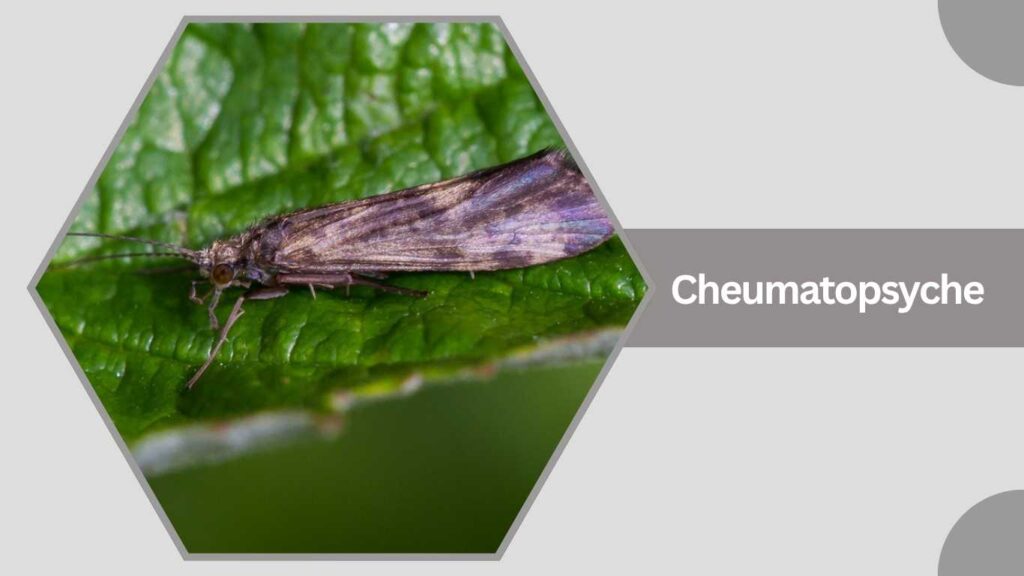
Cheumatopsyche is a genus of net-spinning caddisflies in the family Hydropsychidae. These caddisflies are widely distributed and are especially common in streams and rivers with moderate to fast currents. Larvae are filter feeders, constructing silken nets to capture food particles from flowing water.
Identification
- Small to medium-sized caddisflies with dark, mottled wings
- Larvae spin silken nets attached to rocks or submerged vegetation
- Adults have long, thread-like antennae and roof-like wings
- Larvae possess well-developed legs and gills along the abdomen
Habitat and Distribution
Cheumatopsyche species are found in clean, oxygen-rich streams and rivers worldwide. They thrive in riffles and shallow sections with strong currents where they can anchor their nets.
Life Cycle
The genus follows complete metamorphosis: egg, larval, pupal, and adult stages. Larvae remain within or near their nets while feeding on fine particulate matter. Adults emerge seasonally to mate and lay eggs.
Ecological Importance
Larvae help filter organic debris from streams, contributing to water purification and nutrient cycling. They are also an important prey source for fish and other aquatic predators.
Behavior
Larvae are sedentary within their nets, capturing drifting food particles. Adults are nocturnal and often found near streams, attracted to lights during emergence periods.
6. Rhyacophila
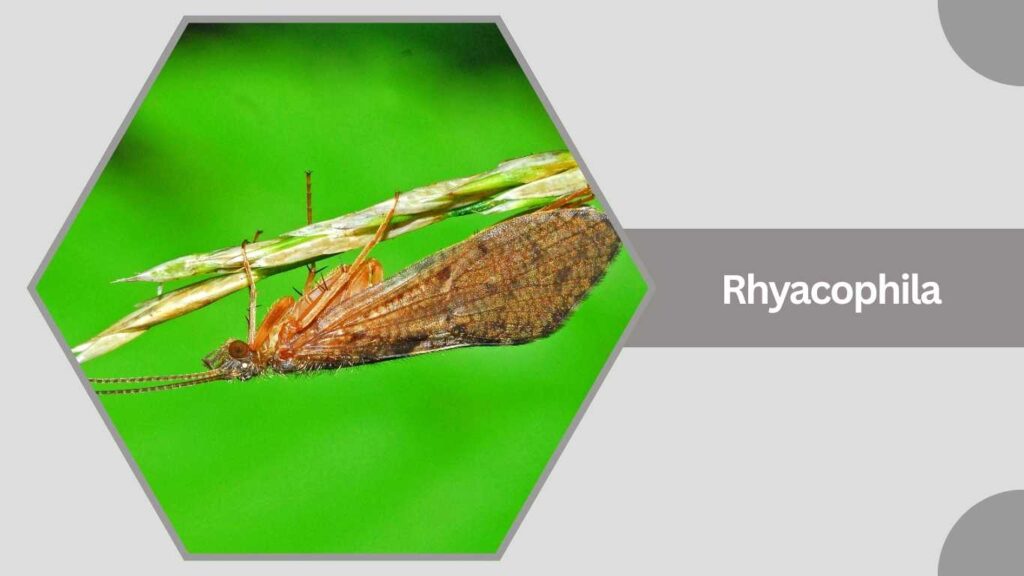
Rhyacophila is a genus of free-living caddisflies in the family Rhyacophilidae. Unlike many caddisflies, their larvae do not construct cases but are active predators, hunting small aquatic invertebrates in fast-flowing streams. They are often considered indicators of clean, well-oxygenated waters.
Identification
- Medium-sized caddisflies with slender, agile bodies
- Larvae are free-living, lacking portable cases
- Adults have long, narrow wings held roof-like over the body
- Strong mandibles in larvae for predation
Habitat and Distribution
Rhyacophila species inhabit cool, fast-flowing streams and rivers with rocky substrates. They are common across North America, Europe, and Asia, especially in mountainous regions.
Life Cycle
The genus undergoes complete metamorphosis: egg, larval, pupal, and adult stages. Predatory larvae actively hunt other invertebrates, while adults emerge to mate and deposit eggs along stream margins.
Ecological Importance
Larvae play a key role in controlling populations of small aquatic invertebrates. They also serve as prey for fish and contribute to the overall biodiversity and balance of stream ecosystems.
Behavior
Larvae are highly mobile and actively forage along the streambed. Adults are typically nocturnal, flying near water bodies during emergence periods.
7. Sericostoma
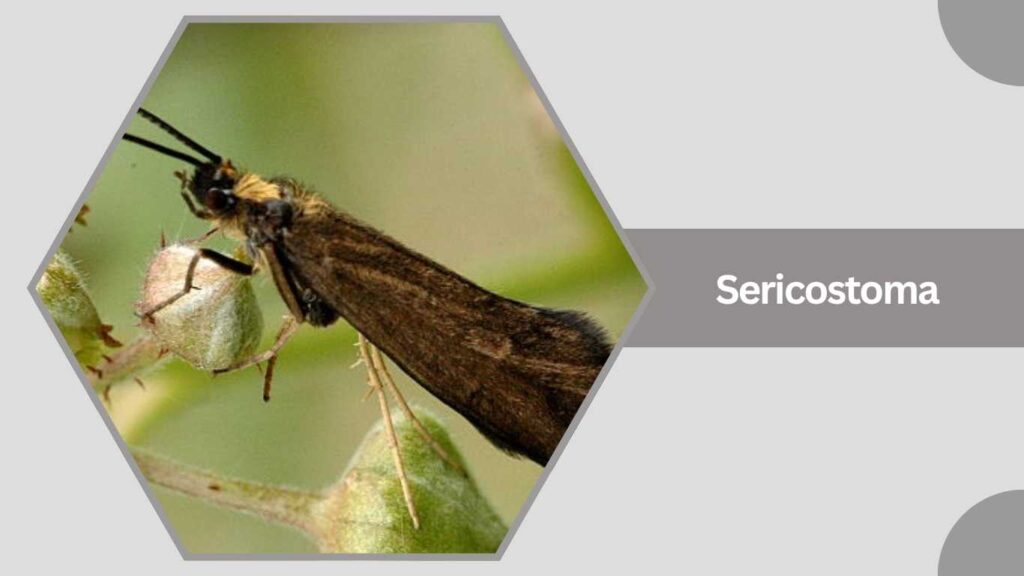
Sericostoma is a genus of caddisflies in the family Sericostomatidae, known for their case-building larvae. These caddisflies are generally found in clean, moderately fast-flowing streams and rivers. Larvae construct protective cases from sand, small stones, and plant debris.
Identification
- Medium-sized caddisflies with brown or mottled wings
- Larvae build tubular cases from mineral particles and plant material
- Adults have long antennae and roof-like wings
- Larvae have well-developed legs for crawling along substrates
Habitat and Distribution
Sericostoma species inhabit cool, oxygen-rich streams with moderate currents. They are common in Europe, North America, and parts of Asia, preferring habitats with stable substrates for case attachment.
Life Cycle
The genus undergoes complete metamorphosis: egg, larval, pupal, and adult stages. Larvae remain inside their cases, feeding primarily on detritus and periphyton. Adults emerge seasonally to mate and lay eggs.
Ecological Importance
Larvae contribute to nutrient cycling and help break down organic matter in streams. They are also an important food source for fish, amphibians, and other aquatic predators.
Behavior
Larvae are mostly sedentary within their cases, grazing on available organic material. Adults are nocturnal, often flying near streams and attracted to light sources during emergence.
8. Philopotamus
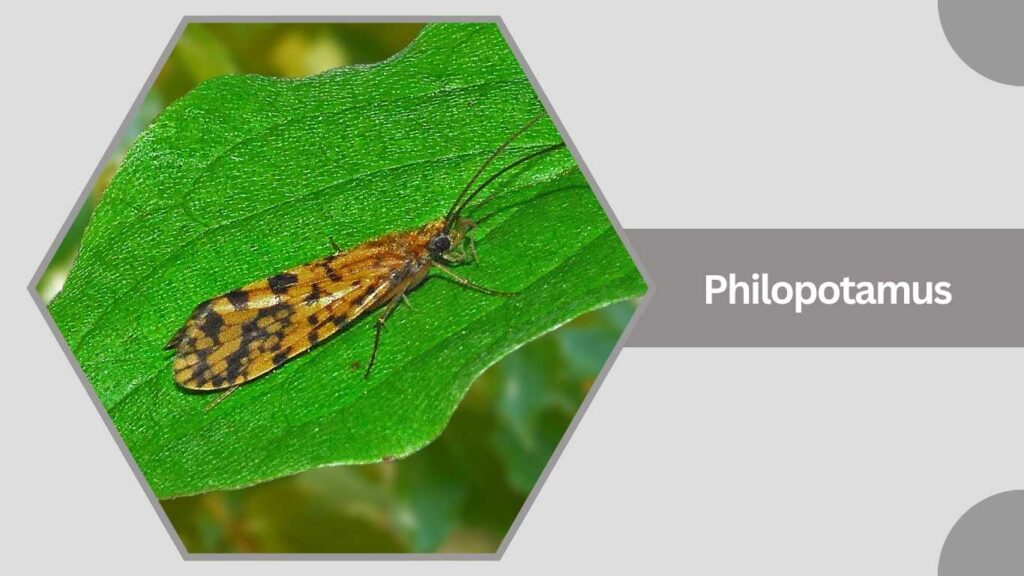
Philopotamus is a genus of caddisflies in the family Philopotamidae, commonly called fingernet caddisflies. Their larvae are specialized filter feeders, constructing fine-meshed silken nets to capture tiny particles of organic matter from flowing water. They are commonly found in clean, well-oxygenated streams and rivers.
Identification
- Small to medium-sized caddisflies with brownish wings
- Larvae spin fine-meshed silken nets attached to rocks or submerged debris
- Adults have long antennae and roof-like wings
- Larvae possess elongated, flexible bodies adapted for net-building
Habitat and Distribution
Philopotamus species inhabit fast-flowing, oxygen-rich streams and rivers worldwide. They prefer riffles and shallow sections where water flow is sufficient to deliver organic particles to their nets.
Life Cycle
The genus exhibits complete metamorphosis: egg, larval, pupal, and adult stages. Larvae remain within or near their nets while feeding. Adults emerge seasonally to mate and lay eggs along stream margins.
Ecological Importance
Larvae help filter fine organic matter from streams, contributing to water purification and nutrient cycling. They are also an important prey item for fish and other aquatic predators.
Behavior
Larvae are largely sedentary within their nets, capturing drifting food particles. Adults are nocturnal flyers and are often attracted to light near streams during emergence periods.
9. Goera
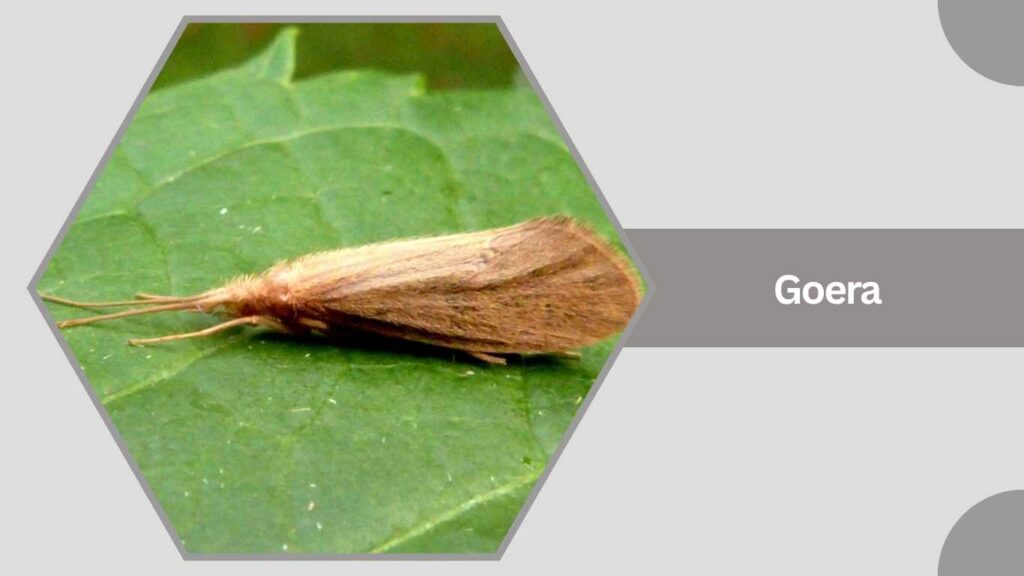
Goera is a genus of caddisflies in the family Goeridae, known for their case-building larvae. These caddisflies are typically found in clean, well-oxygenated streams and rivers, where larvae construct portable cases from sand, small stones, and plant material.
Identification
- Medium-sized caddisflies with brown or mottled wings
- Larvae build tubular cases from sand, stones, and plant debris
- Adults have long antennae and roof-like wings
- Larvae have strong legs for crawling along substrates
Habitat and Distribution
Goera species inhabit moderate to fast-flowing streams with stable substrates. They are found across North America, Europe, and parts of Asia, preferring clean, unpolluted waters.
Life Cycle
The genus undergoes complete metamorphosis: egg, larval, pupal, and adult stages. Larvae spend most of their development inside protective cases while feeding on detritus and algae. Adults emerge seasonally to mate and lay eggs.
Ecological Importance
Larvae play a key role in detritus processing and nutrient cycling in freshwater ecosystems. They also serve as a food source for fish, amphibians, and other aquatic predators.
Behavior
Larvae are mostly sedentary, moving slowly within their cases to feed. Adults are nocturnal flyers, often found near water bodies during emergence periods.
10. Lepidostoma
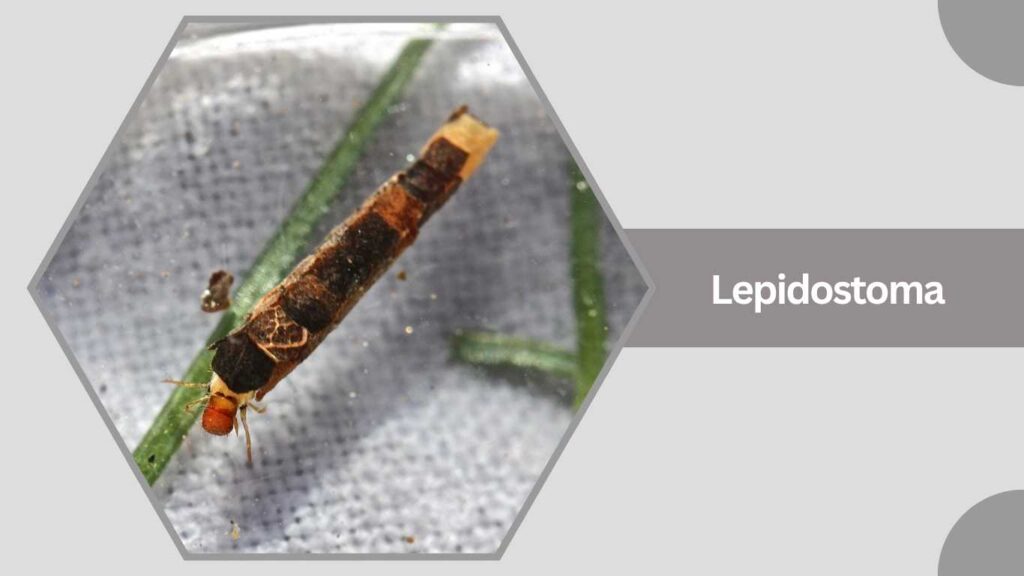
Lepidostoma is a genus of caddisflies in the family Lepidostomatidae, recognized for their case-making larvae. These caddisflies are usually found in clean, cool streams and rivers, where larvae construct cases from plant material and detritus.
Identification
- Medium-sized caddisflies with brown or mottled wings
- Larvae build tubular cases primarily from plant fragments
- Adults have long antennae and wings held roof-like over the body
- Larvae have well-developed legs and prominent head capsules
Habitat and Distribution
Lepidostoma species prefer slow to moderately flowing streams with abundant vegetation. They are commonly found in North America and parts of Europe, thriving in well-oxygenated waters.
Life Cycle
The genus follows complete metamorphosis: egg, larval, pupal, and adult stages. Larvae remain inside their cases while feeding on detritus and organic matter. Adults emerge seasonally to mate and lay eggs along stream margins.
Ecological Importance
Larvae contribute to nutrient cycling by breaking down organic matter and detritus. They are also prey for fish, amphibians, and other aquatic predators, supporting freshwater food webs.
Behavior
Larvae are mostly sedentary within their cases, grazing on plant material and detritus. Adults are nocturnal and often found near streams during emergence, attracted to light.
11. Molanna
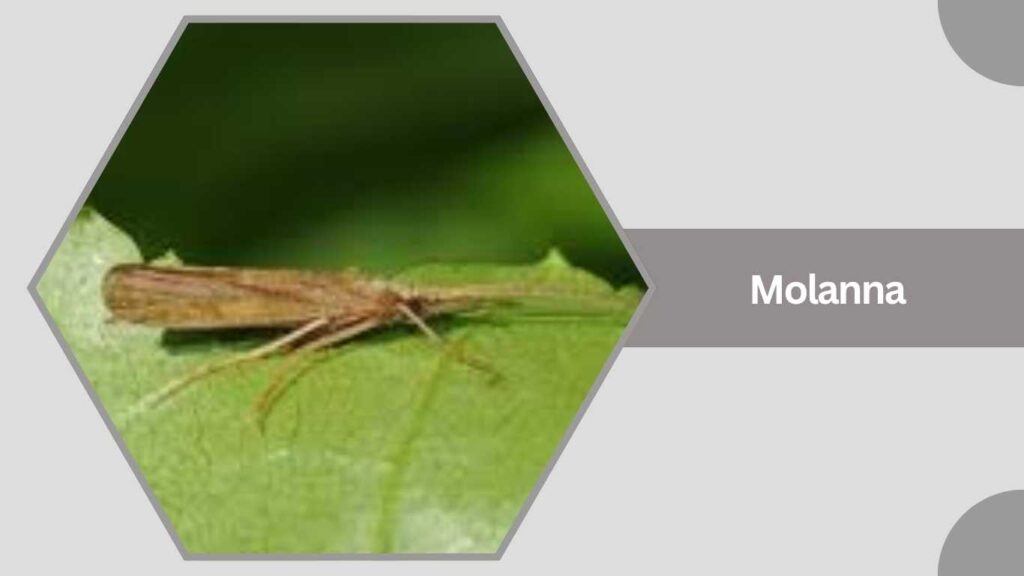
Molanna is a genus of caddisflies in the family Molannidae, known for their tube-dwelling larvae. These caddisflies are usually found in sandy or silty bottoms of streams, rivers, and lakes, where larvae construct cylindrical cases from sand grains and detritus.
Identification
- Medium-sized caddisflies with slender, brownish wings
- Larvae build tubular cases from sand particles and detritus
- Adults have long antennae and roof-like wings
- Larvae possess well-developed legs for crawling along soft substrates
Habitat and Distribution
Molanna species inhabit slow to moderately flowing waters with sandy or silty substrates. They are found across North America, Europe, and Asia, preferring clean, oxygenated environments.
Life Cycle
The genus exhibits complete metamorphosis: egg, larval, pupal, and adult stages. Larvae remain inside their protective cases, feeding on detritus. Adults emerge seasonally to mate and lay eggs along the water body margins.
Ecological Importance
Larvae aid in detritus processing and nutrient cycling in freshwater habitats. They are an important food source for fish and other aquatic predators.
Behavior
Larvae are mostly sedentary within their cases, moving slowly across the substrate to feed. Adults are nocturnal, often flying near water bodies during emergence periods.
12. Oecetis
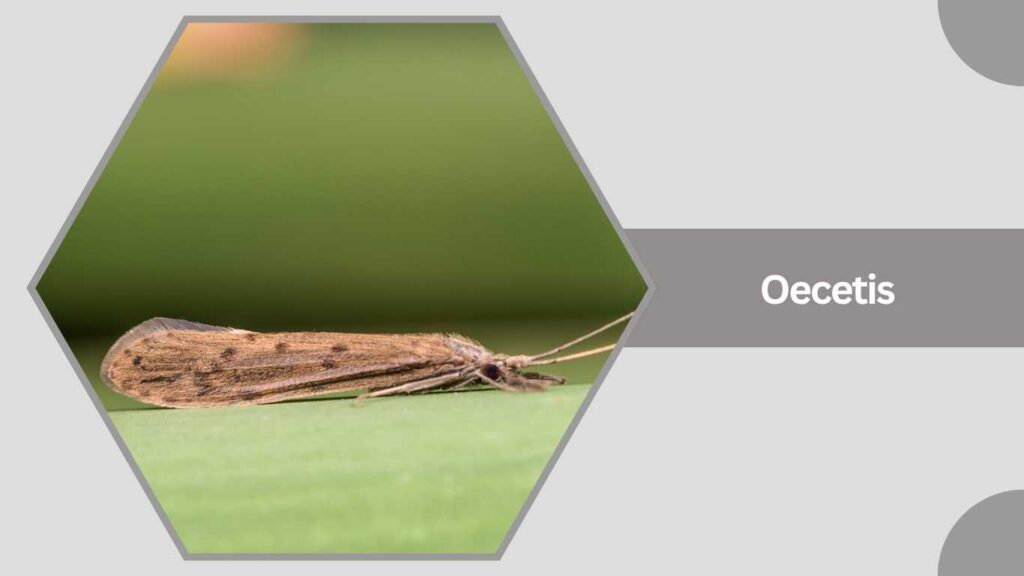
Oecetis is a genus of caddisflies in the family Leptoceridae, commonly called long-horned caddisflies due to their exceptionally long antennae. Larvae are case-makers, constructing portable cases from sand, plant material, or silk, and are typically found in streams and rivers with moderate to slow flow.
Identification
- Medium-sized caddisflies with narrow, brown or gray wings
- Larvae build tubular cases from sand, plant fragments, or silk
- Adults have very long antennae and roof-like wings
- Larvae have well-developed legs and elongated bodies for mobility in their cases
Habitat and Distribution
Oecetis species inhabit slow to moderately flowing streams, rivers, and sometimes lakes. They are widely distributed across North America, Europe, Africa, and Asia, favoring clean waters with stable substrates.
Life Cycle
The genus undergoes complete metamorphosis: egg, larval, pupal, and adult stages. Larvae remain inside their cases while feeding on detritus or periphyton. Adults emerge seasonally to mate and lay eggs.
Ecological Importance
Larvae contribute to nutrient cycling by breaking down organic matter and are an important prey source for fish and other aquatic predators. Their presence often indicates healthy freshwater ecosystems.
Behavior
Larvae are mostly sedentary within their cases, grazing on organic material. Adults are nocturnal and attracted to lights, typically flying near streams or rivers during emergence periods.
13. Triaenodes
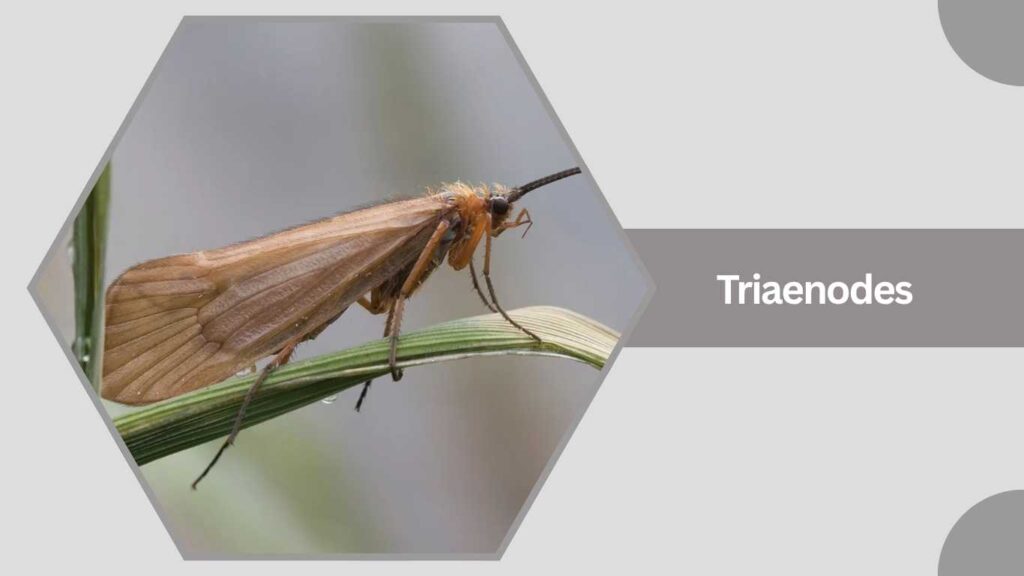
Triaenodes is a genus of caddisflies in the family Leptoceridae, commonly referred to as long-horned caddisflies. Their larvae are case-makers, constructing portable cases from sand, plant material, or small debris. They are primarily found in clean streams and rivers with moderate currents.
Identification
- Medium-sized caddisflies with narrow, brownish wings
- Larvae build tubular or slightly flattened cases from sand, plant fragments, or silk
- Adults have long antennae and roof-like wings
- Larvae possess well-developed legs for crawling along substrates
Habitat and Distribution
Triaenodes species inhabit streams and rivers with moderate to slow flow. They are widely distributed across North America, Europe, and parts of Asia, favoring clean, oxygen-rich waters.
Life Cycle
The genus exhibits complete metamorphosis: egg, larval, pupal, and adult stages. Larvae remain protected in their portable cases while feeding on detritus or algae. Adults emerge seasonally to mate and lay eggs.
Ecological Importance
Larvae aid in detritus processing and nutrient cycling in freshwater ecosystems. They are a significant food source for fish and other aquatic predators.
Behavior
Larvae are mostly sedentary, moving slowly within their cases to feed. Adults are nocturnal flyers, often attracted to light near water bodies during emergence periods.
14. Polycentropus
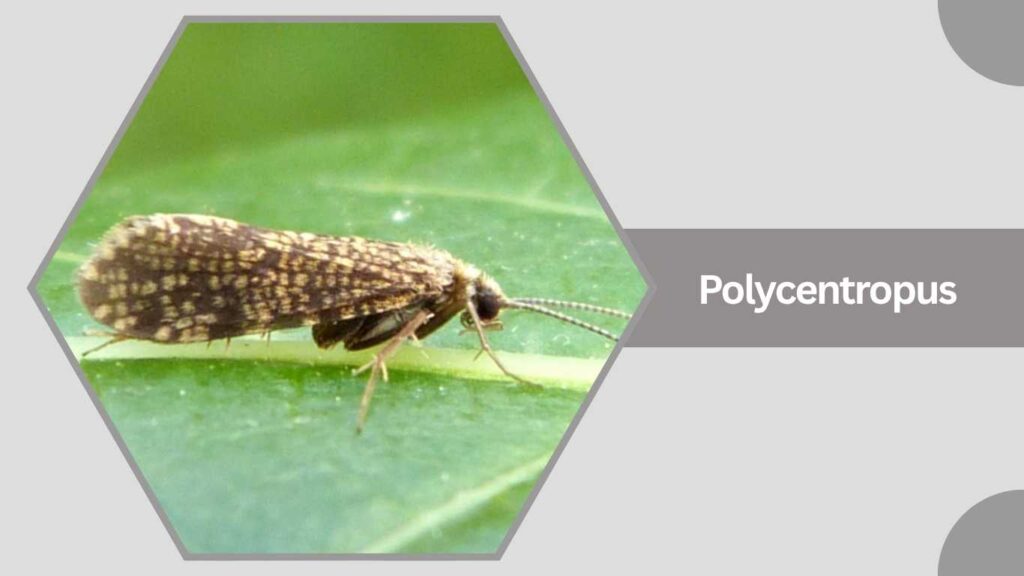
Polycentropus is a genus of caddisflies in the family Polycentropodidae, known for their predatory, tube-dwelling larvae. These caddisflies are commonly found in clean streams and rivers with moderate to fast currents, where larvae construct silken retreats to ambush small invertebrates.
Identification
- Small to medium-sized caddisflies with dark, mottled wings
- Larvae build silken tubes or retreats attached to rocks or submerged debris
- Adults have long antennae and roof-like wings
- Larvae possess strong mandibles for predation
Habitat and Distribution
Polycentropus species inhabit riffles and shallow flowing waters with clean, oxygen-rich conditions. They are found in North America, Europe, and parts of Asia.
Life Cycle
The genus follows complete metamorphosis: egg, larval, pupal, and adult stages. Larvae remain within their silken retreats while hunting small aquatic invertebrates. Adults emerge seasonally to mate and lay eggs.
Ecological Importance
Larvae are important predators in stream ecosystems, helping control populations of small invertebrates. They also serve as prey for fish, contributing to freshwater food webs.
Behavior
Larvae are sedentary within their retreats, ambushing passing prey. Adults are nocturnal and often fly near streams, attracted to lights during emergence.
15. Neureclipsis
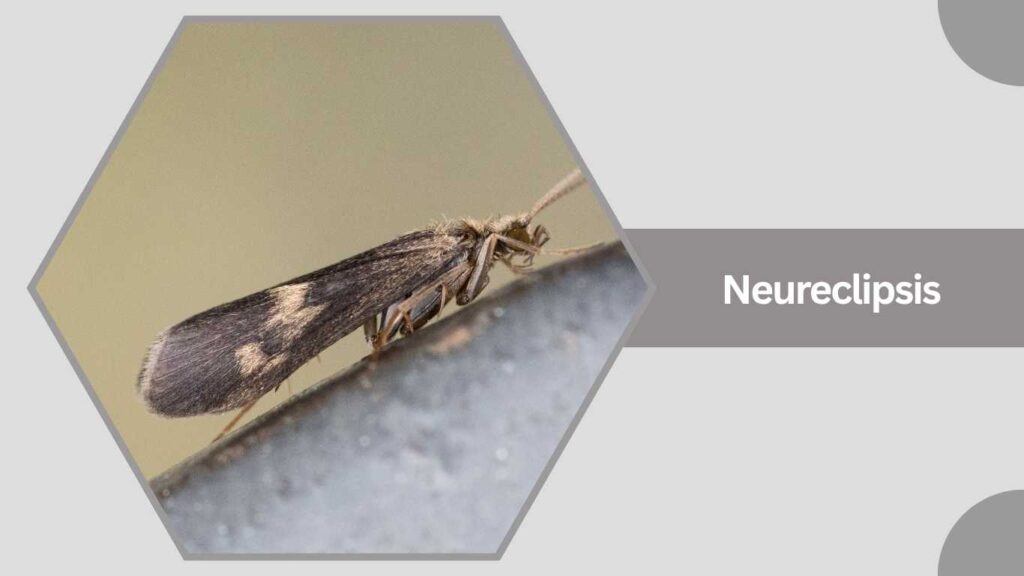
Neureclipsis is a genus of caddisflies in the family Polycentropodidae, known for their net-spinning larvae. These caddisflies are commonly found in clean, fast-flowing streams and rivers, where larvae construct silken nets to capture small organic particles and tiny invertebrates.
Identification
- Small to medium-sized caddisflies with dark or brownish wings
- Larvae spin silken nets attached to rocks or submerged vegetation
- Adults have long antennae and roof-like wings
- Larvae have strong, well-developed legs for anchoring in currents
Habitat and Distribution
Neureclipsis species inhabit well-oxygenated streams and rivers with moderate to fast currents. They are widely distributed across North America and Europe, preferring clean waters with rocky substrates.
Life Cycle
The genus exhibits complete metamorphosis: egg, larval, pupal, and adult stages. Larvae remain within or near their nets while feeding. Adults emerge seasonally to mate and lay eggs along stream margins.
Ecological Importance
Larvae help filter organic particles from flowing water, contributing to nutrient cycling. They are also an important prey source for fish and other aquatic predators.
Behavior
Larvae are largely sedentary within their nets, capturing drifting food particles. Adults are nocturnal flyers, often attracted to light sources near streams.
16. Hydatophylax
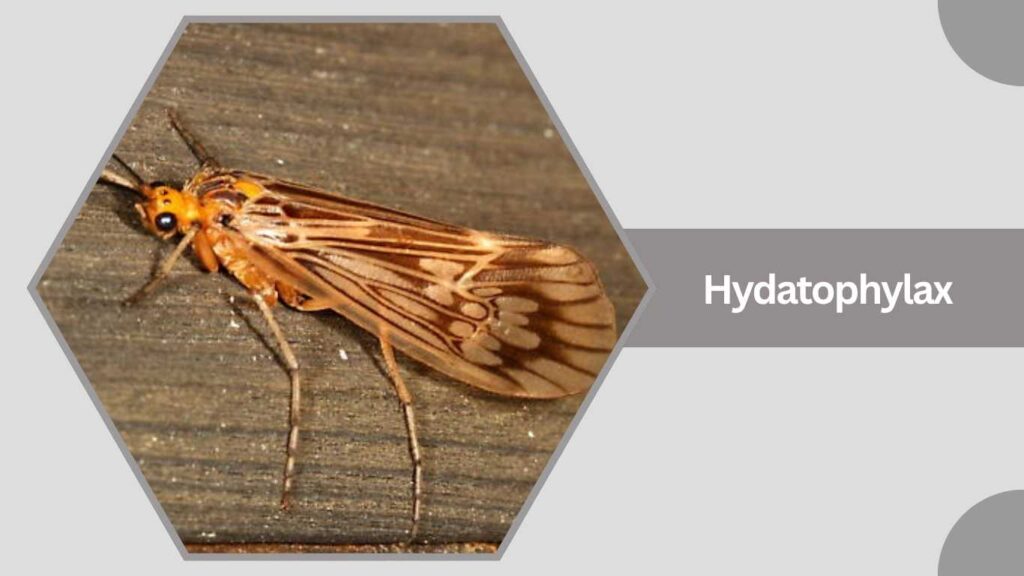
Hydatophylax is a genus of caddisflies in the family Limnephilidae, known for their case-building larvae. These caddisflies are typically found in clean, slow- to moderate-flowing streams and rivers, where larvae construct portable cases from plant material, sand, and detritus.
Identification
- Medium-sized caddisflies with brown or mottled wings
- Larvae build tubular cases from plant fragments, sand, or detritus
- Adults have long antennae and roof-like wings
- Larvae have well-developed legs for crawling along substrates
Habitat and Distribution
Hydatophylax species inhabit slow to moderately flowing streams and rivers, often with abundant submerged vegetation. They are widely distributed in North America and parts of Europe, favoring clean waters.
Life Cycle
The genus undergoes complete metamorphosis: egg, larval, pupal, and adult stages. Larvae remain protected in their cases while feeding on detritus and periphyton. Adults emerge seasonally to mate and lay eggs.
Ecological Importance
Larvae contribute to nutrient cycling and detritus breakdown in freshwater ecosystems. They also provide a food source for fish and other aquatic predators.
Behavior
Larvae are mostly sedentary within their cases, grazing on available organic material. Adults are nocturnal, flying near streams and rivers during emergence periods.
17. Apatania
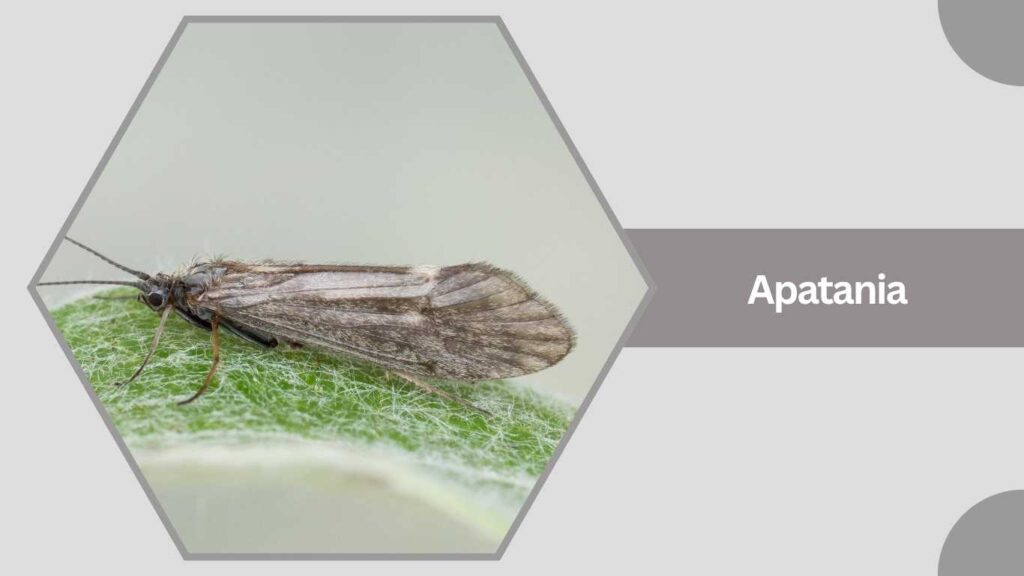
Apatania is a genus of caddisflies in the family Apataniidae, known for their case-making larvae. These caddisflies are typically found in cool, clean streams and rivers, where larvae construct protective cases from sand, plant material, and other debris.
Identification
- Medium-sized caddisflies with brownish or mottled wings
- Larvae build tubular cases from sand, small stones, and plant fragments
- Adults have long antennae and roof-like wings
- Larvae have well-developed legs and a robust head capsule
Habitat and Distribution
Apatania species inhabit well-oxygenated, slow to moderately flowing streams and rivers. They are distributed across North America and Europe, often favoring mountainous or forested streams.
Life Cycle
The genus exhibits complete metamorphosis: egg, larval, pupal, and adult stages. Larvae develop inside their cases, feeding on detritus, algae, and small organic particles. Adults emerge seasonally to mate and lay eggs.
Ecological Importance
Larvae play an essential role in detritus processing and nutrient cycling in freshwater ecosystems. They are also prey for fish and other aquatic predators, supporting food web dynamics.
Behavior
Larvae are mostly sedentary, moving within their cases to graze. Adults are nocturnal flyers and are often attracted to light sources near water bodies during emergence periods.
18. Halesus
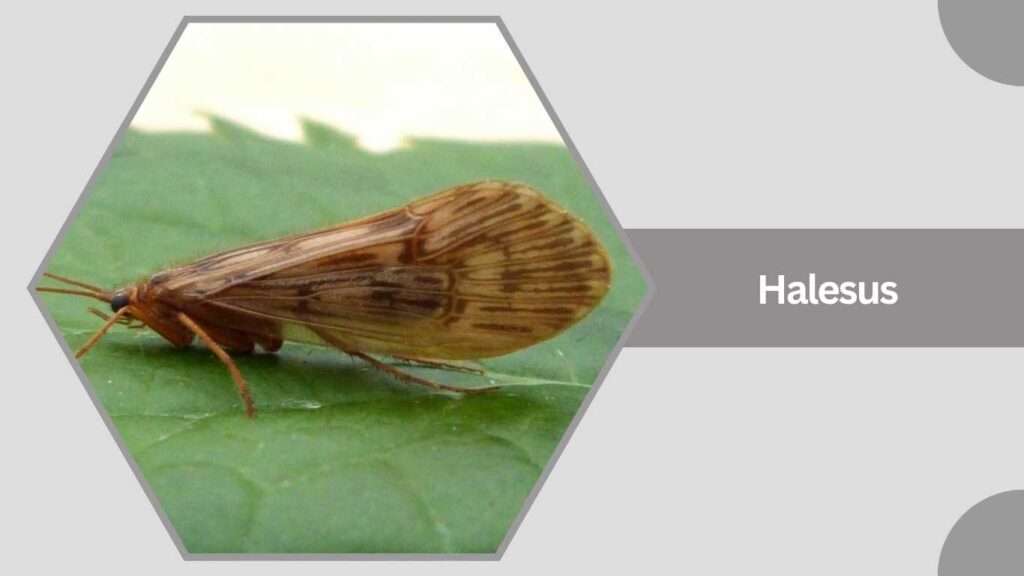
Halesus is a genus of caddisflies in the family Limnephilidae, known for their case-building larvae. These caddisflies are commonly found in slow- to moderately flowing streams and rivers, where larvae construct cases from plant debris, sand, and small stones.
Identification
- Medium to large-sized caddisflies with brown or mottled wings
- Larvae build tubular cases from plant fragments, sand, and detritus
- Adults have long antennae and roof-like wings
- Larvae have strong legs for crawling and a robust head capsule
Habitat and Distribution
Halesus species inhabit clean streams and rivers with abundant vegetation or stable substrates. They are distributed across North America and Europe, often in cooler freshwater systems.
Life Cycle
The genus exhibits complete metamorphosis: egg, larval, pupal, and adult stages. Larvae remain inside their cases while feeding on detritus and periphyton. Adults emerge seasonally to mate and lay eggs along the water margins.
Ecological Importance
Larvae contribute to nutrient cycling and detritus breakdown in freshwater ecosystems. They also serve as prey for fish and other aquatic predators, playing a key role in stream food webs.
Behavior
Larvae are mostly sedentary within their cases, grazing on available organic material. Adults are nocturnal and fly near streams during emergence periods.
19. Athripsodes
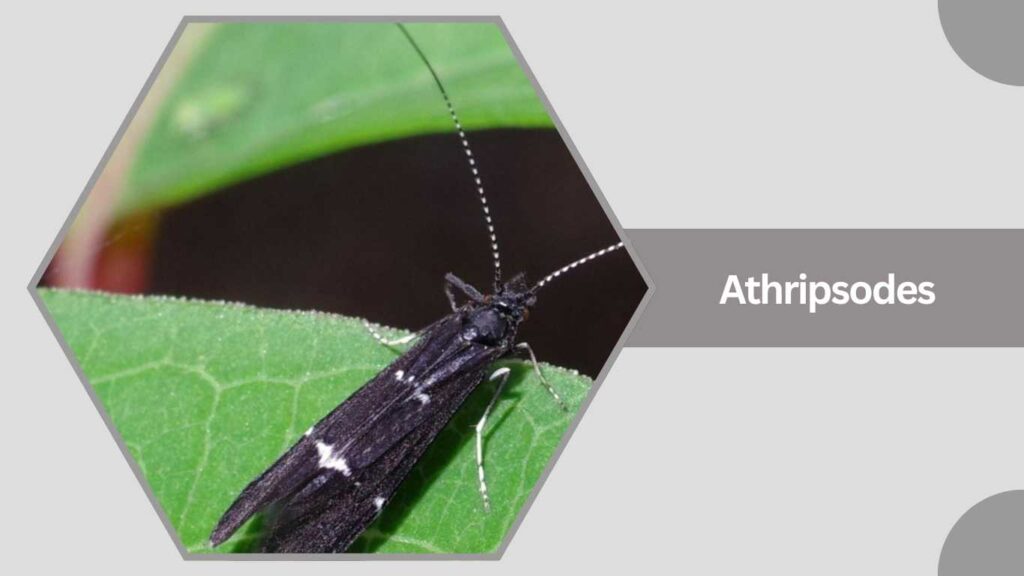
Athripsodes is a genus of caddisflies in the family Leptoceridae, commonly referred to as long-horned caddisflies. Their larvae are case-makers, constructing portable cases from sand, plant fragments, and detritus. They are usually found in clean streams and rivers with moderate to slow flow.
Identification
- Small to medium-sized caddisflies with narrow, brownish wings
- Larvae build tubular cases from sand, plant material, or detritus
- Adults have very long antennae and roof-like wings
- Larvae have well-developed legs for crawling along substrates
Habitat and Distribution
Athripsodes species inhabit slow to moderately flowing streams and rivers with clean, oxygen-rich water. They are widely distributed across North America and Europe.
Life Cycle
The genus exhibits complete metamorphosis: egg, larval, pupal, and adult stages. Larvae develop inside their cases, feeding on detritus, algae, and small organic particles. Adults emerge seasonally to mate and lay eggs.
Ecological Importance
Larvae play a vital role in detritus processing and nutrient cycling in freshwater ecosystems. They are also an important food source for fish and other aquatic predators.
Behavior
Larvae are mostly sedentary within their cases, grazing on detritus and plant material. Adults are nocturnal flyers and are often attracted to lights near streams during emergence periods.
20. Mystacides
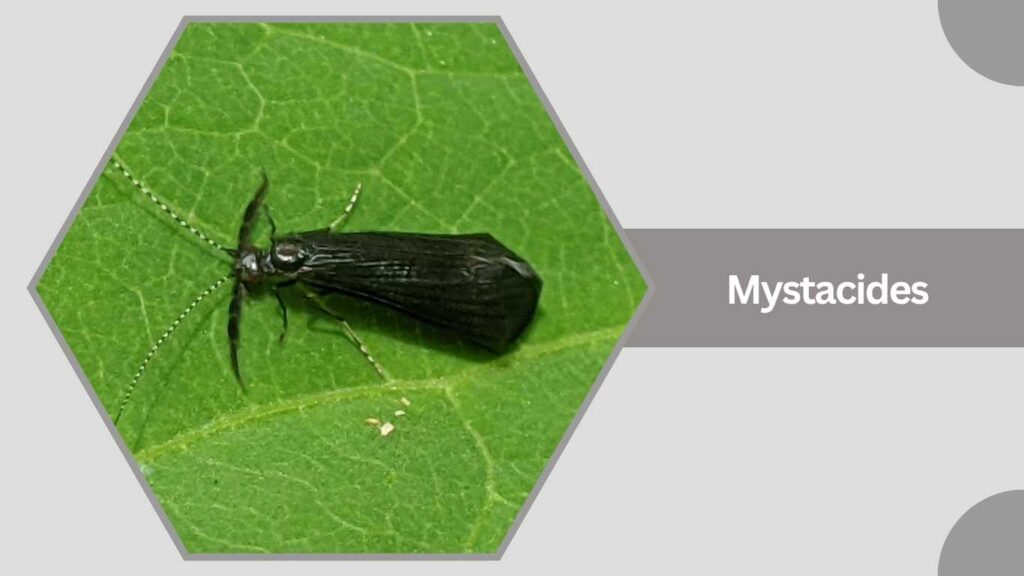
Mystacides is a genus of caddisflies in the family Leptoceridae, commonly known as long-horned caddisflies. Their larvae are case-makers, constructing portable cases from plant material, sand, and detritus. They are usually found in clean streams, rivers, and occasionally lakes with slow to moderate flow.
Identification
- Small to medium-sized caddisflies with narrow, brown or mottled wings
- Larvae build tubular cases primarily from plant fragments and detritus
- Adults have very long antennae and roof-like wings
- Larvae have well-developed legs for crawling along substrates
Habitat and Distribution
Mystacides species inhabit slow to moderately flowing freshwater habitats with clean, oxygen-rich water. They are distributed across North America and Europe, often favoring streams with abundant vegetation.
Life Cycle
The genus undergoes complete metamorphosis: egg, larval, pupal, and adult stages. Larvae remain inside their cases while feeding on detritus and algae. Adults emerge seasonally to mate and lay eggs.
Ecological Importance
Larvae contribute to nutrient cycling by breaking down organic matter. They are also an important food source for fish and other aquatic predators, supporting freshwater food webs.
Behavior
Larvae are mostly sedentary within their cases, grazing on organic material. Adults are nocturnal flyers, often attracted to lights near water bodies during emergence periods.
21. Phryganea
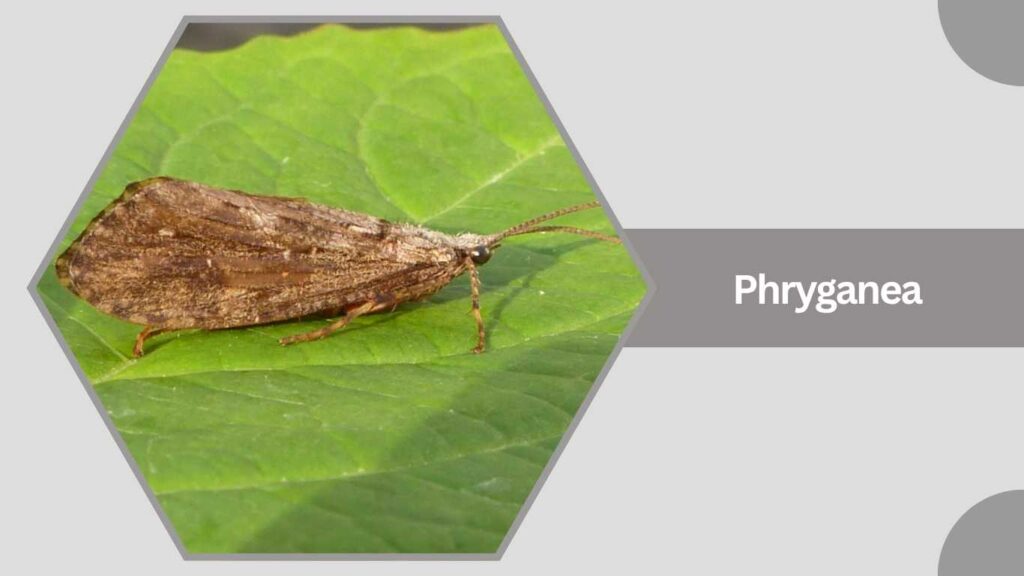
Phryganea is a genus of caddisflies in the family Phryganeidae, commonly called giant caddisflies. Their larvae are large case-makers, constructing robust cases from plant material and detritus. They are typically found in slow-moving streams, ponds, and lakes.
Identification
- Large caddisflies with brown or mottled wings
- Larvae build sturdy, tubular cases from plant fragments and detritus
- Adults have long antennae and broad, roof-like wings
- Larvae possess strong legs and a well-developed head capsule
Habitat and Distribution
Phryganea species inhabit lentic or slow-flowing waters such as ponds, lakes, and calm streams. They are found widely across North America and Europe.
Life Cycle
The genus exhibits complete metamorphosis: egg, larval, pupal, and adult stages. Larvae develop inside their cases while feeding on detritus and plant material. Adults emerge seasonally to mate and lay eggs.
Ecological Importance
Larvae help process organic matter and contribute to nutrient cycling. They are also a significant food source for fish and other aquatic predators in freshwater habitats.
Behavior
Larvae are mostly sedentary within their cases, grazing on organic matter. Adults are nocturnal flyers and are often attracted to lights near water bodies during emergence periods.
22. Limnocentropus
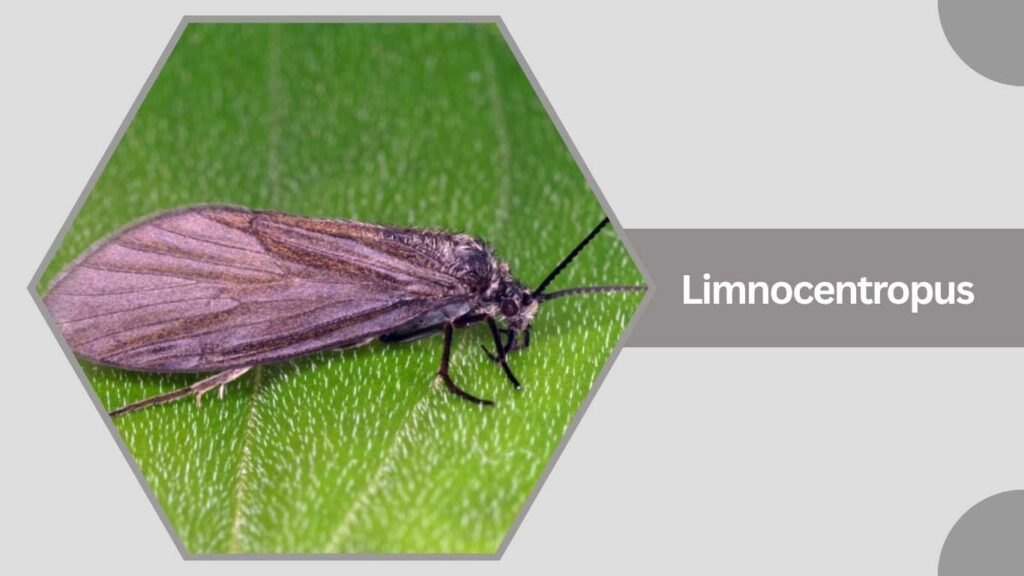
Limnocentropus is a genus of caddisflies in the family Limnephilidae, known for their case-building larvae. These caddisflies are usually found in slow-moving streams, rivers, and ponds, where larvae construct portable cases from plant material, detritus, and small mineral particles.
Identification
- Medium-sized caddisflies with brown or mottled wings
- Larvae build tubular cases from plant fragments, detritus, and sand
- Adults have long antennae and roof-like wings
- Larvae have well-developed legs and a robust head capsule
Habitat and Distribution
Limnocentropus species inhabit lentic and slow-flowing freshwater habitats with clean, oxygen-rich water. They are widely distributed in North America and parts of Europe.
Life Cycle
The genus undergoes complete metamorphosis: egg, larval, pupal, and adult stages. Larvae feed on detritus and plant material while developing inside their cases. Adults emerge seasonally to mate and lay eggs.
Ecological Importance
Larvae play an important role in detritus processing and nutrient cycling in freshwater ecosystems. They are also prey for fish, amphibians, and other aquatic predators.
Behavior
Larvae are mostly sedentary, grazing within their cases. Adults are nocturnal flyers and often attracted to lights near water bodies during emergence periods.
23. Holocentropus
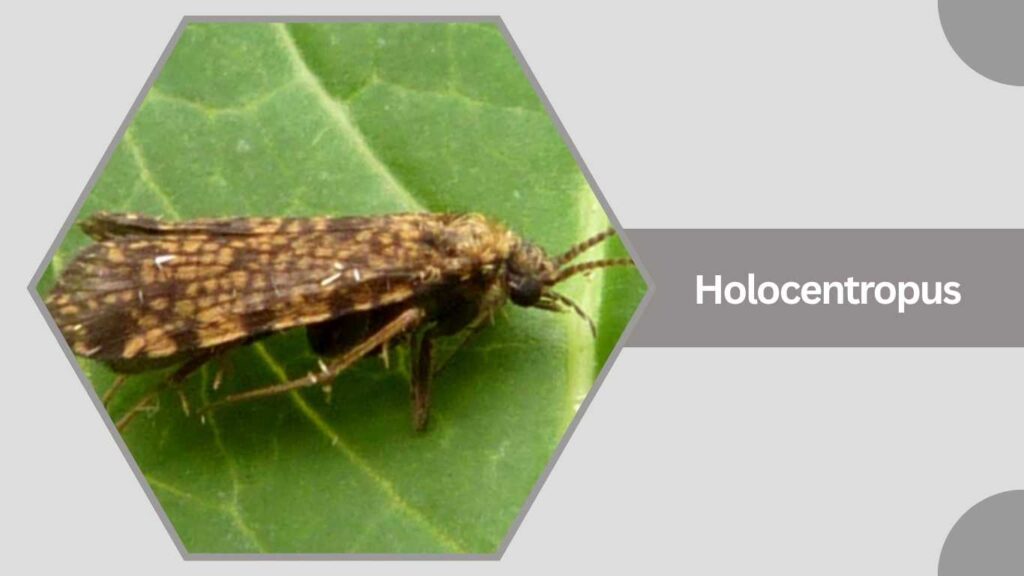
Holocentropus is a genus of caddisflies in the family Polycentropodidae, known for their predatory, tube-dwelling larvae. These caddisflies are typically found in clean streams and rivers with moderate to fast currents, where larvae construct silken retreats to ambush small invertebrates.
Identification
- Small to medium-sized caddisflies with dark or brownish wings
- Larvae build silken tubes or retreats attached to rocks or submerged debris
- Adults have long antennae and roof-like wings
- Larvae possess strong mandibles for predation
Habitat and Distribution
Holocentropus species inhabit riffles and shallow flowing waters with clean, oxygen-rich conditions. They are found across North America and Europe.
Life Cycle
The genus exhibits complete metamorphosis: egg, larval, pupal, and adult stages. Larvae remain within their silken retreats while hunting small aquatic invertebrates. Adults emerge seasonally to mate and lay eggs.
Ecological Importance
Larvae are important predators in stream ecosystems, helping regulate populations of small invertebrates. They also serve as prey for fish, supporting freshwater food webs.
Behavior
Larvae are sedentary within their retreats, ambushing passing prey. Adults are nocturnal and often fly near streams, attracted to lights during emergence.
24. Ceraclea
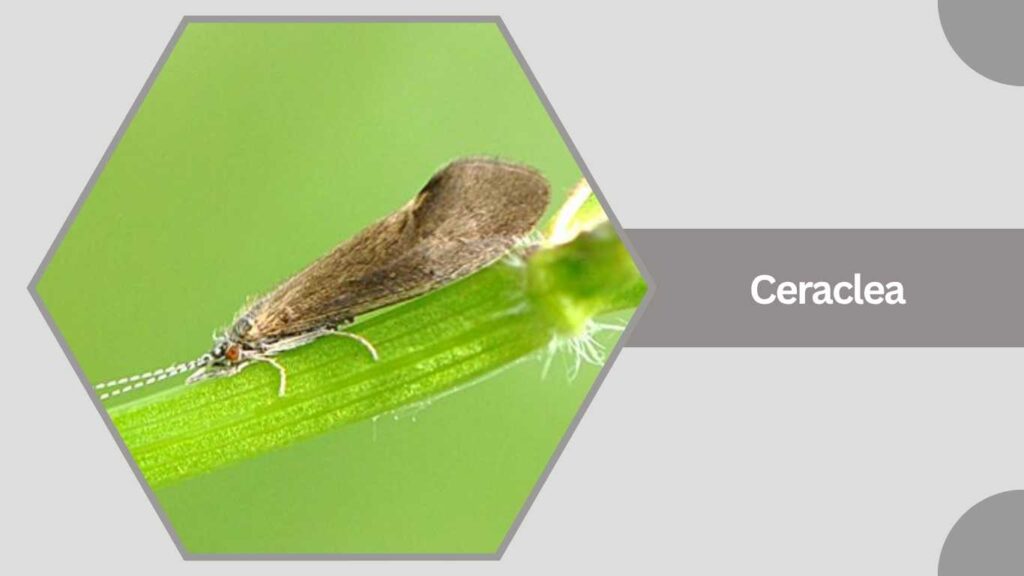
Ceraclea is a genus of caddisflies in the family Leptoceridae, commonly known as long-horned caddisflies. Their larvae are case-makers, constructing portable cases from sand, plant fragments, and detritus. They are usually found in slow to moderately flowing streams, rivers, and ponds.
Identification
- Small to medium-sized caddisflies with narrow, brown or mottled wings
- Larvae build tubular cases primarily from sand and plant material
- Adults have very long antennae and roof-like wings
- Larvae have well-developed legs for crawling along substrates
Habitat and Distribution
Ceraclea species inhabit clean, slow to moderately flowing freshwater habitats, often with sandy or vegetated substrates. They are widely distributed in North America and Europe.
Life Cycle
The genus undergoes complete metamorphosis: egg, larval, pupal, and adult stages. Larvae remain inside their cases while feeding on detritus and algae. Adults emerge seasonally to mate and lay eggs along the water margins.
Ecological Importance
Larvae contribute to nutrient cycling by processing detritus and organic matter. They are also an important food source for fish and other aquatic predators, supporting freshwater food webs.
Behavior
Larvae are mostly sedentary within their cases, grazing on detritus and plant material. Adults are nocturnal flyers, often attracted to light sources near water bodies during emergence periods.
25. Anabolia
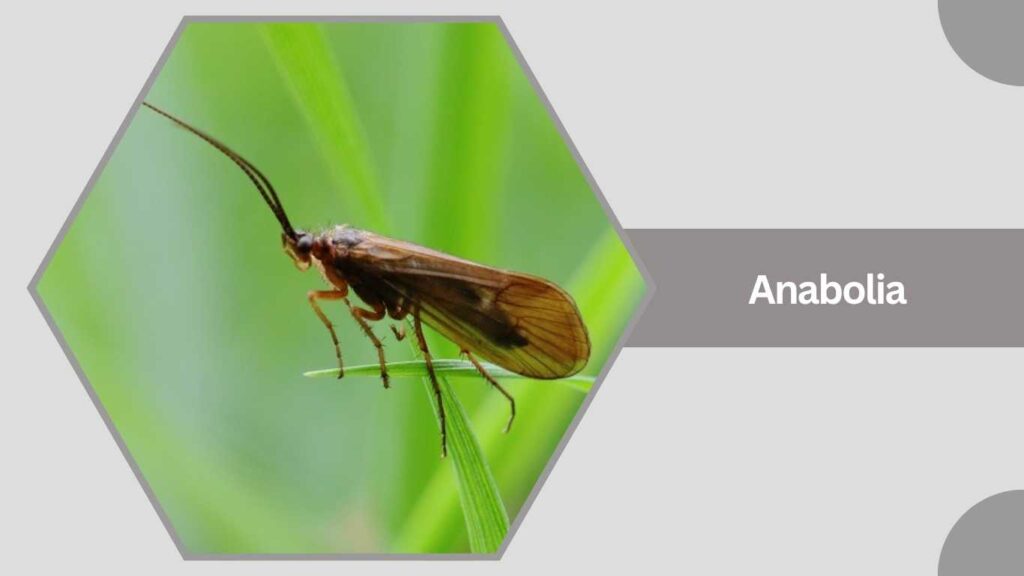
Anabolia is a genus of caddisflies in the family Limnephilidae, known for their case-building larvae. These caddisflies are commonly found in clean, slow- to moderately flowing streams, rivers, and ponds, where larvae construct portable cases from sand, plant fragments, and detritus.
Identification
- Medium-sized caddisflies with brown or mottled wings
- Larvae build tubular cases from sand, plant material, and detritus
- Adults have long antennae and roof-like wings
- Larvae have well-developed legs and a robust head capsule
Habitat and Distribution
Anabolia species inhabit slow to moderately flowing freshwater habitats with clean, oxygen-rich water. They are widely distributed in North America and Europe, often favoring streams with abundant vegetation.
Life Cycle
The genus undergoes complete metamorphosis: egg, larval, pupal, and adult stages. Larvae develop inside their cases, feeding on detritus, algae, and organic matter. Adults emerge seasonally to mate and lay eggs.
Ecological Importance
Larvae contribute to detritus processing and nutrient cycling in freshwater ecosystems. They are also prey for fish, amphibians, and other aquatic predators.
Behavior
Larvae are mostly sedentary within their cases, grazing on organic material. Adults are nocturnal flyers and are often attracted to lights near streams during emergence periods.
FAQs
What is a caddisfly?
Caddisflies are insects of the order Trichoptera, closely related to moths and butterflies. They are aquatic during the larval stage and terrestrial as adults. Larvae often build protective cases or nets, playing a key role in freshwater ecosystems by processing organic matter and serving as food for fish.
How do caddisfly larvae build their cases?
Caddisfly larvae construct cases using materials like sand, small stones, plant fragments, or silk. The case serves as protection against predators and strong currents. Different genera have distinct case shapes, such as tubular, flattened, or saddle-shaped, which can help in identifying the species.
Where are caddisflies commonly found?
Caddisflies inhabit a wide range of freshwater habitats, including streams, rivers, ponds, and lakes. Many prefer clean, oxygen-rich waters with stable substrates. Some genera, like Glossosoma and Rhyacophila, thrive in fast-flowing streams, while others, like Phryganea and Limnocentropus, prefer slow-moving waters.
Why are caddisflies important for ecosystems?
Larvae contribute to nutrient cycling by breaking down organic matter and controlling algae or invertebrate populations. They also serve as a critical food source for fish, amphibians, and other predators. Adult caddisflies provide food for birds and bats, linking aquatic and terrestrial food webs.
How can I identify different caddisfly genera?
Identification relies on larval case type, body shape, size, and feeding behavior. Net-spinning larvae (like Hydropsyche) construct silken nets, while case-building genera (like Limnephilus or Anabolia) carry portable cases made of sand or plant debris. Adult wing patterns, size, and antenna length also aid in genus-level identification.