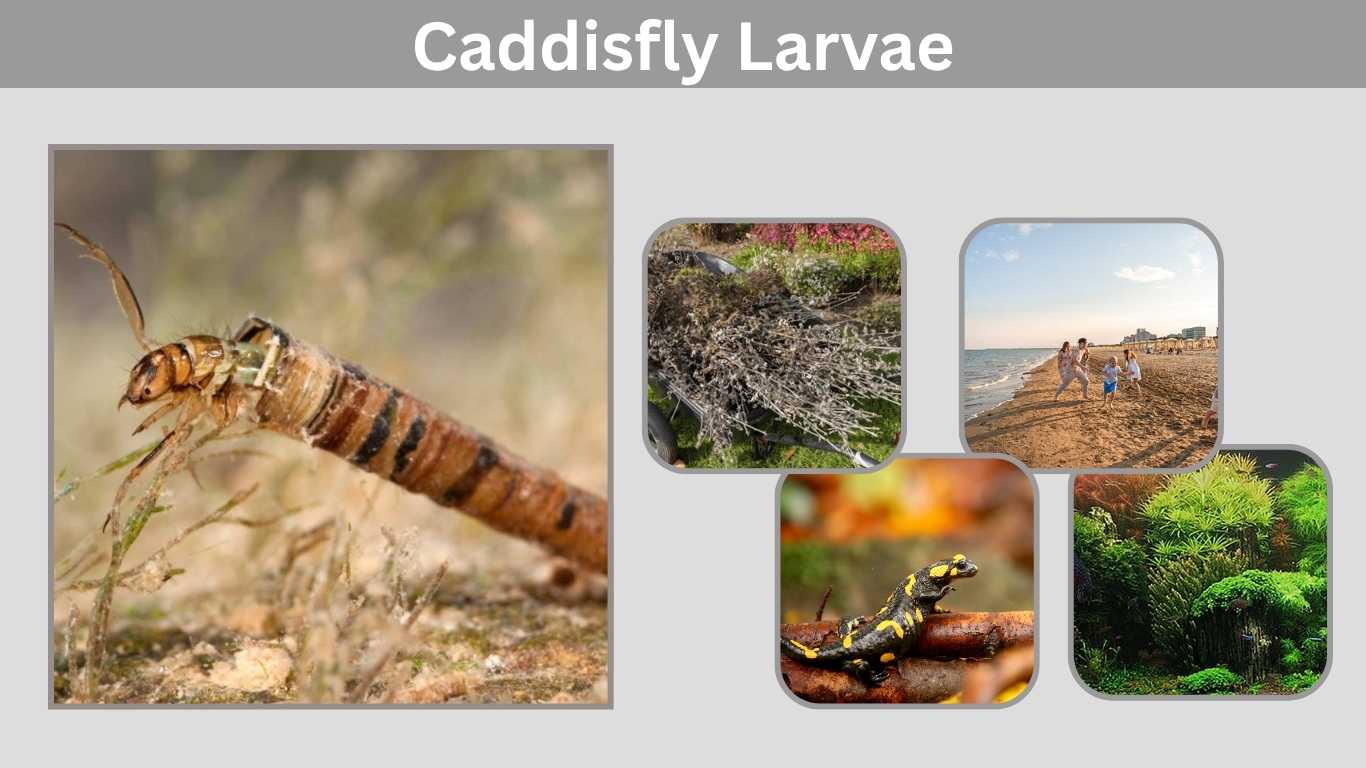
Caddisfly larvae are fascinating freshwater insects, widely known for their intricate behaviors and ecological importance. Found in rivers, streams, ponds, and even aquariums, these larvae play a crucial role in nutrient recycling and water quality monitoring. Their ability to construct protective cases using natural materials like sand, sticks, and leaves has inspired both scientists and artists alike.
Apart from their ecological significance, caddisfly larvae are popular in fly fishing, where their unique forms influence artificial fly patterns. Artists have also used their case-building behavior to create living art, blending nature with human creativity.
What Are Caddisfly Larvae?
Caddisfly larvae are aquatic insects in the order Trichoptera. They are the immature form of caddisflies and exhibit unique behaviors that distinguish them from other freshwater insects. These larvae are primarily found in clean, well-oxygenated water, making them excellent indicators of water quality. They vary in size, color, and morphology depending on species and habitat.
Identification
- Cased vs. Caseless Larvae: Some larvae construct cases for protection, while others remain free-living.
- Physical Traits: Head, thorax, abdomen, and visible gills help differentiate species.
- Regional Variations: In the UK, Iowa, Virginia, and Massachusetts, different species show specific adaptations to local water conditions.
- Size and Color: Most range from 5 to 25 mm and may be green, brown, or black.
Caddisfly Larvae Habitat and Distribution
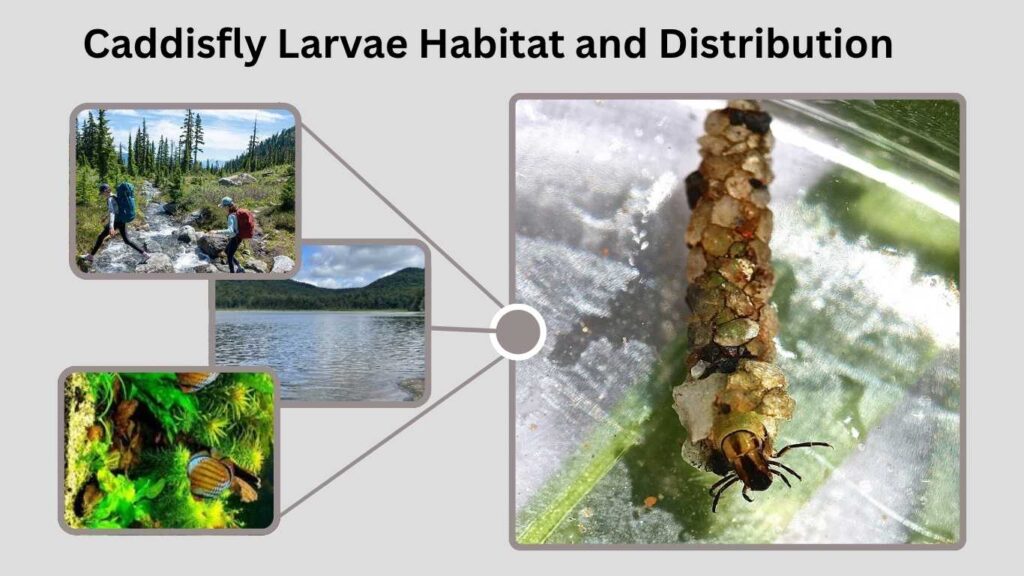
Caddisfly larvae inhabit diverse freshwater environments. They are commonly found in streams, rivers, lakes, and ponds, often preferring areas with moderate flow and plenty of rocks or vegetation. Some species can also survive in aquariums if water quality is maintained.
Freshwater Ecosystems
- Streams and Rivers: Provide oxygen-rich water and abundant food sources.
- Ponds and Lakes: Ideal for slower-moving species that feed on detritus or algae.
- Aquarium Habitats: Require clean water, suitable substrate, and proper feeding.
Pollution Sensitivity
Caddisfly larvae are sensitive to chemical pollution and sedimentation. Species like net-spinning larvae are especially vulnerable, making them reliable bioindicators for ecologists. Presence or absence can reveal water quality levels and ecosystem health.
Caddisfly Larvae Anatomy and Adaptations
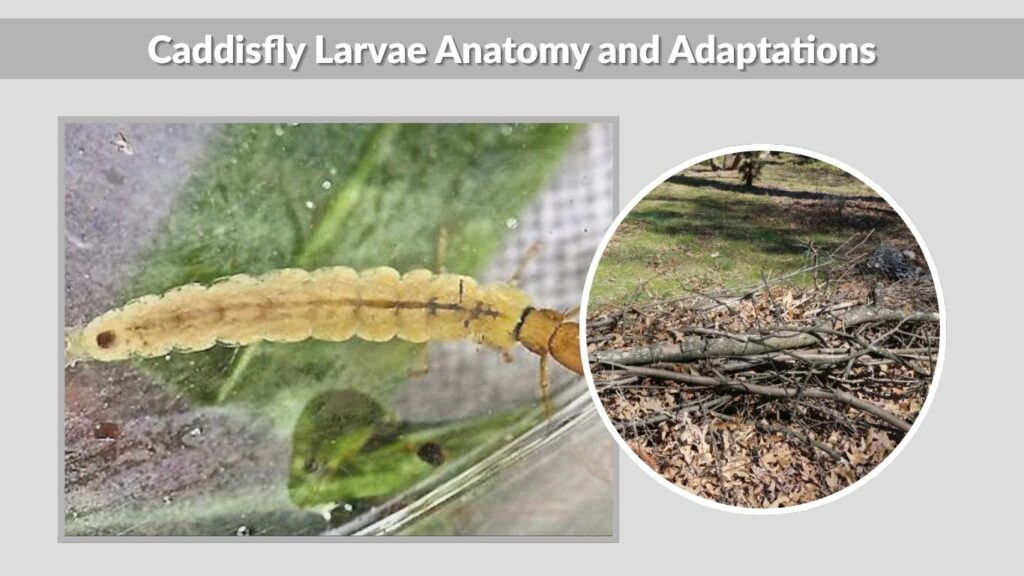
Caddisfly larvae display remarkable adaptations that help them survive in aquatic environments. Unlike many insects, they possess gills along the sides of their abdomen, allowing them to extract oxygen directly from water. Their segmented bodies are equipped with legs, silk glands, and various appendages that aid in movement, feeding, and case construction.
Some larvae are net-spinners, creating silk nets to trap food particles like algae or tiny invertebrates. Others build portable cases using sand grains, sticks, leaves, or even small bits of metal or shells. These cases protect them from predators and environmental hazards while allowing them to move freely.
Case-Building Behavior
- Materials Used: Sand, sticks, plant debris, and even gold leaf in artistic applications.
- Purpose: Protection from predators, camouflage, and stability in flowing water.
- Variation by Species: Some larvae construct tubular cases, others make flattened or spiral-shaped shelters.
Feeding and Diet
Caddisfly larvae diets vary by species:
- Herbivores: Consume algae and plant matter.
- Detritivores: Feed on decomposing organic matter.
- Predators: Capture smaller invertebrates using silk nets.
Caddisfly Larvae Life Cycle and Behavior
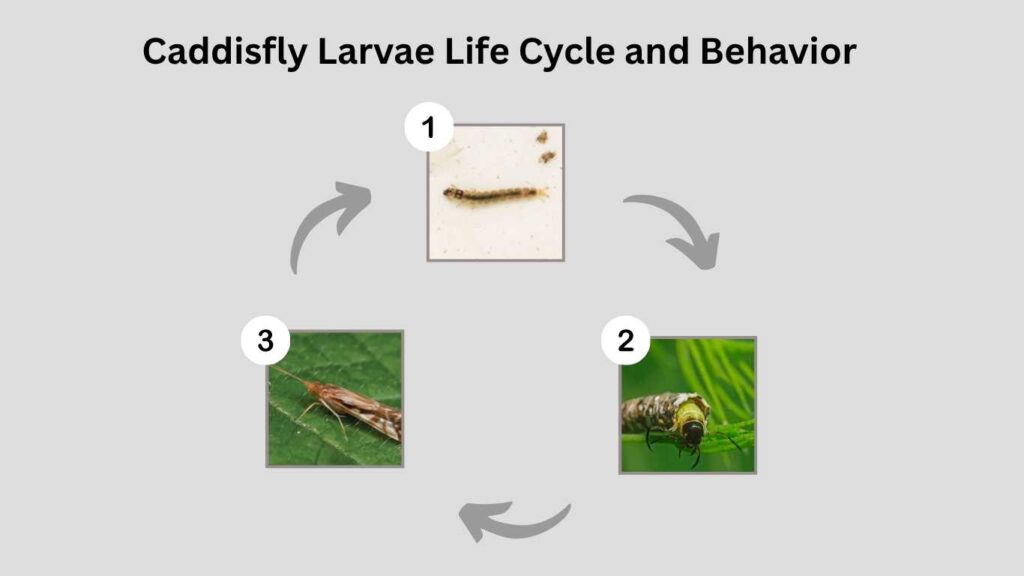
Caddisfly larvae undergo complete metamorphosis, which includes egg, larval, pupal, and adult stages. The larval stage can last from a few weeks to over a year, depending on the species and environmental conditions. During this period, larvae grow, feed, and construct protective cases or nets, preparing for pupation.
Larval Stage
- Growth: Larvae molt multiple times, increasing in size with each stage.
- Habitat Use: Larvae remain in freshwater habitats, often near rocks, submerged plants, or leaf litter.
- Behavior: Many larvae are nocturnal, feeding under the cover of darkness.
Pupal Stage
- Pupae remain inside their cases or cocoons while undergoing transformation.
- Silk lining or hardened case protects them from predators and environmental stress.
- Duration varies with water temperature and species.
Adult Stage
- Adults emerge from water, usually as short-lived insects focused on reproduction.
- Flight patterns and mating behaviors are species-specific.
- Adults are generally harmless and do not feed significantly.
Human Interaction and Cultural Significance
Caddisfly larvae have a unique place in human culture, both practical and artistic. Fly fishers closely study larvae for creating artificial flies that mimic their appearance and movement. Beyond fishing, artists have collaborated with caddisfly larvae to produce “living art” by providing materials such as gold leaf or shells for case building.
Artistic Applications
- Jewelry and Decorative Art: Larvae cases can be turned into earrings, pendants, or miniature art pieces.
- Artists like Hubert Duprat: Known for guiding caddisfly larvae to create exquisite gold-covered cases.
- Educational Uses: Demonstrates nature’s creativity and insect behavior in classrooms and exhibits.
Aquarium and Commercial Interest
- Live larvae are available for purchase for study, aquariums, or artistic purposes.
- Proper care involves clean, oxygenated water, appropriate feeding, and substrate for case building.
- Overcollection or improper care can harm both larvae and ecosystems.
Ecological Importance
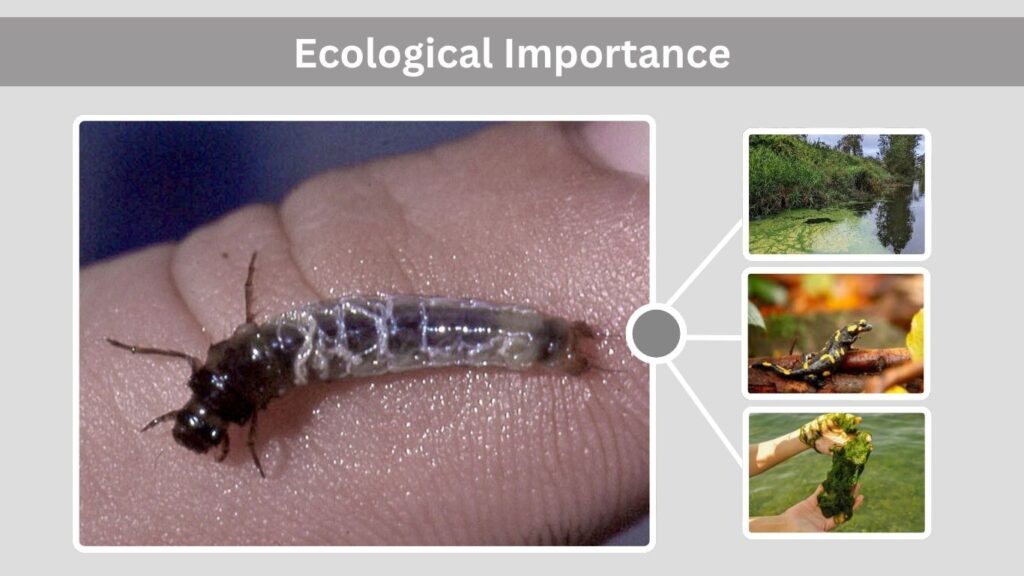
Caddisfly larvae play a vital role in freshwater ecosystems. They are integral in nutrient cycling, breaking down organic matter, and serving as prey for fish, amphibians, and larger invertebrates. Their presence indicates healthy, well-oxygenated water, while their absence can signal pollution or ecological imbalance.
Food Web Role
- Prey for Predators: Fish, salamanders, and birds rely on larvae for protein.
- Detritus Recycling: Helps decompose leaves, algae, and organic debris.
- Algae Control: Herbivorous larvae maintain balance in aquatic plant growth.
Indicator Species
- Sensitive species reflect water quality.
- Presence in streams or ponds signals low pollution levels.
- Used by ecologists to monitor long-term environmental health.
Interesting Facts About Caddisfly Larvae
- Some larvae spin silk nets to trap food particles.
- They can decorate their cases with gold, shells, or plant material, depending on availability.
- Lifespan varies widely: a few months for smaller species, up to a year for larger larvae.
- Larvae are harmless and do not bite humans.
FAQs
What do caddisfly larvae eat?
Caddisfly larvae feed on algae, decaying plant matter, or small invertebrates. Diet depends on species: herbivores consume algae, detritivores eat decomposing material, and net-spinners catch tiny prey in silk nets.
Are caddisfly larvae dangerous?
No, caddisfly larvae are not harmful to humans. They do not bite, sting, or carry diseases, and are beneficial to freshwater ecosystems.
How do caddisfly larvae breathe?
They use gills along their abdomen to extract oxygen from water. Some species build cases that allow water flow to reach the gills, while others remain free-living and rely on mobility to access oxygenated water.
What is the difference between cased and caseless larvae?
Cased larvae construct protective shelters from sand, plant matter, or other debris, providing camouflage and defense. Caseless larvae lack these cases and rely on speed, mobility, and camouflage to survive.
Can caddisfly larvae live in aquariums?
Yes, if water quality is maintained. They require clean, oxygen-rich water, a suitable substrate for building cases, and appropriate food sources such as algae or organic debris.