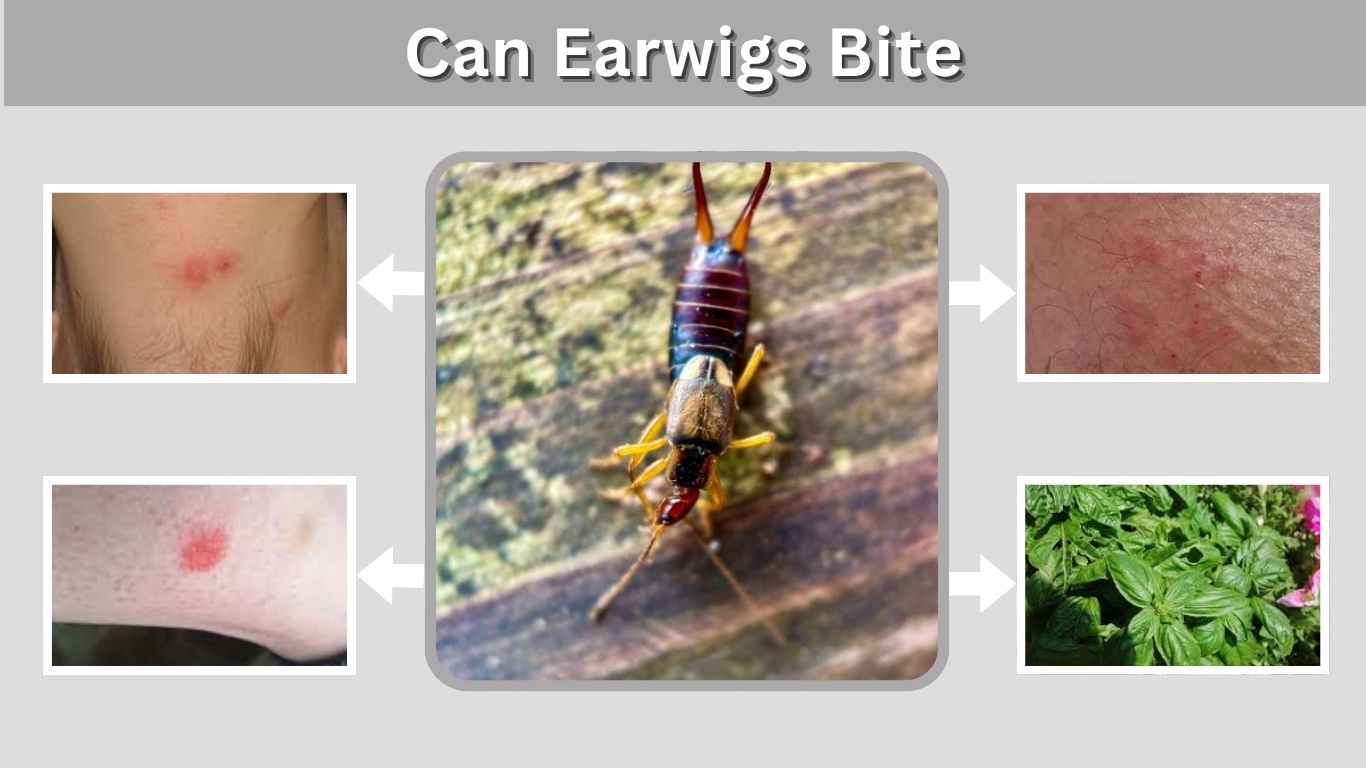
Earwigs look alarming because of the curved pincers on the back of their bodies. That often leads people to ask, can earwigs bite, sting, or harm humans? The good news is that earwigs are not dangerous pests. They may pinch if handled or threatened, but they do not bite like mosquitoes, spiders, or bed bugs, and they are not venomous.
Can Earwigs Bite Humans?
Earwigs can technically use their mouthparts to chew small food sources, but they do not bite humans in the way many people imagine. They are not blood-feeding insects, and they do not seek out people or pets as a food source.
Most reports of an “earwig bite” are actually caused by the insect’s pincers. These pincers, also called forceps, are located at the end of the earwig’s abdomen. Earwigs use them for defense, mating, and handling prey or food. If you pick one up or press it against your skin, it may pinch as a defensive reaction.
Can an Earwig Bite You?
An earwig is unlikely to bite you. If one crawls across your skin, it will usually try to escape rather than attack. Earwigs prefer dark, damp hiding places such as mulch, leaf piles, basements, bathrooms, crawl spaces, and cracks around foundations.
A person might feel a small pinch if:
- An earwig is trapped under clothing or bedding
- Someone picks it up with bare hands
- It is accidentally pressed against the skin
- A child or pet tries to handle or disturb it
Even then, the reaction is usually mild. Earwig pinches may feel surprising or uncomfortable, but they rarely break the skin.
Can Earwigs Bite People While Sleeping?
Earwigs do not actively look for sleeping people to bite. They may wander indoors while searching for moisture, shelter, or food, but they are not parasitic. If one ends up in a bed, it is usually accidental.
The old myth that earwigs crawl into ears is one reason people fear them. While any small insect could accidentally enter an ear in rare situations, earwigs do not target ears, burrow into brains, or lay eggs inside people. Those stories are myths, not normal earwig behavior.
Earwig Bite vs Earwig Pinch
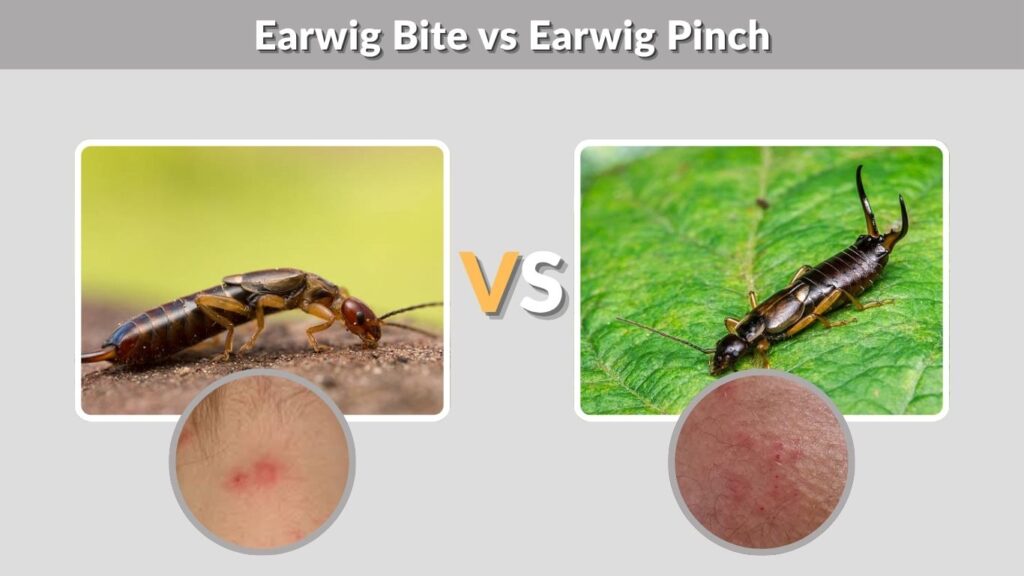
Many people use the phrase “earwig bite,” but “earwig pinch” is usually more accurate. Understanding the difference helps you know what to expect and how to respond.
| Feature | Earwig Bite | Earwig Pinch |
| How it happens | Very uncommon and not typical behavior | More likely if the insect is handled or trapped |
| Body part used | Mouthparts | Rear pincers or forceps |
| Pain level | Usually minimal if it happens | Mild, quick pinch or pressure |
| Skin damage | Rare | Rare, but possible tiny red mark |
| Danger level | Low | Low |
What Does an Earwig Pinch Feel Like?
An earwig pinch may feel like a quick prick, squeeze, or tiny pinch. Some people may barely notice it, while others may see a small red spot afterward. The severity depends on the size of the earwig, how long it was pressed against the skin, and whether the person has sensitive skin.
A typical earwig pinch may cause:
- Mild redness
- Slight swelling
- Temporary irritation
- A tiny mark if the skin was pinched firmly
These symptoms usually fade on their own. Serious reactions are very uncommon.
Can Earwigs Bite or Sting?
Earwigs do not sting. They do not have a stinger, and they do not inject venom. Their pincers can look like a scorpion’s tail or a dangerous stinging tool, but they are not designed for stinging.
This is an important distinction because many people search for “can earwigs bite or sting” after seeing the insect’s rear pincers. The pincers may look threatening, especially on larger adult earwigs, but they are mostly defensive tools.
Are Earwigs Venomous?
No, earwigs are not venomous. A pinch from an earwig does not deliver poison, toxin, or venom. If your skin becomes irritated, it is usually from the mechanical pinch itself or from scratching the area afterward.
You should still clean the area if the skin is broken, just as you would with any small scratch. This helps reduce the chance of irritation or infection.
Are Earwig Pinches Dangerous?
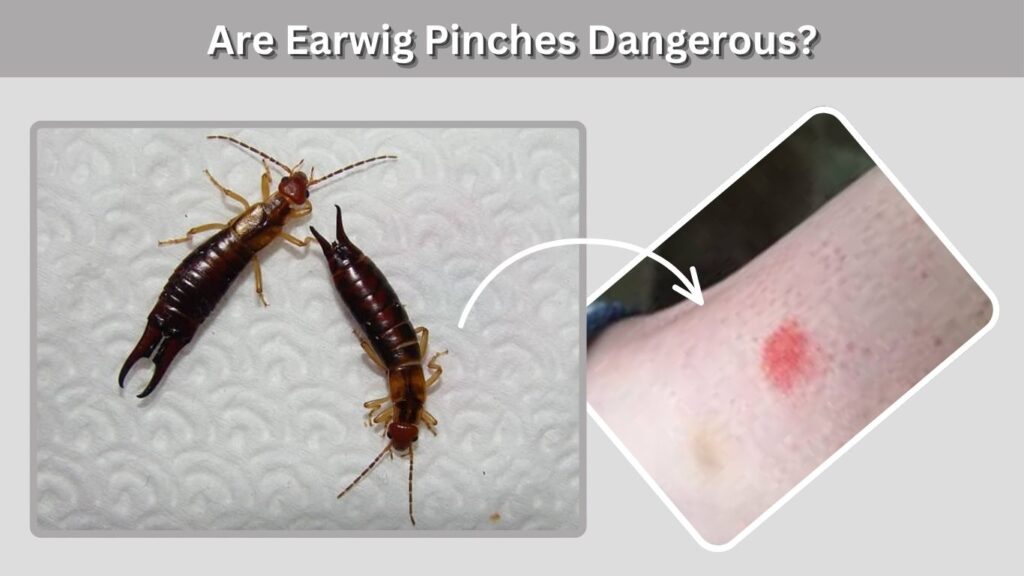
For most people, an earwig pinch is not dangerous. Earwigs are nuisance pests, not medically important pests. They do not spread disease in the same way some insects and rodents can, and they are not known for causing serious harm to humans.
When Should You Be Concerned?
Although earwig pinches are usually harmless, you should watch the area if the skin is broken. Any small wound can become irritated if it is scratched or not cleaned properly.
Consider getting medical advice if you notice:
- Increasing redness or swelling
- Warmth around the affected area
- Pus or drainage
- Severe pain
- A spreading rash
- Symptoms that do not improve after a few days
These issues are not typical of earwig pinches, but they can happen with many minor skin injuries.
What To Do If an Earwig Pinches You
If you think an earwig has pinched you, basic first aid is usually enough. The goal is to clean the skin, reduce irritation, and avoid scratching.
Simple First Aid Steps
Follow these steps after a suspected earwig pinch:
- Wash the area with soap and warm water.
- Pat the skin dry with a clean towel.
- Apply an antiseptic if the skin is scratched or broken.
- Use a cold compress if there is mild swelling.
- Avoid scratching the area.
- Monitor the spot for unusual irritation.
Most earwig pinches do not need special treatment. The mark should fade without any major issue.
What Not To Do
Avoid overreacting to a suspected earwig bite or pinch. Do not cut the skin, apply harsh chemicals, or use strong home remedies that may irritate the area further. Also avoid squeezing the skin aggressively, as this can worsen redness or swelling.
Can Earwigs Bite Dogs?
Earwigs can pinch dogs, but they are not a major threat to pets. A curious dog may sniff, paw at, or try to eat an earwig. If the insect feels threatened, it may use its pincers defensively.
For most dogs, this is not a serious problem. A pinch may cause brief discomfort, but it usually does not require treatment. Eating one or two earwigs is also unlikely to cause major harm, though some dogs may drool, gag, or vomit if they dislike the taste.
Signs Your Dog May Have Been Pinched
Watch your dog for mild signs such as:
- Pawing at the nose or mouth
- Sudden licking
- Brief whining
- Shaking the head
- Mild redness around the nose, lips, or paws
If your dog shows repeated vomiting, facial swelling, breathing trouble, or unusual behavior, contact a veterinarian. Those symptoms are not typical from earwigs alone and may point to another issue.
Why Earwigs Come Inside Homes
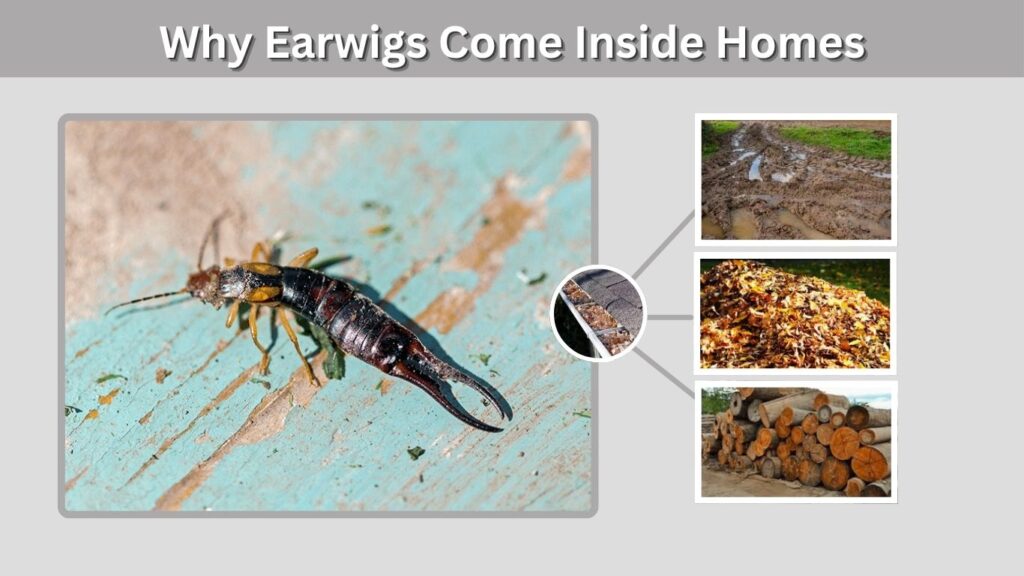
Earwigs usually enter homes because they are looking for moisture, darkness, or shelter. They are more common indoors during wet weather, drought conditions, or seasonal changes. They may also move inside when outdoor hiding spots become overcrowded or disturbed.
Common indoor areas include bathrooms, kitchens, laundry rooms, basements, garages, and crawl spaces. Outdoors, they often hide under mulch, stones, logs, flowerpots, garden debris, and damp leaves.
What Attracts Earwigs?
Earwigs are attracted to conditions that help them stay hidden and moist. They may gather near your home if the environment offers food and shelter.
Common attractants include:
- Excess mulch near the foundation
- Damp soil
- Leaky outdoor faucets
- Leaf piles
- Woodpiles
- Clogged gutters
- Cracks around doors and windows
- Outdoor lights near entry points
Reducing these attractants can help prevent earwigs from becoming a recurring problem.
How To Prevent Earwigs From Pinching or Entering Your Home
The easiest way to avoid earwig pinches is to avoid handling them and reduce the conditions that bring them indoors. Since earwigs prefer damp, hidden spaces, moisture control is one of the most effective prevention steps.
Indoor Prevention Tips
To keep earwigs out of living spaces:
- Seal cracks around windows, doors, pipes, and foundation gaps
- Install or repair door sweeps
- Use dehumidifiers in damp basements
- Fix leaks under sinks and around plumbing
- Vacuum visible earwigs instead of picking them up
- Keep bathrooms and laundry rooms dry
- Reduce clutter in garages and storage areas
If you find one or two earwigs indoors, it does not always mean you have a serious infestation. However, frequent sightings may mean they are entering through gaps or that moisture is attracting them.
Outdoor Prevention Tips
Outdoor changes can make your home less inviting to earwigs. Focus on the areas closest to your foundation first.
Helpful steps include:
- Move mulch several inches away from the foundation
- Remove leaf litter and garden debris
- Store firewood off the ground and away from the house
- Clean clogged gutters
- Trim dense vegetation near walls
- Repair leaking hoses or faucets
- Reduce unnecessary outdoor lighting near doors
These steps also help prevent other moisture-loving pests.
Do Earwigs Damage Homes or Gardens?
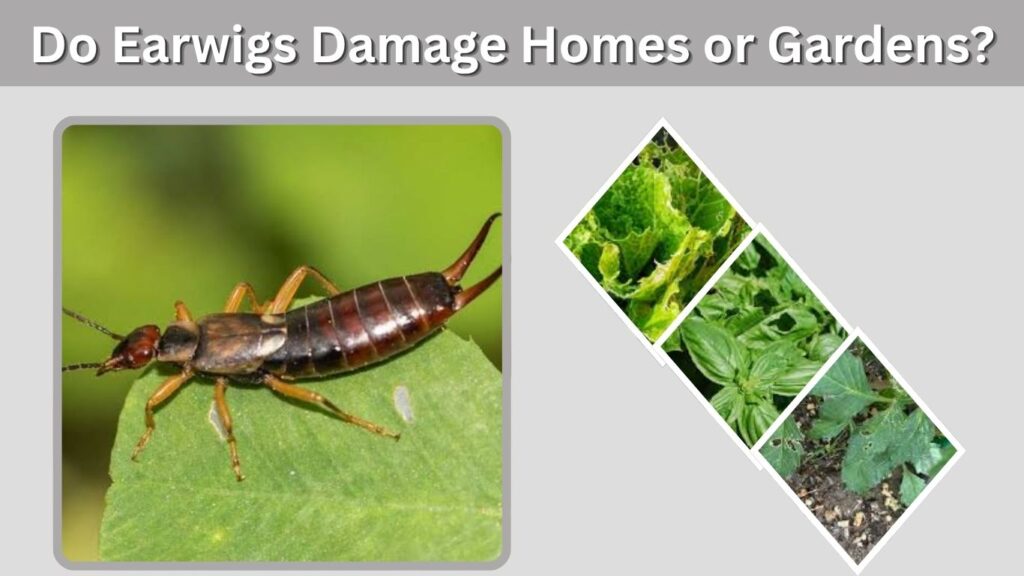
Earwigs do not damage wood, wiring, insulation, or structural materials. They are not like termites or carpenter ants. Indoors, they are mainly a nuisance because of their appearance and sudden movement.
In gardens, earwigs can be both helpful and harmful. They may feed on decaying plant matter and small insects, which can be beneficial. However, they may also chew on tender plants, seedlings, flowers, fruits, and vegetables if populations are high.
Plants Earwigs May Damage
Earwigs may feed on:
- Lettuce
- Basil
- Dahlias
- Marigolds
- Strawberries
- Seedlings
- Soft fruits
- Flower petals
Damage often appears as small, irregular holes in leaves or petals. Since slugs, caterpillars, and other pests can cause similar damage, it is important to identify the pest before choosing a treatment.
How To Remove Earwigs Safely
If you see earwigs inside, avoid grabbing them with bare hands. While they are not dangerous, handling them increases the chance of a defensive pinch.
Safe Removal Methods
You can remove earwigs by:
- Vacuuming them and emptying the vacuum outside
- Sweeping them into a dustpan
- Using a cup and paper to move them outdoors
- Placing sticky traps near entry points
- Reducing moisture where they appear
For recurring problems, focus on exclusion and moisture control rather than only killing the insects you see. Earwigs usually come from outdoor hiding spots, so long-term control starts around the home’s exterior.
FAQs
Can you get bit by an earwig?
It is possible but uncommon. Most “earwig bites” are actually pinches from the insect’s rear pincers. Earwigs do not feed on people, and they usually try to escape rather than attack. A pinch may cause mild redness or brief discomfort.
Can earwigs bite or pinch?
Earwigs are more likely to pinch than bite. Their pincers are located at the end of their abdomen and are used mainly for defense. If handled, trapped, or pressed against the skin, an earwig may pinch, but the reaction is usually mild.
Can earwigs sting or bite?
Earwigs do not sting because they do not have a stinger. They are also not venomous. While they have mouthparts, they do not normally bite humans. The pincers on their rear end are the main reason people think they are dangerous.
Can you die from an earwig bite?
No, you should not die from an earwig bite or pinch. Earwigs are not venomous and are not considered dangerous to humans. If the skin is broken, clean the area with soap and water and watch for signs of irritation or infection.
Can European earwigs bite?
European earwigs can use their mouthparts, but they are not known for biting people. Like other earwigs, they may pinch with their rear forceps if threatened or handled. The pinch is usually minor and not medically serious for most people.