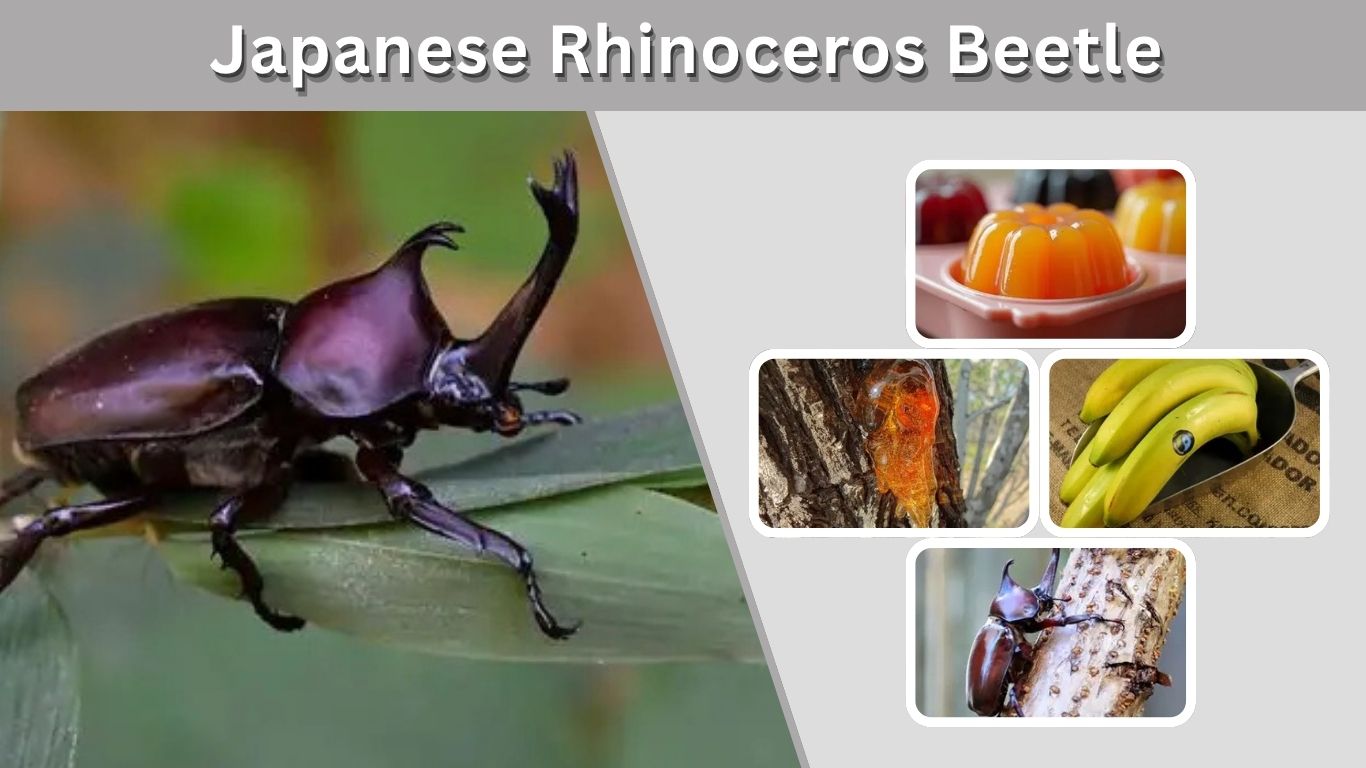
The Japanese rhinoceros beetle is one of Asia’s most recognizable horned beetles. Known in Japan as kabutomushi, this strong scarab is famous for its helmet-like male horn, summer activity, and popularity as a pet insect. This guide explains its identification, habitat, diet, life cycle, behavior, lifespan, safety, and basic care for anyone interested in learning about this remarkable beetle.
What Is a Japanese Rhinoceros Beetle?
The Japanese rhinoceros beetle is a large scarab beetle known for its powerful body and dramatic male horn. It belongs to the rhinoceros beetle group, which includes some of the strongest insects in the world. In Japan, it is closely linked with summer, children’s insect collecting, and beetle-keeping culture.
Its scientific name is commonly written as Allomyrina dichotoma. Some references also use Trypoxylus dichotomus, so both names may appear in books, pet care sheets, and scientific articles. The common names include Japanese rhinoceros beetle, Japanese horned beetle, Japanese rhino beetle, and kabutomushi.
Adult males are easy to recognize because they have a long, forked horn on the head and a smaller horn-like structure on the thorax. Females do not have the large horn, but they are still strong, oval-bodied beetles with shiny brown to dark reddish-brown wing covers.
Japanese Rhinoceros Beetle Identification
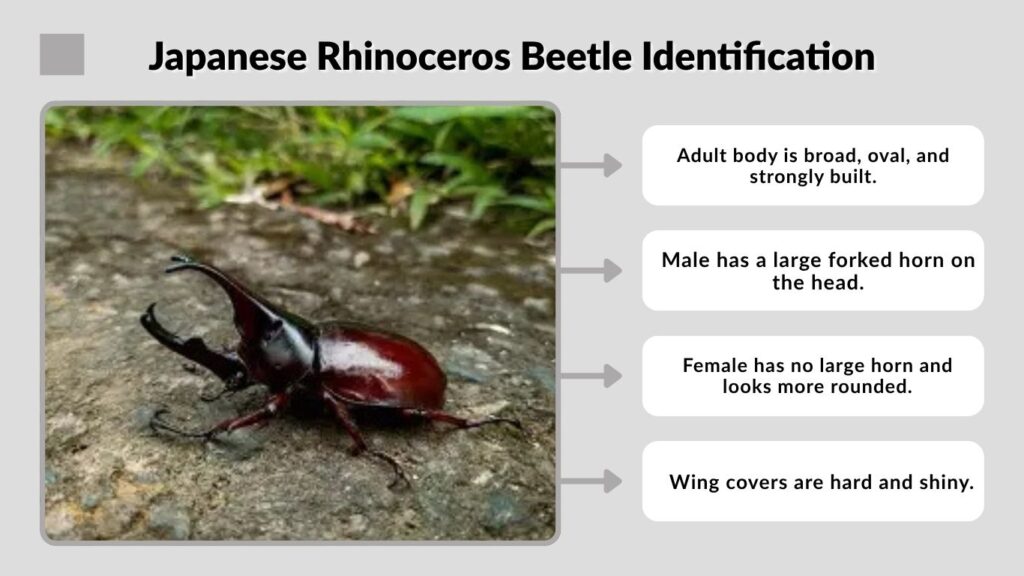
This beetle has a compact, armored look. The body is smooth, glossy, and usually reddish brown, dark brown, or almost black depending on age, lighting, and individual variation. Males look more dramatic because of the horn, while females are rounder and simpler in shape.
Key Identification Features
- Adult body is broad, oval, and strongly built.
- Male has a large forked horn on the head.
- Male also has a smaller horn or projection on the thorax.
- Female has no large horn and looks more rounded.
- Color is usually dark brown, reddish brown, or blackish brown.
- Legs are spiny and strong for gripping bark and soil.
- Wing covers are hard and shiny.
- Larvae are white, C-shaped grubs with a brown head capsule.
A male Japanese rhinoceros beetle is usually identified quickly by its horn. The horn is not used for biting or stinging. Instead, males use it like a lifting tool during fights with other males. Females are sometimes confused with other large scarab beetles, so body shape, origin, and care source are useful clues.
Quick Facts About Japanese Rhinoceros Beetles
This beetle is popular because it is large, active, and easy to observe. The table below gives a quick overview before the detailed care and biology sections.
| Feature | Details |
| Common name | Japanese rhinoceros beetle, kabutomushi |
| Scientific name | Allomyrina dichotoma / Trypoxylus dichotomus |
| Beetle family | Scarabaeidae |
| Adult diet | Tree sap, ripe fruit, beetle jelly |
| Larval diet | Decaying wood, leaf mold, humus-rich substrate |
| Main habitat | Broad-leaved forests and wooded areas |
| Adult lifespan | Usually a few months |
| Full life cycle | About one year in many conditions |
| Dangerous to humans? | No, but claws can grip skin firmly |
| Pet difficulty | Beginner-friendly if legally obtained and properly housed |
Japanese Rhinoceros Beetle Habitat and Natural Range
Japanese rhinoceros beetles are native to parts of East and Southeast Asia. They are strongly associated with Japan, but related populations also occur in areas such as Korea, China, Taiwan, and parts of mainland Asia. They prefer warm wooded habitats where decaying plant material and sap-feeding sites are available.
Adults are often found around broad-leaved trees. They feed on sap from wounded tree trunks, especially during warm summer nights. In the wild, they may gather around tree wounds where sap is flowing. These feeding areas can also become fighting grounds for males.
The larvae live underground or inside rich decaying material. They do not eat fresh leaves like many garden pests. Instead, they feed on rotting wood, compost-like humus, and decomposed leaf litter. This makes the larval stage important for nutrient recycling in forest environments.
Japanese Rhinoceros Beetle Diet
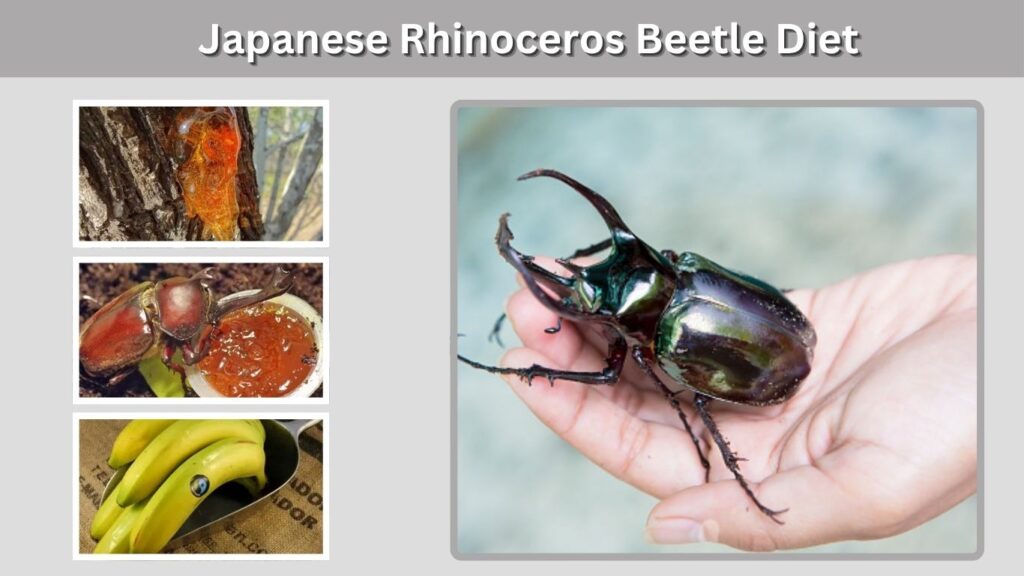
The diet changes between the larval and adult stages. Larvae need decaying organic material, while adults need soft, sugary food. A proper diet is especially important in captivity because poor nutrition can shorten lifespan and reduce activity.
What Adults Eat
- Tree sap from wounded trunks
- Commercial beetle jelly
- Ripe banana in small amounts
- Apple or other soft fruits in moderation
- Sugar-rich natural fluids from damaged trees
For pet beetles, beetle jelly is often the safest and cleanest food. It is made for adult beetles and does not spoil as quickly as fruit. Ripe fruit can be used, but it should be removed before it molds or attracts mites and flies.
Avoid citrus, salty foods, processed sweets, bread, and anything with pesticides. Fruit should be offered in small pieces, and the enclosure should be cleaned regularly. Adult beetles may not eat constantly, but they need access to food during their active period.
What Larvae Eat
Japanese rhinoceros beetle larvae eat decayed wood and leaf-based substrate. They need deep, moist, decomposed material because they live buried for much of their development. A dry, shallow, or poor-quality substrate can cause weak growth or death.
Larvae should not be fed fresh wood chips, fresh leaves, or soil treated with chemicals. In beetle care, keepers often use fermented flake soil or well-prepared decayed hardwood substrate. Larvae grow slowly and pass through several stages before becoming pupae.
Life Cycle of the Japanese Rhinoceros Beetle
The life cycle includes egg, larva, pupa, and adult. Like many scarab beetles, the Japanese rhinoceros beetle spends most of its life hidden as a larva. The adult stage is shorter but more visible, which is why people often notice them during summer.
Egg Stage
Females lay eggs in soft, moist, humus-rich material. The eggs are small, pale, and usually hidden below the surface. In captivity, a female needs enough deep substrate to lay eggs safely. If the substrate is too dry or too compacted, egg survival may drop.
Larval Stage
The larval stage is the longest part of the life cycle. Larvae are thick, white, and C-shaped. They spend their time feeding and growing inside decayed organic material. Good larval nutrition affects adult size, especially in males, because the horn and body develop from stored energy.
Pupal Stage
When the larva is fully grown, it forms a pupal chamber in the substrate. This chamber must not be broken. During this stage, the insect transforms into an adult beetle. Disturbing the pupa can cause deformity or death, so keepers should avoid digging once pupation begins.
Adult Stage
Adults emerge from the substrate when conditions are warm. They feed, mate, and reproduce. Adult life is usually short compared with the larval stage. In many cases, adults live only a few months, although careful captive conditions may help them remain active longer.
Japanese Rhinoceros Beetle Behavior and Fighting
Japanese rhinoceros beetles are famous for male fighting behavior. Males compete for feeding spots and access to females. During a fight, one male tries to hook or lift the other with his horn and throw him off the branch or feeding area.
This behavior looks dramatic, but it is natural for the species. The horn works like a lever rather than a weapon for piercing. Larger males often have an advantage, but smaller males may use different strategies to avoid direct fights.
Adults are mostly active in warm conditions and may be more active at night. In captivity, they climb, dig, feed, and push against enclosure objects. Because they are strong, the enclosure lid must be secure.
Are Japanese Rhinoceros Beetles Dangerous?
Japanese rhinoceros beetles are not dangerous to humans. They do not sting, they are not venomous, and they are not aggressive toward people. However, they have strong legs and sharp claws that can grip skin tightly. This may feel uncomfortable, especially for children.
Safety Notes
- They do not have venom.
- They do not sting.
- They may pinch lightly with their legs or claws.
- They should be handled gently and close to a surface.
- Do not pull hard if the claws grip your skin.
- Wash hands before and after handling.
- Never release captive beetles into the wild.
A bite is not the main concern with this beetle. Stress, falling, overheating, and illegal release are bigger issues. If you keep one as a pet, treat it as a delicate living animal even though it looks strong.
Japanese Rhinoceros Beetle as a Pet
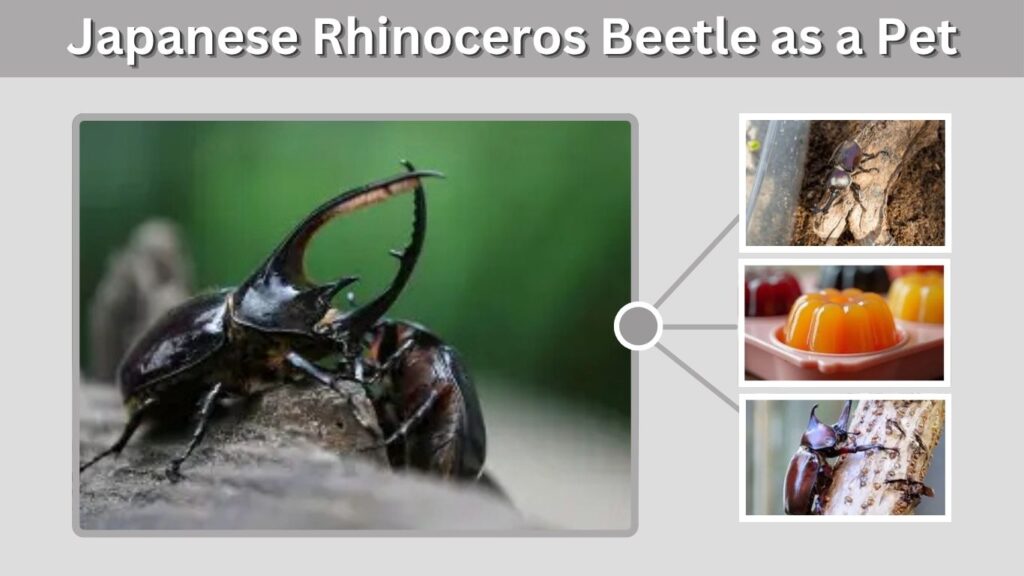
The Japanese rhinoceros beetle can be a fascinating pet insect when kept responsibly. It does not need daily handling, but it does need the right enclosure, food, humidity, and substrate. It is best for observation rather than constant play.
A single adult can live in a small but secure plastic or glass enclosure with ventilation. The floor should have several inches of moist beetle substrate, coconut fiber, or suitable decayed wood mix. Add bark, branches, or climbing surfaces so the beetle can right itself if it flips over.
Basic Care Checklist
- Use a secure enclosure with air holes.
- Keep the substrate slightly moist, not wet.
- Provide beetle jelly or safe ripe fruit.
- Remove spoiled food quickly.
- Add bark or branches for climbing.
- Keep the enclosure away from direct sun.
- Avoid overcrowding males.
- Do not disturb pupae or newly emerged adults.
Males should not be kept together in cramped spaces because they may fight often. A male and female pair may mate, but breeding requires proper larval substrate and space. Beginners should learn adult care first before trying to breed them.
Lifespan in the Wild and Captivity
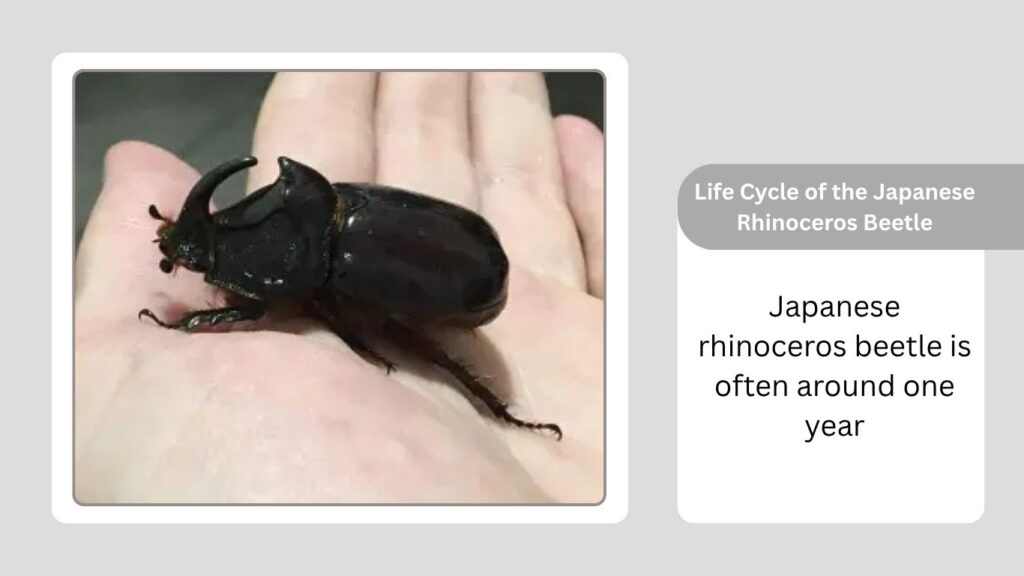
The full life cycle of a Japanese rhinoceros beetle is often around one year, but most of that time is spent as a larva. The adult stage is much shorter. Adults commonly live for a few months, especially during the warm season.
Captive adults may live longer when conditions are stable, but they are still short-lived insects. Temperature, humidity, food quality, stress, and handling all affect longevity. Overheating, dry substrate, moldy food, and frequent disturbance can shorten their life.
For larvae, the goal is steady growth in clean, nutritious substrate. For adults, the goal is comfort, food access, and low stress. A beetle that is constantly handled, exposed to heat, or kept in a dry enclosure will usually decline faster.
Buying and Price Considerations
Interest in Japanese rhinoceros beetles is high because they are attractive, unusual, and popular in Japanese culture. Prices can vary depending on country, season, sex, size, breeder, and whether the beetle is sold as a larva, pupa, or adult.
However, live insect laws matter. In some countries or regions, buying, selling, importing, or moving live beetles may require permits. This is especially important for non-native insects because accidental release can create ecological or agricultural risks.
Before buying a Japanese rhinoceros beetle, check your local wildlife, agriculture, and import rules. Buy only from legal, responsible breeders. Avoid unknown sellers, illegal imports, and listings that cannot explain the beetle’s origin.
Male vs Female Japanese Rhinoceros Beetle
Males and females are easy to tell apart once they mature. Males have the famous horn, while females do not. This difference is called sexual dimorphism, meaning the two sexes look different.
Males are often chosen by hobbyists because they look impressive and show fighting behavior. Females are important for breeding and are usually less dramatic in appearance. Both sexes need similar adult care, although females may benefit from deeper substrate if egg-laying is possible.
Female beetles may spend more time digging. If a female has mated, she may lay eggs in suitable substrate. Keepers should avoid constantly disturbing the soil because eggs and young larvae are easy to damage.
Japanese Rhinoceros Beetle Larvae
The larvae are large white grubs that live inside decaying organic matter. They may look simple, but this stage is extremely important. A healthy larva becomes a stronger adult, and larval nutrition affects adult body size.
Larvae should be kept in deep, clean, moist substrate. The substrate should hold moisture but not become muddy. If it smells rotten, becomes too wet, or grows excessive mold, it may need partial replacement.
Larvae should be handled as little as possible. Their soft bodies can be damaged easily. When moving them, use clean hands or a soft spoon and place them back into substrate quickly. They need darkness, moisture, and stable conditions more than attention.
Japanese Rhinoceros Beetle vs Stag Beetle
Japanese rhinoceros beetles and stag beetles are both popular in Japan, but they are not the same. Rhinoceros beetles have a horn on the head and thorax, while stag beetles have large mandibles that look like jaws or antlers.
Rhinoceros beetle males use their horn to lift and flip rivals. Stag beetle males use their mandibles to grip and wrestle. Both can be kept by experienced hobbyists, but their care, behavior, and breeding needs are different.
For beginners, the Japanese rhinoceros beetle is often easier to recognize because of the male’s helmet-like horn. Stag beetles vary widely by species, and some require more specific care.
Cultural Importance in Japan
In Japan, kabutomushi is strongly connected with summer. Children often learn about insects through beetle collecting, beetle keeping, and nature observation. The beetle appears in toys, games, anime, art, and seasonal displays.
Its name is linked to the shape of a samurai helmet, which helps explain why it feels iconic in Japanese culture. The male’s horn gives it a bold, warrior-like appearance. This cultural popularity is one reason people around the world search for information about its care, lifespan, and behavior.
FAQs
How long do Japanese rhinoceros beetles live?
The full life cycle is often around one year, but the adult stage is much shorter. Adults usually live for a few months, depending on temperature, food, humidity, and stress. Larvae spend much longer developing underground or inside decayed organic material before pupating.
What do Japanese rhinoceros beetles eat?
Adults eat tree sap, beetle jelly, and small amounts of ripe fruit. Larvae eat decaying wood, leaf mold, and humus-rich substrate. Adults should not be given salty, processed, pesticide-treated, or moldy food. In captivity, beetle jelly is usually cleaner than fresh fruit.
Are Japanese rhinoceros beetles good pets?
They can be good pet insects for careful beginners, especially for observation. They need a secure enclosure, moist substrate, climbing material, and regular food. They are not cuddly pets and should not be handled too often. Legal ownership rules should always be checked first.
Can Japanese rhinoceros beetles fly?
Yes, adult Japanese rhinoceros beetles can fly. Their hard wing covers open, and the flight wings unfold underneath. They may fly in warm conditions, especially at night. A pet enclosure should always have a secure lid because adults are strong and can escape.
Are Japanese rhinoceros beetles harmful to humans?
No, they are not venomous and do not sting. Their claws can grip skin tightly, which may feel sharp or uncomfortable. Handle them gently, avoid pulling them from your hand, and keep them close to a surface so they do not fall and injure themselves.