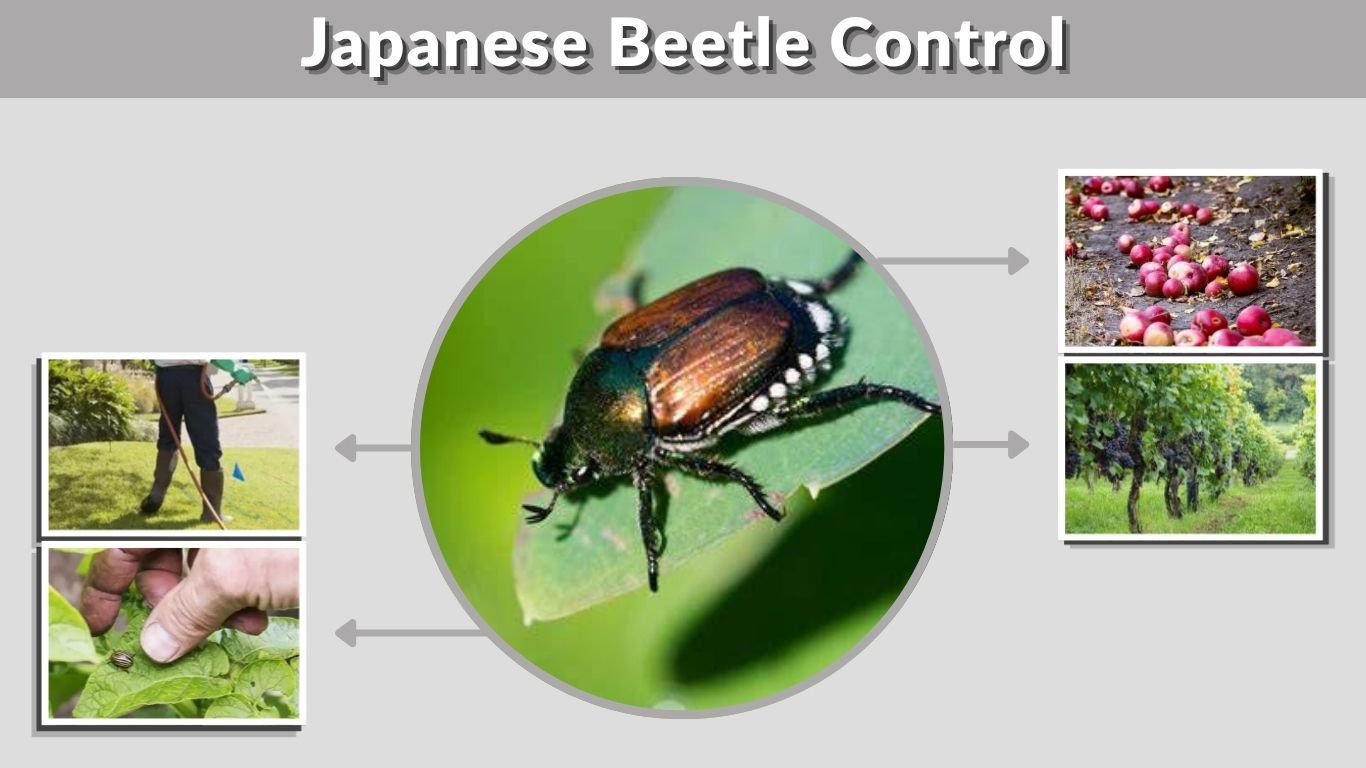
Japanese beetle control is difficult because this pest attacks both plants and lawns. Adult beetles chew leaves, flowers, and fruit, while the larvae damage turf roots underground. A good control plan should not rely on one spray or trap. Instead, it should combine monitoring, hand removal, plant protection, lawn care, grub control, and careful treatment timing.
Understanding Japanese Beetle Problems
Japanese beetles are small, metallic green insects with copper-brown wing covers. They may look attractive, but they are destructive garden and lawn pests. The adult beetles feed above ground, while the immature stage, called a grub, lives in the soil.
Japanese beetles are especially frustrating because they gather in groups. A few beetles feeding on a rose, grapevine, or fruit tree can attract more beetles. This is why one plant may suddenly look covered while nearby plants have little damage.
Why Control Requires Two Strategies
To manage Japanese beetles properly, you need to think about two different pest stages. Adult beetles damage leaves, flowers, and fruit in summer. Grubs damage lawns by feeding on grass roots.
Adult control does not automatically solve grub problems. Grub control does not stop adult beetles from flying in from nearby yards. That is why the best Japanese beetle control plan uses several methods together.
How to Identify Japanese Beetle Damage
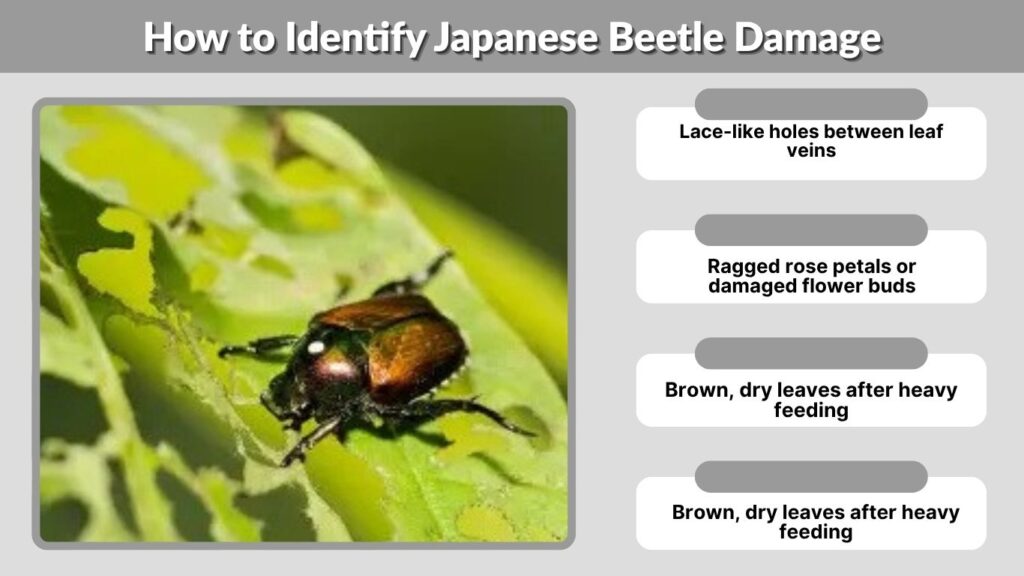
Japanese beetle damage is usually easy to spot once you know the pattern. Adults feed on the soft tissue between leaf veins. This creates a thin, lace-like look called skeletonizing. Flowers may look ragged, torn, or chewed.
Roses, grapes, raspberries, beans, apple trees, cherry trees, plum trees, linden trees, and hibiscus are common targets. Beetles often feed on sunny, upper parts of plants first.
Common Signs on Plants
Look for these symptoms during summer:
- Lace-like holes between leaf veins
- Ragged rose petals or damaged flower buds
- Beetles clustered together on leaves or flowers
- Brown, dry leaves after heavy feeding
- Chewed fruit skin on grapes, berries, or tree fruit
- Sudden damage on the sunniest parts of the plant
Japanese beetles usually cause cosmetic damage on healthy, mature plants. However, young plants, stressed plants, and heavily defoliated plants may suffer more serious injury.
Japanese Beetle Life Cycle
Knowing the life cycle helps you choose the right control method. Japanese beetles usually have one generation per year in many areas. Adults are most active in summer, while grubs spend much of their time in the soil.
| Stage | Location | Main Concern |
| Egg | Soil | No visible damage |
| Grub/Larva | Lawn and soil | Feeds on grass roots |
| Pupa | Soil | Transitional stage |
| Adult | Plants and trees | Chews leaves, flowers, and fruit |
When Adults Appear
Adult beetles commonly emerge in late June or early July, depending on the region and weather. They are often most active in July and August. During this time, gardeners may see beetles on roses, grapes, fruit trees, and vegetables.
Adults can fly from nearby areas, so seeing beetles on your plants does not always mean the grubs are in your lawn. This is an important point because many people treat the lawn without checking for grubs first.
Natural Japanese Beetle Control Methods
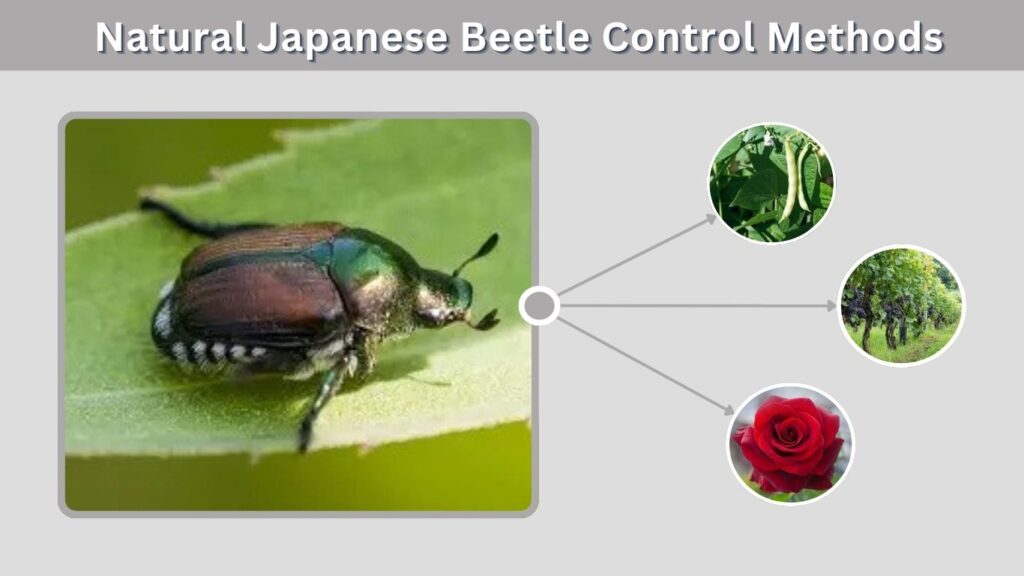
Natural Japanese beetle control works best when you start early. Waiting until hundreds of beetles are feeding usually makes control harder. The goal is to reduce beetle numbers before they gather and attract more beetles.
Handpicking Beetles
Handpicking is one of the simplest and most effective natural methods for small gardens. Go out in the early morning when beetles are slower. Hold a bucket of soapy water under the beetles and shake or tap the plant. The beetles will drop into the water.
This method is especially useful for:
- Roses
- Grapevines
- Beans
- Berry plants
- Small fruit trees
- Hibiscus and other ornamentals
Repeat the process daily during peak beetle activity. It may seem simple, but regular removal can reduce feeding pressure and slow down group buildup.
Use Physical Barriers
Row covers can protect vegetables and small plants from adult beetles. They work by blocking beetles before they reach the crop. However, do not keep row covers on plants that need pollination unless you manage timing carefully.
For example, row covers can be useful for beans or young vegetable plants. For flowering crops, remove covers when pollinators are needed.
Remove Beetles Early
Japanese beetles are social feeders. When a plant is already being eaten, more beetles may arrive. Removing the first beetles early can help prevent larger groups from forming.
Organic Japanese Beetle Control Options
Organic Japanese beetle control can reduce damage, but it still requires timing and realistic expectations. Organic products are not magic fixes. They work best as part of a larger management plan.
Neem Oil for Japanese Beetle Control
Neem oil may help reduce feeding when used correctly. It is usually more helpful on small to moderate infestations than on severe outbreaks. Apply it according to label directions and avoid spraying during hot sun or when pollinators are active on flowers.
Neem oil works best when coverage is thorough. If beetles are feeding deep inside flowers or high in trees, control may be limited.
Insecticidal Soap
Insecticidal soap can affect insects when sprayed directly, but it has little lasting effect once dry. This means it may help with direct contact but is not usually enough for large Japanese beetle populations.
Use insecticidal soap carefully on sensitive plants. Test a small area first if you are unsure how the plant will respond.
Home Remedies to Be Careful With
Many home remedies for Japanese beetle control are shared online, but not all are safe for plants. Strong dish soap mixtures, vinegar sprays, garlic sprays, or homemade chemical blends may burn leaves or harm beneficial insects.
Safer home-based methods include:
- Handpicking into soapy water
- Removing damaged flowers that attract beetles
- Covering vulnerable plants
- Keeping plants healthy with proper watering
- Avoiding unnecessary broad-spectrum sprays
Japanese Beetle Control on Roses
Roses are one of the most common plants attacked by Japanese beetles. Beetles chew petals, buds, and leaves, making blooms look ragged and unattractive.
How to Protect Roses
Start checking roses as soon as adult beetles appear. Early morning handpicking is very useful because beetles are slower and easier to remove. Remove heavily damaged flowers because they can attract more beetles.
For rose protection:
- Inspect plants daily during peak season
- Drop beetles into soapy water
- Remove damaged blooms
- Avoid placing beetle traps near roses
- Use labeled sprays only when necessary
- Avoid spraying open blooms when bees are active
If you use neem oil or another labeled product, follow the label carefully. Roses can be sensitive to sprays during hot weather.
Japanese Beetle Control on Fruit Trees and Grapes
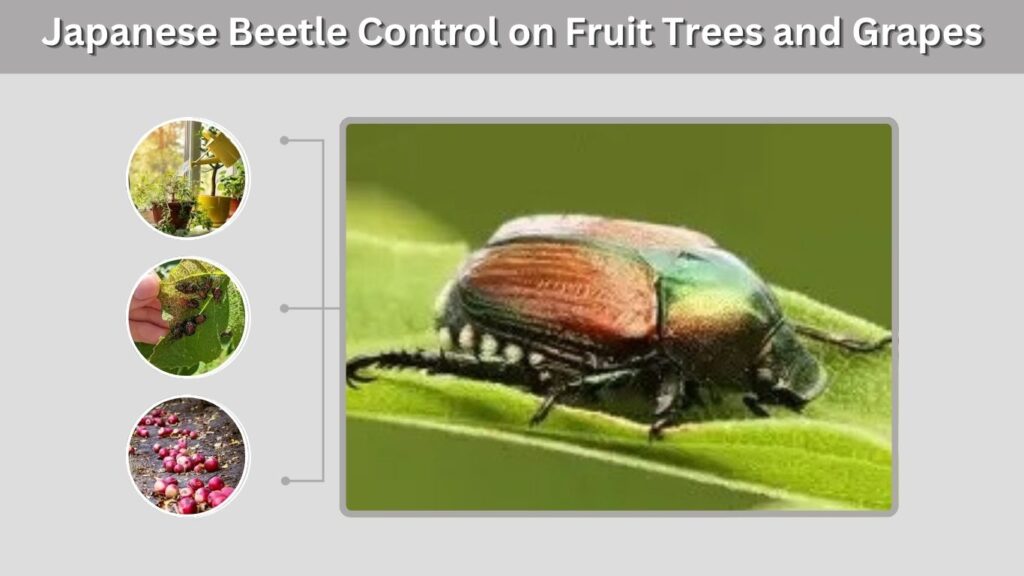
Fruit trees and grapevines can suffer heavy feeding when beetle numbers are high. Grapes are especially attractive, and beetles may skeletonize leaves quickly.
Managing Beetles on Edible Plants
When controlling Japanese beetles on fruit trees, grapes, raspberries, or vegetables, always check whether a product is labeled for edible crops. Pay attention to the pre-harvest interval, which tells you how long to wait before picking fruit after treatment.
For edible plants, focus on prevention and early action:
- Monitor plants often during summer
- Handpick beetles from reachable branches
- Use netting where practical
- Remove overripe or damaged fruit
- Choose crop-safe products only
- Follow all harvest waiting periods
Large trees are harder to protect because sprays may not reach the full canopy. In many home gardens, protecting young trees and small fruit plants is more practical than trying to treat large mature trees.
Japanese Beetle Grub Control in Lawns
Japanese beetle grubs live underground and feed on grass roots. When grub numbers are high, lawns may develop brown patches. The turf may pull up easily because the roots have been eaten.
Check for Grubs Before Treating
Do not apply grub control just because you see adult beetles on flowers. Adults can fly in from other yards. Instead, inspect the lawn.
Cut and lift a small section of turf near damaged areas. Look in the top few inches of soil for white, C-shaped grubs with brown heads. If you find several grubs and the grass is weak, treatment may be needed.
When to Apply Grub Control
Timing depends on the product and local climate. Many preventive grub-control products work best when young grubs are active near the soil surface. Curative products may be used when active grubs are already present, but they must be chosen and timed correctly.
Because timing varies by region, follow local extension guidance and the product label. Watering after application may be required for some products to move into the root zone.
Biological Control: Nematodes and Milky Spore
Biological control can be useful, but results vary. These methods usually work against the grub stage rather than adult beetles on plants.
Beneficial Nematodes
Beneficial nematodes are microscopic organisms that attack soil-dwelling insects. Some types are used for white grub control. They need moist soil and proper temperatures to survive and work well.
Apply nematodes in the evening or during cloudy weather, then keep the soil moist according to product directions. Dry soil and hot sun can reduce their effectiveness.
Milky Spore
Milky spore is used against Japanese beetle grubs, but it is not a quick fix. It may take time to build up in the soil, and performance can vary depending on soil conditions, climate, and whether the grubs are actually Japanese beetles.
Milky spore is also specific. If your lawn has other white grub species, it may not control them well. Correct identification matters before relying on this method.
Chemical Control of Japanese Beetles
Chemical control may be needed when beetle numbers are high or valuable plants are at risk. However, sprays should be used carefully because they can harm pollinators and beneficial insects.
Choosing the Right Product
Products for adult Japanese beetles are different from products for grubs. A spray for beetles on roses may not control grubs in the lawn. A grub-control product in the soil will not stop adult beetles from flying onto your plants.
Before applying any insecticide:
- Identify whether you are treating adults or grubs
- Confirm the product is labeled for the plant or lawn area
- Read pollinator warnings
- Avoid spraying flowers when bees are active
- Follow the exact rate and timing on the label
Systemic products may move within plant tissue, but some can pose risks to pollinators if used on flowering plants. Use caution and follow local guidance.
Should You Use Japanese Beetle Traps?
Japanese beetle traps are popular, but they can create problems when placed in the wrong location. These traps attract beetles with scent lures. In some cases, they may bring more beetles into the yard than they catch.
If you use traps, place them far away from the plants you want to protect. Do not put traps beside roses, grapes, fruit trees, or vegetable gardens.
Best Use of Traps
Traps may be useful for monitoring or for limited control in specific situations. They are usually not the best main control method for a home garden with established beetle pressure.
Best Overall Japanese Beetle Control Plan
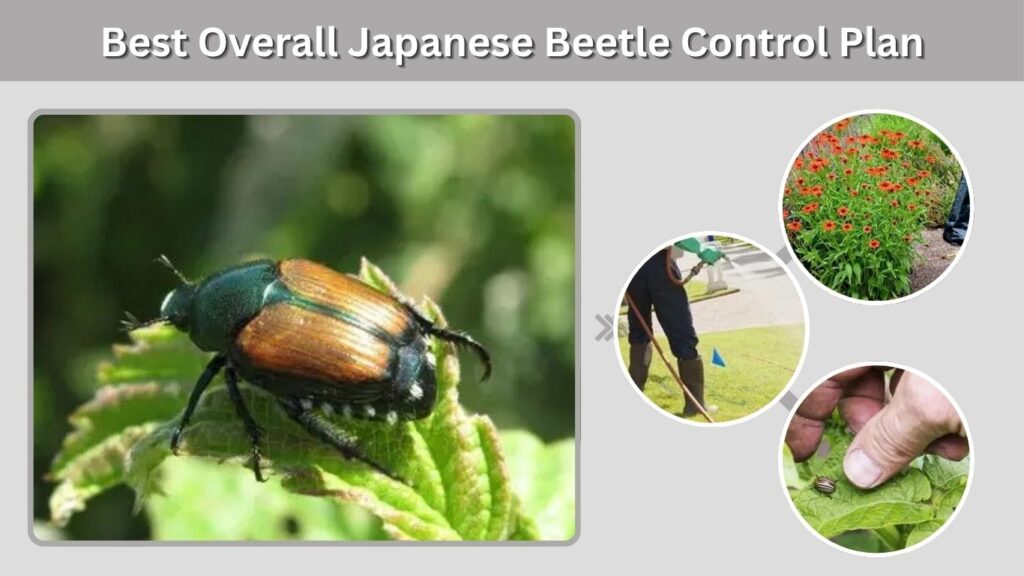
The best way to control Japanese beetles is to combine several methods instead of relying on one solution. A balanced plan protects plants, reduces beetle numbers, and manages grubs only when needed.
A practical control plan includes:
- Monitor vulnerable plants in early summer
- Handpick beetles before groups build up
- Protect small crops with row covers or netting
- Avoid placing traps near valuable plants
- Check lawns before applying grub control
- Use neem, nematodes, milky spore, or insecticides only when appropriate
- Choose less attractive plants when redesigning landscapes
Japanese beetle control is not about eliminating every beetle. It is about reducing damage to a manageable level while protecting plants, lawns, pollinators, and the wider garden ecosystem.
FAQs
What is the best way to control Japanese beetles?
The best way to control Japanese beetles is to combine early monitoring, handpicking, plant protection, and selective treatments. For small gardens, dropping beetles into soapy water works well. For lawns, check for grubs before treating. Avoid relying only on traps because they may attract more beetles.
Does grub control kill Japanese beetles?
Grub control targets the larval stage in the soil, not adult beetles feeding on plants. It may reduce future beetle emergence from your lawn, but it will not stop adult beetles from flying in from nearby areas. Adult plant damage needs separate control methods.
Does neem oil control Japanese beetles?
Neem oil may help reduce Japanese beetle feeding when applied correctly, especially on smaller plants or moderate infestations. It is not always enough for heavy outbreaks. Apply it according to label directions, avoid hot sun, and do not spray open flowers when pollinators are active.
How do you control Japanese beetles on roses?
Check roses daily during peak beetle season. In the morning, shake or pick beetles into soapy water. Remove damaged blooms because they can attract more beetles. Avoid placing traps near roses. If using a spray, choose one labeled for roses and protect pollinators.
When should I apply grub control for Japanese beetles?
The best timing depends on your region, product type, and grub stage. Preventive products usually work best when young grubs are active near the soil surface. Before applying anything, inspect the lawn and confirm grubs are present. Always follow local extension advice and product label directions.