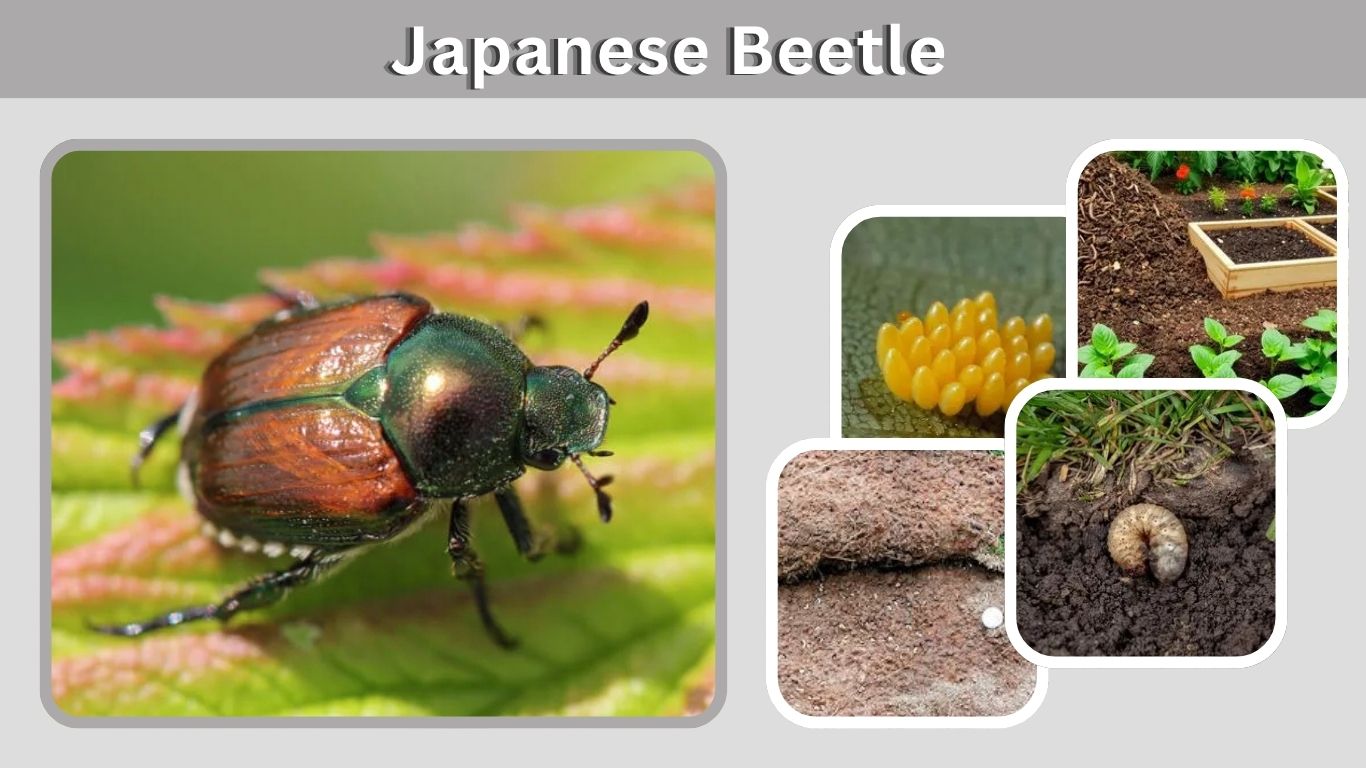
The Japanese beetle is one of the most frustrating garden and lawn pests because it damages plants in two different stages of life. Adult beetles chew leaves, flowers, and fruit, while the larvae, called grubs, feed underground on grass roots. For gardeners, the key to managing this pest is understanding what it looks like, when it appears, and which control methods actually help.
What Is a Japanese Beetle?
The Japanese beetle is an invasive insect known for attacking gardens, lawns, orchards, and ornamental landscapes. Its scientific name is Popillia japonica. Although the adult beetle is small, it can cause noticeable damage when many beetles gather on the same plant.
Adult Japanese beetles are easy to recognize once you know what to look for. They are usually metallic green with copper-brown wing covers. Along the sides of the body, they have small white tufts of hair. These markings help separate them from many other beetles found in gardens.
Why This Pest Is a Serious Problem
Japanese beetles are not picky feeders. Adults can feed on hundreds of plants, including roses, grapes, beans, fruit trees, ornamental shrubs, and many landscape plants. This wide feeding range makes them difficult to manage with one simple solution.
The pest is also troublesome because damage happens both above and below ground. Adults attack leaves and flowers during summer, while larvae live in the soil and feed on turf roots. That means a homeowner may see garden damage and lawn damage from the same insect at different times of the year.
How to Identify Japanese Beetle Damage
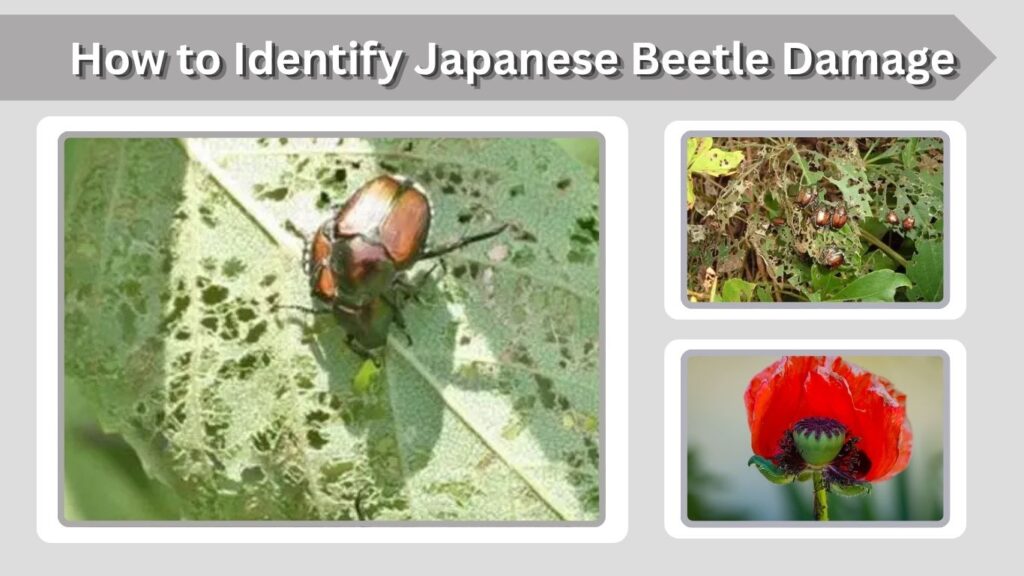
Japanese beetle damage often looks different from damage caused by caterpillars, slugs, or leaf diseases. The adults usually chew the soft tissue between leaf veins. This leaves behind a thin, lace-like pattern known as skeletonizing.
Damage on Leaves and Flowers
On leaves, Japanese beetles often create a webbed or skeleton-like appearance. The veins remain visible, but the green tissue between them is eaten away. Heavy feeding can make leaves turn brown and dry.
On flowers, the damage may look more ragged. Roses are especially attractive to Japanese beetles. The beetles may chew petals, buds, and open blooms, leaving flowers torn and unattractive.
Common signs include:
- Lace-like holes between leaf veins
- Ragged flower petals
- Beetles clustered in groups on sunny parts of plants
- Brown, dry leaves after heavy feeding
- Damaged fruit skins on grapes, berries, or tree fruit
Damage in Lawns
Japanese beetle larvae are white grubs that live in the soil. They feed on grass roots, which weakens the turf. A damaged lawn may develop brown patches, especially in late summer or early fall.
One common sign of grub damage is turf that pulls up easily, almost like a loose carpet. This happens because the roots have been eaten away. Birds, raccoons, skunks, or other animals may also dig into the lawn while searching for grubs.
Japanese Beetle Life Cycle
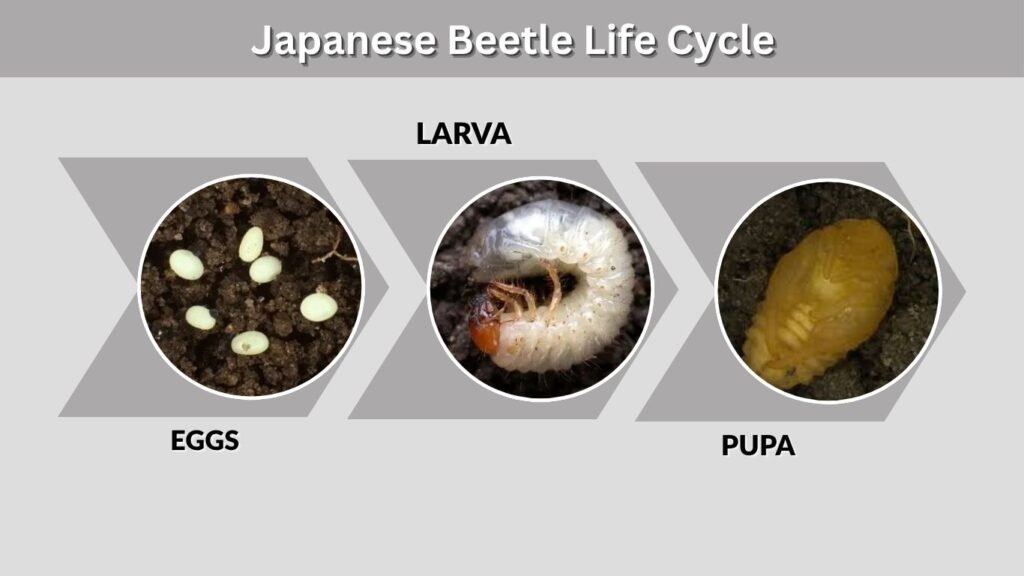
Understanding the life cycle helps you choose the right control method at the right time. Treating adults and treating grubs are not the same thing. Each stage requires a different approach.
Japanese beetles usually have one generation per year in many regions. Adults are most visible in summer, while larvae spend much of their life underground.
| Life Stage | Where It Happens | Main Damage |
| Egg | Soil | No visible plant damage |
| Larva/Grub | Underground near grass roots | Root feeding and brown lawn patches |
| Pupa | Soil | Transitional stage |
| Adult | Plants, flowers, fruit, and shrubs | Leaf skeletonizing and flower damage |
Egg Stage
Female beetles lay eggs in the soil, often in grassy areas with enough moisture. Moist soil can support egg survival, which is one reason well-watered lawns may become attractive egg-laying sites.
Grub Stage
After eggs hatch, the larvae begin feeding on roots. These grubs are creamy white, C-shaped, and have brown heads. As they grow, they damage turf by chewing the root system.
Grubs usually move deeper into the soil during cold weather and return closer to the root zone when conditions become favorable again.
Adult Stage
Adults emerge from the soil and begin feeding on plants. They often gather in groups because feeding beetles can attract more beetles. This is why damage may appear severe on one plant while nearby plants are less affected.
Plants Japanese Beetles Commonly Attack
Japanese beetles feed on many plants, but some are more attractive than others. Gardeners often notice the worst damage on roses, grapes, fruit trees, and certain ornamental trees.
Highly Attractive Plants
Some plants seem to draw beetles quickly during peak season. These include:
- Roses
- Grapes
- Raspberries
- Beans
- Apples
- Cherries
- Plums
- Linden trees
- Birch trees
- Hibiscus
If your garden includes several preferred plants, regular inspection is important during summer. Early action can prevent small beetle groups from becoming large feeding clusters.
Less Attractive Plant Choices
One long-term strategy is to choose plants that Japanese beetles are less likely to attack. This does not guarantee a beetle-free garden, but it can reduce yearly damage.
When planning a landscape, mix vulnerable plants with more resistant choices. Avoid planting large groups of highly attractive plants in one area, especially near lawns where grubs may develop.
How to Get Rid of Japanese Beetles Naturally
Natural control works best when you start early and stay consistent. A few beetles can be managed by hand, but large infestations require a broader plan.
Handpicking Beetles
For small gardens, handpicking is one of the simplest and most effective methods. The best time is early morning when beetles are slower and easier to remove.
Hold a container of soapy water under the beetles and gently shake or tap the plant. The beetles will drop into the water and drown. Repeat this daily during peak activity.
This method works especially well for roses, beans, grapes, and small fruit plants.
Use Row Covers Carefully
Floating row covers can protect vegetables and small plants from adult beetles. They work by creating a physical barrier. However, row covers should not be used when plants need pollination unless they are removed at the right time.
For crops like beans, covers may be helpful during the most active beetle period. For flowering crops that need bees, timing matters.
Encourage a Healthy Garden Ecosystem
A balanced garden can support birds, beneficial insects, and soil organisms that help reduce pest pressure. This does not eliminate Japanese beetles completely, but it can make outbreaks easier to manage.
Helpful practices include:
- Avoiding unnecessary broad-spectrum insecticides
- Growing a diversity of plants
- Keeping plants healthy with proper watering
- Removing heavily damaged flowers and leaves
- Cleaning up fallen fruit that may attract pests
Should You Use Japanese Beetle Traps?
Japanese beetle traps are common in garden centers, but they should be used with caution. These traps use scents to attract beetles. The problem is that they may attract more beetles into your yard than they actually capture.
If traps are used, they should be placed far away from valuable plants, not in the middle of the garden. For many homeowners, handpicking and targeted plant protection may be more useful than placing traps near vulnerable plants.
When Traps May Be Useful
Traps may help in limited monitoring situations or when placed at a distance from the main garden. They are not usually the best stand-alone solution for protecting roses, grapes, or fruit trees.
Managing Japanese Beetle Grubs in Lawns
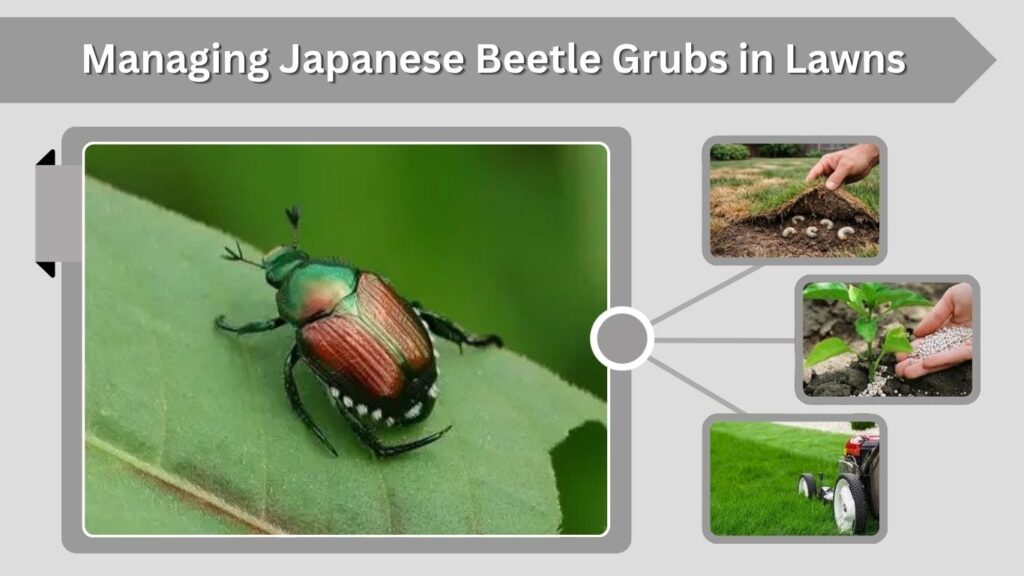
Adult beetles are only half of the problem. If your lawn has brown patches and pulls up easily, grubs may be feeding on the roots. Managing grubs requires a different strategy than managing adults on plants.
Check Before Treating
Do not treat the lawn automatically just because you see adult beetles in the garden. Adult beetles can fly in from nearby areas, so the grubs may not be in your lawn.
To check for grubs, cut and lift a small section of turf in a damaged area. Look in the top few inches of soil for C-shaped white grubs. If you find several grubs in a small area and the turf is weak, treatment may be justified.
Lawn Care That Reduces Grub Problems
Healthy turf can tolerate some grub feeding. Good lawn care helps reduce visible damage and supports root recovery.
Useful practices include:
- Watering deeply but not constantly
- Mowing at the recommended height for your grass type
- Avoiding excess nitrogen fertilizer
- Improving soil health
- Repairing thin turf before weeds take over
Overly moist soil can favor egg survival, so avoid keeping the lawn constantly wet during beetle egg-laying periods.
Organic and Chemical Control Options
Control options should be chosen carefully because some products can affect pollinators and beneficial insects. Always read and follow the label before using any pesticide.
Organic Options
Neem-based products may help reduce adult feeding when used correctly, especially on smaller plants. Insecticidal soaps may affect beetles only when sprayed directly, so coverage is important.
Beneficial nematodes are sometimes used against grubs in the soil. They must be applied under the right moisture and temperature conditions to work well. Milky spore is another biological option used for Japanese beetle grubs, but results can vary by climate and soil conditions.
Chemical Options
Some insecticides can control adults or grubs, but timing is critical. Products for adult beetles may not control grubs, and grub-control products may not stop adult feeding on flowers.
Avoid spraying open flowers when bees and other pollinators are active. If chemical control is needed, choose the least disruptive option and apply it according to label directions.
Prevention Tips for Next Season
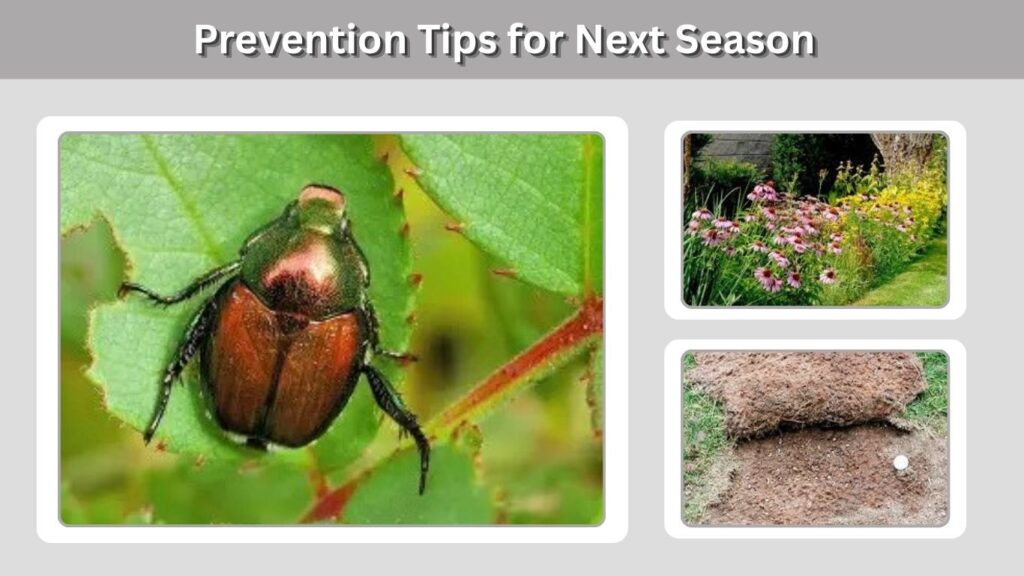
Japanese beetle management is easier when you plan before the outbreak becomes severe. Prevention does not mean you will never see beetles, but it can reduce damage.
Practical Prevention Steps
Use a combination of plant selection, monitoring, lawn care, and early removal.
Helpful steps include:
- Inspect susceptible plants in early summer
- Remove beetles before large groups form
- Choose less attractive plants for new landscaping
- Keep turf healthy but avoid overwatering
- Check lawns for grubs before applying treatment
- Place traps away from valued plants if you use them
- Avoid broad insecticides that harm beneficial insects
The best approach is integrated pest management. This means using several methods together instead of relying on one product or one quick fix.
Common Mistakes to Avoid
Many gardeners make Japanese beetle problems worse by reacting too late or using the wrong method.
Relying Only on Traps
Traps may bring more beetles into the area. They should not be placed beside roses, grapes, or other plants you want to protect.
Spraying Too Often
Repeated spraying can harm beneficial insects and pollinators. It may also fail if the product is not designed for the right life stage.
Ignoring the Grub Stage
If your lawn has root damage, removing adults from flowers will not solve the turf problem. Grub inspection and proper timing are important.
Treating Without Confirming the Pest
Brown lawn patches can come from drought, disease, pet urine, or other insects. Always check for grubs before choosing a grub-control product.
FAQs
What do Japanese beetles look like?
Adult Japanese beetles are small, shiny insects with metallic green bodies and copper-brown wing covers. They also have small white hair tufts along the sides of the abdomen. These markings make them easier to identify compared with many other garden beetles.
Are Japanese beetles harmful to plants?
Yes, Japanese beetles can seriously damage plants when many adults feed together. They chew leaf tissue between the veins, creating a lace-like or skeletonized appearance. They also damage flowers and fruit, especially roses, grapes, berries, and some fruit trees.
Do Japanese beetles damage lawns?
Yes, the larvae can damage lawns. Japanese beetle grubs live in the soil and feed on grass roots. When the root system is weakened, turf may turn brown and pull up easily. Animals may also dig into the lawn while searching for grubs.
What is the best natural way to control Japanese beetles?
For small infestations, handpicking beetles into soapy water is one of the best natural methods. It works best in the early morning when beetles are slower. For larger problems, combine handpicking with plant protection, healthy lawn care, and grub monitoring.
Should I use Japanese beetle traps in my garden?
Use traps carefully. They can attract beetles from surrounding areas and may increase damage if placed near valuable plants. If you use them, place them far away from roses, grapes, fruit trees, and other plants you want to protect.