
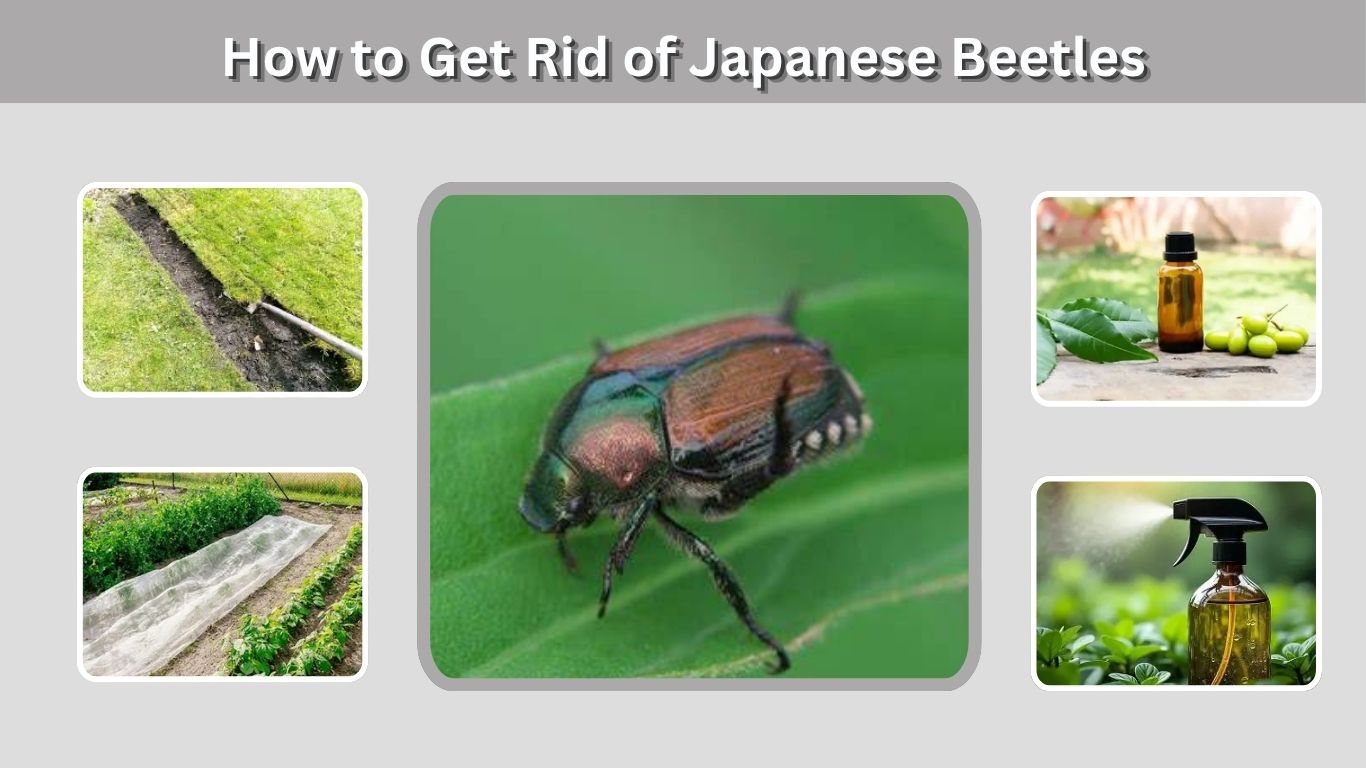
Japanese beetles can turn healthy roses, fruit trees, lawns, and garden plants into damaged, lace-like foliage in a short time. The best way to control them is not one single spray or trap. It is a steady plan that targets adult beetles on plants and grubs in the soil. With the right timing, you can reduce damage and protect your garden naturally.
What Japanese Beetles Do to Plants
Japanese beetles are small, metallic green insects with copper-colored wing covers. Adult beetles usually feed above ground, while their larvae, called grubs, live in the soil and feed on grass roots. This is why a Japanese beetle problem can show up in two different places: chewed plants and damaged lawns.
Adults often eat the soft tissue between leaf veins. This creates a skeletonized, lace-like look on leaves. They also feed on flowers, fruits, shrubs, vegetables, and ornamental plants. Roses, grapes, beans, raspberries, fruit trees, and many landscape plants can attract them.
The grubs cause a different kind of problem. They live under the lawn and feed on turf roots. When grub numbers are high, grass may turn brown, loosen from the soil, or peel back easily because the roots are damaged.
Signs You Have Japanese Beetles
You may have Japanese beetles if you notice:
- Metallic green and copper beetles gathering on leaves or flowers
- Leaves with a lace-like or skeletonized appearance
- Beetles feeding in groups during warm summer days
- Damaged roses, grapes, beans, fruit trees, or ornamental plants
- Brown lawn patches caused by root-feeding grubs
- Birds or animals digging in turf for grubs
Best Way to Get Rid of Japanese Beetles
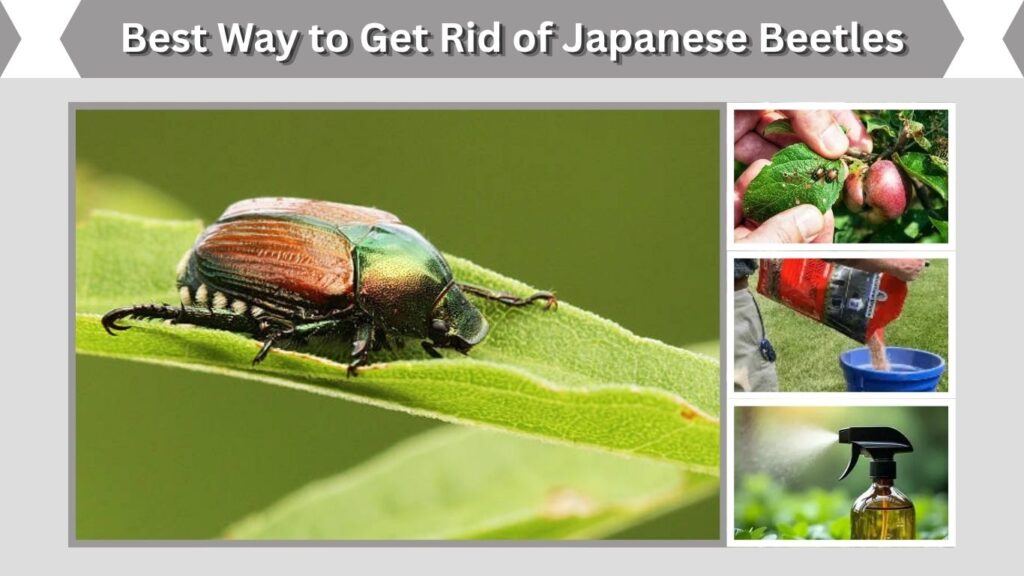
The best way to get rid of Japanese beetles is to use an integrated approach. That means combining hand removal, plant protection, natural sprays, lawn grub control, and smart prevention. Trying only one method often gives weak results because Japanese beetles have both an adult stage and a grub stage.
Adults are easiest to manage when they first appear. Grubs are easier to manage later in the season when they are young and close to the surface. If you control both stages, you have a better chance of lowering future beetle pressure.
Start Early in the Season
Begin checking plants in late spring or early summer. Japanese beetles often arrive in waves, and the first beetles can attract more beetles to the same plants. Removing the early arrivals helps slow the problem before it becomes severe.
Check your most vulnerable plants every morning. Roses, grapevines, beans, hibiscus, fruit trees, and raspberries should be inspected often during beetle season.
Remove Beetles by Hand
Hand-picking is one of the simplest and most effective ways to control small or moderate infestations. Japanese beetles are slower in the morning, especially when temperatures are cooler. Place a bucket of soapy water under the affected plant and gently knock the beetles into it.
Do this daily when beetles are active. It may seem basic, but it works well because it immediately removes feeding adults before they can attract more beetles or lay eggs.
Natural Ways to Get Rid of Japanese Beetles
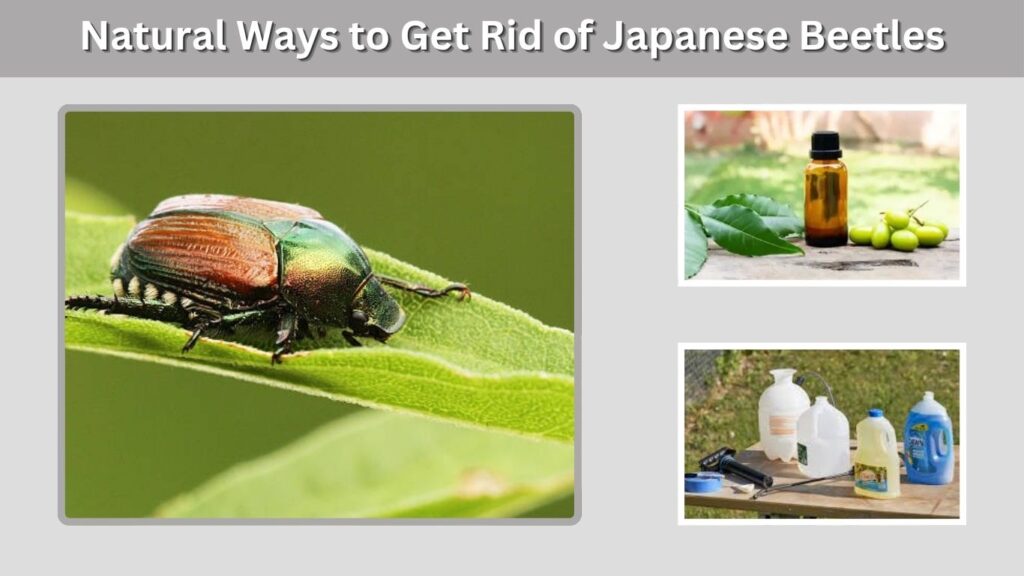
Many gardeners prefer natural control because Japanese beetles often feed on flowering plants where pollinators are also active. Natural methods require consistency, but they can reduce damage without relying heavily on harsh chemicals.
Use Neem Oil Carefully
Neem oil may help reduce feeding when used correctly. It works best on young or early infestations and must be applied according to the product label. Spray in the evening or early morning to reduce risk to bees and other beneficial insects.
Avoid spraying open flowers when pollinators are active. Neem oil is not a one-time fix, so repeated applications may be needed after rain or heavy beetle activity.
Try Insecticidal Soap for Direct Contact
Insecticidal soap can help when sprayed directly on beetles. It does not usually leave long-lasting protection, so it works best when you can see the beetles and treat them directly. Always test a small area of the plant first because some leaves can be sensitive.
Follow the label carefully and avoid spraying during hot, sunny conditions. Early morning or evening is usually safer for plants.
Protect Plants with Physical Barriers
For vegetables, young plants, and smaller ornamentals, row covers or fine netting can help keep beetles away. This works best before beetles arrive or when plants are not flowering.
Do not cover plants that need pollination unless you remove the cover during pollination time. For fruiting crops, timing matters.
How to Get Rid of Japanese Beetles on Roses
Roses are one of the most common plants damaged by Japanese beetles. The flowers and soft leaves attract adults, and the damage can make rose bushes look weak and ragged.
The safest approach is to inspect roses daily during peak beetle season. Knock beetles into soapy water in the morning, remove damaged blooms, and avoid letting beetles gather in large groups.
Rose Control Checklist
- Check roses every morning during beetle season
- Remove beetles by hand before they gather
- Drop beetles into a bucket of soapy water
- Prune badly damaged flowers when needed
- Use neem oil only according to label directions
- Avoid spraying open blooms when bees are active
- Keep rose bushes healthy with proper watering and pruning
Healthy roses can often recover from light to moderate feeding. Severe damage needs faster action, especially if beetles are stripping blooms and leaves daily.
How to Get Rid of Japanese Beetles in the Garden
Garden control should focus on reducing feeding pressure without harming helpful insects. Japanese beetles may attack beans, corn silk, basil, grapes, berries, fruit trees, and many ornamentals.
Walk through the garden each morning and remove beetles from high-value plants first. If you have limited time, focus on the plants showing the worst damage or the plants you most want to protect.
| Control Method | Best For | Notes |
|---|---|---|
| Hand-picking | Small to medium infestations | Most useful in the morning when beetles are slow |
| Neem oil | Early feeding damage | Use carefully and avoid pollinator activity times |
| Insecticidal soap | Direct beetle contact | Must hit beetles directly to work well |
| Row covers | Vegetables and young plants | Remove when plants need pollination |
| Nematodes | Lawn grub control | Works on grubs in soil, not adult beetles |
| Milky spore | Long-term grub suppression | Works slowly and is more useful where Japanese beetles are established |
How to Get Rid of Japanese Beetle Grubs
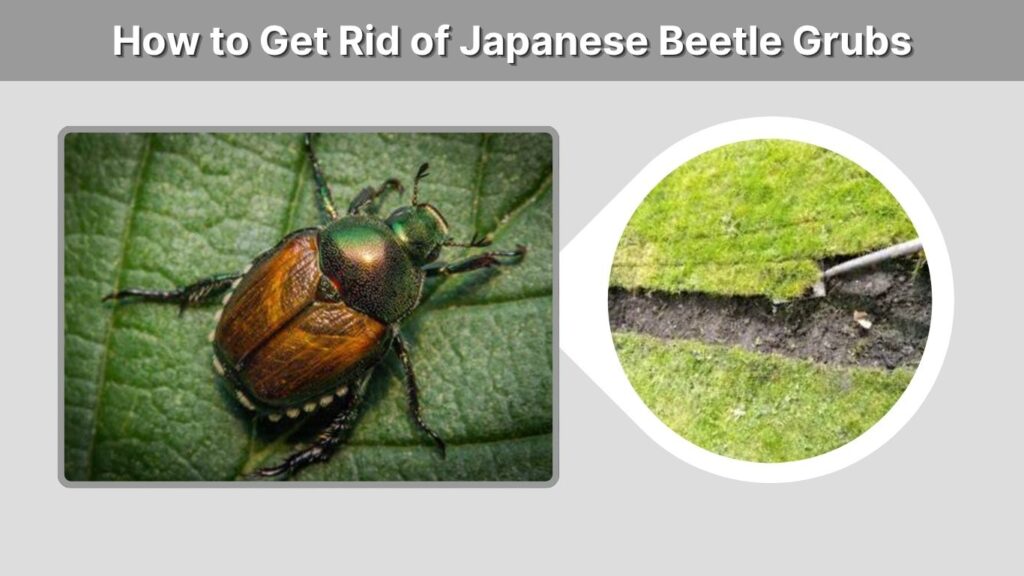
Adult beetles are only part of the problem. Grubs live in the soil for much of the year and feed on grass roots. If your lawn has brown patches and you also see many adult beetles nearby, grub control may be needed.
Before treating, check whether grubs are actually present. Cut and lift a small section of turf near damaged areas and look in the soil and roots. If you find many white, C-shaped grubs, lawn treatment may help.
Natural Grub Control Options
Beneficial nematodes are microscopic organisms that attack grubs in the soil. They are living products, so they must be handled carefully. Apply them according to package directions, usually when soil moisture and temperature are suitable.
Milky spore is another biological option for Japanese beetle grubs. It can help suppress grub populations over time, but it works slowly and may take years to build up in the soil. It is not a quick fix for adults already eating your plants.
Should You Use Japanese Beetle Traps?
Japanese beetle traps can catch many beetles, but they can also attract more beetles into the area. That makes them risky in small home gardens if placed near roses, vegetables, or fruit plants.
Traps are better for monitoring beetle activity than for protecting a prized plant. If you use one, place it far away from the plants you want to protect and empty it often. A trap placed beside your roses may make the problem worse by drawing beetles directly to the garden.
How to Get Rid of Japanese Beetles in the House
Japanese beetles are mostly outdoor plant pests. If you see them inside, they likely entered through open doors, windows, gaps, or carried-in plants. They do not usually infest homes the way pantry pests or fabric pests do.
Vacuum or collect beetles indoors and dispose of them. Seal gaps, repair screens, and check plants before bringing them inside. Avoid using outdoor garden sprays inside the home unless the product label clearly allows indoor use.
What Not to Do When Fighting Japanese Beetles
Some methods sound helpful but can create new problems. Avoid shortcuts that damage plants, harm pollinators, or attract more beetles.
Do not rely only on traps near your garden. Do not spray flowers during peak bee activity. Do not overuse broad-spectrum insecticides without considering beneficial insects. Do not treat the entire lawn unless grub numbers justify it.
Also, do not expect permanent elimination. Japanese beetles can fly in from nearby areas, so the goal is management, not total eradication.
Prevention Tips for Long-Term Control
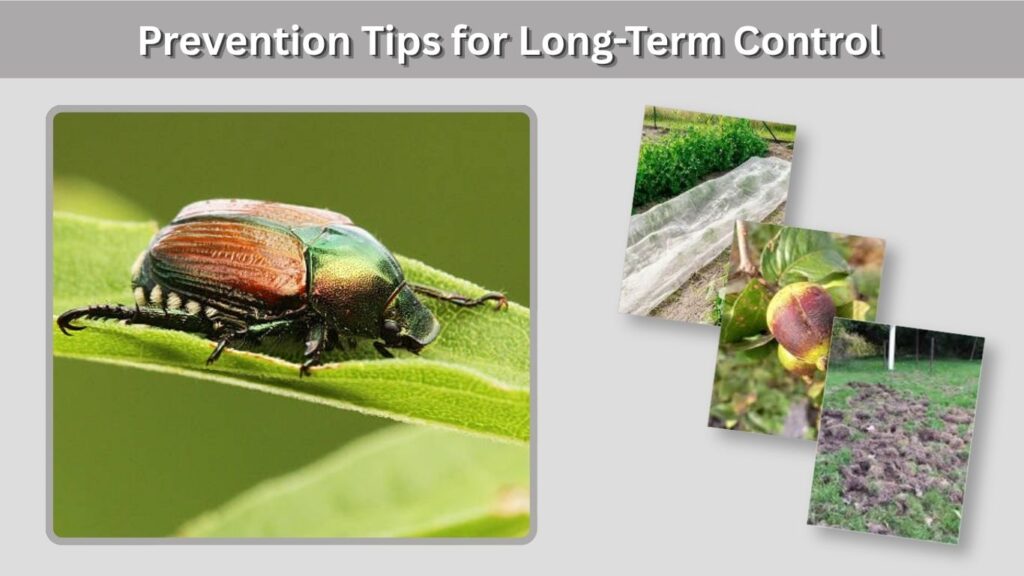
Long-term control is easier when your garden is less attractive and less vulnerable to beetle damage. You may not be able to remove every favorite plant, but you can reduce risk with smarter maintenance.
Build a Beetle-Resistant Plan
- Keep plants healthy with proper watering and pruning
- Remove damaged leaves and overripe fruit
- Monitor favorite plants early in summer
- Use row covers on vulnerable vegetables when practical
- Treat grubs only when they are present at damaging levels
- Choose less attractive plants in areas with repeated problems
- Coordinate control with nearby neighbors when possible
Japanese beetle management improves when nearby yards also reduce grubs and adult beetles. Since beetles move between properties, a neighborhood approach can be more effective than treating one garden alone.
FAQs
What is the fastest way to get rid of Japanese beetles?
The fastest method is hand-picking adult beetles into soapy water early in the morning. This removes active beetles immediately and helps stop them from attracting more beetles to the same plant. For heavy infestations, combine hand removal with careful neem oil or insecticidal soap use.
How do I get rid of Japanese beetles naturally?
Use daily hand-picking, row covers, beneficial nematodes for grubs, and neem oil when appropriate. Natural control works best when started early, before beetles gather in large numbers. Focus on protecting your most vulnerable plants and reducing future grub populations in the soil.
Does neem oil get rid of Japanese beetles?
Neem oil may help reduce Japanese beetle feeding, especially when used early and applied correctly. It is not an instant cure and may need repeat applications. Always follow the product label, avoid spraying open flowers, and apply when pollinators are not actively visiting plants.
How do I get rid of Japanese beetles on roses?
Check roses every morning and knock beetles into a bucket of soapy water. Remove badly damaged blooms, keep the plant healthy, and use neem oil carefully if feeding continues. Avoid spraying open rose flowers during pollinator activity because bees and other beneficial insects may be affected.
Can Japanese beetles be removed permanently?
Japanese beetles are difficult to remove permanently because adults can fly in from nearby areas and grubs may develop in surrounding lawns. The realistic goal is steady management. Controlling adults, reducing grubs, avoiding poorly placed traps, and monitoring plants every season can greatly reduce damage.
