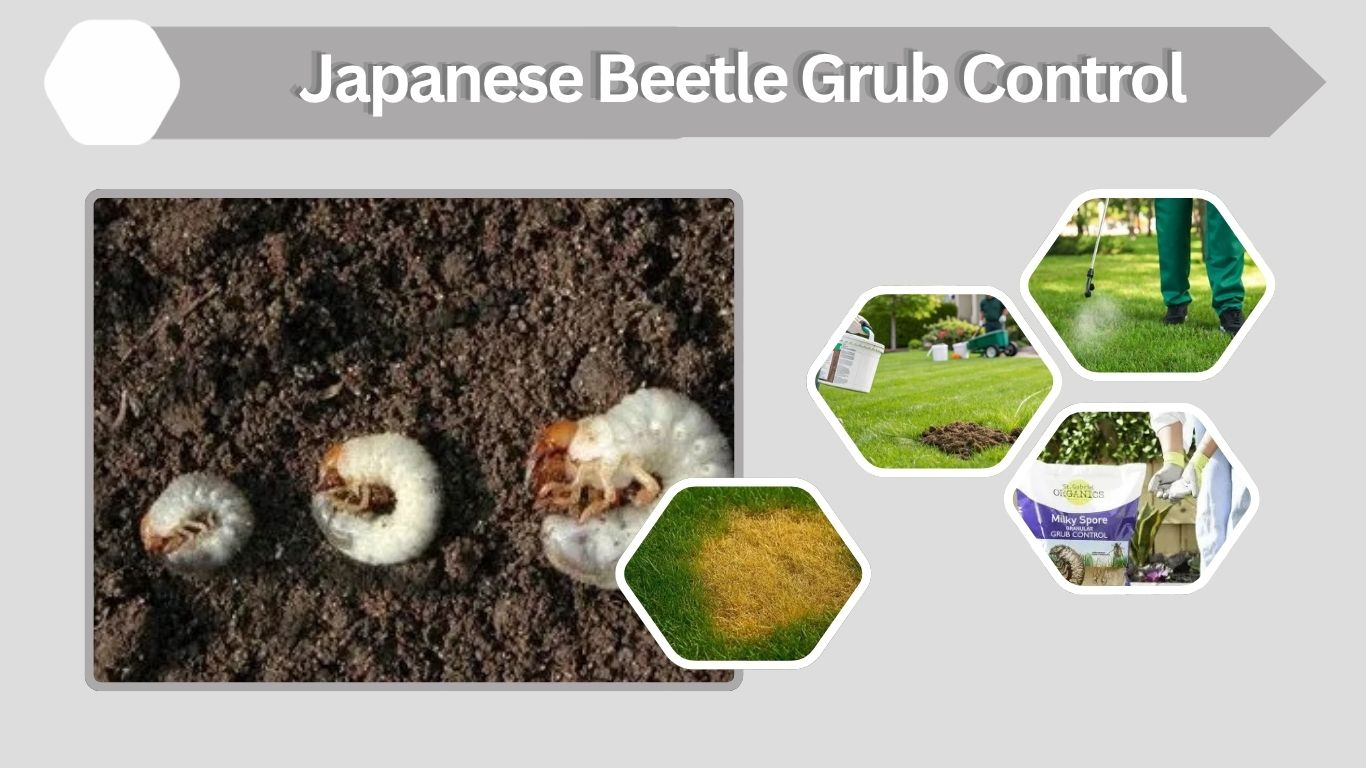
Japanese beetle grub control works best when you treat the right stage at the right time. These white grubs live under the lawn and feed on grass roots before turning into adult Japanese beetles. Good control starts with inspection, correct timing, and choosing the right method. This guide explains when to apply grub control, which treatments work, and how to reduce future lawn damage.
What Is Japanese Beetle Grub Control?
Japanese beetle grub control means managing the larval stage of the Japanese beetle before it damages turfgrass roots or becomes an adult beetle. The grubs live in the soil, where they chew grass roots and weaken the lawn from below.
A healthy lawn may tolerate a small number of grubs. The problem begins when grub numbers rise and the root system becomes too damaged to support the grass. Brown patches, loose turf, and animal digging are common signs.
Control is not only about killing grubs. It also includes monitoring, improving lawn health, using natural enemies, choosing the correct product, and applying treatments at the correct time. A product used too early, too late, or without watering may give poor results.
How Japanese Beetle Grubs Damage Lawns
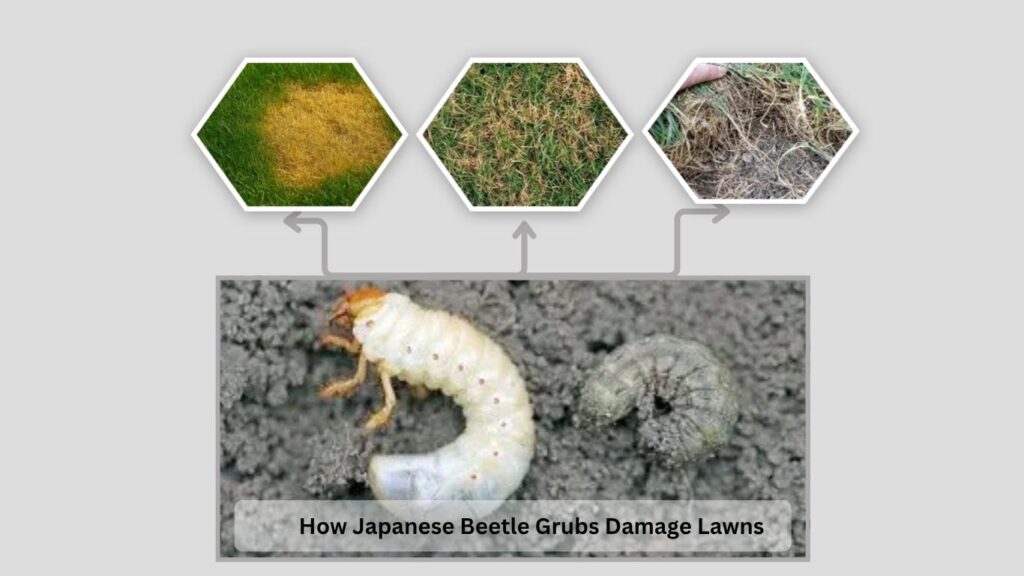
Japanese beetle grubs feed underground, so damage may not be obvious at first. By the time the grass turns brown, many roots may already be damaged. This is why inspection is important before choosing treatment.
Common Signs of Grub Damage
- Irregular brown or yellow lawn patches
- Grass that wilts even after watering
- Turf that feels soft, loose, or spongy
- Grass that pulls up like a loose carpet
- Skunks, raccoons, birds, or moles digging in the lawn
- Visible white C-shaped grubs under the root zone
- Thinning grass in late summer or early fall
- Repeated damage in the same sunny lawn areas
Animal digging does not always mean Japanese beetle grubs are present, but it is a strong warning sign. Many animals dig because they are feeding on grubs. The only way to confirm the issue is to lift a section of turf and check the soil.
When to Apply Grub Control for Japanese Beetles
Timing is the most important part of Japanese beetle grub control. Young grubs near the soil surface are easier to control than older grubs that are deep in the soil or close to pupating.
Preventive grub control is usually applied before or soon after eggs hatch, depending on the product. Curative grub control is applied when grubs are already active and causing damage. These are not the same, so using the wrong type at the wrong time can waste money.
In many northern and Midwestern areas, adult Japanese beetles appear in summer, lay eggs in soil, and young grubs begin feeding later in summer. Late summer to early fall is often a key time to inspect lawns. Spring grubs may be larger and harder to control before they turn into adults.
Always read the product label. Some products need to be applied earlier in the season, while others are designed to kill active grubs after damage appears.
Preventive vs Curative Grub Control
Preventive and curative products work differently. Preventive products are used before major grub damage appears. Curative products are used after grubs are already present and actively feeding.
| Control Type | Best Use | Common Timing | Main Purpose |
| Preventive control | Before serious damage | Late spring to midsummer, depending on product | Targets young grubs after egg hatch |
| Curative control | Active grub problem | Late summer or early fall in many areas | Kills grubs already feeding |
| Organic control | Long-term or low-chemical approach | Depends on method and soil conditions | Reduces grub numbers naturally |
| Lawn-care prevention | Year-round | All season | Builds stronger turf and reduces damage |
Preventive treatments are usually best when you have a history of grub damage. Curative treatments are better when you confirm grubs are already present. If you apply treatment without checking the lawn, you may treat a problem that does not exist.
Best Way to Check Before Treatment
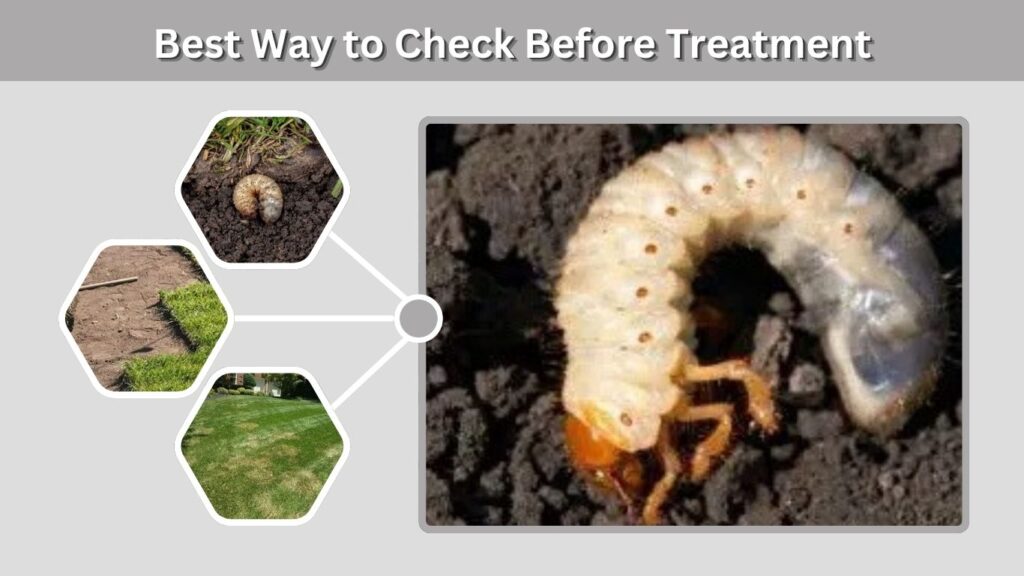
Before applying any grub control, inspect the lawn. This helps you avoid unnecessary pesticide use and choose the right treatment. A weak lawn can turn brown from drought, disease, poor soil, or heat stress, not only grubs.
Simple Lawn Inspection Steps
- Choose a weak or brown patch.
- Cut a square section of turf with a shovel.
- Lift the turf carefully and check the root zone.
- Look through the top few inches of soil.
- Count the number of white grubs.
- Check several spots, not only one area.
- Compare damaged areas with healthy areas.
- Treat only if grub numbers and damage are high enough.
If you find only one or two grubs, treatment may not be needed. If you find many grubs and the turf is loose, control may be necessary. The exact treatment threshold can vary depending on lawn health, soil moisture, grass type, and local guidance.
Chemical Grub Control Options
Chemical grub-control products can work well when used correctly, but timing and label directions matter. Some products are designed to prevent young grubs, while others are designed to kill existing grubs quickly.
Common Product Categories
- Preventive grub-control products
- Curative grub-killer products
- Products containing chlorantraniliprole
- Products containing imidacloprid
- Products containing trichlorfon
- Lawn insecticides labeled for white grubs
- Professional turfgrass treatments
Preventive products are usually applied before young grubs cause heavy damage. Curative products are used when active grubs are already present. A preventive product may not work well on large, mature grubs. A curative product may not provide long-term prevention if applied too early.
Watering after application is often required to move the active ingredient into the root zone. Without water, the product may stay too high on the surface and fail to reach the grubs. Never exceed label rates, and keep children and pets away until the treated area is safe according to the label.
Organic Japanese Beetle Grub Control
Organic control is useful for homeowners who want to reduce chemical use. These methods may be slower or more condition-dependent, but they can help as part of a long-term lawn plan.
Beneficial nematodes are one of the most common natural options. These microscopic organisms enter grubs and kill them. They need moisture, suitable soil temperature, and protection from direct sunlight. Evening application is often better because sunlight can reduce nematode survival.
Milky spore is another well-known option for Japanese beetle grubs. It is a biological control that targets Japanese beetle larvae. However, it is not a quick fix. It may take time to build up in the soil, and results can vary by climate and grub population.
Organic control works best when grubs are present near the surface and soil conditions are suitable. If the soil is too dry, too cold, or too hot, results may be weaker.
Milky Spore for Japanese Beetle Grubs
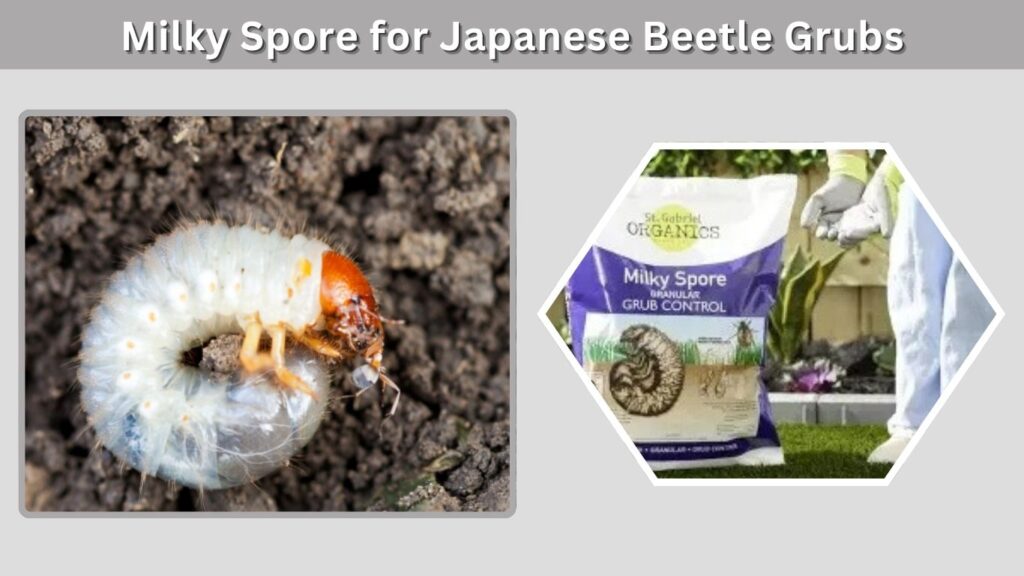
Milky spore is often marketed for Japanese beetle grub control. It contains a bacterium that infects Japanese beetle larvae. Once infected grubs die, the spores may spread in the soil and continue working over time.
This method is most useful for long-term control, not fast rescue. If your lawn is already badly damaged and full of active grubs, milky spore alone may not solve the problem quickly. It may take multiple seasons to show stronger results.
Milky spore is also more specific than many other treatments. It targets Japanese beetle grubs, not every type of white grub. If your lawn has June beetle grubs, masked chafer grubs, or mixed grub species, milky spore may not control all of them.
Before using it, confirm that Japanese beetle grubs are the main issue. Follow the product directions carefully, including application pattern, watering, and timing.
Does Grub Control Kill Adult Japanese Beetles?
Grub control mainly targets the larval stage in the soil. It does not directly kill adult Japanese beetles flying around your roses, grapes, fruit trees, or garden plants. If adults are already feeding above ground, lawn grub control will not remove them immediately.
However, reducing grubs can reduce the number of beetles emerging from your lawn in future seasons. It may not stop all adults because Japanese beetles can fly in from neighboring yards, parks, fields, and untreated lawns.
This is why Japanese beetle management often needs two parts: grub control for the lawn and adult beetle control for plants. Hand-picking adults, protecting valuable plants, and avoiding beetle-attracting traps near gardens can help reduce adult feeding damage.
Best Grub Control for Japanese Beetles
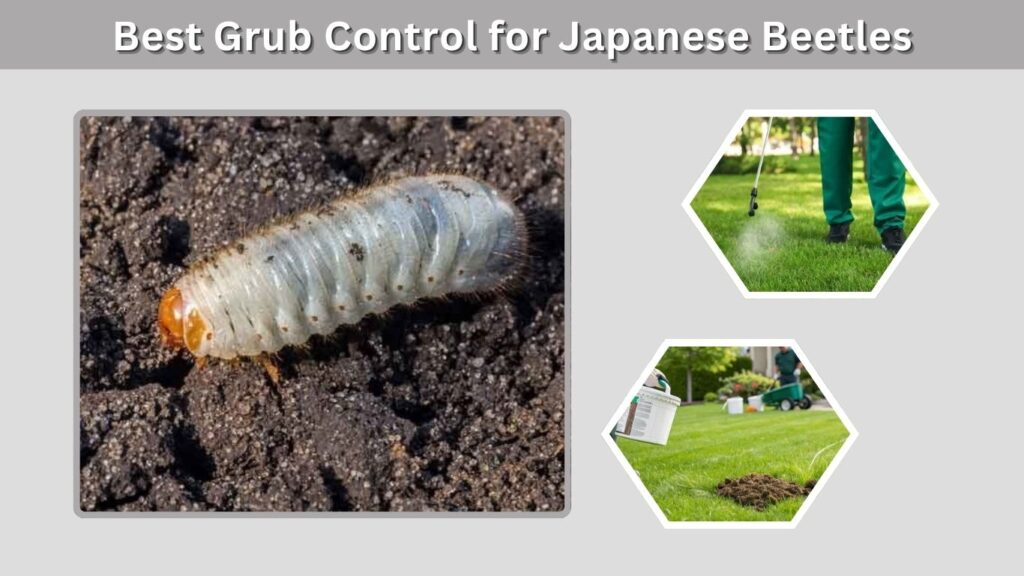
The best grub control depends on your situation. There is no single perfect treatment for every lawn. The right choice depends on timing, grub size, lawn damage, climate, and whether you prefer conventional or organic methods.
Choosing the Right Option
- Use preventive control if your lawn gets grub damage every year.
- Use curative control if you confirm active grubs and damage.
- Use beneficial nematodes when soil is moist and grubs are present.
- Use milky spore for long-term Japanese beetle grub suppression.
- Use lawn repair if old damage remains after grubs are gone.
- Avoid treatment if grub numbers are low.
- Get local advice if damage is severe or repeated.
For many lawns, the best plan is not one product but a schedule. Inspect first, treat only when needed, water correctly, and improve turf health so the lawn can recover.
Lawn Care That Helps Prevent Grub Damage
A strong lawn can handle some grub feeding better than a weak lawn. Good lawn care does not eliminate Japanese beetles, but it can reduce visible damage and improve recovery.
Mow at the right height for your grass type. Taller grass often supports deeper roots, which helps the lawn tolerate stress. Avoid cutting too short because scalped grass dries out faster and becomes weaker.
Water deeply but not constantly. Female Japanese beetles often prefer moist soil for egg laying. Overwatering during beetle activity can make a lawn more attractive for egg laying. Deep, less frequent watering is usually better than daily shallow watering.
Aeration, overseeding, and soil improvement can also help damaged lawns recover. If grub damage has already killed patches, you may need to reseed after controlling the active grubs.
Mistakes to Avoid During Grub Control
Many homeowners apply grub control without checking for grubs first. This can waste money and may harm beneficial insects. Another common mistake is using a preventive product after grubs are already large and damaging the lawn.
Do not assume every brown patch is caused by grubs. Heat, drought, fungal disease, pet urine, compacted soil, and poor irrigation can look similar. Inspect the soil before treatment.
Avoid applying insecticides before heavy rain or without watering when the label says water is needed. Also avoid using products around flowering weeds if pollinators may contact residues. Mow flowering weeds before treatment if the label and local guidance allow it.
Never mix products or increase the rate beyond the label. More product does not mean better control and can create safety and environmental problems.
Step-by-Step Japanese Beetle Grub Control Plan
A simple plan helps you avoid random treatment and improves results. Start with inspection, then choose a treatment based on the season and grub stage.
First, check the lawn in damaged areas. Confirm that grubs are present. Second, decide whether you need preventive, curative, or organic control. Third, apply the product exactly as directed. Fourth, water it in if required. Fifth, monitor the lawn for recovery and repeat inspection later in the season.
If adult Japanese beetles are already flying, manage them separately on plants. Lawn grub control may help reduce future emergence, but it will not stop all beetles already active in the yard.
FAQs
When should I apply grub control for Japanese beetles?
The best time depends on the product and your region. Preventive control is usually applied before or around early grub development, while curative control is used when active grubs are already feeding. Young grubs near the surface are easier to control than older grubs deep in the soil.
What is the best grub control for Japanese beetles?
The best option depends on timing and infestation level. Preventive products work best before major damage, curative products work on active grubs, and organic options like beneficial nematodes or milky spore can help in suitable conditions. Always inspect the lawn before choosing treatment.
Does grub control kill Japanese beetles?
Grub control kills the larval stage in the soil, not adult beetles already flying and feeding on plants. It can reduce future beetle emergence from your lawn, but adults may still fly in from nearby areas. Adult beetle management must be handled separately.
Is milky spore good for Japanese beetle grub control?
Milky spore can help control Japanese beetle grubs over time, but it is not a fast rescue treatment. It works best as a long-term biological control and may take multiple seasons to show strong results. It also targets Japanese beetle grubs, not all white grub species.
Can I use organic grub control for Japanese beetles?
Yes, organic options include beneficial nematodes, milky spore, and improved lawn-care practices. These methods depend on timing, soil moisture, temperature, and correct application. Organic control may work more slowly than chemical treatment, but it can be useful for long-term lawn management.