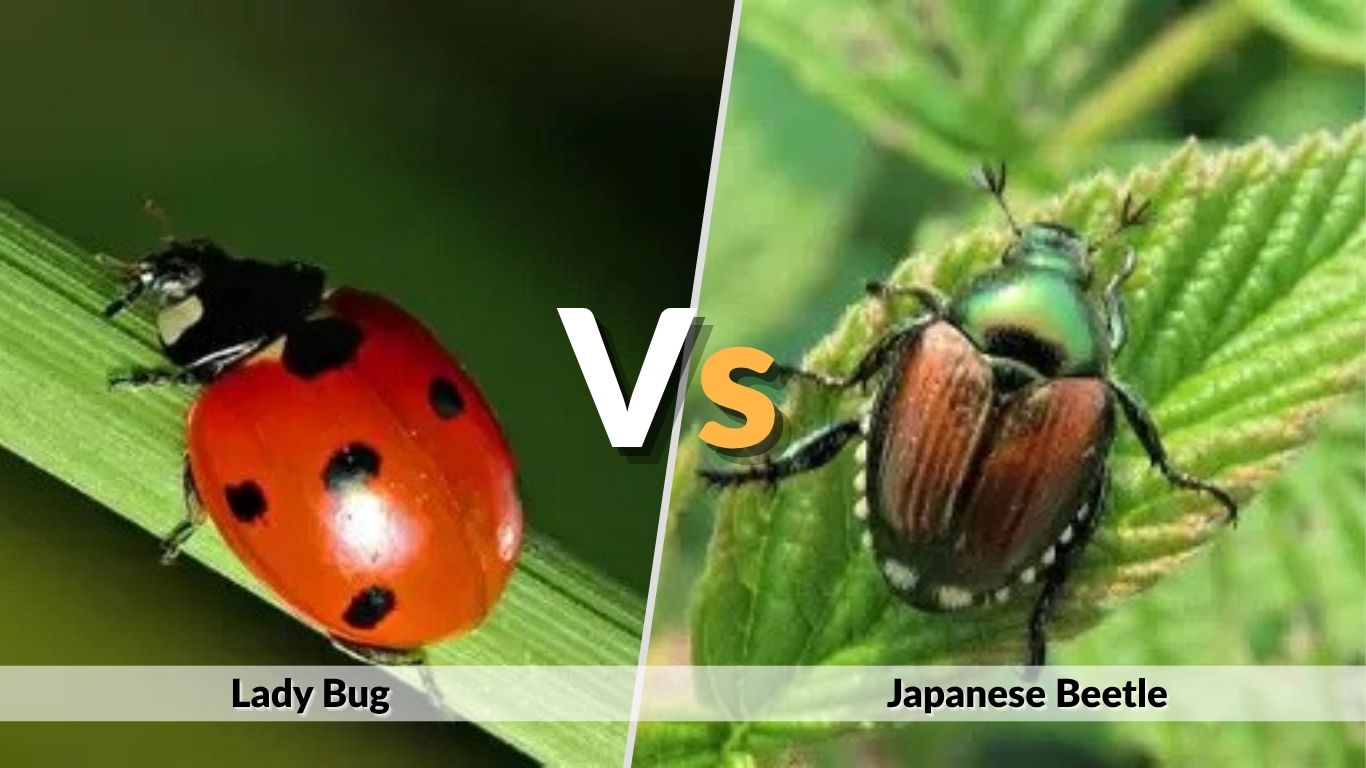
Lady bugs and Japanese beetles are often confused because both are small, rounded insects that may appear in gardens. However, they are very different in appearance, behavior, diet, and impact on plants. Lady bugs are usually helpful predators, while Japanese beetles are destructive plant feeders. Knowing the difference helps gardeners protect plants without harming beneficial insects.
Lady Bug vs Japanese Beetle: Quick Overview
Lady bugs, also called lady beetles or ladybird beetles, are usually welcomed in gardens because they feed on aphids and other soft-bodied pests. Japanese beetles, on the other hand, chew leaves, flowers, and fruit. They often gather in groups and can damage roses, grapes, beans, fruit trees, and many ornamental plants.
Main Difference Between Lady Bugs and Japanese Beetles
The main difference is their role in the garden. Lady bugs are mostly beneficial predators, while Japanese beetles are plant-feeding pests. Lady bugs help reduce aphids, scale insects, mealybugs, and mites. Japanese beetles damage leaves by chewing the soft tissue between leaf veins, leaving a lace-like pattern.
| Feature | Lady Bug | Japanese Beetle |
| Garden role | Beneficial insect | Plant pest |
| Main food | Aphids and soft-bodied insects | Leaves, flowers, and fruit |
| Body shape | Round or oval dome | Oval, slightly longer body |
| Common color | Red, orange, yellow, or black | Metallic green and copper |
| Plant damage | Usually no serious plant damage | Heavy leaf and flower damage |
| Group behavior | Often found alone or in small groups | Often feeds in clusters |
This difference matters because gardeners should protect lady bugs and control Japanese beetles. Killing every beetle-like insect in the garden can reduce natural pest control and make plant problems worse.
How to Identify a Lady Bug
Lady bugs are small beetles with a rounded, dome-shaped body. Many species are red or orange with black spots, but some are yellow, black, gray, or spotless. Their heads are small and partly hidden under the pronotum, which is the shield-like area behind the head.
Lady Bug Identification
Use these features to recognize lady bugs in the garden:
- Small, rounded, dome-shaped body
- Commonly red, orange, yellow, or black
- May have black spots, white marks, or no spots
- Short legs mostly hidden under the body
- Smooth wing covers
- Often found near aphids or other small pests
- Usually does not chew holes in leaves
- Moves slowly across stems and leaves while hunting prey
Lady bugs are especially common on plants with aphid problems. You may see them on roses, milkweed, vegetables, fruit trees, and flowering plants. If the insect is sitting near aphids and not chewing the plant, it is more likely to be a lady bug than a Japanese beetle.
Are Lady Bugs Good for Plants?
Lady bugs are good for plants because they eat pests that suck plant sap. Aphids, mealybugs, scale insects, and mites can weaken plants, curl leaves, and spread disease. Lady bugs help control these pests naturally.
Both adult lady bugs and their larvae can be helpful. Lady bug larvae do not look like adults. They are longer, darker, and often look like tiny alligator-shaped insects. Many people mistake them for harmful bugs, but they are strong predators and should usually be left alone.
How to Identify a Japanese Beetle
Japanese beetles are easy to recognize once you know their colors. Adults have a shiny metallic green head and body with copper-brown wing covers. They are usually about half an inch long and have small white hair patches along the sides of the abdomen.
Japanese Beetle Identification
Look for these signs when checking your plants:
- Metallic green head and thorax
- Copper or bronze wing covers
- Oval body, not as round as a lady bug
- White hair tufts along the sides of the body
- Often feeds in groups
- Chews leaves, flowers, and soft fruit
- Leaves skeletonized, lace-like damage
- Most active on warm, sunny days
Japanese beetles usually do not hide their damage. They gather on exposed leaves and flowers, especially in sunny parts of the plant. Roses, grapes, raspberries, beans, basil, cherry trees, apple trees, and hibiscus are common targets.
Are Japanese Beetles Bad for Plants?
Japanese beetles are bad for many plants because they feed heavily as adults. They chew the tissue between leaf veins, leaving leaves brown, dry, and skeletonized. They may also damage flower petals and fruit surfaces.
Healthy mature plants can survive light feeding, but heavy infestations can weaken plants. Young plants, stressed plants, and fruiting plants may suffer more. Japanese beetle grubs can also damage lawns by feeding on grass roots underground.
Lady Bug vs Japanese Beetle Appearance
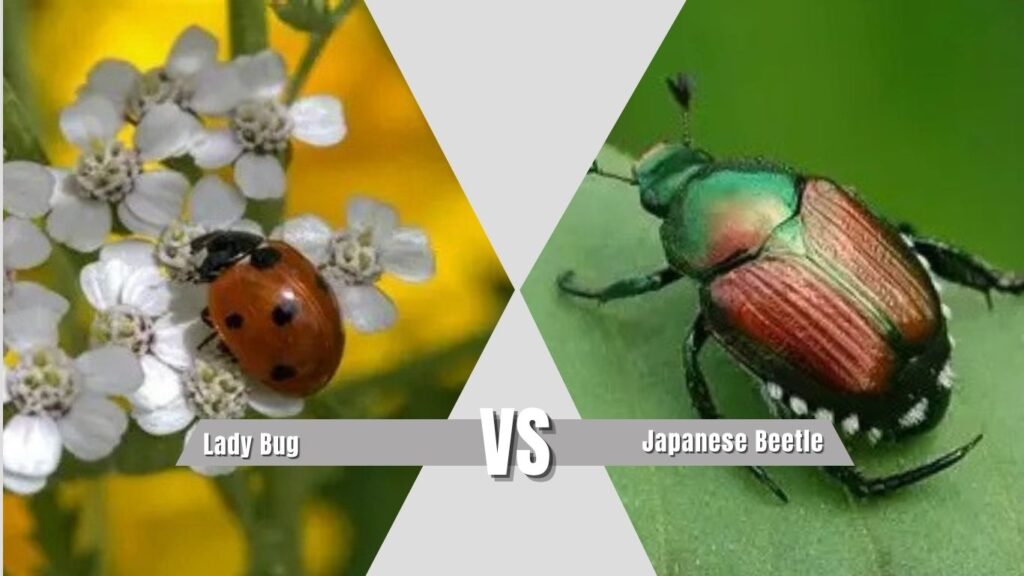
At first glance, both insects may look small and beetle-like. A closer look shows clear differences in body color, shape, markings, and movement. Lady bugs look more rounded and often have spot patterns. Japanese beetles look longer and shinier, with metallic green and copper coloring.
Appearance Comparison
| Body Feature | Lady Bug | Japanese Beetle |
| Body shape | Round and dome-like | Oval and slightly longer |
| Color | Red, orange, yellow, black, or mixed | Metallic green with copper wings |
| Spots | Often has black spots | No black spots on wing covers |
| Side markings | Usually no white side tufts | White hair tufts on sides |
| Surface | Smooth and glossy | Metallic and shiny |
| Size | Usually small and compact | Around 1/2 inch long |
| Look-alikes | Asian lady beetle, other lady beetles | June bugs, green June beetles |
The white side tufts are one of the best clues for Japanese beetles. Lady bugs may have white markings near the head, but they do not have the same row of white hair patches along the sides of the body.
Lady Bug vs Japanese Beetle Behavior
Behavior is another easy way to separate them. Lady bugs search for prey. Japanese beetles feed directly on plants. If the insect is chewing leaves or flowers, it is probably not a helpful lady bug.
Feeding Behavior
Lady bugs walk across leaves looking for aphids and other tiny insects. They may stay on one plant if there is plenty of prey. They do not usually gather in large groups to eat plant leaves.
Japanese beetles feed in clusters. Once a few beetles start feeding, more may arrive. Damaged plants can release odors that attract additional beetles. This is why a small problem can become a large infestation quickly.
Garden Impact
| Behavior | Lady Bug | Japanese Beetle |
| Eats aphids | Yes | No |
| Chews leaves | Usually no | Yes |
| Damages flowers | No serious damage | Yes |
| Helps pest control | Yes | No |
| Needs control | Usually no | Often yes |
| Should be protected | Yes | No |
If you are unsure, watch what the insect is doing. A lady bug crawling among aphids is helping your plant. A Japanese beetle chewing a rose, grape leaf, bean leaf, or flower petal is causing damage.
Lady Bug vs Japanese Lady Beetle
Some confusion comes from the name “Japanese lady beetle.” People may use this phrase when they mean Asian lady beetle, Japanese beetle, or a lady bug from Asia. These are not the same thing.
Lady Bug and Asian Lady Beetle
Asian lady beetles are a type of lady beetle that can look like common lady bugs. They may be orange, yellow, red, or spotted. Some have a noticeable dark “M” or “W” marking behind the head. They can be helpful in gardens, but they may become a nuisance indoors during cooler months.
Japanese beetles are different. They are not lady bugs. They are metallic green and copper plant pests. They do not control aphids and should not be treated as beneficial insects.
Japanese Beetle vs June Bug
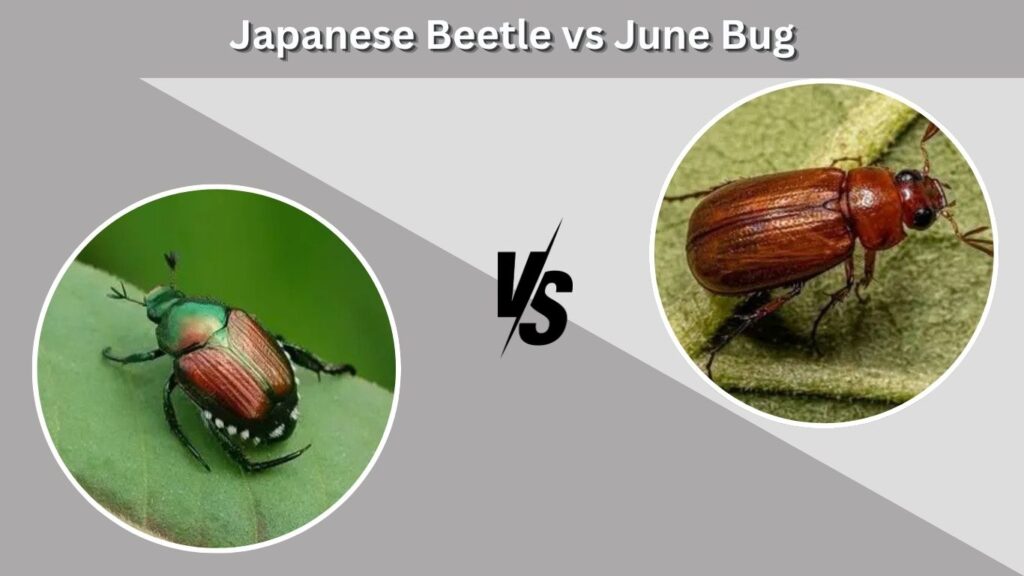
Japanese beetles are also confused with June bugs. Both are scarab beetles, and both can have grub stages in soil. However, adults look different and often behave differently in the garden.
Difference Between Japanese Beetles and June Bugs
June bugs are usually larger, brown, and more active at night. Japanese beetles are smaller, metallic green and copper, and commonly feed during the day. June bugs may fly around lights, while Japanese beetles are often found directly on leaves and flowers.
Japanese beetle grubs and June bug grubs may look similar in soil because both are C-shaped white grubs. Accurate grub identification can be difficult without close inspection. For home gardeners, the visible adult damage is often easier to recognize.
Do Lady Bugs Eat Japanese Beetles?
Lady bugs do not usually eat adult Japanese beetles. Adult Japanese beetles are too large and hard-bodied for lady bugs to handle. Lady bugs prefer soft-bodied insects such as aphids, mites, scale insects, and mealybugs.
Bugs That Eat Japanese Beetles
Some natural predators may feed on Japanese beetles or their grubs. Birds, spiders, assassin bugs, wheel bugs, robber flies, and certain parasitic wasps may attack them. However, natural predators usually do not eliminate a heavy Japanese beetle infestation by themselves.
Lady bugs should still be protected because they control other garden pests. A balanced garden with many beneficial insects is healthier than a garden where all insects are killed by broad sprays.
How to Get Rid of Japanese Beetles Without Harming Lady Bugs
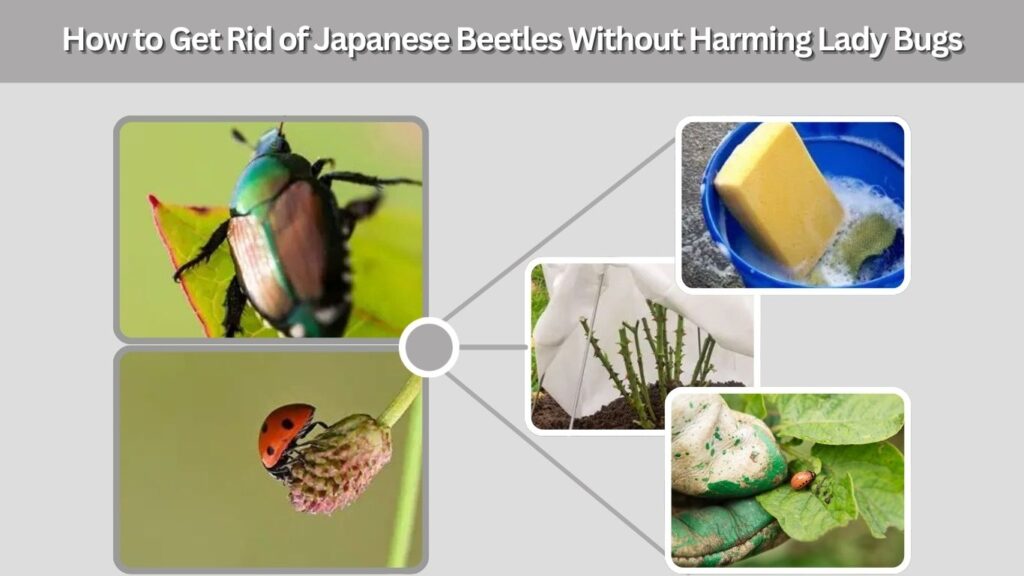
The best control methods target Japanese beetles directly while avoiding broad harm to beneficial insects. Hand removal, selective plant protection, and careful timing are safer than spraying every plant in the garden.
Safe Japanese Beetle Control Tips
Use these methods first:
- Pick Japanese beetles by hand in the morning or evening.
- Drop them into a bucket of soapy water.
- Use insect netting over vulnerable plants.
- Protect roses, grapes, beans, and berries early.
- Avoid spraying open flowers where pollinators visit.
- Do not spray plants where lady bugs are actively feeding on aphids.
- Remove beetles before they gather in large groups.
- Choose Japanese beetle resistant plants for future garden beds.
Hand-picking may sound simple, but it works well in small gardens. Japanese beetles often drop when disturbed, so hold the bucket underneath before tapping the plant.
Should You Use Bug Spray for Japanese Beetles?
Bug sprays can kill Japanese beetles, but many sprays may also harm lady bugs, bees, butterflies, and other beneficial insects. Use sprays only when damage is serious and always follow the product label.
Neem oil may help reduce feeding when used correctly, but it should still be applied carefully. Spray in the evening or early morning and avoid open blooms. Strong chemical sprays should be a last option in pollinator-friendly gardens.
Do Japanese Beetle Traps Work?
Japanese beetle traps can catch many beetles, but they may also attract more beetles into your yard. If a trap is placed near roses, grapes, beans, or fruit trees, it can make damage worse around those plants.
How to Use Japanese Beetle Traps Safely
If you use a trap, place it far away from the plants you want to protect. Do not hang it directly beside damaged plants. Empty the trap often because full bags can smell bad and become messy.
Traps may be useful in some large areas, but they are not always the best choice for small gardens. For many homeowners, hand removal and plant protection are more practical.
FAQs
Are lady bugs and Japanese beetles the same?
No, lady bugs and Japanese beetles are not the same. Lady bugs are usually beneficial insects that eat aphids and other soft-bodied pests. Japanese beetles are plant pests that chew leaves, flowers, and fruit. Their color, behavior, and garden impact are very different.
How can I tell a lady bug from a Japanese beetle?
Look at color and feeding behavior. Lady bugs are usually round and red, orange, yellow, or black, often with spots. Japanese beetles are metallic green with copper wing covers and white side tufts. If the insect is chewing leaves or flowers, it is likely a Japanese beetle.
Do lady bugs eat Japanese beetles?
Lady bugs do not normally eat adult Japanese beetles. Japanese beetles are too large and hard-bodied for them. Lady bugs mostly eat aphids, mites, scale insects, and mealybugs. Other predators, such as birds, assassin bugs, and spiders, may attack Japanese beetles.
Are June bugs and Japanese beetles the same?
No, June bugs and Japanese beetles are different insects. June bugs are usually larger, brown, and often active at night. Japanese beetles are smaller, metallic green and copper, and feed on plants during the day. Their grubs may look similar in the soil.
Should I kill lady bugs if I see them near my plants?
No, you should usually leave lady bugs alone. They help protect plants by eating aphids and other pests. Before removing any beetle, check its color, shape, and behavior. If it is not chewing your plant and appears to be hunting small insects, it may be beneficial.