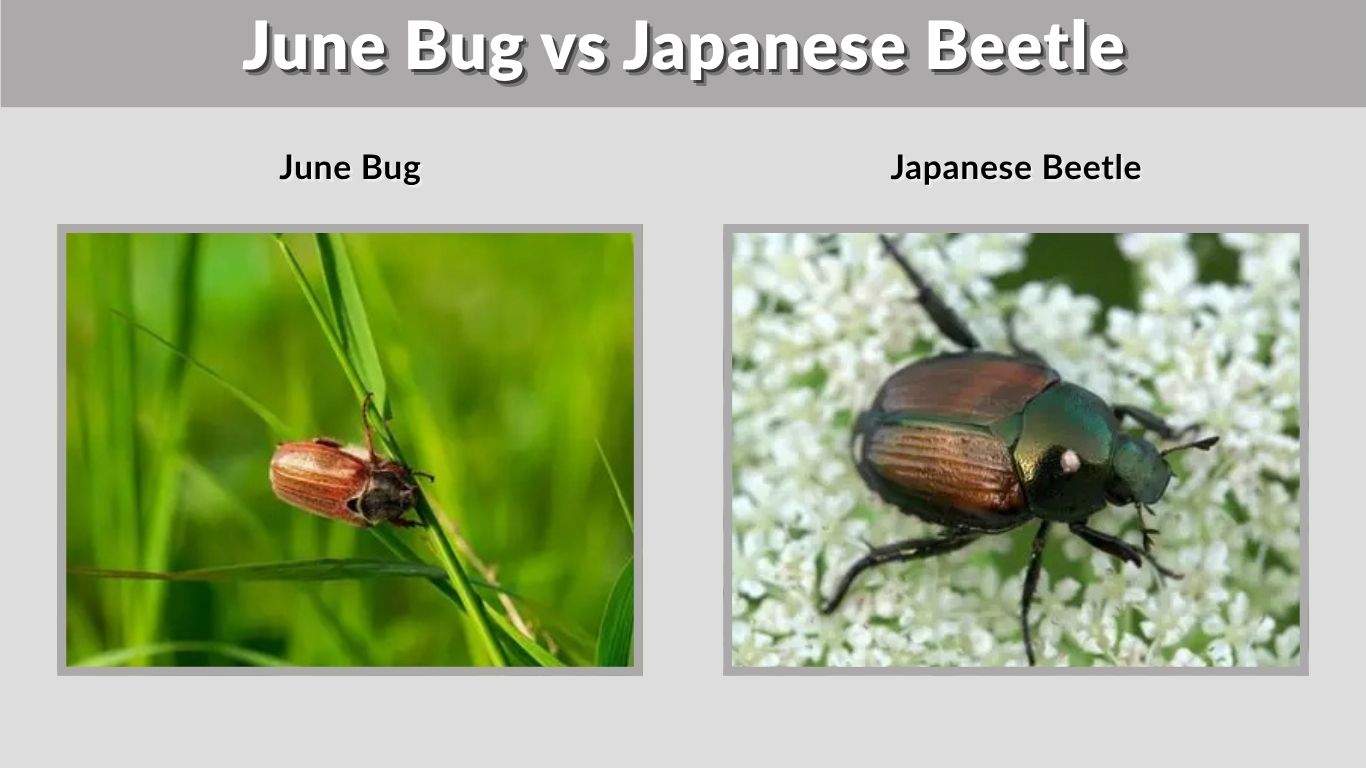
June bugs and Japanese beetles are often confused because both are scarab beetles, both appear in warm months, and both have soil-dwelling grubs. However, they differ in size, color, feeding habits, plant damage, and control methods. Japanese beetles are usually more destructive to garden leaves and flowers, while June bugs are often more noticeable around lights and lawns.
What Are June Bugs?
June bugs are a group of scarab beetles that usually appear in late spring and summer. The name “June bug” can refer to several beetles, including brown May beetles and green June beetles. Their adults may be brown, reddish-brown, or metallic green depending on the species.
June bugs are usually active at night and are strongly attracted to outdoor lights. Many people notice them bumping into porch lights, windows, doors, or screens. Their larvae, called grubs, live in soil and feed on plant roots, especially grass roots.
June Bug Identification
June bugs can vary by species, but many share a heavy-bodied beetle shape. Brown June bugs are usually dull brown and oval, while green June beetles are larger and metallic green.
Key features include:
- Rounded, bulky body
- Brown, reddish-brown, or green color
- Usually active at night
- Strong attraction to lights
- Hard wing covers
- Slow, clumsy flight
- Grubs found in soil
- Adults often seen in late spring or summer
Brown June bugs are usually less colorful than Japanese beetles. Green June beetles can look more similar, but they are often larger and have a different body shape.
What Are Japanese Beetles?
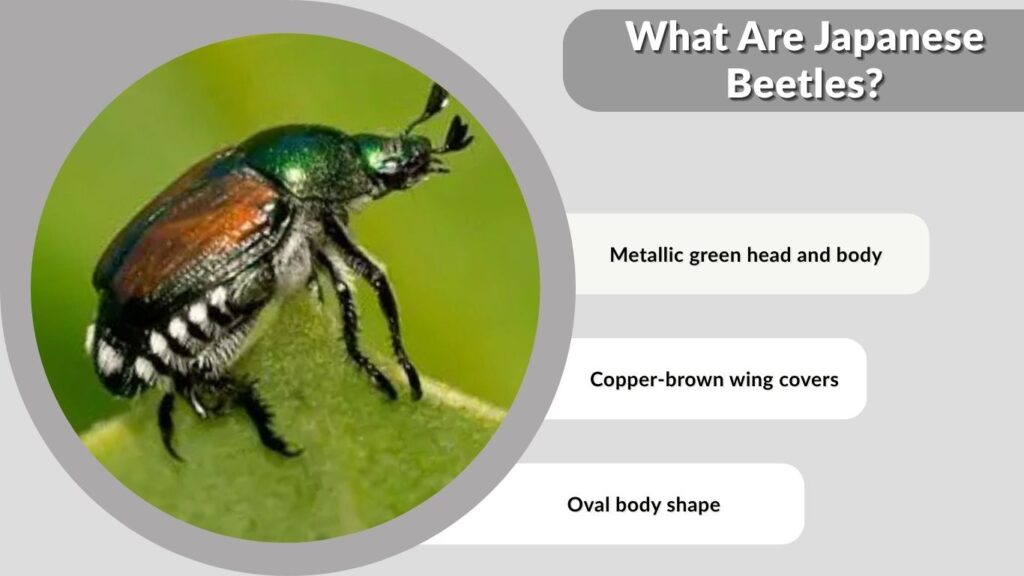
Japanese beetles are invasive scarab beetles known for heavy feeding on garden plants. Adults are metallic green with copper-colored wing covers and small white hair tufts along the sides of the body. They usually appear in summer and often gather in groups on leaves, flowers, and fruit.
Unlike many June bugs, Japanese beetles are active during the day. They feed openly on roses, grapes, beans, fruit trees, and many ornamental plants. Their grubs live in soil and feed on grass roots, which can damage lawns.
Japanese Beetle Identification
Japanese beetles are easier to identify because they have a distinct shiny color pattern. They are smaller than many June bugs but often cause more visible garden damage.
Key features include:
- Metallic green head and body
- Copper-brown wing covers
- Small white hair tufts along the sides
- Oval body shape
- Active during the day
- Often found feeding in groups
- Skeletonizes leaves
- Grubs live in lawns and soil
The white hair tufts are one of the best identification clues. Green June beetles may also look shiny, but they do not have the same copper wing covers and white side tufts.
June Bug vs Japanese Beetle: Quick Comparison
Both beetles belong to the scarab beetle family, but their behavior and damage patterns are different. Japanese beetles are usually more serious garden pests because adults feed heavily on leaves, flowers, and fruit. June bugs may damage lawns as grubs, but adults are often less destructive to garden foliage.
| Feature | June Bug | Japanese Beetle |
| Beetle family | Scarab beetle | Scarab beetle |
| Common adult color | Brown, reddish-brown, or green | Metallic green and copper |
| Body size | Often larger | Usually smaller |
| Activity time | Mostly night | Mostly day |
| Attracted to lights | Yes, strongly | Not usually the main sign |
| Garden leaf damage | Usually moderate | Often severe |
| Grub damage | Can damage grass roots | Can damage grass roots |
| Feeding style | Varies by species | Skeletonizes leaves |
| Common season | Late spring to summer | Summer |
| Best ID clue | Night flying near lights | White side tufts and copper wings |
Main Difference Between June Bugs and Japanese Beetles
The biggest difference is adult feeding behavior. Japanese beetles are daytime plant feeders that often gather in groups and chew leaves until only the veins remain. June bugs are usually night-active beetles that are more often noticed around lights.
Japanese beetles are also more recognizable because of their metallic green body, copper wings, and white hair tufts. June bugs are usually plainer brown or larger green beetles, depending on the species.
June Bug vs Japanese Beetle Appearance and Size Differences
Japanese beetles are generally about ⅜ inch long. Their body is shiny metallic green, and their wing covers are copper or bronze. They also have small white patches along the sides and back of the body.
June bugs vary more in appearance. Brown June bugs are often dull brown and may be larger than Japanese beetles. Green June beetles can be much larger, sometimes close to an inch long, and have a shiny green body with yellowish or bronze edges.
Color and Body Shape
Color is one of the easiest ways to separate these beetles. Japanese beetles have a bright two-tone look, while many June bugs have a simpler brown or green body.
Important visual differences include:
- Japanese beetles have copper wing covers
- Japanese beetles have white hair tufts
- Brown June bugs are usually plain brown
- Green June beetles are often larger and brighter green
- June bugs often look heavier and rounder
- Japanese beetles look smaller and more compact
If the beetle is shiny green and copper with white side tufts, it is likely a Japanese beetle. If it is a large green beetle without those white tufts, it may be a green June beetle.
June Bug vs Japanese Beetle Behavior Differences
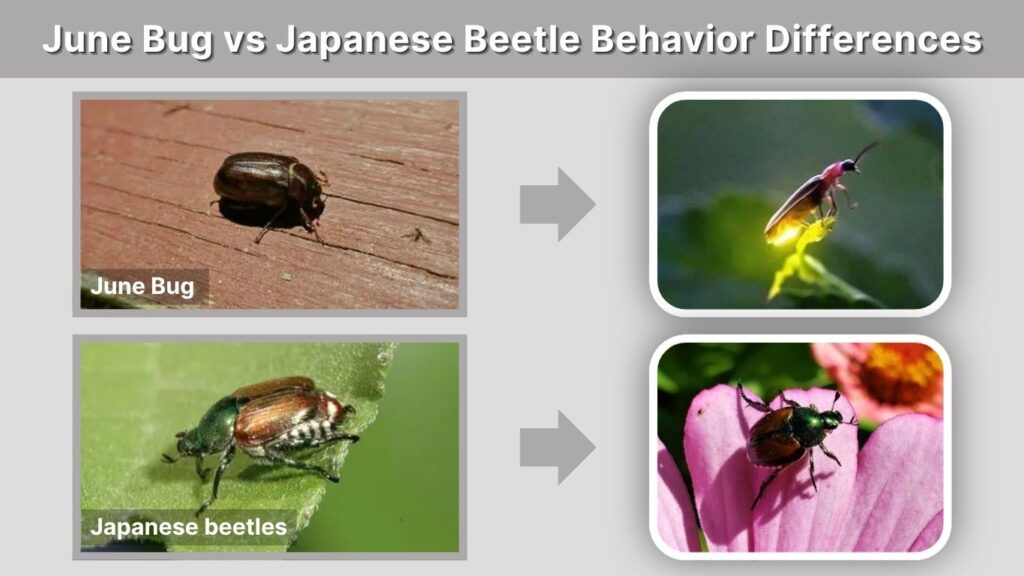
June bugs and Japanese beetles behave differently in gardens and lawns. June bugs are mostly active at night and are famous for flying into lights. Japanese beetles are active during sunny daytime hours and can be seen feeding directly on plants.
This difference helps with identification. If beetles are crashing into porch lights at night, they are probably June bugs. If they are covering roses or grape leaves during the day, they are more likely Japanese beetles.
When They Are Most Active
June bugs are usually most active in the evening and at night. They may hide during the day and come out after sunset. Japanese beetles are most active during warm, sunny parts of the day.
Their activity patterns include:
- June bugs fly at night
- June bugs gather around porch lights
- Japanese beetles feed during the day
- Japanese beetles gather on sunny plants
- June bugs may be noticed near lawns
- Japanese beetles are often found on flowers and leaves
- Both appear during warm months
Because Japanese beetles feed in the open, their damage is often easier to spot quickly. June bug damage may be less obvious until lawn roots are affected by grubs.
June Bug vs Japanese Beetle Garden Damage Differences
Japanese beetles usually cause more obvious damage in flower beds, vegetable gardens, fruit plants, and ornamental shrubs. They chew leaf tissue between the veins, creating a lace-like or skeletonized pattern. They also feed on flowers and soft fruit.
June bug adults may feed on leaves, but many species are not as aggressive in gardens as Japanese beetles. However, June bug grubs can damage lawns and plant roots underground.
| Damage Type | June Bug | Japanese Beetle |
| Leaf skeletonizing | Less common | Very common |
| Flower damage | Possible | Common |
| Fruit damage | Possible | Common |
| Lawn grub damage | Common with some species | Common |
| Root damage | Caused by grubs | Caused by grubs |
| Visible daytime feeding | Less common | Very common |
| Group feeding | Less obvious | Very common |
Are Japanese Beetles Worse Than June Bugs?
In most gardens, Japanese beetles are worse for leaves, flowers, and fruits. They feed in large groups and can damage roses, grapes, beans, fruit trees, and ornamental plants quickly.
June bugs can still be a problem, especially when grubs are feeding in the lawn. Their underground damage may cause brown grass patches, weak turf, or loose soil. So Japanese beetles are usually worse above ground, while June bugs can be serious below ground.
June Bug Grub vs Japanese Beetle Grub
Both June bug grubs and Japanese beetle grubs are white, C-shaped larvae that live in soil. They can be difficult to tell apart without close inspection. Both feed on roots and may damage lawns, gardens, and turf.
Japanese beetle grubs are usually smaller than many June bug grubs. June bug grubs, especially from larger species, may be bigger and take longer to develop. However, size alone is not always reliable because grub age also matters.
Larvae Identification
Grub identification can be tricky because many scarab beetle larvae look similar. Gardeners usually notice damage before they identify the exact grub species.
Common grub signs include:
- White C-shaped larvae in soil
- Brown patches in lawns
- Grass lifting easily from the ground
- Birds or animals digging for grubs
- Weak root systems
- Spongy turf areas
- Grubs found under damaged grass
The most accurate way to separate grubs is by looking at the raster pattern near the rear end under magnification. For most home gardeners, it is more practical to manage grub damage rather than identify every larva perfectly.
Green June Bug vs Japanese Beetle
Green June bugs are often confused with Japanese beetles because both can have green coloring. However, green June bugs are usually larger, broader, and more solid green. Japanese beetles are smaller, with copper wing covers and white hair tufts.
Green June bugs may feed on ripe fruits and damaged produce, while Japanese beetles commonly skeletonize leaves and attack flowers. Green June bugs may also fly loudly and clumsily, while Japanese beetles are usually seen clustered on plants.
Easy Field Differences
You can separate green June bugs and Japanese beetles by checking size, color pattern, and feeding location.
Use these clues:
- Green June bugs are usually larger
- Japanese beetles have copper wing covers
- Japanese beetles have white side tufts
- Green June bugs may look more solid green
- Japanese beetles often feed in groups on leaves
- Green June bugs may visit ripe or damaged fruit
- Japanese beetles are smaller and more oval
If the beetle is large, loud, and mostly green, it may be a green June bug. If it is smaller, shiny green and copper, and feeding on leaves in groups, it is likely a Japanese beetle.
Are They Harmful to Humans or Pets?
June bugs and Japanese beetles are not dangerous to humans. They do not sting, and they are not known for biting people in a harmful way. They may feel unpleasant if they crawl on skin, but they are mainly plant and lawn pests.
Pets may chase or eat beetles, especially dogs and cats. Eating one or two beetles is usually not a serious issue, but eating many insects could cause stomach upset. If a pet shows vomiting, drooling, or discomfort after eating beetles, contact a veterinarian.
How to Control June Bugs and Japanese Beetles
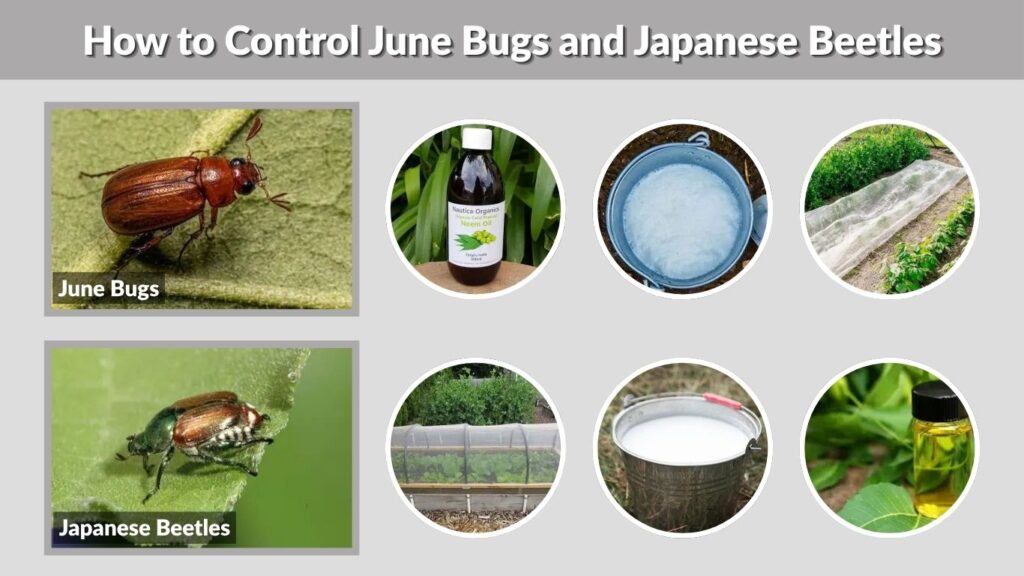
Control depends on whether you are dealing with adults or grubs. Japanese beetle adults are best managed by hand-picking, row covers, and careful garden sprays. June bugs are often managed by reducing outdoor lights and treating lawn grubs if needed.
Grub control can help both pests because their larvae live in soil. Beneficial nematodes, healthy lawn care, and proper timing can reduce grub populations.
| Control Method | Best For June Bugs | Best For Japanese Beetles |
| Hand-picking adults | Sometimes useful | Very useful |
| Soapy water bucket | Useful for adults | Very useful |
| Row covers | Less common | Very useful for vegetables |
| Reducing outdoor lights | Very useful | Less important |
| Neem oil | Limited use | Useful with care |
| Grub control | Very useful | Useful |
| Beetle traps | Not usually needed | Use carefully away from plants |
| Lawn care | Important | Important |
Natural Control Tips
Natural control is often the safest option for home gardens, especially around vegetables and pollinators.
Helpful methods include:
- Knock Japanese beetles into soapy water
- Remove beetles early in the morning
- Use row covers on vegetables
- Reduce porch lights during June bug season
- Keep lawns healthy and not overwatered
- Apply beneficial nematodes for grubs
- Pick ripe fruit quickly
- Remove fallen or damaged fruit
- Avoid placing beetle traps near gardens
- Check plants daily during peak season
Japanese beetle traps can attract more beetles into the area, so they should not be placed near valuable plants. If used, place them far away from the garden.
Which Beetle Do You Have?
The easiest way to identify the beetle is to look at when it appears, where it is found, and what it looks like. A beetle flying into lights at night is probably a June bug. A shiny green and copper beetle feeding on leaves during the day is probably a Japanese beetle.
If you find white grubs in the soil, identification is harder. Look at the adult beetles nearby, the type of damage, and the season. If the main problem is skeletonized leaves on roses or grapes, Japanese beetles are more likely. If the main issue is lawn damage and night-flying beetles, June bugs may be involved.
FAQs
Are June bugs and Japanese beetles the same?
No, June bugs and Japanese beetles are not the same, but they are both scarab beetles. June bugs can refer to several beetle species, while Japanese beetles are a specific invasive species. They differ in color, size, activity time, feeding habits, and garden damage.
How can I tell a Japanese beetle from a June bug?
Japanese beetles are smaller, metallic green, and have copper wing covers with white hair tufts along the sides. June bugs are often brown or larger green beetles. June bugs usually fly at night near lights, while Japanese beetles feed on plants during the day.
Which is worse, June bugs or Japanese beetles?
Japanese beetles are usually worse for garden plants because they feed in groups and skeletonize leaves, flowers, and fruit. June bugs can still be harmful, especially as grubs in lawns. They are often more noticeable at night around lights than on garden leaves.
Are June bug grubs and Japanese beetle grubs different?
Yes, they come from different beetles, but they look very similar. Both are white, C-shaped larvae that live in soil and feed on roots. Japanese beetle grubs are often smaller, while some June bug grubs are larger, but exact identification can require close inspection.
Do June bugs and Japanese beetles bite?
June bugs and Japanese beetles are not dangerous to people. They do not sting and are not known for harmful bites. They may cling to skin or feel annoying if handled, but the main concern is plant damage, lawn damage, and grub feeding in soil.