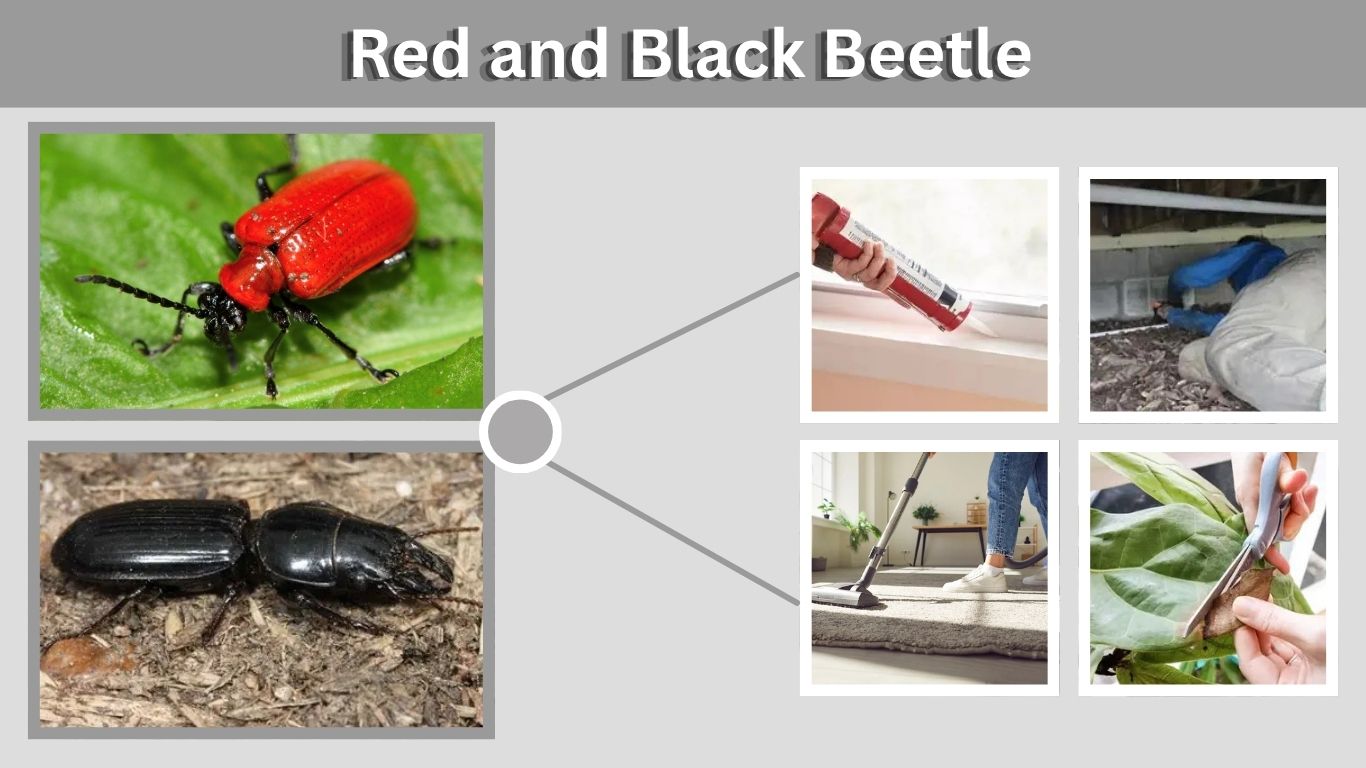
Red and black beetles are common in gardens, fields, forests, and sometimes around homes. Their bold colors make them easy to notice, but many species look similar at first glance. Some are harmless plant visitors, while others can damage crops, feed on milkweed, or cause skin irritation. Learning their shape, markings, habitat, and behavior can help you identify them correctly.
What Is a Red and Black Beetle?
A red and black beetle is not one single species. It is a general description for beetles that have red, orange-red, or reddish markings mixed with black bodies, heads, wings, or spots. These beetles may be small, large, striped, spotted, or even capable of flying.
Some red and black beetles are true beetles with hard wing covers. Others may look like beetles but belong to different insect groups, such as boxelder bugs or milkweed bugs. That is why body shape is very important for identification.
General Appearance
Most red and black beetles have a shiny or slightly matte body. The red color may appear on the wing covers, head, thorax, or legs. Some have black spots on a red body, while others have red stripes on a black body.
Common features include:
- Hard outer wing covers
- Six legs
- Segmented antennae
- Oval, long, or narrow body shape
- Red, orange, or scarlet markings
- Black head, wings, or body sections
The exact pattern depends on the species. A lady beetle may have a rounded body, while a blister beetle usually looks long and soft-bodied.
Size and Shape
Red and black beetles can be tiny or quite noticeable. Some are only a few millimeters long, while others grow over half an inch. Small red and black beetles are often found on plants, flowers, or walls. Larger ones may appear in gardens, fields, or wooded areas.
Round beetles are often lady beetles. Long and narrow beetles may be blister beetles, soldier beetles, or longhorn beetles. If the insect has a soft body and long legs, it may not be a true beetle.
Flying Behavior
Many red and black beetles can fly. They have hidden wings under their hard wing covers. When disturbed, they may open the wing covers and fly away. Flying beetles are common around gardens, lights, flowers, and outdoor walls.
Some flying red and black beetles are attracted to warm surfaces, bright lights, or flowering plants. Others fly mainly during mating season or when searching for food.
Common Types of Red and Black Beetles
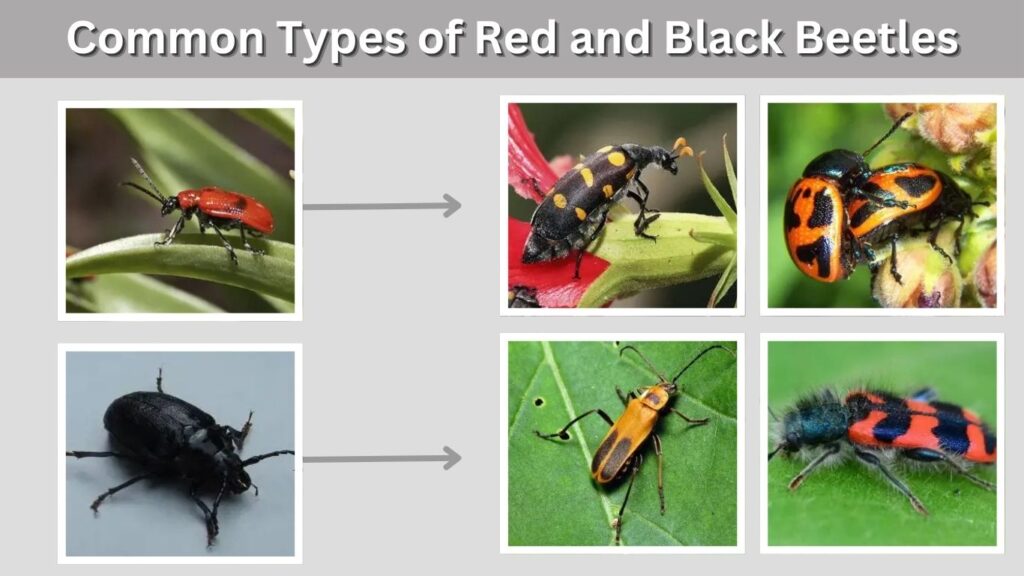
Several beetles have red and black colors. Some are beneficial, some are neutral, and a few can become pests. Correct identification helps you decide whether the insect should be left alone or controlled.
The table below shows common red and black beetles and their key features.
| Beetle Type | Main Features | Common Location | Harmful or Harmless |
|---|---|---|---|
| Lady Beetle | Round red body with black spots | Gardens, plants, homes | Mostly beneficial |
| Blister Beetle | Long soft body, red and black markings | Fields, flowers, crops | Can irritate skin |
| Milkweed Leaf Beetle | Red/orange and black body | Milkweed plants | Usually harmless |
| Soldier Beetle | Narrow body, red-orange and black | Flowers and gardens | Beneficial |
| Longhorn Beetle | Long antennae, patterned body | Trees, logs, gardens | Depends on species |
| Checkered Beetle | Red and black pattern, narrow body | Flowers, bark, wood | Mostly beneficial |
Lady Beetles
Lady beetles, also called ladybugs, are among the most familiar red and black beetles. They usually have a round or dome-shaped body with red or orange wing covers and black spots. Some species may also have black bodies with red markings.
Lady beetles are useful in gardens because they feed on aphids, scale insects, and other soft-bodied pests. They may enter homes in large numbers during cooler months, but they do not damage wood, furniture, or stored food.
Blister Beetles
Blister beetles can be red and black, black and red striped, or mostly dark with bright markings. They have long, soft bodies and narrow heads. These beetles are important to identify because some species release a chemical called cantharidin, which can irritate skin.
They are often found on flowers, vegetables, and field crops. Avoid crushing them with bare hands. If they appear in large numbers on plants, remove them carefully using gloves.
Milkweed Beetles
Red and black beetles on milkweed are often milkweed leaf beetles or other milkweed-feeding insects. These insects are usually found on milkweed leaves, stems, flowers, or seed pods. Their bright colors warn predators that they may taste bad.
Milkweed beetles do not usually cause serious damage unless they are present in large groups. They are part of the natural milkweed ecosystem and often appear alongside monarch caterpillars, milkweed bugs, and aphids.
Soldier Beetles
Soldier beetles often have orange-red and black markings. Their bodies are softer and longer than lady beetles. They are commonly seen on flowers, especially in summer. Many feed on pollen, nectar, and small insects.
These beetles are considered beneficial because they may help with pollination and pest control. They usually do not bite, sting, or damage homes.
How to Identify a Red and Black Beetle
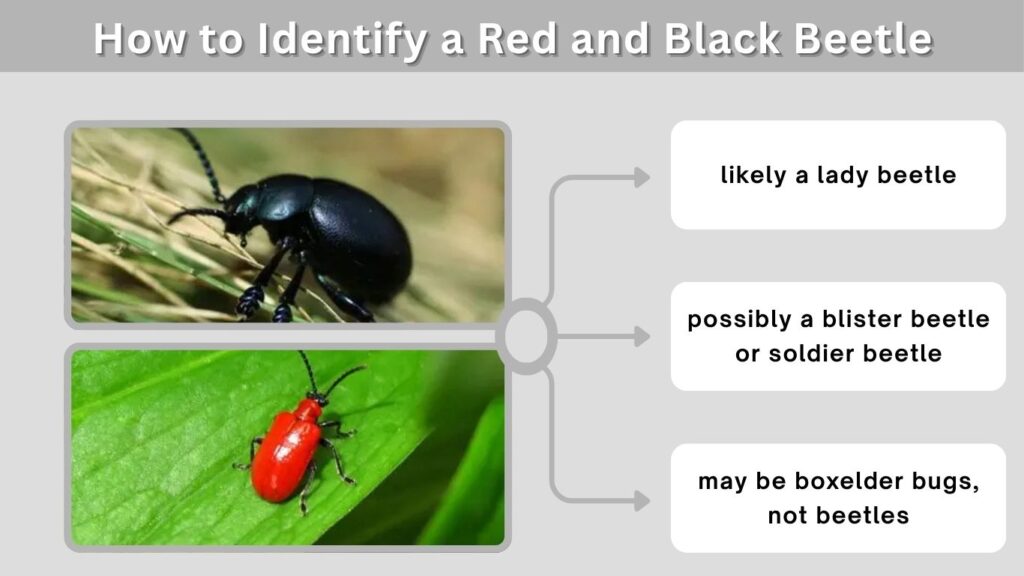
Identification depends on color, body shape, size, location, and behavior. A red and black insect in the garden may be harmless, while one inside the home may be a seasonal invader or a look-alike bug.
Look closely before deciding what it is. Do not rely only on color because many insects share red and black patterns.
Identification Checklist
Use these signs to narrow down the beetle type:
- Round body with black spots: likely a lady beetle
- Long soft body: possibly a blister beetle or soldier beetle
- Found on milkweed: likely a milkweed beetle or milkweed bug
- Very long antennae: may be a longhorn beetle
- Red stripes on black body: could be a striped beetle or look-alike bug
- Large groups on walls: may be boxelder bugs, not beetles
- Flying from flowers: often soldier beetles or blister beetles
- Tiny beetles indoors: could be carpet beetles or lady beetles
If the insect has a hard shell divided down the back, it is more likely a beetle. If it has a flat body with an X-shaped wing pattern, it may be a true bug instead.
Red and Black Beetle vs Boxelder Bug
Boxelder bugs are often confused with red and black beetles. They have black bodies with red-orange lines along the wings and edges. However, they are not beetles. They are true bugs.
Boxelder bugs have flatter bodies and long, thin legs. They often gather on sunny walls, windows, and doors in fall. Unlike beetles, they do not have hard wing covers. They are mostly a nuisance pest and do not cause serious structural damage.
Red and Black Beetle vs Milkweed Bug
Milkweed bugs are also red and black, but they are not beetles. They have a long oval body with an X-like pattern on the back. They feed on milkweed seeds and often appear in groups.
Milkweed beetles, on the other hand, usually have harder bodies and beetle-like wing covers. Both are common on milkweed, so body shape is the best clue.
Where Red and Black Beetles Live
Red and black beetles live in many places, including gardens, fields, forests, lawns, and farms. Some species stay close to specific host plants, while others move from flower to flower searching for food.
You may also see them around homes, especially near lights, windows, siding, or warm outdoor walls. Indoor sightings are usually accidental unless they are overwintering insects.
In Gardens
Gardens attract many red and black beetles because they offer food, shelter, and flowering plants. Lady beetles hunt aphids on roses, vegetables, and fruit plants. Soldier beetles visit flowers for nectar and pollen. Blister beetles may feed on leaves and blossoms.
Common garden locations include:
- Vegetable plants
- Flower beds
- Milkweed patches
- Tall weeds
- Fruit trees
- Compost edges
- Sunny leaves and stems
Most garden beetles should not be killed unless they are clearly damaging plants or appearing in large numbers.
On Milkweed Plants
Milkweed is a hotspot for red and black insects. Milkweed leaf beetles, milkweed bugs, and red milkweed beetles may all appear on the same plant. Their colors help protect them from predators.
These insects often feed on leaves, stems, flowers, or seeds. Minor feeding damage is normal. Healthy milkweed plants can usually tolerate them without serious problems.
Inside the House
Red and black beetles inside the house are often accidental visitors. Lady beetles may enter homes in fall to overwinter. Small beetles may come through cracks, windows, vents, or doors.
If you find many red and black insects indoors, check windows, attic spaces, wall gaps, and sunny sides of the house. Vacuuming is usually the safest way to remove them.
Are Red and Black Beetles Dangerous?
Most red and black beetles are not dangerous to humans. They usually do not bite or sting. However, some species can irritate skin, damage plants, or become annoying when they gather in large numbers.
The main concern depends on the beetle type. Lady beetles are mostly helpful. Blister beetles require more caution. Milkweed beetles are usually harmless outdoors.
Risk to Humans
Most red and black beetles are safe to observe. They do not attack people. Still, avoid handling unknown beetles with bare hands, especially long, soft-bodied beetles that may be blister beetles.
Possible issues include mild skin irritation, odor when crushed, or allergic reactions in sensitive people. If you touch an unknown beetle, wash your hands afterward.
Risk to Pets
Pets may sniff, lick, or eat beetles. Most beetles cause little harm, but some can taste bad or cause drooling, vomiting, or mouth irritation. Blister beetles can be more concerning because of their irritating chemical.
Keep pets away from large groups of unknown beetles. If a pet eats many insects and shows symptoms, contact a veterinarian.
Risk to Plants
Some red and black beetles feed on plant leaves, flowers, or seeds. A few may damage crops or garden plants when populations grow. Blister beetles can strip leaves from vegetables and ornamentals.
Beneficial beetles, such as lady beetles and soldier beetles, help control pests instead of harming plants. Before treating the area, identify the beetle carefully.
How to Get Rid of Red and Black Beetles
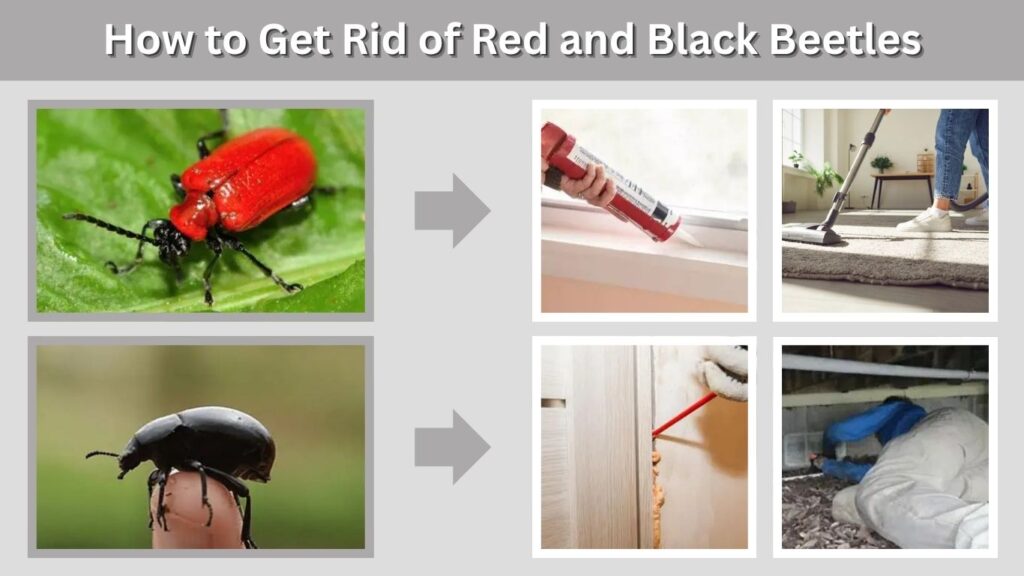
Control is not always needed. If the beetles are beneficial or present in small numbers, it is better to leave them alone. Use removal methods only when they are damaging plants, entering the house, or appearing in large groups.
Start with simple, low-risk methods before using sprays. This protects pollinators and helpful insects.
Natural Removal Methods
For indoor and outdoor control, try these steps:
- Vacuum beetles indoors and empty the vacuum outside
- Seal cracks around windows, doors, vents, and siding
- Remove weeds and plant debris near the house
- Wear gloves when removing unknown beetles by hand
- Spray plants with water to knock off small groups
- Use row covers to protect vegetable crops
- Avoid crushing beetles that may release odor or irritating fluids
- Keep outdoor lights off when beetles are active
For blister beetles, hand-picking should only be done with gloves. Drop them into soapy water instead of crushing them.
Garden Prevention
Healthy garden management can reduce pest beetle problems. Remove heavily damaged leaves, rotate crops, and keep weeds under control. Many beetles hide in dense vegetation, so spacing plants properly can help.
Encourage natural predators such as birds, spiders, and beneficial insects. Avoid broad insecticides unless absolutely necessary because they can kill helpful beetles too.
Indoor Prevention
To stop beetles from entering your home, seal entry points before cooler weather. Check window screens, door sweeps, attic vents, and cracks around siding. Lady beetles and boxelder bugs often enter through small gaps.
Use a vacuum for beetles already inside. Avoid spraying indoor insecticides unless the infestation is severe and properly identified.
FAQs
What is a red and black beetle called?
A red and black beetle may be a lady beetle, blister beetle, soldier beetle, milkweed leaf beetle, longhorn beetle, or checkered beetle. The exact name depends on body shape, markings, size, and where it was found. Some red and black insects are not beetles at all.
Are red and black beetles poisonous?
Most red and black beetles are not poisonous to people. However, some blister beetles can release a chemical that irritates the skin and causes blisters. It is best not to handle unknown red and black beetles with bare hands, especially if they have long, soft bodies.
Why are red and black beetles on my milkweed?
Milkweed attracts several red and black insects because many species feed on milkweed leaves, stems, flowers, or seeds. Milkweed beetles and milkweed bugs are common visitors. They usually do not kill healthy plants, although large groups may cause visible feeding damage.
Do red and black beetles fly?
Many red and black beetles can fly. They have folded wings hidden under their hard wing covers. They may fly between flowers, plants, lights, or warm outdoor surfaces. Some species fly more often during mating season or when searching for food.
How do I know if a red and black beetle is harmful?
Check its body shape and behavior. Round lady beetles are usually helpful. Long, soft-bodied blister beetles need caution. Beetles eating plant leaves in large numbers may be pests. If the insect gathers on walls or windows, it may be a nuisance bug rather than a harmful beetle.