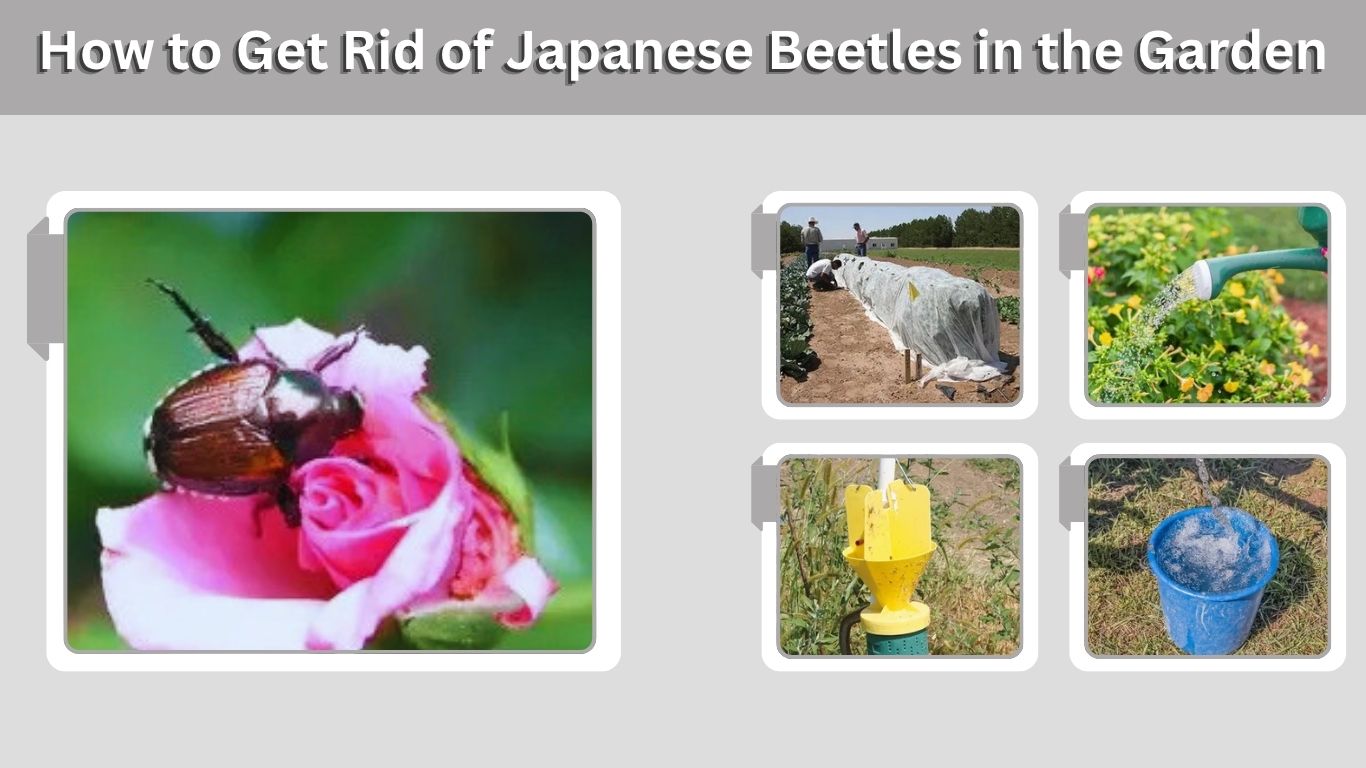
Japanese beetles can quickly damage garden plants by chewing leaves, flowers, fruits, and vegetables. These shiny green and copper beetles often appear in groups, leaving behind skeletonized leaves with only the veins remaining. The best way to get rid of Japanese beetles in the garden is to combine hand-picking, natural sprays, plant protection, and grub control before the infestation becomes severe.
What Are Japanese Beetles?
Japanese beetles are small invasive beetles that feed on hundreds of plants. Adult beetles are usually metallic green with copper-brown wing covers. They are easy to notice because they often gather in groups on roses, grapes, beans, fruit trees, and many ornamental plants.
Adult beetles feed above ground, while their larvae, called grubs, live in the soil. The grubs feed on grass roots and organic matter before becoming adult beetles. This two-stage life cycle makes control more difficult because gardeners often need to manage both adults and grubs.
Why They Are a Problem in Gardens
Japanese beetles are bad for gardens because they feed heavily and attract more beetles once they begin damaging a plant. Their feeding releases plant odors that can bring in additional adults.
Common damage includes:
- Skeletonized leaves
- Chewed flower petals
- Damaged fruit skins
- Weak vegetable plants
- Brown patches in lawns from grubs
- Reduced plant growth
- Increased stress on young plants
- Heavy beetle clusters on roses and beans
A few beetles may not destroy a healthy plant, but large groups can cause serious damage in a short time. Young plants, soft leaves, and flowering plants are often more vulnerable.
How to Get Rid of Japanese Beetles by Hand
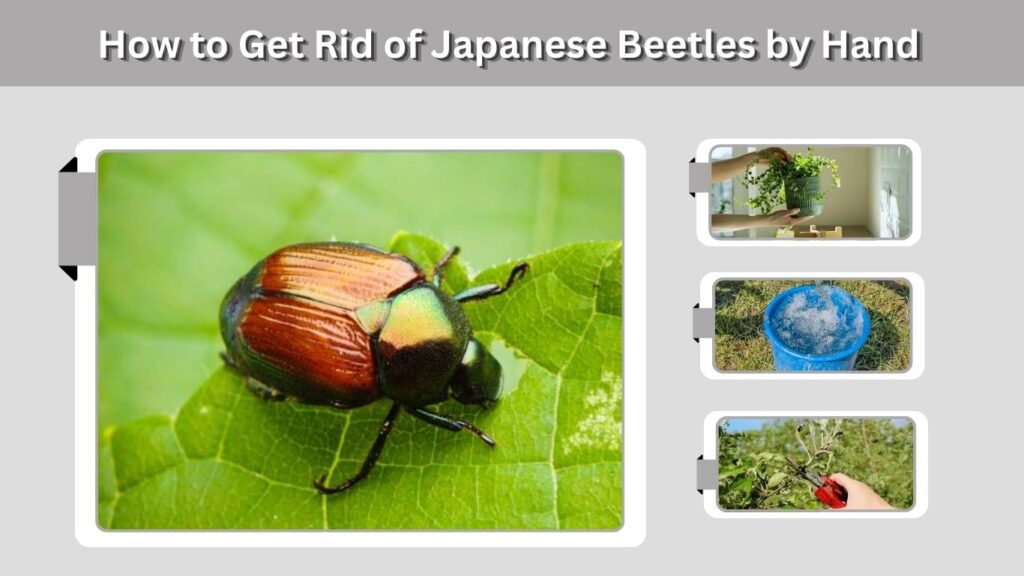
Hand-picking is one of the safest and most effective ways to control Japanese beetles in a home garden. It works best early in the morning when beetles are slower and less active. You can knock them into a bucket of soapy water, where they will quickly drown.
This method is especially useful for vegetable gardens because it avoids chemical sprays on edible crops. It also reduces the number of adult beetles before they mate and lay eggs.
Best Time to Remove Them
Japanese beetles are easiest to remove when they are cool and sluggish. Early morning is usually the best time. Evening can also work, but beetles may be more active during warm weather.
Follow these steps:
- Fill a bucket with water and dish soap
- Hold the bucket under the beetles
- Tap or shake the plant gently
- Let beetles fall into the soapy water
- Check the same plants daily
- Remove damaged leaves when needed
- Repeat during peak beetle season
Do not crush beetles on the plant. Damaged beetles may release odors that attract more beetles. A soapy water bucket is cleaner and more effective.
Natural Ways to Control Japanese Beetles
Natural control methods are often the best choice for vegetable gardens, pollinator gardens, and small home landscapes. These methods reduce beetle numbers without causing unnecessary harm to beneficial insects.
Natural control works best when used consistently. One method alone may not solve a heavy infestation, but several methods together can greatly reduce damage.
Homemade Soapy Water Spray
A mild soapy water spray can help knock beetles off plants and make feeding harder. It is not always a complete solution, but it can support hand-picking and daily garden checks.
To make a simple spray, mix a few drops of mild dish soap with water in a spray bottle. Spray directly on the beetles, not heavily over the whole plant. Always test a small leaf first because some plants are sensitive to soap.
Avoid spraying during hot sun. Early morning or evening is safer because wet leaves are less likely to burn. Also avoid spraying flowers when bees are active.
Neem Oil for Japanese Beetles
Neem oil can help reduce Japanese beetle feeding when used correctly. It works better on young beetles and repeated feeding than as an instant knockdown treatment. Neem may also affect insects that eat sprayed leaves, so it should be used carefully.
Apply neem oil in the evening when pollinators are less active. Do not spray open flowers if bees and other beneficial insects visit them. Follow the label instructions closely because too much neem can damage plants.
Neem oil is most useful as part of a control plan, not as the only treatment. Combine it with hand-picking and plant protection for better results.
How to Protect Garden Plants
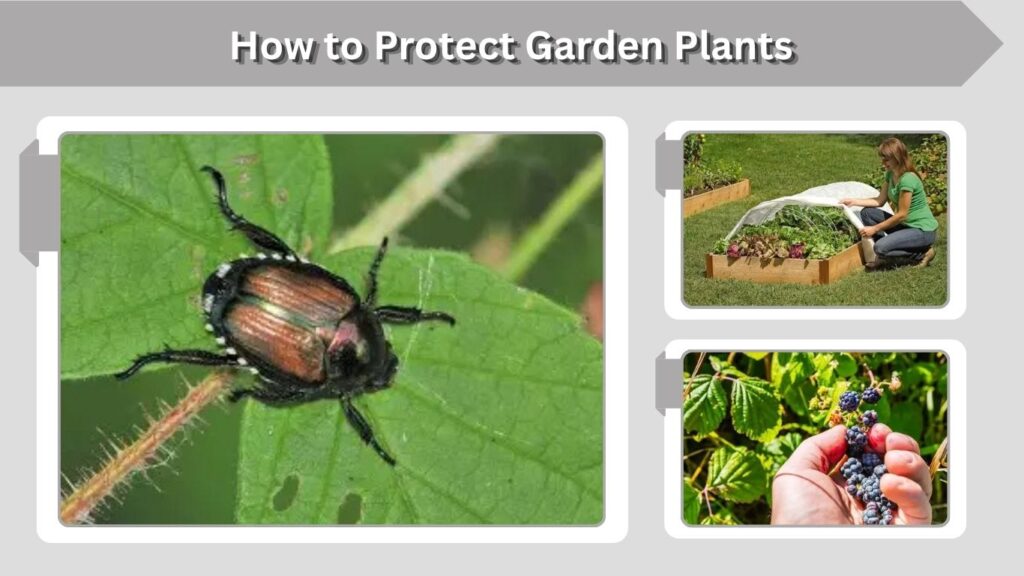
Protecting plants is often easier than killing every beetle. Physical barriers, careful plant selection, and regular inspection can reduce damage before it spreads. This is especially helpful for vegetables, young fruit trees, and high-value garden plants.
Japanese beetles usually target tender leaves, flowers, and ripening fruit. If you protect these areas during peak beetle season, your plants may recover faster and produce better.
Use Row Covers
Row covers can keep Japanese beetles away from vegetables and small plants. Lightweight garden fabric creates a barrier while still allowing light and air to pass through. This method works well for beans, leafy greens, young crops, and small fruit plants.
Use row covers before beetles arrive or as soon as you notice the first adults. Secure the edges so beetles cannot crawl underneath. Remove covers when crops need pollination, or hand-pollinate if needed.
Row covers are not always practical for large shrubs or flowering ornamentals, but they are excellent for vegetable gardens.
Protect Roses and Fruit Plants
Roses, grapes, raspberries, apples, and other fruiting plants are common targets. Japanese beetles often gather on flowers and soft fruit, causing visible damage quickly.
Helpful protection steps include:
- Remove beetles every morning
- Cover small plants with netting
- Pick ripe fruit quickly
- Prune badly damaged leaves
- Avoid over-fertilizing soft new growth
- Keep plants watered during stress
- Remove fallen fruit from the ground
- Watch nearby plants for early beetles
Healthy plants can tolerate some feeding, but repeated heavy damage weakens them. Daily checks during beetle season are important.
Japanese Beetles in Vegetable Gardens
Japanese beetles in vegetable gardens can be frustrating because many gardeners want to avoid harsh insecticides on food crops. The safest control methods include hand-picking, row covers, soapy water, and careful use of labeled organic sprays.
Beans, corn silk, tomatoes, peppers, okra, and leafy crops may suffer damage if beetles are present in large numbers. The damage is often more serious on young plants than on mature, healthy ones.
Safe Control Around Edible Plants
When treating vegetable gardens, always choose methods that are safe for food crops. Read product labels carefully and follow harvest waiting periods if using sprays.
Safe options include:
- Hand-picking beetles daily
- Using floating row covers
- Spraying beetles directly with mild soapy water
- Applying neem oil according to label directions
- Removing badly damaged leaves
- Keeping plants healthy with proper watering
- Avoiding sprays during pollinator activity
Never use a garden spray on vegetables unless the label says it is safe for edible crops. Some products are meant only for ornamental plants.
Should You Use Japanese Beetle Traps?
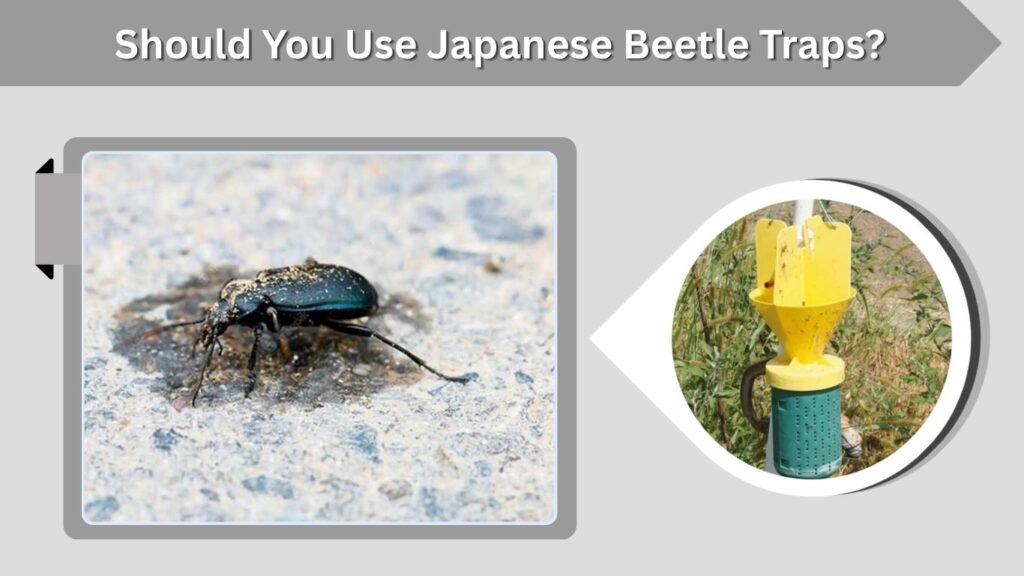
Japanese beetle traps can catch many beetles, but they can also attract more beetles into your yard. These traps use scents that draw beetles from a distance. If placed too close to your garden, they may increase feeding damage near your plants.
Traps may be useful in some cases, but placement is very important. They should be far away from valuable plants, not beside roses, grapes, vegetables, or fruit trees.
When Traps May Help
Traps are not the best first choice for small gardens. However, they may help when used carefully on larger properties.
Use traps only if:
- You can place them far from the garden
- Beetle pressure is already high
- You are trying to reduce adults in a wide area
- You empty the trap regularly
- You do not place them near favorite plants
For most home gardens, hand-picking and plant protection are more reliable than traps near the growing area.
How to Control Japanese Beetle Grubs
Adult beetles are only part of the problem. Japanese beetle grubs live in the soil and feed on grass roots. Controlling grubs can reduce future adult beetle populations, although adults can still fly in from nearby yards.
Grub control is most useful in lawns and grassy areas near the garden. It is not always necessary in vegetable beds unless grubs are present in the soil.
Signs of Grubs in Soil
Japanese beetle grubs are white, C-shaped larvae found below the soil surface. They are most common in lawns, where they damage grass roots.
Signs of grub problems include:
- Brown patches in lawn
- Grass that lifts easily
- Birds or animals digging in soil
- White curled grubs under turf
- Weak grass growth
- Adult beetles returning each year
Beneficial nematodes can help control grubs naturally when applied correctly. Milky spore is another long-term option in some areas, but results can vary by climate and soil conditions.
Garden Sprays for Japanese Beetles
Garden sprays can help during heavy infestations, but they should be used carefully. Some sprays kill beneficial insects along with Japanese beetles. This is a major concern in gardens with bees, butterflies, ladybugs, and other helpful insects.
For vegetable gardens, choose only products labeled for edible plants. For ornamental plants, more options may be available, but careful timing is still important.
Spray Safety Tips
Sprays should be a last step after hand removal and plant protection. If you decide to use a spray, apply it responsibly.
Important safety tips include:
- Read the label before use
- Choose products safe for the plant type
- Avoid spraying open flowers
- Spray in the evening when bees are less active
- Do not spray during windy weather
- Keep children and pets away until safe
- Follow harvest intervals for vegetables
- Avoid repeated unnecessary spraying
Insecticidal soap may help with direct contact, but it often works best when sprayed directly on the beetles. It may not protect plants for long after drying.
How to Prevent Japanese Beetles in the Garden
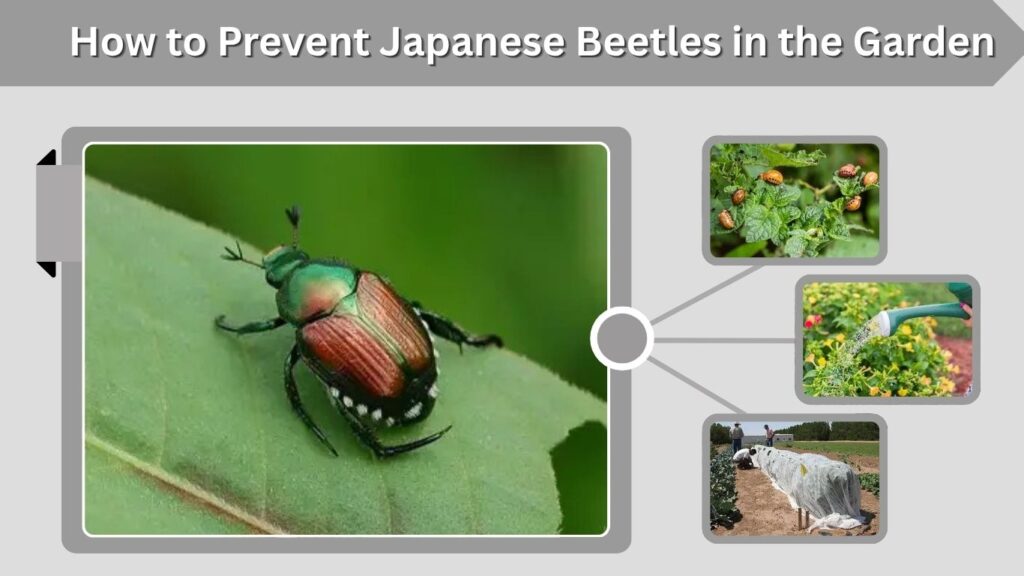
Prevention is easier than fighting a large infestation. Japanese beetles are attracted to certain plants, damaged leaves, and ripe fruit. Reducing these attractants can lower pressure in your garden.
You cannot always prevent beetles completely because they can fly from nearby areas. However, a well-maintained garden is less likely to suffer severe damage.
Prevention Methods That Work
A strong prevention plan combines plant care, monitoring, and soil management.
Helpful steps include:
- Check plants daily during beetle season
- Remove the first beetles quickly
- Avoid planting too many favorite host plants together
- Keep plants watered during dry weather
- Pick ripe fruit before it attracts beetles
- Remove damaged leaves and fallen fruit
- Use row covers on vulnerable crops
- Treat grubs if lawn damage is present
- Encourage birds and beneficial wildlife
- Avoid placing beetle traps near the garden
Healthy plants can usually handle light feeding better than stressed plants. Good watering, mulching, and soil care can help plants recover after damage.
Plants Japanese Beetles Like Most
Japanese beetles feed on many garden and landscape plants, but some are more attractive than others. Knowing their favorite plants helps you monitor the right areas first.
They commonly feed on roses, grapes, raspberries, beans, apples, cherries, plums, peaches, hibiscus, birch, linden, and crape myrtle. If these plants are in your garden, check them often during summer.
Plants They Often Avoid
Some plants are less attractive to Japanese beetles. They may not guarantee full protection, but using resistant plants can reduce damage over time.
Less preferred plants may include:
- Boxwood
- Dogwood
- Forsythia
- Holly
- Lilac
- Magnolia
- Red maple
- Sweetgum
- Yew
- Begonia
- Marigold
- Geranium
Plant resistance can vary by region and beetle pressure. During a heavy outbreak, beetles may still feed on plants they usually avoid.
Are Japanese Beetles Good for the Garden?
Japanese beetles are not considered good for gardens. Adult beetles damage leaves, flowers, and fruit, while grubs can damage grass roots. Although birds and other animals may eat some beetles, the damage they cause usually outweighs any small benefit.
A few beetles may not be a major problem, but large groups can weaken plants and reduce harvest quality. Controlling them early is the best way to avoid serious garden damage.
FAQs
What is the best way to get rid of Japanese beetles in the garden?
The best method is to combine daily hand-picking, soapy water, row covers, and careful plant monitoring. For heavy infestations, neem oil or labeled garden sprays may help. Controlling grubs in nearby lawns can also reduce future beetle pressure.
How do I get rid of Japanese beetles naturally?
Natural control includes knocking beetles into soapy water, using row covers, applying neem oil carefully, removing damaged leaves, and treating grubs with beneficial nematodes. These methods work best when started early before beetles gather in large groups.
Are Japanese beetles bad for vegetable gardens?
Yes, Japanese beetles can damage vegetable gardens by chewing leaves, flowers, and developing crops. Beans, corn silk, and soft leaves are common targets. Hand-picking and row covers are usually the safest control options for edible plants.
Does insecticidal soap kill Japanese beetles?
Insecticidal soap may kill Japanese beetles when sprayed directly on them, but it does not provide long-lasting protection after drying. It works best as a contact treatment. Always test a small plant area first and follow the product label.
How can I keep Japanese beetles out of my garden?
You can reduce Japanese beetles by removing the first adults quickly, using row covers, picking ripe fruit, avoiding traps near plants, and controlling lawn grubs. You may not keep every beetle away, but early prevention can greatly reduce damage.