
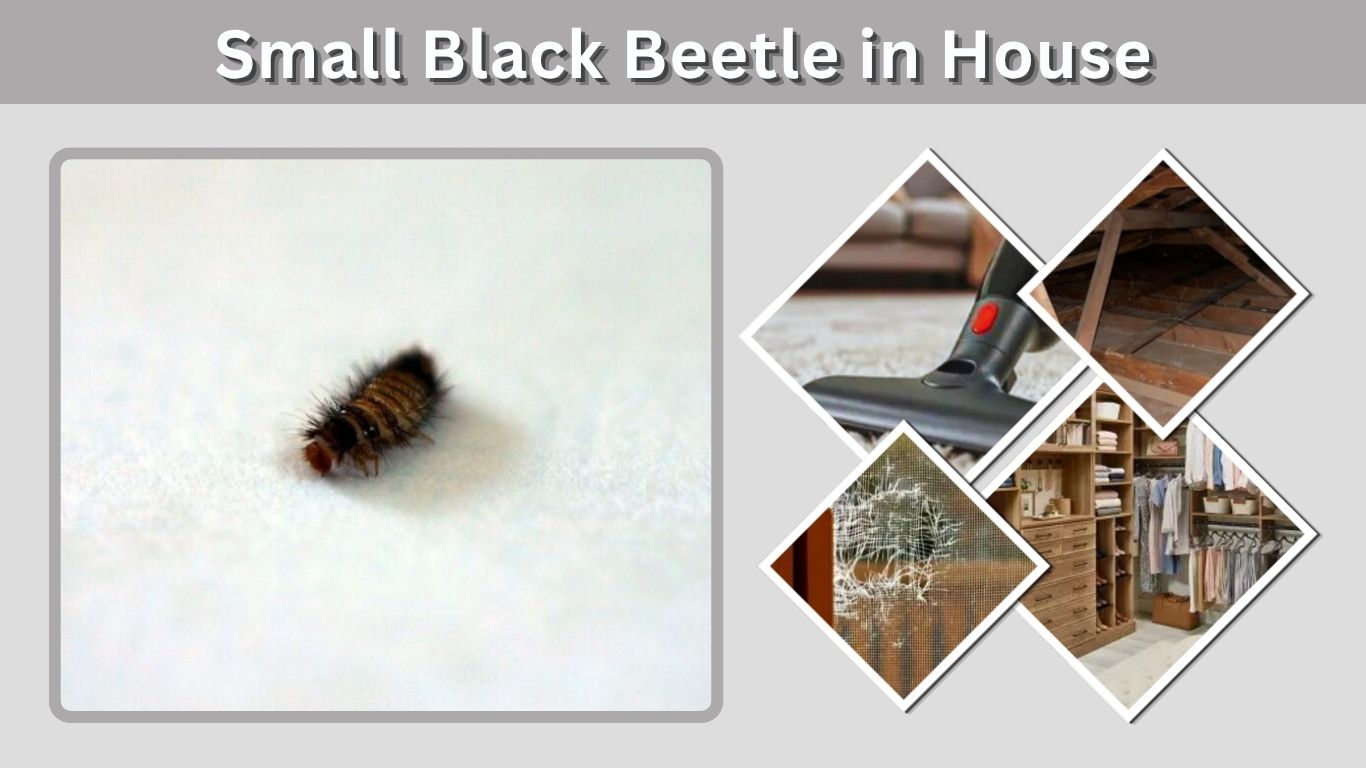
A small black beetle in the house can be confusing because many insects look similar at first glance. Some are harmless outdoor visitors, while others may damage fabrics, stored food, carpets, or wood. Correct identification is the first step before using any treatment. This guide explains common types, where they hide, why they enter homes, and how to remove them safely.
What Is a Small Black Beetle?
Small black beetles are not one single insect. The phrase can describe several beetle species with dark, oval, round, shiny, flat, or spotted bodies. Some fly toward lights, some crawl near windows, and some hide in carpets, closets, kitchens, or bathrooms.
Most small black beetles are not dangerous to humans. However, some can become household pests when their larvae feed on natural fibers, pet hair, dead insects, stored food, or organic debris. Their size, body shape, markings, and location inside the home can help you identify them.
Common Features
Many small black beetles share a few visible features:
- Hard outer wing covers
- Oval, round, or slightly flat body
- Six legs and short antennae
- Slow crawling or short flying movement
- Black, dark brown, gray, or patterned color
- Size often between 1/16 and 1/4 inch
A small shiny black beetle may be a carpet beetle, pantry beetle, ground beetle, or another outdoor beetle that entered by accident. If it has white spots, stripes, or patches, carpet beetles are often a strong possibility.
Why Identification Matters
Different beetles need different control methods. A carpet beetle problem starts with fabrics, lint, pet hair, and stored clothing. A pantry beetle problem starts with flour, grains, cereal, rice, or dried food. A ground beetle may simply wander indoors and does not usually breed inside.
Using the wrong treatment can waste time. Instead of spraying randomly, look at where the beetles appear most often. The room, food source, and body pattern usually give better clues than color alone.
Common Small Black Beetles Found Indoors
Several beetles can appear as tiny black bugs in a home. Some are true indoor pests, while others come from outdoors through doors, windows, vents, cracks, or gaps around lights.
The table below gives a quick comparison of common possibilities.
| Beetle Type | Common Look | Where Found | Main Concern |
|---|---|---|---|
| Black carpet beetle | Small, oval, dark black or brown | Carpets, closets, baseboards | Larvae damage fabrics |
| Varied carpet beetle | Round, black with white/yellow patches | Windows, carpets, clothing storage | Larvae feed on natural fibers |
| Ground beetle | Shiny black, longer body | Basement, garage, doors | Usually accidental visitor |
| Pantry beetle | Small dark beetle | Kitchen, cabinets, dry foods | Stored food infestation |
| Spider beetle | Round body, long legs, dark brown-black | Storage areas, old food, walls | Feeds on dry organic matter |
Black Carpet Beetles
Black carpet beetles are one of the most common small black beetles in homes. Adults are usually oval, dark, and tiny. The adult beetles may appear near windows because they are attracted to light, but the larvae cause the real damage.
Larvae feed on wool, silk, feathers, leather, pet hair, lint, dead insects, and other natural materials. You may find them near rugs, closets, upholstered furniture, baseboards, air vents, or under beds. Signs include shed larval skins, small fabric holes, and tiny beetles near sunny windows.
Small Black Beetle with White Spots
A small black beetle with white spots or pale patches is often a type of carpet beetle, especially the varied carpet beetle. These beetles may look round and patterned, with white, tan, yellow, or brown scales on the back.
Adults usually do not damage clothes. They feed on pollen outdoors and may enter through windows or flowers. The larvae, however, can live indoors and feed on natural fibers. If you see spotted adults often, check nearby closets, rugs, pet bedding, stored blankets, and fabric storage boxes.
Small Black Flying Beetles
Small black beetles with wings may fly around lights, windows, or doors. Many beetles have wings hidden under hard wing covers, even if they do not fly strongly. Flying beetles inside the house may include carpet beetles, pantry beetles, drugstore beetles, or outdoor beetles.
If they appear mostly at night near lights, they may be outdoor beetles entering through gaps. If they appear from kitchen cabinets, inspect dry food. If they appear from closets or carpets, check for carpet beetle larvae.
Why Small Black Beetles Come Into the House
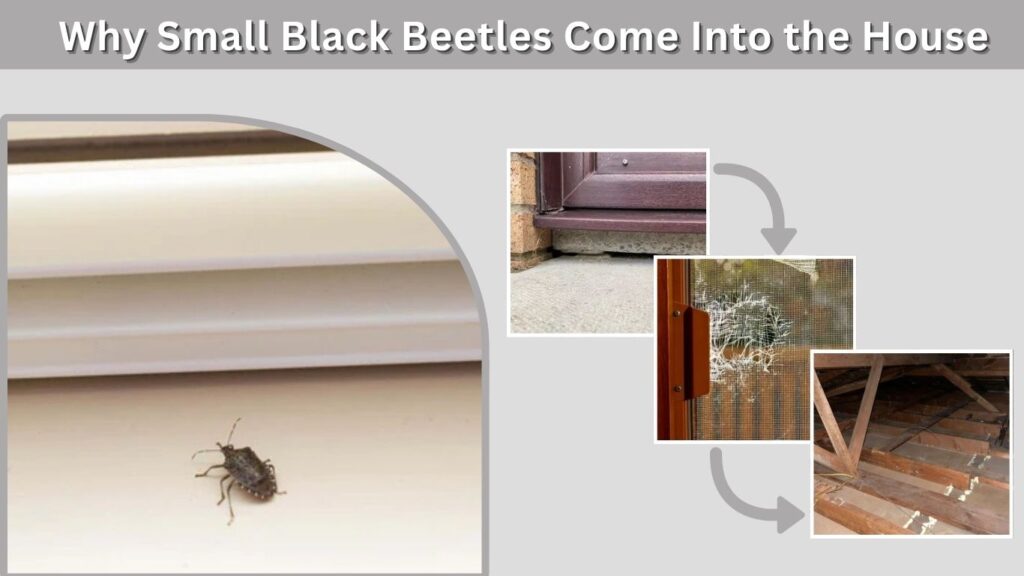
Small black beetles enter homes for shelter, food, warmth, moisture, or light. Some come inside by accident, while others find enough food to reproduce indoors.
They can enter through window screens, door gaps, vents, cracks in siding, attic openings, packages, used furniture, flowers, pet bedding, or stored food. Once inside, they may hide in quiet, dark places.
Common Entry Points
Check these areas if beetles keep returning:
- Gaps under exterior doors
- Torn window screens
- Cracks around windows
- Open vents or attic gaps
- Garage doors and basement entries
- Firewood, plants, or outdoor items brought inside
- Used rugs, furniture, or storage boxes
- Dry foods already carrying pantry pests
Sealing entry points helps prevent new beetles from entering. However, if beetles are already breeding indoors, sealing alone will not remove the source.
Food Sources Indoors
Small black beetles survive when they find food. Carpet beetle larvae prefer lint, hair, wool, feathers, fur, silk, and dead insects. Pantry beetles feed on dry stored foods. Spider beetles may feed on old crumbs, dried organic material, or forgotten food in storage areas.
A clean-looking room can still support beetles if lint builds up under furniture or along baseboards. Pet hair, old bird nests in vents, dead insects in wall voids, and rarely moved storage boxes can also attract them.
Seasonal Movement
Many beetles become more noticeable in spring and summer. Adults may fly indoors from outside or emerge from hidden indoor sources. In colder months, beetles may enter homes looking for shelter.
Finding one or two beetles does not always mean infestation. Repeated sightings, larvae, shed skins, fabric damage, or beetles appearing in the same room usually indicate a source nearby.
How to Identify the Beetle Correctly
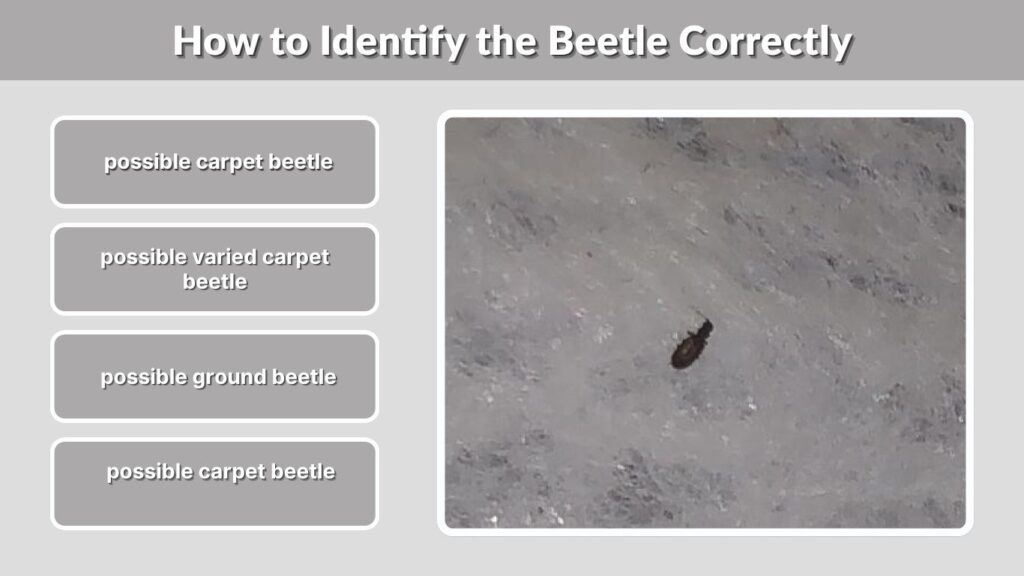
The best way to identify a small black beetle is to observe its shape, markings, movement, and location. A close photo can help, but you can also use simple visual clues.
Do not rely only on color. Many beetles are black or dark brown. Look for body shape, spots, stripes, wings, and where the insect appears.
Identification Checklist
Use this checklist before choosing a treatment:
- Oval and tiny: possible carpet beetle
- Round with white spots: possible varied carpet beetle
- Long and shiny: possible ground beetle
- Found in flour or cereal: possible pantry beetle
- Found in closet or carpet: possible carpet beetle
- Found near bathroom drain: may be another moisture insect, not always a beetle
- Found in bed: inspect fabrics, pet hair, and nearby carpets
- Flying near lights: may be outdoor beetle or adult carpet beetle
If the beetle has a hard shell and visible wing covers, it is likely a beetle. If it is soft-bodied, jumps, or has many legs, it may be another insect.
Small Black Beetles in Kitchen
Small black beetles in the kitchen may come from pantry items. Check flour, rice, cereal, pasta, spices, pet food, seeds, nuts, and dried fruit. Look for tiny beetles inside packaging, webbing, dust, holes in bags, or crawling insects on shelves.
Throw away heavily infested food in sealed bags. Vacuum shelves, wipe cracks, and store dry foods in airtight containers. Avoid keeping old opened products for long periods.
Small Black Beetles in Bedroom or Bed
Small black beetles in bedrooms are often connected to fabrics, carpets, pet hair, or storage under the bed. Carpet beetle larvae can hide in quiet areas and feed on natural materials. Adults may crawl on beds by accident, especially if the bed is near a window.
Wash bedding, vacuum under the bed, clean baseboards, and inspect wool blankets, stored clothing, pillows, and pet bedding. Beetles in bed are not the same as bed bugs, but careful inspection is still important.
Do Small Black Beetles Bite?
Most small black beetles do not bite humans. Carpet beetles do not bite, but their larvae can cause skin irritation in some people. The tiny hairs on larvae may trigger itchy bumps or a rash-like reaction, especially when they contact skin, bedding, or clothing.
Some beetles can pinch or bite if handled, but household beetles are usually not aggressive. If you notice repeated skin marks, inspect for bed bugs, fleas, mites, mosquitoes, or other biting pests. Do not assume every small black insect is causing bites.
Carpet Beetle Rash vs Bite
A carpet beetle rash is not a true bite. It happens when sensitive skin reacts to larval hairs or shed skins. The irritation may appear where clothing, bedding, or carpets contact the skin.
Cleaning is the main solution. Wash fabrics in hot water when possible, vacuum thoroughly, and remove larvae, shed skins, and lint. If irritation is serious or ongoing, a medical professional can help identify the cause.
Are They Harmful to Pets?
Small black beetles usually do not harm pets directly. However, pet hair and bedding can attract carpet beetle larvae. Dogs and cats may carry hair, dander, and outdoor debris into the home, creating food sources for larvae.
Wash pet bedding often, vacuum around pet resting areas, and clean under furniture. If pets scratch frequently, check for fleas as well, since fleas are more likely to bite than beetles.
When to Be Concerned
Be concerned when you see many beetles, larvae, shed skins, fabric holes, or repeated insects in the same room. A single beetle near a door may not be serious. A steady number near carpets, cabinets, or beds suggests an indoor source.
Finding the source is more important than killing visible adults. Adults are often only the sign; larvae or food sources may be hidden nearby.
How to Get Rid of Small Black Beetles in the House
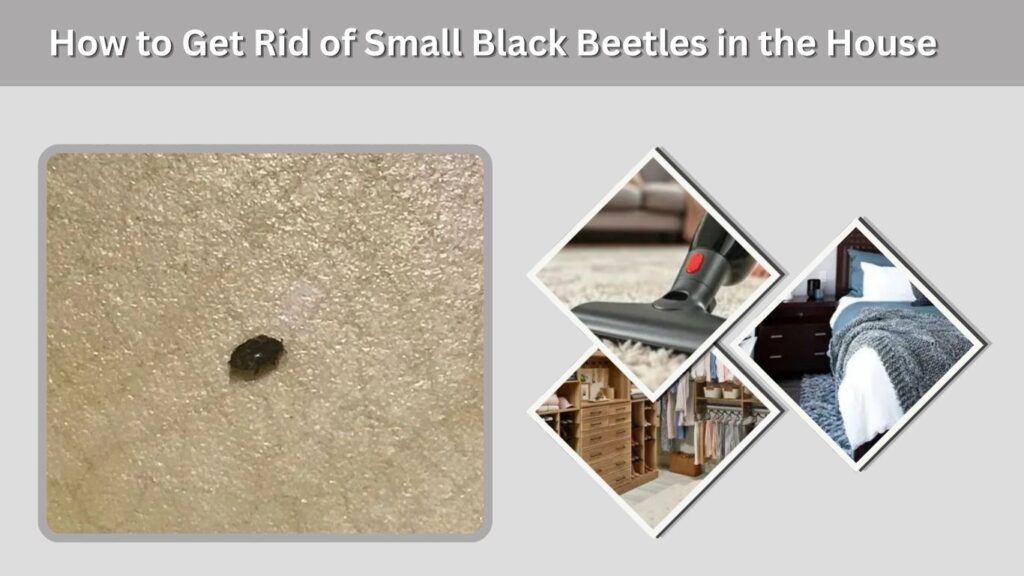
Removing small black beetles requires cleaning, source control, sealing, and prevention. Sprays alone rarely solve the problem if larvae or infested items remain hidden.
Start by identifying the room with the highest activity. Then inspect nearby food, fabric, storage, and cracks.
Step-by-Step Removal
Follow these steps for better control:
- Vacuum carpets, rugs, baseboards, closets, furniture edges, and under beds.
- Empty the vacuum outside or seal the contents before disposal.
- Wash bedding, clothing, curtains, and pet bedding when needed.
- Inspect dry foods and throw away infested pantry products.
- Store grains, flour, cereal, and pet food in sealed containers.
- Remove lint, hair, dead insects, and old nests from hidden areas.
- Seal cracks around doors, windows, vents, and utility openings.
- Use sticky traps to monitor beetle activity.
- Repeat cleaning weekly until beetles disappear.
For carpet beetles, focus on larvae. For pantry beetles, focus on food packages. For outdoor beetles, focus on exclusion and light management.
Natural Prevention Tips
You can reduce beetles without heavy chemical use by improving storage and cleaning habits. Keep closets dry, avoid storing dirty clothing, and use sealed bins for wool, silk, feathers, and seasonal fabrics.
Regular vacuuming is one of the strongest prevention methods. Pay special attention to edges, corners, under furniture, and behind doors. These quiet places collect lint and hair, which can feed larvae.
When to Call Pest Control
Call a pest control professional if beetles keep appearing after repeated cleaning, if larvae are widespread, or if you cannot find the source. Professional inspection can help identify hidden infestations in walls, attics, crawl spaces, vents, or stored materials.
This is especially helpful when beetles appear in many rooms or return every season despite cleaning and sealing.
FAQs
What are the small black beetles in my house?
They may be carpet beetles, ground beetles, pantry beetles, spider beetles, or other small dark beetles. The correct answer depends on their shape, markings, and location. Beetles near closets often point to carpet beetles, while beetles in kitchen cabinets may point to pantry pests.
Why do I see small black beetles near windows?
Many adult beetles are attracted to light and crawl toward windows after entering the home. Carpet beetle adults also commonly appear on windowsills. Check nearby carpets, closets, and baseboards for larvae, because the adult beetles may be emerging from a hidden indoor source.
Are small black carpet beetles dangerous?
Small black carpet beetles are not dangerous in the same way as biting insects. They do not bite people, but their larvae can damage wool, silk, feathers, fur, and other natural materials. Some people may also get skin irritation from larval hairs.
How do I get rid of small black beetles naturally?
Vacuum thoroughly, wash fabrics, remove lint and pet hair, inspect pantry foods, and seal cracks around windows and doors. Store dry foods and seasonal clothes in airtight containers. Natural control works best when you remove the food source and repeat cleaning regularly.
Can small black beetles fly?
Yes, many small black beetles can fly because they have wings under their hard wing covers. Some fly strongly toward lights, while others fly only short distances. If flying beetles appear indoors often, check lights, windows, pantry items, carpets, and entry gaps.
