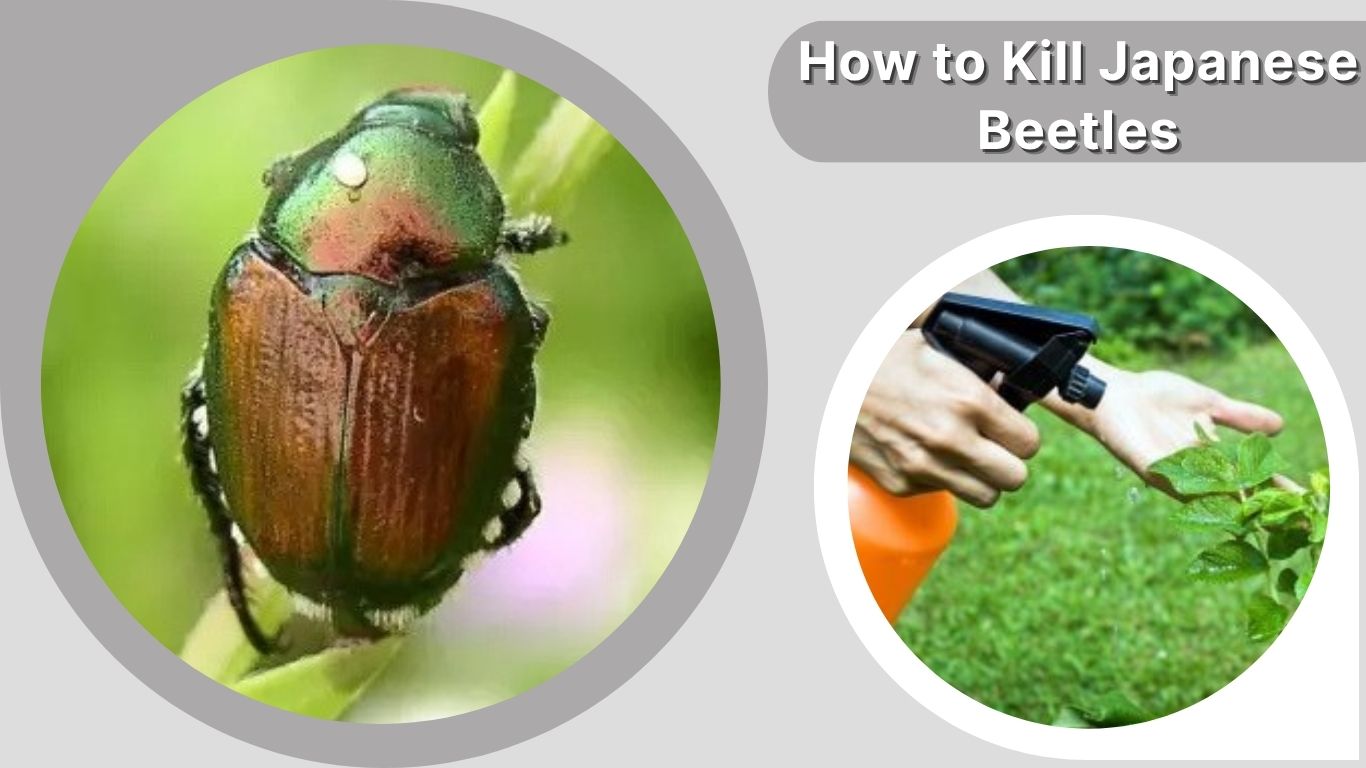
Japanese beetles can quickly damage roses, grapes, fruit trees, vegetables, and ornamental plants. Adult beetles chew leaves into a lace-like pattern, while their grubs feed underground on grass roots. The best control plan targets both stages: remove adults from plants, protect sensitive foliage, and treat grubs before they become next season’s beetles. Here is a practical guide to killing Japanese beetles safely and effectively.
What Kills Japanese Beetles Fast?
Japanese beetles can be killed by hand-picking, soapy water, neem oil, insecticidal soap, pyrethrin sprays, carbaryl products, and some grub treatments. The right choice depends on where the beetles are feeding, how heavy the infestation is, and whether you want a natural or chemical method. Adult beetles and grubs need different control methods because they live in different places.
Best Quick-Kill Options
- Soapy water: Drop adult beetles into a bucket of water mixed with dish soap. This is one of the safest ways to kill them instantly.
- Hand-picking: Remove beetles early in the morning when they are slower and easier to catch.
- Neem oil: Works best when sprayed directly on leaves and beetles at the first sign of damage.
- Pyrethrin spray: A fast-acting contact spray for adult beetles.
- Carbaryl or Sevin-type products: Can kill Japanese beetles, but they may also harm pollinators if used carelessly.
- Grub killer: Targets larvae in the lawn before they become adults.
Adult Japanese beetles feed on more than 300 ornamental and agricultural plants, and grubs damage turf by feeding on grass roots.
Why Timing Matters
Japanese beetles are easiest to manage when you act early. Adults often appear in early to midsummer and feed for several weeks. If you wait until plants are covered, the damage becomes harder to stop. Check roses, grapes, hibiscus, fruit trees, beans, and other favorite plants daily during peak season.
How to Kill Japanese Beetles Naturally
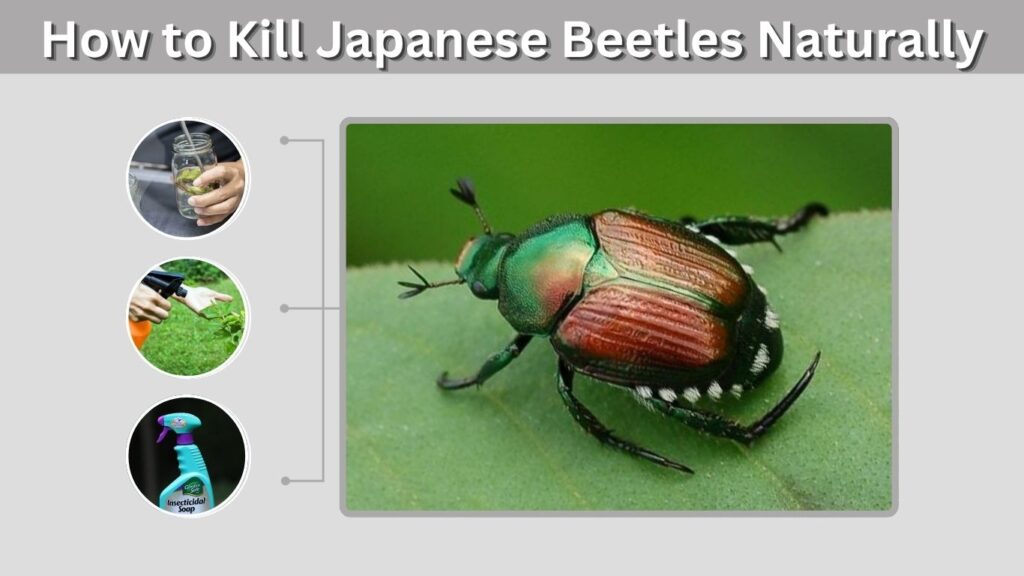
Natural control is often the best starting point, especially in vegetable gardens, flower beds, and pollinator-friendly landscapes. These methods reduce beetle numbers without creating unnecessary risk for bees, butterflies, pets, or edible plants. Natural methods work best when repeated consistently.
Hand-Pick Beetles Into Soapy Water
The simplest natural method is hand-picking. Fill a small bucket with water and a few drops of dish soap. Hold the bucket under the beetles and tap the leaves. Many beetles will drop directly into the water.
Do this in the early morning or evening. Japanese beetles are less active when temperatures are cooler, so they are easier to remove. This method is especially useful on roses, grapevines, small fruit trees, and garden vegetables.
Use Neem Oil on Affected Plants
Neem oil can help reduce feeding and reproduction when applied correctly. It does not always kill every beetle immediately, but it can slow damage and make treated plants less attractive. Spray the tops and undersides of leaves where beetles are feeding.
Use neem oil in the early morning or evening to avoid leaf burn and reduce risk to pollinators. Do not spray open flowers where bees are active. Reapply after rain and follow the product label.
Try Insecticidal Soap
Insecticidal soap works best when sprayed directly on beetles. It has little residual effect after it dries, so it is more useful for direct contact than long-term protection. It can be a good option for gardeners who want a softer treatment than broad-spectrum insecticides.
Avoid spraying during hot midday sun because some plants may suffer leaf damage. Test a small area first if the plant is sensitive.
Does Diatomaceous Earth Kill Japanese Beetles?
Diatomaceous earth may kill some beetles if it contacts their bodies, but it is not always the most reliable control for Japanese beetles on leafy plants. Rain, watering, and humidity reduce its effectiveness. It can also affect beneficial insects if applied broadly.
Use it only in dry conditions and avoid dusting flowers. For heavy infestations, hand-picking, neem oil, or labeled sprays usually work better.
Natural Japanese Beetle Control Methods
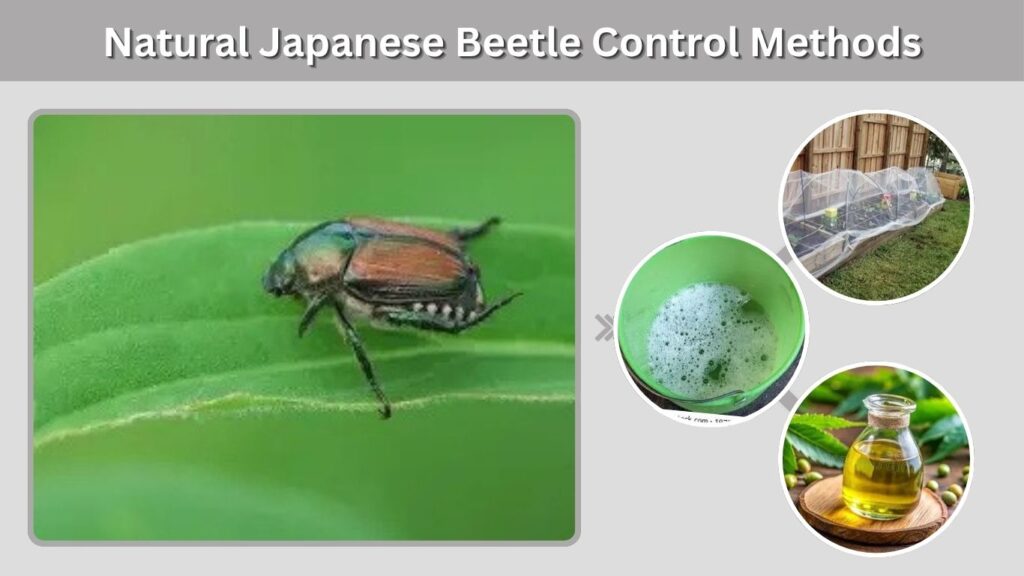
Natural control is more effective when you combine several methods. One method may reduce beetles for a day, but a complete plan keeps pressure low throughout the season. This is important because Japanese beetles can fly in from nearby lawns and gardens.
| Method | Best For | How Fast It Works | Notes |
| Soapy water bucket | Adult beetles | Immediate | Best for small to medium infestations |
| Neem oil | Leaf protection | Slow to moderate | Reapply after rain |
| Insecticidal soap | Direct contact | Fast on contact | Little effect after drying |
| Row covers | Vegetables | Preventive | Use before beetles arrive |
| Beneficial nematodes | Grubs | Gradual | Apply to soil when grubs are active |
| Milky spore | Japanese beetle grubs | Long-term | Works slowly and only on Japanese beetle grubs |
Use Row Covers for Vegetables
Row covers can protect beans, basil, eggplant, and other vulnerable crops during peak beetle season. They create a physical barrier, so beetles cannot land and feed. However, remove covers when crops need pollination, or hand-pollinate if needed.
This method works best before beetles arrive. Once adults are already feeding, remove them first, then cover the plants.
Avoid Overusing Beetle Traps
Japanese beetle traps can attract beetles from surrounding areas. In small yards, traps may bring more beetles close to your plants instead of solving the problem. If you use traps, place them far away from valued plants, not inside the garden.
Many extension-based recommendations suggest using traps carefully because their lures attract beetles strongly. They are better for monitoring or large-property placement than for small garden beds.
Choose Less Attractive Plants
Plant choice can reduce future damage. Japanese beetles often prefer roses, grapes, linden, hibiscus, hollyhocks, and certain fruit trees. You do not need to remove every favorite plant, but mixing in less attractive plants can reduce repeated problems.
Strong, healthy plants also recover better from feeding damage. Water properly, avoid over-fertilizing soft growth, and prune damaged leaves when needed.
What Spray Kills Japanese Beetles?
Sprays can kill Japanese beetles quickly, but they should be used carefully. Some products harm bees, butterflies, lady beetles, and other beneficial insects. Always read and follow the label, especially on vegetables, fruit trees, and flowering plants.
Common Spray Options
- Neem oil spray: Better for light to moderate infestations and repeat protection.
- Pyrethrin spray: Fast contact kill, often used in garden insect sprays.
- Insecticidal soap: Good for direct contact on beetles.
- Carbaryl products: Effective against beetles but risky for pollinators.
- Permethrin or bifenthrin products: Stronger residual control, but should be used cautiously and only where labeled.
- Malathion: May be labeled for some pest control uses, but plant type and local rules matter.
Some chemical insecticides can control adults, but broad-spectrum products may also affect beneficial insects. Extension sources recommend matching the product to the site and using labels carefully.
Does Sevin Kill Japanese Beetles?
Yes, Sevin-type products containing carbaryl can kill Japanese beetles. However, carbaryl can also harm bees and other beneficial insects. Do not apply it to blooming plants when pollinators are visiting. Use it only according to the label and avoid unnecessary spraying.
For roses and ornamentals, spot treatment may be better than spraying the whole yard. For edible plants, check the pre-harvest interval on the label before using any pesticide.
Does Neem Oil Kill Japanese Beetles?
Neem oil can kill or weaken Japanese beetles when applied directly, but it is usually not as instant as stronger contact insecticides. Its biggest benefit is reducing feeding and making plants less suitable for beetles over repeated applications.
For best results, spray affected leaves thoroughly, apply during cooler hours, and repeat every few days during heavy activity. Do not expect one neem application to end a large infestation.
How to Kill Japanese Beetles on Roses
Roses are one of the most common plants attacked by Japanese beetles. Beetles chew petals and leaves, leaving ragged blooms and skeletonized foliage. Since roses also attract pollinators, control should be careful and targeted.
Safe Rose Treatment Steps
- Pick beetles off roses early in the morning.
- Drop them into soapy water.
- Remove badly damaged blooms to reduce attraction.
- Spray neem oil on leaves, not directly on open flowers.
- Use insecticidal soap only when beetles are present.
- Avoid broad sprays when bees are visiting.
- Repeat checks daily during peak season.
If the infestation is severe, a labeled Japanese beetle spray may be needed. Apply it in the evening after bees are less active. Never spray open flowers unless the product label clearly allows it and pollinator risk is managed.
Keep Roses Less Attractive
Japanese beetles are drawn to damaged leaves and flowers because feeding beetles release scents that attract more beetles. Removing beetles early helps prevent large clusters from forming. Keeping rose beds clean and pruning damaged blooms can reduce repeat attacks.
How to Kill Japanese Beetle Grubs
Killing adult beetles helps protect leaves now, but grub control helps reduce future populations. Japanese beetle grubs live in soil and feed on grass roots. Lawns with grub damage may show brown patches, loose turf, or areas dug up by birds and animals searching for larvae.
Best Grub Control Options
- Beneficial nematodes: Microscopic organisms that attack grubs in soil.
- Milky spore: A biological control that targets Japanese beetle grubs.
- Labeled grub killer granules: Chemical products designed for lawn grub control.
- Healthy lawn care: Strong turf can tolerate light grub feeding better.
- Reduced unnecessary watering: Moist soil can favor egg and grub survival.
Japanese beetles have one generation per year in many areas. Adults emerge in summer, lay eggs in soil, and grubs feed on roots later in the season before overwintering.
When to Treat Grubs
Grub treatments work best when grubs are small and actively feeding near the soil surface. Late summer to early fall is often an important treatment window in many regions. Spring treatments may be less effective if grubs are larger and close to pupating.
Water the lawn before and after applying some grub treatments, depending on the product label. Biological controls such as nematodes usually need moist soil and should be applied when sunlight is low.
Will Killing Grubs Stop All Japanese Beetles?
Grub control helps, but it may not stop every adult beetle. Adults can fly in from nearby yards, parks, fields, and untreated lawns. A complete plan includes both grub treatment and adult beetle control on plants.
Do Japanese Beetles Kill Trees and Plants?
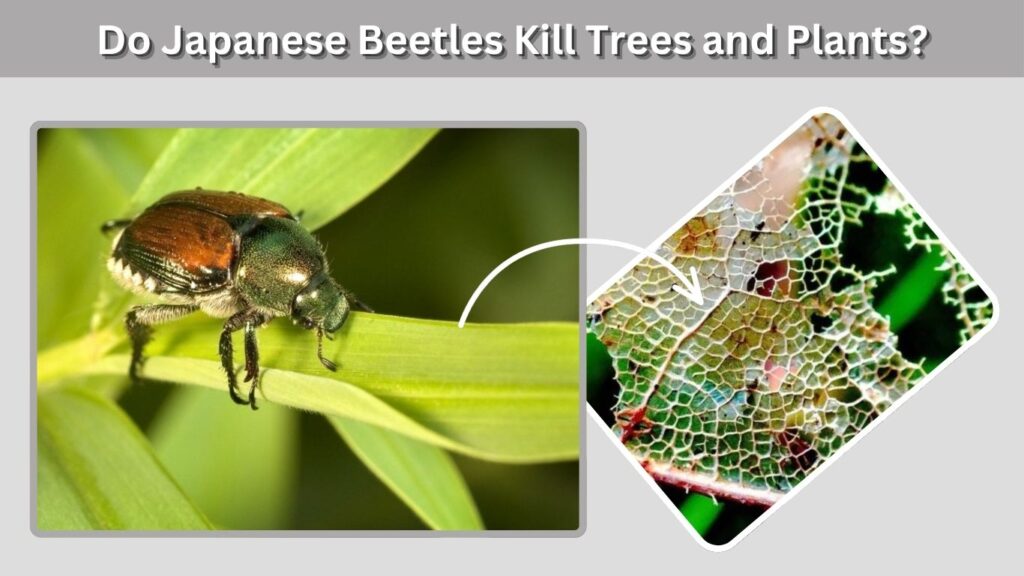
Japanese beetles can badly damage plants, but they do not always kill mature trees or shrubs. Many established plants recover after the feeding season ends. Young trees, stressed plants, roses, grapevines, and fruit crops are more vulnerable.
Signs of Serious Damage
- Leaves look skeletonized or lace-like.
- Flowers are shredded or browned.
- Fruit has chewing damage.
- Beetles gather in large groups.
- Young plants lose many leaves quickly.
- Lawn patches turn brown from grub feeding.
- Turf pulls up easily because roots are damaged.
The USDA notes that adults chew irregular holes and skeletonize leaves, while grubs damage turf roots below the soil.
When Plants Need Extra Protection
Protect young trees, newly planted shrubs, vegetable crops, and fruiting plants first. Mature ornamental trees may look bad for a few weeks but often survive. If a plant is already drought-stressed, newly transplanted, or repeatedly defoliated, beetle feeding becomes more serious.
Use netting, hand removal, or targeted sprays for high-value plants. Avoid spraying large flowering trees because it can harm pollinators and may not fully reach beetles in the canopy.
Homemade Japanese Beetle Killer
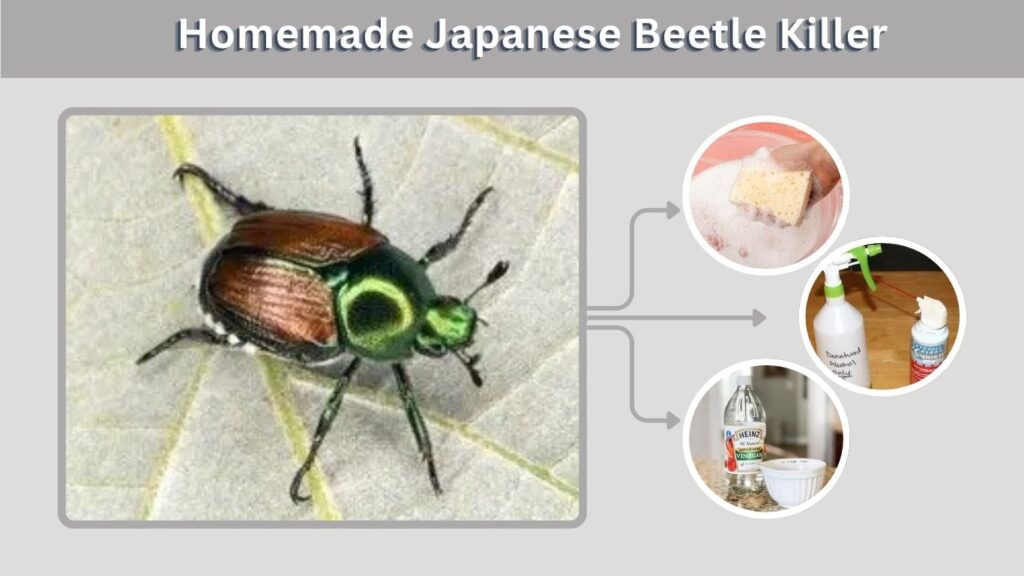
Homemade methods are popular because they are cheap and easy. The most useful homemade beetle killer is a bucket of soapy water. Some homemade sprays may help knock beetles down, but they can also burn leaves if mixed too strongly.
Simple Soapy Water Method
Mix a few drops of dish soap into a bucket of water. Shake beetles from leaves into the bucket. The soap breaks the water surface tension, causing beetles to sink and die.
For a light spray, some gardeners use mild soapy water directly on beetles. Test it on a few leaves first. Strong dish soap mixtures can damage plants, especially in hot weather.
Should You Use Vinegar?
Vinegar may kill beetles on direct contact, but it can also damage plant leaves. It is not the best choice for spraying roses, vegetables, or ornamentals. If used at all, keep it away from valuable foliage and avoid soil drenching.
Home Remedies That Work Best
The best home remedies are simple: hand-picking, soapy water buckets, row covers, and early morning inspections. These methods are safer and more dependable than harsh homemade sprays.
Best Way to Kill Japanese Beetles
The best way to kill Japanese beetles is to combine fast adult removal with long-term grub control. Start with hand-picking and soapy water. Add neem oil or insecticidal soap for moderate problems. Use stronger sprays only when damage is severe and the product is labeled for the plant.
Practical Control Plan
- Inspect favorite plants every morning during beetle season.
- Remove beetles by hand and drop them into soapy water.
- Prune badly damaged flowers and leaves.
- Spray neem oil or insecticidal soap when beetles continue feeding.
- Avoid placing traps near garden beds.
- Treat grubs in the lawn at the correct time.
- Protect roses, grapes, young trees, and vegetables first.
This combined approach works better than relying on one spray. It also reduces the chance of harming pollinators or wasting money on products that do not solve the root problem.
FAQs
What kills Japanese beetles instantly?
Soapy water kills Japanese beetles quickly when beetles are dropped into it. Pyrethrin and some labeled chemical sprays can also kill on contact. For a safer garden method, hand-pick beetles in the morning and drop them into a bucket of water mixed with dish soap.
Will neem oil kill Japanese beetles?
Neem oil can kill or weaken Japanese beetles when sprayed directly, but it often works better as a feeding deterrent than an instant killer. Apply it to affected leaves in the early morning or evening. Reapply after rain and avoid spraying open flowers where bees are active.
Does soapy water kill Japanese beetles?
Yes, soapy water kills Japanese beetles when they fall into it. The easiest method is to hold a bucket of soapy water under the beetles and tap the plant. This method is safe, cheap, and useful for roses, grapes, vegetables, and small trees.
What is the best Japanese beetle grub killer?
Beneficial nematodes, milky spores, and labeled lawn grub products can help control Japanese beetle grubs. Beneficial nematodes may work faster, while milky spore is a longer-term biological option. For best results, treat when grubs are small and active near the soil surface.
Should I kill Japanese beetles or leave them alone?
You should kill Japanese beetles when they are damaging roses, grapes, vegetables, fruit trees, or young plants. A few beetles on strong mature plants may not cause serious harm. However, early removal is smart because feeding beetles can attract more beetles to the same plant.