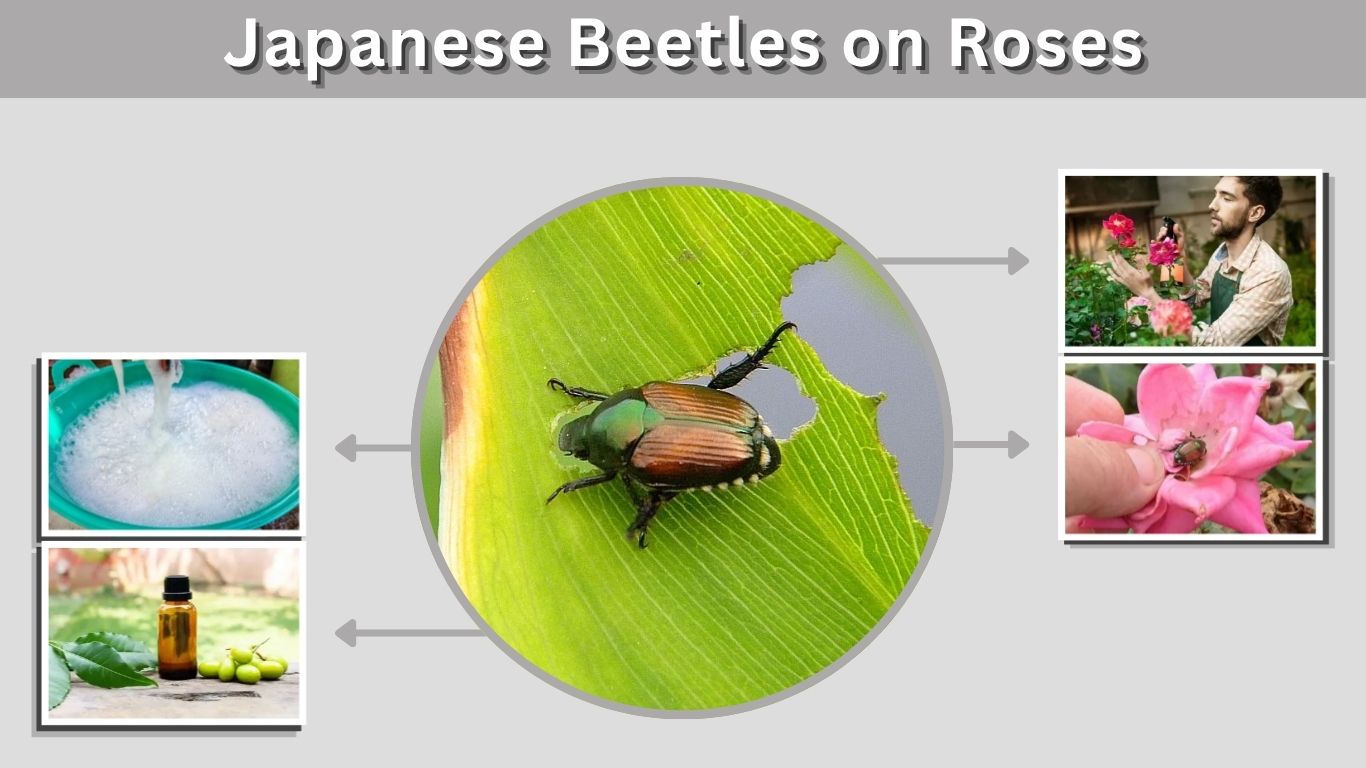
Japanese beetles on roses can turn healthy blooms into shredded petals and skeletonized leaves within a short time. These metallic green beetles are especially attracted to roses because of their fragrance, soft petals, and tender foliage. The good news is that you can control them with hand removal, natural treatments, protective habits, and safe sprays. The best results come from acting early before large groups gather on your rose bushes.
Why Japanese Beetles Attack Roses
Japanese beetles are one of the most common pests found on rose bushes during summer. They feed on petals, leaves, and buds, leaving roses weak and unattractive. Once a few beetles start feeding, more beetles may arrive because damaged plant tissue and beetle activity can attract others.
Do Japanese Beetles Eat Roses?
Yes, Japanese beetles eat roses. They are especially fond of soft rose petals and tender new leaves. On rose bushes, they usually chew irregular holes in petals and skeletonize leaves by eating the tissue between the veins. This gives the leaves a thin, lace-like appearance.
Roses attract Japanese beetles because they offer food, fragrance, and easy landing spots. Open blooms are often damaged first, but beetles can also attack buds and leaves. Knock Out roses, hybrid tea roses, climbing roses, and shrub roses may all suffer damage during peak beetle season.
When Beetles Are Most Active
Japanese beetles are usually most active on warm, sunny days. They often feed in groups and may be easier to find during late morning and afternoon. However, the best time to remove them is early morning, when they are slower and less likely to fly away.
The adult beetle season often lasts several weeks. During this time, daily inspection is important. If you ignore the first few beetles, your rose bushes may quickly attract larger numbers.
Do Roses Attract Japanese Beetles?
Yes, roses can attract Japanese beetles, especially when blooms are open and fragrant. Damaged flowers may attract even more beetles. This is why early removal is important. Keeping roses clean, deadheading damaged blooms, and removing beetles daily can reduce the chance of heavy feeding.
Japanese Beetle Damage on Roses
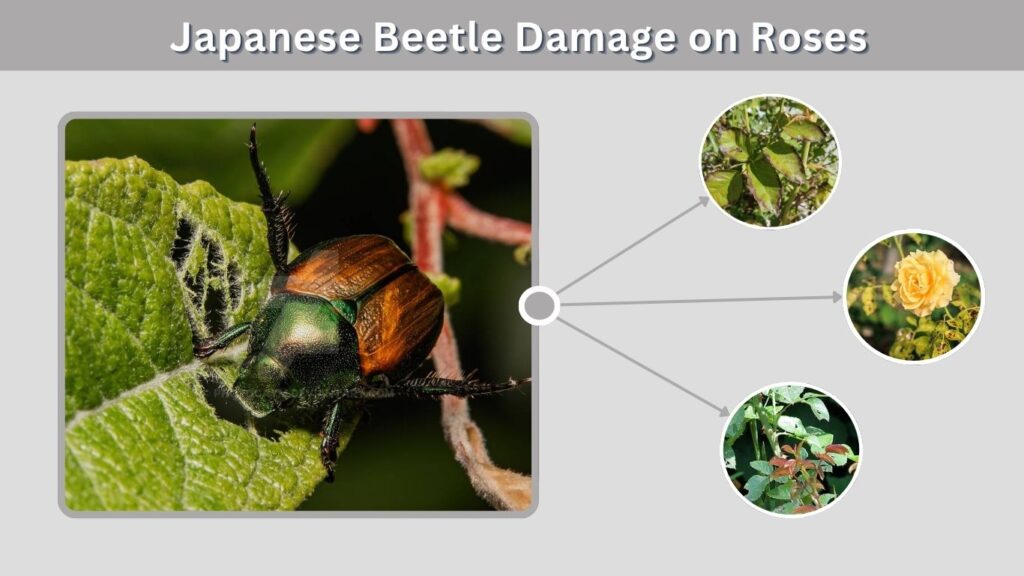
Japanese beetle damage on roses is usually easy to recognize. The damage may appear suddenly because adult beetles feed aggressively in groups. They attack both flowers and foliage, making rose bushes look ragged during the blooming season.
Common Signs of Damage
- Rose petals look shredded or chewed.
- Leaves have a lace-like or skeletonized pattern.
- Buds may fail to open properly.
- Beetles gather on flowers in groups.
- Brown edges appear on damaged petals.
- Leaves may look thin, dry, or torn.
- Blooms lose their shape quickly.
- Rose bushes look stressed during heavy feeding.
Light damage usually does not kill a healthy rose bush. However, repeated or severe feeding can weaken the plant, reduce blooming, and make it more vulnerable to stress.
Do Japanese Beetles Kill Rose Bushes?
Japanese beetles do not usually kill mature, healthy rose bushes by themselves. Most established roses can recover after the beetle season ends. However, young roses, newly planted bushes, drought-stressed plants, and heavily defoliated roses may suffer more serious damage.
If beetles remove many leaves, the plant loses energy because leaves are needed for photosynthesis. If this happens year after year, the rose bush may become weaker and produce fewer blooms.
Rose Chafer vs Japanese Beetle
Rose chafers and Japanese beetles can both damage roses, but they are not the same insect. Japanese beetles are metallic green with coppery wing covers and small white hair tufts along the sides of the body. Rose chafers are usually tan or grayish and more slender.
| Feature | Japanese Beetle | Rose Chafer |
| Body color | Metallic green and copper | Tan, gray, or brownish |
| Body shape | Oval and shiny | Slender and dull |
| Common damage | Leaves and flowers | Flowers, leaves, and fruit |
| Feeding habit | Often feeds in groups | May also gather on blooms |
| Control method | Hand-picking, neem, sprays | Similar rose-safe controls |
Correct identification helps you choose the right control method, but both pests can often be managed with similar rose protection steps.
How to Get Rid of Japanese Beetles on Roses
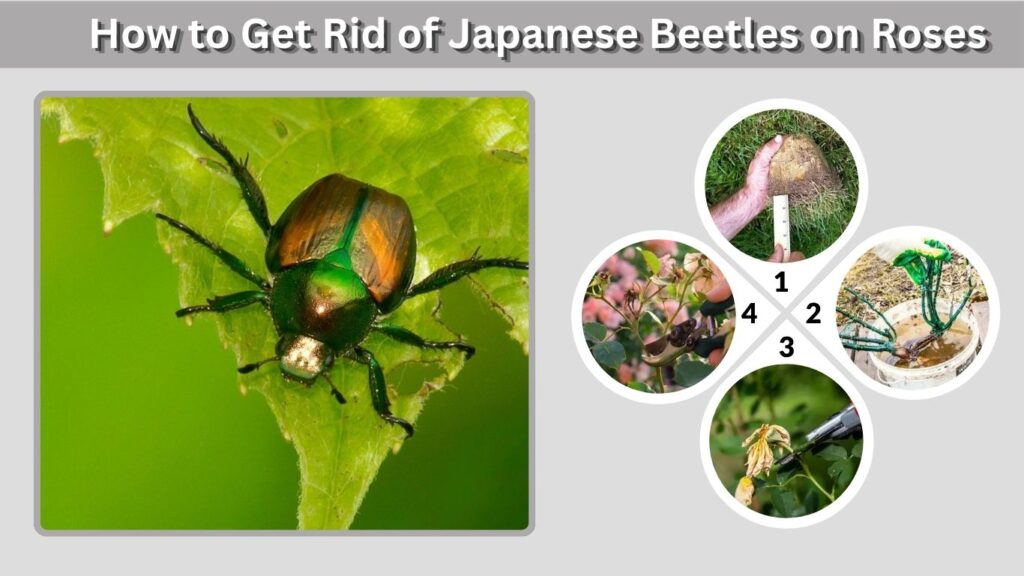
Getting rid of Japanese beetles on roses requires consistency. One treatment may reduce the beetles for a day, but new beetles can fly in from nearby lawns and gardens. A daily control routine works better than waiting until the rose bush is covered.
Start With Hand Removal
Hand removal is one of the safest and most effective ways to control Japanese beetles on roses. Fill a small bucket with water and add a few drops of dish soap. Hold the bucket under the beetles and gently shake the rose branch. Many beetles will drop into the water.
Do this early in the morning when beetles are sluggish. You can also pick them off by hand if the infestation is small. This method is safe for pollinators, pets, and the rose bush.
Remove Damaged Blooms
Damaged blooms can continue attracting beetles. Deadhead chewed flowers and remove badly damaged petals. This makes the plant less attractive and encourages cleaner new growth.
Do not leave beetle-covered flowers on the plant. If several beetles are feeding on one bloom, remove the beetles first, then prune the damaged flower if needed.
Use a Strong Water Spray
A firm spray of water can knock beetles off roses, especially when numbers are low. After knocking them down, collect them in soapy water if possible. Water spray alone may not kill them, but it can interrupt feeding and make hand removal easier.
Avoid using strong water pressure on delicate blooms because it may damage petals. Focus on leaves and stems where beetles are resting.
Natural Ways to Keep Japanese Beetles Off Roses
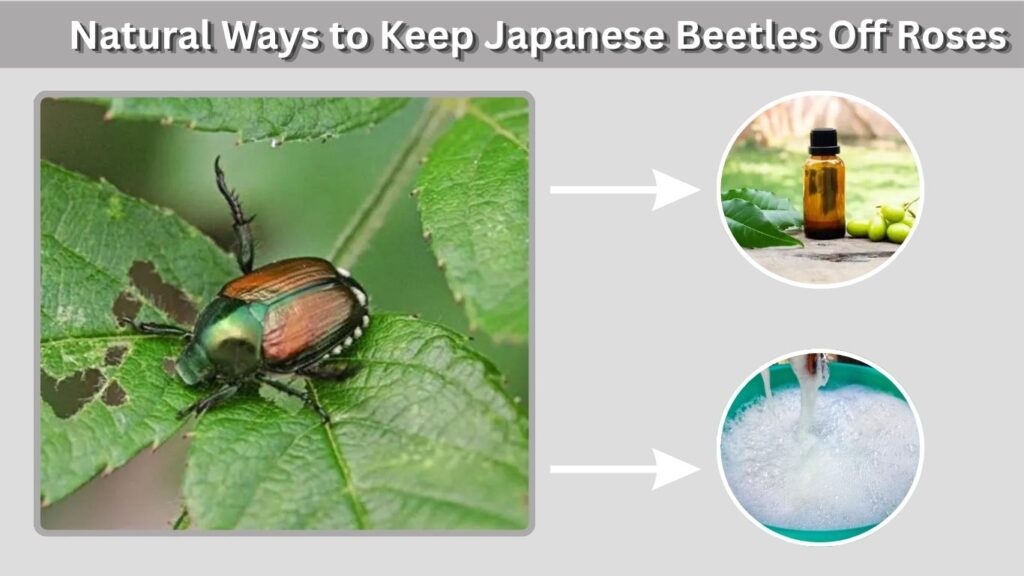
Natural control is often best for rose gardens because roses attract bees, butterflies, and other helpful insects. Natural methods reduce beetle damage while lowering the risk of harming pollinators.
Neem Oil for Japanese Beetles on Roses
Neem oil can help control Japanese beetles on roses when used correctly. It may reduce feeding and affect beetle activity, especially with repeated applications. Spray neem oil on leaves and stems where beetles are feeding, but avoid spraying open blooms when bees are active.
Apply neem oil in the early morning or evening. Do not spray during hot sun because it may burn leaves. Always follow the product label and test a small part of the rose bush first.
Soapy Water Method
Soapy water is best used as a beetle bucket, not as a strong spray over the whole rose bush. Drop beetles into the bucket to kill them quickly. This is simple, cheap, and safe for most gardens.
A light soap spray may kill some beetles on contact, but too much dish soap can damage rose leaves. If you try it, use a mild mix and test it on a small area first.
Home Remedies for Japanese Beetles on Roses
Some home remedies can help, but not all are safe for roses. The most reliable home remedies are hand-picking, soapy water buckets, deadheading damaged flowers, and using row-style netting on small rose plants.
Avoid harsh vinegar sprays on rose leaves. Vinegar may kill insects on contact, but it can also burn foliage and damage tender growth.
Japanese Beetle Spray for Roses
Sometimes natural methods are not enough, especially when beetles are destroying many blooms every day. In that case, a rose-safe spray may help. The most important rule is to choose a product labeled for roses and Japanese beetles.
Best Spray Options for Roses
- Neem oil spray: Good for light to moderate control.
- Insecticidal soap: Works best when sprayed directly on beetles.
- Pyrethrin spray: Fast contact control for adult beetles.
- Carbaryl products: Can kill beetles but may harm bees.
- Permethrin or bifenthrin products: Stronger residual control, but should be used carefully.
- Rose and flower insect sprays: Convenient if labeled for Japanese beetles.
Always read the label before spraying. Some products are not safe for all plants, and some should not be used when roses are blooming.
When to Spray Roses
Spray roses in the evening or early morning when bees are less active. Avoid spraying open flowers if pollinators are visiting. Focus on leaves and beetle feeding areas rather than coating every bloom.
Do not spray during extreme heat, drought stress, or direct midday sun. Stressed roses may react badly to sprays. Water the plant properly and apply treatments during cooler hours.
Best Insecticide for Japanese Beetles on Roses
The best insecticide depends on your goal. If you want a softer option, neem oil or insecticidal soap is a good starting point. If you need faster control, pyrethrin may work better. For severe infestations, stronger labeled insecticides may be used carefully.
Avoid overusing chemical sprays. Broad-spectrum insecticides can kill beneficial insects that help keep other pests under control.
How to Prevent Japanese Beetles on Roses
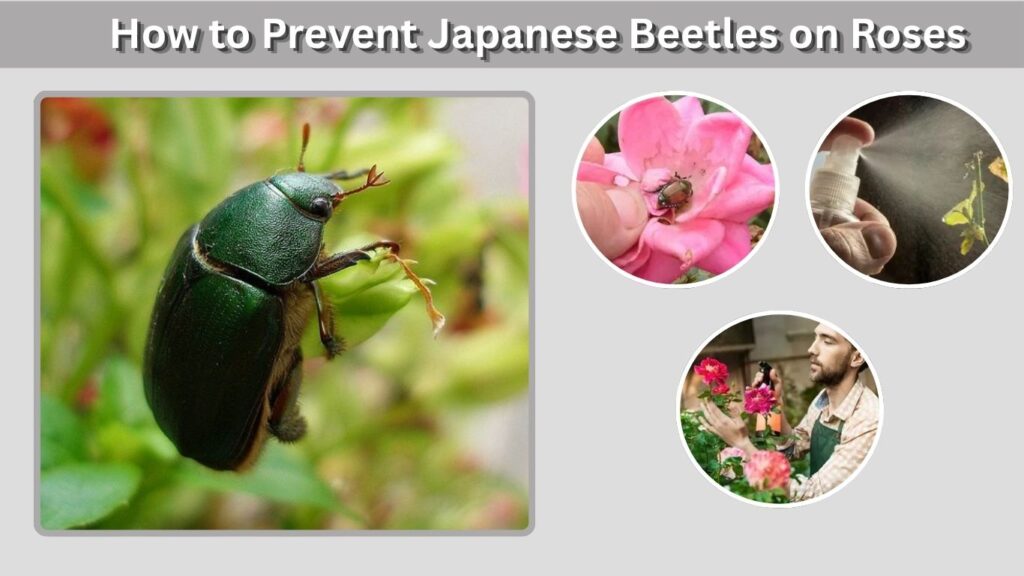
Prevention is easier than fighting a heavy infestation. You may not stop every beetle, but you can make your rose garden less attractive and reduce damage.
Prevention Tips
- Check rose bushes daily during beetle season.
- Remove the first beetles before groups form.
- Deadhead damaged blooms quickly.
- Keep roses healthy with proper watering.
- Avoid over-fertilizing soft new growth.
- Use neem oil early before heavy damage starts.
- Place beetle traps far away from roses.
- Treat lawn grubs if you have repeated yearly problems.
- Choose rose varieties that recover well from pest damage.
- Keep the garden clean and remove fallen damaged petals.
Prevention works best when started before roses are covered in beetles. A few minutes of inspection each morning can save many blooms.
Should You Use Japanese Beetle Traps Near Roses?
Japanese beetle traps are not ideal near rose bushes. They use strong attractants and may pull more beetles into the area. If you use traps, place them far away from your roses, not beside the garden bed.
In small yards, traps may make the problem worse by attracting beetles from surrounding areas. Hand-picking and targeted plant protection are usually better for rose gardens.
Japanese Beetle Resistant Roses
No rose is completely Japanese beetle-proof, but some roses may suffer less damage or recover faster. Roses with fewer fragrant blooms may attract fewer beetles than highly fragrant, soft-petaled varieties. Healthy shrub roses may also tolerate feeding better than weak or newly planted roses.
If beetles are a yearly problem, choose strong rose varieties and mix roses with plants that are less attractive to Japanese beetles.
How to Protect Knock Out Roses and Rose of Sharon
Japanese beetles may feed on Knock Out roses and Rose of Sharon. These plants are tough, but they can still look damaged during heavy beetle activity. The same control methods work well if applied early.
Japanese Beetles on Knock Out Roses
Knock Out roses are popular because they are hardy and bloom heavily, but Japanese beetles can still chew their flowers and leaves. Hand-picking is often effective because these roses are usually easy to inspect.
Remove damaged blooms and keep the plant healthy. If needed, use neem oil or a labeled rose spray. Avoid spraying flowers when pollinators are active.
Japanese Beetles on Rose of Sharon
Rose of Sharon can also attract Japanese beetles. Beetles may chew leaves and flowers, especially during midsummer. Since Rose of Sharon can grow tall, hand removal may be harder on larger shrubs.
For small plants, use the soapy water bucket method. For larger shrubs, prune damaged blooms when possible and use targeted sprays only if the damage is severe.
Protecting Young Rose Plants
Young roses need extra protection because they have fewer leaves and less stored energy. If beetles remove too much foliage, the plant may struggle to recover. Use hand removal, neem oil, and temporary netting if needed.
Avoid strong chemical sprays on young, stressed roses unless the label clearly allows it.
Rose Care After Japanese Beetle Damage
After beetles damage roses, the plant needs support. Good care helps the bush recover and produce new growth after the beetle season ends.
Help Roses Recover
Water deeply when the soil is dry, especially during hot weather. Remove dead flowers and badly damaged leaves, but do not over-prune the plant. Roses still need healthy leaves to make energy.
A light feeding may help if the rose is actively growing, but avoid heavy fertilizer during stress. Too much fertilizer can push soft growth that attracts more pests.
When to Prune Damaged Roses
Prune damaged flowers anytime to keep the plant clean. For leaves, remove only the worst damaged parts. If a leaf is partly green and still functioning, it may still help the plant.
Major pruning is usually not needed unless branches are broken, diseased, or severely damaged.
Will Roses Bloom Again?
Many roses will bloom again after Japanese beetle damage, especially repeat-blooming varieties like Knock Out roses and many shrub roses. Once beetle pressure drops, healthy roses often produce cleaner flowers.
Keep removing beetles and damaged blooms until the season passes. With proper care, most roses recover well.
FAQs
How do I get rid of Japanese beetles on roses naturally?
The best natural method is to hand-pick beetles early in the morning and drop them into soapy water. You can also use neem oil, remove damaged blooms, and protect small roses with netting. Repeat these steps daily during peak beetle season for better control.
What is the best spray for Japanese beetles on roses?
Neem oil, insecticidal soap, and pyrethrin sprays are common options for Japanese beetles on roses. Neem oil is better for softer control, while pyrethrin works faster on contact. Always choose a product labeled for roses and avoid spraying when bees are active.
Do Japanese beetles kill rose bushes?
Japanese beetles usually do not kill mature, healthy rose bushes. However, heavy feeding can weaken young, stressed, or newly planted roses. Severe leaf loss can reduce blooming and plant strength. Early control helps protect the rose bush from repeated damage.
How do I keep Japanese beetles off my roses?
Check roses daily, remove beetles early, deadhead damaged blooms, and use neem oil before the infestation becomes heavy. Avoid placing Japanese beetle traps near roses because they may attract more beetles. Healthy rose care also helps plants recover from light damage.
Do Japanese beetles eat Rose of Sharon?
Yes, Japanese beetles may eat Rose of Sharon flowers and leaves. Damage often appears as chewed petals or skeletonized leaves. Hand-picking works on smaller shrubs, while neem oil or labeled sprays may help when beetle numbers are high.