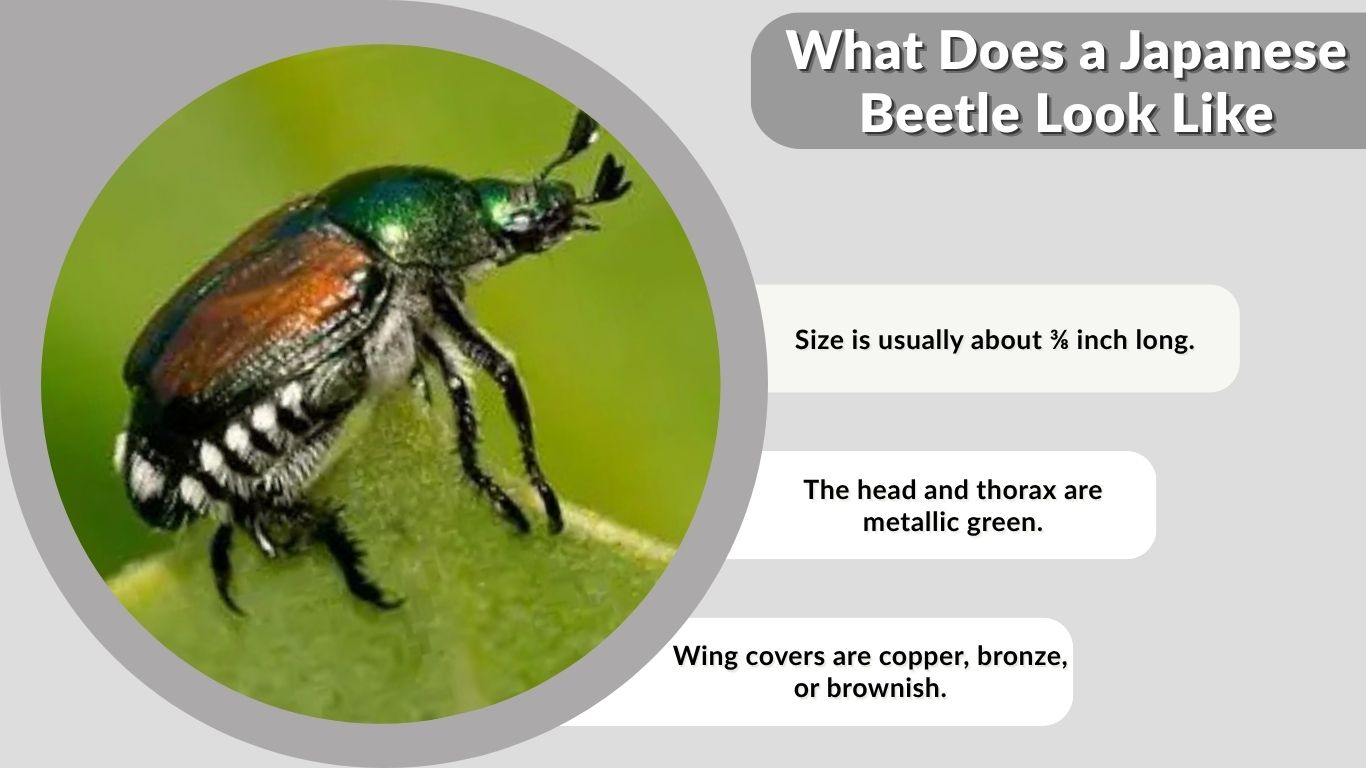
Japanese beetles are small but very noticeable garden pests. They have shiny metallic green bodies, copper-brown wing covers, and tiny white hair tufts along the sides of the abdomen. Many people confuse them with ladybugs, rose chafers, June beetles, or other shiny beetles. Learning their shape, color, larvae, eggs, and plant damage makes identification much easier before they spread across roses, trees, vegetables, and lawns.
What Does a Japanese Beetle Look Like?
Japanese beetles have a distinct shiny appearance that makes them easier to recognize than many other garden beetles. Adult beetles are small, oval-shaped, and brightly colored. Their metallic green head and body contrast with coppery wing covers, giving them a polished look in sunlight.
Adult Japanese Beetle Identification
- Size is usually about ⅜ inch long.
- The body shape is oval and slightly rounded.
- The head and thorax are metallic green.
- Wing covers are copper, bronze, or brownish.
- Small white hair tufts appear along each side of the body.
- Two white hair patches are visible near the rear.
- Legs are dark and slightly spiny.
- Antennae are short with clubbed tips.
- Body looks shiny, not dull.
- Adults often gather in groups on leaves and flowers.
The white hair tufts are one of the best identification signs. Many beetles are shiny or brown, but Japanese beetles have those small white patches along the sides, which help separate them from similar insects.
Color and Body Shape
A Japanese beetle is not fully green or fully brown. The head and front body are usually metallic green, while the hard wing covers are coppery brown. In bright light, the body may look bronze, gold, or greenish.
Its body is compact and oval, not long and narrow. This shape is one reason it may be confused with other beetles, but the color pattern and white hair tufts make it stand out.
How Big Is a Japanese Beetle?
Japanese beetles are small, but they are large enough to see clearly on flowers and leaves. Most adults are around ⅜ inch long. They are smaller than many June beetles but usually bigger than most ladybugs.
Because they often gather in groups, even a small number can look like a serious infestation. On roses, grapes, hibiscus, and fruit trees, several beetles may feed on one flower or leaf at the same time.
Japanese Beetle vs Ladybug
Japanese beetles can look like ladybugs at first glance because both are small, rounded insects that may appear shiny. However, they are very different in color, body markings, feeding habits, and garden impact. Ladybugs are usually beneficial, while Japanese beetles are destructive plant pests.
Why Japanese Beetles Look Like Ladybugs
Both insects have a rounded body and hard wing covers. From a distance, a Japanese beetle sitting on a leaf may look like a large brownish ladybug. The confusion is stronger when the beetle is seen quickly or in poor light.
However, ladybugs usually have red, orange, yellow, or black wing covers with spots or markings. Japanese beetles have metallic green bodies and copper-brown wing covers without ladybug-style black spots.
Key Differences
| Feature | Japanese Beetle | Ladybug |
| Body color | Metallic green and copper brown | Red, orange, yellow, black, or spotted |
| Body shape | Oval and shiny | Rounder and dome-shaped |
| Size | About ⅜ inch | Usually smaller, varies by species |
| Markings | White hair tufts on sides | Spots or solid colored wing covers |
| Diet | Eats leaves, flowers, and fruit | Eats aphids and soft-bodied pests |
| Garden role | Harmful plant pest | Usually beneficial insect |
A Japanese beetle does not have the classic red shell with black spots. If the insect is shiny green with copper wings and white side tufts, it is much more likely to be a Japanese beetle than a ladybug.
Are Japanese Beetles Helpful Like Ladybugs?
No, Japanese beetles are not helpful in the same way ladybugs are. Ladybugs often feed on aphids, mites, and other soft-bodied pests. Japanese beetles feed on plant leaves, flowers, and fruits.
In gardens, Japanese beetles can damage roses, grapes, beans, fruit trees, hibiscus, and many ornamental plants. Their larvae also damage lawns by feeding on grass roots.
What Do Japanese Beetle Grubs Look Like?
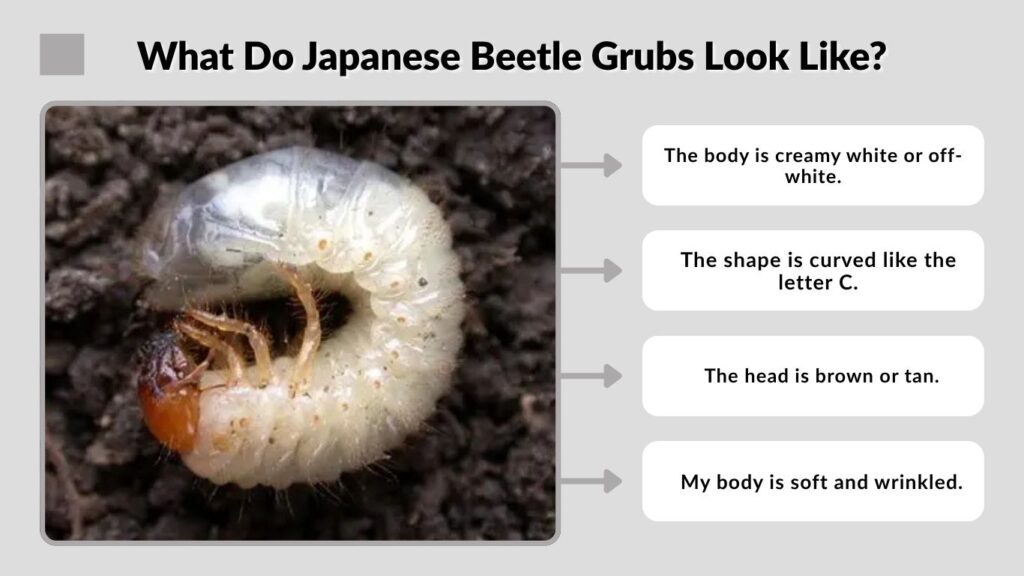
Japanese beetle grubs look very different from adult beetles. They live underground in lawns and soil, where they feed on grass roots. Since they are hidden most of the time, many people do not notice them until lawn damage appears.
Japanese Beetle Larvae Identification
- The body is creamy white or off-white.
- The shape is curved like the letter C.
- The head is brown or tan.
- Six small legs are near the head.
- My body is soft and wrinkled.
- Size changes as the grub grows.
- Grubs are usually found in soil under grass.
- They curl tightly when disturbed.
- They may be found near damaged turf roots.
- Mature grubs are larger and thicker than young ones.
Japanese beetle grubs are often called white grubs. Several beetle species have similar-looking grubs, so adult beetle activity nearby can help confirm the source.
Where Grubs Are Found
Japanese beetle grubs usually live in the top layer of soil under lawns. They feed on grass roots, especially in moist soil. Damaged turf may turn brown, feel loose, or pull up easily like a carpet.
Animals such as birds, skunks, and raccoons may dig in the lawn to eat grubs. If you see patches of torn-up grass along with brown lawn spots, grubs may be present.
What Do Young Japanese Beetles Look Like?
Young Japanese beetles are larvae, not small versions of the adult beetle. They start as tiny grubs after hatching from eggs. As they grow, they remain white, soft-bodied, and C-shaped until they pupate and become adult beetles.
They do not have shiny green or copper colors while in the larval stage. That metallic appearance only appears after they become adults.
What Do Japanese Beetle Eggs Look Like?
Japanese beetle eggs are small and hard to see in soil. The female lays eggs underground, usually in grassy areas. These eggs hatch into grubs, which begin feeding on grass roots.
Japanese Beetle Eggs
Japanese beetle eggs are usually tiny, light-colored, and oval or round. They are placed in soil rather than on leaves or flowers. Because they are hidden underground, gardeners rarely see them unless they are closely inspecting soil.
The eggs need moisture to develop well. This is why Japanese beetle problems are often worse in areas with healthy, irrigated lawns. Moist soil can support egg survival and grub development.
Japanese Beetle Nest Appearance
Japanese beetles do not build a visible nest like wasps, ants, or termites. There is no paper nest, mud nest, mound, or hive. Instead, females lay eggs in soil, and the larvae develop underground.
If someone asks what a Japanese beetle nest looks like, the answer is simple: there is usually no visible nest to find. The closest sign is grub activity in lawns or adult beetles feeding nearby.
Life Stages at a Glance
Japanese beetles go through egg, larva, pupa, and adult stages. The adult is the shiny green and copper beetle seen on plants. The larva is the white C-shaped grub found in soil. The pupa stage happens underground before the adult emerges.
Understanding these stages helps with control. Adult beetles damage flowers and leaves, while grubs damage lawns.
What Does Japanese Beetle Damage Look Like?
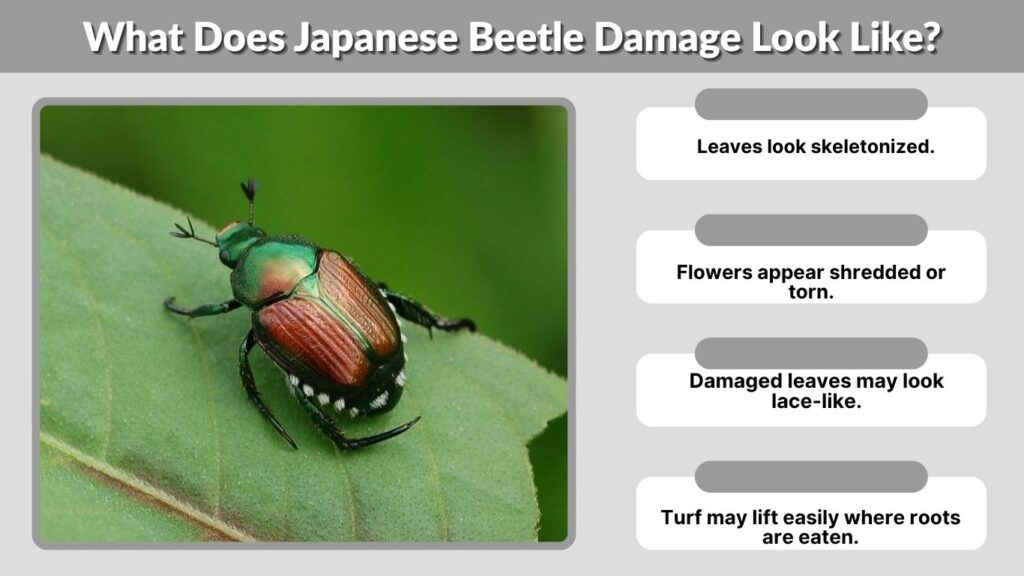
Japanese beetle damage is often easier to spot than the beetles themselves. Adults chew leaves, flowers, and fruit. Their feeding can make plants look ragged, thin, or scorched.
Common Damage Signs
- Leaves look skeletonized.
- Leaf tissue is eaten between the veins.
- Flowers appear shredded or torn.
- Rose petals turn brown at the edges.
- Fruits may have shallow chewing marks.
- Beetles gather in groups on sunny leaves.
- Damaged leaves may look lace-like.
- Plants may lose beauty quickly during summer.
- Lawn patches may turn brown from grub feeding.
- Turf may lift easily where roots are eaten.
On roses, Japanese beetles often destroy petals first. On grapes and trees, they usually leave skeletonized leaves. On lawns, the damage comes from grubs feeding underground.
Damage on Roses
Roses are one of the favorite plants of Japanese beetles. Beetles chew soft petals, buds, and leaves. Damaged blooms may look shredded, while leaves may show a lace-like pattern.
A few beetles may not kill a healthy rose bush, but heavy feeding can reduce blooming and weaken the plant. Removing beetles early helps stop large groups from gathering.
Damage on Trees and Shrubs
Japanese beetles may feed on birch, maple, crabapple, linden, elm, fruit trees, and other woody plants. They usually attack leaves exposed to sun. Large trees may survive the damage, but young or stressed trees can suffer more.
If the top leaves of a tree look brown, thin, or skeletonized during summer, Japanese beetles may be one cause.
Beetles That Look Like Japanese Beetles
Several beetles can be confused with Japanese beetles. Some are similar in size, color, or body shape. The best way to tell them apart is to check for metallic green coloring, copper wing covers, and white hair tufts.
Common Look-Alikes
- Rose chafer: Tan or grayish beetle that also feeds on roses.
- June beetle: Larger, brown beetle often seen at night.
- Green June beetle: Larger and more green than a Japanese beetle.
- False Japanese beetle: Similar shape but usually lacks strong metallic color.
- Asian lady beetle: Looks like a ladybug, not metallic green.
- Flower chafer beetles: May be shiny and feed on blooms.
- Brown garden beetles: Can look similar from a distance.
Some look-alikes are harmful to plants, while others may be less damaging. Correct identification helps you choose the right treatment.
Brown Beetle That Looks Like a Japanese Beetle
A brown beetle that looks like a Japanese beetle may be a June beetle, rose chafer, or another scarab beetle. Japanese beetles are not plain brown. They have a metallic green head and copper-brown wing covers.
If the beetle is entirely brown, dull, and larger, it is probably not a Japanese beetle. If it is shiny green and copper with white side tufts, it likely is.
Large Beetle That Looks Like a Japanese Beetle
A large beetle that looks like a Japanese beetle may be a green June beetle. Green June beetles are bigger and bulkier. They may be green, bronze, or brownish, but they are noticeably larger than Japanese beetles.
Japanese beetles are small and compact. Their size, white side tufts, and copper wing covers are useful clues.
What Plants Do Japanese Beetles Like?
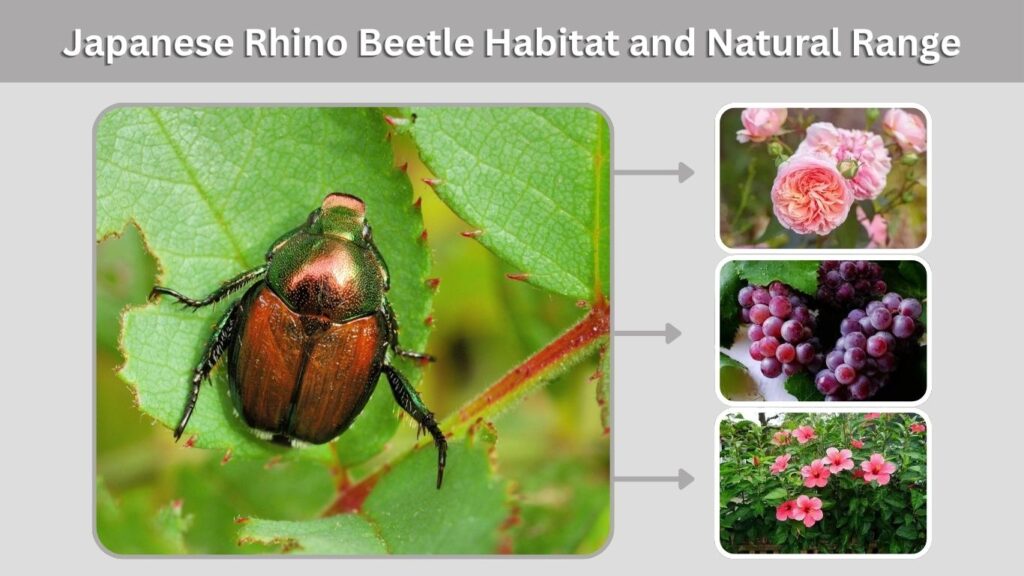
Japanese beetles feed on many plants. They are especially attracted to plants with soft leaves, fragrant flowers, and sunny exposure. Knowing their favorite plants helps you monitor the right areas first.
Plants Japanese Beetles Like
- Roses
- Grapes
- Hibiscus
- Rose of Sharon
- Hollyhocks
- Zinnias
- Dahlias
- Sunflowers
- Beans
- Basil
- Apple trees
- Cherry trees
- Plum trees
- Crabapple trees
- Birch trees
- Linden trees
- Maple trees
- Virginia creeper
- Raspberry plants
- Elm trees
Japanese beetles often gather on roses, grapes, hibiscus, and fruit trees first. If these plants are in your garden, inspect them often during summer.
Do Japanese Beetles Like Roses?
Yes, Japanese beetles like roses. They feed on rose petals, leaves, and buds. Their damage is often very visible because flowers are affected first. Roses may attract groups of beetles, especially when blooms are open and fragrant.
Early hand-picking, neem oil, and removing damaged blooms can help reduce the problem.
Do Japanese Beetles Like Hydrangeas and Marigolds?
Japanese beetles may feed on some hydrangeas, but they are usually more attracted to roses, grapes, hibiscus, and fruit trees. Marigolds are not usually their top favorite, but beetles may still visit them depending on nearby food sources.
Plant preference can vary by location, beetle population, and plant condition.
What Plants Do Japanese Beetles Not Like?
Some plants are less attractive to Japanese beetles. Planting these around vulnerable roses or garden beds may reduce overall damage, although they will not create perfect protection.
Less Attractive Plants
- Begonias
- Impatiens
- Lilacs
- Boxwood
- Dogwood
- Forsythia
- Redbud
- Magnolia
- Tulip tree
- Ash
- Pine
- Spruce
- Juniper
- Garlic
- Mint
- Lavender
- Catnip
- Chives
- Onions
- Marigolds
These plants are not guaranteed to repel every beetle, but they are usually less preferred than roses, grapes, and certain fruit trees.
Flowers Japanese Beetles Usually Avoid
Japanese beetles may be less attracted to begonias, impatiens, and some strongly scented herbs. Lavender, mint, garlic, and chives are often used near gardens because their scent may make the area less attractive.
However, plant resistance is not absolute. Hungry beetles may feed on many plants if preferred food is limited.
Trees Japanese Beetles Like Less
Trees such as dogwood, redbud, magnolia, pine, spruce, and tulip tree are often considered less attractive than linden, birch, crabapple, and fruit trees. If Japanese beetles are a yearly issue, choosing less attractive trees can reduce future damage.
What Do Japanese Beetles Like to Eat?
Japanese beetles eat leaves, flowers, and fruit from many plants. Adults feed above ground, while grubs feed below ground on grass roots. This two-stage feeding habit makes them troublesome in both gardens and lawns.
Favorite Foods
Adult Japanese beetles commonly feed on roses, grapes, beans, hibiscus, fruit trees, and ornamental plants. They prefer sunny areas and often begin feeding at the top of plants. Once feeding starts, groups may form quickly.
They usually eat the soft tissue between leaf veins, leaving the veins behind. This creates the common skeletonized leaf pattern.
Do Japanese Beetles Bite?
Japanese beetles are not known for biting people. They may feel prickly if handled because of their legs, but they do not bite like mosquitoes, spiders, or ants. A “Japanese beetle bite” is usually just skin irritation from handling the insect or from another bug.
They are mainly plant pests, not human pests.
What Does Japanese Beetle Poop Look Like?
Japanese beetle droppings are usually tiny dark specks or stains near feeding areas. They are not always easy to notice because leaf damage is much more obvious. On flowers, small dark marks may appear around damaged petals, but they are not the best identification clue.
The beetle’s body color, white side tufts, and skeletonized leaf damage are better signs.
FAQs
What does a Japanese beetle look like?
A Japanese beetle is small, oval, and shiny. It has a metallic green head and body, copper-brown wing covers, and small white hair tufts along the sides of its abdomen. These white tufts are one of the easiest ways to identify it.
Do Japanese beetles look like ladybugs?
Japanese beetles can look a little like ladybugs from a distance because both are small and rounded. However, Japanese beetles are metallic green and copper brown, while ladybugs are usually red, orange, yellow, or black with spots or markings.
What do Japanese beetle grubs look like?
Japanese beetle grubs are creamy white, soft-bodied, and C-shaped. They have brown heads and six small legs near the front of the body. They live in soil and feed on grass roots, often causing brown or loose patches in lawns.
What does Japanese beetle damage look like?
Japanese beetle damage often looks like skeletonized leaves. The beetles eat the soft tissue between leaf veins, leaving a lace-like pattern. On roses, they shred petals and chew buds. In lawns, grubs can cause brown patches by feeding on roots.
What plants do Japanese beetles like most?
Japanese beetles commonly like roses, grapes, hibiscus, beans, hollyhocks, zinnias, fruit trees, crabapple, birch, linden, and maple. They often gather on sunny leaves and fragrant flowers, especially during warm summer days.