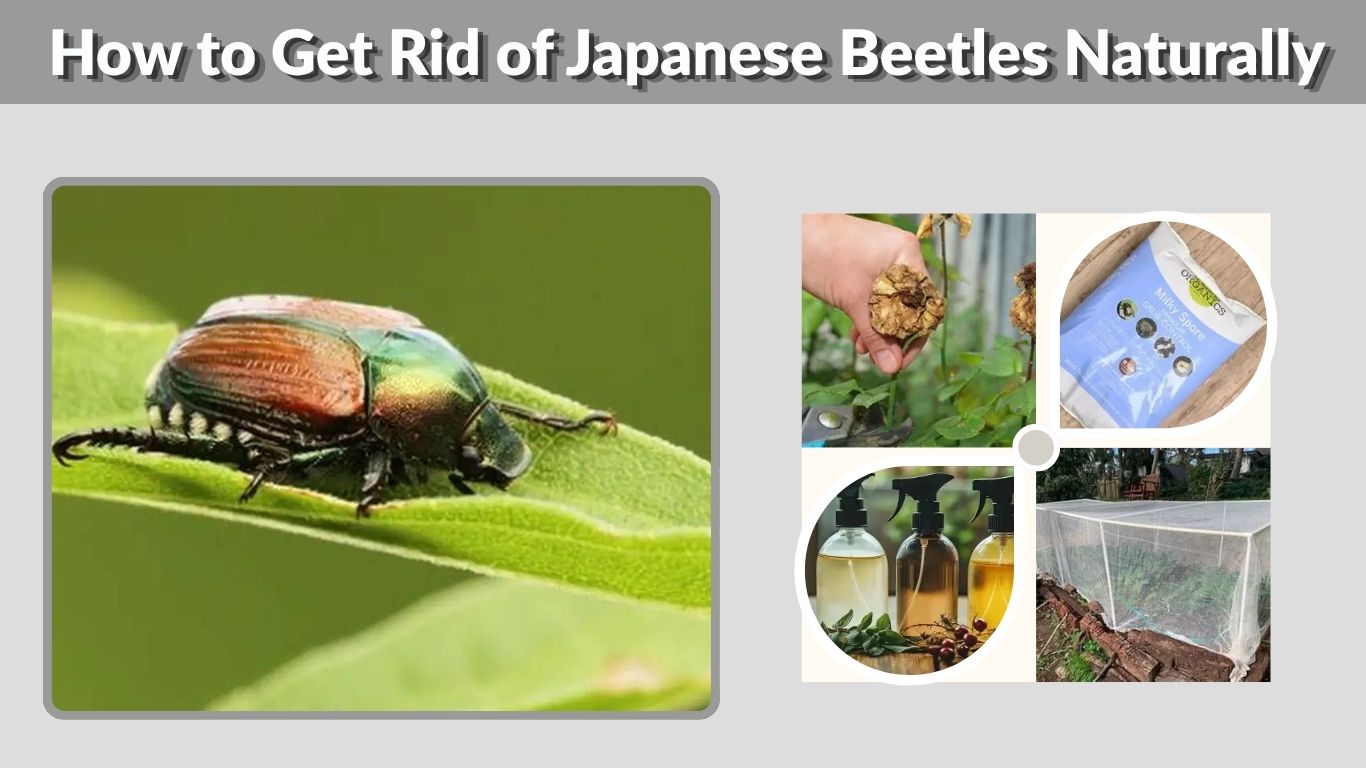
Japanese beetles can damage roses, grapes, fruit trees, vegetables, and ornamental plants in a short time. Adults chew flowers and leaves, while grubs feed underground on grass roots. Natural control works best when you combine several methods: hand-picking, soapy water, neem oil, plant protection, grub control, and natural predators. The goal is not only to kill beetles, but also to reduce future infestations safely.
Why Natural Japanese Beetle Control Works
Natural Japanese beetle control focuses on reducing beetle numbers without using harsh chemicals. This is useful in gardens where bees, butterflies, pets, children, vegetables, and flowering plants are present. Natural methods may take more consistency, but they can protect plants while keeping the garden healthier.
Why Japanese Beetles Are Hard to Control
Japanese beetles are difficult because they attack plants in groups. One beetle feeding on a flower can attract more beetles. They also fly from nearby yards, fields, and lawns, so even if you remove them today, more may arrive tomorrow.
Adult beetles feed above ground, while their larvae live underground as grubs. This means you need two types of control: one for adult beetles on plants and one for grubs in the soil.
Best Natural Control Strategy
- Remove adult beetles early.
- Drop beetles into soapy water.
- Use neem oil before damage spreads.
- Protect high-value plants with netting.
- Avoid placing traps near the garden.
- Encourage birds and beneficial insects.
- Treat lawn grubs naturally.
- Grow plants that beetles dislike.
- Keep plants healthy and less stressed.
- Repeat control steps during beetle season.
Natural methods work best when used together. Hand-picking alone may help for a few days, but combining it with neem oil, plant barriers, and grub control gives better long-term results.
When to Start Treatment
Start treatment as soon as you see the first beetles. Do not wait until roses, beans, grapes, or fruit trees are covered. Early action prevents feeding groups from becoming larger.
Morning is the best time to remove beetles because they are slower in cool temperatures. Check plants daily during peak season.
How to Get Rid of Japanese Beetles Naturally
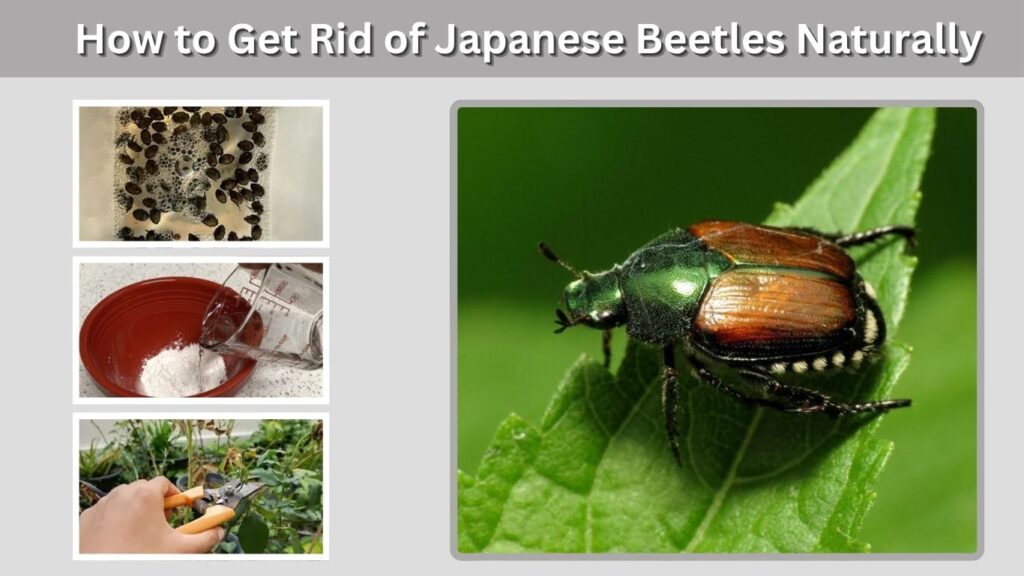
The easiest natural method is hand removal. It may sound simple, but it is one of the most effective ways to reduce beetle numbers without harming pollinators. It works especially well on roses, grapes, beans, hibiscus, and small fruit trees.
Hand-Picking Method
Fill a small bucket with water and add a few drops of dish soap. Hold the bucket under the beetles and gently tap the leaves or flowers. The beetles usually drop into the bucket. The soap prevents them from escaping.
Do this early in the morning or late evening when the beetles are less active. If you do it daily, you can reduce damage before the infestation becomes heavy.
Soapy Water Beetle Trap
A soapy water bucket is a simple natural Japanese beetle killer. It works by drowning the beetles quickly. You do not need a strong soap mixture. A few drops of mild dish soap in water is enough.
Avoid spraying strong dish soap directly over rose leaves or vegetable plants. Strong soap mixtures can burn leaves, especially during hot weather. It is safer to use the bucket method.
Remove Damaged Flowers and Leaves
Japanese beetles are attracted to damaged plant tissue. If beetles have shredded rose blooms or chewed leaves badly, remove the most damaged parts. This can reduce attraction and help the plant put energy into new growth.
Deadheading damaged roses is especially helpful. It keeps the plant cleaner and may reduce beetle gathering.
Natural Sprays for Japanese Beetles
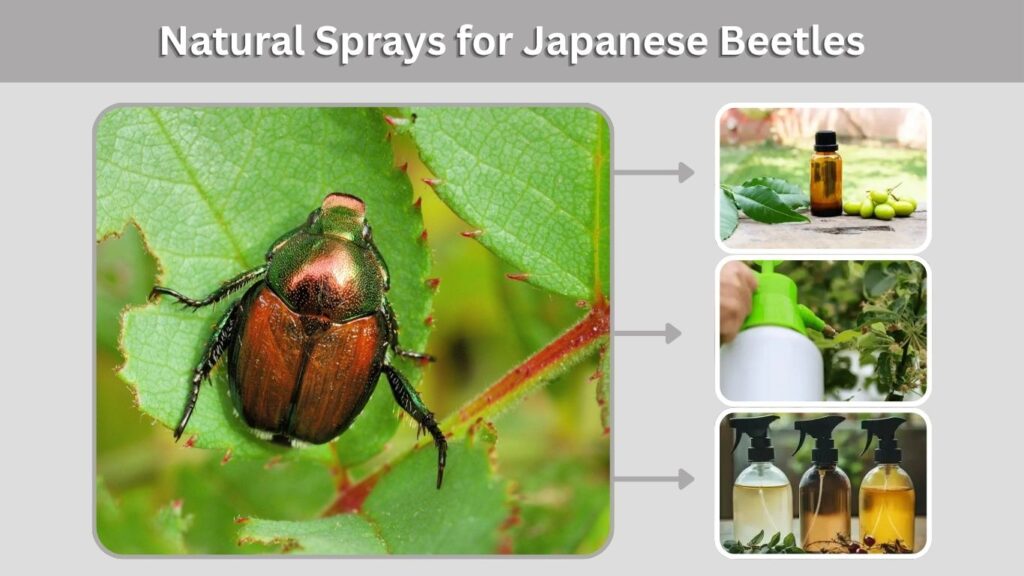
Natural sprays can help when hand-picking is not enough. They are best for light to moderate infestations. Most natural sprays need direct contact or repeated use, so they should be applied carefully and consistently.
Neem Oil for Japanese Beetles
Neem oil is one of the most common natural sprays for Japanese beetles. It can reduce feeding and may affect beetle activity when used regularly. Neem works best when applied early, before beetle numbers become too high.
Spray neem oil on leaves and stems where beetles are feeding. Apply it in the early morning or evening. Do not spray open flowers when bees are active. Also, avoid spraying during hot midday sun because it may damage leaves.
Insecticidal Soap
Insecticidal soap is another natural option. It works best when sprayed directly on beetles. Once it dries, it has little remaining effect, so it is not a long-term shield. Still, it can help reduce beetles on roses, vegetables, and ornamentals.
Always test a small area of the plant first. Some delicate plants may react badly to soap sprays, especially during heat or drought stress.
Homemade Natural Spray
Some gardeners make a light homemade spray using water and a small amount of mild dish soap. This may kill beetles on contact, but it can also harm leaves if too strong. For safety, use homemade soap sprays carefully.
The better homemade method is the soapy water bucket. It kills beetles without coating the whole plant.
Natural Japanese Beetle Repellents
Repellents do not always stop Japanese beetles completely, but they can make plants less attractive. Natural deterrents work better as part of a full control plan rather than as the only method.
Plants That May Repel Japanese Beetles
Some plants are less attractive to Japanese beetles and may help reduce pressure around vulnerable garden areas. Strong-smelling herbs are often used near roses, vegetables, and fruit plants.
- Garlic
- Chives
- Mint
- Catnip
- Lavender
- Rue
- Tansy
- Marigolds
- Onions
- Wormwood
These plants are not a perfect barrier. Japanese beetles may still enter the garden if favorite plants are nearby. However, mixing less attractive plants around roses and vegetables can make the area less inviting.
Plants Japanese Beetles Usually Like
Japanese beetles often prefer soft leaves, fragrant blooms, and sunny plants. They commonly feed on roses, grapes, beans, hibiscus, zinnias, hollyhocks, fruit trees, birch, linden, and crabapple.
If these plants are in your yard, inspect them first. Protecting their favorite plants early helps reduce heavy damage.
Natural Deterrent Habits
Good garden habits can work like a natural deterrent. Remove beetles early, prune damaged blooms, keep plants healthy, and avoid over-fertilizing. Soft, lush growth may be more attractive to pests.
Do not let damaged flowers stay on the plant for too long. Clean plants are less likely to attract large beetle groups.
Natural Predators of Japanese Beetles
Japanese beetles do have natural enemies. Birds, insects, and soil organisms can help reduce their numbers. Natural predators may not remove every beetle, but they are useful in a balanced garden.
Common Natural Enemies
| Natural enemy | What it targets | Garden benefit |
| Birds | Adult beetles and grubs | Reduce beetle numbers naturally |
| Tachinid flies | Adult beetles | Parasitize beetles |
| Ground beetles | Eggs and larvae | Help in soil and garden beds |
| Beneficial nematodes | Grubs | Attack larvae underground |
| Milky spore | Japanese beetle grubs | Long-term biological control |
| Chickens | Adult beetles | Eat beetles if allowed in garden areas |
Encouraging natural enemies can reduce beetle pressure over time. However, predators alone usually cannot stop a heavy infestation quickly.
Birds That Eat Japanese Beetles
Some birds eat adult Japanese beetles and grubs. Robins, starlings, crows, grackles, and other insect-eating birds may feed on them. You can attract birds by providing water, shelter, native plants, and safe feeding areas.
Avoid using broad chemical sprays if you want birds and beneficial insects to help. Harsh pesticides can reduce the natural balance in your garden.
Beneficial Nematodes
Beneficial nematodes are microscopic organisms that attack grubs in the soil. They are a natural option for lawn grub control. Apply them when soil is moist and grubs are active. Evening application is best because sunlight can reduce their survival.
Water the soil before and after applying nematodes. They need moisture to move through the soil and find grubs.
Natural Grub Control for Japanese Beetles
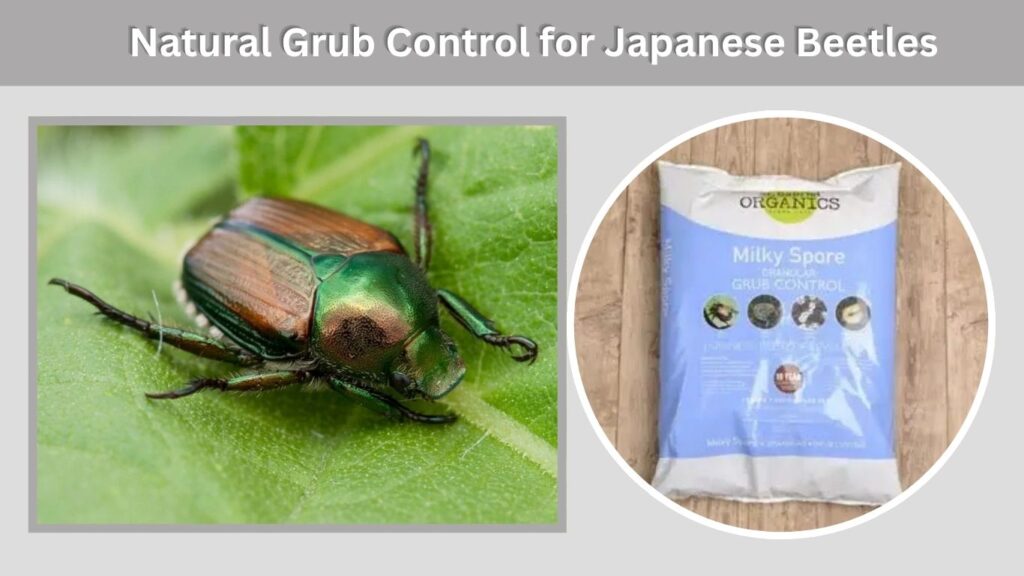
Adult beetles are only part of the problem. Japanese beetle grubs live in the soil and feed on grass roots. If you treat grubs naturally, you can reduce future adult beetle populations.
Milky Spore for Japanese Beetle Grubs
Milky spore is a biological control that targets Japanese beetle grubs. It works slowly, but it can remain active in soil for a long time when conditions are right. It is not an instant fix, but it may help with long-term control.
Milky spore is most useful in areas where Japanese beetles are a repeated yearly problem. It does not kill adult beetles directly.
Lawn Care to Reduce Grubs
A healthy lawn can tolerate some grub feeding better than weak grass. Avoid overwatering, because moist soil can encourage egg survival. Deep, less frequent watering is usually better than constant shallow watering.
Mow at the right height for your grass type and avoid stressing the lawn during hot weather. Strong turf can recover more easily from light grub damage.
When to Treat Grubs Naturally
Treat grubs when they are small and close to the soil surface. This is often late summer to early fall in many areas. Spring treatment may be less effective because older grubs are harder to control.
Natural grub control takes patience. Combine it with adult beetle removal for the best results.
How to Repel Japanese Beetles Naturally from Plants
Repelling Japanese beetles naturally means making your plants harder to attack and less attractive. This works best before beetle numbers become high. Once many beetles are already feeding, removal is more important than repelling.
Use Garden Netting
Fine garden netting can protect small plants, young trees, and valuable crops. It blocks beetles from landing and feeding. This is useful for beans, berries, young fruit trees, and small rose bushes.
Use netting before beetles arrive or after you remove existing beetles. If a plant needs pollination, remove the cover during pollination time or hand-pollinate when needed.
Avoid Japanese Beetle Traps Near Plants
Japanese beetle traps may attract more beetles into your yard. They use strong scents that pull beetles from surrounding areas. If placed near roses or vegetables, they may make the problem worse.
If you use traps, place them far away from the plants you want to protect. For small gardens, hand-picking and plant protection are usually better.
Keep Beetles From Gathering
Japanese beetles often gather in groups. Once they start feeding, more beetles may join. Remove the first beetles quickly to stop this cycle.
Daily inspection is important. A few minutes in the morning can prevent heavy feeding later.
Best Natural Way to Kill Japanese Beetles
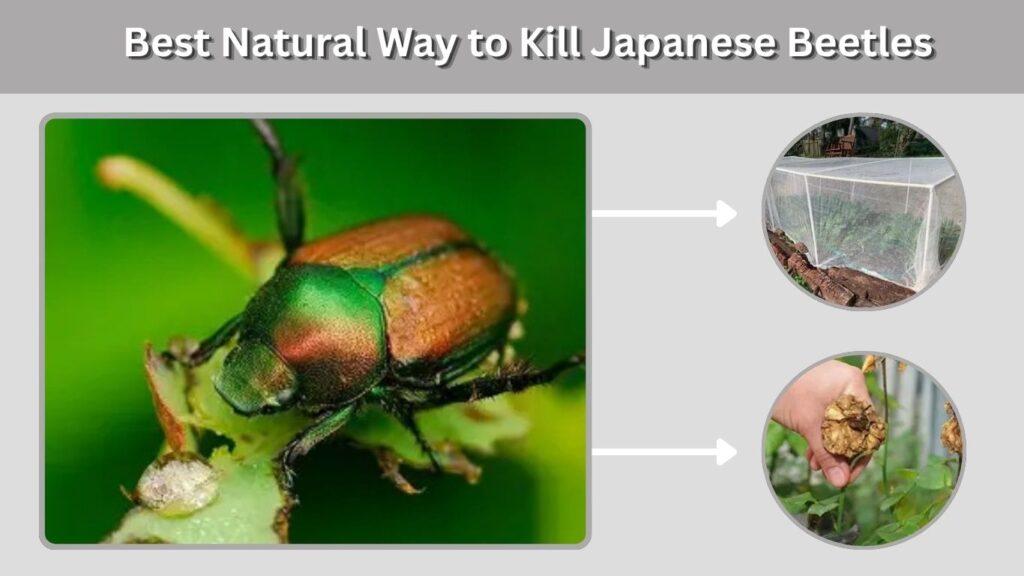
The best natural way is not one single method. A combination gives the strongest result. Start with hand-picking and soapy water, then use neem oil or insecticidal soap if damage continues. Add grub control for long-term prevention.
Simple Natural Control Plan
- Inspect plants every morning.
- Remove beetles by hand.
- Drop beetles into soapy water.
- Prune damaged flowers.
- Spray neem oil on affected leaves.
- Use insecticidal soap for direct contact.
- Cover small plants with netting.
- Avoid traps near garden beds.
- Encourage birds and beneficial insects.
- Treat grubs with nematodes or milky spore.
This plan is safe for most home gardens when done correctly. It also reduces the need for stronger chemicals.
What Naturally Kills Japanese Beetles?
Soapy water kills adult beetles when they are dropped into it. Neem oil may weaken or kill beetles and reduce feeding. Beneficial nematodes and milky spore target grubs underground. Birds, chickens, and parasitic flies can also help reduce beetle numbers naturally.
No natural method works perfectly in one day. Repetition is the key.
Natural Control on Roses
For roses, start with hand-picking every morning. Drop beetles into soapy water and remove damaged blooms. Use neem oil on leaves, but avoid spraying open flowers when bees are active.
If roses are heavily attacked every year, combine adult control with grub control in the lawn.
Natural Remedies to Avoid
Not every home remedy is safe. Some natural-sounding methods may harm plants, soil, or beneficial insects. Use caution before spraying homemade mixtures over valuable plants.
Avoid Strong Vinegar Sprays
Vinegar can damage rose leaves, vegetable plants, and tender growth. It may kill insects on contact, but it can also burn foliage. It is not a good choice for spraying Japanese beetles on plants.
Avoid Harsh Soap Mixtures
Too much dish soap can dry or burn leaves. If you use soap, keep it mild and test a small area first. The bucket method is safer than spraying soap all over plants.
Avoid Overusing Any Spray
Even natural sprays can cause problems if overused. Neem oil and insecticidal soap may affect beneficial insects if sprayed directly on them. Apply carefully, avoid open flowers, and spray during cooler hours.
FAQs
How do I get rid of Japanese beetles naturally?
The best natural way is to hand-pick beetles early in the morning and drop them into soapy water. Then use neem oil, remove damaged flowers, protect plants with netting, and treat grubs naturally with beneficial nematodes or milky spore.
What is a natural Japanese beetle repellent?
Strong-smelling plants such as garlic, chives, mint, lavender, catnip, and onions may help deter Japanese beetles. They are not perfect repellents, but planting them near vulnerable plants can reduce attraction. Early removal and healthy plant care are still important.
Does neem oil get rid of Japanese beetles naturally?
Neem oil can help control Japanese beetles naturally by reducing feeding and affecting beetle activity. It works best when used early and repeated as needed. Apply it in the morning or evening and avoid spraying open flowers when bees are visiting.
What are natural predators of Japanese beetles?
Natural predators include birds, chickens, ground beetles, tachinid flies, beneficial nematodes, and milky spore bacteria. Birds and chickens may eat adults, while nematodes and milky spore target grubs in the soil. Predators help most when the garden avoids harsh pesticides.
What naturally kills Japanese beetle grubs?
Beneficial nematodes and milky spore are two natural controls for Japanese beetle grubs. Nematodes attack grubs in moist soil, while milky spore works as a longer-term biological treatment. Apply grub controls when larvae are active near the soil surface.