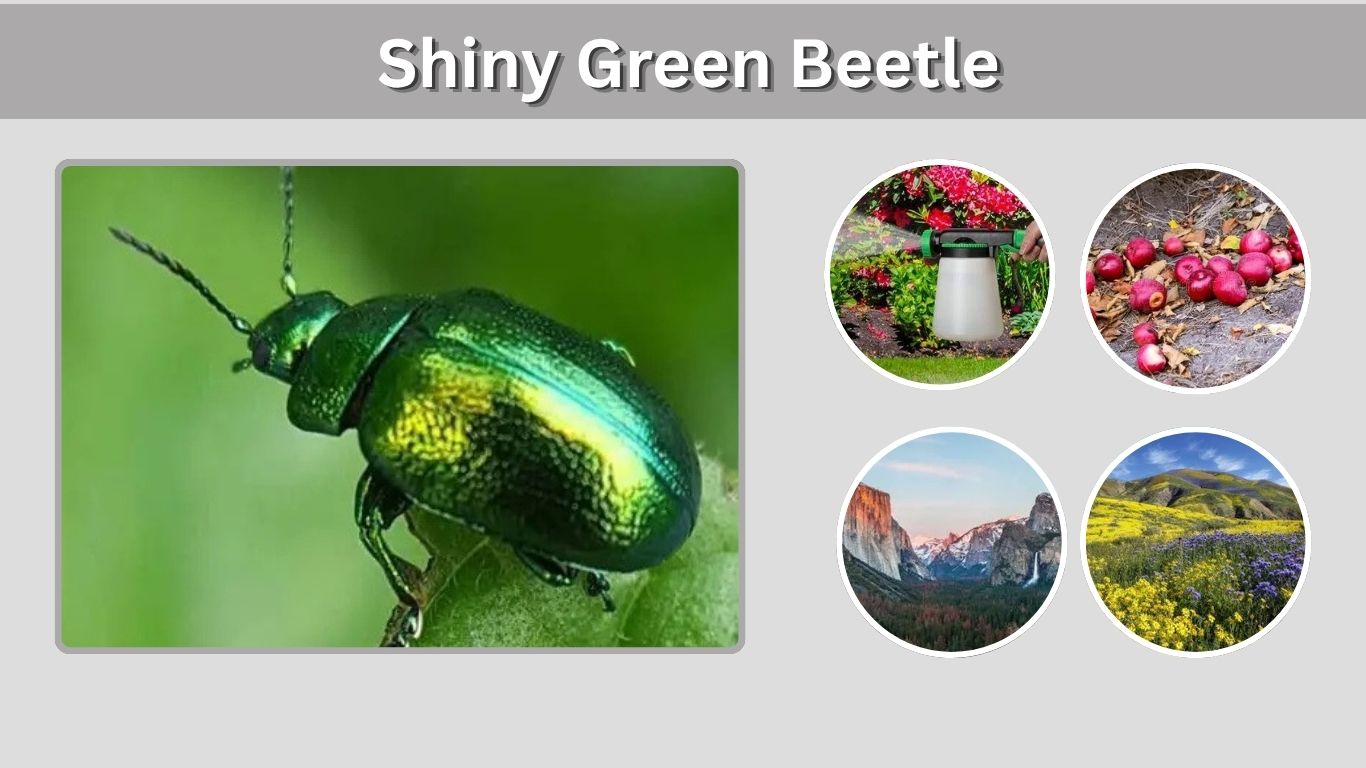
A shiny green beetle can be exciting to find because its body often looks like polished metal, emerald, gold, or blue-green glass. But “shiny green beetle” is not one single insect. It can describe many different beetles, including green June beetles, Japanese beetles, figeater beetles, tiger beetles, ground beetles, leaf beetles, and jewel beetles. Some are harmless, some are helpful predators, and others can damage roses, lawns, fruit trees, vegetables, or shade trees. The easiest way to identify one is by checking its size, shape, markings, behavior, and where you found it.
What Is a Shiny Green Beetle?
A shiny green beetle is usually a beetle with a reflective green shell, back, head, belly, or wing covers. The shine may look metallic, glassy, golden, blue, purple, or bronze depending on the light.
Many people describe these insects in different ways, such as bright green shiny beetle, shiny emerald green beetle, beetle with shiny green back, shiny green flying beetle, or metallic shiny green beetle. These descriptions all point to the same main feature: a reflective green body.
Why Are Some Beetles Shiny Green?
The shiny color comes from the beetle’s outer body covering, called the exoskeleton. In many species, tiny structures on the shell reflect light and create a metallic effect. This can make the beetle look green from one angle and blue, gold, brown, or purple from another.
This shine may help beetles:
- Blend into green leaves
- Reflect sunlight
- Attract mates
- Warn predators
- Confuse predators with changing colors
Is “Shiny Green Beetle” a Species Name?
No. “Shiny green beetle” is a description, not a scientific name. Many species can match it. For example, a big shiny green beetle in California may be a figeater beetle, while a shiny green beetle on roses may be a Japanese beetle. A small shiny green beetle on garden leaves may be a leaf beetle or flea beetle.
Common Shiny Green Beetle Names
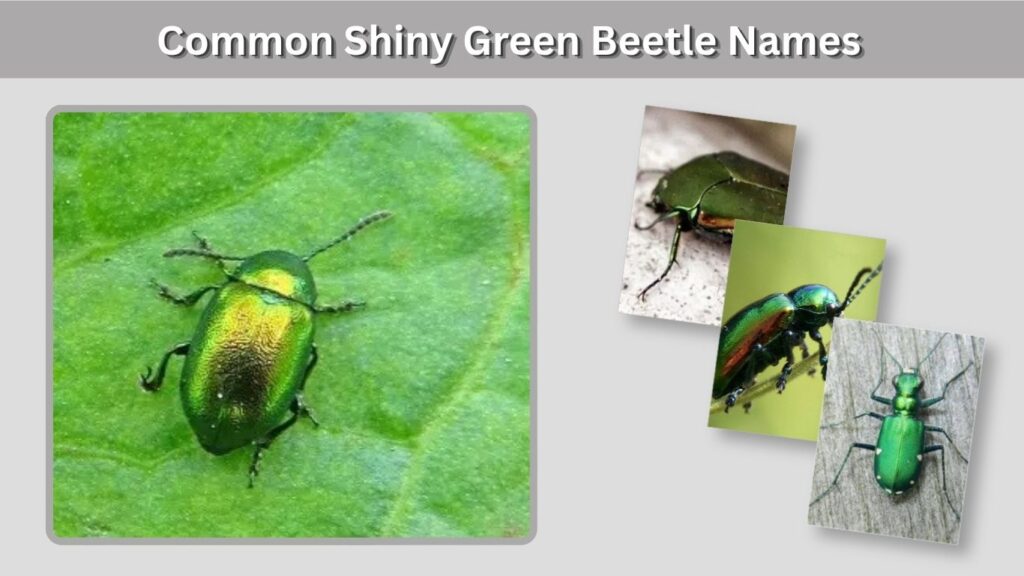
Because many beetles are green and glossy, identification depends on the details. The table below shows common possibilities.
| Common Name | Size | Key Feature | Common Location |
|---|---|---|---|
| Green June Beetle | Large | Green body with bronze edges | Lawns, fruit trees, gardens |
| Figeater Beetle | Large | Big green flying scarab | California, Arizona, fruit trees |
| Japanese Beetle | Small-medium | Green head, copper wings | Roses, grapes, gardens |
| Six-Spotted Tiger Beetle | Small-medium | Fast, bright green, white spots | Woodland trails |
| Dogbane Beetle | Small | Green, gold, copper shine | Dogbane plants |
| Green Ground Beetle | Medium | Fast-running predator | Soil, mulch, gardens |
| Mint Leaf Beetle | Small | Rounded green-blue body | Mint plants |
| Green Dock Beetle | Small | Shiny oval body | Dock and sorrel plants |
| Emerald Ash Borer | Small | Narrow metallic green body | Ash trees |
| Rose Chafer | Medium | Greenish or tan flower beetle | Roses and flowers |
Big Shiny Green Beetle
A big shiny green beetle is often a scarab beetle. These beetles usually have oval bodies, strong legs, and loud flying behavior. They may be seen around lawns, compost piles, flowers, or ripe fruit.
Common examples include:
- Green June beetle
- Figeater beetle
- Green scarab beetle
- Large flower chafer
These beetles are usually not dangerous to people, but some can damage fruit or turfgrass.
Small Shiny Green Beetle
A small shiny green beetle is often a leaf beetle, flea beetle, tiger beetle, or small ground beetle. Many small shiny beetles live on plants and feed on leaves. Others run on the ground and hunt tiny insects.
Small shiny green beetles may be found on:
- Mint
- Dock
- Sorrel
- Roses
- Grapes
- Vegetables
- Weeds
- Flowers
Long Shiny Green Beetle
A long shiny green beetle may be a jewel beetle, metallic wood-boring beetle, or longhorn beetle. These beetles often have narrow bodies. Some have long antennae, while others have smooth, bullet-shaped bodies.
If you find a long shiny green beetle near bark, logs, firewood, or a tree trunk, it may be connected to wood. Some wood-boring beetles attack stressed, weakened, or dying trees.
Shiny Green Beetle Identification
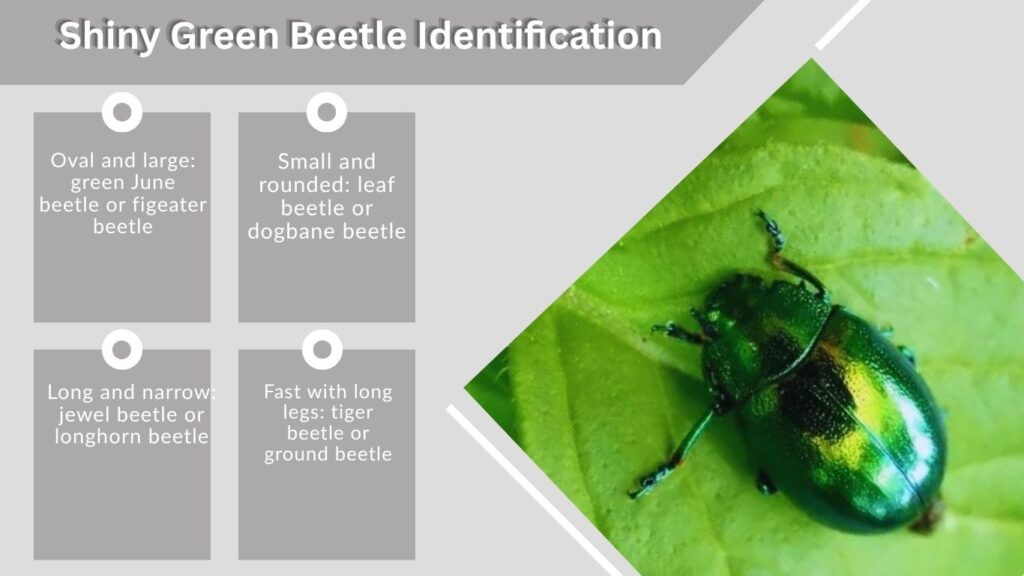
To identify a green shiny beetle, look beyond color. Color can be misleading because many species share the same metallic green appearance.
Check the Body Shape
Body shape is one of the best clues. A round or oval beetle may be a scarab or leaf beetle. A long narrow beetle may be a longhorn beetle or jewel beetle. A fast beetle with long legs and big eyes may be a tiger beetle.
Use these clues:
- Oval and large: green June beetle or figeater beetle
- Small and rounded: leaf beetle or dogbane beetle
- Long and narrow: jewel beetle or longhorn beetle
- Fast with long legs: tiger beetle or ground beetle
- Green head with copper wings: Japanese beetle
Look at the Color Pattern
Not every shiny green beetle is fully green. Some have mixed colors. A shiny green and brown beetle may be a Japanese beetle or green June beetle. A shiny green and gold beetle may be a dogbane beetle or tortoise beetle. A shiny green and red beetle could be a colorful leaf beetle or longhorn beetle.
Common color combinations include:
- Shiny green and brown
- Shiny blue-green
- Shiny green and gold
- Shiny green and orange
- Shiny green and red
- Shiny green and purple
- Shiny green and yellow
- Black and green shiny body
- Shiny green with white spots
Notice Where You Found It
Location is very important. A shiny green beetle on roses is often a Japanese beetle. A shiny green flying beetle in California may be a figeater beetle. A shiny green beetle in a lawn may be a green June beetle. A shiny green beetle running on a trail may be a tiger beetle.
Shiny Green Flying Beetles
Many shiny green beetles can fly. Some fly smoothly, while others buzz loudly and bump into objects. A big green shiny flying beetle is usually more noticeable because of its size and sound.
Why Do Shiny Green Beetles Fly Around People?
Most shiny green flying beetles are not attacking people. They may fly toward light, fruit odors, flowers, moisture, or open sunny areas. Large beetles such as green June beetles and figeater beetles are clumsy fliers, so they may accidentally hit people, windows, fences, or walls.
Large Shiny Green Flying Beetle
A large shiny green flying beetle may be:
- Green June beetle
- Figeater beetle
- Rose chafer
- Flower chafer
- Large green scarab beetle
These beetles are usually active in warm weather. They may feed on fruit, flowers, plant sap, or soft plant material.
Shiny Green Beetles in the Garden
Some shiny green beetles are harmless in gardens, but others can become pests. The damage depends on the species and how many beetles are present.
Shiny Green Beetle Eating Plants
If a shiny green beetle is eating plants, it may be a Japanese beetle, leaf beetle, cucumber beetle, flea beetle, or rose chafer. These beetles can chew leaves, flowers, and soft fruit.
Signs of plant damage include:
- Holes in leaves
- Skeletonized leaves
- Damaged rose petals
- Chewed fruit skin
- Beetles feeding in groups
- Weak or stressed garden plants
Shiny Green Beetle on Roses
A shiny green beetle on roses is commonly a Japanese beetle in many parts of the United States. Japanese beetles feed on rose petals and leaves. They often gather in groups and leave a lace-like or skeletonized pattern on foliage.
Shiny Green Beetles in Lawns
If you see large shiny green beetles flying over grass, they may be green June beetles. Their larvae live in soil as grubs. These grubs can loosen turf, create small soil mounds, and attract birds or animals that dig in the lawn.
Shiny Green Beetle by Location
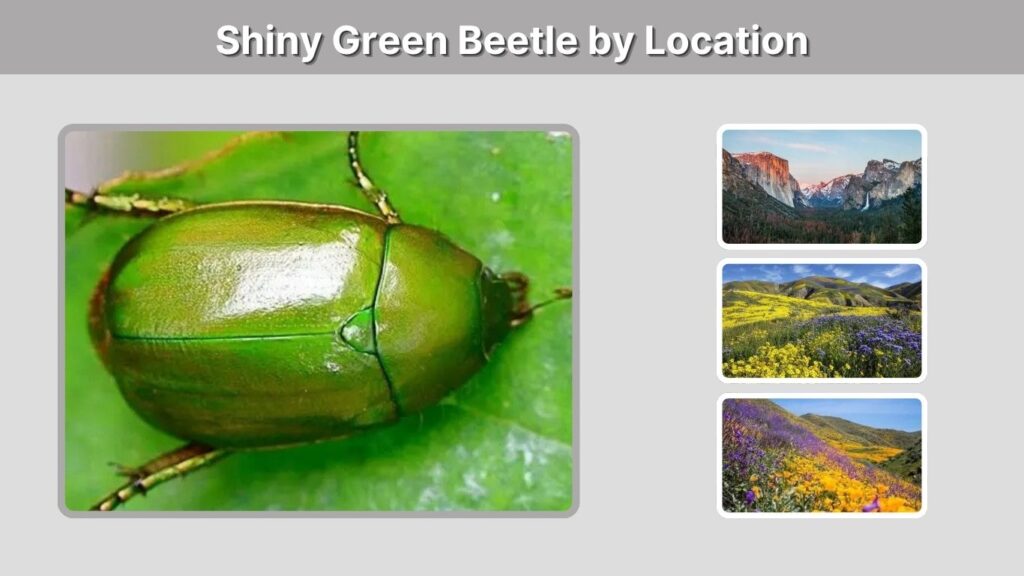
Many searches include state, region, or country names because shiny green beetles vary by location. Here are common possibilities.
Shiny Green Beetle in California
In California, a big shiny green flying beetle is often a figeater beetle. It may be seen around figs, peaches, grapes, compost, or gardens. Southern California homes commonly report these large green beetles during warm months.
Shiny Green Beetle in Texas
In Texas, shiny green beetles may include green June beetles, figeater beetles, tiger beetles, ground beetles, and leaf beetles. Large flying beetles are often scarabs, while fast ground beetles may be predators.
Shiny Green Beetle in Arizona
In Arizona, a large shiny green beetle may be a figeater beetle or another fruit-loving scarab. They are often seen in irrigated yards, orchards, and gardens.
Shiny Green Beetle in Florida
Florida has many shiny green beetles because of its warm climate. Possible examples include scarabs, leaf beetles, ground beetles, tiger beetles, and flower beetles. Host plant and body shape are important for accurate identification.
Shiny Green Beetle in Oregon and Washington
In Oregon and Washington, shiny green beetles may include ground beetles, tiger beetles, leaf beetles, and some scarab beetles. Beetles found in gardens may be plant feeders, while those running on soil may be beneficial predators.
Shiny Green Beetle in the UK
In the UK, shiny green beetles may include rose chafers, green tiger beetles, mint leaf beetles, dock beetles, and ground beetles. Rose chafers are often found on flowers, while green tiger beetles are fast runners on sunny paths.
Are Shiny Green Beetles Dangerous?
Most shiny green beetles are not dangerous to humans. They do not sting, and most do not bite unless handled roughly. However, some can be harmful to plants, lawns, fruit trees, or shade trees.
Do Shiny Green Beetles Bite?
Most shiny green beetles do not bite people in a dangerous way. Some may pinch slightly if trapped or handled, but they are not aggressive. Large beetles may scratch your skin with their legs because they have strong claws for gripping.
Are Shiny Green Beetles Poisonous?
Most shiny green beetles are not poisonous to people. Still, it is better not to handle unknown insects too much. Pets should not eat many beetles because insects may cause mild stomach upset.
Are Shiny Green Beetles Bad for Plants?
Some are bad for plants, but not all. Japanese beetles, rose chafers, and some leaf beetles can damage garden plants. Green June beetles and figeater beetles may damage ripe fruit. Ground beetles and tiger beetles are usually helpful because they eat other insects.
How to Manage Shiny Green Beetles
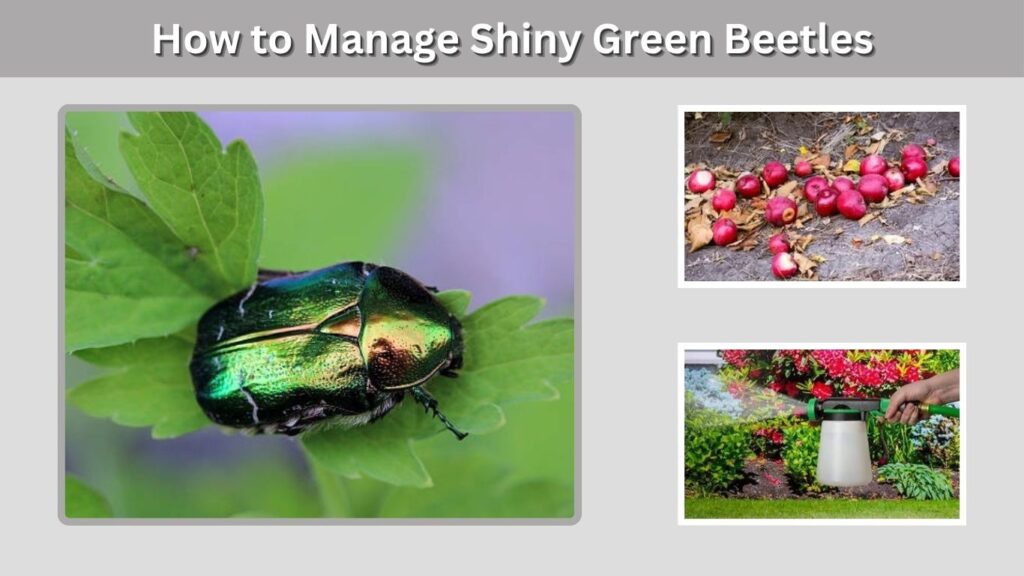
Control depends on the beetle species. Do not use pesticides just because a beetle is shiny and green. First, identify whether it is causing damage.
Natural Control Tips
For garden and fruit-feeding beetles, try simple steps first:
- Handpick beetles from plants when numbers are low.
- Remove overripe or fallen fruit.
- Keep compost away from fruit trees.
- Spray plants with water to knock off small beetles.
- Use row covers for vulnerable vegetables.
- Encourage birds and beneficial insects.
- Avoid overwatering lawns if grubs are a problem.
When Control Is Needed
Control may be needed if beetles are heavily damaging roses, fruit trees, vegetables, or turf. If the beetle is a wood-boring species such as emerald ash borer, tree health may require professional inspection.
| Beetle Situation | Likely Issue | Best First Step |
|---|---|---|
| Large beetles on ripe fruit | Fruit-feeding scarabs | Remove damaged fruit |
| Beetles on roses | Japanese beetles or chafers | Handpick and monitor |
| Grubs in lawn | Scarab larvae | Check turf and soil |
| Beetle from tree bark | Wood-boring beetle | Inspect tree health |
| Fast beetle on ground | Predator | Leave it alone |
| Tiny beetle on leaves | Leaf beetle or flea beetle | Check plant damage |
FAQs
What are the shiny green beetles called?
Shiny green beetles may be called green June beetles, figeater beetles, Japanese beetles, tiger beetles, dogbane beetles, leaf beetles, ground beetles, or jewel beetles. The exact name depends on size, shape, markings, and location.
What is a big shiny green beetle?
A big shiny green beetle is often a green June beetle, figeater beetle, rose chafer, or green scarab beetle. These beetles are usually oval, strong-bodied, and active in warm weather.
What is a small shiny green beetle?
A small shiny green beetle may be a leaf beetle, flea beetle, dogbane beetle, tiger beetle, or emerald ash borer. If it is on plants, it may be feeding on leaves. If it is running on the ground, it may be a predator.
Are shiny green beetles harmful?
Most shiny green beetles are not harmful to people. Some are harmful to plants, fruit, lawns, or trees. Others, such as ground beetles and tiger beetles, are beneficial because they eat pests.
Why is there a shiny green beetle in my garden?
A shiny green beetle may be in your garden because it is feeding on flowers, leaves, ripe fruit, sap, or smaller insects. Check the plant it is on and look for damage before deciding whether it needs control.